
Why Chamomile Water is the Gold-Standard Ingredient for Soothing Skincare Lines
Here’s a number that should get any product developer’s attention. About 38% of people in the US and 44% in Europe say they have sensitive skin, based on a review covering 26 studies and 51,783 participants. That’s not a niche. That’s a huge chunk of your customers.
And the money follows the skin. The global sensitive-skincare market was worth roughly $47.2 billion in 2024. It’s forecast to hit $74.1 billion by 2030, growing about 7.8% a year. People want gentle. They want natural. And they want it to actually work.
So where does chamomile water for face products fit in? Right in the middle of that demand.
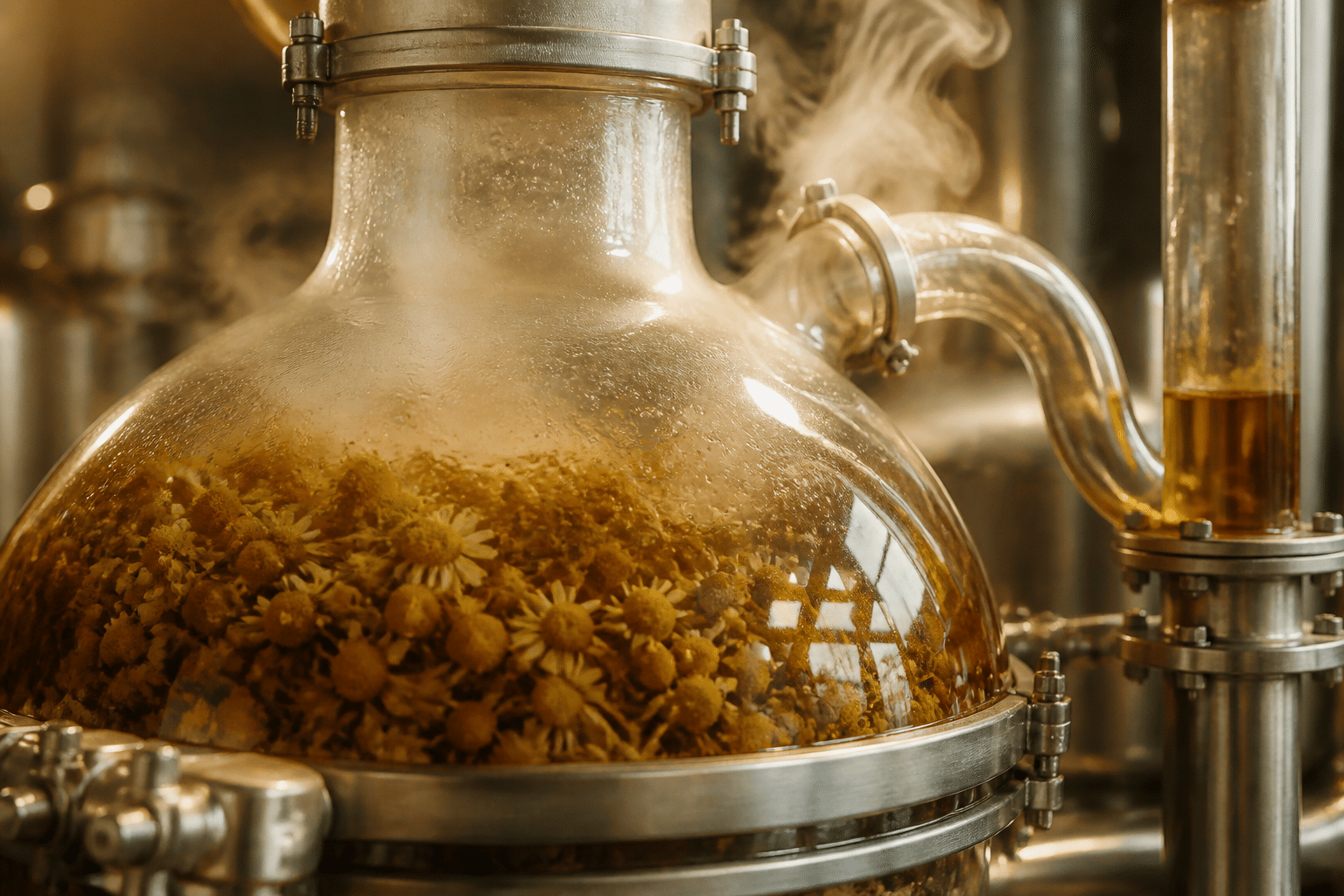
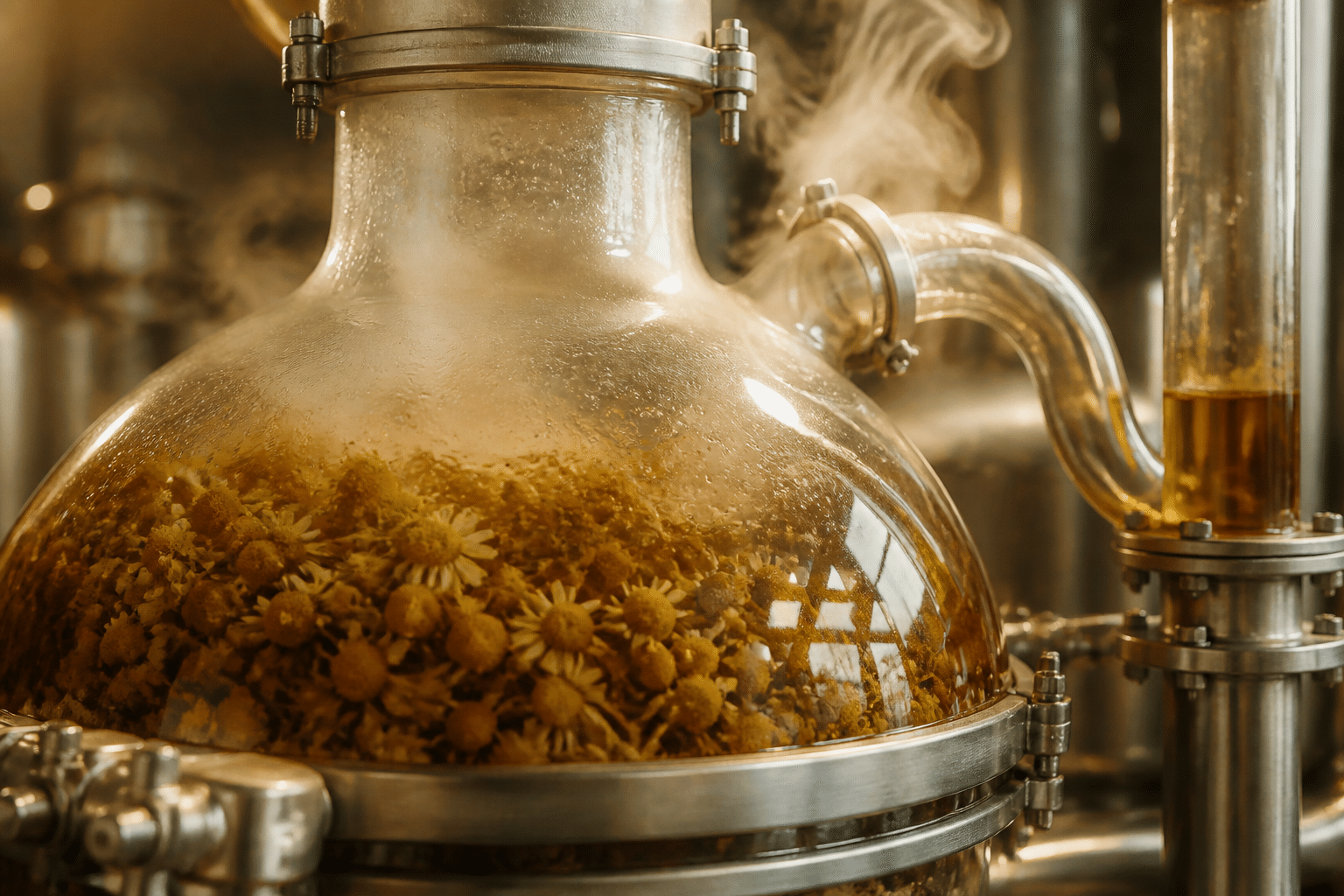
Chamomile water, also called chamomile hydrosol for skin, is the water left behind after steam-distilled chamomile flowers give up their essential oil. It’s light, calming, and easy to build into a toner, mist, or serum. Plenty of brands already say “soothing” on the label. Fewer can back it up with a well-sourced, well-documented ingredient. That’s the gap a good hydrosol can fill.
I’ll be upfront about one thing. Chamomile water isn’t a miracle cure, and we won’t pretend it is. It’s a smart, science-backed natural ingredient for sensitive skincare when you pick the right one and use it well.
This guide is written for product developers and procurement managers. We’ll look at how chamomile works on the skin, why hydrosol purity matters, how to formulate with it, and how to source it in bulk without headaches. Let’s start with the science.
The Science of Serenity: Deconstructing Chamomile Water’s Soothing Mechanisms
So what’s actually going on when chamomile water calms a red, cranky face? Let’s break it down, one molecule at a time.
The Calming Compounds Behind the Label
Chamomile carries a few key players. Reviews of chamomile pharmacology point to α-bisabolol, bisabolol oxides, chamazulene and apigenin as the main anti-inflammatory constituents. German chamomile is especially rich in the bisabolol types and chamazulene. Roman chamomile leans toward esters instead, with far less of both.
Here’s how bisabolol works at the cell level. In a 2014 study in Inflammopharmacology, topical bisabolol cut ear swelling in mice and held back the inflammatory messengers TNF-α and IL-6. Think of those messengers as alarm bells. Less ringing, less redness. A 2022 study in Molecules found something similar in a mouse model of atopic dermatitis, where bisabolol seemed to quiet the JNK/MAPK and NF-κB signals.
Now the fine print. Both studies were in animals, not people. And these compounds don’t dissolve well in water, so a true hydrosol carries much less of them than the essential oil does. I’d call chamomile water a soothing botanical with supportive evidence, not a treatment.
| Compound | What it does for skin |
|---|---|
| α-Bisabolol | Helps reduce redness and swelling signals |
| Chamazulene | Adds calming action (more common in German chamomile) |
| Apigenin | Fights free radicals and supports calming |
| Bisabolol oxides | Back up the anti-inflammatory effect |
Antioxidant Protection Before Trouble Starts
Inflammation often begins with stress. Pollution, sun and city grime create free radicals, and those tip skin toward irritation. Chamomile’s apigenin is a flavonoid with antioxidant activity. In that same bisabolol study, treated skin also showed less lipid peroxidation, which is a marker of oxidative damage. So the idea is simple: calm things down early, before the flare-up.
Gentle Help for Stressed or Blemish-Prone Skin
Chamomile has a long history in mild antiseptic and skin-recovery care, which is why brands like it for compromised or blemish-prone skin. Honestly, though, solid human data on hydrosol for wound healing is thin. Keep your claims modest. Also, chamomile belongs to the daisy family, so people allergic to ragweed or daisies can react. A patch test belongs in your plan.
There’s one more catch. All of this science depends on what’s actually in the bottle, and that varies a lot from batch to batch.
Not All Chamomile Water is Created Equal: The Importance of Hydrosol Purity

Picture this. You order a drum of “chamomile water,” it smells lovely, and your first pilot batch looks fine. Then the second batch shows up a different color and smells off. Sound familiar? It happens more than you’d think.
The label doesn’t tell you much. Two bottles can both say “chamomile water” and be totally different inside. Let’s sort out what you’re really buying.
True Hydrosol vs. Infused Water
A true hydrosol comes from steam distillation. Steam passes through fresh or dried flowers, carries the volatile bits along, then cools back into liquid. The water left after the oil separates is your chamomile hydrosol for skin. Think of it as a captured vapor.
Infused water is more like tea. Flowers sit in hot or cold water and the water pulls out whatever dissolves. It’s simple, but it’s a different thing. Tea-style water has plant sugars and other bits that feed microbes, so it spoils faster. It also lacks the distilled volatile profile you’d expect.
| Feature | True steam-distilled hydrosol | Infused water or tea |
|---|---|---|
| How it’s made | Steam passes through flowers, vapor is cooled and collected | Flowers steeped in water |
| What’s in it | Water-soluble volatile traces from the plant | Mix of dissolved plant material |
| Potency | Light but consistent when sourced well | Varies a lot with steep time and temperature |
| Shelf life | Longer, with proper preservation | Short, spoils quickly |
| Best use | Toners, mists, serums | Home use, not bulk formulas |
One thing to keep straight: even a real hydrosol is gentle. As we covered above, the main calming compounds prefer oil over water. So potency here means a clean, repeatable profile, not a strong one.
What Happens When the Bottle Isn’t What It Claims
This part stings. Reliable hydrosol-specific market data is limited, but the Circle H Institute reports that samples sold as hydrosols have contained synthetic ingredients or weren’t true hydrosols at all. Common tricks include:
- Heavy dilution with plain water
- Chamomile essential oil or fragrance mixed into water
- Undisclosed alcohol, solubilizers or preservatives
- Roman chamomile sold as German (they have very different profiles)
Why care? Because the fallout lands on your brand. Hidden additives can change pH and how your preservative behaves. A Cosmetics & Toiletries formulation review lists color variation, instability and safety concerns as repeat problems with botanical materials. Fragrance-laced water can irritate the very customers who bought a “sensitive” toner. And a product that doesn’t soothe gets a one-star review fast.
Proof Lives in the Lab Report
So how do you check? Ask for third-party testing, starting with GC-MS (gas chromatography-mass spectrometry). It maps the volatile compounds in the batch. Fair warning: GC-MS can’t “certify” purity on its own. It supports identity and flags oddities. You also need microbiology, pH and preservative disclosure.
Here’s what to look for on a Certificate of Analysis (COA):
| COA line | What it tells you | Red flag |
|---|---|---|
| Botanical name and plant part | Species, such as Matricaria recutita or Chamaemelum nobile | Only “chamomile” listed |
| Origin and distillation date | Traceability and freshness | Missing or vague |
| GC-MS profile | Marker pattern matching the stated species | Odd dominance of one compound, such as trans-anethole |
| Non-chamomile peaks | Solvents, fragrance or unlisted additives | Unexplained peaks waved off as “natural variation” |
| Microbial results | Safety and sanitation | No results at all |
| pH and preservative | Compatibility with your formula | Preservative not disclosed |
Marker patterns matter too. German types should show a coherent set, including α-bisabolol, its oxides and chamazulene, while Roman types lean toward angelate esters. A 2024 analysis of commercial German chamomile oils is a good example of why proportions count. Don’t just check that a marker exists.
This is where a supplier’s habits show. Aroma Monk, for one, backs its natural products with lab testing and traceability, which is the kind of paperwork you should expect from anyone. Ask for the batch COA before you approve a single liter.
Next up: once you trust the water, how do you actually build it into a formula?
Formulation Blueprint: Incorporating Chamomile Water Into High-Performance Face Products
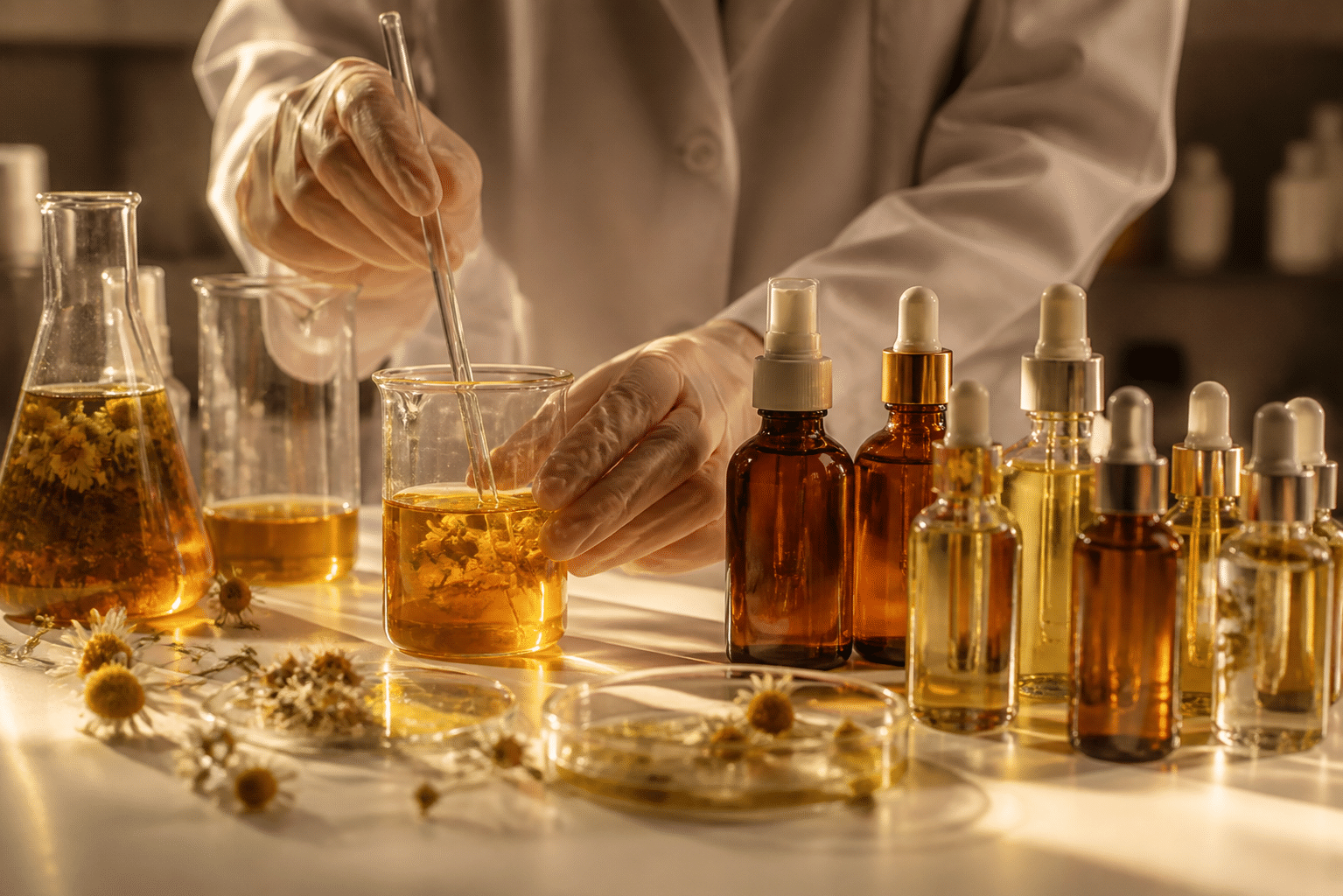
OK, you trust your hydrosol. Now comes the fun part, actually putting it in a bottle. I’ll admit I’ve seen formulators treat chamomile water like plain water with a nice smell. It deserves better.
How Much Chamomile Water Goes Where
Usage levels depend on the product. A mist can be nearly all hydrosol. A cream only borrows a slice of the water phase. One published toner example from WF Academy’s hydrosol guide uses 94% chamomile hydrosol, 3% glycerin, 2% panthenol and 1% preservative. That’s a solid starting point.
The other ranges below are bench-trial starting points, not hard rules. I couldn’t find a published standard, so test them in your own base.
| Product type | Recommended % concentration | Key benefit in application | Formulation tip |
|---|---|---|---|
| Facial mist or toner | 85 to 95% | Light, calming hydration | Keep glycerin at 2 to 4% so the mist doesn’t turn tacky |
| Serum | 40 to 70% | Soothing base for water-soluble actives | Check pH after gums and polymers fully hydrate |
| Cleanser | 10 to 30% | Gentle, soothing feel after rinsing | Test with your surfactants, since some can mute the subtle scent |
| Cream or lotion | 10 to 40% of the water phase | Calming, light feel in an emulsion | Add it in the cool-down phase, not during heating |
| Mask | 20 to 50% | Soothing hydration during short contact time | Pair with a film-former or clay base and challenge-test it |
Pairings That Make It Work Harder
Chamomile water is gentle on its own. But it plays well with others.
- Hyaluronic acid: Low molecular weight sodium hyaluronate at 0.05 to 0.3% adds water-holding power.
- Niacinamide: At 2 to 3%, it backs up the skin barrier. DIY Cosmetica shares a chamomile hydrosol toner built around it.
- Panthenol: A 1 to 2% dose adds comfort and softness.
- Calendula: A classic partner for calming claims. Don’t say it beats chamomile, though. No solid head-to-head human data exists.
Going for sensitive skin? Skip the fragrance. Always.
Keeping pH and Preservation Under Control
Here’s the thing nobody tells new formulators: you can’t set pH from the hydrosol alone. One supplier lists its chamomile hydrosol at roughly pH 5.8, but batches shift. So measure the finished product. Aim for pH 5.2, with a production window of 5.0 to 5.5. Use dilute citric or lactic acid to bring it down.
Now preservation. Hydrosols are mostly water, and microbes love that. “Natural” isn’t a preservative. Essential oils or vitamin E won’t protect a toner by themselves. Practical options include benzyl alcohol with dehydroacetic acid, a benzoate and sorbate blend, or phenoxyethanol with ethylhexylglycerin. Made by Genie’s preservative guide walks through how these systems differ. Whatever you pick, check the supplier’s dosage and pH range, then run a challenge test on the finished formula.
Protecting the Good Stuff During Production
Heat is the enemy of delicate volatiles. So don’t boil the hydrosol with your oil phase. In emulsions, add it during the cool-down stage, usually below 40°C, or follow your preservative supplier’s temperature limits. Keep tanks clean and closed, minimize air exposure, and package in opaque or airless containers when you can.
A batch COA from your supplier makes all of this easier. Aroma Monk, for example, backs its natural products with lab testing and traceability, which helps keep your starting material steady.
Once the formula is stable, the next question is where it sells.
Get a quote from Aroma Monk.
Essential Oil Supplier – Bulk pricing • Samples • Fast response
Market Opportunities: Leveraging Chamomile Water to Meet Consumer Demands
You’ve got a good hydrosol and a stable formula. Now, where should it live on the shelf? Let’s look at four spots where a chamomile story fits naturally.
Four Product Categories That Fit a Chamomile Story
- Post-procedure care: Skin after peels or facials often feels tight and cranky. A fragrance-free mist with chamomile water suits that “gentle, comforting” mood. Keep claims to comfort, not healing.
- Anti-redness lines: Rosacea affects about 5.46% of people worldwide, based on a review of 32 studies. Many more people just have easily flushed skin. Soothing toners and serums speak to both groups.
- Baby care: Natural-ingredient products make up about 47.6% of the roughly $8.7 billion baby skin-care market, though that’s a commercial estimate. Parents read labels closely, so a short ingredient list wins. Babies need extra safety testing, though.
- Daily urban products: Innova Market Insights saw anti-pollution launches grow 4% a year from 2020 to 2024. In Thailand, Mintel found 52% of people call their facial skin sensitive. Position it as “soothing hydration for city-stressed skin.” Don’t say it blocks pollution unless you’ve tested that.
How to Market “Steam-Distilled” Without Overpromising
Here’s the deal. Most shoppers can’t tell a hydrosol from a tea. So tell them, simply.
- Name it on the label: “Chamomile Flower Water” or Chamomilla recutita (Matricaria) flower water.
- Say “steam-distilled” and name the species. German and Roman chamomile aren’t the same thing.
- Show batch traceability and testing. Trust is what lets you charge more.
- Skip “clinically proven” unless you ran the study.
One warning: plenty of products say “chamomile” but only contain extract, essential oil or bisabolol. A real flower-water product stands out because the ingredient list proves it.
What Competitors Are Doing
I couldn’t find a big pile of verified examples, so I’ll stick to two I can point to.
- L’Erbolario’s Aromatic Chamomile Water lists chamomile flower water near the top, with glycerin, chamomile extract, sodium PCA and allantoin. The water is the hero, not a sidekick.
- Natural Heroes’ Roman Chamomile Hydrosol keeps it minimal: chamomile flower water, potassium sorbate, citric acid. Short list, clear message.
The pattern? Simple lists and plain language. Nobody’s shouting.
Three Product Concepts to Borrow
| Concept | Target audience | Key claims |
|---|---|---|
| Urban Defence Facial Mist with Chamomile & Green Tea | City commuters, 25 to 40, with stressed skin | Soothing hydration for skin exposed to urban stress; fragrance-free; steam-distilled chamomile water |
| Calm Aftercare Mist | People recovering from facials, peels or laser sessions | Comforting, alcohol-free mist; gentle feel; made with German chamomile water |
| Little Calm Face Toner | Parents of babies and toddlers | Short ingredient list; botanical chamomile flower water; fragrance-free (safety-tested for baby use) |
Each concept sells one clear idea. That’s usually what works.
So the demand is there, and the story is easy to tell. The next question is how to buy this stuff in volume without surprises.
Sourcing at Scale: A Procurement Manager’s Guide to Bulk Chamomile Water
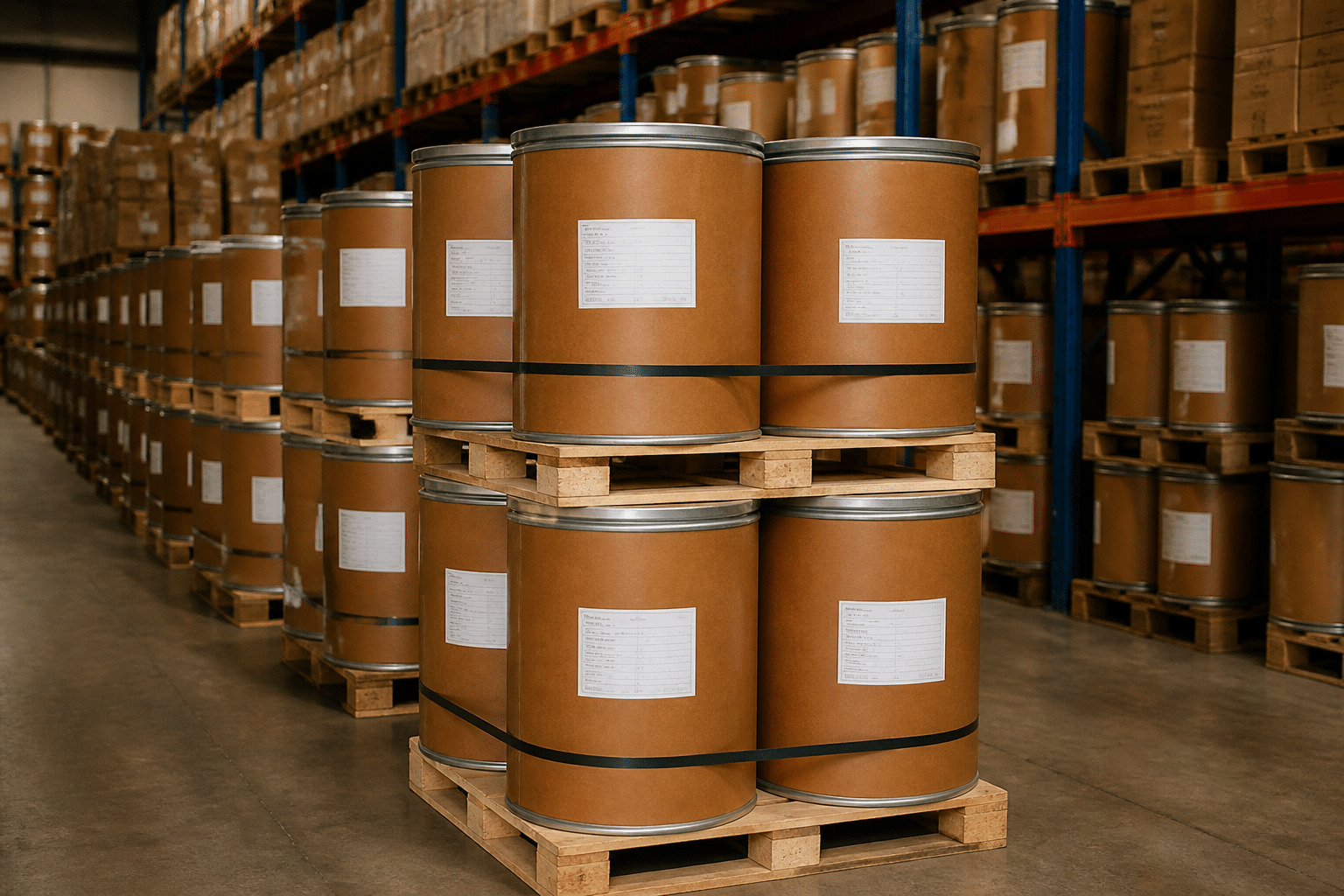
You found the right formula. Your pilot batch looks great. Now someone has to buy 200 kg of chamomile water, and that someone is probably you. No pressure.
Buying bulk hydrosol isn’t like ordering a case of bottles. The material is mostly water, it can spoil, and it changes with the harvest. So let’s talk about how to vet a supplier before you sign anything.
What to Look for in a Bulk Chamomile Water Supplier
Start with transparency. A good supplier should tell you the species, the plant part, the country of origin, and the harvest or distillation date. If the answer to “where did these flowers grow?” is a shrug, walk away.
Next, ask how it’s made. You want steam-distilled chamomile water, not tea-style infusion, and you want the supplier to say so in writing. Also ask about batch consistency. Natural materials shift with weather and season. Roland Berger’s 2025 analysis lists seasonality, quality variation and traceability as the big weak spots in natural-ingredient supply chains. So a supplier who can show you three or four past batch COAs side by side is worth a lot.
Hatton Naturals puts it simply in its formulator’s guide: “Always request a COA and verify that the lot meets your formulation requirements.”
Manufacturer or Distributor?
Here’s the deal. Distributors are handy for small runs. Wholesale Diffuser, for example, lists chamomile hydrosol at a 1 kg minimum. Export-focused manufacturers usually start higher. Aromaaz lists a 25 kg minimum for bulk chamomile floral water.
Once you pass 25 L or so, going direct tends to pay off:
- Better pricing: No middle layer adding margin.
- Real traceability: The people who distilled it can answer your questions.
- Room to customize: Packaging size, drum type, even preservative choice can be on the table.
That last point matters more than people expect. A manufacturer like Aroma Monk handles the chain from sourcing to delivery, so one phone call can sort out a custom pack size. With a broker, you may wait days for a reply. (Ask me how I know.)
10 Questions to Ask Before You Order
Print this one out. Tape it next to your monitor.
| # | Question | What a good answer sounds like |
|---|---|---|
| 1 | Which species and plant part do you use? | Botanical name, such as Matricaria recutita flower |
| 2 | Where is it grown, and when was it distilled? | Named country and a dated batch |
| 3 | Is it true steam-distilled hydrosol? | Yes, with process details |
| 4 | Can I see a batch COA with GC-MS data? | Sent quickly, no fuss |
| 5 | What preservative is in it, and at what pH? | Fully disclosed |
| 6 | Which certifications do you hold (ISO, GMP, organic)? | Certificates you can check |
| 7 | What are your MOQs and price tiers? | Clear quotes at 5, 25 and 200 kg |
| 8 | What’s the lead time for repeat bulk orders? | A firm number of days, plus how you handle delays |
| 9 | How do you pack and ship liquids? | Leak-proof containers, SDS, HS code, full paperwork |
| 10 | Can you hold stock or customize packaging? | Yes, or a clear explanation why not |
Shipping deserves extra attention. DHL’s cosmetics shipping guide points to leak-free containers, strong outer boxes and correct customs paperwork as the basics. Rules also differ by country, so check the destination early.
Got answers you trust? Good. Next, let’s talk about turning a supplier into a long-term partner.
Partnering for Purity and Potency: Elevate Your Brand with Superior Chamomile Water
Let’s wrap this up. Chamomile water for face products isn’t magic, but it’s a smart bet. The demand is real, the soothing story is easy to tell, and the science gives you a fair base to stand on (as long as you keep your claims modest).
Here’s what to take with you:
- Demand is solid. Sensitive skin is common, and gentle products keep selling.
- Purity decides everything. A true, steam-distilled hydrosol behaves the same way batch after batch. A diluted or doctored one doesn’t, and your customers feel it.
- Paperwork matters. Batch COA, GC-MS data, pH, preservative details and microbial results. No exceptions.
- Species matters too. Roman and German chamomile aren’t swappable, so name the one you’re buying.
See the pattern? Most of the pain in this guide comes back to one thing: what’s really in the drum. Get that right and the formula, the label and the reviews tend to fall into place. Get it wrong and no clever marketing will save you.
That’s where the supplier matters. Aroma Monk is a manufacturer and exporter, not a middle layer. It handles the chain from sourcing to delivery, backs its natural products with lab testing and traceability, and supports bulk orders and custom packaging. In plain terms, that lines up with the problems we’ve talked about: fewer surprises, clearer answers, and one team to call when a batch question pops up.
My advice? Don’t start with a big order. Start with a sample and the matching COA. Check the odor, color and pH. Run it through your own stability and challenge tests. Then scale.
Ready to Test the Difference?
| Request Your COA & Bulk Quote for Pure Chamomile Hydrosol |
|---|
| Get a sample, the batch COA and a volume-based quote for your target quantity and destination. Request Your COA & Bulk Quote for Pure Chamomile Hydrosol |
Your customers want calm skin. Give them a hydrosol you can stand behind.
Get a quote from Aroma Monk.
Essential Oil Supplier – Bulk pricing • Samples • Fast response