
Beyond the Trend: Why Chamomile Water is a Strategic Ingredient for Modern Skincare Brands
Picture a buyer scrolling through a hundred new serums and toners. Most of them promise calm skin. Few of them say how.
That’s the gap smart brands are trying to fill. Shoppers want gentle products that actually work, and they want them made with plants. The numbers back it up. One Global Market Insights report puts the natural and organic cosmetics market at $40.8 billion in 2024, heading toward $68.8 billion by 2034. Plus, a 2025 market analysis on anti-inflammatory skincare says around 50% of consumers see themselves as having sensitive skin. (Market reports define “natural” differently, so treat the totals as a direction, not a promise.)
So where does chamomile water for face care fit in? Many people picture it as a pretty floral water and nothing more. I think that undersells it. Chamomile hydrosol is the water-based distillate left after steam distilling the flowers. It can serve as a toner base, a mist, or part of the water phase in a cream. It brings a gentle botanical story and a soft scent, and research on chamomile compounds like apigenin and bisabolol points to real soothing potential.
But here’s the catch. The science on extracts is stronger than the science on hydrosols. Quality, preservation, and the exact botanical (German or Roman) all change what ends up in your bottle.
That’s why we’re taking a practical route in this guide. We’ll look at what chamomile water is, what the evidence supports, how to use it in formulas, and how to source it with confidence. If you build or buy for a skincare brand, this is for you.
1. What Exactly is Chamomile Water? Demystifying the Hydrosol for Product Formulation
Let’s clear something up first. “Chamomile water” on a spec sheet can mean very different things. Some of it is real. Some of it is just tap water with a nice name.
How a True Hydrosol Gets Made
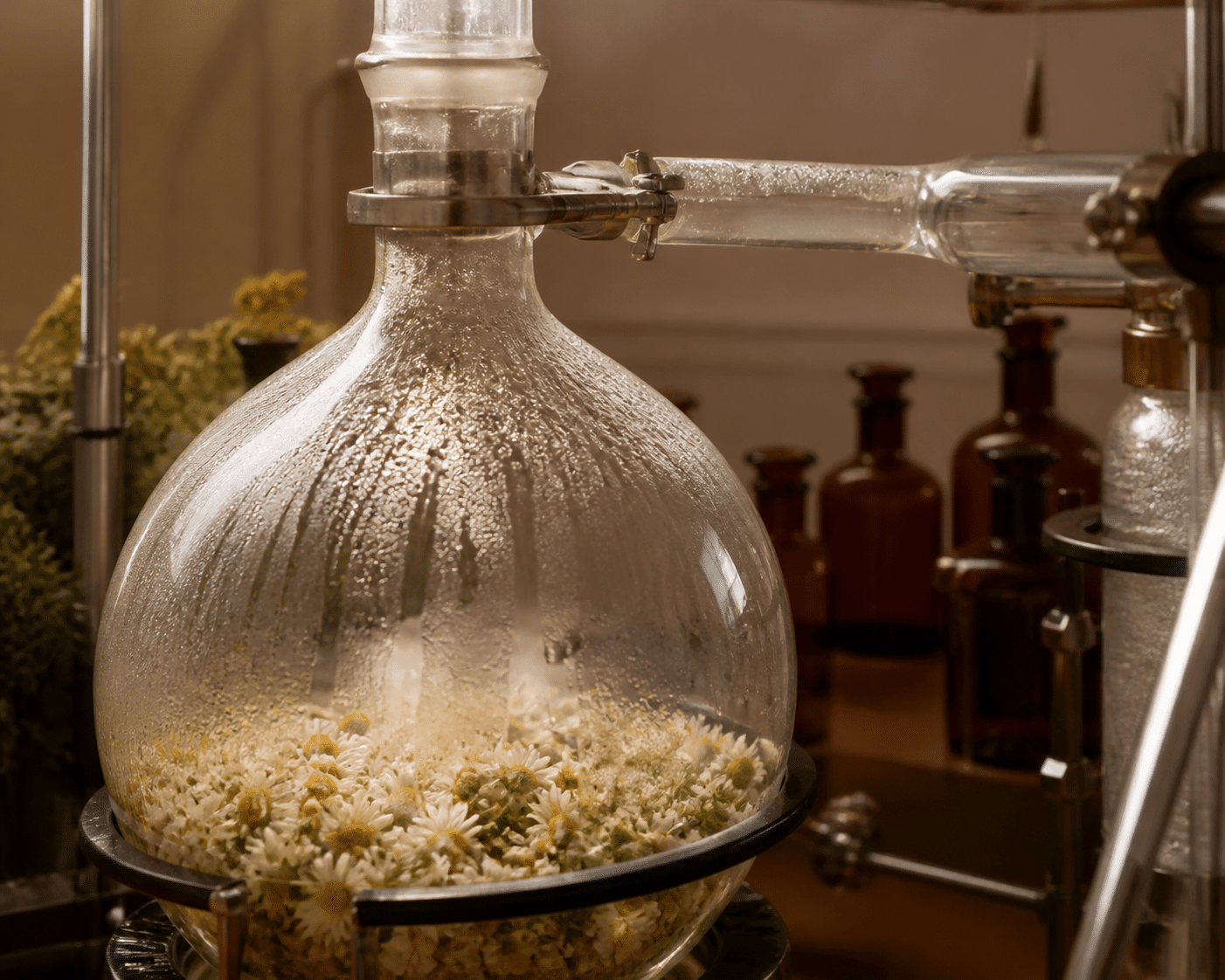
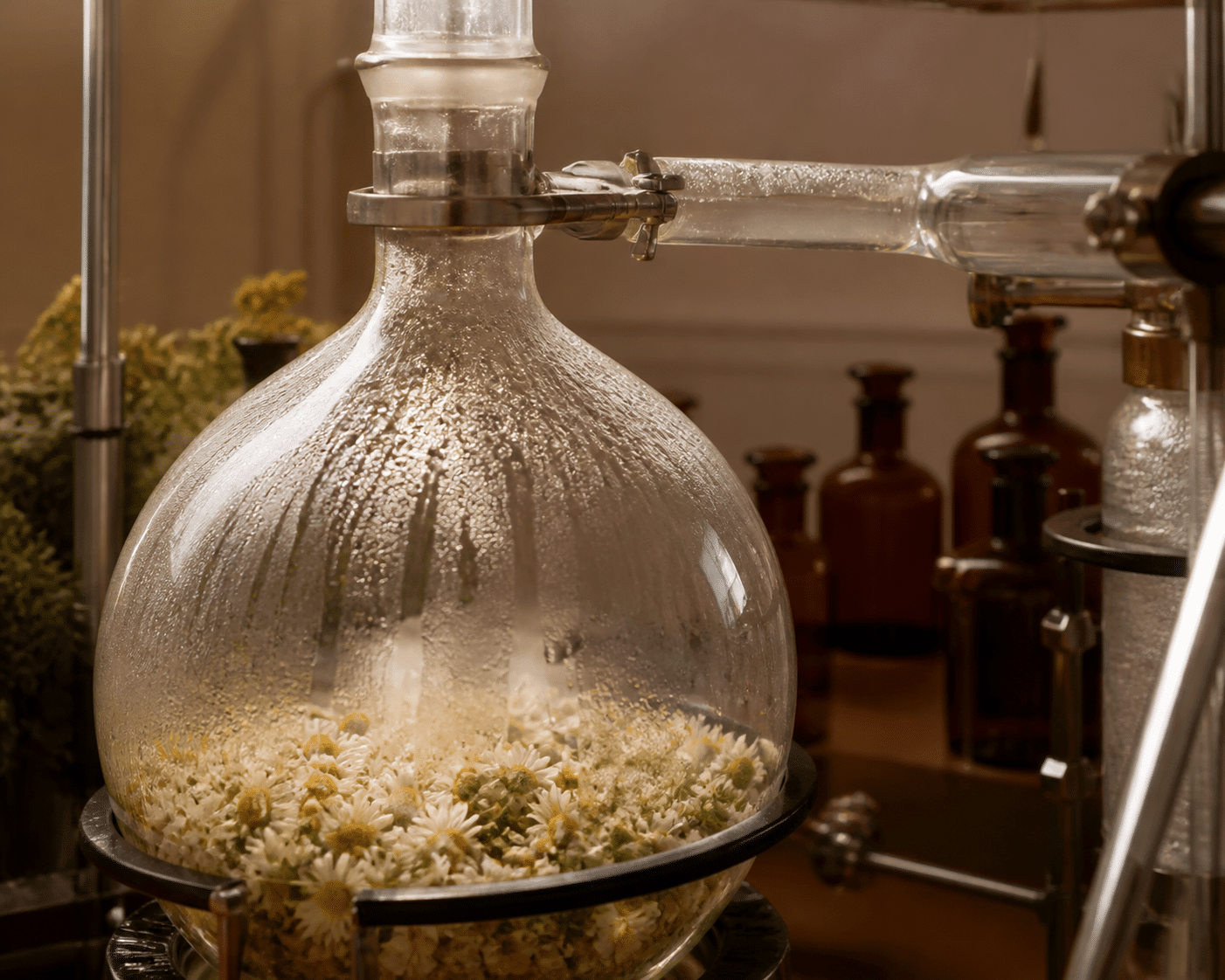
A true hydrosol comes from steam. Fresh or dried flowers sit in a still, and hot steam passes through them. The steam picks up tiny plant compounds, then cools back into liquid. You end up with two layers: a small amount of essential oil on top and a lot of scented water below. That water is the chamomile hydrosol for skin care. According to Formula Botanica’s guide for formulators, it’s the water-based condensate recovered during distillation.
Here’s the process in plain steps:
- Step 1: Flowers go into the still.
- Step 2: Steam rises through the plant material.
- Step 3: The steam carries water-friendly compounds with it.
- Step 4: A cooling coil turns the steam back into liquid.
- Step 5: Oil and water separate, and the water gets collected.
Simple, right? But the details (time, pressure, flower quality) change the final liquid a lot.
German vs. Roman: Not the Same Plant
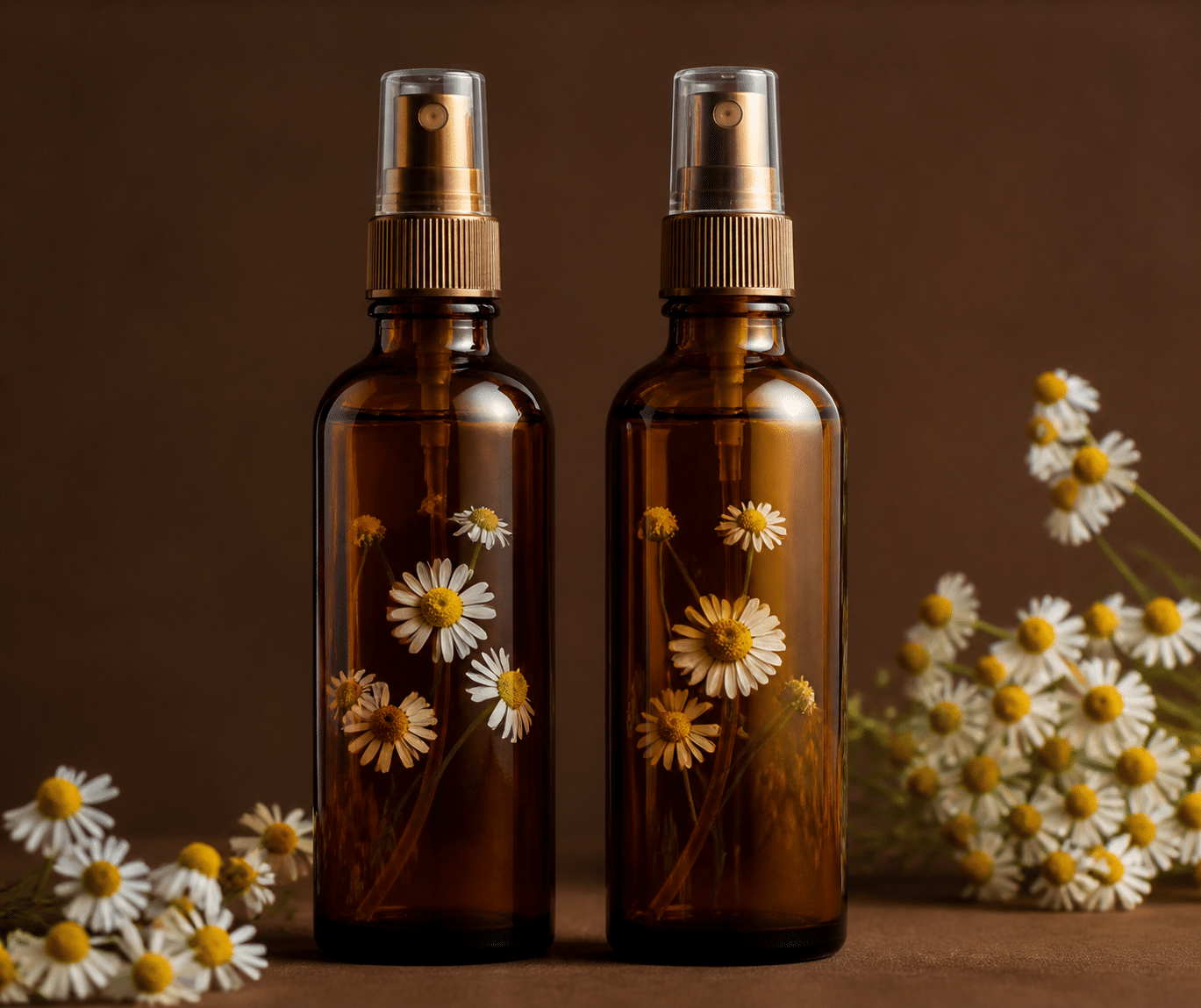
Both are called chamomile. They aren’t twins. German chamomile is Matricaria recutita, and Roman chamomile is Chamaemelum nobile. Their chemistry is different, so a 2026 comparative review notes that Roman chamomile oil isn’t dominated by bisabolol-type compounds, and it holds only trace chamazulene. A 2025 study of Roman chamomile hydrolate found trans-pinocarveol and pinocarvone as top compounds.
One catch. Chamazulene doesn’t love water. So even German chamomile water for face care may carry little of it. Don’t promise a blue-tinted miracle.
| Feature | German chamomile water | Roman chamomile water |
|---|---|---|
| Botanical | Matricaria recutita | Chamaemelum nobile |
| Typical INCI | Chamomilla recutita flower water | Anthemis nobilis flower water |
| Known markers | Bisabolol, bisabolol oxides, some chamazulene | Pinocarveol, pinocarvone, esters |
| Common story | Calming, anti-irritation positioning | Soft, gentle, sensitive-skin positioning |
| Watch for | Chamazulene often low in hydrosol | Profile shifts with extraction method |
Hydrosol vs. Oil Mixed Into Water
This is where buyers get burned. Dropping essential oil into water isn’t a hydrosol. It’s a mix, and it separates, smells off, and can irritate skin. A real hydrosol is single-botanical, distilled, and fully disclosed.
Adulteration happens, too. One third-party hydrosol screen flagged a Roman chamomile sample with sorbic acid and signs of synthetic additions. That’s the kind of thing that wrecks a label claim.
So ask for the Latin name, the process, and a batch GC-MS report. Aroma Monk follows that same lab-tested, traceable approach with its botanical waters. Next, we’ll look at what the research says these waters can actually do.
2. The Science-Backed Benefits of Chamomile Water for Face and Skin Health
Here’s the honest starting point. Most of the strong research on chamomile uses extracts, not hydrosols. Extracts pack in more plant material. A distilled water carries far less of it. So let’s separate what we know from what we hope.
Calming Redness and Irritation
This is chamomile’s best-known talent. A 2026 review of chamomile flower extracts reports lower levels of inflammation signals like TNF-α, IL-1β and IL-6, mostly thanks to flavonoids such as apigenin and luteolin. Another mechanistic review saw chamomile extract cut IL-6 in skin cell tests, and the cells tolerated it well.
That’s why chamomile hydrosol for skin gets linked to redness, rosacea-prone skin and eczema-type irritation. But I’d be careful here. A hydrosol isn’t an extract. Apigenin may barely show up in the distilled water, so “helps soothe visibly irritated skin” is a safer line than “treats eczema.”
Here’s a quick look at the compounds people talk about:
- α-Bisabolol: a soothing, anti-inflammatory marker, mostly tied to German chamomile
- Apigenin: a flavonoid linked to calming inflammation signals (stronger in extracts)
- Luteolin: another flavonoid that helps with oxidative and inflammatory stress
- Chamazulene: a calming compound, though it’s often low in hydrosols
Fighting Free Radicals
Free radicals come from sun, pollution and plain old daily life. They stress skin and can speed up visible aging. Chamomile’s polyphenols help mop them up. A 2021 study of six commercial chamomile products found that the ones richest in apigenin, luteolin and phenolic acids did best at calming reactive oxygen species.
For sun exposure, a 2024 review lists chamomile extract as a possible helper for UV-related skin stress. Helper is the word. It’s not a sunscreen. Never position it as one.
Fact Box: A Surprising Number
In a 2019 comparison of chamomile samples, the best one scored about 6.51 mmol TE/g in antioxidant testing. Sounds huge, right? Pure rutin scored 20.22. And that’s dried extract, not facial water. Don’t copy those numbers onto a hydrosol label.
Gentle Hydration for Sensitive Skin
Now the easy win. Chamomile floral water for sensitive skin works as a light, water-based step that doesn’t weigh anything down. A 2025 meta-analysis found plant-based topical products improved skin hydration and redness overall (though not TEWL). That’s plant products as a group, not chamomile alone.
Still, the fit is natural for reactive skin, or skin that feels tight after a peel or other procedure. Think calming mist, soft toner, or the water phase of a gentle cream.
The takeaway for formulators? Chamomile water offers a soothing, botanical story with real science behind its compounds. But you’ll want batch data and your own testing to back any claim. Next, we’ll look at where it fits in actual products.
3. Commercial Skincare Applications: Integrating Chamomile Hydrosol into Your Product Line
So you’ve got a chamomile water you trust. Now what do you actually put it in? Good news: it’s pretty flexible.
Toners and Mists for Sensitive or Acne-Prone Skin
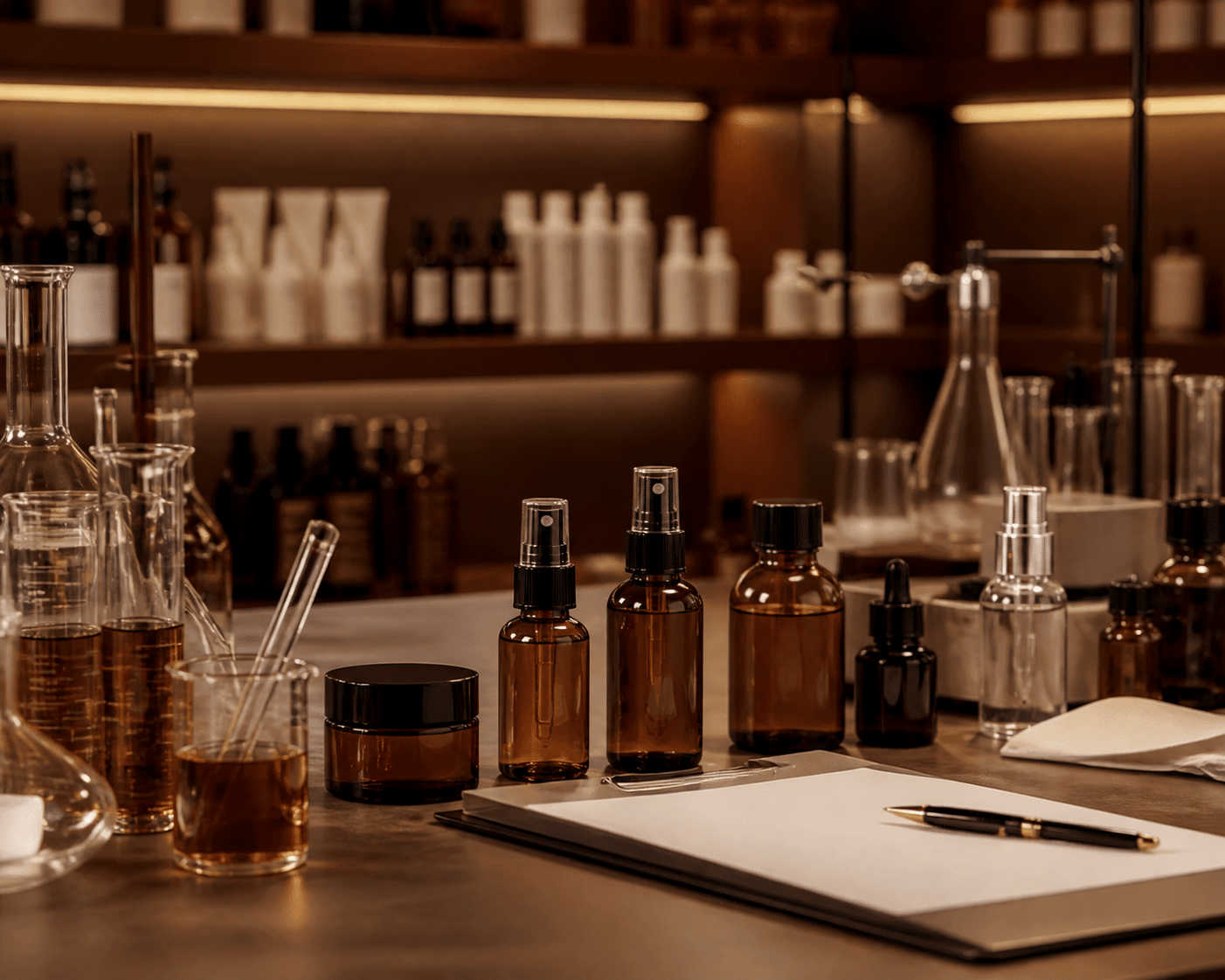
This is the easiest home for chamomile water for face care. A toner or mist is mostly water anyway, so the hydrosol can be the star instead of a background player.
A supplier-published usage guide from Teravella puts typical hydrosol levels at 20 to 60% for toners and 30 to 80% for mists. (Those are starting points, not rules. Test your own.)
The market already shows how brands do it:
- Biome Be.UNITY Chamomile Hydrosol Face Mist (100 mL): a pure, steam-distilled mist with no alcohol, glycerin or synthetic fragrance. The brand says you can use it as a makeup remover, cleanser and toner.
- LOLI Beauty Chamomile Lavender Tonic: an indie toner that blends chamomile, lavender and witch-hazel waters with glycerin and a few light oils.
And for acne-prone skin? There’s a Korean patent, KR20170092281A, built around 65 to 70% chamomile floral water for an acne-care concept. It dates to 2016, and a patent isn’t proof it works. But it shows the idea isn’t new.
A quick word on pH. Hydrosols usually sit on the acidic side, which fits skin well. Just measure the finished product, because every other ingredient shifts it.
Gentle Cleansers and Micellar Waters
Here’s a simple swap. Take part of the plain water in a cleanser or micellar water and replace it with chamomile hydrosol. Suddenly your label has a soothing botanical story without a new product line.
Go easy, though. The same guide suggests about 10 to 40% in cleansers. Surfactants and fragrance can change how a hydrosol smells and feels, so start low and adjust. A cleansing lotion patent, CN105726360B, even uses a blend of witch-hazel, chamomile and bitter-orange-blossom hydrosols.
Not sure where to begin? This table gives you a rough map.
| Product type | Starting hydrosol level | Why chamomile fits |
|---|---|---|
| Facial toner | 20 to 60% | Light, calming base |
| Facial mist | 30 to 80% | Simple, minimalist story |
| Cleanser | 10 to 40% | Adds soothing value to rinse-off use |
| Cream or lotion | 5 to 40% of water phase | Gentle water-phase upgrade |
| Micellar water | Test from the low end | Replaces part of plain water |
Baby Care, Post-Sun and Aftershave Lines
Some categories live and die by “gentle.” Think baby wipes and washes, post-sun mists, and men’s aftershave splashes where razor burn is the whole problem. Calm is the entire pitch here.
The chamomile fit is easy to see. Reviews link its compounds to soothing and antioxidant activity. But keep your wording careful. “Helps soothe visibly irritated skin” is safe. “Repairs sunburn” or “treats diaper rash” is not, and a hydrosol is never a sunscreen.
Baby lines also need extra caution. Check your target market’s rules, run safety testing, and choose a preservation system that suits young skin.
Whichever format you pick, preservation and stability decide whether it survives on a shelf. That’s where we head next.
Get a quote from Aroma Monk.
Essential Oil Supplier – Bulk pricing • Samples • Fast response
4. Formulation & Stability: Key Technical Considerations for Product Developers
You’ve picked a chamomile water you trust. Now comes the part that keeps formulators up at night: making it behave in the bottle for a year or more.
Start With pH
Chamomile hydrosol usually sits around pH 4 to 5. That’s a happy match for skin, which likes a slightly acidic surface (the acid mantle). It also gets along with most gentle water-phase ingredients.
But don’t stop at the supplier’s number. Every other ingredient nudges the pH, so measure the finished product. Then check it again during stability testing.
Preservation Is Not Optional
Here’s where people slip. A low pH feels protective. It isn’t, really. A hydrosol formulating guide from WF Academy points out that an acidic pH may slow some bacteria but doesn’t reliably stop yeast and mold. Hydrosols are mostly water with a little plant matter dissolved in them, which makes a cozy home for microbes.
Common options formulators reach for:
- Phenoxyethanol with ethylhexylglycerin, often around 0.8 to 1.0% (follow your region’s limits)
- Benzyl alcohol with dehydroacetic acid, popular for naturally positioned formulas
- Organic acids like benzoic or sorbic acid, which work better at lower pH
Then test the real thing. Teravella’s guide to hydrosols in the water phase mentions preservative efficacy (challenge) testing, commonly done to ISO 11930. A pre-preserved hydrosol lowers your starting germ load, but it doesn’t replace that test. Packaging matters too. Pumps and sprays beat wide-mouth jars every time.
Pairings Worth Testing
I’ll be upfront: solid, chamomile-specific synergy data is thin. One 2025 chamomile face serum study paired chamomile compounds like bisabolol and apigenin and reported calming and protective effects. But it’s a formulation study, not clinical proof.
So treat the pairings below as smart starting ideas. Compare chamomile alone against the blend before you claim anything.
| Pairing | Possible combined benefit | Formulator note |
|---|---|---|
| Chamomile + lavender water | Calming, softer floral scent | Easy swap in toners and mists |
| Chamomile + hyaluronic acid | Soothing plus water-binding hydration | Watch texture and stickiness |
| Chamomile + niacinamide | Soothing plus barrier support | Check finished pH |
| Chamomile + panthenol or allantoin | Extra comfort for reactive skin | Plausible, needs testing |
| Chamomile + vitamin E | Added antioxidant support | Better suited to emulsions |
Once your formula holds up, the next question is where to buy a hydrosol that’s worth putting in it.
5. Sourcing High-Purity Chamomile Water: A Guide for Procurement & Quality Assurance
You found the perfect formula. Then the first bulk drum shows up smelling like a candle shop, and the label says “chamomile water.” Ouch.
That’s why vetting a bulk chamomile water supplier matters as much as the recipe itself. Let’s walk through what to check before you sign anything.
Start With Traceability and Process
Ask where the flowers grew. Ask who harvested them, and when. A good supplier can tell you the farm, the botanical (German or Roman), the plant part, and the distillation method. If they dodge, that’s your answer.
Batch consistency is the quiet one. Flowers change from season to season, so a reliable supplier tracks each lot from field to drum. You want batch records that show origin, distillation date and storage, not just a nice brochure.
Here’s a quick checklist you can copy into your supplier file:
| Check | What to ask for | Red flag |
|---|---|---|
| Botanical identity | Latin name and plant part on the INCI | Just “chamomile water” |
| Farm to facility traceability | Origin, harvest date, lot number | No batch records |
| Distillation method | Steam or hydro-distillation, named clearly | “Natural process” with no detail |
| Batch consistency | Several past COAs to compare | Only one perfect report |
| Preservative disclosure | Full list and amounts | Unlisted additives |
| Certifications | Current certificates (ISO 22716 GMP, organic if claimed) | Logos with no certificate number |
| Sample policy | Pre-shipment sample and retained reference | No samples offered |
Read the Lab Reports, Don’t Just Collect Them

A GC/MS report is a fingerprint of the volatile compounds in the water. It helps confirm the right species and spot things that shouldn’t be there. But a chromatogram with no explanation is just a squiggly line.
Ask for a report tied to your exact lot, with a quantitative table. Here’s what a summary can look like (illustrative layout only, not real batch data):
| Field | Sample entry | What you’re checking |
|---|---|---|
| Lot number | Matches your drum label | Report belongs to your batch |
| Botanical | Matricaria recutita flower water | Matches the INCI |
| Marker compounds | Bisabolol oxides: detected | Fits German chamomile |
| Chamazulene | Trace or not detected | Normal in water, not a fraud sign |
| Unidentified peaks | None flagged | No added fragrance or solvents |
| Microbiology | Within limits | GC/MS can’t show this |
GC/MS won’t prove microbial safety, so pair it with a full COA, SDS and technical data sheet. CBI’s guide to technical dossiers is a handy reference for what those documents usually hold.
Why Vertical Integration Helps
Here’s the deal. Every middleman is one more place for dilution, relabeling or lost paperwork. A supplier who manages the whole chain, from sourcing to distillation to testing to export, can answer questions fast because the answers live in one house.
That usually means steadier pricing, better bulk availability and fewer surprises when you scale up. Aroma Monk works this way, with lab-tested, traceable products and direct delivery to B2B buyers. Next, we’ll wrap up with how to turn all this into your next step.
7. Elevate Your Formulations with the Power of Pure Chamomile Water
So, what should you take away from all this? Let’s keep it short.
Chamomile water is a flexible, in-demand ingredient. It fits toners, mists, cleansers and creams. The science on chamomile compounds is promising, though most of it comes from extracts, not hydrosols. So keep your claims honest. “Helps soothe visibly irritated skin” beats “treats eczema” every single time.
Here’s the part I’d tattoo on a lab wall: your finished product is only as good as the water going into it. A true single-botanical hydrosol, a clear Latin name, careful preservation and a batch-specific GC/MS report all come before the pretty label. Skip those and the best formula in the world can fall flat. Or worse, fail a challenge test.
The good news? You don’t need to guess. You just need a partner who shows their work.
Ready to test pure chamomile water in your next prototype?
Aroma Monk offers lab-tested, traceable botanical products with direct delivery for B2B buyers. Request a formulation sample and the technical package, including the TDS, batch-specific COA, SDS, origin details, preservation information and suggested use level. Tell us your format (toner, mist, serum, cream or mask) and we’ll help you pick the right material to evaluate.
Shoppers want calm, plant-based skincare, and they can tell when a brand cuts corners. Start with a sample, read the report, and build from there.
Get a quote from Aroma Monk.
Essential Oil Supplier – Bulk pricing • Samples • Fast response