
Unlocking Nature’s Secret to Serenity: An Introduction to Chamomile Water
Ever had one of those days where your skin feels mad at you, your brain won’t shut up, and sleep feels miles away? Yeah. Same.
That’s part of why chamomile water is getting so much love lately. Sensitive skin is way more common than a lot of people think, with reports saying it now affects up to 71% of adults worldwide, and dermatitis cases have also climbed over the years according to Galderma’s sensitive skin research. That’s a lot of itchy, flushed, tired people looking for something gentle.
Chamomile has been used for ages in European and Mediterranean folk care as a calming plant for skin and nerves. And chamomile water, also called chamomile hydrosol or chamomile floral water, brings that soft, soothing feel in a milder form. It’s a natural skin soother, a bedtime mist, and a simple DIY helper all in one.
In this article, we’ll keep it simple and practical. We’ll look at the benefits of chamomile for skin, how people use it for rest, how to make chamomile water at home, and what to look for if you want to buy a quality product. We’ll also touch on chamomile for skin, using chamomile for sleep, DIY chamomile toner, and even a bit about chamomile benefits for hair.
If you’re building skincare, wellness, or fragrance products, this matters even more. A clean, well-sourced chamomile base can fit right into blends, mists, and gentle beauty formulas. And if you’re looking for trusted raw ingredients like rose water and pure essential oils, brands like Aroma Monk often work with B2B buyers who want lab-tested, natural materials they can count on.
What Exactly is Chamomile Water? (And What It’s Not)
Picture this. You’ve had a long day, your skin is prickly, and even your pillow feels too loud. That’s usually the moment people reach for something soft, simple, and calming.
Chamomile water fits that mood really well.
It’s a watery plant blend made from chamomile flowers. More specifically, it holds the water-soluble parts of the plant, which is why it feels light and gentle on skin. It’s often called chamomile hydrosol or chamomile floral water, and people use it as a face mist, toner, or calming spray.
But here’s where folks get mixed up. Chamomile water is not the same as cooled chamomile tea, even though both start with flowers and water. A tea is just a simple infusion. You steep the flowers, cool the liquid, and use it. A true hydrosol is made during steam distillation. It’s a co-product of making essential oil, so it carries tiny amounts of the plant’s water-loving aroma compounds in a much cleaner, more stable form.
And it’s not the same as chamomile essential oil either. Not even close. Essential oil is highly concentrated and oil-based, so it needs extra care and usually must be diluted before skin use. Chamomile water is much milder, which is why so many people like it for chamomile for skin, especially when their face feels reactive or tired.
That gentler feel matters. Sensitive skin has become a big deal, with reports showing it now affects up to 71% of adults worldwide according to Galderma’s sensitive skin research. So yeah, a soft option like this makes sense.
Think of it like this:
| Type | What it is | Feel on skin |
| Chamomile tea | Flowers steeped in hot water, then cooled | Simple, mild, short shelf life |
| Chamomile hydrosol | Steam-distilled floral water from chamomile | Light, aromatic, more refined |
| Chamomile essential oil | Highly concentrated plant oil | Very strong, needs careful dilution |
If you’re making a DIY chamomile toner, looking for a natural skin soother, or just trying to understand how to make chamomile water for home use, this difference matters a lot. The right form gives you the calm. The wrong one can be way too much.
And if you’re buying ingredients for a skincare line or wellness product, pure chamomile hydrosol can be a smart base to build from. It plays nicely with mists, facial sprays, and gentle blends. Plus, if you already use rose water or essential oils in your formulas, chamomile water can fit right in without feeling heavy.
One more thing. Chamomile isn’t just trendy now. It’s been used for ages in European and Mediterranean folk care for soothing skin and nerves. Old-school? Sure. But it still works for a lot of people today.
The Science-Backed Soothing Power of Chamomile
You know that feeling when your face looks one shade too red, and your brain feels just as frazzled? Chamomile has been soothing that kind of day for ages. And now we know a bit more about why it works.
Chamomile water carries some of the plant’s gentle compounds in a light form. The big names here are apigenin, chamazulene, and bisabolol. Apigenin is a flavonoid that’s linked to calm feelings and a softer mood. Chamazulene and bisabolol are known for helping calm skin that looks hot, angry, or just plain irritated. Think redness. Itching. That tight, cranky feeling after too much sun or too many harsh products.
Here’s the deal: chamomile is loved as a natural skin soother because it seems to help with inflammation. In recent reviews, chamomile extracts showed anti-inflammatory action and antioxidant activity, and one clinical trial found chamomile cream worked better than 0.5% hydrocortisone for mild to moderate eczema research on chamomile’s skin and calming effects.
That matters for chamomile for skin, especially if you deal with sensitivity, rosacea-like flushing, or dry patches that get upset fast. A gentle chamomile hydrosol or chamomile floral water can feel easier than stronger toners because it’s light, mildly acidic, and closer to the skin’s own comfort zone.
And there’s more. Chamomile also brings antioxidant power. That means it may help the skin deal with everyday stress from pollution, sun, and just plain life. Not magic. But helpful. Pretty helpful, actually.
| Compound | What it’s known for | Why people care |
| Apigenin | Calming and anti-inflammatory support | May help skin feel less reactive and may support relaxation |
| Chamazulene | Soothing, blue-toned plant compound | Often linked with redness relief |
| Bisabolol | Skin comfort and calming support | Common in gentle skincare for irritated skin |
This is also why using chamomile for sleep has stayed popular for so long. The scent alone can feel like a little sigh at the end of the day. And if you’re making a DIY chamomile toner or a bedtime mist, that soft, herbal smell is part of the charm.
Funny enough, the calming part isn’t just folk wisdom. It’s one reason many people keep reaching for chamomile instead of harsher plant extracts. Old-school? Yes. But the science keeps catching up.
If you’re sourcing a chamomile base for products, look for pure, well-tested ingredients that keep that gentle profile intact. For B2B buyers, that usually means a supplier with traceable materials, clean testing, and steady bulk supply. That’s where brands like Aroma Monk fit nicely for natural product makers who want reliable raw materials for skincare, wellness, and fragrance blends.
Top 5 Skin Benefits of Using Chamomile Water
Skin can get cranky fast. One minute you’re fine, and the next your face is red, tight, and acting like you forgot its birthday. That’s a big reason chamomile water keeps showing up in gentle skincare routines.
Sensitive skin is not rare, either. It now affects up to 71% of adults worldwide, and dermatitis cases have also climbed in recent years according to Galderma’s sensitive skin research. So if you’ve been hunting for a softer option, you’re not alone.
1. Calms irritation and redness
This is the one most people want first. Chamomile water, also called chamomile hydrosol or chamomile floral water, can feel like a cool sip of water for angry skin. It’s often used as a natural skin soother for skin that looks flushed, feels itchy, or gets upset from harsh products.
That makes it a nice pick for chamomile for skin care, especially for acne-prone or rosacea-prone faces that don’t like heavy products. A few sprays on clean skin can feel calming pretty quickly.
2. Hydrates and softens
Chamomile water is light, but it still helps skin feel fresher. Because it’s alcohol-free and water-based, it won’t strip your face the way some toners do. Instead, it can leave skin feeling soft, comfy, and a little more balanced.
Think of it as a gentle reset. Not greasy. Not heavy. Just a simple way to add a bit of moisture before serum or cream.
3. Helps with dark circles and puffiness
You know those mornings when your eyes look like you barely slept, even if you did? Chamomile water can be used as a cool compress on the under-eye area to help calm puffiness and make tired skin feel less puffy.
Its soothing nature may help ease the look of under-eye irritation, too. A clean cotton pad soaked in chilled chamomile water is easy, cheap, and kind of nice. Weirdly comforting, honestly.
4. Brings antioxidant support
Chamomile has plant compounds that help fight everyday stress on skin. Pollution, sunlight, and just daily life can all leave skin feeling worn out. Chamomile water won’t fix everything, but it may help your skin deal with that stress a little better.
That’s one reason the benefits of chamomile keep getting attention in gentle beauty care. It has a calm, old-school feel, but there’s real science behind the plant’s soothing side.
5. Balances oily skin without drying it out
Oily skin can still be sensitive. Actually, wait, it often is. And when breakout-prone skin gets treated with harsh products, it can swing even more out of whack.
Chamomile water may help soothe the inflammation that comes with breakouts without stripping away your skin’s natural oils. So it works well in a DIY chamomile toner or as part of a simple day spray. If your skin hates alcohol-based toners, this is a gentler path.
| Skin benefit | How chamomile water may help |
| Redness relief | Helps calm the look of irritation |
| Hydration | Adds light moisture without heaviness |
| Puffy eyes | Works as a cool compress |
| Antioxidant care | Helps support skin against daily stress |
| Oily skin balance | Soothes without over-drying |
And if you’re wondering how to make chamomile water at home, it can be as simple as steeping dried flowers, chilling the liquid, and using it fresh. Just keep it clean and use it fast.
For brands and makers, this gentle base is also handy in mists, toners, and spa products. If you’re sourcing plant waters or building a calm skincare line, a trusted supplier like Aroma Monk can help with lab-tested natural ingredients that fit wellness and beauty formulas.
A quick safety note
Chamomile is gentle for a lot of people, but not for everyone. If you’re allergic to ragweed, daisies, marigolds, or other plants in the Asteraceae family, patch testing is a must.
That said, for many people, chamomile water is one of those simple things that just works. Soft skin. Softer mood. Nice little win.## Beyond the Skin: Promoting Relaxation and Restful Sleep
You know that heavy, wired feeling at 10:47 p.m. when your body is tired but your brain is still writing emails? Yeah, chamomile has been the bedtime helper for that kind of night for ages.
And it’s not just a cozy old habit. Chamomile contains apigenin, a plant compound that can bind to benzodiazepine receptors in the brain, which may help create a mild calming effect. That’s one reason using chamomile for sleep shows up again and again in bedtime routines. A 2017 study in Phytomedicine also found chamomile extract helped improve sleep quality in older adults study on chamomile and sleep quality.
Here’s the deal. You don’t have to turn it into a big ritual. Keep it simple:
- Pillow mist: Spray a little chamomile water on your pillow before bed. Light. Soft. Not overpowering.
- Room spray: Mist it in the air after you dim the lights. It can help set a calm mood.
- Warm bath: Add a small splash to bath water for a gentle wind-down.
- Bedtime cup: Make a warm chamomile infusion with dried flowers and sip it like a tiny pause button.
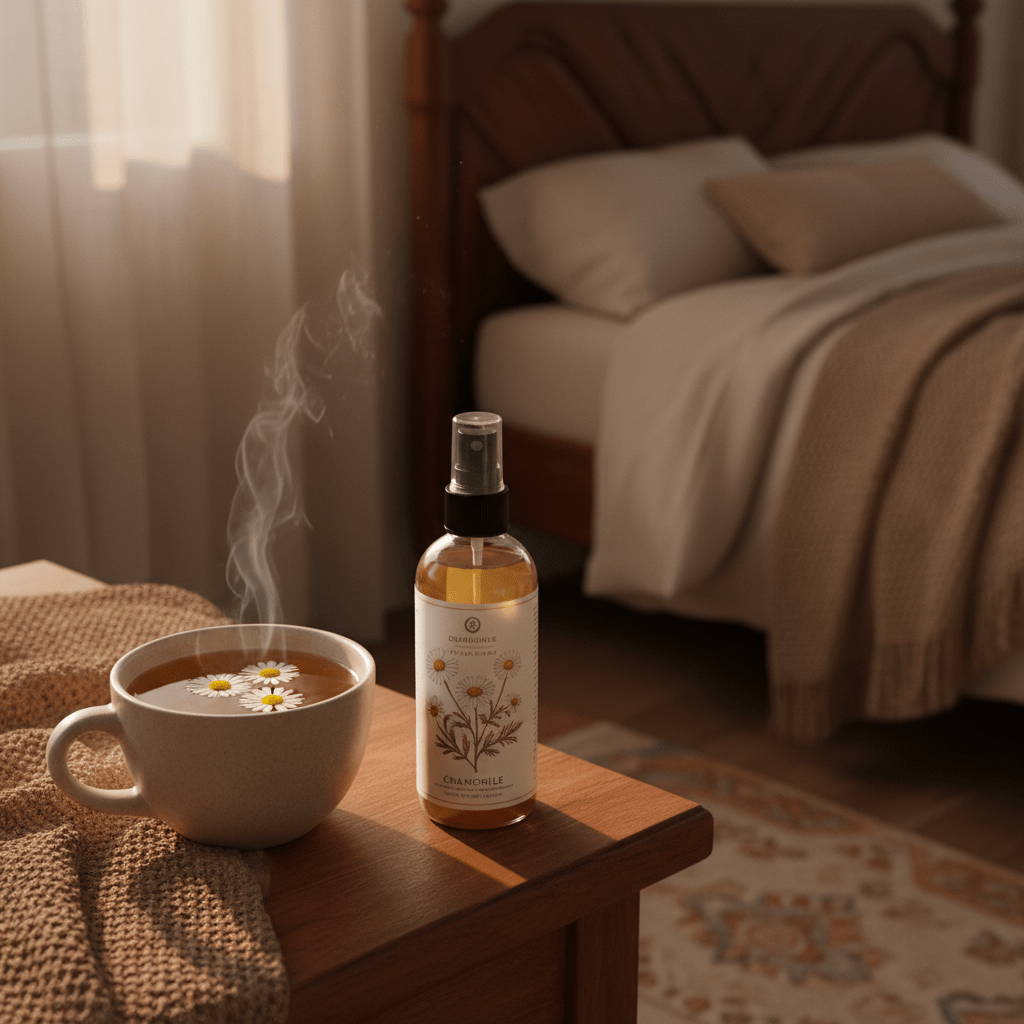
That last one is probably the easiest if you want a caffeine-free habit. Just steep dried chamomile flowers in hot water, cover the cup, and let it sit for 10 to 15 minutes. Don’t boil the flowers hard. That can flatten the aroma and mess with the delicate plant bits. And nobody wants sad chamomile.
If you like a bedtime routine, this fits right in. Dim lights, phone away, cup in hand. Simple stuff. But it works.
| Bedtime use | What it can feel like |
| Pillow mist | Softer, calmer sleep space |
| Room spray | A more peaceful bedroom mood |
| Warm bath | Full-body wind-down |
| Chamomile tea | Gentle, caffeine-free evening ritual |
For product makers, this is where chamomile water gets extra useful. It can go into sleep sprays, spa blends, and gentle nighttime products without feeling heavy. If you’re building a wellness line, pairing chamomile water with other soft ingredients like rose water or lavender can create a calm, crowd-pleasing formula. And if you need lab-tested botanicals in bulk, Aroma Monk supplies natural ingredients for cosmetics, wellness, and fragrance brands that want clean, traceable materials.
And one last thing. Chamomile has been used in European and Mediterranean folk care for calming nerves and easing discomfort for centuries. So while a pillow mist might feel modern, the plant behind it has been doing this job for a very long time.
Get a quote from Aroma Monk.
Essential Oil Supplier – Bulk pricing • Samples • Fast response
How to Make and Use Chamomile Water at Home (Simple DIY Guide)
Ever made tea, then thought, “Wait… could I use this on my skin?” You’re not the only one. That little idea is the start of a pretty handy chamomile water DIY.
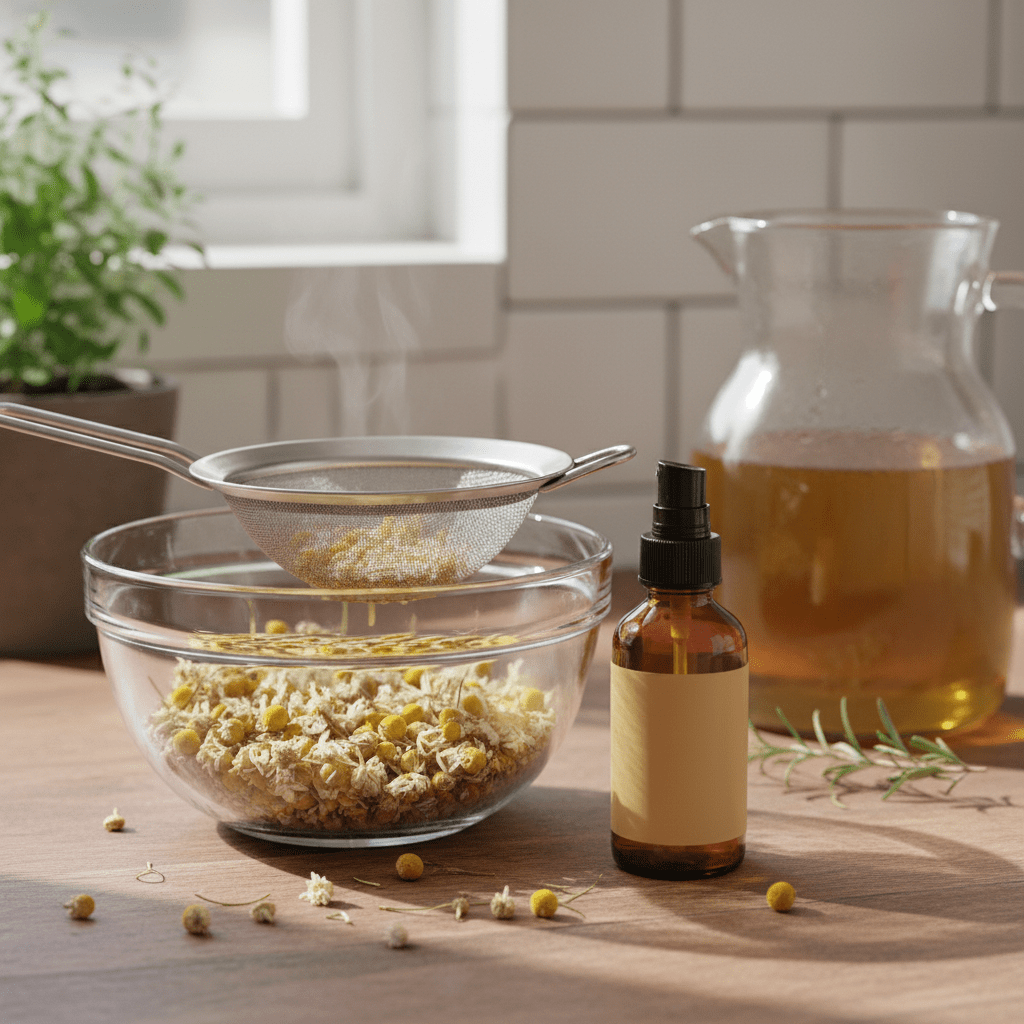
For a fresh batch you can use right away, the tea method is the easiest. It’s quick, low-cost, and works well if you want a gentle DIY chamomile toner or rinse. A simple skin infusion usually uses 1 to 2 tablespoons of dried chamomile flowers per 1 cup of water. Pour hot water just off the boil over the flowers, cover the cup, and let it steep for 10 to 15 minutes. Then strain it well and let it cool fully.
A few small things matter here. Don’t boil the flowers hard. That can flatten the scent and dull the plant bits you actually want. And use clean, pesticide-free dried chamomile if you can. Messy jar? Weird smell? Toss it. No one needs that energy.
Quick DIY steps
- Put 1 to 2 tablespoons of dried chamomile flowers in a clean cup or bowl.
- Pour in 1 cup of hot water, just off the boil.
- Cover it with a lid or small plate.
- Steep for 10 to 15 minutes.
- Strain out the flowers.
- Cool it fully before use.
- Store it in the fridge right away.
How to use it
| Use | How it helps |
| Facial toner | Gently refreshes skin and may calm redness |
| Hair rinse | Can add a soft shine and soothe the scalp |
| Compress | Feels nice on irritated or puffy skin |
| Face mask base | Works with oat flour, honey, aloe, or kaolin clay |
For a facial toner, pour the cooled liquid into a spray bottle and mist it after cleansing. If your skin gets cranky fast, this can feel like a little reset. For a hair rinse, pour it over clean hair after shampooing and let it sit for a minute or two before rinsing lightly. People often like this for chamomile benefits for hair because it can help the scalp feel calmer and the hair look a bit shinier.
You can also soak a cotton pad in chilled chamomile water and press it on tired, red, or itchy spots. Nice for the cheeks. Nice for under the eyes too, if they look puffy after a bad night.
And for masks, chamomile water is a simple liquid base. Mix it with raw honey and oat flour for a soft mask, or blend it with aloe vera gel and kaolin clay if your skin feels oily but sensitive. Pretty simple. Pretty useful.
Storage and shelf life
Keep your DIY chamomile water in the refrigerator and use it within 2 to 3 days. No skipping this part. Because it’s a homemade water blend, it doesn’t last long. If it starts to smell off, changes color, or looks cloudy in a new way, make a fresh batch.
If you want a longer-lasting option, a true chamomile hydrosol or chamomile floral water from a trusted supplier is usually the better pick. That’s a smarter move for product makers too, especially if you’re building toners, mists, or spa items and need steadier quality. Aroma Monk can be a solid place to look if you need clean natural ingredients in bulk, along with rose water and essential oils for broader skincare or wellness formulas.
And one last note. Chamomile is gentle for a lot of people, but if you’re allergic to ragweed, daisies, marigolds, or other Asteraceae plants, patch test first. No shortcuts there.
Buying Guide: How to Choose the Best Quality Chamomile Water
Ever grab a pretty bottle and think, “This should be gentle, right?” Sometimes yes. Sometimes… not so much.
If you want the best chamomile water, start with the label. Look for 100% pure hydrosol or floral water. That tells you you’re getting a true plant water, not a watered-down mix with extra stuff tossed in for show. For chamomile for skin, that clean label matters a lot.
Here’s what to skip:
- Alcohol
- Synthetic fragrances
- Polysorbates
- Unnecessary preservatives
Why avoid those? Because they can turn a calm, soft product into something your skin has to fight with. And if your face is already touchy, that’s the last thing you want.
A good bottle should also be in dark glass. Light can wear down plant waters over time, so dark glass helps protect the quality. Think of it like sunglasses for your chamomile water. Simple. Smart.
Also, check for organic certifications, like USDA Organic, if that matters to you. It won’t solve everything, but it does give you another clue about how the chamomile was grown and handled. For brands and makers, that can be a big deal when you’re building a clean skincare line or a gentle DIY chamomile toner product.
| What to look for | Why it helps |
| 100% pure hydrosol / floral water | Means a truer chamomile base |
| Dark glass bottle | Helps protect from UV damage |
| Organic certification | Adds another layer of trust |
| Short ingredient list | Usually means fewer extras |
And here’s a tiny but helpful tip. If the scent smells fake, sharp, or perfumey, walk away. Real chamomile hydrosol usually smells soft, herbal, and a little sweet. Not like a candle aisle trying too hard.
For home use, a pure bottle is great for misting, compresses, and bedtime sprays. For product makers, it’s even more useful because a clean chamomile floral water can fit into mists, toners, and spa blends without fighting the rest of your formula. If you also source rose water or essential oils, brands like Aroma Monk can be a solid place to look for lab-tested, bulk ingredients that support skincare, wellness, and fragrance products.
One more thing. If you have ragweed or daisy family allergies, patch test first. Chamomile is gentle for lots of people, but allergies don’t care how soothing the bottle looks.
Embrace the Gentle Power of Chamomile in Your Daily Routine
Chamomile has a funny way of showing up right when we need it most. A rough day. A tense night. Skin that feels touchy for no clear reason. And then this little plant steps in, quiet as can be.
That’s what makes chamomile water such a handy part of a simple routine. It can work as a natural skin soother, a soft DIY chamomile toner, and a calming mist before bed. It’s gentle, easy to use, and it fits nicely into both skincare and sleep habits. Plus, it’s backed by a long history of use in European and Mediterranean care traditions, along with modern research showing just how common sensitive skin has become. One report found that self-reported sensitive skin affects up to 71% of adults worldwide, and dermatitis has kept rising too according to Galderma’s sensitive skin research.
So if your skin gets angry fast, or your mind won’t slow down at night, chamomile water may be worth a try. Start small. A cool face mist. A calming pillow spray. Maybe a fresh batch of chamomile floral water tonight. That’s a pretty easy first step.
And if you’re sourcing ingredients for your own skincare or wellness brand, a clean chamomile hydrosol can be a smart base for mists, toners, and spa products. Brands like Aroma Monk also supply pure, lab-tested botanicals like rose water and essential oils for bulk buyers who want reliable raw materials.
Start with a simple DIY facial toner or a calming pillow spray tonight and experience the serene benefits for yourself.
Get a quote from Aroma Monk.
Essential Oil Supplier – Bulk pricing • Samples • Fast response