
Tired of Irritated, Angry Skin? This Ancient Flower Might Be the Answer
You know that puffy, hot, red feeling that shows up right when you want your skin to behave? Yeah, that one. It can make even the simplest face wash sting a little, and suddenly your mirror feels rude.
A lot of people deal with that. A large review found that 71% of adults say they have sensitive skin, and redness, burning, itching, and tightness are big reasons they look for calming skincare ingredients. So if your skin gets cranky fast, you’re very much not alone.
That’s where chamomile water comes in. It’s a gentle, time-tested soothing spray that people use as a calming skincare ingredient, a natural face mist, and even a chamomile water toner. It can help skin feel more comfy, balanced, and less upset.
And the cool part? This isn’t just a cute old herbal trend. Chamomile has been used for skin care for thousands of years, and modern research keeps pointing to its soothing benefits. In this guide, we’ll look at what chamomile water is, the benefits of chamomile for skin, and how to use chamomile water in your own routine. We’ll also cover DIY chamomile water, safety tips, and what to look for if you want to buy a good bottle.
What Exactly is Chamomile Water (And How Is It Different from Tea?)
Picture this. You’ve got a little bottle in your hand, it smells soft and herbal, and you’re wondering if it’s basically just fancy tea in spray form. Fair question. It’s not tea, though. Not even close.
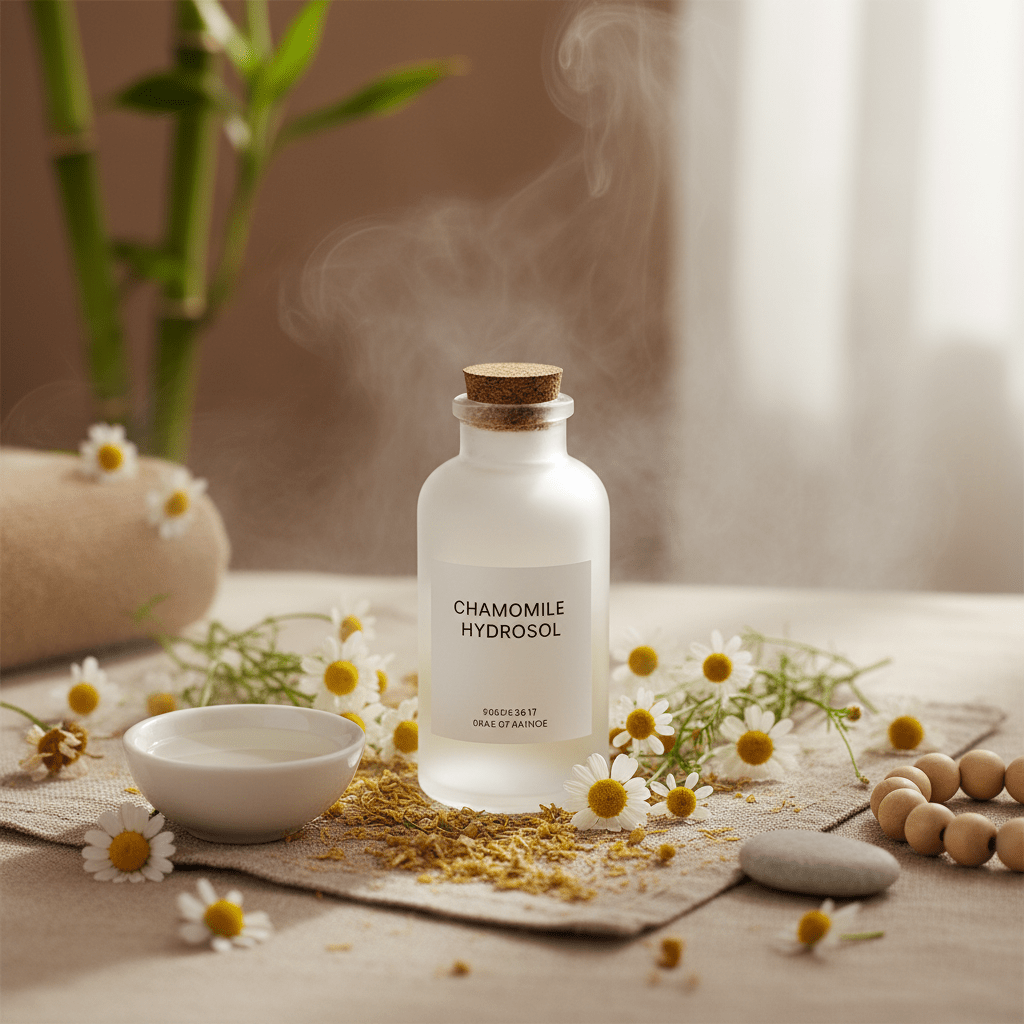
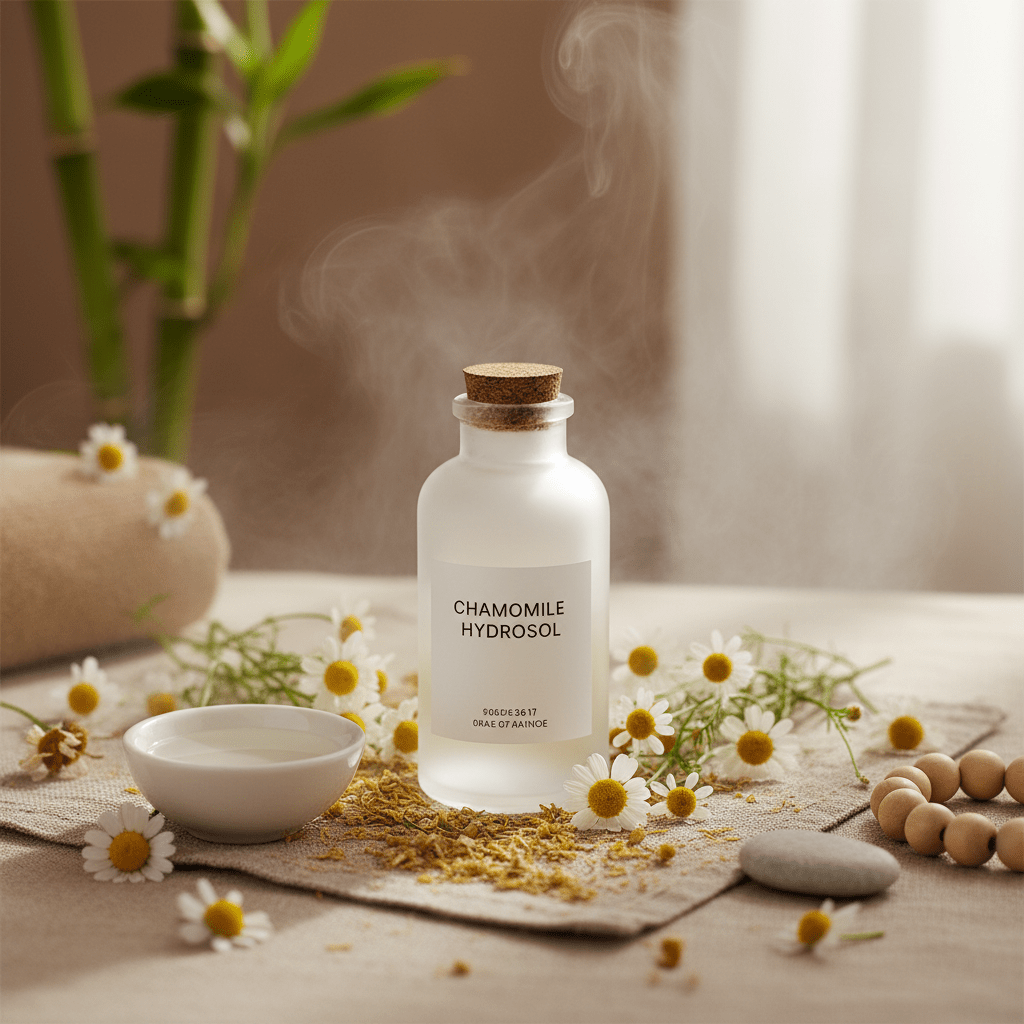
Chamomile water is also called chamomile hydrosol. It’s the aromatic water that’s left over after chamomile flowers are steam distilled to make chamomile essential oil. So you get two parts from one process: the oil on top, and the gentle floral water underneath. That water still carries some of the plant’s natural scent and skin-friendly compounds.
And that’s why people love it as a chamomile water toner or natural face mist. It’s light, clear, and usually has a soft, herb-like smell. Not strong. Not perfume-y. Just calm and clean.
Tea is different. Chamomile tea is made by steeping dried flowers in hot water. Nice for sipping on a sleepy night, sure, but it’s not the same thing as a hydrosol for skin. Tea is an infusion. Chamomile water is a distillate. Big difference.
Then there’s chamomile essential oil. That one is way more concentrated. It’s made for tiny amounts, not for spraying directly on your face like a mist. Chamomile hydrosol is much gentler, so it’s usually safer for direct skin use, especially if your skin gets red or prickly fast.
Here’s the quick breakdown:
| Form | What it is | How strong it is | Common use |
| Chamomile tea | Flowers steeped in hot water | Very mild | Drinking |
| Chamomile water / hydrosol | Water from steam distillation | Light and skin-friendly | Spritzing, toning, soothing skin |
| Chamomile essential oil | Pure plant oil from distillation | Very strong | Aromatherapy, diluted skincare |
Most chamomile water has a clear look and a soft pH that works well on skin. That makes it handy for people who want a calming skincare ingredient without the punch of an essential oil. And if you’ve got skin that flares up after cleanser, weather, or one weird product your friend swore was “gentle,” this kind of thing can feel like a relief.
The history is kind of fun too. Chamomile has been used for skin care for thousands of years, and ancient people treated it like a healing plant long before modern beauty shelves existed. So yes, it’s old. Really old. But it still fits right into today’s routines.
If you want to buy or blend chamomile water for personal care products, look for labels like Chamomilla Recutita Flower Water or Anthemis Nobilis Flower Water. That’s the real INCI name, and it helps you know what you’re getting.
And if you’re sourcing in bulk for skincare or wellness products, Aroma Monk can be a smart place to look for pure floral waters and other natural ingredients. Clean sourcing matters. Especially when your customers want gentle products they can trust.
The Science Behind the Soothing: Active Compounds That Benefit Your Skin
You know that puffy, hot, red feeling that shows up right when your skin gets annoyed? Chamomile water can feel like a small kindness on days like that. And it’s not just about the scent. The plant has a few neat compounds that actually help calm things down.
German chamomile, the kind often used in chamomile hydrosol, contains bisabolol and chamazulene. These two are known for their soothing, anti-inflammatory action. Bisabolol helps calm irritated skin and may support healing, while chamazulene is linked to chamomile’s blue color in some extracts and is known for helping reduce redness and discomfort. So if your face feels hot after cleansing, shaving, or a windy day outside, this is where chamomile water starts to make sense.
And yes, that’s a big deal for people with sensitive skin. A review found that 71% of adults report some degree of sensitive skin, with redness, burning, itching, and tightness driving the search for calming skincare ingredients source. No wonder a gentle natural face mist gets so much love.
Then there’s apigenin. This is a plant antioxidant that helps protect skin from free radical damage and outside stress like pollution and UV exposure. Basically, it acts like a tiny helper that steps in when skin is dealing with daily wear and tear. Not flashy. Just useful. The kind of thing your skin notices, even if you don’t.
Chamomile also has mild antiseptic and healing traits. That’s one reason people like it for chamomile for acne or skin that feels raw and overworked. It won’t act like a harsh acne product, and that’s the point. It may help calm breakout-related redness while being gentler on skin that’s already upset.
Here’s a simple way to think about the main compounds:
| Compound | What it does | Why skin likes it |
| Bisabolol | Helps calm irritation | May reduce redness and support healing |
| Chamazulene | Anti-inflammatory helper | Can soothe stressed, reactive skin |
| Apigenin | Antioxidant support | Helps guard skin from daily stress |
Actually, wait, there’s more to the story. Chamomile has been used for skin care for more than 5,000 years. Ancient Egyptians used it in beauty and ritual care, and Greek and Roman writers praised it for inflammation and skin comfort. Old-school? Yes. Random? Not really.
So if you’re looking for a calming skincare ingredient that fits into a chamomile water toner, a bedtime mist, or even DIY chamomile water, this flower has some real science behind it. And if you’re a brand owner or formulator, Aroma Monk can help you source pure floral waters and natural ingredients for product development, bulk supply, and custom blends. That part matters too, because good skin care starts with good raw materials.
5 Science-Backed Benefits of Using Chamomile Water in Your Skincare
You know that day when your skin feels like it picked a fight with the weather, your cleanser, and maybe your pillowcase too? Yep. We’ve all had one of those. And that’s exactly where chamomile water starts looking less like a cute floral extra and more like a real helper.
Here’s the thing. Sensitive skin is everywhere. A global review found that 71% of adults say they have some level of sensitive skin, and the biggest complaints are redness, burning, itching, and tightness (Global Sensitive Skin Review). So if your face gets cranky fast, you’re in very crowded company.
Chamomile water, also called chamomile hydrosol, fits nicely into that kind of routine. It’s gentle, easy to use, and it brings a lot of the plant’s calm-down energy without feeling heavy or harsh. Let’s look at five ways it can help.
1. It Calms Redness and Irritation
This is probably the biggest reason people reach for chamomile water. The flower has soothing plant compounds like bisabolol, which is linked with calming skin that feels hot, stressed, or flushed. That makes it a nice option for skin that reacts to shaving, dry air, or just one too many active products.
If you deal with rosacea, eczema, or general skin redness, a chamomile water toner can feel like a small reset. Not a cure. Just a softer place for your skin to land. And honestly, that matters.
2. It Gently Hydrates and Tones
After cleansing, skin can feel a little stripped. Not squeaky clean. More like “why does my face feel thirsty?” Chamomile water works well as a light natural face mist or toner because it adds a bit of moisture without that sticky, heavy feel.
Used after washing, it can help your skin feel more balanced before serums or creams go on. Some people like to keep a bottle in the fridge and mist it on in the morning. Cool, simple, done.
3. It Brings Antioxidant Support
Chamomile isn’t just about comfort. It also has plant antioxidants like apigenin and quercetin, which help fight free radicals from pollution, UV exposure, and everyday stress on the skin. Free radicals are those unstable little troublemakers that can leave skin looking tired over time.
So while chamomile water won’t replace sunscreen, it can be a nice extra layer in a calm skincare routine. Think of it as backup support. Quiet, steady, useful.
4. It Can Help Calm Acne-Prone Skin
Chamomile water is not a harsh acne treatment. That’s actually part of its charm. For skin that breaks out and gets angry at the same time, it may help ease the redness around blemishes while feeling kinder than strong drying products.
Some people use chamomile for acne because it has mild anti-inflammatory and soothing traits. It won’t bulldoze breakouts overnight, but it may help skin feel less inflamed and less sore while you’re working through them. And if your skin hates aggressive products, that’s a big win.
5. It May Support Skin Healing After Daily Stress
This one is easy to miss, but it’s useful. Chamomile water is often used on skin after sun exposure, waxing, shaving, or other minor irritation. Why? Because it can help skin feel calmer while it bounces back.
That makes it handy for post-shave care, after-sun misting, or even as a gentle step when your skin barrier feels worn out. Actually, wait, there’s a better way to say it: it’s the kind of thing you reach for when your face needs a soft landing.
Quick Ways to Use Chamomile Water
| Use | How to do it |
| Chamomile water toner | Apply after cleansing with a cotton pad or spray directly |
| Natural face mist | Mist onto clean skin during the day |
| DIY chamomile water | Use as a base for simple skin blends |
| Post-shave spray | Apply lightly to calm the skin |
| After-sun care | Mist on clean skin for a cooling feel |
If you’re shopping for a good bottle, look for the INCI names Chamomilla Recutita Flower Water or Anthemis Nobilis Flower Water. That usually tells you you’re getting the real thing, not a watered-down mix with a fancy label.
And if you’re a brand owner or formulator, this is where quality sourcing matters a lot. Aroma Monk offers pure botanical ingredients and bulk supply options for skincare and wellness lines, so you can build calming products with a cleaner ingredient story. Nice for small batches. Nice for bigger runs too.
Get a quote from Aroma Monk.
Essential Oil Supplier – Bulk pricing • Samples • Fast response
How to Integrate Chamomile Water into Your Daily Skincare Routine
You know that moment when your skin feels fine one minute, then suddenly it’s mad at everything the next? Yeah. That’s usually when a gentle reset helps more than a stronger product ever could.
Chamomile water, also called chamomile hydrosol, fits into a routine without making a fuss. It’s light, soft, and easy to use. And for a lot of people with sensitive skin, that matters a ton. A review of 26 studies across 18 countries found that 71% of adults report some level of sensitive skin, with redness, burning, itching, stinging, and tightness being the biggest complaints study on global sensitive skin rates. So if your face gets irritated fast, you’re not being picky. Your skin is just asking for a calmer path.
Here’s how to use chamomile water in real life.
1. Use It as a Facial Toner
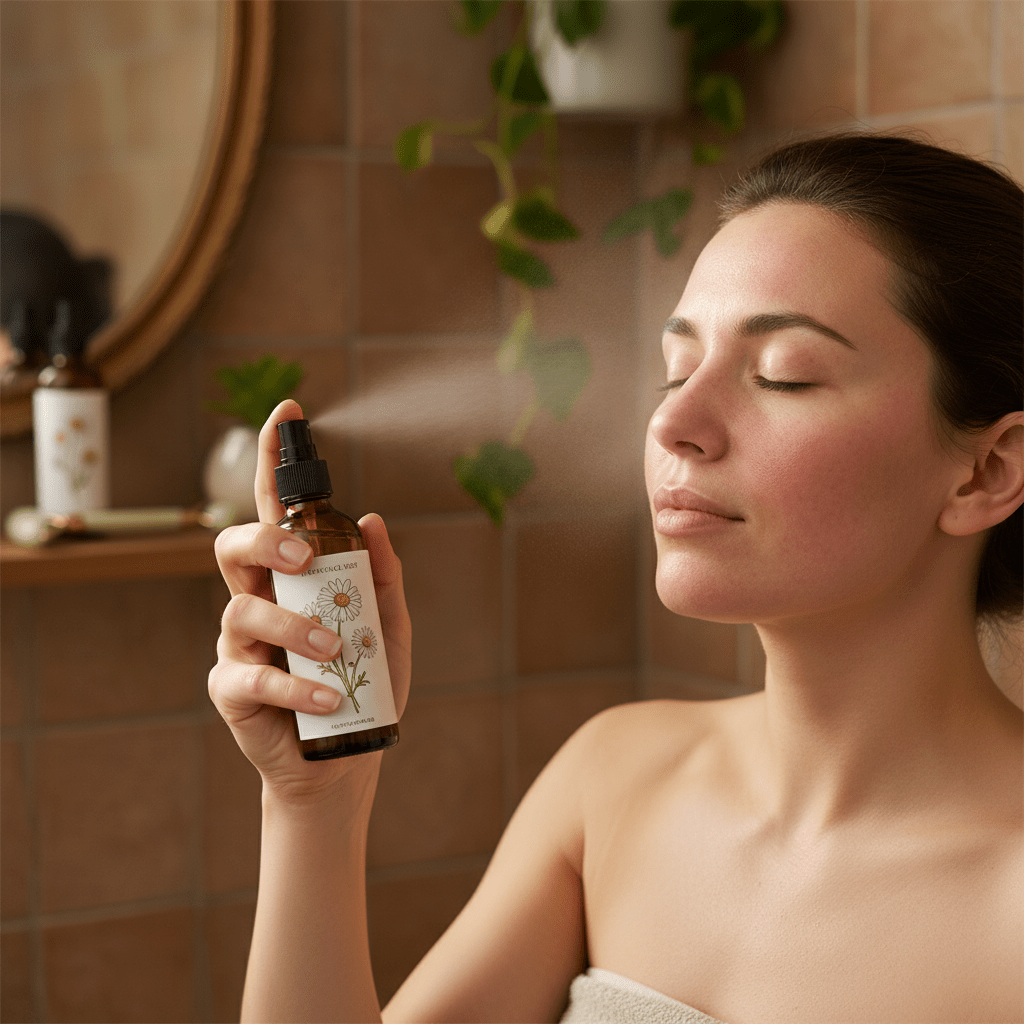
After cleansing, spray chamomile water onto a cotton pad or mist it straight onto your face. Then let it sit for a few seconds before adding serum or moisturizer.
That small step can help your skin feel less stripped. Not fancy. Just helpful. If your cleanser leaves your face feeling tight, this can be a nice bridge between washing and moisturizing.
A lot of people like this in the morning because it feels clean without being harsh. And at night? It can be a quiet little cue that the day is done.
2. Keep It as a Soothing Face Mist
This is probably the easiest way to use chamomile water. Keep a bottle in your bag, on your desk, or in the fridge for a cool spritz during the day.
If you work in an office with dry air, or you live somewhere hot and windy, a chilled natural face mist can feel like a tiny rescue. I’ve seen people use it before Zoom calls, after a commute, and even after a long flight. Honestly, it’s one of those “why didn’t I do this sooner?” things.
A quick spritz can also help skin feel less frazzled after a long day in front of screens. Weird, but true. Dry air plus stress usually does a number on skin.
3. Mix It Into Clay Masks
If you use clay masks, try swapping plain water for chamomile water. It works well with bentonite or kaolin clay and can make the mask feel less drying.
That matters because clay masks can sometimes leave skin feeling a little too squeaky. With chamomile water, you still get the clean-feeling mask, but with a softer finish. More comfort. Less “my face needs help now.”
This is a nice trick if your skin is oily but touchy, or if you want a mask that doesn’t leave you red for the next hour. Simple swap. Nice payoff.
4. Use It After Shaving, Waxing, or Mild Cosmetic Care
Chamomile water can also be used as a post-procedure soother after shaving, waxing, or a mild cosmetic treatment. The goal is to help skin feel calm, not overloaded.
But here’s the deal: if you’ve had a stronger treatment, like a peel or laser session, check with your skin pro first. I know that sounds cautious, but it’s the smart move. Skin that’s freshly treated can be extra sensitive, and you don’t want to guess.
For everyday shaving irritation, though, a light mist can feel lovely. Especially on the neck, legs, or anywhere that gets prickly fast.
Quick Ways to Work Chamomile Water Into Your Routine
| Time of day | How to use it | Why it helps |
| Morning | Mist after cleansing | Preps skin for serum and cream |
| Midday | Keep in the fridge and spray | Refreshes dry, tired skin |
| Mask night | Mix with clay mask | Adds soothing moisture |
| After shaving | Light spritz on clean skin | Helps skin feel calmer |
If you’re choosing a bottle, look for Chamomilla Recutita Flower Water or Anthemis Nobilis Flower Water on the label. Those INCI names usually mean you’re getting real chamomile water, not a watered-down mix with extra fragrance stuff.
And if you’re a brand owner or product maker, this is where sourcing matters. Aroma Monk offers pure botanical ingredients and bulk supply options for skincare and wellness lines, so you can build clean, gentle products with ingredients people actually feel good about using.
A Few Safety Tips Before You Start
Chamomile water is usually gentle, but no ingredient is perfect for everyone. If you’re allergic to ragweed, daisies, chrysanthemums, or other Asteraceae plants, patch test first. That family can cross-react for some people.
Do a simple patch test on your inner arm or behind your ear. Wait 24 to 48 hours. If you see redness, itching, or swelling, skip it.
And if you’re pregnant or healing from a professional treatment, it’s smart to ask a doctor, esthetician, or dermatologist before adding anything new. Better safe than sorry. Especially when your skin is already feeling touchy.
Chamomile water plays well with other gentle ingredients too, like aloe vera, hyaluronic acid, niacinamide, and centella. So if you want a calmer routine without a lot of extra steps, it can fit right in.
DIY vs. Store-Bought: How to Choose the Best Chamomile Water
You know that moment when your skin is already annoyed, and then you accidentally make it worse with the wrong product? Ugh. Been there. That’s why this choice matters more than it looks.
If you want the real thing, store-bought chamomile water is usually the safer pick. Look for the ingredient name on the label. It should say Chamomilla Recutita (Matricaria) Flower Water or Anthemis Nobilis Flower Water. Those are the usual INCI names for chamomile hydrosol.
And skip products with lots of extras. If you see added alcohol, strong fragrance, or a long list of synthetic fillers, that’s a little red flag waving at you. A true chamomile water toner should feel simple and gentle, not like a science fair project.
Store-Bought vs. DIY
| Option | Pros | Cons |
| Store-bought chamomile water | Sterile, stable, true hydrosol, easy to use | Costs more |
| DIY chamomile water | Fresh, cheap, simple to make | Not a true hydrosol, less strong, short shelf life |
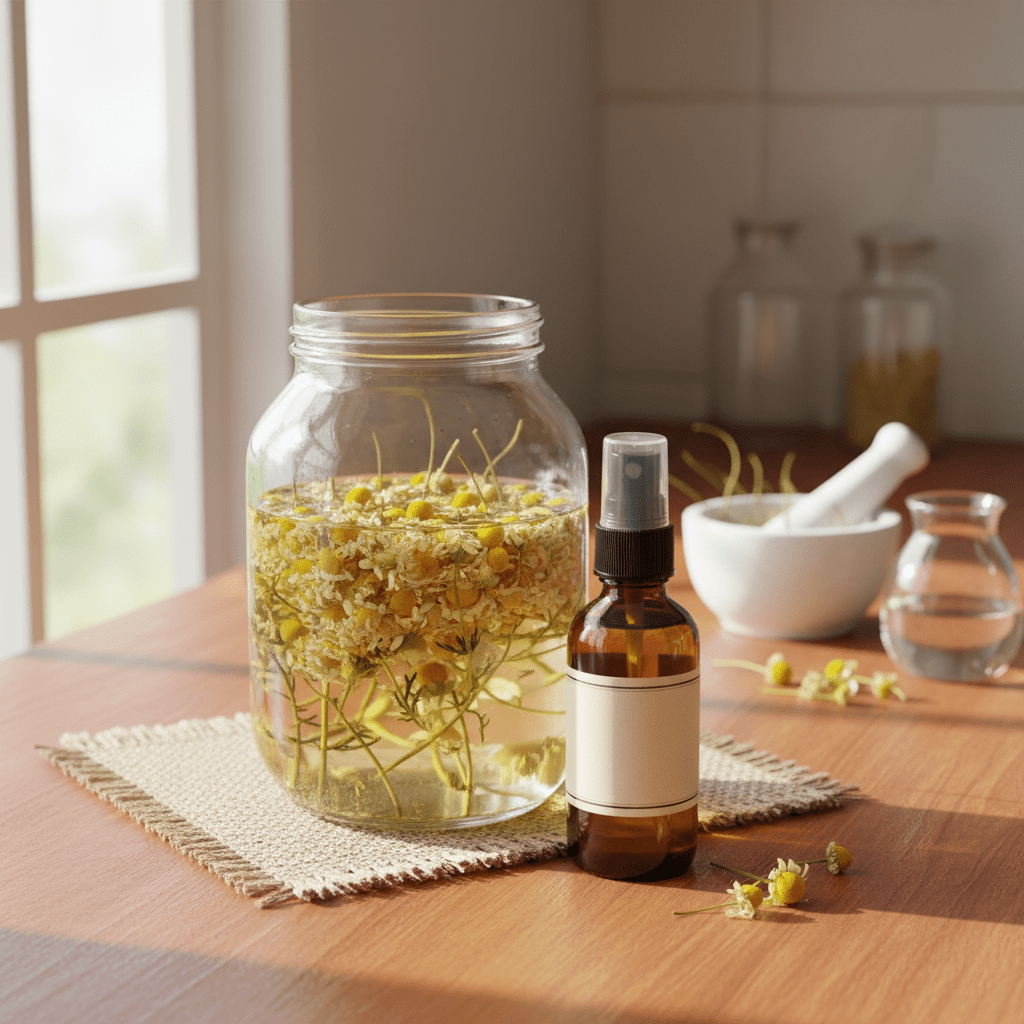
Now, if you like making things at home, DIY chamomile water can be a nice backup. Just keep this in mind: it’s an infusion, not a true hydrosol. That means it’s more like a fresh herbal rinse than a distilled floral water.
Simple DIY Chamomile Water Recipe
You’ll need:
- 1 tablespoon dried chamomile flowers
- 1 cup distilled water
- A clean glass jar or bowl
- A strainer
- A clean spray bottle
Steps:
- Boil the distilled water.
- Pour it over the chamomile flowers.
- Let it steep for 15 to 20 minutes.
- Strain out the flowers.
- Cool it fully.
- Pour it into a clean spray bottle and refrigerate.
That’s it. Pretty easy. But here’s the catch: homemade chamomile water only lasts about 3 to 5 days in the fridge. After that, toss it. Don’t try to stretch it. Skin irritation is not worth saving two ounces of herbal water.
So what should you choose? If you want a calming skincare ingredient that’s sterile, steady, and ready to use, store-bought is the better bet. If you want a fresh, low-cost option for quick use, DIY chamomile water works fine.
For brands and makers, this choice matters even more. If you’re building a chamomile water toner, natural face mist, or gentle wellness product, Aroma Monk can help with pure floral ingredients and bulk supply options for skincare and personal care lines. Good raw materials make a big difference. And customers notice.
Is Chamomile Water Safe for Everyone? Potential Side Effects & Considerations
Good question. Because even the gentlest skincare thing can cause trouble for the wrong person. And chamomile water, while calming for a lot of us, is no exception.
The good news? Chamomile water is usually one of the softest botanical choices you can put on skin. It’s light, simple, and often a nice fit for sensitive skin, dry skin, acne-prone skin, mature skin, and even oily skin that still wants something gentle. That’s why it shows up so often in a chamomile water toner or a natural face mist.
But here’s the part to watch. Chamomile comes from the Asteraceae family, the same plant family as ragweed, daisies, chrysanthemums, and marigolds. If you react to those plants, be careful. Do a patch test first. I mean it. A tiny test on your inner arm or behind your ear can save you from a face full of regret.
A patch test is easy:
- Put a small amount on clean skin.
- Leave it alone for 24 to 48 hours.
- Watch for redness, itching, swelling, or burning.
If nothing happens, you’re probably good to go.
Chamomile is also a big deal for people with reactive skin. In a global review, 71% of adults said they have some level of sensitive skin, and the top complaints were redness, burning, stinging, itching, and tightness global sensitive-skin review. That’s a lot of people looking for a calming skincare ingredient that won’t make things worse.
For most users, chamomile for skin redness is a gentle helper, not a harsh fix. It can work well on its own or alongside aloe, centella, or hyaluronic acid. And if you’re buying a bottle, look for simple labels and skip products with lots of fragrance or alcohol. Clean and plain usually wins here.
So yes, chamomile water is safe for most people. Just give it the same respect you’d give any new skincare product. Small test first. Then enjoy the calm.
Embrace the Calm: Your Next Step to Healthier Skin
So here’s the nice part. Chamomile water is not just a pretty bottle with a soft smell. It’s a calming skincare ingredient that can help skin feel less hot, less red, and less fussy. And for a lot of people with sensitive skin, that kind of gentle support is a pretty big deal.
We’ve seen how chamomile hydrosol can fit into real routines as a chamomile water toner, a natural face mist, or even a mix-in for masks. It can also give acne-prone or irritated skin a softer place to land, without the harsh feel of stronger products. That’s the charm of it. Quiet help.
The old use is nice too. Chamomile has been part of skin care for thousands of years, and modern research keeps backing up its soothing side review of sensitive skin and chamomile use. So whether you buy a pure hydrosol or try a simple DIY chamomile water recipe, you’re choosing a small step that can make your routine feel kinder.
If your skin has been yelling at you lately, maybe it’s time to answer back with something gentler. Try chamomile water. Mist it. Tone with it. Mix it into a mask. And see how your skin likes the calm.
Get a quote from Aroma Monk.
Essential Oil Supplier – Bulk pricing • Samples • Fast response