
Meeting Market Demand: The Rise of Gentle, Natural Solutions for Acne-Prone Skin
Picture a shopper standing in a pharmacy aisle, holding a bottle of benzoyl peroxide wash. Her cheeks already sting from last week’s retinoid. She puts it back. Then she reaches for something with a flower on the label.
That little moment is happening everywhere. And it’s reshaping how acne products get made.
The numbers back it up. One report put the global clean beauty market at US$8.29 billion in 2025, with a path toward roughly US$20.50 billion by 2032. That’s about 14% growth every year. (I should say, nobody publishes a clean number for natural acne products alone, so treat this as the big-picture trend.) Gentle claims are climbing too. Mintel found that “for sensitive skin” claims grew from 26% to 35% of relevant skincare launches between 2021 and 2023, with acne and redness showing up more often alongside them.
Why does this matter for acne? Because acne and sensitivity often come as a pair. A 2025 review cited a survey where 92% of people with facial acne said their facial skin felt sensitive. Another study found more than 58% of acne patients had sensitive skin. The range is wide, but the message is simple: harsh isn’t what these customers want.
Where Chamomile Water Fits In
This is where chamomile water for skin gets interesting. Chamomile hydrosol is the gentle, aromatic water left behind after steam distilling chamomile flowers. It’s a soothing ingredient that fits right into toners, mists, lotions and gels. Brands looking for natural ingredients for acne products get a plant-based story that feels calm, not aggressive. Plus, it’s a bit different from the usual tea tree and witch hazel lineup, so it can help your line stand out.
Let’s be honest about limits, though. Chamomile water won’t be sold as an acne cure, and it shouldn’t be. Think soothing, comforting and botanical.
What This Means for Your Brand
Customers who want a calmer routine tend to trust brands that feel the same way. Using a quality hydrosol can help build that reputation, especially when your supplier backs it with clear lab data. Aroma Monk, a bulk supplier of pure, lab-tested natural ingredients, sees this shift from buyers all the time. Next, we’ll look at what chamomile water really is, so you know exactly what you’re putting in the bottle.
What is True Chamomile Water? A Scientific Primer for Product Developers
Before a single drop goes into your formula, you should know exactly what it is. Sounds obvious. But “chamomile water” gets slapped on a few very different things, and the differences matter.
From Flower to Hydrosol
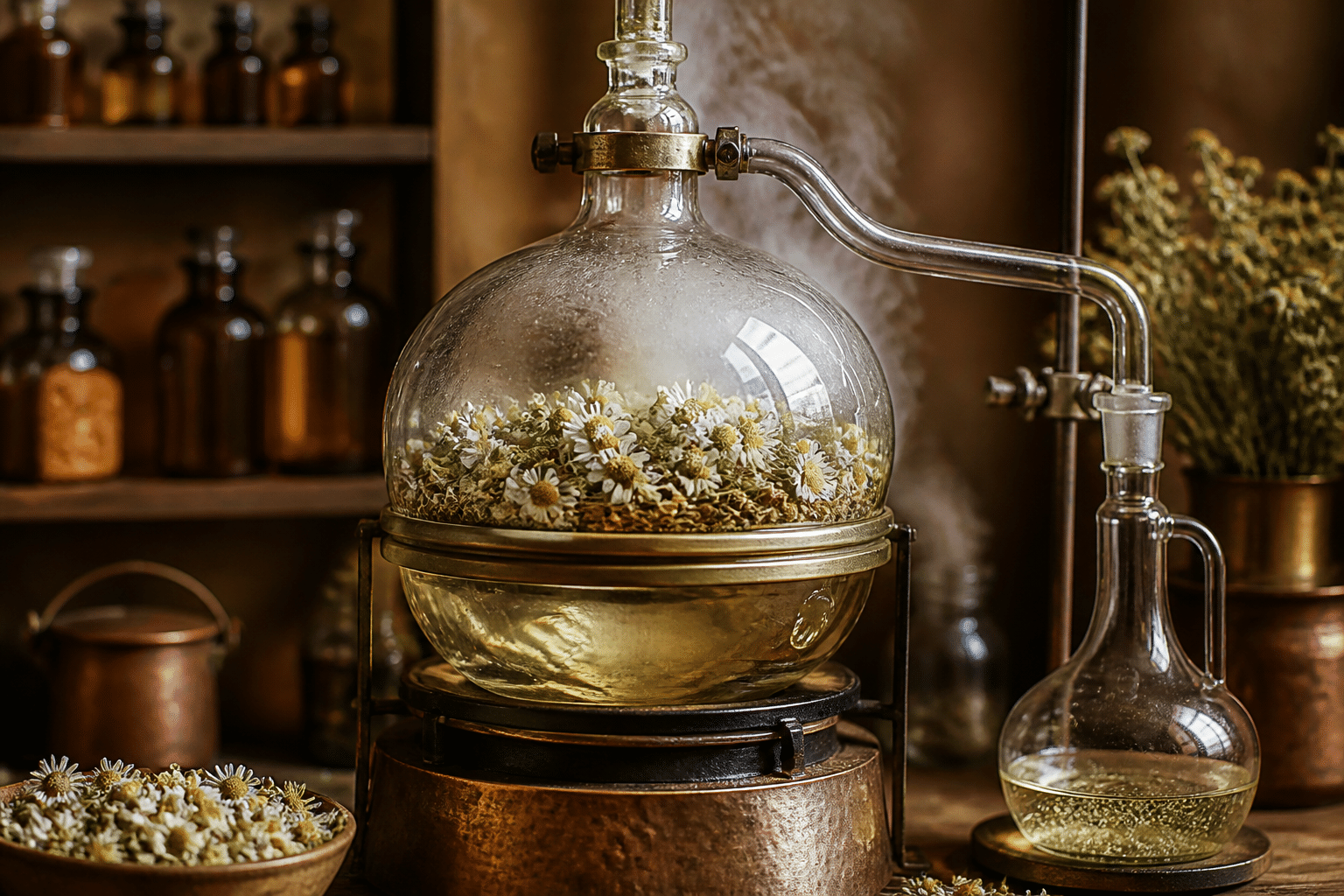
True chamomile water is a hydrosol. Steam passes through chamomile flowers, picks up the aromatic parts, and then cools in a condenser. The liquid splits into two layers: a tiny bit of essential oil and a much bigger amount of aromatic water. That water is your hydrosol, a co-product of the oil.
Two plants are common here. German chamomile (Matricaria recutita) and Roman chamomile (Chamaemelum nobile). Same idea, different chemistry.
| Step | What happens |
|---|---|
| 1. Loading | Chamomile flowers go into the still |
| 2. Steam | Hot steam moves through the flowers and carries aromatic compounds out |
| 3. Cooling | A condenser turns the steam back into liquid |
| 4. Separation | A small oil layer is collected on top of the aromatic water |
| 5. Collection | The water phase is the hydrosol, sold as chamomile water |
Hydrosol, Essential Oil, or Floral Water?
This is where buyers get tripped up. A hydrosol is not diluted essential oil. One supplier safety document describes it as roughly 99% water, with small amounts of dissolved oil and water-friendly plant compounds.
| True hydrosol | Essential oil | Simple floral water | |
|---|---|---|---|
| Made by | Steam distillation, water phase | Steam distillation, oil phase | Mixing |
| Main body | Aromatic water | Concentrated volatile oil | Water plus fragrance or solubilized oil |
| Strength | Mild, gentle | Very strong | Often strong smell, little plant character |
| Best for | Toners, mists, lotions, gels | Small amounts in blends | Cheap scent |
The fake version is the one to watch. Water mixed with a solubilizer and some fragrance can smell loud and still miss the real plant profile.
What’s Actually Inside the Bottle
Three compounds come up again and again: bisabolol, chamazulene and apigenin. Here’s the honest version of each.
Bisabolol is the headliner. A 2014 study found it lowered the inflammatory markers TNF-α and IL-6 in cell and mouse models. That’s lab evidence, not an acne trial, so keep claims soft.
Chamazulene is the blue compound that forms during distillation. German chamomile makes far more of it than Roman, according to this chamomile review. Apigenin is a flavonoid with antioxidant interest. But it doesn’t travel well in steam, so I wouldn’t count on much of it in a hydrosol.
Also, these oil-loving compounds show up only in trace amounts in chamomile water. Nobody can promise a “typical” level without a batch-specific GC-MS report. Ask for one.
Labeling is simple. German chamomile water is Chamomilla Recutita Flower Water, and Roman is Anthemis Nobilis Flower Water. Next, we’ll look at why this gentle water earns its spot in acne-prone formulas.
Why Chamomile Water is a Superior Ingredient for Acne-Prone Skin Formulations
Let’s be clear about what “superior” means here. Chamomile water doesn’t win by being strong. It wins by being kind. For customers whose faces already sting from benzoyl peroxide and retinoids, that’s a big deal.
Calming Red, Angry Bumps
Papules and pustules are red, puffy and sore. That’s inflammation doing its thing. So an ingredient that calms it down has a real job in an acne-prone line.
This is where bisabolol, the compound we met earlier, earns its reputation. In a 2015 clinical study, 18 people with facial seborrheic dermatitis used a product with 1.2% bisabolol, and redness in the treated area dropped compared with the untouched side. (The product had other actives and no blinding, so bisabolol can’t take all the credit.) A 2022 review also covered a double-blind trial of a 0.3 g/100 g bisabolol cream used twice daily for eight weeks, with less itching and inflammation in people with atopic dermatitis.
Nice. But here’s the catch. Those studies used bisabolol itself, not chamomile water, and none were acne trials. A hydrosol carries only a trace. So write “soothing” and “calming” on the label, not “treats breakouts.”
Mild Antibacterial Support, Without the Stripping
Acne bacteria like C. acnes get a lot of attention. Harsh products go after them hard, and the skin pays for it.
Chamomile offers something gentler. A 2016 lab study found tea tree oil beat chamomile oil at 50% and 100% strength, while chamomile oil did better at 25%. Interesting, but that’s essential oil, not hydrosol. Chamomile water is far weaker, so think of it as light support, not a bacteria killer. A 2025 review also noted that no randomized trial has confirmed chamomile works against acne lesions.
The upside? No alcohol sting. Dermatologist Miriam Vega Gonzalez told Women’s Health that most witch hazel products are alcohol-based and that the cooling feeling can be mistaken for calming. A hydrosol skips that trap.
Comforting a Stressed Moisture Barrier
Here’s the part I like most. Skin on acne treatments often feels tight, flaky and raw. A toner or mist that adds comfort instead of more stress is a relief.
Chamomile hydrosol is also mildly acidic. One supplier lists a pH of about 4.8 to 5.9, which sits close to the skin’s natural acidic surface. That helps a formula avoid pushing skin toward irritation. Still, pH varies by batch, and preservatives can shift it. Test the finished product every time.
Here’s a quick problem and solution map for your product team:
- Problem: Inflammatory redness. Solution: Bisabolol in chamomile water helps calm the look of irritated skin.
- Problem: Swollen, sore-feeling bumps. Solution: A soothing botanical base adds comfort without heat or sting.
- Problem: Acne-prone skin that hates alcohol. Solution: Hydrosol replaces harsh astringents in toners and mists.
- Problem: Dry, tight skin from active treatments. Solution: A mildly acidic water phase supports a gentler, barrier-friendly feel.
- Problem: Customers who want a natural story. Solution: A plant-based ingredient with clear lab data behind it.
One safety note: chamomile belongs to the daisy family, so people allergic to ragweed may react. Patch test first. Next, we’ll look at how to actually put this water into your formulas.
Formulation Strategies: Incorporating Chamomile Water into Your Skincare Line
Here’s the fun part. You’ve got a gentle ingredient, and now it has to work in a real bottle.
One honest note first: there’s no single industry standard for how much chamomile water to use. Supplier advice varies a lot. So treat every number below as a starting point for your own testing, not a rule.
How Much Chamomile Water Goes in Each Format
Toners and mists are the easy win. DIY Cosmetica suggests 50 to 100% for these, since the hydrosol can be the main water phase. Masks sit lower, and Formulator Sample Shop lists 15 to 50% for toners and masks. Lotions go lighter again. Candles & Supplies points to 5 to 20%, although Formulators Inc. recommends 30 to 50% for creams and lotions.
I couldn’t find sourced numbers for cleansers or serums. So the ranges for those in the table are my own suggested test points. Run them through your own stability work.
A simple plan? Swap out 25%, 50% and 75% of the purified water in a toner. In a lotion or gel, try 5%, 10% and 20%. Then compare feel, clarity and stability.
| Product Type | Recommended % | Key Benefit | Synergistic Pairings |
|---|---|---|---|
| Facial toner or mist | 50-100% | Alcohol-free calm, light hydration | Hyaluronic acid, panthenol, glycerin |
| Gentle cleanser | 10-30% of water phase (test point) | Soothing feel without a tight, stripped finish | Glycerin, mild surfactants |
| Serum | 10-50% (test point) | Calming base for actives | Niacinamide, hyaluronic acid |
| Clay mask | 15-50% | Softens the drying pull of clay | Willow bark extract, glycerin |
| Moisturizer (lotion or gel) | 5-20% to start | Comfort for treated, tired skin | Niacinamide, hyaluronic acid |
pH, Preservatives and Other Gotchas
Start with pH. Supplier specs are all over the place. Some list about 4.0 to 4.5, while one German chamomile spec runs 4.5 to 7.0. So measure each batch, then measure your finished product again. Preservatives, humectants and surfactants can all shift it.
Acidic water can also upset some neutral-pH thickeners and emulsifiers. Check the technical data before you fall in love with a texture.
Now the big one: preservation. A hydrosol is basically water, and water-rich formulas can support microbial growth. Swapping it for purified water doesn’t remove the need for a preservative. For clean-leaning lines, natural and COSMOS-friendly options include gluconolactone with sodium benzoate, which tends to like acidic systems. A common broad-spectrum pick is phenoxyethanol with ethylhexylglycerin. One formulation guide shared on LinkedIn suggests roughly 0.8 to 1% at a finished pH near 4.0 to 5.5. It also shares a toner example with 94% chamomile hydrosol, 3% glycerin, 2% panthenol and 1% preservative. That’s an example, not proof that 1% protects every formula. And not every clean beauty retailer accepts phenoxyethanol, so check the standard you’re aiming for.
Whatever you pick, run a challenge test (ISO 11930 or similar) on the finished product. Vitamin E or essential oils alone won’t cut it.
What about acne actives? Chamomile water has no known chemical clash with salicylic acid, niacinamide, azelaic acid or benzoyl peroxide. But each active has its own pH needs. Test the whole formula.
Pairings That Play Nicely Together
Chamomile water works best as a team player. A few combos worth trying:
- Hyaluronic acid: Adds water-binding hydration to the calming base. Great for toners and gel moisturizers.
- Niacinamide: Supports a barrier-friendly feel, which matters for skin tired from retinoids.
- Willow bark extract: A gentler, plant-based route to light exfoliation. It generally prefers a mildly acidic setup, which suits a hydrosol.
- Panthenol and glycerin: Simple comfort boosters that keep a toner from feeling thin.
Keep claims soft, though. “Soothing” and “comforting” are safe. Also, ask your supplier (Aroma Monk included) for batch pH and documentation before you lock a formula.
Next, let’s see how chamomile water stacks up against other popular acne ingredients.
Get a quote from Aroma Monk.
Essential Oil Supplier – Bulk pricing • Samples • Fast response
Comparative Analysis: Chamomile Water vs. Other Popular Acne Ingredients
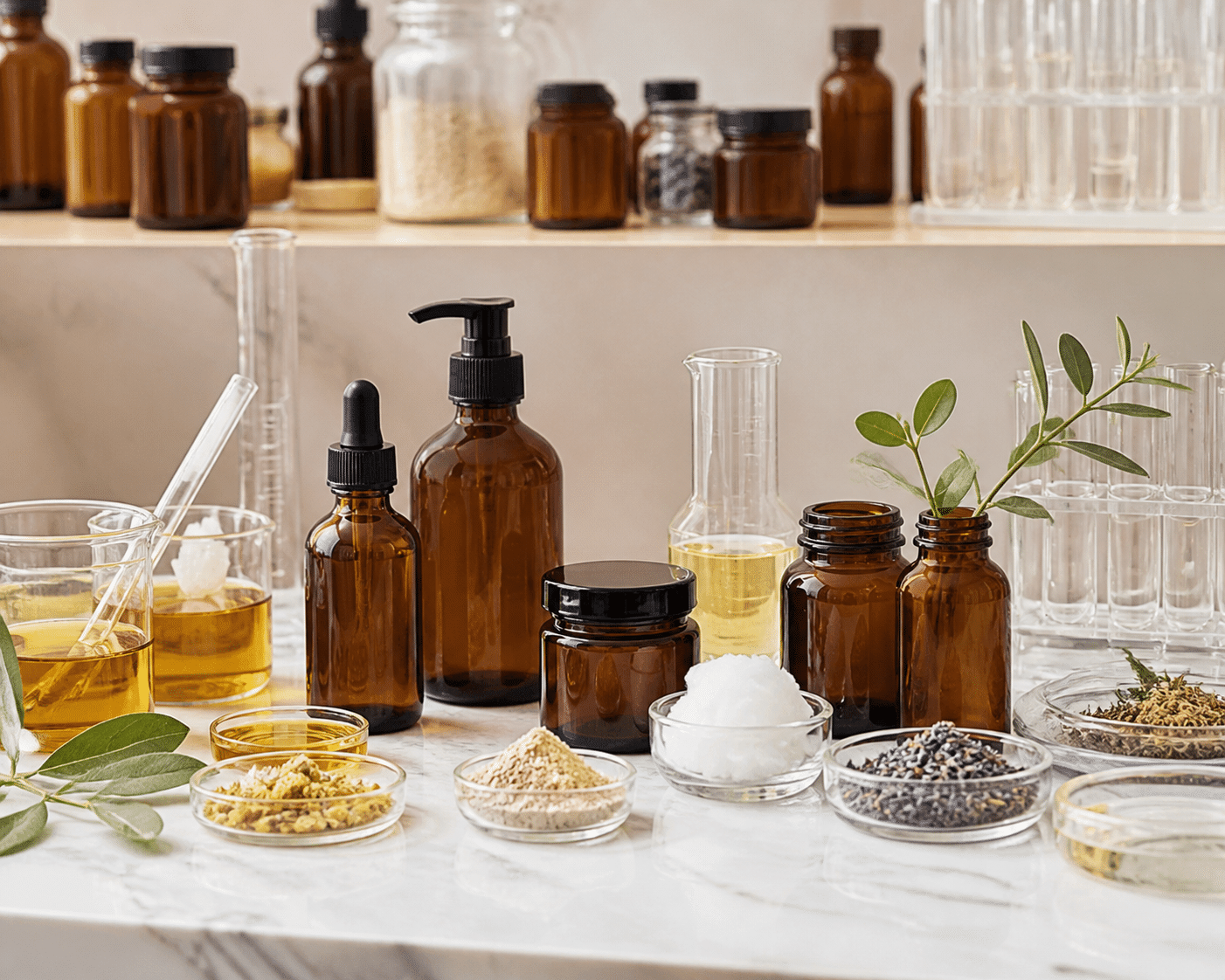
Your buyers already know tea tree, witch hazel and the big synthetic actives. So where does chamomile water fit next to them? Here’s a quick side-by-side first, then the details.
| Ingredient | Primary Action | Best For (Skin Type) | Potential Drawbacks |
|---|---|---|---|
| Chamomile water | Soothing, calming, light hydration | Sensitive, reactive, acne-prone skin tired from treatments | Mild effect only, batch variation, rare allergy in people sensitive to ragweed and daisies |
| Tea tree oil | Antibacterial, most acne research of the three | Oilier, more resilient skin | Can irritate or cause allergic contact dermatitis, especially if oxidized or poorly diluted |
| Witch hazel | Astringent, tightening | Skin that tolerates alcohol well | Often alcohol-based, can dry and sting, occasional contact allergen |
Chamomile Water vs. Tea Tree Oil
Let’s be fair to tea tree. It has far more acne research behind it. And I couldn’t find a single head-to-head trial of chamomile hydrosol against it, so don’t claim chamomile water is “more antibacterial.” It isn’t proven.
The gap shows up in comfort. One review of patch-test data found 0.9% of tested patients reacted to tea tree oil. That sounds small, but risk climbs when the oil is old or not diluted well. Reddit’s acne guide even warns that poorly diluted tea tree can cause irritation and chemical burns. Chamomile water is mostly water, so that kind of harsh surprise is much less likely. Still, nobody should call it irritation-free. Patch test it.
Chamomile Water vs. Witch Hazel
Witch hazel is the old bathroom-cabinet favorite. But it’s mostly known for tightening, and many versions contain alcohol. Dermatologist Corey Hartman has warned that long-term witch hazel use can damage the skin barrier. That’s the last thing a customer using retinoids needs.
Chamomile water flips the script. It brings a gentle, hydrating feel plus the bisabolol story we covered earlier, with no alcohol sting. For a toner aimed at sensitive, flaky, red-prone skin, that’s a pretty easy choice.
Next to Benzoyl Peroxide and Salicylic Acid
Here’s where I’d pump the brakes. Chamomile water isn’t a swap for these actives. Benzoyl peroxide and salicylic acid have real acne data, and chamomile doesn’t (a 2025 review found no randomized trial confirming it works on acne lesions).
But consumers aren’t happy with the side effects. Reddit threads keep describing dryness, peeling and bleached towels. That’s your opening.
So position chamomile water as the calm partner. Think pre- or post-treatment toners, mists and gels that make a routine easier to stick with. For brands targeting the sensitive-skin or natural shopper, it can even be the hero of a gentle line that skips the harsh actives altogether. Just keep the claims soft: soothing, comforting, calming.
Next, we’ll cover how to buy chamomile water without getting burned.
A Procurement Manager’s Checklist for Sourcing High-Purity Chamomile Water
You’ve nailed the formula. Now comes the part that keeps buyers up at night: finding chamomile water you can actually trust. A bad batch can sink a whole launch.
Start With the Paperwork: CoA and GC-MS
Ask for a Certificate of Analysis (CoA) before you ask for a price. Every time. A good one is tied to a batch number and lists the botanical name, appearance, pH, microbial limits and contaminant results, including heavy metals.
Then ask for the GC-MS report from that same batch. This is the test that shows what’s really in the water. No single compound proves a hydrosol is genuine, so look at the whole pattern. For German chamomile, that means traces of bisabolol oxides and chamazulene. Request the raw chromatogram too, not just a summary page.
Why so picky? Because fakes are real. Some sellers mix fragrance or solubilized oil into plain water and call it a hydrosol. Watch for a loud, perfume-like smell, oily droplets, cloudiness, or a label that just says “fragrance.” And if a supplier has no chromatogram? That’s your answer.
Spotting a Supplier You Can Trust
A reliable bulk chamomile water supplier is happy to answer boring questions. Ask these:
- How is it distilled, and from what plant part?
- Which species is it, German or Roman, and where was it grown?
- Who tests each batch, and can you see the results?
Good suppliers put this in writing. A German chamomile hydrosol spec sheet from Madar is a handy example. It names steam distillation and includes declarations on GMO status and CMR substances. Vague answers or slow replies usually mean the paperwork isn’t there. Aroma Monk, for one, handles the chain from sourcing raw material to final delivery and backs its products with lab testing and traceability, which is the kind of openness you want to see.
Certifications That Actually Mean Something
Logos are easy to print. So check what’s behind them. Buyers in Europe commonly look for ISO 22716 or EFfCI GMP, COSMOS, NATRUE and organic certification. Ask for the certificate itself, with the certifier, product name, facility and expiry date. For COSMOS claims, you can look the supplier up in the official COSMOS database.
Traceability matters just as much. You want to follow a batch from farm to still to drum. Use this as your quick vetting list:
| Check | What to ask for | Red flag |
|---|---|---|
| Batch CoA | pH, microbial limits, heavy metals, batch number | Generic, undated sheet |
| GC-MS report | Raw chromatogram from your batch | Summary only, or none |
| Botanical identity | Species and INCI name | “Chamomile” with no detail |
| Process | Steam distillation details | Won’t explain it |
| Origin | Country and farm or region | “Sourced globally” |
| Certifications | Certificate with scope and expiry | Logo only |
| Traceability | Batch-to-source records | No records |
Once your supplier passes, you’re ready to talk about the finish line.
Elevate Your Brand with the Soothing Efficacy of Premium Chamomile Water
So, what’s the big picture? Chamomile water is gentle, easy to explain, and fits a market that’s asking for calmer skincare. That’s a strong place to start.
Here’s what we covered. It’s a true hydrosol, not diluted oil. It carries trace bisabolol and chamazulene, which give it a soothing story. It’s mildly acidic, alcohol-free, and plays well with hyaluronic acid, niacinamide and panthenol. And it gives your line a calm, plant-based voice that stands out from the usual tea tree and witch hazel crowd.
But let’s keep it honest. Chamomile water is a soothing partner, not an acne cure. Its calming and light antibacterial support is what makes a formula both gentle and thoughtful. Say “soothing” and “comforting.” Skip “treats breakouts.” Customers notice, and trust grows when your claims match the bottle.
The last piece is the supplier. Great formulas fall apart on a weak batch. You want batch CoAs, GC-MS reports, clear certifications and traceability from farm to drum. That’s how you get the same quality in your tenth order as in your first.
Ready to Formulate?
Partner with a supplier who shares your standards. Aroma Monk offers pure, lab-tested natural ingredients with traceability from sourcing to delivery. Ask about samples, batch documentation and formulation support for your acne-prone skin range.
Your customers want calm. Give it to them in a bottle they can trust.
Get a quote from Aroma Monk.
Essential Oil Supplier – Bulk pricing • Samples • Fast response