
The Rising Demand for Gentle, Effective Anti-Inflammatory Skincare Ingredients
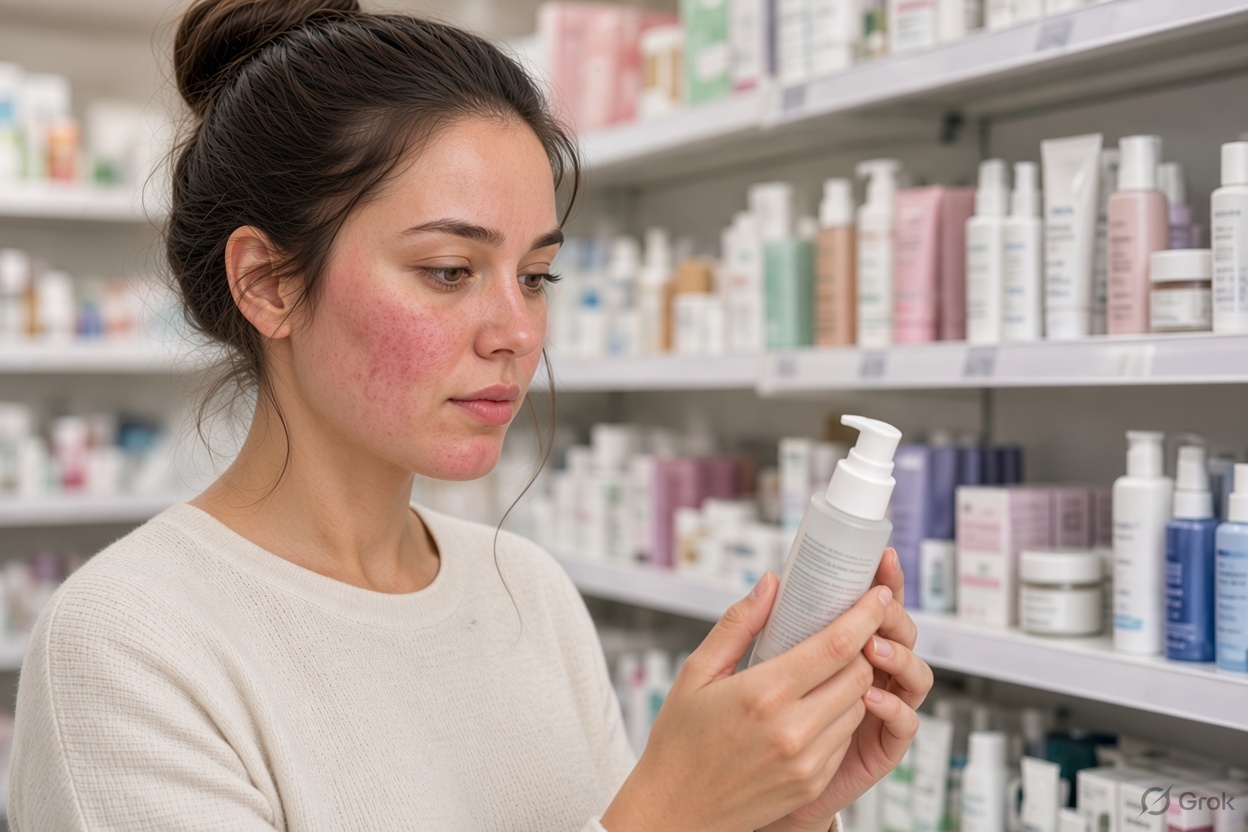
Picture a shopper standing in a drugstore aisle, turning a bottle over to squint at the ingredient list. Her cheeks are red and tight. She’s tired of stinging. She wants something gentle, and she wants it to actually work.
She’s not alone. The natural cosmetics market is forecast to grow from $23.88 billion in 2025 to $32.49 billion by 2030, a pace of about 6.35% a year. Chamomile is one of the botanicals that report lists for soothing, anti-inflammatory positioning. Plus, one natural-beauty report says about 54% of buyers pick natural skincare because they believe it’s gentler on sensitive skin. People want less irritation. They also read labels, a lot.
So where does that leave brands? With a real chance, but also a tougher crowd.
This is where chamomile water for skin comes in. Most shoppers know chamomile from a tea bag. Formulators know it can be much more: a true hydrosol, the water-based distillate left after steam distillation, with a soft botanical profile that suits natural ingredients for sensitive skin. It’s a premium option, but only if the quality holds up.
That’s the catch. Not every bottle labeled “chamomile water” is the real thing, and batches can vary more than you’d guess.
This guide is for procurement managers, product developers, and brand owners who want to use chamomile hydrosol well. We’ll look at what it is, what the science says (and doesn’t), how to formulate with it, and how to source it with confidence. First, let’s get clear on what chamomile water actually is.
Beyond the Tea Bag: Understanding True Chamomile Water (Hydrosol)
Here’s something that trips up a lot of buyers. A bottle says “chamomile water,” and you assume it’s all the same stuff. It isn’t.
How Steam Distillation Makes a True Hydrosol
A true chamomile hydrosol starts with flowers and steam. That’s it. A wfacademy guide on hydrosols in cosmetic formulas describes the aqueous condensate made during steam distillation of plant material, usually alongside an essential oil. Think of it as a short trip with five stops:
| Stage | What happens |
|---|---|
| 1. Water reservoir | Water is heated to make steam |
| 2. Steam | Hot steam rises toward the plant chamber |
| 3. Plant chamber | Steam passes through chamomile flowers and picks up volatile compounds |
| 4. Condenser | The vapor cools back into liquid |
| 5. Collection vessel | Essential oil separates out, and the water-based hydrosol remains |
Want to see it in action? This video on distilling hydrosols with Hannah Kincaid walks through the whole sequence.
Now, calling it “leftover water” sells it short. Its makeup depends on the plant, water quality, steam temperature, and how long the run lasts. So two batches can smell and test a bit differently.
Hydrosol vs. Floral Water vs. Simple Infusion
A tea-bag style infusion is just chamomile steeped in hot water. No distillation. A blended “floral water” might be plain water with fragrance or a little essential oil. Here’s the catch: there’s no single worldwide rule that separates “hydrosol” from “floral water.” Brands often use the words interchangeably. So the label alone won’t save you. Ask how it was made, and whether it’s the direct distillate or a reconstituted mix.
German vs. Roman Chamomile Water
The two types look alike on a shelf but behave differently in a formula. This is the heart of the German chamomile water vs Roman debate.
| Attribute | German chamomile | Roman chamomile |
|---|---|---|
| Botanical name | Matricaria recutita | Chamaemelum nobile (older name: Anthemis nobilis) |
| Appearance | Clear to nearly colorless, sometimes a faint blue tint | Usually clear and colorless |
| Aroma | Green, herbal, slightly bitter-sweet, tea-like | Floral, honeyed, soft, a bit fruity |
| Reported pH | Around 4 in one supplier spec | About 5.5 to 7.0 in one supplier spec |
| Formulation note | Often chosen for its classic chamomile profile | Often chosen for a softer scent |
The faint blue comes from chamazulene, but color isn’t a reliable authenticity test. A pale German lot isn’t automatically fake. Also, pH swings from batch to batch, so use the supplier’s batch data, not a generic number. Don’t swap one species spec for the other, either.
Why 100% Pure Matters for Buyers
For B2B buyers, purity is a stability issue as much as a marketing one. Diluted or scented “chamomile water” can throw off your scent, pH, and preservation plan. Look for a clear botanical name, plant part, origin, distillation method, batch number, and a certificate of analysis. Words like “natural” or “pure” on the front label prove nothing by themselves.
Next up, we’ll look at what the science says about why chamomile soothes, and where the evidence runs thin.
The Science of Soothing: Chamomile’s Anti-Inflammatory Mechanisms
Here’s the deal. Chamomile has a great reputation for calming skin. The lab data is promising too. But a lot of it comes from mice and test tubes, not people, and that matters when you write product claims.
The Compounds Behind the Calm
Three names come up again and again: chamazulene, bisabolol, and apigenin.
- Chamazulene gives German chamomile oil its blue color.
- Bisabolol is a soothing alcohol found in the oil part of the flower.
- Apigenin is a plant compound (a flavonoid) with a long research trail in skin inflammation.
Now the catch. Chamazulene and bisabolol mostly live in the oil phase. A true hydrosol is mostly water, so it may hold only trace amounts of them. Nobody has published one “typical” bisabolol number for chamomile water, because it changes with species, distillation, and testing method. If a supplier claims a lot of bisabolol, ask for a GC-MS report.
How They Calm Irritated Skin
Think of inflammation as an alarm system. When skin is stressed, cells send out signals that bring redness, heat, and that tight, itchy feeling. Researchers study where those signals can be turned down.
| Pathway | What it does in skin | Chamomile compound studied |
|---|---|---|
| NF-κB | Switches on many inflammatory genes | Apigenin |
| MAPK (including p38) | Passes stress signals inside the cell | Apigenin, chamazulene |
| COX-2 | Helps make redness and swelling messengers | Apigenin, chamazulene |
| NLRP3 | Triggers inflammatory messengers | Apigenin |
A 2024 review found that apigenin can quiet NF-κB, MAPK, COX-2, and NLRP3-related signals. Most of that evidence came from cell and animal models, though. In a 2025 mouse study, 0.4% chamazulene on UVB-damaged skin lowered the p38 MAPK/COX-2 signal.
What the Studies Really Prove
A 2024 mouse study tested topical apigenin on psoriasis-like skin and saw less inflammation and oxidative stress. Nice. But it wasn’t a human trial.
And not every test agrees. A 2024 ex-vivo study found apigenin didn’t differ much from the vehicle on its blood-flow measures. So results swing depending on the model.
Here’s my honest read:
- I found no recent, solid human trial showing isolated chamazulene or apigenin treats rosacea, eczema, or acne.
- That 0.4% chamazulene dose is far stronger than ordinary chamomile water.
- Chamomile can also trigger reactions in people allergic to Asteraceae plants, so patch testing is smart.
So call the evidence promising but early. Wording like this keeps your claims honest:
“Chamomile water may contain trace volatile actives, but its bisabolol and chamazulene content is variable and should be confirmed by batch-specific GC-MS.”
Safer product copy also leans on feel, such as “helps soothe the feel of temporarily irritated skin.” Skip words like “treats” or “cures.”
Next, let’s turn this science into something you can actually pour into a bottle.
Formulation Blueprint: Integrating Chamomile Water into Your Product Line
OK, you’ve got the science and the sourcing basics. Now for the fun part: putting chamomile water in a bottle that actually sells. I’ll admit, the first time I mixed a hydrosol-heavy toner, it looked perfect on day one and cloudy by week three. Lesson learned. Let’s save you that headache.
Where Chamomile Water Fits Best
Chamomile water works as a water-phase base. That makes it a natural fit for products where you’d normally use plain distilled water.
- Facial toners: the classic use. Light, simple, and easy to explain.
- Soothing mists: great for sensitive-skin lines and travel sizes.
- Gentle cleansers: swap part of the water phase for a softer, herbal feel.
- After-sun products: cooling gels and sprays for skin that’s had a long day outside.
- Baby care lines: think mild wipes or body mists. Keep these fragrance-free and patch-tested.
Here’s a starting map. These percentages are bench-trial starting points, not hard rules. One supplier of a preserved Roman chamomile water, MakingCosmetics, lists a typical use range of 1 to 100%, so the real answer depends on your formula.
| Product type | Starting level of chamomile water | Formulation idea |
|---|---|---|
| Toner | 50 to 90% | Main water phase, plus glycerin and a mild humectant |
| Soothing mist | 70 to 95% | Light humectant, low-pH preservation system |
| Serum | 20 to 50% | Replaces part of the water, paired with hyaluronic acid |
| Gentle cleanser | 10 to 40% | Replaces part of the water phase, mild surfactants |
| After-sun gel or spray | 30 to 60% | Cooling gel base, soothing extracts |
| Baby mist or wipe lotion | 20 to 50% | Fragrance-free, minimal ingredients |
Start low, test, then nudge it up. More isn’t always better.
Pairing It With Other Soothing Ingredients
Chamomile water plays well with others. Hyaluronic acid adds slip and water-holding. Calendula adds a second botanical story. Niacinamide is popular for tone and barrier support, though it tends to prefer a slightly higher pH, so check your numbers before you commit.
Want a real-world example? The Dr. Scheller Soothing Chamomile Serum lists chamomile extract alongside calendula, bisabolol, and hyaluronate. And the L’Erbolario chamomile water toner pairs flower water with glycerin, allantoin, and sodium PCA. Different products, same idea: keep it simple and soft.
Preservation, pH, and Shelf Life
Here’s the part people skip. Hydrosols are mostly water. Microbes love that. “Natural” doesn’t mean self-preserving, so you still need a real preservation system and a challenge test on the finished product.
A few practical habits help:
- Measure the pH of every incoming batch, then adjust the finished formula.
- For benzoate and sorbate systems, aim for roughly pH 4.0 to 5.0. They work less well as pH climbs.
- Combine hurdles, as Safic-Alcan’s guide to natural preservatives suggests: pH control, organic acids, and helpers like propanediol.
- Re-check pH after you add everything. Extracts and surfactants can shift it.
- Test stability for color, scent, and clarity, since a pale hydrosol can drift over time.
Watch potency too, but be honest about it. Chamomile water is a gentle, sensory-friendly ingredient with variable trace actives, so build your promise around feel, not strength.
Next, let’s talk about where to find a supplier you can trust with all of this.
Get a quote from Aroma Monk.
Essential Oil Supplier – Bulk pricing • Samples • Fast response
Sourcing Strategy: How to Procure High-Purity Bulk Chamomile Water
You found a bulk chamomile water at a great price. The sample smells lovely. Then the first production batch arrives, and it smells like a candle shop. Sound familiar? Let’s make sure that story never ends up yours.
The Paperwork That Proves It
A label proves nothing. Documents do. Before you buy at scale, ask for three things:
- Certificate of Analysis (CoA): batch-specific pH, appearance, odor, and microbiology. Here’s what a real supplier CoA looks like if you’ve never read one.
- GC-MS report: the chemical fingerprint. Ask for the raw chromatogram and the method, not just a “pass” stamp.
- MSDS: handling, storage, and safety details. Some suppliers post theirs openly, like this chamomile hydrosol MSDS.
If you want certification on top, the COSMOS technical guide treats hydrolates as a recognized category and expects things like technical data sheets and raw-material questionnaires.
Here’s a quick way to read a GC-MS table. This one is made up, just to show you where to look.
| Peak | Example compound | Area (illustrative) | What to look for |
|---|---|---|---|
| 1 | Oxygenated monoterpene | Low | Plausible for chamomile, steady across batches |
| 2 | Bisabolol-type alcohol | Trace | May be very low in a hydrosol, so don’t panic |
| 3 | Chamazulene | Trace or absent | Absence alone isn’t proof of fraud |
| 4 | One dominant fragrance-like peak | High | Red flag. Ask questions |
One report won’t prove purity by itself. Compare it with past batches, because a sudden big change is the real tell.
Vetting Your Bulk Hydrosol Supplier
| Check | Ask for | Done? |
|---|---|---|
| Identity | Botanical name, plant part, origin, INCI name | ☐ |
| Process | Direct steam distillate, or reconstituted? | ☐ |
| CoA | Batch-specific, matching the lot you receive | ☐ |
| GC-MS | Raw chromatogram, lab name, method | ☐ |
| MSDS | Current version | ☐ |
| Micro and preservation | Limits, preservative list, challenge data | ☐ |
| Traceability | Lot tracking from farm to filling | ☐ |
| Samples | Several lots, not just one hand-picked jar | ☐ |
Why Vertically Integrated Suppliers Are Worth a Look
Every handoff is a chance for mix-ups. Brokers and middlemen add layers, and layers hide things. A supplier that controls the chain, from raw flowers to distillation to delivery, can answer “where did this lot come from?” in one phone call. That’s traceability you can actually use.
Aroma Monk, for example, says it manages the whole chain from sourcing to final delivery. That’s the kind of setup to look for. Still, ask to see the documents. Claims are nice, files are better.
What Adulteration Really Costs You
Watch for synthetic fragrance, added solubilizers, or plain dilution passed off as “chamomile water.” Fragrance can trigger reactions in sensitive skin, which is exactly who this ingredient is for. It can also wreck your pH and preservation plan, and it makes your soothing claims shaky. One bad batch, one angry review, and your “gentle” story is gone.
So vet first, buy second. Next, let’s look at how to turn that quality into a story customers care about.
Market Differentiation: Turning a Quality Ingredient into a Compelling Brand Story
You can source the best chamomile water on the planet. If shoppers never hear about it, it won’t sell a single bottle. Quality that lives in a spec sheet stays invisible.
Why Proof Earns a Premium
People pay more when they can check your story. NielsenIQ found the share of shoppers who care about transparent product information rose from 69% in 2018 to 76% in 2023. So “pure” isn’t enough anymore. Show the receipts:
- The botanical name (Matricaria recutita)
- Where the flowers grew
- Steam distillation, not just “infused”
- The certifier, if you have one
- A note that every batch is tested
That’s the same paperwork you collected while vetting your supplier. Now it works as marketing.
Claims You Can Make (and One to Rethink)
Keep claims about how skin looks and feels. Here’s a simple guide.
| Claim | Why it works | Keep on file |
|---|---|---|
| “Calms the look of visible redness” | Appearance-based, not a treatment promise | Consumer testing on the finished product |
| “Soothes sensitive skin“ | Matches what shoppers actually want | Patch-test and safety data |
| “Steam distilled from German chamomile” | Specific and checkable | CoA and process records |
| “Distilled for peak potency” | Sounds strong, but risky | GC-MS data for every batch |
That last one deserves a pause. Chamomile water carries only trace actives, so “potency” can overpromise. Say “steam distilled” instead, unless your lab data backs up more.
Brands That Made Chamomile the Hero
I couldn’t find many hydrosol-led launches to point to. But a roundup of organic beauty brands shows three ways to tell a chamomile story:
- Inkarna (Germany): grows its own German chamomile and distills soon after harvest. The origin and freshness are the story, plus certified-natural credentials.
- Martina Gebhardt: chamomile sits inside a bigger promise of Demeter-certified, biodynamic ingredients.
- Primavera: a named “Chamomile & Borage” eye cream. A specific botanical plus a specific use feels real.
Notice the pattern. None of them just say “herbal.”
From Raw Material to Loyal Customers
A premium price holds when customers can trace the reason for it. Sensitive-skin shoppers get burned often, so a brand that proves its ingredient earns repeat orders. Competitors can copy a label. Copying a clean supply chain is much harder.
Next, let’s pull it all together.
Elevate Your Formulations with the Power of Pure Chamomile Water
So what should you walk away with? Chamomile water is a gentle ingredient that shoppers keep asking for, and the lab data behind it looks promising. It’s still early, though. Most of the proof comes from cells and mice, so keep your wording soft: “helps soothe the feel of irritated skin,” not “treats rosacea.”
Here’s the part that matters most. Results come down to three things: purity, source, and smart formulation. A true steam distilled hydrosol with a batch CoA and a GC-MS report is a different animal from scented water wearing a chamomile label. And even great chamomile water needs a checked pH and a real preservation system. Skip any one of those, and the whole thing wobbles.
Ready to act? Here’s a short list you can pin above your desk:
- Review your standards: write down the species, INCI name, process, and documents you’ll require for every hydrosol.
- Request samples: ask for several lots, plus the CoA, GC-MS report, MSDS, and any certificates that name the exact product.
- Test before you scale: check pH, run a preservative challenge, and watch color and scent over time.
- Find your gaps: look at your toners, mists, serums, and baby care lines and spot where a soft botanical water could fit.
- Write honest claims: talk about how skin looks and feels, and keep your proof on file.
If you’re comparing bulk suppliers, Aroma Monk is worth adding to the list. They manage the chain from sourcing to delivery and focus on lab-tested, traceable natural ingredients. Don’t take anyone’s word for it, mine included. Ask for the current spec sheet, CoA, and a sample, and let your own team decide. You can start at Aroma Monk.
Get a quote from Aroma Monk.
Essential Oil Supplier – Bulk pricing • Samples • Fast response