
Introduction: Selecting the Perfect Herbal Water for Your Skincare Line
Picture this. You’re three weeks from a launch, and your lead formulator walks in with four sample bottles of herbal water. They all look like water. They all smell lovely. Which one goes into the toner?
That’s the real question behind choosing herbal waters for skincare, and it’s trickier than it sounds.
Demand is pushing you to get it right. Research cited by New Hope Network found that 74% of Americans say natural ingredients matter in personal-care products. The floral water market is climbing too. One report puts it at $340.75 million in 2025, heading toward $825.85 million by 2033, which works out to about 11.7% growth a year. (Estimates differ a lot between reports, but they all point up.)
So shoppers want gentle, natural, and clearly sourced. Your base ingredients have to deliver that. Water makes up most of a mist or toner, so the herbal water you pick shapes the whole product.
This guide puts chamomile water for skin side by side with other popular hydrosols, like rose, lavender, and witch hazel. We’ll look at rose water vs chamomile water, which options suit sensitive skin, and what to watch for when formulating with hydrosols.
If you’re a procurement or product development manager, the goal is simple. Help you make smart, cost-aware choices that fit your brand and your customers. No hard sell here. Just a practical hydrosol comparison, plus a look at what a bulk hydrosol supplier like Aroma Monk should be able to show you before you buy.
1. The Foundation: Understanding True Hydrosols in Cosmetic Formulation
A lot of people call it “flower water” and move on. But in a factory, that small label choice can change your whole formula.
What makes a hydrosol real?
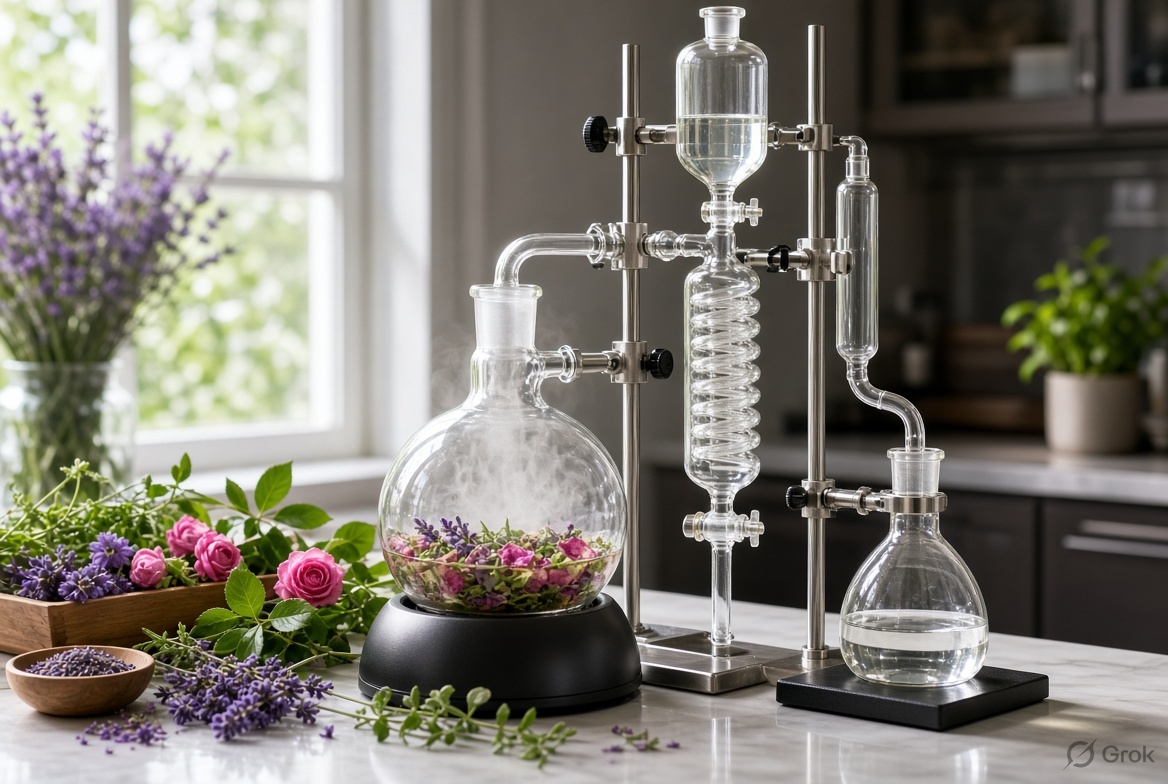
A true hydrosol is the aromatic water made during steam distillation. The plant is steamed, the vapor cools, and the water phase that comes out is the hydrosol. It is not just plain water with a scent added later.
That difference matters. A simple floral water may be water mixed with fragrance, essential oil, or a botanical extract. A true hydrosol comes from the plant itself, so it brings a softer scent and tiny plant compounds that deionized water cannot offer.
Here’s the simple flow:
| Step | What happens | What you get |
|---|---|---|
| 1 | Plant material goes into the still | Fresh flowers, leaves, or herbs |
| 2 | Steam passes through the plant | Volatile plant compounds move with the vapor |
| 3 | Vapor cools | Liquid forms again |
| 4 | Water phase is collected | True hydrosol |
| 5 | Oil may separate | Small trace of essential oil, if present |
What buyers should check first
If you’re sourcing herbal waters for skincare, don’t stop at the smell. Ask for the distillation method, botanical origin, and whether the ingredient is pure, with no extra fragrance or preservatives unless they’re clearly listed.
A Certificate of Analysis, or CoA, should be part of every serious bulk hydrosol supplier conversation. It tells you the batch number, pH, micro results, and if the lot matches what you ordered. No CoA, no real confidence. Simple as that.
Why hydrosols can beat deionized water
Using hydrosols instead of plain water gives you a bit more character in the base. That can mean a gentle scent, a softer skin feel, and a botanical story that fits natural ingredients for cosmetics.
For formulators, that also helps with product identity. A mist made with chamomile water for skin does not feel like a blank slate. It already brings a calming tone before any extra actives go in.
A quick buyer checklist
- Confirm steam distillation, not just blending
- Check the Latin plant name
- Ask if the water is pure and uncut
- Review the CoA before you buy
- Match the hydrosol to the skin goal, like soothing, toning, or freshening
And one small thing many teams miss, the smell can fool you. A stronger scent does not always mean a better hydrosol. Sometimes it just means more added aroma.
Next up, we’ll look at chamomile water on its own and why it gets so much attention in skincare.
2. Spotlight on Chamomile Water: The Ultimate Soothing Solution for Skin
You know that moment when a formula feels a little too “busy”? Chamomile water is the opposite of that. Quiet. Soft. Easy to live with.
Why chamomile water gets picked so often
Chamomile water for skin is loved because it brings a calm, skin-friendly feel without pushing the whole formula to shout. That makes it a handy fit for herbal waters for skincare where the goal is comfort, not drama.
There are two main chamomiles you’ll see in sourcing notes:
| Type | Botanical name | Formulation vibe | Common use in skincare |
|---|---|---|---|
| Roman chamomile | Chamaemelum nobile or Anthemis nobilis | Soft, sweet, gentle | Sensitive-skin toners, baby care, calming mists |
| German chamomile | Matricaria recutita or Matricaria chamomilla | More herbal, more active-leaning | Reactive-skin products, after-sun care, calming masks |
The main reason chamomile keeps showing up in a hydrosol comparison is its plant chemistry. German chamomile is known for compounds like apigenin and chamazulene, which are linked to skin-soothing and anti-inflammatory activity in the plant. Roman chamomile tends to feel milder in aroma and is often chosen for a more delicate sensory profile.
What each type brings to a formula
Roman chamomile is usually the friendlier pick if you want a very soft scent and a gentle product story. It works well in face mists, creamy cleansers, and leave-on products for dry or easily upset skin. German chamomile is often the one formulators reach for when the brief leans toward calming the look of redness or post-sun discomfort.
Actually, wait, there’s a small catch. Stronger sounding does not mean stronger in every bottle. Hydrosols are water-based, so the final aroma and plant compounds can shift a lot from batch to batch. That’s why a bulk hydrosol supplier should give you real specs, not just a pretty smell.
Best product fits for chamomile water
Chamomile water fits neatly into products that need a gentle touch:
- Sensitive skin toners
- Baby care products
- After-sun mists
- Cleansers for reactive skin
- Calming face masks
It also plays well in formulas where the ingredient list already has a fragrance story. Its aroma is light, slightly herbal, and never bossy. Nice, right? It can sit in the background while rose, lavender, or a light floral blend takes the lead.
Why the scent matters so much
This is one of the best things about chamomile hydrosol benefits in real-world use. The aroma usually stays soft enough that it won’t overpower a finished product. So if your brand wants a clean skin mist, a mild baby lotion, or a delicate gel mask, chamomile water can help without taking over the whole sensory profile.
And for brands building natural ingredients for cosmetics lines, that’s a pretty useful trick. It adds character, but keeps the formula balanced.
Quick take for formulators
If your product needs a calming feel, chamomile water is a strong starting point. If you need a louder scent or a sharper astringent feel, other hydrosols may fit better. But for gentle daily care, chamomile often lands in that sweet spot.
Next, we’ll compare the other main contenders side by side and see where each one really fits.
3. The Contenders: Profiling Key Alternative Herbal Waters
Okay, so chamomile water for skin gets a lot of love. But it’s not the only player on the shelf. Rose, lavender, and witch hazel each bring a different mood, a different smell, and a different job in the bottle.
If you’re formulating with hydrosols, this is where the choice gets practical. Do you want soft hydration? A calmer feel for breakout-prone skin? A sharper, more toning touch? Let’s break it down.
🌹 Rose Water: The Classic Hydrator
Rose water is the one most shoppers already know. It has that old-school, luxe feel that shows up in face mists, toners, and creams for dry or mature skin. It’s often picked for its gentle hydrating feel and its sweet, obvious scent. Pretty iconic, honestly.
For brands, rose water does a few nice things:
- Helps a formula feel more plush
- Fits dry and mature skin ideas
- Gives a strong floral story right away
- Works well in premium skincare lines
The big catch? The aroma is bold. Some people adore it. Others think it smells like grandma’s dresser drawer (no offense to grandma). So if your product needs a softer scent story, rose can take over fast.
💜 Lavender Water: The Calming Balancer
Lavender water for face products is popular because it sits in the middle. It feels calming, smells fresh, and usually works across skin types. That makes it a handy pick for oily skin, acne-prone routines, and everyday mists.
It’s often chosen for:
- Light balancing support
- A soft, clean scent
- Skin-care lines that want a relaxed feel
- Products aimed at combo or breakout-prone skin
And yes, people often lump lavender in with soothing skincare. That makes sense. But for formulators, the real value is that it brings a familiar botanical note without feeling heavy. It can play nicely in gel toners, face sprays, and simple daily care products.
🪴 Witch Hazel: The Clarifying Astringent
Witch hazel in cosmetics has a very different personality. It’s the neat-freak of the group. More toning. More pore-focused. More likely to suit oily or combination skin that wants a clean, tighter feel after cleansing.
Here’s the quick read:
- Good for oily skin goals
- Often used in toners and post-cleanse products
- Can help skin feel less greasy
- Works best in balanced formulas
But wait, there’s a catch. If the product contains alcohol, witch hazel can feel drying or stingy, especially on sensitive skin. So buyers should check the label carefully, because “witch hazel” does not always mean the same thing from one supplier to another.
Side-by-Side Hydrosol Snapshot
| Hydrosol | Main skin fit | Scent style | Best known for | Watch out for |
|---|---|---|---|---|
| 🌹 Rose water | Dry, mature, normal | Strong floral | Hydration, toning, premium feel | Can overpower a formula |
| 💜 Lavender water | Oily, acne-prone, combo | Fresh, herbal-floral | Calming balance, everyday care | Fragrance sensitivity in some users |
| 🪴 Witch hazel | Oily, combo | Sharp, clean | Toning, pore feel, oil control | Alcohol can dry the skin |
So if you’re choosing the best hydrosol for sensitive skin, rose is usually more about comfort and hydration, lavender is the easy middle ground, and witch hazel leans clarifying. Chamomile still stays the gentle favorite for formulas that need the softest touch.
Next, we’ll stack them side by side and talk about which one really fits each product goal.
Get a quote from Aroma Monk.
Essential Oil Supplier – Bulk pricing • Samples • Fast response
4. Comparative Analysis: Choosing the Right Hydrosol for Your Product
You can almost hear the sample bottles arguing in the lab. One smells soft. One feels bright. One is sharp enough to wake you up. And the tricky part is that none of them is “best” in every formula.
So let’s keep this practical. If you’re choosing chamomile water for skin or weighing it against rose, lavender, and witch hazel, the real question is fit. Not hype. Not the prettiest scent in the room.
Side-by-side hydrosol comparison
| Hydrosol | Primary benefit | Ideal skin type | Best for product type | Aroma profile | Relative bulk cost |
|---|---|---|---|---|---|
| Chamomile | Soothing, calming | Sensitive, dry, reactive | Toners, mists, mild cleansers, baby care | Soft, light herbal floral | $$ to $$$ |
| Rose | Hydrating, comfort-focused | Dry, mature, normal | Creams, mists, luxe toners | Rich floral, clearly noticeable | $$ to $$$ |
| Lavender | Balancing, fresh-feeling | Combo, oily, breakout-prone | Face sprays, gel toners, daily cleansers | Clean, herbal floral | $ to $$ |
| Witch hazel | Astringent, pore-refining | Oily, combo | After-cleanse toners, clarifying products | Sharp, green, clean | $ to $$ |
Which skin concern does each one fit?
If the brief is soothing and calming, chamomile usually wins. It fits best when the product needs to feel gentle from the first spritz. That makes it a strong pick for the best hydrosol for sensitive skin, especially in leave-on products that should not feel busy or loud.
Rose is more about hydration and a plush skin feel. It brings a classic, pretty profile that works well in premium creams and facial mists. But the scent can take over fast, so it suits brands that want rose to be part of the identity, not just a quiet helper.
Lavender sits in the middle. It feels fresh, tidy, and easy to use across skin types. For lavender water for face products, that middle-ground feel is a big plus, especially in simple routines where customers want something clean without a heavy floral note.
Witch hazel is the most direct of the group. It leans toward oil control and a tighter after-cleanse feel, which is why witch hazel in cosmetics often shows up in clarifying toners. But if the formula needs comfort first, it may feel a little too crisp.
How each hydrosol behaves in formulas
In creams, rose and chamomile tend to feel the most natural. Rose gives body and a soft luxury vibe. Chamomile gives calm without changing the story too much. That’s why formulators often like chamomile water for skin in simple emollient products that need a gentle base.
In mists, all four can work, but the scent decides a lot. Chamomile stays in the background. Lavender gives a fresh daily-use vibe. Rose turns the whole mist into a floral statement. Witch hazel makes the mist feel more functional than romantic. Weirdly enough, that can be a good thing.
In cleansers, the lighter scent profiles usually work best. Chamomile and lavender fit well because they support a soft wash-off feel. Rose can work too, but it may need other notes around it. Witch hazel makes the most sense in products built around a clarifying cleanse.
Sensory fit matters more than people think
A hydrosol does more than sit in water. It shapes the mood of the whole formula. Aroma, color, and how it lands on skin all matter. If your line is aiming at sensitive users, a quiet chamomile profile can help the product feel safer and less fussy. If you’re building a luxe facial mist, rose may give you the right first impression. And if your customer wants a crisp, no-nonsense toner, witch hazel or lavender may be the better call.
Here’s the thing though. A strong scent is not the same as a strong product. Sometimes the softest option is the one that wins because it disappears into the formula in the best way.
A quick decision guide
- Choose chamomile for calming, gentle daily care
- Choose rose for hydration and a more premium sensory feel
- Choose lavender for balance and broad use across skin types
- Choose witch hazel for clarifying, toning, and oil-focused products
Next, we’ll move from formula fit to sourcing and quality control, because the nicest-smelling hydrosol still has to pass the boring stuff first.
5. From Lab to Shelf: Sourcing & Quality Control for Bulk Herbal Waters
You know that sinking feeling when a sample smells great, but the paperwork looks thin? Yep. That’s where a lot of bulk hydrosol buys go sideways.
Ask the right supplier questions first
If you’re sourcing chamomile water for skin or any other herbal waters for skincare, start with the facts, not the fragrance. A good bulk hydrosol supplier should answer these without dodging.
| Question to ask | Why it matters |
|---|---|
| What is the distillation date? | Helps you judge freshness and shelf life |
| What plant part was used? | Flower, leaf, or stem can change the result |
| Is this a true steam-distilled hydrosol? | Cuts down on fake floral water blends |
| Can you share GC/MS reports? | Helps check identity and composition |
| Do you provide a Certificate of Analysis? | Shows batch data, pH, and micro results |
| What are your MOQs and bulk pricing tiers? | Lets procurement compare real cost-in-use |
| What certifications do you hold, like ISO or GMP? | Gives a better read on process control |
| Do you source directly from the manufacturer? | Often means more traceability and fewer middle steps |
And yes, ask for the botanical Latin name too. Simple question. Big deal.
How to read a sample without overthinking it
A sample can tell you a lot in about 60 seconds. First, look at the clarity. A good hydrosol should usually look clean, with no strange cloudiness or bits floating around unless the supplier has explained why.
Then smell it. Fresh is what you want. Clean. Mild. Plant-like. If it smells fermented, musty, sour, or weirdly like old tea, that’s a red flag. Don’t talk yourself into it because the price is nice. Been there, seen that, regretted it.
After that, ask for the Certificate of Analysis. The CoA should match the exact batch you’re testing, not just a generic file from last year. Check the batch number, pH, microbiology, and any preservative details. If the document feels vague, keep pushing.
Why transparency matters so much
This is the boring part, but it saves headaches later. Clear supply chain steps help you spot problems early, like inconsistent scent, weak performance, or sudden lot changes. Plus, if you work with direct manufacturer sourcing, you usually get better traceability and faster answers when R&D needs them.
That matters for natural ingredients for cosmetics because your team may need to defend the ingredient story, the safety file, and the final label. Certifications like ISO or GMP won’t fix a bad product by themselves, but they do tell you the supplier has a system in place.
10 Questions to Ask Your Bulk Hydrosol Supplier
Use this as a quick buying screen before you place a larger order.
- What is the distillation date?
- What is the botanical name?
- Is this a true hydrosol or a blended floral water?
- Can you send the CoA for this exact batch?
- Do you have GC/MS or other identity reports?
- What is the pH of the batch?
- What are the microbial limits and current test results?
- What certifications do you hold, like ISO, GMP, or organic?
- What are your MOQ, lead time, and bulk pricing tiers?
- Can you explain storage needs and shelf life after opening?
For formulating with hydrosols, that last question is a big one. Storage mistakes can wreck an otherwise good ingredient.
A few final buyer habits that pay off
Request samples from more than one lot when you can. Compare scent, color, and paperwork side by side. Keep notes. Short notes. Nothing fancy.
And if a supplier can’t clearly explain where the material came from or how it was made, that’s probably your answer right there.
For teams that want a steadier bulk supply of chamomile water for skin, rose water, and other botanical ingredients, Aroma Monk should be able to support direct manufacturer-to-business sourcing, lab-tested quality, and custom bulk options. If you want to review your next ingredient buy with less guesswork, start by asking for the technical file, then use a checklist like this before you commit.
Conclusion: The Strategic Choice for a Standout Product
The best hydrosol is not the fanciest one. It is the one that fits your product story, your customer, and your price point.
If your line is built for sensitive skin, baby care, or calm daily care, chamomile water for skin is the one that keeps making sense. Its gentle feel, soft scent, and easy fit in soothing formulas make it a strong match for the best hydrosol for sensitive skin. Plus, it works well in brands that want a clean, comforting, natural voice.
Rose water brings luxury. Lavender water for face gives a fresh middle ground. Witch hazel in cosmetics leans more clarifying. So the real win is not picking a favorite. It is matching the hydrosol to the job.
What to remember before you buy
- Pick the hydrosol that fits the end product, not just the scent
- Check purity, batch records, and distillation details
- Ask for a CoA and real traceability from your bulk hydrosol supplier
- Use chamomile when gentle care is the main promise
- Test the finished formula, not just the raw water
For brands building around natural ingredients for cosmetics, that kind of clarity builds trust. And trust is what keeps buyers coming back.
If you are ready to compare samples, request a quote, or review certified, pure chamomile water for your next launch, connect with Aroma Monk here: Aroma Monk.
Request Your Certified Chamomile Water Sample & Bulk Pricing
Get a quote from Aroma Monk.
Essential Oil Supplier – Bulk pricing • Samples • Fast response