

Introduction: Choosing the Right Herbal Water for Your Next Bestselling Skincare Product
How many natural ingredients have crossed your desk this quarter? Twenty? Fifty? And how many of them could actually make your next product stand out?
Here’s the problem. The shelf is crowded, and “natural” doesn’t mean much anymore. Roughly 64% of consumers check ingredient transparency before they buy, according to one market analysis. That’s a lot of people reading your label. So every ingredient has to earn its spot.
Why Gentle and Simple Is Winning
Shoppers want less. Shorter lists, calmer formulas, ingredients they can actually pronounce. The clean beauty market was valued at $10.5 billion in 2025 and could hit $35.3 billion by 2033, and 63% of beauty consumers say clean beauty matters a great deal when they pick cosmetics. (I’d treat forecasts like these as directional, since every research firm counts the market a little differently.)
This is where herbal waters, also called hydrosols, come in. They’re the water left after steam distillation of flowers and plants. Gentle, light, and easy to explain on a label. For sensitive skin ingredients and single-ingredient-style products, they’re a natural fit. And the category is growing too, with one forecast putting floral waters at about $340.75 million in 2025, climbing to $825.85 million by 2033.
What This Guide Will Do for You
But which one do you pick? Rose is the famous one. Lavender has its fans. Chamomile quietly does the soothing job for reactive skin.
So that’s what we’re going to sort out. We’ll look closely at chamomile water for face products, then compare it against other popular herbal hydrosols for cosmetics. The goal is simple: help you make smarter sourcing and formulating calls, whether you’re building a toner, a serum, or a whole new line. Let’s start with what chamomile water really is.
1. Understanding Chamomile Water: The Soothing Standard for Sensitive Formulations
Picture a customer with red, reactive cheeks. She’s tried five toners already. Most of them stung. What would you hand her?
For a lot of formulators, the answer is chamomile water. It’s mild, it smells softly sweet, and it has a long track record in calming products. But “chamomile” isn’t one single thing, and that’s where product developers can trip up.
German vs. Roman: Two Plants, Two Personalities

There are two chamomiles you’ll see on spec sheets. German chamomile is Matricaria recutita. Roman chamomile is Chamaemelum nobile (sometimes listed as Anthemis nobilis). They look alike in a field. In a formula, they’re different raw materials, and they shouldn’t share one spec.
Here’s a quick side-by-side:
| Feature | German chamomile water | Roman chamomile water |
|---|---|---|
| Botanical name | Matricaria recutita | Chamaemelum nobile |
| Known for | Higher azulene and bisabolol content in the plant and its essential oil | Gentle, softer profile, often chosen for very reactive skin |
| Aroma | Herbal, a bit stronger | Lighter, sweet, apple-like |
| Common fit | Redness and irritation positioning | Baby care and ultra-sensitive lines |
One honest note. The azulene advantage is real in the essential oil. In a clear hydrosol, those oil-soluble compounds show up only in trace amounts. So don’t promise a deep blue or a high azulene count on the label.
The Compounds Behind the Calm
Three names come up again and again. Bisabolol, chamazulene, and apigenin.
Bisabolol and chamazulene are the ones linked to soothing. A 2025 review of herbal dermatology research reported that chamomile preparations containing them showed anti-itch and anti-inflammatory effects in eczema models, including less redness. Apigenin, a flavonoid, gets credit for antioxidant support.
But here’s the catch (and I’d rather you hear it from me). Most of that evidence comes from oils and extracts, not steam-distilled water. Apigenin mostly lives in flower extracts. So chamomile water is a gentle, soothing base. It’s not a drug. Keep your claims at “soothing” and “calming,” not “treats eczema.”
Where Chamomile Water Fits Best
Its mildness makes it a natural choice for products aimed at sensitive, reactive, or eczema-prone skin. Think about:
- Facial toners and refreshing mists
- Micellar waters and gentle cleansers
- Baby care wipes, lotions, and washes
- Post-procedure soothing mists (with your safety testing in place)
- Water-based serums and essences for redness-prone skin
The market already proves it works commercially. Brands like Puressentiel sell an organic Roman chamomile floral water built around sensitive, reactive skin. Simple story, simple label.
So chamomile earns its spot. Next, let’s see how it stacks up against the other big names.
2. The Hydrosol Showdown: A Comparative Analysis for Strategic Formulation
Here’s a scene you’ve probably lived. Your team is deciding on a toner base. Someone says rose, because rose sells. Someone else says lavender. And a third person wants witch hazel because it’s cheap and “everybody uses it.”
All three can work. But they don’t do the same job, and they don’t suit the same shopper. Let’s sort them out.
Chamomile vs. Rose Water: Therapeutic Calm or Luxury Glow?
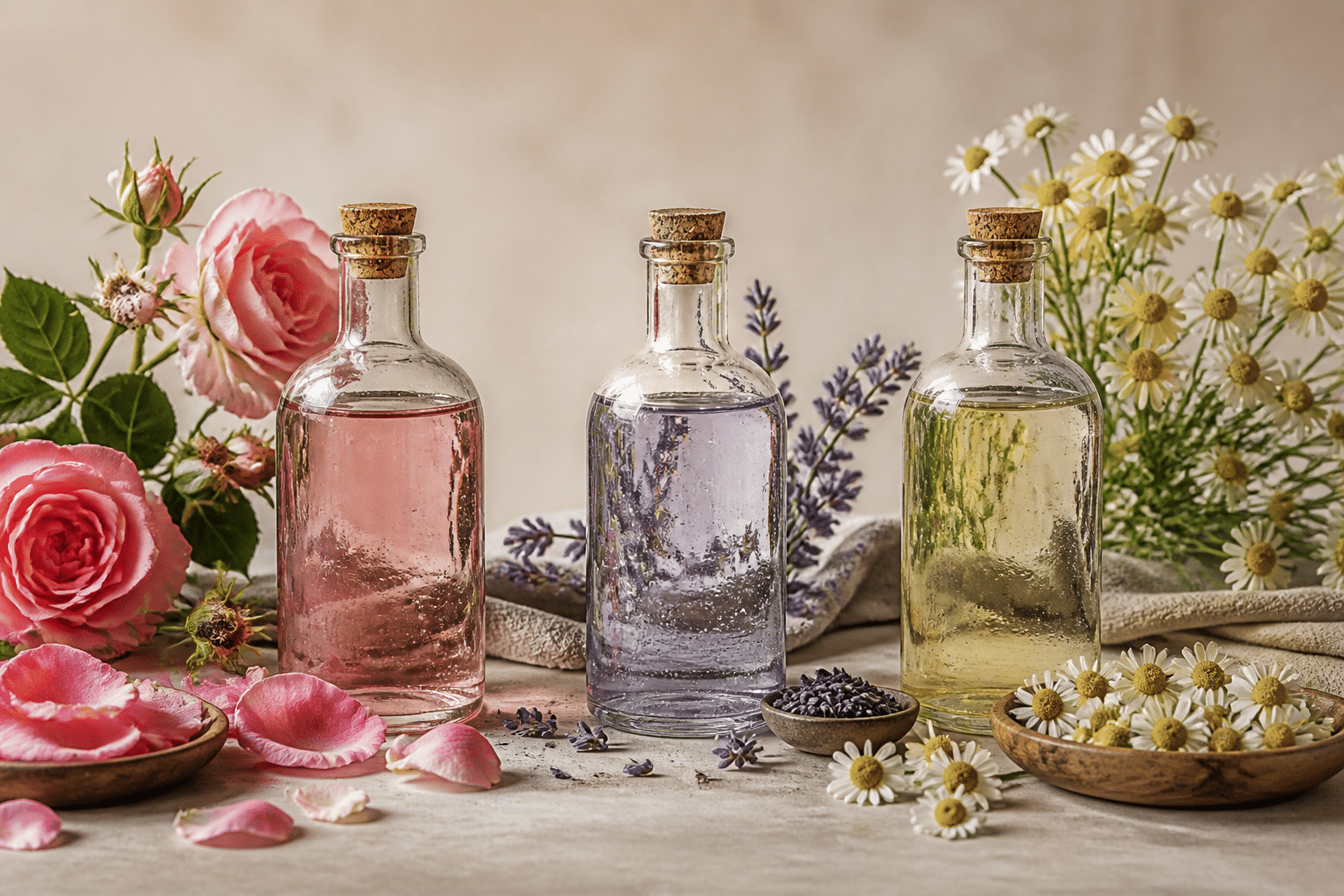
Rose is the market’s favorite, and the numbers show it. One floral water market estimate gives rose water about 36.5% of the category, with lavender near 24%, orange blossom at 16.5%, and chamomile at 12%. (Different reports slice the market differently, so treat those as rough shares, not audited facts.)
So chamomile is the smaller player. That can actually help you.
Rose water is the “treat yourself” ingredient. Its scent comes mostly from compounds like phenethyl alcohol, citronellol, and geraniol, and a 2026 chromatographic study found those levels vary a lot from sample to sample. That’s why origin and distillation matter so much. Rose reads as hydrating, refreshing, and a little glamorous. It fits mature-skin toners, gift sets, and prestige mists.
Chamomile reads differently. It’s quieter, sweeter, and more clinical. Think red, reactive skin, baby care, and post-shave comfort. Your rose buyer wants a ritual. Your chamomile buyer wants relief.
Neither one is a proven anti-aging active in water form, by the way. Keep rose claims at “refreshing” and “comforting.” Aroma Monk, for instance, supplies rose water for cosmetic and skincare use, and the same careful claim language applies there too.
Chamomile vs. Lavender Water: Soothing Irritation or Balancing Skin?
Lavender water has a cleaner, more herbal smell and a spa-like feel. A 2024 hydrosol review reported one tested sample at roughly 29% linalool, 15% coumarin, and 14% alpha-terpineol. Those numbers won’t match every batch, but they show where the aroma and the personality come from.
That makes lavender a good fit for combination or breakout-prone skin lines, where the story is “balanced” and “fresh.” It also works well in aromatherapy-style mists, since people already link the scent with winding down.
But here’s the catch. Linalool is a fragrance allergen, and lavender can be more sensitizing than chamomile for very reactive skin. So for a truly sensitive line, chamomile is usually the safer story. For a calming-but-clarifying line, lavender earns its place. Some brands even blend the two (test that in your own formula, though).
Chamomile vs. Witch Hazel: The Purity Question
This one trips people up. Witch hazel isn’t a hydrosol in the same sense. It’s a Hamamelis virginiana preparation, and depending on the maker, it may be made with water, alcohol, or another solvent. Many commercial versions are alcohol-based astringents.
That’s the whole difference for sensitive-skin positioning. Chamomile hydrosol is a gentle, water-based distillate. A witch hazel alternative that skips the stinging and drying? Chamomile fits that brief nicely.
Labeling matters too. Don’t call a distilled floral water an extract, or an extract a hydrosol, unless your supplier’s paperwork backs it up. The Cosmetics Europe labelling guidelines are a handy starting point for how ingredient names should appear.
Side-by-Side Comparison
Here’s the quick view. The cost index is a rough, relative guide only. Real prices swing with origin, harvest, certification, and order size.
| Hydrosol | Key Bioactives | Primary Skincare Benefit | Best For Skin Type | Scent Profile | Formulation Considerations | Bulk Cost Index |
|---|---|---|---|---|---|---|
| Chamomile | Trace bisabolol and related volatiles (varies by species) | Soothing, calming | Sensitive, reactive, eczema-prone | Soft, sweet, apple-like | Not self-preserving. Confirm species (German vs. Roman). Keep claims to “soothing.” | $$ |
| Rose | Phenethyl alcohol, citronellol, geraniol | Refreshing, toning, comfort | Normal, dry, mature | Rich, floral, classic | Strong scent drives luxury appeal. Composition varies by origin. | $$$ |
| Lavender | Linalool, alpha-terpineol, coumarin | Balancing, fresh, aromatic | Combination, oily, breakout-prone | Herbal, clean, floral | Declare fragrance allergens when above thresholds. | $$ |
| Witch hazel | Tannins (in the extract) | Astringent, toning | Oily, resilient | Sharp, faint woody | Check for alcohol. Use correct extract INCI name. | $ |
So Which One Wins?
None of them, on their own. It depends on the shopper you’re building for. Luxury and gifting? Rose. Balanced, fresh, acne-prone? Lavender. Sensitive and reactive? Chamomile. Next up, we’ll get into how to actually formulate with these waters, because choosing the right one is only half the job.
3. From Lab to Label: A Product Developer’s Guide to Formulating with Herbal Waters
Here’s a story that happens more than anyone admits. A formulator makes a gorgeous chamomile toner. It smells lovely, it feels soft, and the sample sails through the first meeting. Three weeks later, the jar on the shelf looks cloudy and smells a bit like old tea.
Oops.
Hydrosols are mostly water, and water is a happy home for microbes. So let’s talk about how to build with chamomile water for face products without that sinking feeling.
Stability, Preservation, and pH
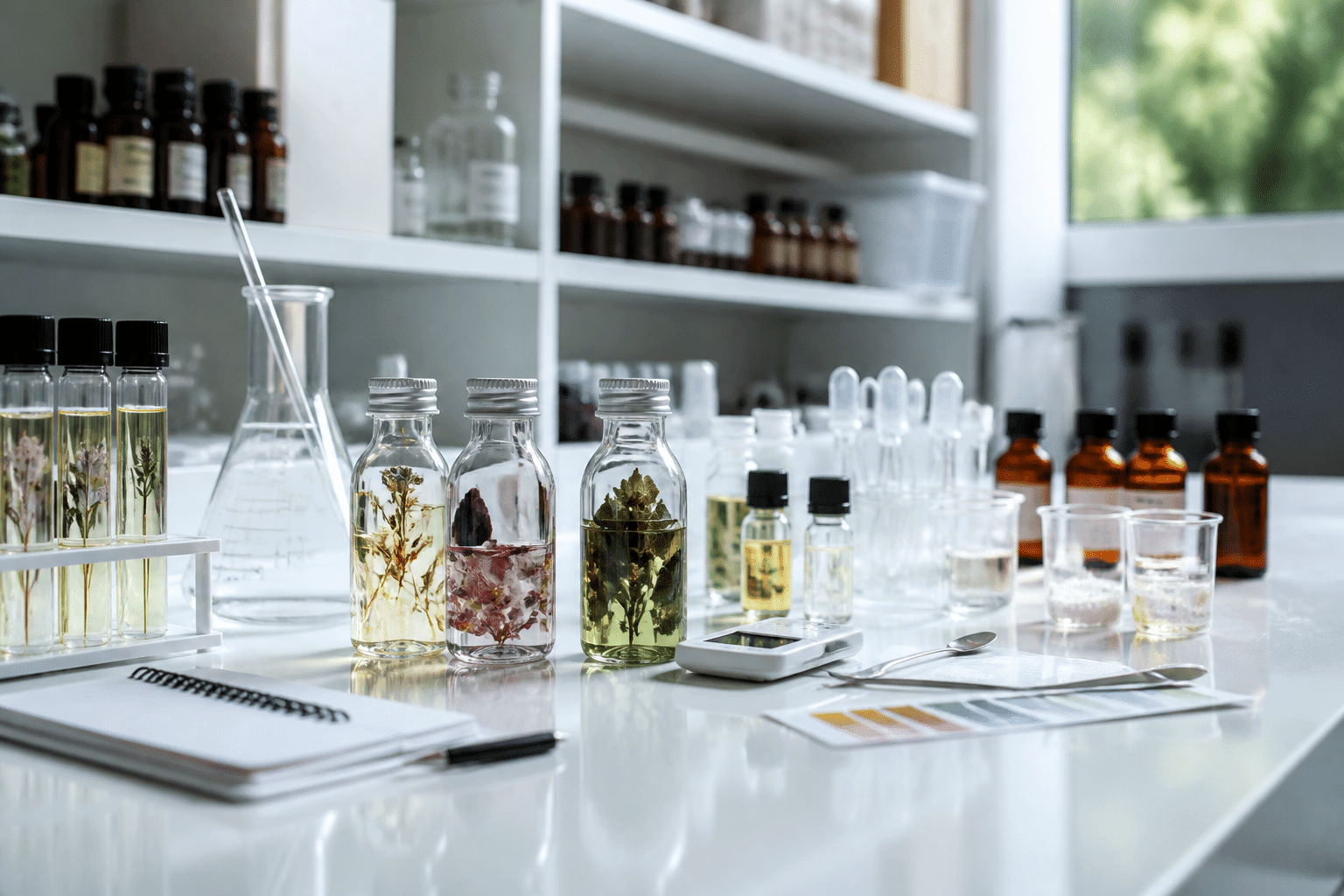
First, the big one. Chamomile water isn’t self-preserving. Any high-water product needs a real preservative system, and it should be proven with challenge testing on the finished product. Standards like ISO 11930 and USP <51> are the usual yardsticks.
So which preservative? It depends on your brand’s “clean” rules. Here’s a quick look:
| Preservative system | Works best when | Watch out for |
|---|---|---|
| Gluconolactone + sodium benzoate | Formula is acidic | Natural-friendly, but pH must stay low |
| Benzyl alcohol + dehydroacetic acid | You want a natural-leaning option | Check supplier limits and certification |
| Sodium benzoate + potassium sorbate | Toners and gels with low pH | Needs pH below about 5 to work well |
| Levulinic and anisic acid blends | You want natural-origin options | Often need pH control and a partner |
| Phenoxyethanol + ethylhexylglycerin | You need strong, familiar protection | May not fit every “clean” or certified definition |
Now pH. Chamomile hydrosol usually lands somewhere between 4.5 and 6.0, though supplier specs can be wider. For sensitive skin, I’d set a tighter internal target of 4.8 to 5.5. And here’s the part people skip: test pH in the final preserved product, not just the raw water. Preservatives and other ingredients can nudge it.
One more thing. Keep strong acids, strong alkalis, and oxidizing agents away from your chamomile water, since supplier safety documents list them as incompatible. Oil-soluble ingredients like bisabolol or essential oils won’t mix in on their own either. They need a solubiliser or an oil phase.
Recipe Cards: Two Starter Concepts
These are development ranges, not finished recipes. Always test them in your own lab. But they give you a place to start.
Recipe Card 1: “Calm & Hydrate” Serum
- Base: 50 to 80% chamomile water (Roman for ultra-sensitive lines)
- Hydrator: hyaluronic acid, in a low-molecular-weight and a higher-weight mix
- Support: 2% panthenol, 3% glycerin or propanediol
- Preservative: a validated system matched to your pH
- Notes: Supplier guidance lists 30 to 80% hydrosol for sensitive-skin serums. Add thickener slowly to avoid clumps. Final pH target: about 5.0.
Recipe Card 2: Bi-Phase Cleanser
- Water phase: chamomile water, around 60%
- Oil phase: a light carrier oil like jojoba or sweet almond, around 30%
- Extras: a mild preservative and a pinch of humectant in the water phase
- How it works: Shake it, sweep it over the face, then rinse or wipe. The water side soothes while the oil side lifts makeup.
- Notes: Because it’s two layers, no emulsifier is needed. Do check the preservative still protects the water layer.
A 94% chamomile toner with 3% glycerin, 2% panthenol, and 1% preservative is also a real-world example of how simple a hydrosol product can be. Simple is fine. Simple is actually the point.
Blending Hydrosols for Synergy
Combining waters is where it gets fun. A chamomile and lavender mist makes a natural nighttime story: soft sweetness from chamomile, clean herbal calm from lavender. Try a 70:30 chamomile to lavender split to keep the sensitive-skin feel. Lavender brings linalool, so check allergen labeling at your final level.
But here’s the catch (and it’s a big one). Every extra unpreserved water adds to the microbial load. If your preservative worked on chamomile alone, it may not hold up once you add a second hydrosol. Re-run your challenge test on the blend. Every time.
Hydrosol Formulation Best Practices Checklist
- Confirm the species on the spec sheet (German or Roman chamomile).
- Measure pH in the finished, preserved product.
- Run preservative efficacy testing on every new version.
- Hold back some hydrosol for the cool-down phase in heated emulsions, so you don’t cook off delicate aromatics.
- Use opaque or UV-protective packaging, since chamomile water dislikes light and heat.
- Use a solubiliser if you add any oil-soluble ingredient.
- Keep claims at “soothing” and “calming.”
- Test the finished leave-on product on sensitive skin, because chamomile can bother people allergic to Asteraceae plants.
Get these right and your formula starts strong. But even a perfect recipe falls apart with weak raw materials, which brings us to where your hydrosols actually come from.
Get a quote from Aroma Monk.
Essential Oil Supplier – Bulk pricing • Samples • Fast response
4. The Supply Chain Imperative: Sourcing High-Purity Hydrosols for Quality and Scale
Here’s a hard truth. You can have a perfect recipe, a great preservative system, and a lovely brand story. And one bad drum of chamomile water can still wreck the batch.
So let’s talk about the part that happens before the lab: sourcing pure hydrosols you can trust.
True Hydrosol, Diluted Oil, or Fake Floral Water?
Not everything labeled “chamomile water” is the same thing. Honestly, this is where a lot of buyers get burned. There are three common versions on the market, and only one is the real deal.
| Type | How it’s made | What to expect |
|---|---|---|
| True steam-distilled hydrosol | Plant material is steam distilled. The water that’s collected after the oil separates is the hydrosol. | Soft, natural scent. Trace levels of plant volatiles. Needs preserving. |
| Diluted essential oil | Essential oil is mixed into water, often with a solubiliser | Scent can be stronger or oddly flat. Profile may not match a real distillate. |
| Synthetic fragranced water | Water plus fragrance chemicals, sometimes with colorants | Loud, sweet smell. No real plant link. Not a hydrosol at all. |
Want to see how the real process looks? This steam distillation walkthrough from Typology explains how chamomile hydrosol is obtained.
Now, a clean GC-MS report won’t magically fix this. Hydrosols hold far less volatile material than essential oils, so a real one may show only trace peaks. A mixed-up “hydrosol” made from water and a splash of oil can look different on paper. So ask one blunt question: is your material co-distilled, recovered from distillation, or compounded? A good supplier answers without squirming.
The Paperwork to Demand Before You Buy
I’ll admit it. Early in my career I’d skim a spec sheet and move on. Don’t. Here’s what to ask for, every time:
- A batch-specific COA (Certificate of Analysis). It should match your lot number. It should cover pH, appearance, odor, total aerobic count, and yeast and mold. An undated, generic sheet doesn’t count.
- The full GC-MS report. Not just a “passed” stamp. You want the chromatogram, the peak table, and the method details. Check the botanical name too: Matricaria recutita or Chamaemelum nobile, not just “chamomile.” And don’t expect a high chamazulene number in a clear hydrosol. If a supplier promises one, that’s an essential oil profile.
- Organic certifications, if your brand makes organic claims. Ask for the current certificate and check that it covers the exact product.
- GMP compliance. Look for documented sanitation, batch records, and a way to handle complaints.
- Traceability records. Where was it grown? When was it distilled? Who handled it along the way?
One more thing. GC-MS alone doesn’t prove the water is microbiologically safe. Microbial testing is commonly aligned with ISO 17516 for cosmetics, so ask which methods the lab used. And test incoming lots yourself when you can, instead of leaning only on the supplier’s COA.
Red Flags Worth Walking Away From
- Prices way below everyone else (could mean dilution or old stock)
- No lot numbers or traceability
- Vague naming, like “chamomile water” with no Latin name
- Claims of years of shelf life with no preservative
- Refusal to send samples or allow third-party testing
Price alone doesn’t prove fraud. But it’s a signal, so look closer.
Shelf Life, Storage, and Packaging for Bulk Orders

Hydrosols are mostly water. That makes them fragile. Heat, light, and air all chip away at quality, and microbes love the leftovers.
FDA’s cosmetic GMP guidance says raw materials should be stored so they don’t pick up contamination or break down from heat, cold, sunlight, or moisture. For hydrosols, that translates into some simple habits:
- Store cool and dark. A range around 5 to 20°C is often cited, but follow your supplier’s validated spec.
- Use sealed, compatible packaging. Food-grade HDPE drums, totes, or stainless steel are common. Avoid clear containers and anything that leaks or absorbs aroma.
- Keep lot labels intact. Each drum should show batch number, production date, and storage conditions.
- Check on arrival. Look at seals, color, cloudiness, odor, and pH. A musty smell is bad news.
- Quarantine until tested. Don’t pour it into production the same afternoon.
- Reseal fast and rotate stock. First in, first out. Large drums shouldn’t be opened over and over.
Shelf life depends on the supplier’s data, not on wishful thinking. If a supplier can’t tell you how long a lot stays within spec, that’s your answer.
For bigger programs, line up a backup supplier and ask for change notices on the botanical source, distillation site, or packaging. Boring? Sure. Cheaper than a recall.
This is the kind of detail Aroma Monk’s bulk-supply approach is built around: lab-tested materials, traceability, and handling from sourcing through delivery. Once the supply side is solid, the next question is where the market is headed.
5. Tapping into 2027 Market Trends: How Chamomile Water Drives Brand Value
Shoppers are tired. Tired of ten-step routines, tired of stinging toners, tired of labels that read like a chemistry exam. And that’s good news if your formula starts with chamomile water.
Skinimalism, Transparency, and Calm
The shift toward simpler, gentler skincare shows up in search data. Spate’s 2025 review, as reported by Beauty Matter, flagged fast growth in soothing formats:
| Search term | Reported growth |
|---|---|
| Milky toners | 132.0% |
| Hypochlorous acid sprays | 50.4% |
| Centella ampoules | 47.9% |
None of these are chamomile searches. I couldn’t find a trustworthy number for that exact phrase, so I won’t invent one. But the pattern is clear: people want calm, barrier-friendly products, and they like ingredients they recognize.
Transparency matters too. A GCI Magazine report on beauty ingredients says 65% of consumers always or mostly read ingredient labels. Chamomile water is easy to explain. You can name the species, say it’s steam distilled, and list the preservative. Short label, short story.
Storytelling Without Overpromising
Chamomile already feels calming. You don’t have to oversell it. Here’s how three mock-up concepts could sound, with copy that stays at “soothing” and “comforting”:
| Concept | Ingredient-forward copy | Claim to avoid |
|---|---|---|
| Calm Cheek Mist | “Steam-distilled Roman chamomile water. Nothing loud. Just a soft, cooling mist for sensitive-feeling skin.” | “Cures redness” |
| Baby-Safe Wipe Water | “Chamomile flower water, gentle glycerin, a clearly labeled preservative. That’s the list.” | “Dermatologist-proven” (unless you’ve tested) |
| Evening Reset Toner | “94% chamomile water. Fewer steps, fewer worries.” | “Treats eczema” |
Put the Latin name on the pack. Mention where it was grown if your supplier can prove it. Shoppers with sensitive skin read labels like detectives, so give them clues. And skip the miracle language, because it invites regulators and unhappy customers.
The Business Case for Premium Hydrosols
So why pay more for a better water? Three reasons.
First, price. A short, clear, well-documented label can support a higher shelf price than a generic “floral water” toner. Not guaranteed, but it’s a story shoppers understand.
Second, loyalty. If someone with reactive skin finds a mist that doesn’t sting, she’s not switching for a dollar off. I’d bet on that.
Third, room to grow. Strategic Market Research estimates the broader hydrosols market will rise from $1.5 billion in 2024 to $2.3 billion by 2030 (that figure includes uses beyond facial care, so read it as a signal, not a forecast for your product).
There’s a catch. Premium pricing only holds if every batch matches the last one. That’s where suppliers like Aroma Monk come in, with lab testing and traceability that back up your label. Once the brand story and the supply story agree, there’s one more step: pulling it all together.
Conclusion: Make a Strategic Choice for Purity, Performance, and Partnership
So, which herbal water wins? Still depends on who you’re building for. Rose is the luxury glow. Lavender is fresh and balanced. Chamomile is the quiet one that calms red, reactive skin without stinging. Pick the water that fits your shopper, not the one that’s loudest on the shelf.
But here’s the part I’d tattoo on every spec sheet. A great formula can’t rescue a weak raw material. Your preservative system, your pH target, your gentle claims, all of it sits on top of the water you start with. If that water is diluted, old, or poorly documented, the finished product pays for it. Shoppers who read labels like detectives (and lots of them do) will notice when it doesn’t match the story.
That’s why the supplier matters as much as the recipe. The best partner isn’t the cheapest one or the one with the prettiest pitch. It’s the one who can deliver verified purity, batch after batch, with a COA, traceability, and a steady supply you can plan around.
Aroma Monk works that way. Lab-tested materials, traceable sourcing, and bulk supply managed from sourcing through delivery. Boring? Maybe. But boring is exactly what you want from your supply chain.
Ready to formulate with certified-pure chamomile water? Request a sample and COA from our specialists today at Aroma Monk.
Your next bestseller might be one good drum of water away.
Get a quote from Aroma Monk.
Essential Oil Supplier – Bulk pricing • Samples • Fast response