
Introduction: The Untapped Potential of Sandalwood Water in the Booming After-Sun Market
Picture this. It’s launch review day, and your team has just spent three months on a new after-sun gel. The formula is fine. The texture is fine. But when you line it up next to ten others on the shelf, they all say “aloe.” Sound familiar?
If you’re a Product Development Manager, you already know the real goal isn’t just a good product. It’s a product people can tell apart from the rest.
A Market With Room to Grow
The after-sun category isn’t small, and it’s still climbing. Fortune Business Insights puts the global market at about $2.59 billion in 2026, with a growth rate near 4.35% a year. Other firms land in a similar range, so it’s safe to say we’re talking roughly $3 billion by 2030.
Shoppers are also reading labels more closely. Innova Market Insights found that 60% of global consumers actively look for natural ingredients in their skincare. That’s a big crowd asking for something plant-based.
Where Sandalwood Water Comes In
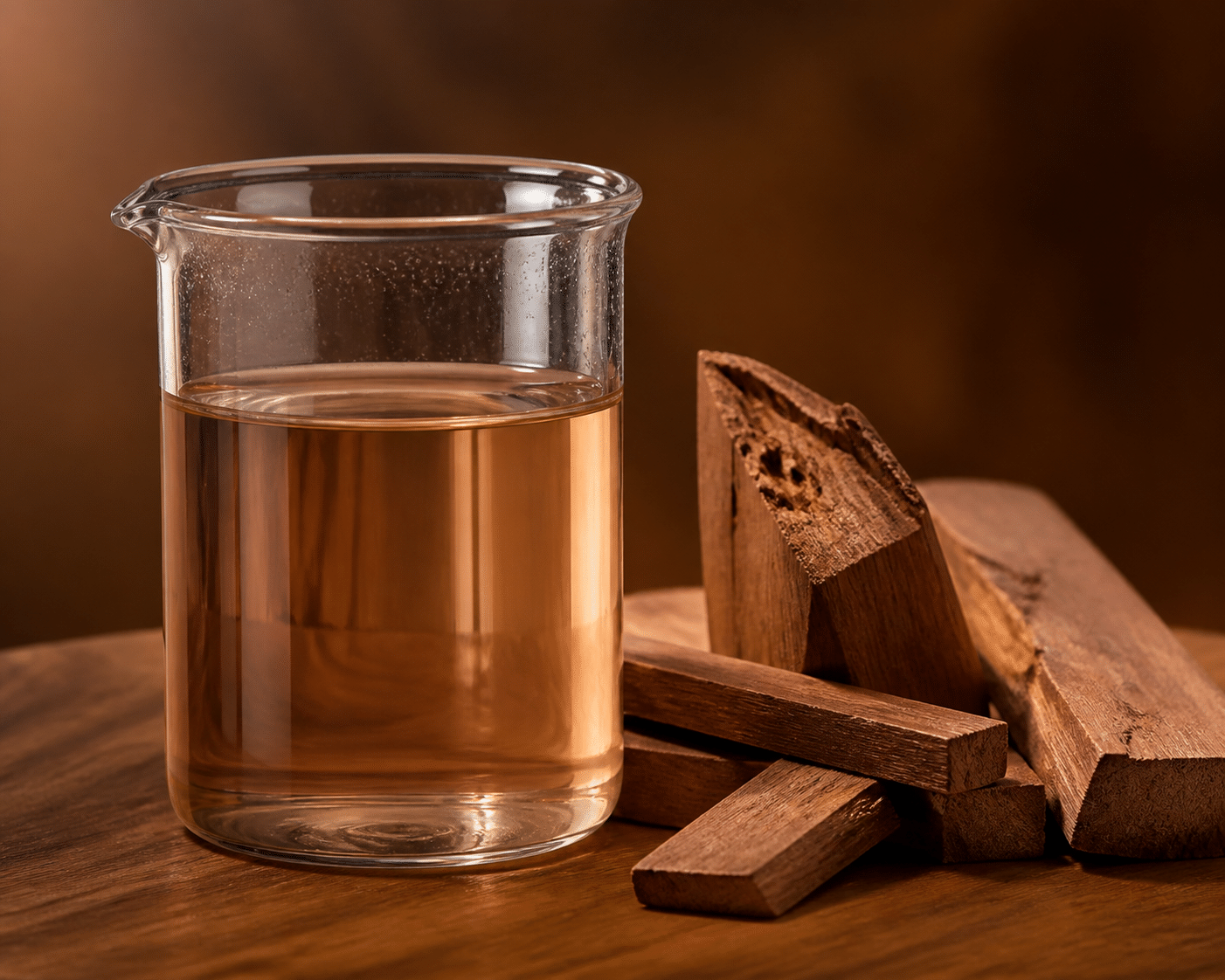
Here’s the idea. Sandalwood water, also called sandalwood hydrosol, is the gentle, water-based distillate left after steam-distilling sandalwood. It’s light. It’s cooling on the skin. And it has a soft, woody scent that most aloe-only products simply don’t have.
I’ll be straight with you: it’s not a miracle cure for sunburn, and no honest supplier should say it is. But as a lightweight, plant-derived base for a mist, gel or recovery mask, it gives your line a story that’s different and easy to explain. That’s a real edge.
The Catch: Purity Is Everything
Now for the hard part. A great ingredient story falls apart fast if the water in the drum is diluted, mislabeled or poorly tested. Sandalwood is one of the most commonly faked botanicals out there. So the real question isn’t just “should we use it?” It’s “can we get it pure, tested and consistent, batch after batch?”
That’s what the rest of this guide is about. Let’s start with how pure sandalwood water is actually made.
Understanding Sandalwood Water: From Steam Distillation to Certified Purity
Here’s something that surprises a lot of buyers. The “sandalwood water” in one drum can be a totally different thing from the “sandalwood water” in the next. Same label. Very different liquid.
So let’s start with what the real stuff actually is.
How Real Sandalwood Water Is Made
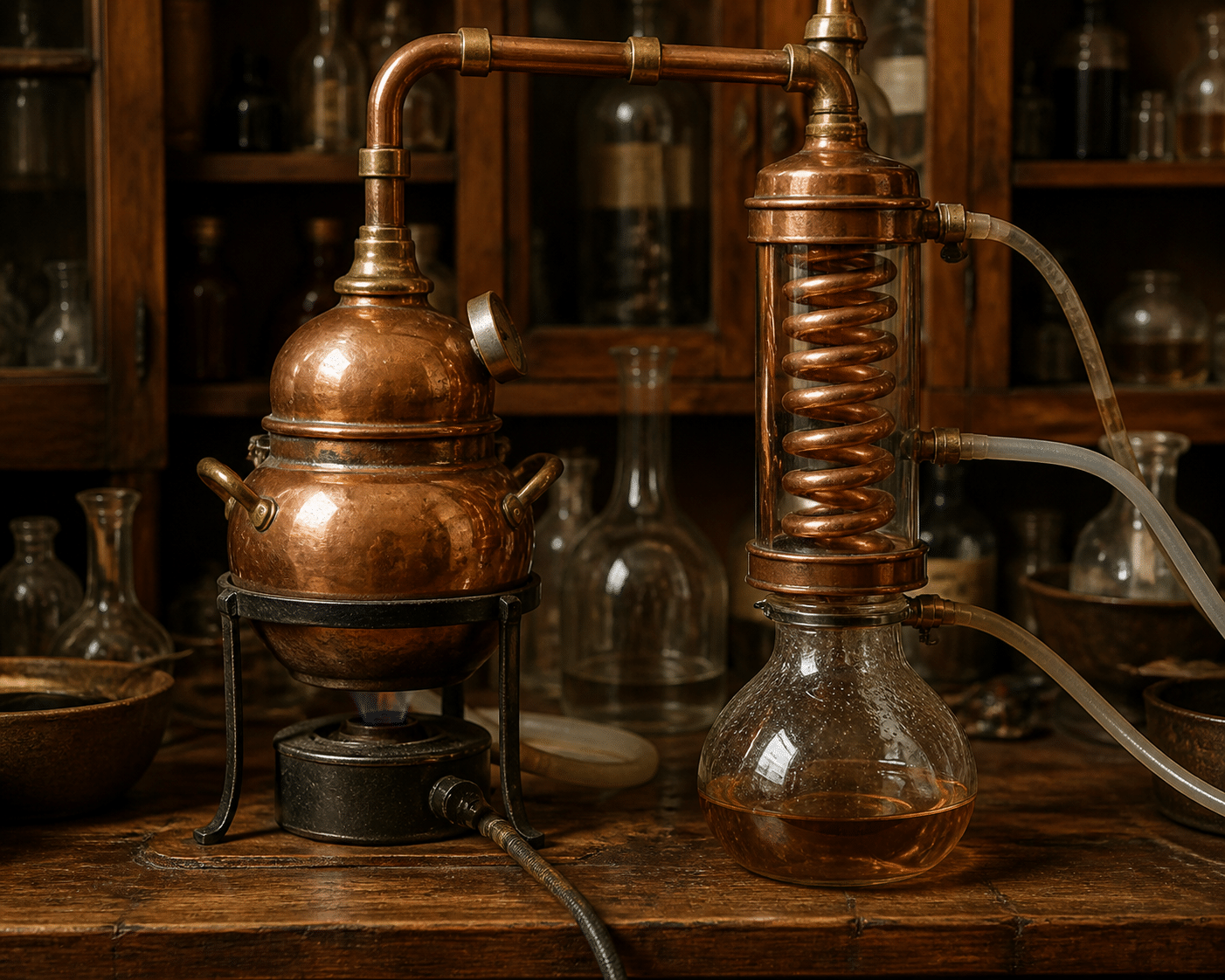
True sandalwood water (some suppliers call it chandan ark) comes from steam distillation. Think of it like a slow, careful kettle. Iowa State University’s steam distillation SOP shows the setup: a boiling flask, a chamber for the plant material, a still head, a water-cooled condenser and a receiver.
Here’s the basic path:
- Sandalwood heartwood sits above or in heated water.
- Steam passes through the wood.
- The steam picks up tiny, water-soluble aromatic bits.
- A condenser cools the vapor back into liquid.
- What’s collected is the hydrosol, and any oil that separates sits in its own layer.
That’s it. No shortcuts. The result is mostly water (one supplier lists more than 99.85% water with only about 0.03 to 0.07% santalol). So don’t expect it to smell like a punchy oil. It’s soft, and that’s the point.
Why Purity Is Non-Negotiable
Now, why am I making such a big deal about this? Because formulators get burned here. A diluted or fake product can mean weaker results, odd smells, or skin that reacts badly. Imagine launching an after-sun mist for sensitive skin, and the batch has hidden alcohol, synthetic fragrance or unlisted preservatives. Not great.
And sandalwood is a favorite target for cheats. Common problems include:
- Plain dilution with water or a generic aromatic hydrosol
- Added preservatives, alcohol or solubilizers nobody declared
- Swapping in other species, like West Indian sandalwood (Amyris balsamifera)
- Synthetic sandalwood odorants
One published review of sandalwood authenticity also notes that studies found phthalates at very high levels in adulterated sandalwood oil samples. That research is about oils, not hydrosols. Still, it’s a good reason to ask for phthalate and solvent screening.
True Hydrosol vs. Scented Water
This table shows what to look for.
| Feature | True Sandalwood Hydrosol | Scented Water or Diluted Oil |
|---|---|---|
| How it’s made | Steam distilled from Santalum album heartwood | Mixed from oil, fragrance or other waters |
| Scent | Soft, woody, a bit green | Often loud, flat or sweet |
| Ingredients | Water-soluble distillate (plus declared preservative, if any) | May include alcohol, solubilizers or synthetic fragrance |
| Documents | Batch CoA, botanical name, origin | Vague “100% pure” claim |
| Lab fingerprint | Consistent GC-MS profile | Unclear or missing |
| Risk to your formula | Lower, if tested | Higher: irritation, off smells, batch swings |
Testing and Certificates That Actually Mean Something
Here’s the catch. “100% pure” on a label proves nothing. There’s also no single universal chemical spec for sandalwood hydrosol, because the makeup shifts with wood age, origin and distillation. So you want a batch-specific GC-MS or GC-FID profile for every lot, not one old report.
A solid bulk package usually includes:
- Batch CoA with the botanical name (Santalum album L.), plant part and origin
- GC-MS fingerprint, pH, color and odor notes
- Microbial counts, heavy metals, pesticides, residual solvents and phthalates
- Preservative disclosure, SDS and allergen statement
- ISO 22716 (cosmetic manufacturing practice) and COSMOS or organic certificates, if claimed
One warning: ISO 22716 shows good manufacturing habits. It doesn’t prove the water is real sandalwood. That’s why lab data and certificates have to work together. This is also how Aroma Monk approaches its lab-tested, traceable products.
Next up, let’s look at what sandalwood water might actually do for sun-stressed skin.
Section 2: The Science of Soothing: Unpacking the Sandalwood Water Benefits for Sun-Exposed Skin
Let’s talk about what sandalwood water might actually do for skin that’s had too much sun. And I’ll be upfront: the strongest research is on sandalwood oil, not the water. So we’ll stick to what the evidence supports and skip the hype.
The Anti-Inflammatory Side
The star compounds here are alpha-santalol and beta-santalol. In lab tests on human skin cells, sandalwood oil and purified santalols quieted several inflammatory signals, including IL-6 and IL-8. That’s promising. But it’s in vitro work, which isn’t the same as proof on a real sunburn.
Here’s the catch. Hydrosol holds only tiny amounts of santalol compared to oil. So I wouldn’t call sandalwood water a treatment for redness. I’d call it a gentle, supportive ingredient that fits a calming, recovery-style formula. Honest claims age better anyway.
Cooling, Toning and Pores
Sun-exposed skin feels hot and tight. A water-based mist hits that feeling right away, and it’s mostly the cool, light feel doing the work. Plus, one supplier describes its hydrosol as having mild astringent capabilities, which is why sandalwood water shows up in toners.
A mild astringent can leave skin feeling fresher and tighter. Pores may look a bit smaller for a while. (Temporary, to be clear.) The pH helps too. One listed white-sandalwood aromatic water measures 6.4 on the aroma-zone product page, which is close to skin’s slightly acidic surface. You’ll still want to test the pH of your finished formula, not just the raw water.
Hydration Without the Grease
After a long day outside, skin loses water fast. That’s where the peeling and dryness start. Sandalwood water is thin and fast to absorb, so it adds a light layer of moisture with no sticky or greasy feel. Shoppers complain about sticky after-sun products all the time, so this matters.
But water alone won’t hold moisture in. Pair it with glycerin, panthenol or hyaluronic acid, and you’ve got a mist or gel that actually lasts.
Quick Look at the Key Properties
Here’s how I’d sum up what sandalwood water can bring to a formula:
- Anti-inflammatory potential: santalol shows promise in lab studies, but the evidence for hydrosol is limited
- Cooling feel: a fresh, light sensation on warm, tight skin
- Mild astringent action: helps tone skin and soften how pores look
- Light hydration: water-based moisture with no greasy residue
- Antiseptic leaning: suppliers describe mild antibacterial qualities, though that’s not clinical proof
Did You Know? Aloe vera is the big name in after-sun care. One market report says aloe-based formulas hold about 38.3% of the after-sun spray market. But aloe soothes with a thick, slippery gel, and a lot of aloe products smell the same. Sandalwood water works differently. It’s a thin, cooling distillate with a soft woody scent. Think of it as a partner to aloe, not a replacement.
So the honest pitch is simple: light, refreshing, plant-based hydration for skin after sun. Next, let’s look at how to build that into a real formula.
Section 3: Formulator’s Guide: Incorporating Sandalwood Water into High-Performance After-Sun Products
OK, time to get your hands wet. (Sorry, couldn’t resist.) You’ve got a pure, tested sandalwood hydrosol on the bench. Now what do you actually make with it?
I’ll say this up front. The ranges below are starting points I’d test, not industry rules. Every hydrosol and every formula behaves a little differently.
Base Ingredient or Active? Pick a Job
Sandalwood water can play two roles.
As a base, it replaces some or all of the deionized water in your formula. This is where I’d start. It’s mostly water anyway, so it slots into the water phase without drama, and it gives you a clean “made with sandalwood water” story on the label.
As an active, you add a smaller amount on top of your normal base. But be honest with yourself here. Sandalwood water carries only trace santalol, so a little more of it won’t make a product “stronger.” What you get is scent, a cooling feel and a nice ingredient story. Not a treatment.
One more thing. Don’t treat it as self-preserving. Organic Creations sells an unpreserved sandalwood hydrosol that should be used within three months, and a preserved version that lasts up to a year. So add a broad-spectrum preservative system, run a challenge test, and check the finished pH.
The Formulation Idea Matrix
Here’s a quick map of four product types. Percentages are rough starting ranges for your first prototypes.
| Product type | Sandalwood water level (starting range) | Synergistic ingredients to try |
|---|---|---|
| Cooling facial mist | 60 to 90% of the formula, as the main water | Glycerin (1 to 3%), panthenol (about 1%), lavender hydrosol (5 to 10%), peppermint hydrosol (1 to 3%, tested carefully) |
| Lightweight soothing gel | 40 to 70% of the formula | Aloe vera juice, hyaluronic acid (0.1 to 0.5%), glycerin, a clear gelling agent |
| Hydrating after-sun lotion | 20 to 40% of the formula (replaces part of the water phase) | Panthenol, glycerin, ceramides, a light emollient |
| Sheet mask serum | 50 to 80% of the serum | Hyaluronic acid, panthenol, green tea extract |
A few notes on the table. Mists are the easiest win because there’s almost nothing to hide behind. The water is the product. Gels need a bit more testing, since salts and some botanicals can thin them out or cloud them. And for lotions, watch your emulsion stability when you swap the water, because that’s where surprises tend to show up.
Pairings That Make Sense
Sandalwood water is a supporting player, and it works best with a good cast.
- Hyaluronic acid and glycerin: these hold the moisture that water alone can’t. Beauty Matter’s July 2026 coverage points to hyaluronic acid, antioxidants and barrier-repair actives as key directions for post-sun care, so this pairing fits where the category is heading.
- Lavender hydrosol: adds a calming, familiar scent. It also blends nicely with sandalwood’s soft woody note.
- Peppermint hydrosol: gives an extra cooling kick. But go light. Menthol-type cooling can sting skin that’s already tender, so patch test first.
- Aloe and green tea: a friendly, familiar combo that plays well with a water-based formula.
One last thing before you head to the lab. Sandalwood-derived materials can irritate some people, and sunburned skin is already touchy. Think about a fragrance-light or fragrance-free version for your most sensitive customers.
So that’s the formula side. Next, let’s look at how far one sandalwood water can stretch across your whole product range.
Get a quote from Aroma Monk.
Essential Oil Supplier – Bulk pricing • Samples • Fast response
Section 4: Maximizing ROI: The Versatility of Sandalwood Water Beyond Sun Care
Here’s a question your finance team will ask: what happens to the rest of the drum after the after-sun launch? Fair. And honestly, this is where sandalwood water starts to look like a smart buy.
One Drum, Many Products
An ingredient that only fits one SKU is a hard sell at bulk volumes. Sandalwood water doesn’t have that problem. One supplier’s technical monograph lists uses like post-wax care, facial toners and mists, and masks. That’s already three lanes before you leave skincare.
Shoppers like flexible products too. A January 2025 survey of 3,900 U.S. women found that 67% regularly buy products that do more than one job. One hero ingredient across several products fits that habit nicely.
Here’s how one drum could branch out:
| Product | Role of sandalwood water | Starting idea |
|---|---|---|
| Facial toner | Main water phase | Pair with glycerin and a light humectant |
| After-sun mist | Main water phase | Add panthenol and hyaluronic acid |
| Aftershave soother | Water phase in a splash or gel | Keep alcohol low, patch test first |
| Face mask or sheet serum | Soaking liquid | Add green tea or aloe |
| Wellness room or pillow mist | Scented water base | Blend with lavender hydrosol |
Daily Skincare Uses
For oily or combination skin, a toner is the easy win. Sandalwood water has a mild astringent feel, so it leaves skin fresh without that squeaky, stripped feeling. Chandan ark has been used this way in India for ages.
For acne-prone skin, I’d be careful. Suppliers do describe it as mildly antiseptic, and a few small studies on sandalwood mixtures show promise. But those tested oils or blends, not the water alone. So stick to words like “refreshing” and “lightly soothing,” and skip “treats acne.”
For mature or sensitive skin, think calming, not wrinkle-fighting. I couldn’t find solid evidence that sandalwood water reduces wrinkles. What it can do is bring a gentle, cooling hydration to a routine that already has proven actives. Patch testing still matters here, since fragrance can bother some people.
Beyond the Face
Men’s grooming is a nice fit. Freshly shaved skin feels hot and tight, much like sun-exposed skin, and a soft woody scent suits the category. A light aftershave mist or gel is a simple place to start.
Wellness is another door. Sandalwood has a calming, grounding reputation, so a pillow, room or body mist feels natural for aromatherapy lines. (Just keep claims about mood and sleep modest.)
The math is pretty simple. Buying one tested ingredient in bigger volume, then spreading it across four or five SKUs, can lower your cost per unit and cut down on supplier vetting. That’s the kind of range a brand like Aroma Monk supports with bulk supply across its wider natural ingredient lineup.
So how do you actually source this at scale without getting burned? That’s next.
Section 5: The Supply Chain Imperative: How to Source Authentic, Bulk Sandalwood Water Reliably
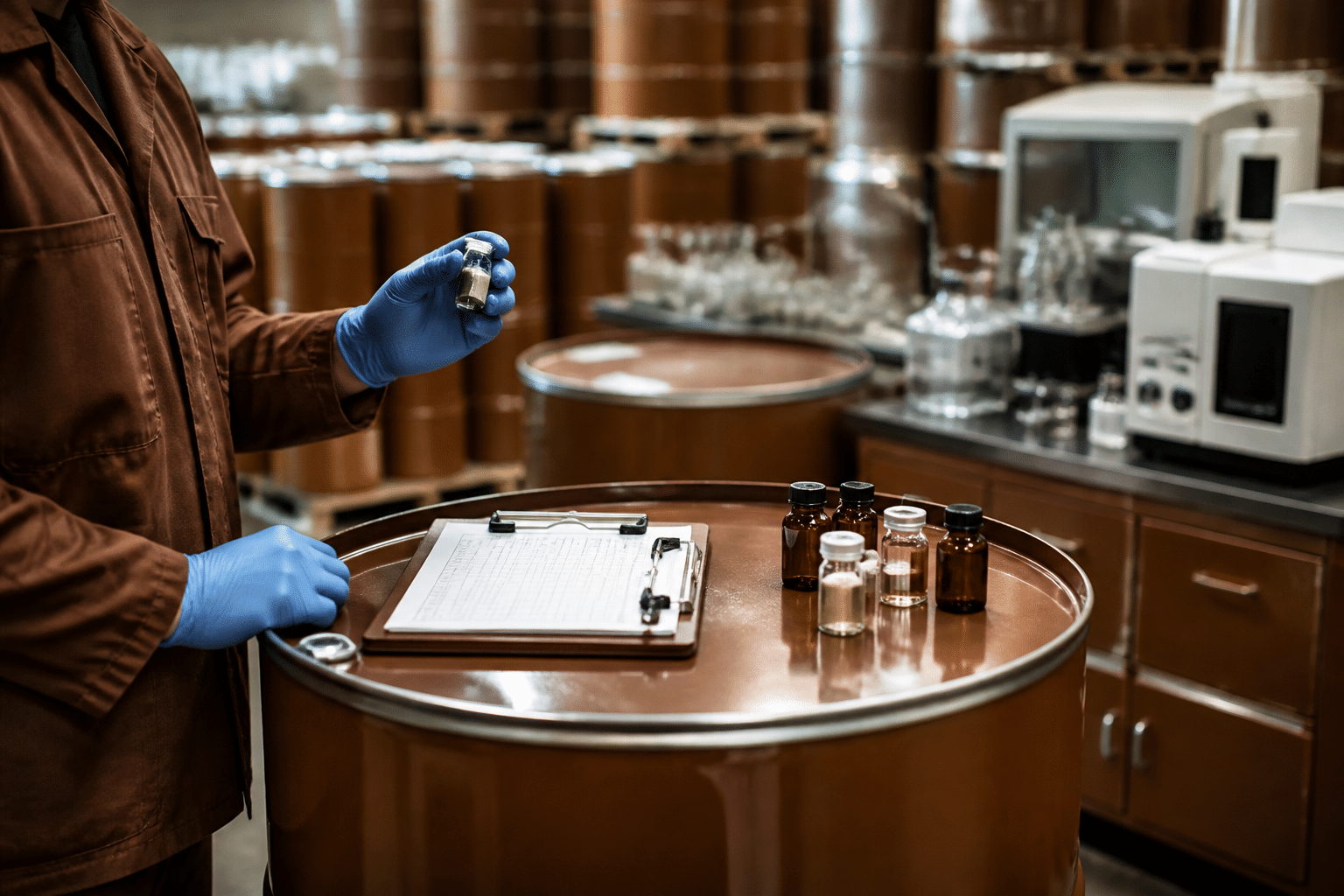
You’ve picked the ingredient. You’ve got a formula idea. Now comes the part that keeps procurement managers up at night: actually getting the stuff, on time, every time.
Where Bulk Sourcing Goes Wrong
Three problems show up again and again. Stockouts (the drum that never arrives). Batches that smell different from the last one. And international logistics with paperwork that seems to multiply overnight.
They’re usually connected. A supplier with thin records and one distillery tends to struggle with all three.
And the cost of a bad disruption isn’t small. Kuehne+Nagel reports that major supply disruptions lasting over a month happen about every 3.7 years, and over a decade they can cost up to 45% of one year’s profit. A late sandalwood water shipment won’t cost you that much. But it can wreck a summer launch window, and an after-sun line can’t really launch in the fall.
What to Check Before You Sign
Here’s what I’d want in hand from any bulk sandalwood water supplier:
- A batch CoA for every lot, not one report from two years ago.
- Clear origin records: botanical name, plant part, region and distillation date.
- Real export experience: packaging formats, lead times, customs documents and a plan if one shipping route fails.
- Certificates you can verify. Ask for the certificate number, the certifier and the scope. “COSMOS-compatible” isn’t the same as certified.
And don’t take the supplier’s word alone. Reserve the right to send incoming lots to an independent lab. Good suppliers won’t blink at that.
10 Questions to Ask Your Bulk Hydrosol Supplier
Print this out. Bring it to the call.
| # | Question | What a good answer looks like |
|---|---|---|
| 1 | What species, plant part and region is this from? | Santalum album L., heartwood, named origin |
| 2 | Is it a true steam distillate? | Yes, with distillation records |
| 3 | Can I see a batch-specific CoA? | Lot number, pH, odor, GC-MS profile, dates |
| 4 | What microbial limits do you test against? | Stated limits for bacteria, yeast and mold |
| 5 | Do you screen for heavy metals, pesticides, solvents and phthalates? | Yes, with lab reports |
| 6 | What is in the bottle besides water? | Full preservative and additive disclosure |
| 7 | Which certifications cover this exact product and site? | Current certificates with numbers |
| 8 | What are your MOQ, lead time, shelf life and storage rules? | Specific numbers, not “it depends” |
| 9 | How do you handle batch variation and recalls? | Retained samples and written change control |
| 10 | What happens if your main source or shipping route fails? | Backup stock or a second route |
Why Going Direct Helps
Every middleman adds a layer between you and the distillery. That’s where records get fuzzy and lead times stretch.
A direct manufacturer-exporter like Aroma Monk cuts that out. It manages the chain from raw material sourcing to final delivery, backs its products with lab testing and traceability, and can customize blends and packaging for your line. That means one team to call when something’s off, not three.
Still, I’d test it like any other supplier. Ask the ten questions, order a sample and run your own checks. Trust is nice, but data is better.
Conclusion: Elevate Your Brand with the Soothing Power of Pure Sandalwood Water
So, back to that launch review table. Ten after-sun gels, all shouting “aloe.” Yours doesn’t have to be one of them.
Let’s pull it together.
What We Covered
Sandalwood water is a light, cooling, plant-derived hydrosol with a soft woody scent. The best research is on sandalwood oil and its santalols, not the water itself. So the honest pitch is “refreshing, lightly hydrating, plant-based comfort for skin after sun.” It isn’t a sunburn treatment. Claims like that age well, and they keep your regulatory team happy.
It’s also flexible. One tested ingredient can sit in an after-sun mist, a toner, an aftershave soother, a sheet mask serum and a pillow spray. That’s a lot of mileage from one drum.
Sourcing Is Where It Succeeds or Fails
Here’s the part I’d tape to your monitor. A great formula can’t rescue a fake or diluted hydrosol. Purity, batch-specific lab data, verifiable certificates and a steady supply are what protect your launch window. A certified, traceable direct supplier cuts the risk before it starts. Ask the ten questions. Test the sample. Trust the data.
Your Next Step
If an after-sun line is on your 2026 roadmap (or you’re planning for next summer), now’s a good time to get a sample on the bench. Ask for the spec sheet, the batch CoA, and the preservation and stability details. Then see how it feels in your own mist or gel.
Secure Your Supply of Pure Sandalwood Water Today
Talk to the team at Aroma Monk about provenance, minimum order quantities and a soothing mist or recovery mask concept built around your brand. One good conversation could be the difference between “another aloe gel” and a product people remember.
Get a quote from Aroma Monk.
Essential Oil Supplier – Bulk pricing • Samples • Fast response