
Meeting the Demand for Gentle Anti-Aging: Why Chamomile Water is Your Next Hero Ingredient
Picture a customer with a drawer full of retinol creams she can’t use. Red cheeks. Peeling skin. A little regret. Sound familiar?
That’s the story behind a big shift. People still want smoother-looking skin, but they don’t want the sting. You can see it in search trends: the LA Times reported rising searches for “retinol alternatives” and “glowing skin naturally” as shoppers look for gentler ways to age well. The money is following them. The global natural and organic skincare market was valued at $10.1 billion in 2024 and could hit $18.7 billion by 2030, which is about 10.9% growth a year.
So where does chamomile water for face fit in? Chamomile hydrosol is the soft, floral water left behind when chamomile flowers are steam distilled. Lab studies show that chamomile compounds like apigenin and bisabolol have antioxidant and calming activity. Here’s the honest part, though. Human trials on the hydrosol itself are limited. So I won’t promise it erases wrinkles. It works best as a gentle, soothing partner in a routine built for sensitive skin.
This guide is for product developers and procurement managers. We’ll cover what chamomile water really is, what the science says, how to formulate with it, and how to buy it without getting stuck with weak or fake batches. Let’s start with the basics.
Understanding Chamomile Water: More Than Just Flower-Infused Water
I’ll admit it. The first time I heard “chamomile water,” I pictured a cold cup of tea. Turns out that’s not even close.
What a Hydrosol Really Is
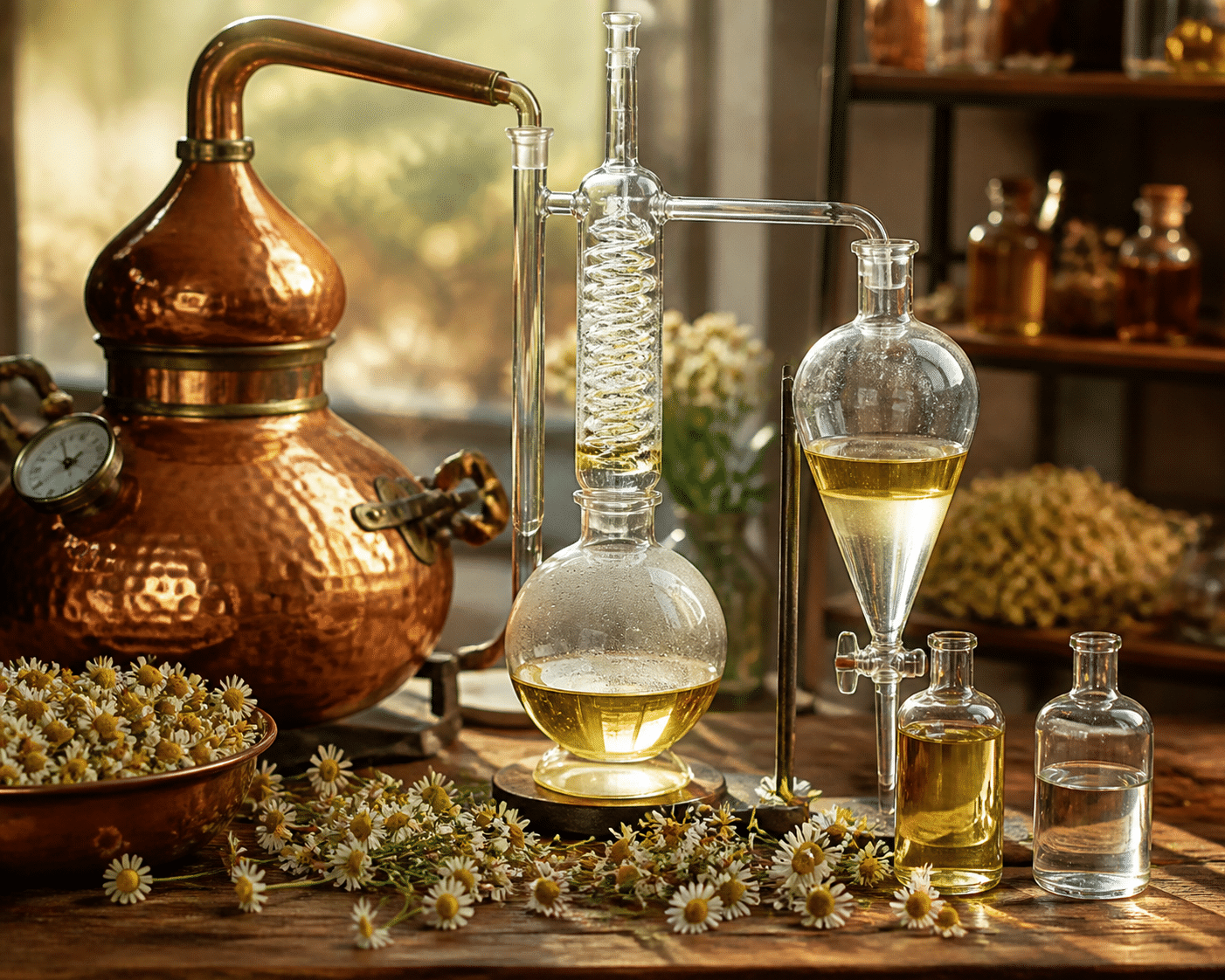
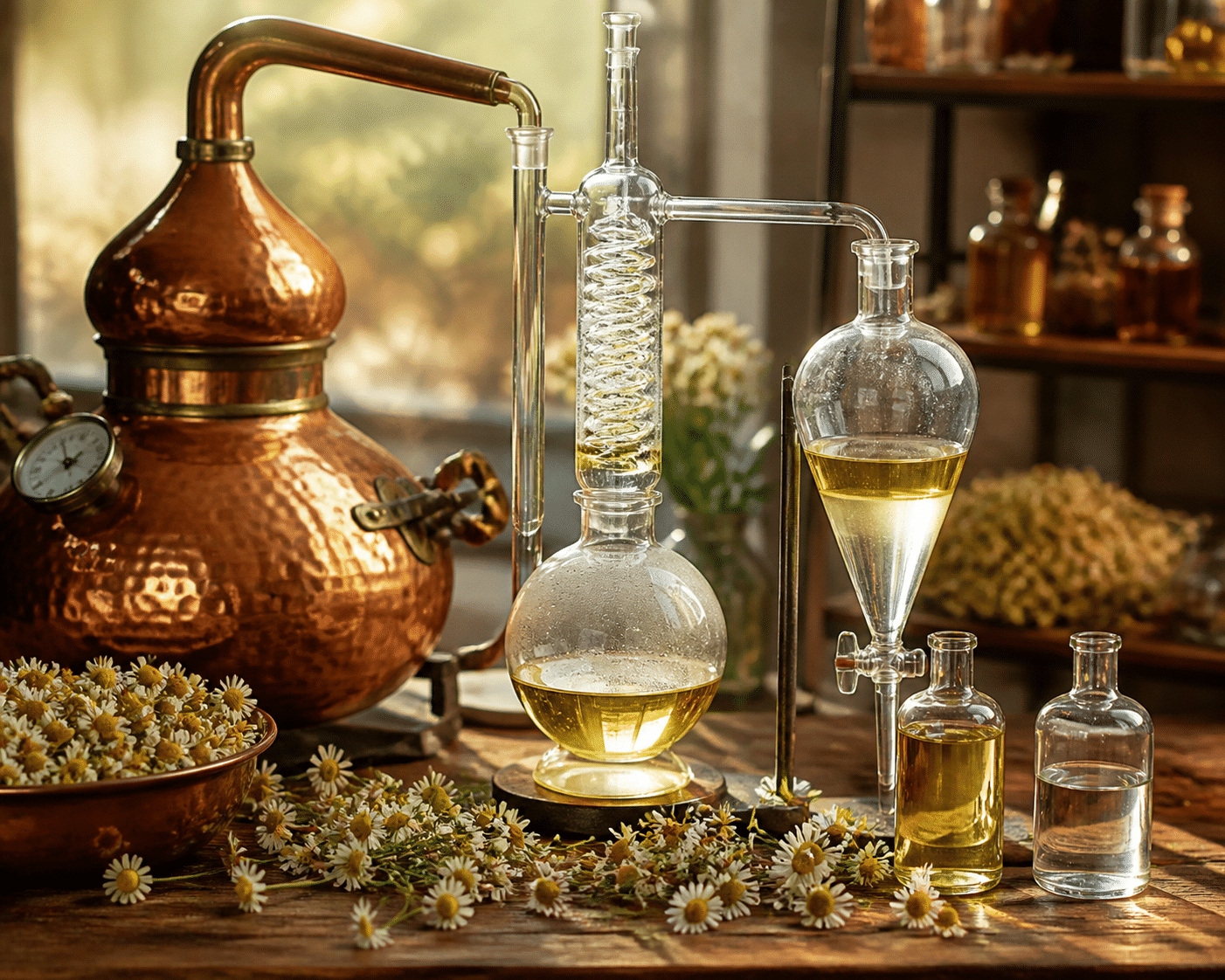
Chamomile water is a hydrosol, sometimes called a hydrolat. It’s the water left over when chamomile flowers are steam distilled to make essential oil. Steam passes through the flowers and carries tiny plant compounds with it. The steam cools back into liquid, and the oil floats on top. The water underneath is the hydrosol.
The ISO 9235:2021 definition isn’t the point here. What matters is simpler: this water holds water-soluble plant compounds and only traces of oil. It isn’t a weak version of the essential oil. It has its own makeup.
Here’s the process in plain steps:
| Step | What happens | What you get |
|---|---|---|
| 1. Load | Fresh or dried chamomile flowers go into the still | Plant material ready to distill |
| 2. Steam | Hot steam moves through the flowers | Steam carrying plant compounds |
| 3. Cool | The steam runs through a cooling coil | Liquid drops of oil and water |
| 4. Separate | Oil floats up and gets collected | Essential oil on top, hydrosol below |
So the hydrosol is a co-product. Same flowers, two different products.
German vs. Roman Chamomile
Not all chamomile water is the same. Two plants show up most in cosmetics, and they behave a bit differently.
| Feature | German chamomile | Roman chamomile |
|---|---|---|
| Botanical name | Matricaria recutita | Anthemis nobilis (also called Chamaemelum nobile) |
| Known for | Chamazulene and bisabolol chemistry, linked to anti-inflammatory activity | Ester-rich profile, soft floral scent, calming feel |
| Good fit for | Products for red-looking or reactive skin | Gentle mists and toners where a soft scent matters |
German chamomile water gets the most attention for calming skin. Roman chamomile water leans softer and more soothing. Here’s the catch, though. Chamazulene doesn’t dissolve well in water, so the hydrosol may hold only small amounts. Plant origin, harvest time and distillation all change the final profile. I’d ask any supplier for batch-level GC/MS data before believing a claim.
Why a True Hydrosol Beats a Shortcut
You might wonder: can’t I just steep flowers in water, or drop essential oil into water? You can. But it isn’t the same thing.
- A simple infusion is basically tea. It spoils fast, changes color, and varies a lot from batch to batch.
- Water plus essential oil won’t mix. The oil floats or breaks into droplets, which can irritate skin and make a formula unstable.
- A true hydrosol blends smoothly into water-based products like toners, mists and serums, with a steadier chemical profile.
That steadier profile is why hydrosols are popular in facial mists and toners. Next, we’ll look at what the research actually says about chamomile’s anti-aging potential.
The Science: Unpacking the Anti-Aging Properties of Chamomile Hydrosol
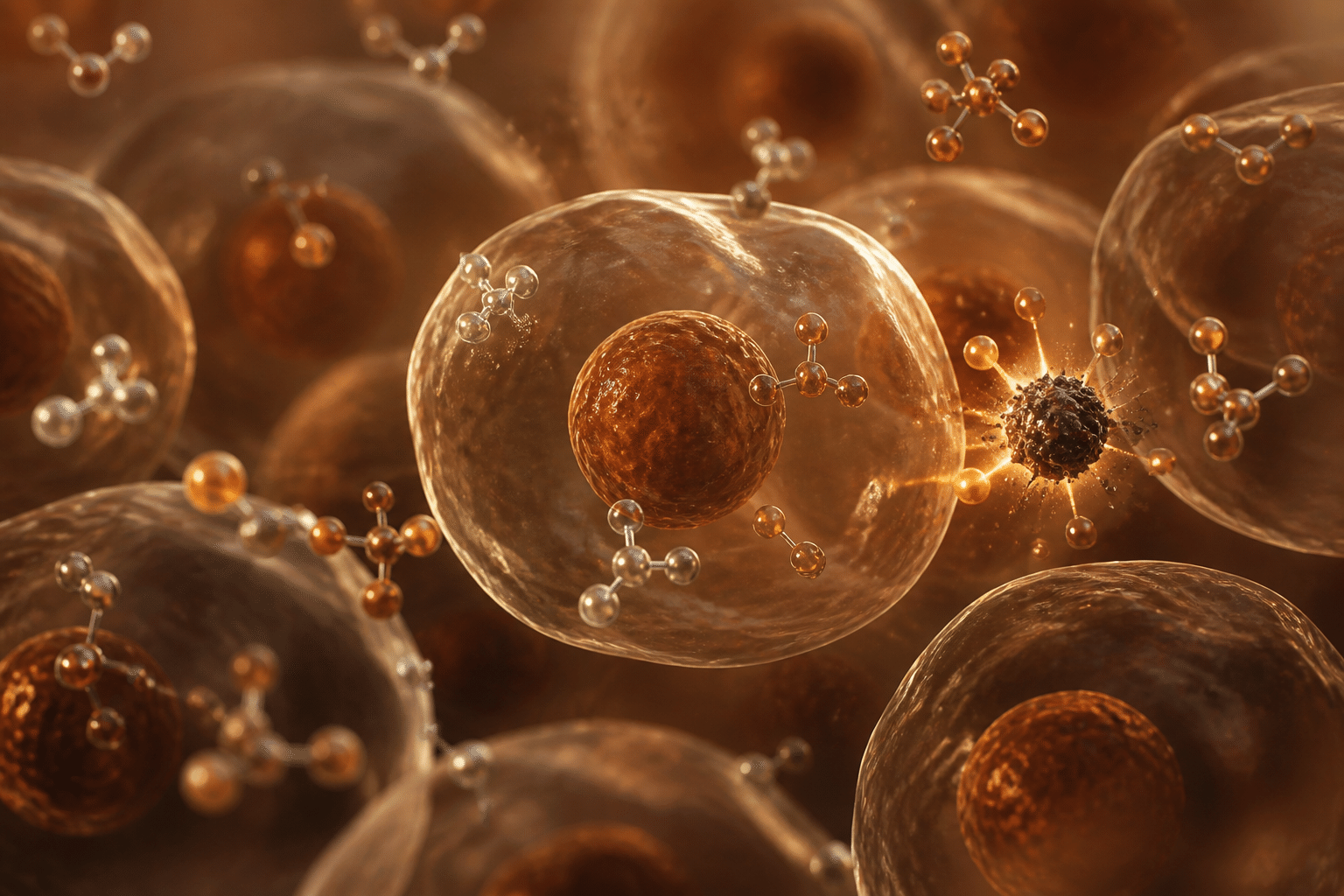
Let’s be honest about something first. Most of the research on chamomile looks at isolated compounds or whole-flower extracts, not the hydrosol itself. So think of this section as “here’s what the parts can do,” not “here’s a proven wrinkle fix.” Still, the parts are pretty interesting.
Antioxidants: Fighting the Free Radical Problem
Skin ages faster when free radicals pile up. UV light, pollution and stress create these unstable molecules, and they damage skin cells. That’s oxidative stress. Over time it can show up as fine lines and dull texture.
Apigenin is the flavonoid most people point to in chamomile. A 2025 review in Discover Plants describes how it can scavenge free radicals directly, bind metal ions and calm oxidant-related signaling pathways. That’s a lot of jobs for one molecule.
Chamomile extracts also test well in the lab. One 2025 study of water-based extracts in Letters in Organic Chemistry measured radical-scavenging activity and found apigenin-7-glucoside among the compounds present. And a 2019 Molecules study of 12 chamomile populations found that antioxidant strength varied a lot from plant to plant.
That last point matters for buyers. Same flower, different results.
The catch? Apigenin doesn’t dissolve easily in water. A hydrosol may carry only small amounts, so the real level should be checked with lab testing.
Calming Inflammation: Bisabolol and Chamazulene
You may have heard the word “inflammaging.” It means low-level, long-running inflammation that can speed up skin aging. Cosmetic chemist Ghanima Abdullah Koestline, quoted by Sunday Riley, put it this way: “Current studies show that inflammaging, or chronic, low-grade inflammation in the skin is a factor of skin aging.” She links it to breakdown of collagen and elastin. That’s expert opinion, not a clinical trial on chamomile water, so I’d treat it as helpful context.
Two compounds do most of the calming work in the research:
- Bisabolol reduced inflammation signals in cell studies and eased skin inflammation in mice, according to a PubMed-indexed study.
- Chamazulene (mostly in German chamomile) shows anti-inflammatory activity in lab models, but I couldn’t find human trials on it alone.
So the mechanism is believable. The human proof for aging skin is still thin.
Supporting Smoother-Looking Skin
Here’s the practical idea. Skin that isn’t irritated all the time can go about its normal repair and turnover work more comfortably. Chamomile doesn’t “force” renewal. It helps create calmer conditions, which makes it a good partner for stronger actives.
| Compound | Where it shows up | What lab studies suggest | Anti-aging angle |
|---|---|---|---|
| Apigenin | Flavonoid in flowers, low in water | Free-radical scavenging, metal binding | Helps limit oxidative stress |
| Bisabolol | Both chamomile types, more in German | Lowers inflammation signals | Calms redness and irritation |
| Chamazulene | Mainly German chamomile | Blocks inflammation enzymes | Eases reactive, inflamed skin |
Here’s how the protection works, step by step:
- Stress from sun or pollution creates free radicals.
- Antioxidants like apigenin neutralize some of them.
- Fewer free radicals means less cell damage and less inflammation.
- Bisabolol and chamazulene help calm what’s left.
- Calmer skin is better placed for normal repair.
Next, let’s talk about how to actually put chamomile water into a formula.
Formulation Blueprint: Incorporating Chamomile Water into High-Efficacy Products
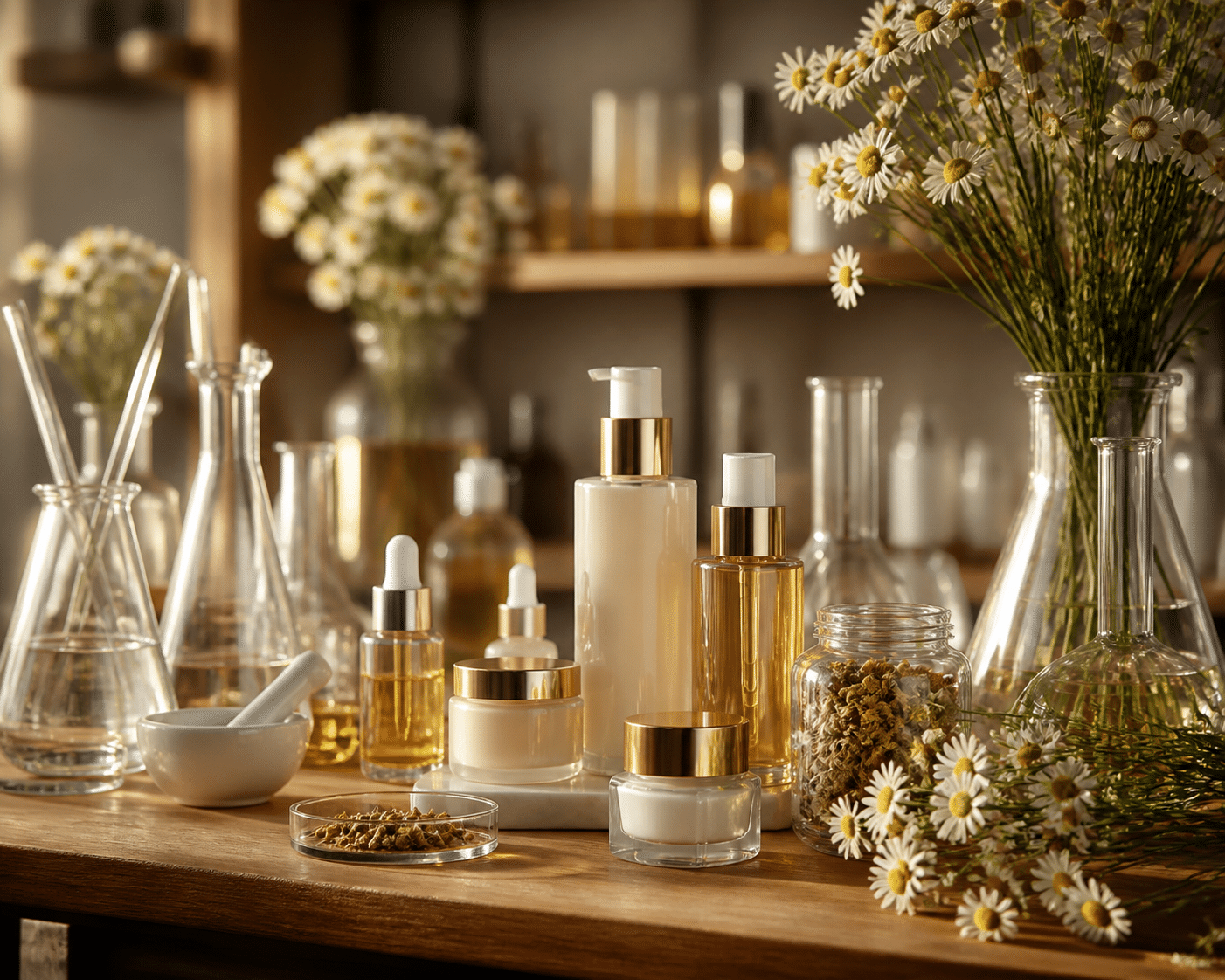
Here’s a simple idea that changes a lot. Most toners, mists and essences start with plain deionized water. It does the job, but it does nothing else. Swap in chamomile water for face care products, and that boring base starts working for you.
Turning Your Water Phase Into a Working Ingredient
Chamomile hydrosol for skin fits neatly into anything water-based. Think anti-aging toners, facial mists, light serums and essences. You aren’t adding a new step. You’re upgrading the step you already have.
Start with what feels right for the product:
- Mists and toners: Often 60% to 100% hydrosol, since the water phase is most of the formula.
- Essences and serums: Usually 30% to 70%, leaving room for actives and texture builders.
- Lighter touch: Even 10% can add a soft scent and a calming story, though the benefit is milder.
I’d test a few levels side by side. Higher isn’t always better, and cost, scent and stability all shift as you go up.
And a quick reality check (because I keep saying it): hydrosol replaces the water. It doesn’t replace your anti-aging actives. It gives them a calmer place to work.
Pairings That Actually Make Sense
Chamomile plays well with others. Here are combinations worth a first trial. German chamomile water suits redness-prone formulas, while Roman chamomile water for cosmetics works nicely where a softer floral scent matters.
| Formulation synergy | What it gives you | Good target product |
|---|---|---|
| Chamomile water + hyaluronic acid | Soothing hydration | Hydrating serum |
| Chamomile water + niacinamide | Calm skin plus barrier support | Balancing toner or essence |
| Chamomile water + rose water | Double soothing with a lovely scent | Refreshing facial mist |
| Chamomile water + panthenol + glycerin | Comfort and light moisture | Daily anti-aging mist |
Rose water is a natural partner here, since both are gentle floral hydrosols. Aroma Monk supplies rose water alongside other botanical ingredients, which makes blending two hydrosols simpler on the buying side.
Three Formulation Checks Before You Scale Up
This is where good ideas either hold up or fall apart. Nobody loves this part, but skipping it costs more later.
Watch the pH
Most chamomile hydrosols sit around pH 4.0 to 5.5, but every lot differs. Aim for a finished product between 4.5 and 5.5, which suits skin and works well with niacinamide. Measure with a calibrated meter after everything is mixed. Don’t trust the certificate alone.
Want to add L-ascorbic acid? That needs a much lower pH, around 3.0 to 3.5, so expect more sting and faster oxidation. A gentler vitamin C derivative fits better with a sensitive-skin story.
Preserve It Properly
Hydrosol is mostly water. Bacteria, yeast and mold love that. It is not self-preserving, and “natural” doesn’t change the math.
- Use a broad-spectrum preservative at your supplier’s validated level.
- Run preservative challenge testing (ISO 11930) on the finished product, in its real packaging.
- Consider a chelating agent to boost preservative performance.
- Choose a fine-mist sprayer or airless pump over an open jar.
Test Stability Early
Run heat, freeze-thaw, color, odor and pH checks before you swap out all your process water. Chamomile water purity matters here too. A weak or diluted batch will behave differently from the one you tested.
Next up, let’s talk about buying the stuff without getting burned.
Sourcing and Quality Control: A Procurement Manager’s Guide to Bulk Chamomile Water
Get a quote from Aroma Monk.
Essential Oil Supplier – Bulk pricing • Samples • Fast response
Here’s a scene I’ve heard versions of more than once. A brand tests a small sample of chamomile water, loves it, and orders 500 liters. The bulk lot arrives smelling a little flat, and nobody can say why. Ugh.
That gap between sample and shipment is where most sourcing trouble starts. So let’s talk about how to vet a bulk chamomile water supplier before money changes hands.
What Real Purity Looks Like on Paper
Start with the claim “100% pure.” It sounds great, but it means very little without proof. Some hydrosols carry hidden preservatives, added fragrance or plain extra water. Your supplier should confirm, in writing, that the chamomile water has no solubilizers, no alcohol and no undeclared preservatives. If a preservative is added, it should be named, with the amount.
Next, ask how it was made. A true hydrosol comes from steam distillation, so request the method, the plant part used (flowers, not stems) and the Latin name. German and Roman chamomile look alike on a label, but they aren’t the same.
Then comes the big one: a batch-specific GC/MS report.
GC/MS in Plain Words
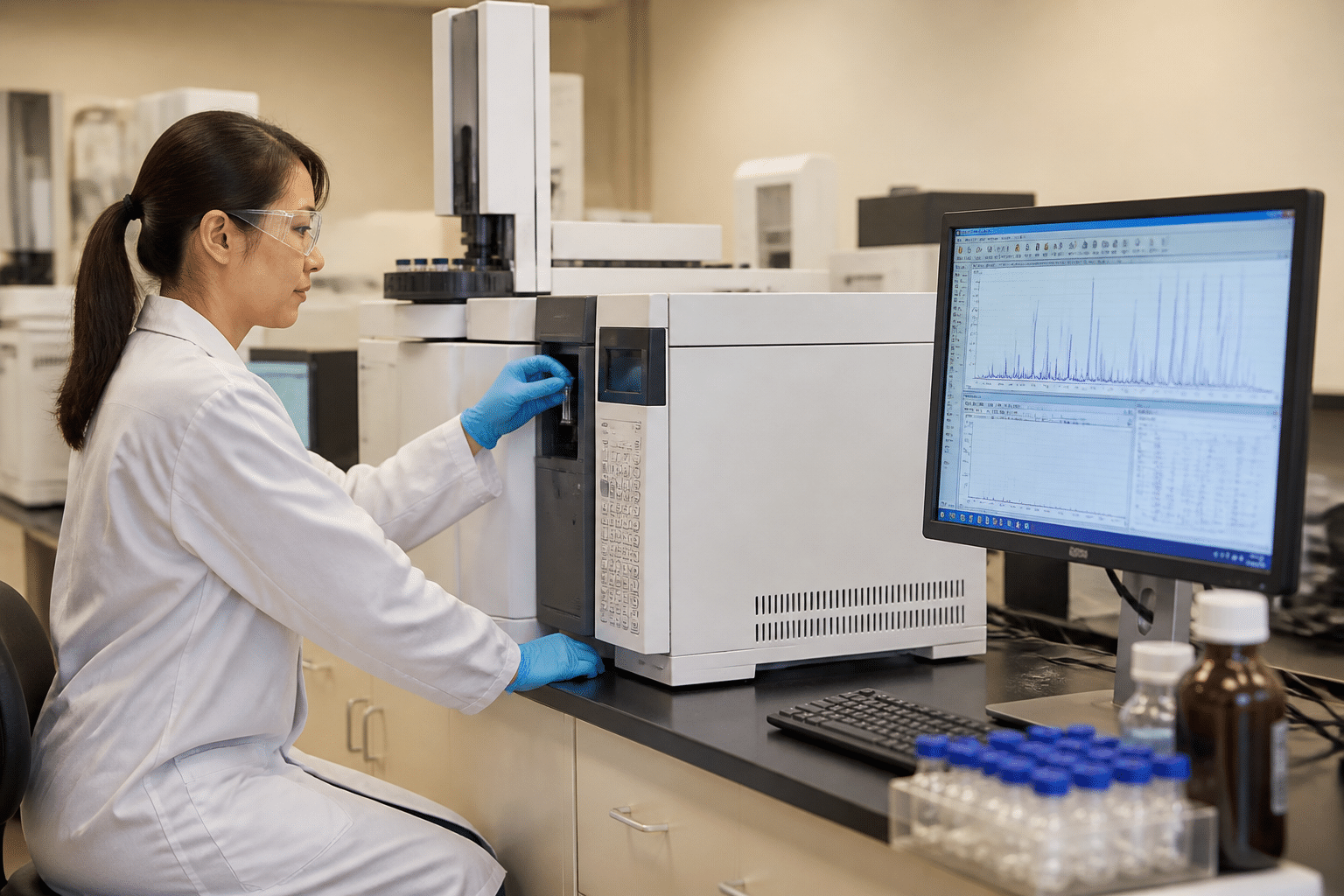
GC/MS stands for gas chromatography and mass spectrometry. Think of it as a fingerprint scan. The lab heats a tiny sample, separates the aroma compounds, then identifies each one. You get a chart with peaks, and each peak is a compound.
What should you look for?
- A batch number and test date that match your lot
- The lab’s name and the botanical name
- A real chromatogram, not just a summary sheet
- Chamomile markers like bisabolol-related compounds (and chamazulene for German chamomile)
One warning: GC/MS doesn’t tell you if the water is safe from germs. Ask for microbiology results, pH and heavy metal tests too. And be suspicious of identical reports across different batches. Real plants don’t repeat themselves that neatly.
Traceability and Certificates Matter Too
Certificates like Organic and ISO aren’t just paperwork. They show that someone outside the company checked the process. Shoppers notice them too. Recent market guidance on natural cosmetic ingredients points to traceability, documentation and steady batch quality as things buyers now weigh when picking suppliers.
Ask where the flowers were grown, when they were harvested and who ran the still. Also ask for change-control notice if any of that shifts.
Direct Manufacturer or Middleman?
This is where I have a strong opinion (with a small caveat: good distributors do exist). When you buy through a broker, you’re a few steps away from the still. Every extra hand adds cost. It also adds chances for dilution, blending or mislabeling, and nobody down the chain can answer your questions.
A direct manufacturer like Aroma Monk controls the chain from raw material to export. That means the lab reports come from the source, batches stay consistent, and you get one team to call when something looks off.
Your Supplier Vetting Checklist
| Ask for | Why it matters | Green flag |
|---|---|---|
| Purity statement | Rules out hidden additives | No solubilizers, alcohol or undeclared preservatives |
| Distillation proof | Confirms a true hydrosol | Steam distillation, flower material, Latin name |
| Batch GC/MS report | Shows real chemistry | Dated, lot-matched, full chromatogram |
| Microbiology and pH data | GC/MS can’t show safety | Clear limits and results per lot |
| Certifications | Third-party proof | Organic, ISO, current dates |
| Traceability records | Finds problems fast | Farm, harvest and still details |
| Supplier type | Controls cost and risk | Direct manufacturer with export experience |
Once you’ve picked a solid source, the next question is how to tell shoppers about it.
Market Positioning: How to Market Your Chamomile-Based Anti-Aging Product
You’ve got a great ingredient. Now shoppers need a reason to care.
Pick an Angle the Science Can Back Up
Chamomile is a soother, so lean into that. Angles like “Calm & Renew,” “Gentle-Yet-Effective Anti-Aging” or “Plant-Based Care for Sensitive Skin” match what the research supports. The timing helps too. Spate’s 2025 Predicted Beauty Trends Report points to rising interest in unscented products and anti-inflammatory claims, driven by people who want zero irritation.
But watch your wording. “Anti-inflammatory” can sound like medicine, and regulators notice. The EU cosmetic claims guidance asks that claims be truthful and backed by evidence.
| Skip this | Try this instead |
|---|---|
| Reduces wrinkles | Helps skin look smoother and feel hydrated |
| Treats redness | Soothes the feel of tight, sensitive skin |
| Clinically proven anti-aging | Chamomile flower water with hyaluronic acid for a comfortable, fresh look |
Talk to the Right Shoppers
Three groups fit best. First, people with reactive or sensitive skin. Second, the retinol dropouts from the intro, who still want to age well. Third, fans of “skinimalism”: short routines, short ingredient lists, no mystery.
A mist with chamomile water, glycerin and hyaluronic acid tells that story in one glance. Simple sells.
Tell the Ingredient’s Story
People have used chamomile as a calming herb for centuries, so history is easy to use. Just keep it specific. Name the plant, like “German chamomile (Matricaria recutita) flower water,” so buyers know what’s inside.
Then add proof of purity. Say it’s steam distilled, batch tested and traceable to the farm. That’s the trust builder, more than any pretty adjective.
When you plan your packaging and campaign visuals, here’s what tends to work:
- Soft, natural colors and a clean label with the plant name front and center
- Frosted or amber glass with a fine-mist sprayer
- Close-ups of real chamomile flowers, not stock-photo daisies
- A small “tested by batch” or origin note on the box
Once your story is set, the last step is choosing a partner who can deliver it.
Partner with a Reliable Supplier to Unlock Chamomile’s Full Potential
So here’s where we land. Chamomile water for face care hits two targets at once. Shoppers want gentle, natural ways to age well, and formulators get a hydrosol with real lab-backed calming and antioxidant activity. That’s a rare pairing.
But the plant name on the label is only half the story. Your finished mist, toner or serum can only be as good as the water that goes into it. A diluted batch, a mislabeled species or a lot with no microbiology data can sink months of careful formulating. Pure chamomile water, with the paperwork to prove it, is what turns a nice idea into a product people reorder.
One more thing I’ll say plainly: the research is strongest on chamomile’s parts, not on the hydrosol itself. So the smart move is to test your own batches and claim only what you can back up. A supplier who shares batch data makes that job a lot easier.
That’s the kind of partner Aroma Monk aims to be. As a direct manufacturer that handles the chain from sourcing to export, Aroma Monk offers lab-tested, traceable botanical ingredients in bulk, with room for custom packaging.
Ready to check the quality for yourself? Head to Aroma Monk and request a sample and spec sheet. Ask for the latest COA, GC/MS report, microbiology results and traceability records too. Your next anti-aging line deserves a strong start.
Request a Sample & Spec Sheet for Our Pure Chamomile Water
Get a quote from Aroma Monk.
Essential Oil Supplier – Bulk pricing • Samples • Fast response