

The ‘Miracle Berry’ Dilemma: Why Finding a Potent Sea Buckthorn Oil Supplement is So Challenging
Ever seen a little orange berry get called a miracle? Sea buckthorn has that kind of buzz. And honestly, it’s not all hype.
People look for a sea buckthorn oil supplement for real reasons. Skin that feels dry. Eyes that feel tired. Cholesterol numbers they want to keep in check. Sea buckthorn oil benefits get talked about a lot because the plant packs omega 7, plus other fatty acids too. But here’s the catch. The supplement aisle is crowded, noisy, and full of labels that sound better than they are.
That’s not just a vibe. The herbal supplement market was valued at about $42 billion to $52 billion in 2024 and keeps growing fast, which means more brands, more claims, and more confusion (Fact.MR market report).
So how do you spot the best sea buckthorn oil and skip the weak stuff? That’s what this guide is for. We’ll walk through how to choose sea buckthorn oil, what to look for on the label, why berry oil and seed oil are not the same thing, and how to tell pure sea buckthorn oil capsules from the products that are mostly filler.
Simple version? We’re going to help you buy smarter.

Section 1: Beyond the Hype – Understanding the Core Benefits That Define Quality
You know that moment when a supplement sounds amazing, but the label feels vague? Yep. That’s the sea buckthorn problem in a nutshell.
Sea buckthorn oil supplement buyers usually want it for three big reasons. Skin that feels dry. Eyes that get gritty after screen time. And cholesterol support, because nobody likes staring at those lab numbers with a frown.
The interesting part is that these sea buckthorn oil benefits are tied to one star compound: omega-7, also called palmitoleic acid. That’s the bit people are really after. It shows up in sea buckthorn berry oil much more than sea buckthorn seed oil, which is why the source matters so much.
High-quality products are the ones that keep that good stuff intact and deliver enough of it to matter. Not just a splash. Not a fancy label. Real, usable amount.
For skin, sea buckthorn oil is often talked about for hydration, elasticity, and helping the skin barrier hold onto moisture. For dry eyes and mucous membranes, it’s linked with comfort and moisture support. And for heart health, the research points to cholesterol and inflammation support, which makes it popular with people trying to be a little kinder to their bodies.
Here’s a quick look at the main benefits people search for most:
| Benefit area | What people want | Why omega-7 matters |
|---|---|---|
| Skin support | More hydration and better barrier feel | Palmitoleic acid is a natural skin fat |
| Dry eye and mucous membranes | Less dryness and irritation | Helps support moisture-rich tissues |
| Heart support | Cholesterol and inflammation support | Often part of the full oil profile |
And here’s the deal. A strong omega 7 supplement is not just about the plant name on the bottle. It’s about how much palmitoleic acid is actually there, whether the oil is clean, and whether the product keeps the fat profile close to what the body can use.
A 2024 herbal supplement market report puts the market at about $42 billion to $52 billion, which tells you one thing fast: lots of brands are trying to sell you something (Fact.MR market report). That’s why sea buckthorn supplement reviews can be all over the place. Good products stand out. Weak ones get lost.
So when we talk about the best sea buckthorn oil, we’re really talking about a product that protects the oil’s natural compounds, delivers a real omega-7 dose, and skips the filler-heavy stuff that looks fine from the outside but doesn’t do much inside.
That’s the quality bar. Simple as that.
Section 2: Seed Oil vs. Berry (Pulp) Oil – The Critical Difference Everyone Misses
Ever bought a supplement and then had that tiny, annoying thought: “Wait… is this even the right version?” Yeah. Sea buckthorn does that to people.
And this is where a lot of shoppers get tripped up. Sea buckthorn berry oil and sea buckthorn seed oil come from the same plant, but they do not do the same job. Not even close.
Berry oil, sometimes called pulp oil, is the one people usually want for skin and moist tissue support. It’s rich in omega-7, plus omega-9. That matters because omega-7, or palmitoleic acid, is the fatty acid most tied to sea buckthorn oil benefits like skin hydration and mucous membrane comfort. The berry side is the real star if you’re looking for that.
Seed oil is different. It has more omega-3 and omega-6, so it tends to fit better with general fatty acid balance, heart support, and anti-inflammatory goals. Good oil. Just a different lane.
Here’s the simple cheat sheet:
| Type of oil | Main fatty acids | Best known for | Best fit for |
|---|---|---|---|
| Sea buckthorn berry oil | Omega-7 and omega-9 | Skin, dryness, internal moisture support | Dry eye, skin barrier support, mucous membranes |
| Sea buckthorn seed oil | Omega-3 and omega-6 | Balanced essential fatty acids | General wellness, cardiovascular support, inflammation support |
| Mixed sea buckthorn oil | A blend of both | A broader fatty acid profile | People who want both sets of benefits |
So if your main goal is omega 7 supplement support, sea buckthorn berry oil is usually the better pick. Pure sea buckthorn oil capsules made from berry oil are often favored by people focused on dry skin or dry eyes. But if you want more of a whole-body fatty acid blend, a combo product can make sense too.
That said, not every product tells the story clearly. Some labels blur the line. Some barely mention whether they use berry oil, seed oil, or both. That’s a problem, because the difference changes what you’re really buying.
Actually, wait – there’s a better way to think about it. Don’t ask, “Is sea buckthorn good?” Ask, “What do I want help with?” That question gets you much closer to the right bottle.
If you’re reading sea buckthorn supplement reviews, look for the oil source first. Berry oil for omega-7 seekers. Seed oil for fatty acid balance. Both if you want a wider net. Simple. Clean. Way less guesswork.
And if a brand like Aroma Monk is sourcing raw oils for skincare or wellness blends, that same logic matters even more. The starting material shapes the whole product. Garbage in, garbage out… but, you know, in a prettier bottle.

Section 3: The Science of Purity: Why Supercritical CO2 Extraction is the Gold Standard
You can almost hear the sales pitch now. “Pure. Potent. Premium.” Nice words. But what’s actually inside the bottle?
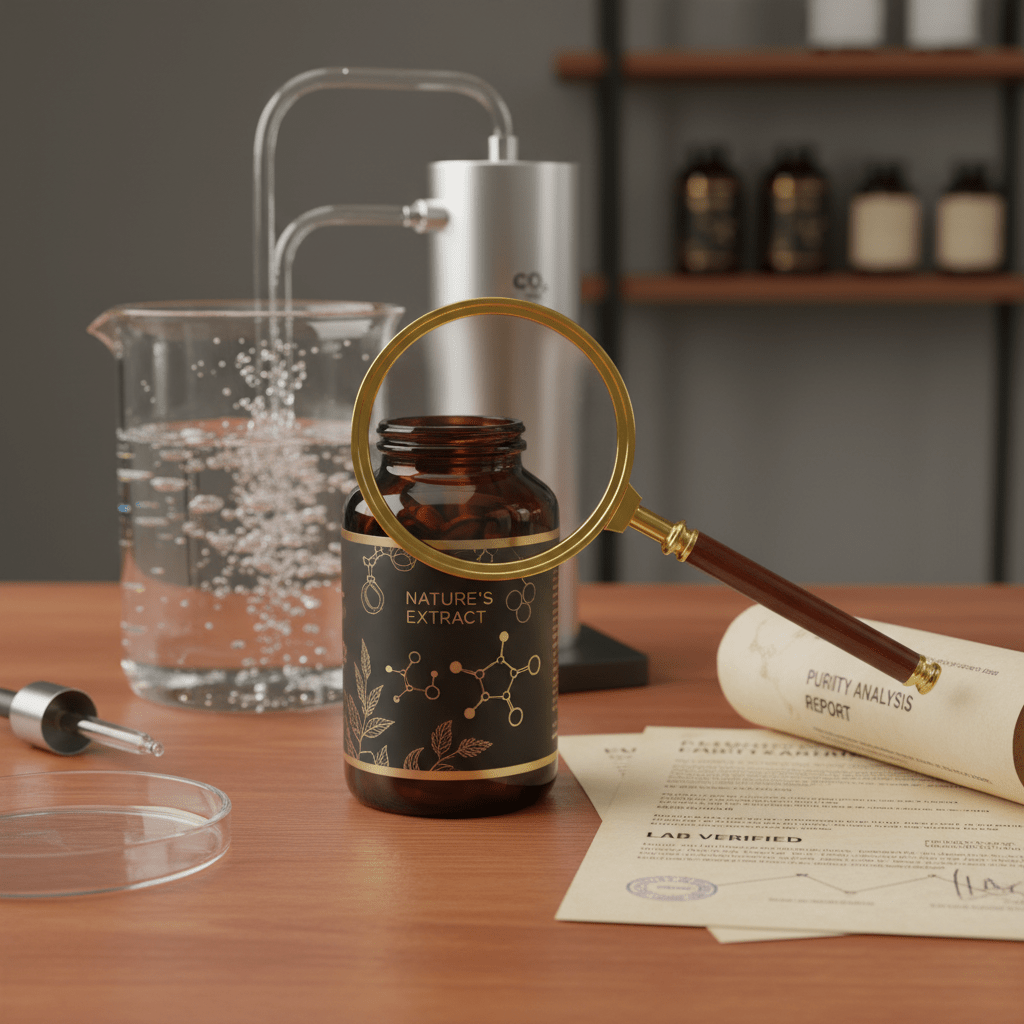
For a sea buckthorn oil supplement, the way the oil is pulled from the plant matters a lot. A lot more than most labels admit. One of the cleanest ways to do it is supercritical CO2 extraction sea buckthorn producers use for delicate oils.
Here’s the simple version. Carbon dioxide is put under high pressure until it acts like both a gas and a liquid. That special state lets it move through the plant material and pull out the oil gently. Then the pressure is released, the CO2 turns back into a gas, and it vanishes. No harsh solvent left behind. No chemical residue hanging around. Pretty neat, right?
That gentler process helps protect the stuff people actually want in the bottle. Omega-7. Carotenoids. Tocopherols. All those fragile bits can get damaged by too much heat or rough processing. With supercritical CO2 extraction, the oil usually comes out cleaner and more stable, which is a big deal if you want the best sea buckthorn oil and not just a shiny label.
Why this method stands out
Cold-pressing can be fine for some oils. It keeps things simple and avoids chemical solvents. But it’s not always the best fit for sea buckthorn, especially for tiny seeds and delicate fruit oils. It can be less efficient, and some of the active parts may still be lost along the way.
Chemical solvent extraction is the one most shoppers should watch out for. It can leave behind residue if it’s not done well, and the process may be harder on sensitive nutrients. That’s not what you want in pure sea buckthorn oil capsules.
Here’s a quick side-by-side look:
| Extraction method | What it does | Main downside | Best for |
|---|---|---|---|
| Supercritical CO2 extraction | Uses pressurized CO2 to gently pull oil from the plant | Usually costs more to produce | High-purity oil with better stability |
| Cold-pressing | Squeezes oil out without chemicals | Less efficient for some sea buckthorn parts | Simple, low-heat oil production |
| Chemical solvent extraction | Uses chemical solvents to draw out oil | Risk of residue and nutrient loss | Bulk extraction, but not ideal for delicate supplements |
A recent review on supercritical CO2 extraction noted that the method helps keep solvent residues out and protects heat-sensitive compounds better than older extraction styles (PMC review on SC-CO2 extraction). That’s why it shows up so often in sea buckthorn supplement reviews from buyers who care about purity.
And if you’re wondering how to choose sea buckthorn oil without getting tricked, start here: ask how it was made. If the brand can’t tell you, or uses vague wording, that’s a red flag.
Actually, wait. Scratch that. It’s not just a red flag. It’s the whole flashlight.
A good omega 7 supplement should list the extraction method, the source oil, and the amount of palmitoleic acid per serving. If it doesn’t, you’re guessing. And nobody needs to guess with supplements.
This is also where quality-minded suppliers like Aroma Monk fit in for B2B buyers. If you’re building a skincare line or wellness blend, the extraction method affects the raw material you get, the shelf life of the final product, and how your brand looks to customers who read every label like it’s a mystery novel.
So yes, supercritical CO2 extraction sea buckthorn oils usually cost more. But you’re paying for cleaner oil, better stability, and a product that’s more likely to keep its natural benefits intact. For people shopping for the sea buckthorn oil supplement that actually does what it says, that tradeoff makes sense.
And that’s the whole point.
Section 4: Decoding the Supplement Label: Your 5-Point Quality Checklist
You ever hold a bottle and think, “OK… but what am I actually buying?” Same. Labels can look clean and still tell you almost nothing.
That’s why I like a simple checklist. It cuts through the fluff fast. And with a sea buckthorn oil supplement, the details on the label tell you way more than the front of the box ever will.
The herbal supplement market was valued at about $42 billion to $52 billion in 2024, so brands are fighting for your attention Fact.MR market report. That also means some bottles are great, and some are just loud. Buyer beware. Pretty much.
Here’s the 5-point check I’d use every time.
| Checkpoint | What to look for | Why it matters |
|---|---|---|
| 1. Source and type | Berry oil, seed oil, or a blend | Tells you if you’re getting omega-7 or more balanced fatty acids |
| 2. Omega-7 amount | Milligrams or percentage of palmitoleic acid | Vague labels make it hard to judge strength |
| 3. Other ingredients | No cheap fillers, colors, or extra oils | Fillers can dilute the oil |
| 4. Extraction method | Supercritical CO2 extraction | Usually cleaner and gentler |
| 5. Capsule type | Vegan or gelatin | Matters if you want plant-based capsules |
1. Source and type of oil
First, check whether the label says sea buckthorn berry oil, sea buckthorn seed oil, or a blend.
That one line changes everything.
Berry oil is the omega 7 supplement version most people want for skin support and dryness. Seed oil is different. It leans more toward omega-3 and omega-6. Both can have a place, but they are not the same product. If a bottle hides that detail, I get suspicious fast.
And if the label mentions where it comes from, like the Himalayan region or Tibetan Plateau, that can be a nice sign of traceability. Not a magic stamp. Just a clue that the brand knows its source.
2. Omega-7 content
This is the big one.
A good label should name the palmitoleic acid amount in milligrams or as a percentage. If it only says “sea buckthorn oil” with no strength listed, that’s not much help. You can’t judge potency from a pretty orange bottle alone.
Some people shopping for pure sea buckthorn oil capsules want a specific daily dose, not just a vague “blend.” That matters because studies and product ranges often talk about real amounts, not wishful thinking. So look for numbers. Real ones.
No number? That’s a red flag.
3. Other ingredients
Now check the fine print.
Look for cheap carrier oils like sunflower oil, soybean oil, or safflower oil. These can water down the sea buckthorn oil itself. Also watch for artificial colors, extra bulk oils, silica, or lecithin if they aren’t needed.
Are all fillers bad? Not always. But if the formula feels padded, that’s usually not a good sign. You want the oil to be the star, not the sidekick.
4. Extraction method
This one gets skipped a lot, which is wild because it tells you a ton.
The best brands usually say supercritical CO2 extraction sea buckthorn right on the bottle or on their site. That method is known for being solvent-free and gentle on delicate plant compounds. In plain words, it helps protect the good stuff.
A review of supercritical CO2 extraction notes that it keeps solvent residues out and does a better job with heat-sensitive compounds than older methods PMC review on SC-CO2 extraction. So if you see that phrase, good. If the brand won’t say how it was made, I’d keep looking.
5. Capsule type
Last, check the shell.
Some capsules are vegan, made with tapioca or plant-based materials. Others use gelatin, which comes from animal sources. If you care about vegan products, that’s a must-check item. If you don’t, it still helps to know what you’re swallowing.
Small detail? Sure. But small details stack up.
Quick label red flags
- “Proprietary blend” with no amounts
- No mention of berry oil or seed oil
- Fancy words like “premium” with no proof
- No extraction method listed
- Extra oils that seem there just to bulk up the bottle
So how to choose sea buckthorn oil without getting fooled? Easy. Read the source, check the omega-7 amount, scan the other ingredients, look for the extraction method, and inspect the capsule type.
That’s the whole game.
And if you’re buying for a brand, not just your own shelf, this matters even more. Aroma Monk works with pure, lab-tested natural oils for wellness, beauty, and product development, so the same label rules apply when you’re sourcing raw ingredients for your own line. Clean source. Clear testing. No mystery mix.
A good bottle won’t hide. It’ll tell you what’s inside. And that’s the one worth your money.
Get a quote from Aroma Monk.
Essential Oil Supplier – Bulk pricing • Samples • Fast response
Section 5: Red Flags and Marketing Ploys to Avoid When Buying Sea Buckthorn Oil
You know that little thrill when a bottle looks fancy and the price seems too good to be true? Yeah… that feeling is usually right.
A sea buckthorn oil supplement can be a real find, but the market is packed with copycat claims and thin formulas. And since the herbal supplement market was valued at about $42 billion to $52 billion in 2024 (Fact.MR market report), there’s a lot of money chasing your attention. A lot.
Here are the biggest red flags I’d watch for.
Warning sign 1: The price is weirdly low
High-quality sea buckthorn oil is not cheap to make. Good sourcing costs money. Gentle extraction costs money too. So if a bottle is priced way below the rest, ask why.
Usually, the answer is one of these:
- The oil is diluted with cheaper carrier oils
- The brand used a less careful extraction method
- The raw material quality is low
- The capsule is mostly filler, with very little active oil inside
Cheap isn’t always bad. But with a sea buckthorn oil supplement, super low price often means super low potency. Weird, right?
Warning sign 2: “Proprietary blend” with no real numbers
This one gets me every time.
If a label hides behind a proprietary blend, you may never know how much sea buckthorn berry oil you’re actually getting. Or how much omega-7 is in each serving. And that’s the whole point of buying it in the first place.
A good product should tell you:
- Whether it uses sea buckthorn berry oil, sea buckthorn seed oil, or both
- How much palmitoleic acid is in the dose
- What else is in the capsule
If the brand can’t give you that, I’d move on. Fast.
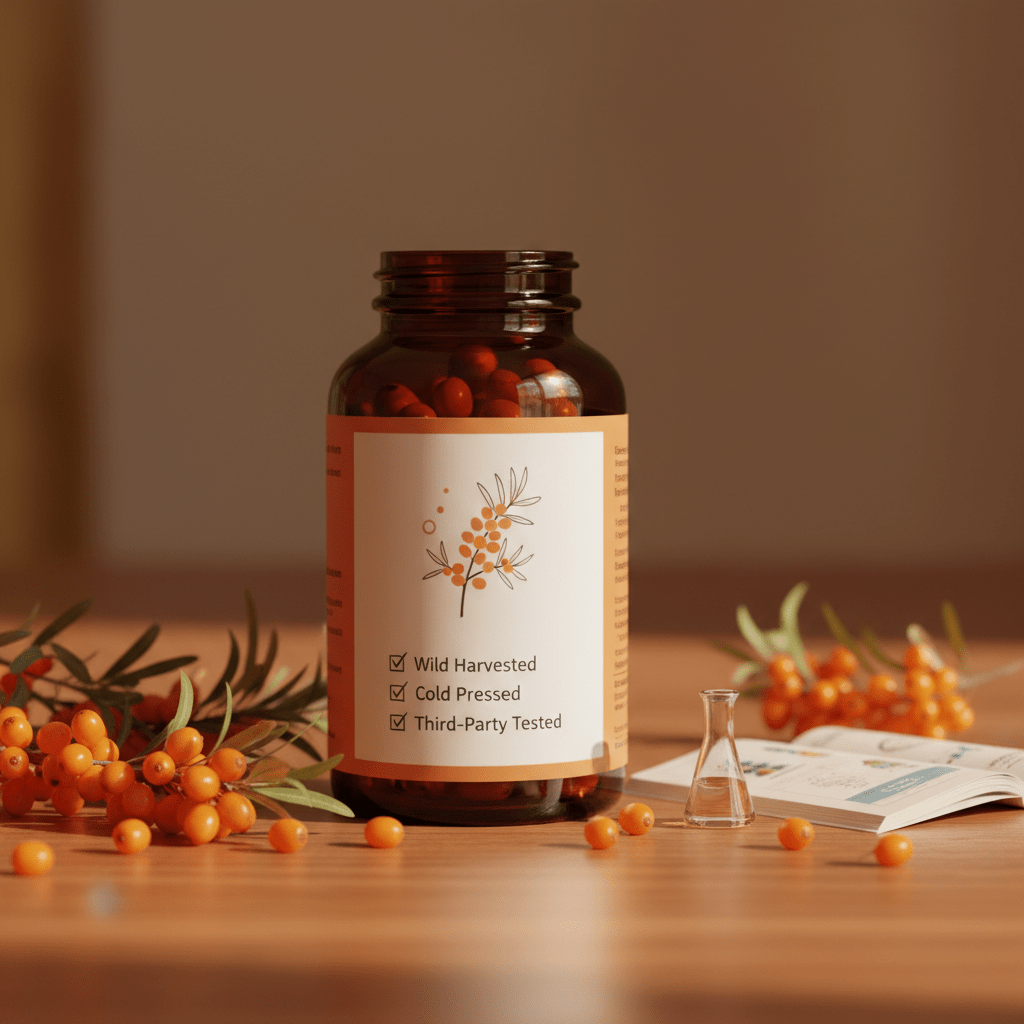
Warning sign 3: No third-party testing
This is a big one for me.
The supplement world can be messy, and watchdog groups have shown that some products don’t match the label. Harvard Health notes that supplements can contain less, or more, than they claim (Harvard Health supplement scorecard). So if a company says its oil is pure, I want proof.
Look for:
- A Certificate of Analysis
- Independent lab testing
- Clear purity and potency results
- Real certification marks, not fake-looking seals
And here’s the thing. “Third-party tested” is nice. But “third-party certified” is better, because it usually means ongoing checks, not just one random sample.
Quick red flag table
| Red flag | Why it matters | What to do |
|---|---|---|
| Very low price | May mean dilution or weak raw material | Compare with similar brands |
| Proprietary blend | Hides actual ingredient amounts | Skip it if doses are unclear |
| No lab results | You can’t verify purity | Ask for a COA or choose another brand |
| Vague claims | Sounds nice, says little | Look for numbers, not buzzwords |
| No oil source listed | You won’t know berry vs seed oil | Buy only when the source is clear |
What a better bottle usually looks like
A stronger sea buckthorn oil supplement usually gives you the details right up front. No games. No mystery mix.
It may list:
- The exact oil source
- Omega-7 amount per serving
- Extraction method, like supercritical CO2 extraction sea buckthorn
- Third-party lab testing
- Fewer fillers and cleaner capsule materials
That’s the kind of product that tends to show up in better sea buckthorn supplement reviews.
And if you’re sourcing oils for a brand, the same rule applies. Aroma Monk works with 100% pure, lab-tested natural oils and bulk supply options, which is the kind of transparency buyers should expect across wellness, skincare, and product development. Clean source. Clear testing. Less guesswork.
So here’s my simple advice: if the price feels off, the label feels vague, or the testing is missing, keep walking. There are plenty of sea buckthorn oil capsules out there. You do not need the shady one.
Your Action Plan for Sourcing the Best Sea Buckthorn Oil Supplement with Confidence
You did the hard part already. You read the labels, learned the difference between berry oil and seed oil, and saw why cheap bottles can be a trap. That alone puts you ahead of most shoppers.
So here’s the simple action plan:
- Aim for berry oil if you want more omega-7 support for skin and dry-eye comfort
- Verify supercritical CO2 extraction so you know the oil was made gently
- Check the omega-7 amount in milligrams, not just the total oil amount
- Read the other ingredients and skip the filler-heavy stuff
- Look for third-party testing like USP, NSF, or similar checks
That’s the cleanest way to buy a sea buckthorn oil supplement without second-guessing yourself later.
And yes, quality does cost a little more. But that’s usually better than buying a weak product twice. A good bottle is an investment in your own health, not just another jar taking up shelf space.
If you’re shopping for pure sea buckthorn oil capsules, or sourcing oils for a brand, keep the same rule in mind: clear source, clear testing, clear dose. No mystery. No fluff.
When you get the right one, the payoff can feel pretty simple. Less guesswork. Better value. And a product that actually matches why you started looking in the first place.
Get a quote from Aroma Monk.
Essential Oil Supplier – Bulk pricing • Samples • Fast response