

Feeling Overwhelmed? This Ancient Herb Might Be the Answer
You know that wired-tired feeling? The one where your brain won’t shut off, but your body feels like it ran a marathon? Yeah, that one. A lot of people are living there right now.
In the U.S., about 1 in 5 adults reported anxiety symptoms in 2022, which is a big jump from 2019. And that’s just one country. Stress, burnout, and restless nights are showing up everywhere, from office desks to kitchen tables.
That’s why so many people are looking back at old wellness traditions. Ashwagandha oil comes from Ayurvedic practice, where ashwagandha has long been seen as a rejuvenating herb, or Rasayana. The root has been used for strength, calm, and recovery for a very long time.
But here’s the thing. We’re not just talking about tradition for tradition’s sake. In this article, we’ll look at the health benefits of ashwagandha oil, how people use it for stress relief, sleep, skin, and massage, plus what to know about ashwagandha oil side effects before you try it. If you’ve been hunting for the best ashwagandha oil or just want a gentler wellness routine, you’re in the right place.

What You’ll Learn Here
- How ashwagandha oil fits into Ayurvedic wellness
- What the science says about stress, sleep, and skin
- Easy ways to use it at home
- Safety tips so you know what to watch for
And if you already work with natural oils in beauty or wellness products, this topic gets even more interesting. Brands like Aroma Monk offer pure essential oils, carrier oils, and rose water that can fit into personal care and aromatherapy lines, which makes this kind of ingredient research handy for both home use and product makers.
What Exactly is Ashwagandha? From Ayurvedic Roots to Modern Science
Ever notice how some herbs stick around for centuries? Ashwagandha is one of them. And that says a lot.
Its botanical name is Withania somnifera. It’s a small plant with a long history in Ayurveda, the old Indian system of wellness. In those texts, ashwagandha was called a Rasayana, which means a rejuvenator. People used it for strength, calm, and recovery, not just for one problem at a time. The name even comes from Sanskrit words that point to the herb’s horse-like smell and its old link with horse-like vigor.
Today, people often call ashwagandha an adaptogen. That sounds fancy, but the idea is pretty simple. An adaptogen is a plant that may help the body handle stress and get back to balance. Think of it like a steadying hand when work, sleep, and life all start piling up. Ashwagandha is often studied for stress support because it may help the body’s stress response system stay a little calmer under pressure.
Here’s where it gets useful for real life. Ashwagandha comes in a few forms, and they don’t all do the same job:
| Form | Common use | What to know |
|---|---|---|
| Powder | Mixed into drinks or food | Flexible, but taste and strength can vary |
| Capsules | Taken by mouth | Easy to dose and more consistent |
| Oil | Used on skin or scalp | Best for massage, skin care, and body rituals |
The oil is the one people usually reach for in self-care routines. It’s not the same as taking a capsule. Oil is mostly for the outside of the body, where it can be used in massage, scalp care, or blended into body oils. So if you’re looking at ashwagandha oil benefits, you’re really looking at a topically used herbal oil, not a drink mix or pill.
And if you’re a brand owner or product maker, that difference matters a lot. The best ashwagandha oil for a lotion, massage blend, or hair product depends on what you want it to do.
If you want to see how a pure, lab-tested ingredient fits into a broader natural care line, Aroma Monk works with essential oils, carrier oils, attars, and rose water for wellness and personal care products.
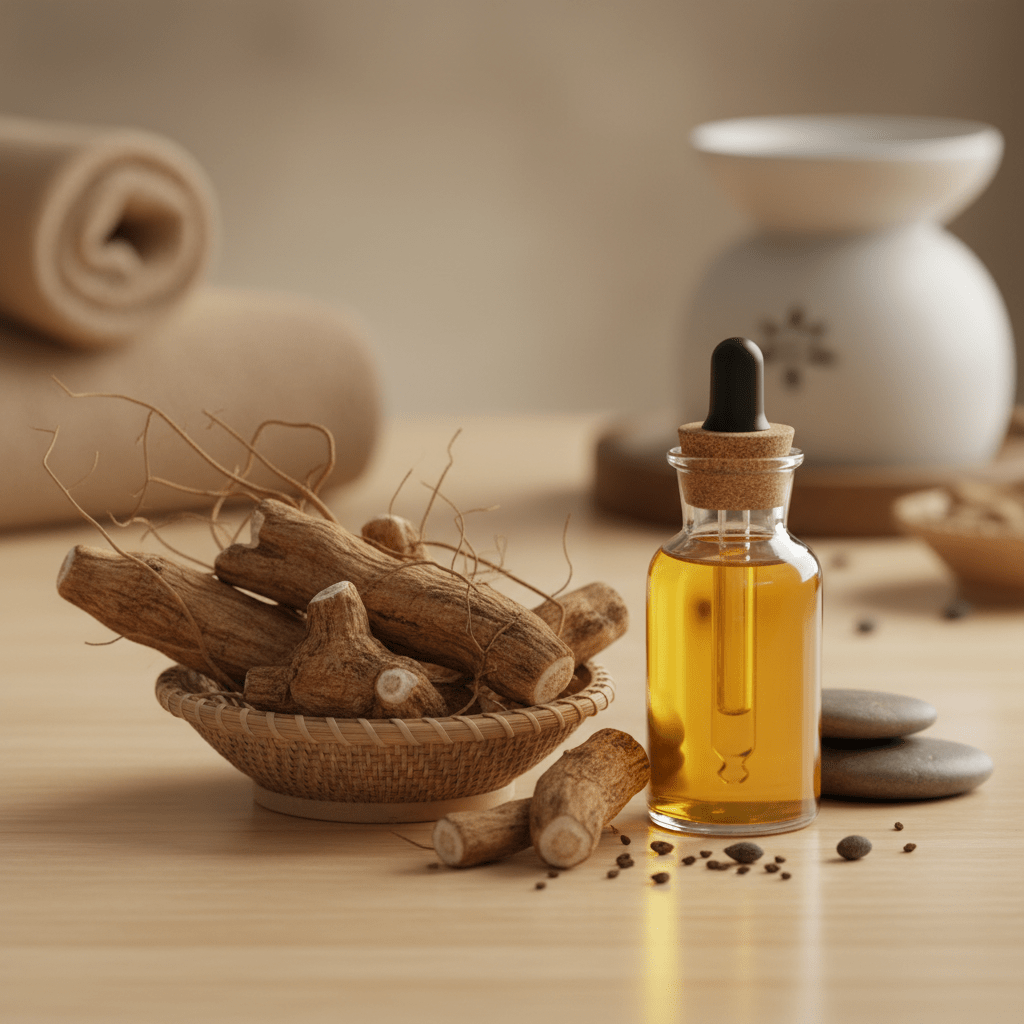
The Science of Serenity: How Ashwagandha Oil Combats Stress and Anxiety
You know that shaky feeling after too much coffee and too little sleep? The one where your shoulders sit up by your ears and your brain keeps replaying the same thought on loop? That’s the kind of stress a lot of people are trying to calm down right now.
And it’s not just a personal thing. In 2022, about 1 in 5 U.S. adults reported anxiety symptoms, and that number has climbed a lot since 2019. CDC anxiety stats There’s a reason old herbs are getting fresh attention.
Ashwagandha has been used in India for ages as a Rasayana, which is a fancy way of saying a rejuvenating herb. Old Ayurvedic texts like the Charaka Samhita and Sushruta Samhita list it for strength and recovery. Pretty wild that something so old still shows up in modern stress talks, right?
So how does it help?
The short version: ashwagandha may help the body deal with stress by calming the HPA axis. That’s the system that helps control cortisol, your main stress hormone. When cortisol runs high for too long, you can feel edgy, tired, and stuck in that wired-tired loop.
Ashwagandha is often called an ayurvedic adaptogen. That means it may help the body get back toward balance after stress. Not like a magic wand. More like a steady hand on a wobbly chair.
The active plant compounds are called withanolides. These are the part researchers keep looking at for calm support. In human studies, ashwagandha extracts have been linked with lower cortisol and lower stress scores, which is why people talk about it so much for ashwagandha for stress relief.
Here’s the simple version of the stress picture:
| What happens | What you may feel | Where ashwagandha fits |
|---|---|---|
| Cortisol stays high | Tension, racing thoughts, poor sleep | May help calm the stress response |
| Nervous system stays keyed up | Restless body, tight muscles | May support a steadier mood |
| Stress piles up | Burnout, fatigue, worry | Often used as a daily wellness helper |
What about massage and the oil itself?
This is where ashwagandha oil gets a little more interesting. When it’s used on the skin during massage, you may get two kinds of comfort at once. One is the feel of the oil itself. Warm hands. Slow strokes. Less tension in the body. The other is the herb side, where plant compounds may absorb through the skin in small amounts.
That’s why many people like ashwagandha oil massage benefits for evening routines or after a long workday. It’s not just about the ingredient. It’s the ritual too.
Actually, wait, there’s a better way to say it. The massage part may be doing a lot of the heavy lifting here. The oil supports the experience, but the calm-from-touch piece matters a ton.
If you’re using ashwagandha oil for skin, think of it as a body care step, not a drink or pill. It can fit into self-massage, scalp care, or a warm bath routine. Simple. Low drama. Kind of nice.
And for brands or makers, this matters too. A pure, lab-tested oil can fit into massage blends, body oils, and calm-focused personal care lines. That’s where a supplier like Aroma Monk can help with essential oils, carrier oils, and rose water for wellness and beauty products.
A quick reality check
Ashwagandha oil side effects are usually mild when the oil is used on the skin, but patch testing is still smart. If you have sensitive skin, start small. And if you’re pregnant, nursing, on thyroid meds, or using sedatives, it’s a good idea to talk with a health pro before trying any ashwagandha product by mouth or on your body.
So yes, this herb has old roots. But its pull is pretty current. People want calmer nights, softer shoulders, and a break from the mental buzz. Ashwagandha oil fits right into that search.
If you want to keep going, look for the best ashwagandha oil by checking purity, source, and whether it’s meant for massage, skin, or scalp use. That little detail makes a big difference.
Unlocking Restful Nights: The Benefit of Ashwagandha Oil for Sleep
Ever lie in bed and feel weirdly wide awake? Your body’s tired, but your brain is running laps. That’s the kind of night a lot of people know too well.
Stress can do that. When your day stays tense for too long, cortisol can stay high too, and sleep starts to feel lighter, shorter, and harder to reach. You may fall asleep late, wake up in the middle of the night, or get up feeling like you barely slept at all. Not fun.
Ashwagandha oil fits into this sleep story in a pretty gentle way. The herb has deep roots in Ayurveda, where it was used as a rejuvenating Rasayana. And today, people still turn to ashwagandha oil and other ashwagandha products for calm support at night, especially when stress is the thing keeping sleep away.
Why stress and sleep get tangled up
When your stress response stays switched on, your body can act like bedtime is a joke. Racing thoughts. Tight shoulders. Restless tossing. That can make it harder to fall asleep, which then makes the next day feel even rougher. Classic loop.
That’s where ashwagandha for stress relief comes in. Research on root extracts suggests it may help lower cortisol and ease perceived stress, and that calmer state can make sleep come more naturally. So it’s not really acting like a sleeping pill. It’s more like taking your foot off the gas.
What the sleep research points to
A human study using sleep actigraphy found that standardized ashwagandha root extract helped people with mild sleep troubles sleep better over 6 weeks. It improved sleep efficiency, total sleep time, and sleep onset latency, which is just a fancy way of saying people fell asleep faster and slept more smoothly. In that study, 72% of the treatment group said their sleep quality improved, compared with 29% on placebo. That’s a pretty clear gap.
So yes, the sleep benefits seem real. But they don’t look like a knockout sedative. They look more like stress relief, less bedtime tension, and a better chance of drifting off without fighting your own thoughts for an hour.
Here’s a simple way to picture it:
| Sleep problem | What it can feel like | How ashwagandha may help |
|---|---|---|
| High stress | Tight body, busy mind | May calm the stress response |
| Slow sleep onset | You can’t fall asleep | May help you fall asleep sooner |
| Broken sleep | Waking up too often | May support steadier sleep |
| Rough mornings | Still feeling drained | May help you wake up more refreshed |
A small but nice bonus
Some people also like using ashwagandha oil as part of a nighttime massage ritual. Warm hands. Slow strokes. Quiet room. It sounds simple because it is. And honestly, that’s part of the appeal.
If you’re using ashwagandha oil for sleep, think of it as a body care step that helps set the mood for rest. A little self-massage before bed can be grounding, and for some people, that routine matters just as much as the ingredient itself.
Actually, wait, maybe more. The ritual may be half the win.
If you want to try it at home, choose the best ashwagandha oil for massage or skin use, and keep the rest of your bedtime routine calm too. Dim lights. Put the phone away. Maybe even skip that third cup of tea. Small stuff adds up.
And if you’re sourcing for products, Aroma Monk offers 100% pure, lab-tested essential oils, carrier oils, attars, and rose water for wellness and personal care lines. That makes it easier to build sleep-focused blends with ingredients you can trust.
A quick safety note
Ashwagandha oil side effects are usually mild when used on the skin, but patch testing is still a smart move. And if you’re pregnant, nursing, taking thyroid medicine, or using sedatives, talk with a health pro first.
So if restless nights have been wearing you down, ashwagandha oil may be worth a look. It won’t fix every sleep problem. But for stress-heavy nights, it might help your body get the message: it’s time to slow down.
Get a quote from Aroma Monk.
Essential Oil Supplier – Bulk pricing • Samples • Fast response
Beyond the Mind: Ashwagandha Oil for Radiant Skin and Healthy Hair
You know that dull, tired-skin look that shows up after a rough week? Or the way your hair seems to lose its spark when stress keeps piling up? Yep, that too. A lot of people notice it.
Ashwagandha oil gets a lot of love for calm and sleep, but its skin and hair perks are pretty interesting too. In traditional use, it’s been part of head massage and body oil routines for a long time. And now, people are looking at it for a few very modern reasons: glow, comfort, and less stress showing up on the outside.
Why skin likes it
Ashwagandha has antioxidant compounds, including withanolides, that may help fight free radical damage. Free radicals are the tiny troublemakers tied to early signs of aging like fine lines and wrinkles. So if your skin has been looking a little worn out, this herb gets attention for a reason.
There’s also research on topical use. In one 60-day study, a lotion with standardized ashwagandha root extract helped reduce wrinkles, pores, and water loss in the skin while improving hydration and elasticity. That’s the kind of result people notice in the mirror, not just in a lab report.
And it may help with irritation too. Ashwagandha oil is often talked about for its anti-inflammatory effects, which is why some people use it for skin that feels itchy, red, or upset. Think acne-prone skin, dry patches, or even eczema-prone areas. Not a cure-all. But a gentle helper can still matter.
| Skin concern | How ashwagandha oil may help |
|---|---|
| Fine lines | Antioxidants may help fight free radical stress |
| Dry skin | May support a softer, more hydrated feel |
| Redness or irritation | Topical use may calm the look of inflamed skin |
| Dull tone | Can fit into a soothing body care routine |
What about hair?
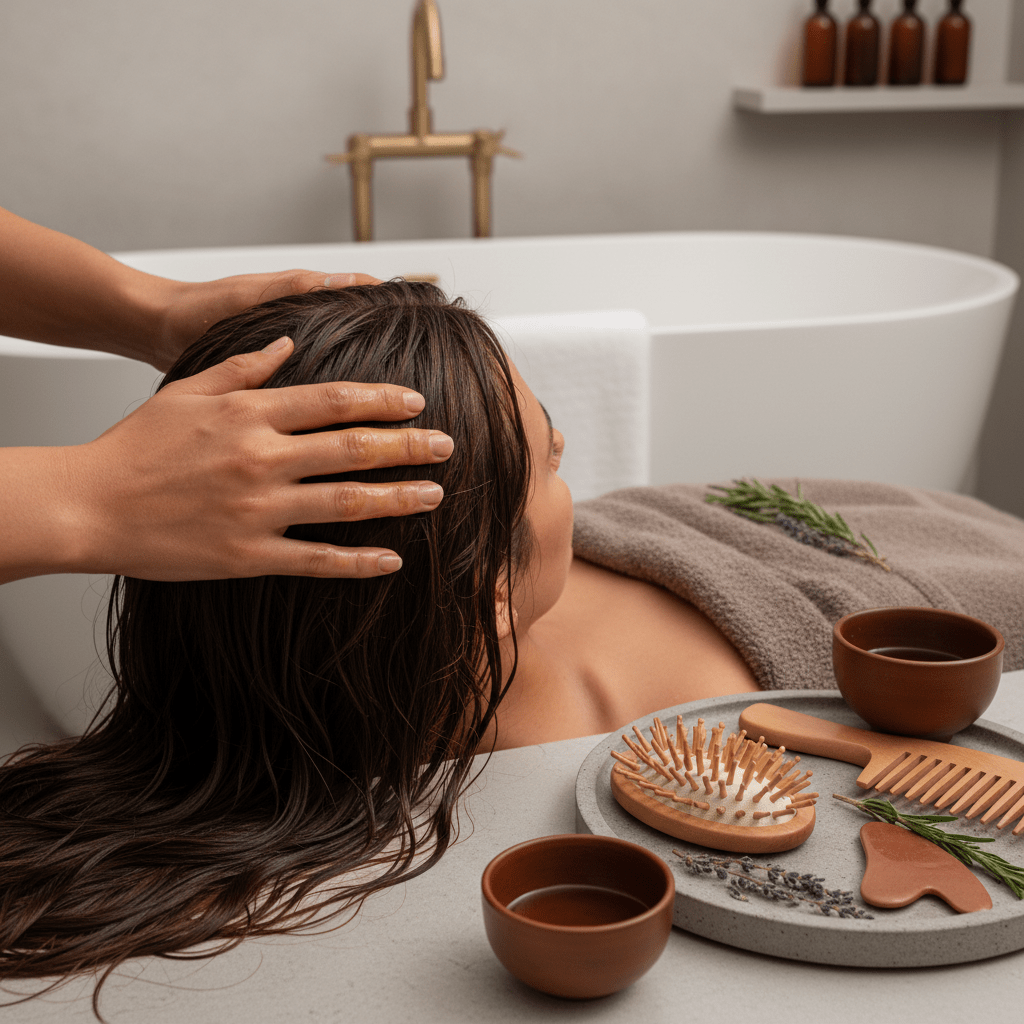
Here’s the fun part. In Ayurveda, head massage is a big deal. Shirodhara and warm oil scalp massage are old practices used to calm the mind and care for the body at the same time. With ashwagandha oil, people have long used that ritual to support hair follicles, reduce dandruff, and keep the scalp in better shape.
And stress matters here. When stress stays high, some people notice extra shedding. That’s why ashwagandha for stress relief can connect to hair care too. If the body feels less overwhelmed, hair often gets a better chance to stay in its usual growth cycle.
A 75-day study on a topical ashwagandha serum found less hair shedding and better hair density, thickness, and growth compared with placebo. Pretty nice for something that starts with a simple scalp massage, right?
Easy ways people use it
- Mix it into a scalp oil routine
- Massage it into dry skin after a shower
- Use it before bed as part of a wind-down ritual
- Blend it with a carrier oil for gentler use
If you’re looking for the best ashwagandha oil for skin or hair, check the label first. Pure, lab-tested oil with no weird extras is usually the safer bet. And if you’re a brand owner, this matters even more. Aroma Monk offers 100% pure essential oils, carrier oils, attars, and rose water for wellness and personal care lines, which makes sourcing a cleaner product a lot easier.
A small safety note
Ashwagandha oil side effects are usually mild when used on skin, but patch testing is smart, especially if your skin gets cranky fast. If you’re pregnant, nursing, or have sensitive scalp issues, it’s a good idea to ask a health pro before using it often.
So yes, ashwagandha oil is about more than calm thoughts. It may also be a quiet helper for skin, scalp, and hair care. Simple. Old-school. Still handy.

How to Choose and Use Ashwagandha Oil Effectively
You know that feeling when you buy a “natural” product and then flip the label over… and it looks like a science fair gone wrong? Yeah. Been there.
If you want the best ashwagandha oil, keep it simple. Start with the label. Look for organic sourcing, cold-pressed carrier oils, and clear origin details. A good bottle should also tell you what base oil it uses, like sesame, almond, apricot kernel, jojoba, or grapeseed. That matters because the carrier oil changes how it feels on skin.
| What to check | Why it matters |
|---|---|
| Organic or clean sourcing | Helps cut down on unwanted extras |
| Cold-pressed oil | Usually keeps the oil more natural |
| Carrier oil type | Affects skin feel and use |
| Batch or sourcing info | Gives you more trust in the product |
| No weird fillers | Better for skin and scalp use |
Sesame oil is a classic choice for Abhyanga, the old Ayurvedic self-massage routine. Almond oil feels lighter. Jojoba is nice if your skin gets fussy. And if you’re using ashwagandha oil for skin or scalp care, a simple formula is often better than a crowded one.
Easy ways to use it
- Topical massage: Rub a few drops into joints, shoulders, or tired legs
- Abhyanga: Warm the oil a little and massage your whole body before a shower
- Scalp care: Work a small amount into the scalp and leave it on for 20 to 30 minutes
- Bath use: Add a little to bath water or mix it with a carrier oil first
And start small. Always. Put a tiny bit on your inner arm first and wait 24 hours to check for skin sensitivity. That one step saves a lot of regret.
For most people, a little goes a long way. One to two teaspoons is usually plenty for a full-body self-massage, but you can use less if that feels better. If you’re just trying it on shoulders or feet, a few drops may do the trick.
But here’s the part people skip: ashwagandha oil side effects are more likely if your skin is sensitive or if the oil is mixed with something you don’t react well to. If you’re pregnant, nursing, taking thyroid medicine, or using sedatives, talk with a health pro before using any ashwagandha product by mouth. For internal use, don’t guess. Get advice first.
If you’re sourcing for a brand or product line, clean ingredient quality matters even more. Aroma Monk offers 100% pure, lab-tested essential oils, carrier oils, attars, and rose water for wellness, beauty, and personal care products. That kind of sourcing can make product development a lot smoother.
So yes, ashwagandha oil can fit into a calm daily routine. But the real win is choosing a good bottle, using it with care, and paying attention to how your body feels.
Safety, Side Effects, and Important Considerations
You know that moment when a “natural” remedy sounds gentle, so you assume it’s harmless? Yeah… not always. Even old herbs need a little respect.
Ashwagandha oil is usually mild on skin, but side effects can still happen. The most common ones are skin irritation, drowsiness, or a little stomach upset if someone uses an internal form too much. That lines up with what health groups like NCCIH say about ashwagandha safety. Short-term use is usually the main comfort zone.
Here’s the part to watch closely:
| Who should be careful | Why |
|---|---|
| Pregnant people | Ashwagandha may not be safe in pregnancy |
| Breastfeeding people | Safety data is limited |
| People with autoimmune conditions | It may nudge the immune system |
| People taking sedatives | It can add to drowsiness |
| People on thyroid medicine | It may affect thyroid hormone levels |
And if you’re using ashwagandha oil for skin, patch testing is a must. Put a tiny bit on your inner arm and wait 24 hours. Boring? Sure. Smart? Very.
The same goes for anyone thinking about supplements. Talk with a health pro or a qualified herbalist first, especially if you take medicine or manage a health condition. That’s the safest way to enjoy the health benefits of ashwagandha oil without guessing.
So yes, ashwagandha oil can be a calm, old-school helper. But the best results come from simple use, careful testing, and knowing when to pause.
Integrating Ancient Wisdom into Your Modern Life
So here’s the easy version. Ashwagandha oil can help in a few real-life ways: it may support stress relief, help you wind down for sleep, and give skin and hair a little extra care. That’s why so many people keep coming back to it. Not because it’s magic. Because it fits into daily life without a lot of fuss.
Ashwagandha has old roots in Ayurveda, where it was used as a Rasayana, or rejuvenating herb. In plain words, it was seen as something that helps the body bounce back. Modern research backs up parts of that idea, too. People still turn to ashwagandha oil for stress relief, ashwagandha oil for sleep, and using ashwagandha oil for skin because it works as a gentle, outside-the-body wellness step.
And that adaptogen idea matters. An ayurvedic adaptogen is not about covering up symptoms. It’s more about helping the body hold steady when life gets loud. That’s a pretty nice goal, honestly.
If you want to try it, start small. Use a patch test. Pay attention to how your skin feels. See how your body responds after a few days. Maybe it becomes part of your massage routine. Maybe it helps at bedtime. Maybe it just gives your shoulders a calmer feeling after work. Either way, you get to listen to your body and decide.
So yes, the health benefits of ashwagandha oil are worth a look. Stress, sleep, skin, even hair care. Simple things. Steady things. And if you’re sourcing ingredients for a product line, a trusted supplier like Aroma Monk can help with pure, lab-tested oils, carrier oils, attars, and rose water for wellness and personal care products.
Try it slowly. Keep it gentle. See what your body says.
Get a quote from Aroma Monk.
Essential Oil Supplier – Bulk pricing • Samples • Fast response