
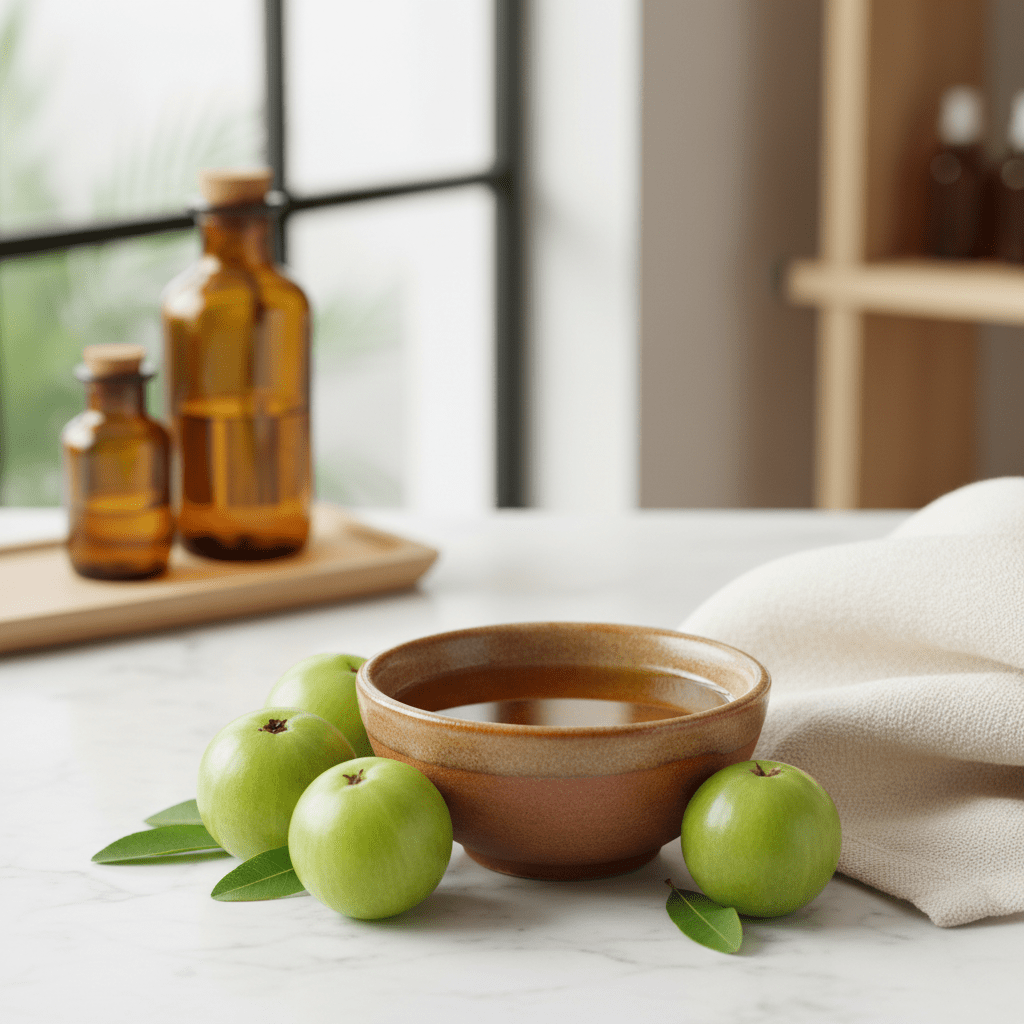
Tired of Lifeless Locks? Discover the Ancient Secret to Reviving Dry, Damaged Hair
Ever look in the mirror and think, “Why does my hair feel like straw?” You’re not alone. A 2022 global study found that 70% of people feel their hair is damaged, and dry, brittle strands are a pretty common headache too. Heat tools, coloring, hard water, sun, and city air can all leave hair looking tired.
That’s where amla hair oil comes in. This old Ayurvedic favorite has been used for more than 5,000 years, and people still reach for it now because it feels simple, natural, and kind to the scalp. Amla, also called Indian gooseberry oil for hair care, has a long history in ayurvedic hair care for dryness, shine, and stronger-feeling strands.
In this guide, we’ll keep it practical. You’ll learn how amla oil works, amla oil benefits for hair, how to choose a good bottle, and how to use amla oil for dry hair without making things messy. We’ll also talk about amla oil for damaged hair, frizz, split ends, and even a DIY amla hair oil recipe if you like making things at home.
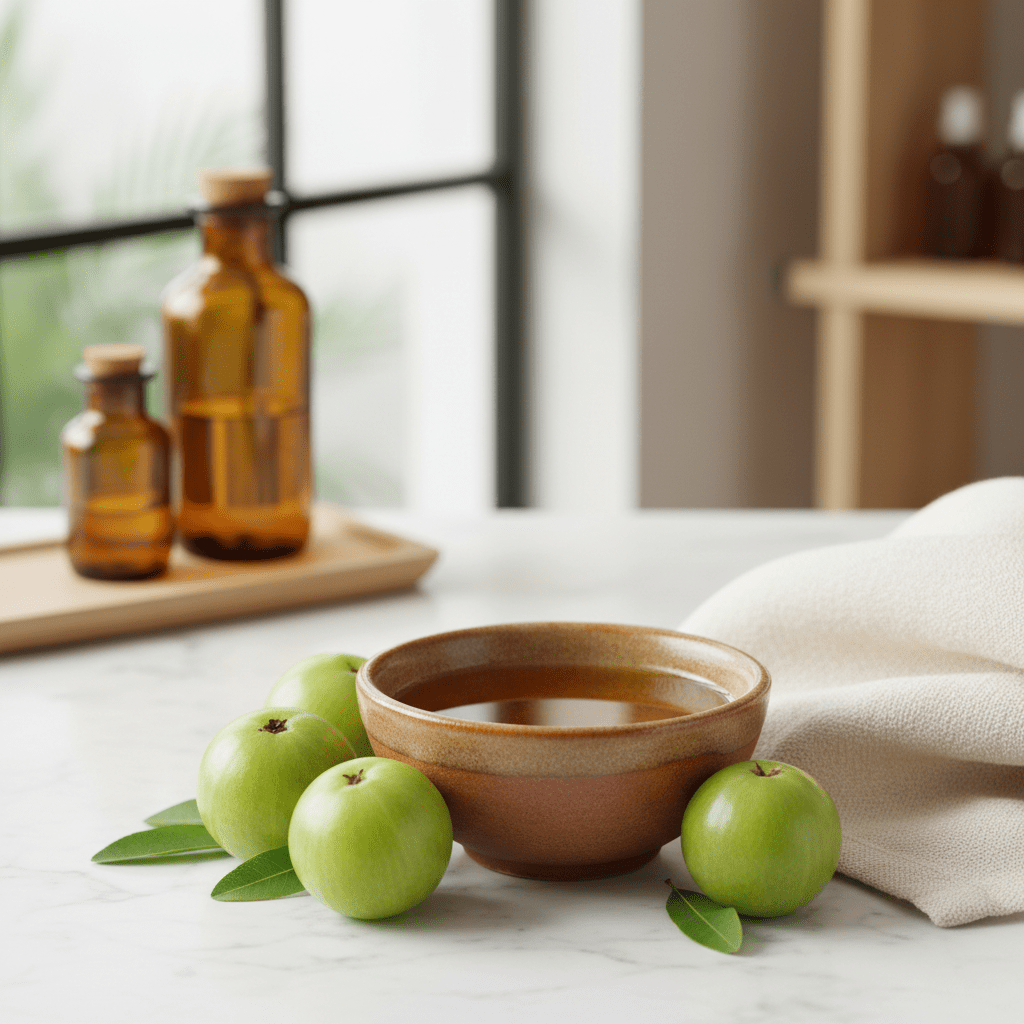
What Exactly is Amla Oil? Your Guide to This ‘Superfruit’ for Hair
Ever chopped open a tiny green amla fruit and thought, “Wait, this little thing has all that power?” It’s kind of wild. Amla, also called Indian gooseberry, has been used in Ayurvedic hair care for a very long time, and people still talk about it because it feels like one of those old-school fixes that never really left.
This fruit is packed with vitamin C and plant compounds called antioxidants. In fact, amla has about 300 to 700 mg of vitamin C per 100 g, which is way more than oranges. That’s a big deal for dry hair, since vitamin C helps support collagen, and collagen helps keep the skin around hair roots in good shape. Plus, antioxidants can help fight the stress that sun, pollution, and heat tools leave behind.
But here’s where people get mixed up. Not all amla hair oil is the same. Some bottles use pure amla oil, which is pressed from the fruit’s seeds. Others use amla-infused oil, where dried amla fruit sits in a carrier oil like coconut, sesame, olive, or almond oil. The infused kind is much more common, and honestly, it makes sense because each carrier oil brings its own perks too.
| Type | What it is | Why do people use it |
|---|---|---|
| Pure amla oil | Pressed from amla seeds | Used for a more direct amla feel |
| Amla-infused oil | Amla soaked in a carrier oil | Helps with softness, shine, and scalp care |
Ayurveda gives amla a special place too. It’s often called a Rasayana, which means a rejuvenating herb. Old texts praise it for hair shine, strength, and scalp health. So if you’ve seen amla oil hair treatment posts all over TikTok or heard your grandma swear by it, there’s a reason for that. It’s old, yes. But it still fits into modern ayurvedic hair care for dryness pretty well.
And if you’re shopping for hair oils for your own brand or salon line, Aroma Monk’s pure essential oils and carrier oils can be a smart base for custom blends. Clean ingredients matter. Especially when hair already feels fried.
The Science of Rescue: How Amla Oil Heals Dry Hair and Repairs Damage
You know that flat, rough feeling when your hair just won’t behave? Yeah, that one. Dry hair often starts with a loss of moisture, but damage usually brings a bigger mess. Heat, color, sun, and pollution can wear hair down piece by piece, and a 2022 global study found that 70% of people feel their hair is damaged. So if your strands feel tired, you’re in crowded company.
Amla hair oil steps in with a few things working at once. First, it’s loaded with vitamin C and plant antioxidants. Amla has about 300 to 700 mg of vitamin C per 100 g, which is far more than oranges, and that matters because vitamin C helps support collagen. Collagen helps the skin around hair roots stay in better shape. Plus, amla’s antioxidants can help fight free radicals from UV rays, heat styling, and city air. That kind of stress adds up fast.
But that’s not the whole story. Amla oil for damaged hair also brings in fatty acids from the oil base, especially if it’s blended with coconut, sesame, olive, or almond oil. These oils coat the hair shaft, help lock in moisture, and make strands feel smoother. Less moisture loss means less snapping. And less snapping means your hair keeps more of its length. Simple, but pretty helpful.
| Why it help dry hair | Why it helps dry hair |
|---|---|
| Vitamin C | Why does it help dry hair |
| Antioxidants | Help calm damage from sun, pollution, and heat |
| Fatty acids | Smooth the hair shaft and reduce moisture loss |
| Plant tannins | Help support stronger-feeling roots |
Here’s the part many people miss. Amla’s phytonutrients, like tannins, may help strengthen hair at the root. That matters because healthy hair starts at the scalp. When the base feels better supported, hair can seem less fragile over time. It’s one reason amla oil hair treatment routines have stayed popular for so long in ayurvedic hair care for dryness.
And yes, the old Ayurvedic records really did love amla. It’s been used for more than 5,000 years and was praised as a Rasayana, or rejuvenating herb, for hair shine and root health. Old-school? Sure. But it still fits modern hair care pretty well.
If you’re learning how to use amla oil for dry hair, start with a small amount and massage it into the scalp for about 5 minutes. Then work it through the lengths. Give it 20 to 45 minutes before washing, or leave it on longer if your hair is very dry.
Want to go a step further? A DIY amla hair oil recipe can be a fun weekend project, especially if you already use natural oils in your routine. And if you make hair or beauty products for a brand, Aroma Monk’s pure carrier oils and essential oils can help you build clean, custom blends that fit your formula goals.
Get a quote from Aroma Monk.
Essential Oil Supplier – Bulk pricing • Samples • Fast response
Beyond Moisture: The Full Spectrum of Amla Hair Oil Benefits
You know that annoying scalp itch that shows up at the worst time? Like, right before a meeting or dinner out. Amla hair oil can help there too. A dry scalp often feels tight, flaky, and grumpy, and amla’s anti-inflammatory and antimicrobial bits may help calm that down while also easing dandruff. That’s a big reason people keep reaching for it in ayurvedic hair care for dryness.
And it’s not just about comfort. Amla oil for damaged hair is also popular because people hope it can support hair growth by helping the scalp feel healthier. Traditional Ayurvedic texts have praised amla for more than 5,000 years as a Rasayana, or rejuvenating herb, and modern hair care still leans on that old wisdom. It’s been tied to stronger roots and less premature graying for a long time, even if it won’t change genetics overnight.
Here’s the part many people love most: shine. Amla oil can smooth the outer layer of hair, so light bounces off better and the hair looks glossier. That soft, reflective finish is one reason indian gooseberry oil for hair shows up in so many natural hair oil for frizz routines. Less roughness. More slip. Better days.
| Amla hair oil benefit | Amla hair oil benefits |
|---|---|
| Soothe the scalp | May calm itchiness and dryness |
| Support hair growth | Helps the scalp and roots feel healthier |
| Add shine | Smooths the hair surface for a glossier look |
| Help with graying | May slow early graying in some cases |
Amla is also loaded with vitamin C. It has about 300 to 700 mg per 100 g, which is way more than oranges. That matters because vitamin C helps with collagen support, and collagen helps the skin around hair follicles stay in better shape. Plus, amla’s antioxidants may help protect against stress from sun, pollution, and heat styling.
But wait, there’s a catch. Amla oil won’t fix every hair issue by itself. It works best as part of a steady routine. If you’re trying to figure out how to use amla oil for dry hair, think in terms of regular oiling, gentle washing, and not frying your strands with hot tools every day. Simple stuff. The boring stuff. The stuff that usually works.
If you’re curious, this is also a nice place to try a DIY amla hair oil recipe at home or test a ready-made amla oil hair treatment that fits your hair type. And if you make hair products for a brand, Aroma Monk’s pure carrier oils and essential oils can help you build clean blends with a more natural feel.
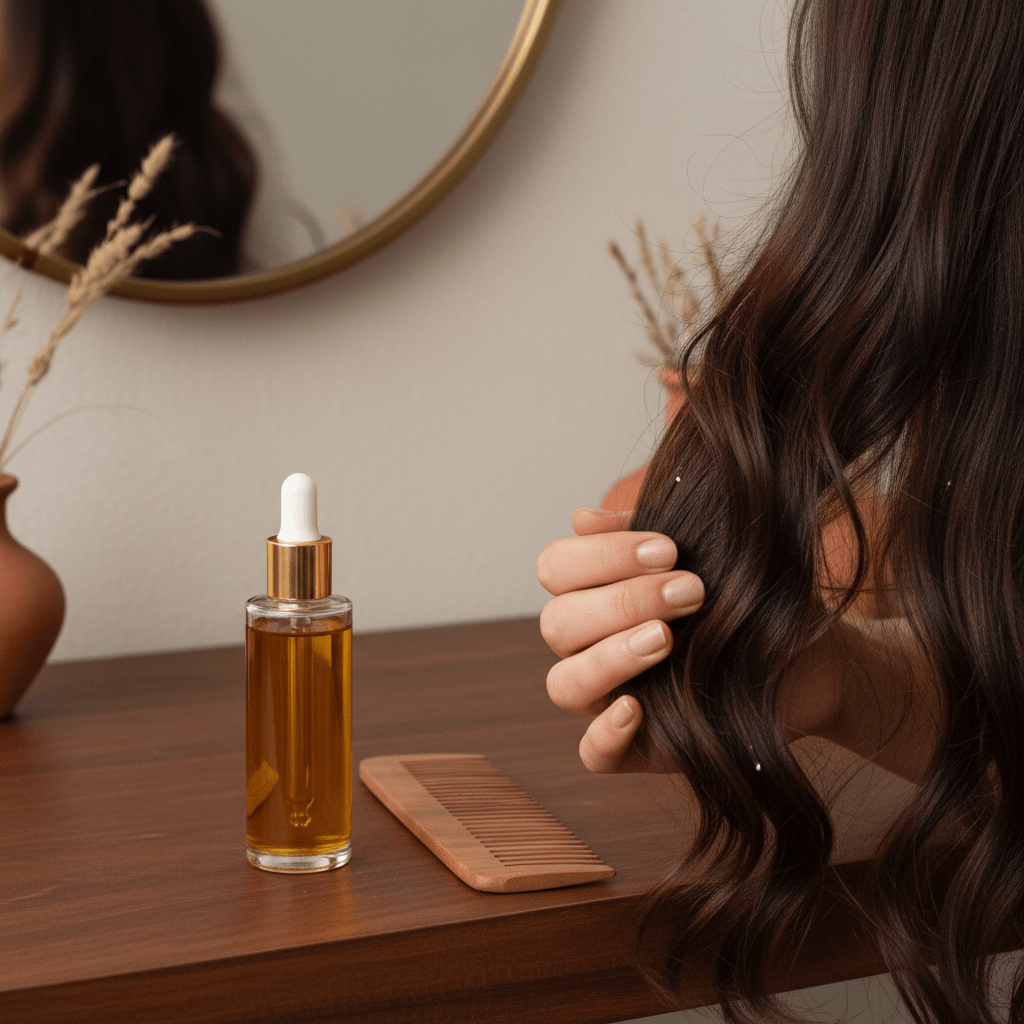
How to Choose the Best Amla Hair Oil for Your Needs
You know that feeling when you buy a hair oil that sounds amazing, then the label looks like a science fair project? Yeah. Been there. And with so many bottles calling themselves the best amla hair oil, it helps to know what to look for before you spend your money.
Start with the ingredient list. Shorter is usually better. Look for cold-pressed oils and a simple blend with amla plus a carrier oil like coconut, sesame, olive, or almond. Cold-pressed matters because it keeps more of the natural plant goodness in the oil. Try to skip products packed with mineral oil, parabens, and fake fragrance, since those can leave hair dull or heavy over time.
Here’s a quick cheat sheet:
| What to look for | Why it helps |
|---|---|
| Cold-pressed oil | Keeps more plant nutrients in the blend |
| Minimal ingredients | Less chance of buildup or irritation |
| No mineral oil | Better for moisture and scalp feel |
| No artificial fragrance | Gentler for dry or sensitive scalps |
And the carrier oil really does matter. If your hair is fine or tends to get greasy fast, coconut oil is a smart pick because it feels lighter and sinks in well. For thick, coarse, or very dry hair, sesame oil or olive oil often feels richer and more nourishing. Almond oil is a nice middle ground if you want something lighter but still softening.
Color can help too. Natural amla oil often looks greenish-brown, not bright neon green. If it smells overly sweet, perfume-like, or just plain weird, pause for a second. That bottle may be hiding more fragrance than fruit. Also check where it comes from. Trusted brands usually say if the amla is sourced from India and how the oil was made.
If you’re making your own blend, a DIY amla hair oil recipe can be as simple as amla powder and a clean carrier oil, then stored in a dark glass bottle. Nice and easy. And if you’re buying in bulk for a beauty line, Aroma Monk’s lab-tested carrier oils and essential oils can help you build cleaner custom blends without all the guesswork.
One more thing. Give any new amla oil hair treatment a little time. Softer hair may show up in 1 to 4 weeks, but bigger changes usually take a couple of months. Hair grows slow. Rude, but true.
Your Amla Oil Ritual: A Step-by-Step Guide to Maximum Hydration
You know that dry, rough hair that just won’t listen? The kind that puffs up the second you step outside? Yeah, we’ve all had that day. And if your hair has been through heat, bleach, color, or too much sun, a simple amla hair oil routine can feel like a small rescue mission.
Here’s the thing. Hair damage is everywhere. A 2022 global study found that 70% of people feel their hair is damaged, so you’re not overthinking it. You’re just seeing what a lot of us see in the mirror.
1) Weekly deep conditioning hot oil treatment
This is the heavy-duty move. Best for very dry, rough, or tired strands.
Start with a small bowl of amla oil. Warm it gently for 10 to 20 seconds in the microwave, or use a double boiler. Warm, not hot. Test it on your wrist first. If it feels too warm for skin, it’s too warm for your scalp. Simple.
Then do this:
- Section your hair into 4 parts.
- Apply the oil to your scalp with your fingertips or an applicator.
- Massage in slow circles for about 5 minutes.
- Work the rest through your lengths, especially the ends.
- Put on a shower cap or plastic cap.
- Wrap a warm towel around your head.
- Leave it on for 20 to 45 minutes. If your hair is extra dry or thick, you can stretch that to 1 hour.
This kind of amla oil hair treatment helps the oil sink in better and gives your hair a softer, more cushioned feel. It also pairs well with oils like coconut, sesame, olive, or almond oil, since each one brings a little something different to the mix.
2) Pre-shampoo treatment for less stripping
If shampoo tends to leave your hair squeaky and sad, this step is for you.
Use amla oil before washing, not after. That way, it forms a light barrier and helps protect strands from the drying feel of shampoo. Put the oil on dry hair, from scalp to ends, then let it sit for 20 to 45 minutes. For thick or very dry hair, 1 hour is fine too.
Then shampoo as usual. You may need two rounds if your oil is rich. That’s normal. Not glamorous, but normal.
This works well as part of ayurvedic hair care for dryness, especially if you wash often or use styling products during the week.
3) Tiny leave-in serum for frizz and split ends
OK, this next part is actually pretty cool. You don’t need a full oiling session every time. Sometimes just a drop or two does the trick.
Rub 1 to 2 drops of amla hair oil between your palms. Then smooth it over the mid-lengths and ends of dry hair. Don’t flood the roots. We want shine, not grease.
This light touch can help with:
- natural hair oil for frizz
- amla oil for split ends
- dull, rough-looking ends
- flyaways around the crown
If you have fine hair, use even less. Like, shockingly little. If you’ve got coarse or curly hair, you may need a touch more.
A few quick tips that save headaches
- Start with a small amount and build up.
- Use amla oil 2 to 3 times a week for best results.
- Store homemade oil in a dark glass bottle in a cool place.
- If you’re making your own blend, a DIY amla hair oil recipe can be as simple as amla powder and a clean carrier oil.
And don’t expect miracles overnight. Most people notice softer hair and more shine in 1 to 4 weeks, but bigger changes usually take 2 to 3 months. Hair grows slow. Annoying, but that’s the deal.
If you’re shopping for a clean base for your own formula, Aroma Monk’s lab-tested carrier oils and essential oils can help you build custom blends for personal care or bulk product lines. Good ingredients make the whole routine easier.
So yes, amla oil can be part of a weekly ritual, a pre-wash shield, or a tiny frizz fix. Use it the way your hair needs it most.
DIY vs. Store-Bought: Crafting Your Own Amla Hair Oil at Home
Ever stared at a bottle and thought, “I could probably make this myself”? Same. And with amla hair oil, that guess isn’t too far off. Amla has been used in Ayurveda for more than 5,000 years, so this isn’t some new TikTok trick. It’s old, trusted, and still shows up in a lot of dry hair routines.
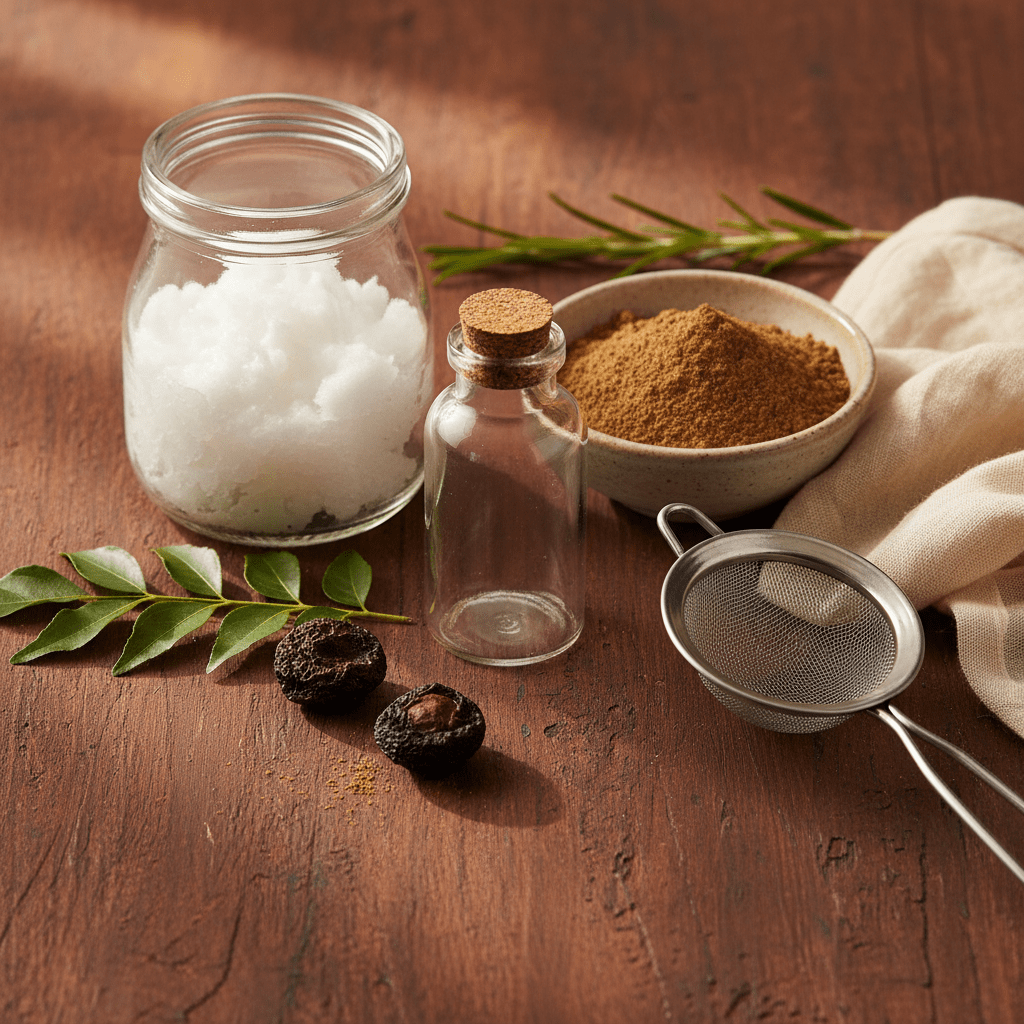
If you like hands-on fixes, a DIY amla hair oil recipe can be a fun weekend project. For a simple batch, mix about 1/4 cup amla powder with 1 cup coconut oil. Warm it very gently for 10 to 20 minutes on low heat, then let it cool. Strain it through a fine cloth or sieve, and store it in a dark glass bottle. That’s it. Easy enough, right?
DIY amla oil: the good and the not-so-good
Pros:
- You control the ingredients
- It’s usually cheaper than fancy store bottles
- You can pick the carrier oil you like best
Cons:
- It takes time
- The shelf life is usually shorter
- If you heat it too much, you can mess it up
DIY works best if you enjoy making things and don’t mind a little trial and error. But if you’re busy, it can become one more thing on your to-do list. And nobody needs that.
Store-bought amla oil has its own upsides. It’s ready to use, the blend is usually more consistent, and many brands last longer because they’re made and packed for stability. That said, you may have less say over the ingredients, and some bottles sneak in mineral oil or strong fragrance that doesn’t help dry hair much.
Here’s a quick side-by-side look:
| Option | Best for | Watch out for |
|---|---|---|
| DIY amla oil | People who want control and lower cost | Shorter shelf life, more prep time |
| Store-bought amla hair oil | People who want ease and steady results | Additives, less ingredient control |
If you want a cleaner, ready-made amla oil hair treatment, look for a short ingredient list and a cold-pressed carrier oil. If you’re more of a maker, keep your homemade oil in a cool, dark spot and use it within a few weeks. Hair care doesn’t need to be fancy. It just needs to fit your life.
And if your brand needs pure oils for custom blends, Aroma Monk’s lab-tested carrier oils, essential oils, and rose water can be a smart place to start. Clean ingredients. Less guesswork. That’s a pretty nice combo.
Embrace a Natural Solution for Strong, Hydrated Hair
If your hair has been feeling dry, rough, or just plain tired, you’re not imagining it. So many people deal with that same problem, and a 2022 global study found that 70% of people feel their hair is damaged. That’s a lot of us staring at the mirror and thinking, “OK, what now?”
This is where amla hair oil still earns its place. Amla, or Indian gooseberry oil for hair, has been used in Ayurveda for more than 5,000 years, and people keep coming back to it for a reason. It brings vitamin C, antioxidants, and nourishing oils together in one simple amla oil hair treatment. That combo may help with dryness, frizz, split ends, and that dull look that makes hair feel older than it is.
But the real trick is consistency. One use won’t change everything. A weekly routine, though? That can make a real difference over time. Whether you try a DIY amla hair oil recipe, a hot oil treatment, or just a light layer on the ends, the key is to stick with it and give your hair a fair shot.
So start small. Pick the method that fits your life, use it regularly, and watch how your hair responds. Softer texture. More shine. Less fuss. Not bad for one old Ayurvedic favorite.
Get a quote from Aroma Monk.
Essential Oil Supplier – Bulk pricing • Samples • Fast response