
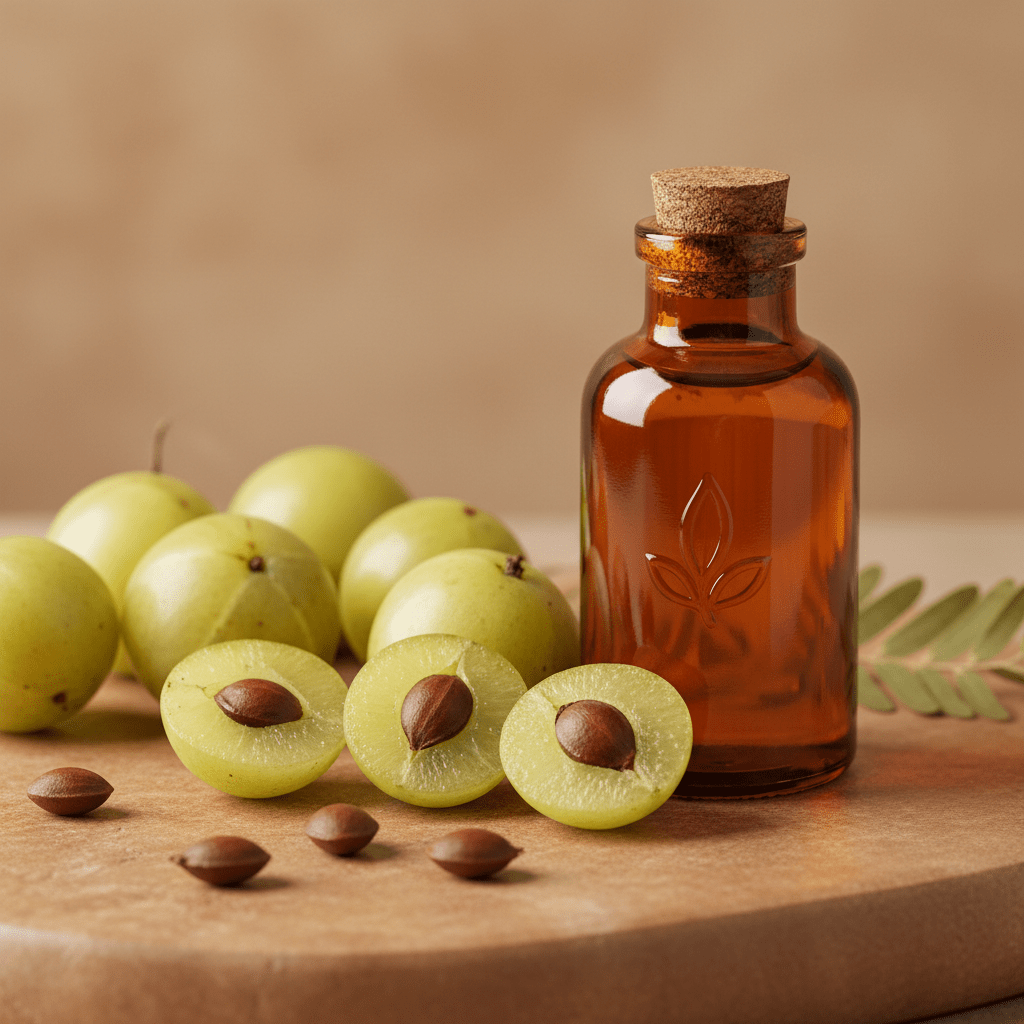
Introduction: Beyond the Hype – A Scientific Look at Amla Hair Oil
Ever had someone swear by a hair oil their grandma used, and then wonder, “OK, but does this stuff actually work?” That’s where amla hair oil gets interesting. It’s been a big name in Ayurvedic hair care for ages, and a lot of people use it for shine, less breakage, and even less gray hair.
But here’s the real question: what does research say? Not marketing. Not old family stories. Real studies.
Amla, also called Phyllanthus emblica, shows up a lot in conversations about hair growth and scalp health. Some brands call it a miracle oil. Some say it helps with hair loss, dry strands, dandruff, and early graying. And yes, the market for amla products keeps growing, which tells us people are still very interested in natural hair care.
So in this article, we’re going past the label. We’ll look at the science of amla hair oil, the key plant compounds, and what the lab and human studies actually found. We’ll also look at where the proof is strong, where it’s still thin, and how amla oil for hair growth compares with other popular options. If you want clear, evidence-based answers, you’re in the right place.
Read more on the research behind amla oil
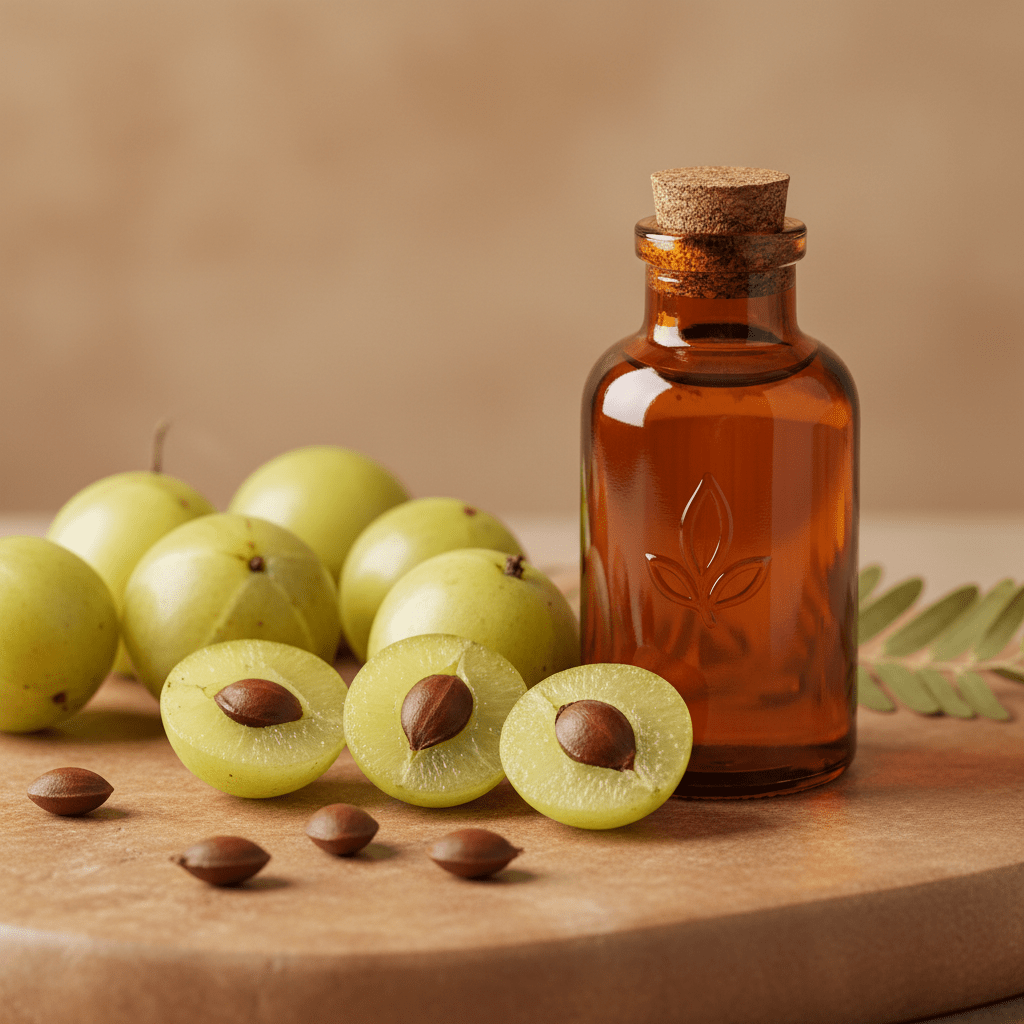
1. What is Amla? Deconstructing the ‘Indian Gooseberry’ and its Oil
You know that one ingredient people talk about like it’s magic? Amla is one of those.
Also called Indian gooseberry, or Phyllanthus emblica, this little fruit has been part of Ayurvedic hair care for a long time. It’s packed with water, but it also carries a strong mix of plant compounds like tannins, polyphenols, flavonoids, and a lot of vitamin C. That combo is a big reason it keeps showing up in conversations about amla oil for hair growth, shine, and scalp health.
But here’s where things get a little messy. Not every bottle labeled amla hair oil is the same thing.
There’s a real difference between true amla oil and amla-infused oil. True amla seed oil is pressed from the seeds, and that’s pretty rare. Most products on shelves are carrier oils like coconut, sesame, or mineral oil that have been blended with amla fruit extract. So if you’ve ever wondered how does amla oil work for hair, the answer depends a lot on what’s actually inside the bottle.
The carrier oil matters. A lot. Coconut and sesame can help spread the amla extract over the scalp and hair, while also adding their own moisturizing feel. The amla part brings the fruit’s active compounds, and the infusion process helps pull out both water-friendly and oil-friendly plant bits from the dried fruit. That’s why ingredient lists matter more than the front label. Fancy words are easy. Real content is the part that counts.
Here’s a quick look at the two common types:
| Type | What it is | Why it matters |
|---|---|---|
| True amla seed oil | Oil pressed from amla seeds | Rare, harder to find |
| Amla-infused oil | Amla fruit extract blended into a carrier oil | Most common in stores |
And if you’re buying for a brand or salon line, that distinction is a big deal. A transparent supplier with lab-tested oils, like Aroma Monk, can help you get cleaner carrier oils and better traceability for formulas, bulk supply, and product development.
People also ask about indian gooseberry oil benefits for hair because amla is tied to hair strength, less breakage, and scalp care in Ayurvedic hair care science. There’s still a gap between marketing and hard proof, but the plant itself has a rich profile that makes it worth a closer look.
Next up, we’ll get into what research says about amla oil hair loss study results, gray hair, and scalp health. That’s where it gets really interesting…
2. The Science of Hair Growth: Can Amla Oil Stimulate Follicles?
You know that tiny moment in the shower when you see more hair than you expected? Yeah. That one. It sends a lot of us looking for answers fast.
So can amla hair oil actually help hair grow? There is some early science that says maybe, but let us keep our feet on the ground. We are not talking magic here. We are talking plant compounds, hair cells, and a few small studies that point in a promising direction.
What the lab studies found
One of the most interesting parts of the scientific evidence around amla oil is how it seems to affect dermal papilla cells. These are the cells at the base of the hair follicle that help kick off the growth phase, also called anagen. In lab tests, Phyllanthus emblica fruit extract showed that it can help these cells multiply, which may help support stronger follicle activity. That matters because healthier papilla cells are tied to better hair growth signals.
And there is more. Some research also suggests amla may slow down 5-alpha reductase, the enzyme linked to androgenetic alopecia, or pattern hair loss. That is the same enzyme finasteride targets. Now, amla is not finasteride, and these two things are very different. But if a natural ingredient can help quiet that enzyme a bit, it is worth paying attention to.
| Hair question | What research suggests |
|---|---|
| Can it support growth? | Lab studies show dermal papilla cell activity may increase |
| Can it help with hair loss? | Amla compounds may act as natural 5-alpha reductase blockers |
| Can it help the scalp? | It may support circulation and nutrient delivery |
How does amla oil work for hair?
Here is the deal. Amla may help in a few different ways at once. First, the plant’s antioxidants can help fight oxidative stress, which is a big deal for weak hair and early grays. Second, the oil base can help massage the scalp, and that massage may improve blood flow a bit. Better flow means more oxygen and nutrients can reach the follicles. Simple idea. Pretty useful.
Also, some amla oil for hair growth claims line up with how scalp massage is already used in hair care. A three to five minute massage, done gently, can help move the oil around and wake up the scalp. No, it will not fix every hair issue. But it can be part of a better routine, especially if your scalp feels dry or tense.
What about hair loss and gray hair?
A good amla oil hair loss study is still hard to find in large numbers. Most of the evidence is from small trials or lab work, not huge human studies. But that does not mean it is useless. It just means we need to be careful with big claims.
For gray hair, the idea is different. Oxidative stress can damage pigment cells in the follicle, and amla’s antioxidant load may help protect against that stress. That is why people keep asking about amla oil for grey hair research. The short answer is that the science is interesting, but it is still early.
A practical note on use
If you want to try it, use a small amount on the scalp one to three times a week. Massage it in for a few minutes, then leave it on for thirty minutes or so before washing. That is usually enough for most people.
And if you are a brand owner or product maker, ingredient quality matters a lot here. A clean, traceable oil base can make a big difference in the final formula. That is where lab-tested carrier oils and blends, like the ones from Aroma Monk, can help with product consistency and bulk supply.
So, does it work?
Maybe. It looks promising for scalp support, follicle activity, and hair strength. But the human research is still thin, so we should treat amla hair oil like a helpful tool, not a miracle fix.
Get a quote from Aroma Monk.
Essential Oil Supplier – Bulk pricing • Samples • Fast response
3. Combating Premature Graying & Damage: Amla’s Antioxidant Powerhouse
Ever notice how stress seems to show up everywhere? Your inbox. Your sleep. And, yep, your hair too.
That’s where amla hair oil gets a lot of attention for grey hair and breakage. The big idea is pretty simple: free radicals can hurt the tiny cells that make hair pigment, and they can also wear down the hair shaft itself. UV light, smoke, pollution, and stress all add to that mess. Over time, that can push hair toward dullness, weakness, and premature graying.
Amla, or Phyllanthus emblica, is packed with antioxidants like emblicanins, tannins, flavonoids, and vitamin C. Those plant compounds help mop up free radicals before they do as much damage. A review on oxidative stress in hair graying points out that hydrogen peroxide can build up in gray follicles and block melanin making, which is one reason amla oil for grey hair research keeps popping up in hair care chats oxidative stress and hair graying research.
Here’s the part people usually miss. Amla’s help is not just about color. It may also protect the hair shaft itself. When hair is under less oxidative stress, it tends to stay stronger, which can mean less snapping, fewer split ends, and a smoother feel after washing. Pretty nice tradeoff.
What the antioxidant power means for hair
| What free radicals can do | How amla may help |
|---|---|
| Stress pigment cells | Antioxidants help calm oxidative damage |
| Dry out the shaft | Plant compounds may support better hair feel |
| Weaken strands | Less stress can mean less breakage |
| Speed up dullness | Vitamin C and polyphenols help guard shine |
And yes, people still ask, how does amla oil work for hair if it’s mostly oil? The answer is that the oil is usually carrying the fruit extract. So the carrier helps spread it on the scalp and strands, while the amla part brings the antioxidants. Simple, but kind of clever.
There’s also a practical side here. If you leave amla oil on for 30 minutes to 2 hours, it can coat the hair and help reduce roughness during washing and combing. That matters more than people think. A lot of damage happens in the bathroom, not outside it. Wet hair is fragile. Tugging is rude. And split ends do not care about your hopes and dreams.
This is why indian gooseberry oil benefits for hair usually focus on both scalp care and strand care. The scalp gets the antioxidant support, and the hair gets a bit of shielding from friction and dryness. That’s not a miracle. But it is useful.
For brands and makers, this is where ingredient quality matters a ton. A clean, lab-tested base oil with real amla content can make a formula much more trustworthy, especially for customers who want natural hair care with fewer fillers. Aroma Monk’s carrier oils and natural ingredient supply can fit that kind of product work well, especially for bulk buying and private label lines.
So, if you’re looking at scientific evidence amla oil has for graying and damage, the short version is this: the antioxidant story is strong, the hair-strength story makes sense, and the human proof is still growing. But the plant itself? It’s doing a lot of heavy lifting.

4. A Foundation for Healthy Hair: Amla’s Impact on Scalp Health
You know that itchy, flaky scalp day? The one where you keep checking your shoulders in the mirror? Yeah, that’s usually where the hair trouble starts to feel very real.
Amla hair oil gets a lot of love for this reason. Not just for shine. Not just for softness. It may also help the scalp itself stay calmer and cleaner, which matters more than people think.
Can amla help with dandruff?
There’s some lab research that points to antifungal action against common scalp troublemakers like Malassezia furfur, one of the main germs linked to dandruff. In a few in vitro tests, amla extracts showed zones of inhibition against these scalp fungi, which means they slowed growth in the lab. That’s not the same as a cure. But it is a real clue.
And that clue matters. A flaky scalp can throw off the whole hair routine. If the skin on your scalp is irritated, your hair can look dull and feel rough too. Not fun.
Why do tannins and flavonoids matter?
Amla fruit, or Phyllanthus emblica, has a bunch of plant compounds that give it its edge. Tannins and flavonoids are the big names here. They’re known for their antioxidant and calming effects, and in scalp care that can mean less redness, less itching, and less of that tight, annoyed feeling.
| Scalp issue | How amla may help |
|---|---|
| Dandruff flakes | May slow fungal growth in lab studies |
| Itching | Plant compounds may soothe irritation |
| Redness | Antioxidants may calm stress on the scalp |
| Dry, rough feel | Oil base may help soften the skin barrier |
So, how does amla oil work for hair if the scalp is the real target? Simple. A healthier scalp gives hair a better place to grow. Clean follicles, less buildup, and a more balanced skin surface can all help support stronger strands over time.
That’s why scientific evidence amla oil isn’t only about hair growth. It’s also about the ground the hair grows from. If the scalp is angry, oily, or flaky, the hair usually shows it.
A balanced scalp makes a big difference
We talk a lot about the hair shaft, but the scalp microbiome matters too. That’s the mix of helpful and harmful microbes living on your skin. When it gets out of whack, you may see more oil, more flakes, or more irritation. And when the scalp is thrown off, hair care gets messy fast.
Amla oil may help as part of a simple scalp care routine. Massage it in gently. Leave it on for 30 minutes to 2 hours. Wash it out well. No need to drown your scalp in it (more oil is not always better, even if grandma said so).
For brands and product makers, this is where ingredient quality really shows up. A clean, lab-tested oil base with real amla content can make a formula feel much more trustworthy. That’s one reason companies looking for bulk supply and traceable natural oils often turn to suppliers like Aroma Monk for carrier oils, essential oils, and other natural ingredients.
So yes, indian gooseberry oil benefits for hair may include more than shine and softness. It may also help support a calmer scalp, which is a pretty good place to start.
5. A Practical Guide: How to Use Amla Hair Oil for Maximum Scientific Benefit
You can buy the fanciest bottle on the shelf, but if it sits in your bathroom cabinet untouched, it won’t do much. Funny how that works, right?
With amla hair oil, the way you use it matters a lot. The goal is simple: get the oil on the scalp, give it time to sit, and pick a formula that’s actually worth your money. Not every bottle is the same. Some are loaded with mineral oil and a tiny bit of amla. Others use a better carrier oil and a stronger fruit extract.
Step 1: Use it as a pre-shampoo oil
Start with dry or slightly damp hair. Warm a small amount in your hands. Then massage it into the scalp for 3 to 5 minutes with slow circles. That little massage helps spread the oil and may support scalp flow.
After that, pull the rest through the mid-lengths and ends. Leave it on for 1 to 2 hours before washing. That gives the active plant compounds time to sit on the scalp and hair instead of getting rinsed off too fast.
If your hair is very dry, you can leave it on longer. Overnight works for some people. But if your scalp gets greasy fast, shorter is probably better.
Step 2: Pick a better bottle
This part is the real trick. When you shop for amla oil for hair growth, read the label like you mean it.
Look for:
- A clear carrier oil, like coconut or sesame
- A high amla content, not just a splash of extract
- No mineral oil if you can avoid it
- No fake fragrance or extra filler junk
- A company that shares lab tests or ingredient details
A lot of commercial amla hair oil products make big promises. Growth. Shine. Less shedding. Less gray hair. But the product itself may not match the ad. A recent review of scientific evidence amla oil found that the research is still limited, and some market claims go way further than the data amla oil research overview. So yeah, the front label is not the whole story.
Step 3: Match the schedule to your hair type
How often should you use it? That depends.
| Hair type | Usual frequency |
|---|---|
| Dry, curly, or thick hair | 2 to 3 times a week |
| Normal hair | About once a week |
| Oily or fine hair | Every 10 to 14 days |
If you’re asking how does amla oil work for hair in real life, the answer is pretty simple. It works best as part of a routine, not a one-time rescue plan.
Step 4: Watch for side effects
Amla is natural, but natural doesn’t mean zero problems. Patch test first if you have sensitive skin. Put a little on your inner arm or behind your ear, then wait 24 hours.
Stop using it if you notice redness, itching, bumps, or a burning feeling. And don’t pile on too much oil. That can leave buildup and make your scalp feel heavy.
For anyone making products, this is where supplier quality matters. Aroma Monk offers lab-tested carrier oils, essential oils, and natural ingredients for bulk supply, which can help brands build cleaner formulas with better traceability.
So, if you want to try amla oil for grey hair research or hair strength claims in a real-world way, keep it simple. Use a good formula. Give it time. Stay consistent. That’s where the best results usually come from.
6. A Balanced View: Understanding the Limits of Today’s Amla Research
You know that moment when a product sounds almost too good? That’s where we need to slow down a bit.
Amla hair oil has real promise. I think that part is fair. But the research we have right now is still mixed in quality. A lot of the studies are done in test tubes or on animals, not in big human groups. And that matters. A lab result can point us in a useful direction, but it does not prove the same thing will happen on your scalp.
Here’s the difference in plain words:
| Study type | What it can tell us | What it cannot tell us |
|---|---|---|
| Test tube study | Amla may affect cells or germs | It may not work the same on real people |
| Animal study | It may help in a living body | It still is not a human result |
| Human trial | It can show real-world effects | Small trials still need more follow-up |
That’s why claims like “miracle cure” are a stretch. Amla may support hair growth, scalp health, and less breakage. But that is not the same as saying it will fix hair loss for everyone. Correlation is not causation. Just because a study sees a link does not mean amla is the only reason things got better.
Also, commercial products can muddy the water. Some bottles with amla hair oil don’t contain much amla at all. So even if the science on phyllanthus emblica for hair looks promising, the product you buy might be a whole different story.
The good news? The old Ayurvedic use lines up pretty well with the early science. The bad news? We still need more double-blind, placebo-controlled human studies before anyone can make big claims with a straight face.
So yes, amla oil for hair growth may be worth trying. Just keep your expectations real. Helpful tool. Not magic.
Conclusion: Integrating Amla Oil into Your Evidence-Based Hair Care Routine
So, what’s the real story with amla hair oil?
It looks promising. Pretty promising, actually. The early research points to a few things: support for hair growth, help with oxidative stress that can play a role in graying and damage, and some scalp care benefits too. That lines up with a lot of what people have said for years in Ayurvedic hair care science. But now we’ve got a bit more than family stories and shiny bottle claims.
At the same time, let’s keep our feet on the ground. Scientific evidence amla oil is still growing, and a lot of the studies are small or done in labs, not big human trials. So no, it’s not a magic potion. Not even close. But it may be a strong natural helper for people who want a gentler hair routine.
If you want to try it, start simple:
- Pick a product with a clear ingredient list
- Look for real amla content, not just a fancy label
- Use it 1 to 3 times a week
- Massage it into the scalp for a few minutes
- Pair it with good sleep, food, and less stress
That last part matters more than people think. Hair health is rarely about one bottle.
And if you’re a brand owner or product maker, quality matters just as much. A clean, traceable oil base can make all the difference in how your formula performs and how much trust it builds. That’s where lab-tested natural ingredients from suppliers like Aroma Monk can help, especially for bulk supply and product development.
The big takeaway? Amla oil for hair growth may help, but consistency and quality are the real stars here. Use it as part of a full hair care routine. Keep your hopes real. And give your scalp a little patience… it usually takes time to show results.
Get a quote from Aroma Monk.
Essential Oil Supplier – Bulk pricing • Samples • Fast response