

The Modern Woman’s Ally: How an Ancient Herb is Revolutionizing Reproductive Wellness
You know that shaky, wired feeling after a long day, when your body feels tired but your brain won’t shut off? A lot of women are living there more often than they’d like. Work stress, family stuff, poor sleep, and nonstop pressure can hit the body hard. And for many women, that stress doesn’t stay in the mind. It shows up in the cycle, mood, skin, sleep, and even fertility.
That’s one reason ashwagandha has gotten so much attention. In Ayurveda, Withania somnifera for female health has been used for ages as a calming, strengthening herb. Today, it’s also getting noticed by modern researchers who study adaptogens for women’s reproductive health. It’s not magic. But it may offer real support.
In this guide, we’ll look at the ashwagandha oil benefits for women and how this herb may help with stress, hormones, menstrual flow, fertility, and even perimenopause. We’ll also talk about ashwagandha oil and cortisol, ashwagandha for hormonal balance, and where topical use may fit in. Plus, we’ll keep it honest about what we know, what we don’t, and when to be careful.
If you’ve been looking for natural support for menstrual cycle changes or want a gentler way to care for your body, you’re in the right place.
Why women are reaching for calmer support
A lot of women are not just “stressed.” They’re worn down.
PCOS alone affects about 7% of women in the 25 to 45 age group worldwide. And women with PCOS often deal with anxiety and depression at much higher rates than women without it. That’s a big deal. It helps explain why so many women are looking at herbs, oils, and other natural tools that might help the body settle down.
Ashwagandha has a long history here. In old Ayurvedic texts, it was used for women after birth, for low fertility, and for menstrual trouble. People also used it as a massage oil and tonic. So this isn’t some brand-new trend with a cute label on it.
It’s old wisdom meeting new interest.
And that mix is exactly what makes the topic worth a closer look.

What this guide will cover
We’ll walk through:
- how ashwagandha may help the stress response
- why cortisol matters for the menstrual cycle
- what we know about ashwagandha for female fertility
- how it may fit into support for PMS and perimenopause
- what to know about using ashwagandha oil topically
- safety notes, because yes, that part matters too
So let’s get into it. Calmly. No hype.
A quick note before we go дальше
I’m not here to say ashwagandha fixes everything. It doesn’t. But for women who feel like stress has taken over their cycle, sleep, and energy, it may be one helpful piece of the puzzle.
And honestly? Sometimes one good piece is a relief.
Understanding Ashwagandha: From Root to Oil
Ever rubbed your temples at 9 p.m. and thought, “Why am I still tired and wide awake?” Yeah. A lot of women know that feeling too well.
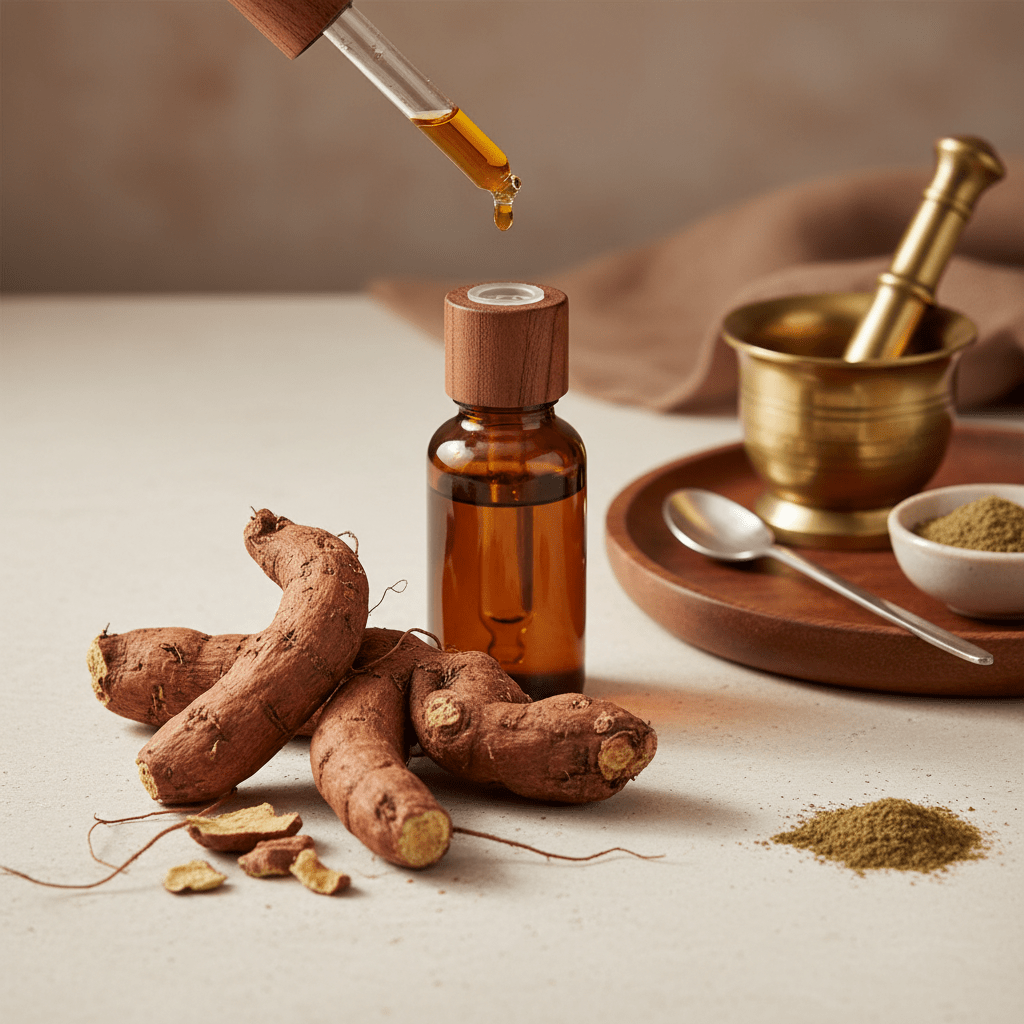
That’s part of why ashwagandha keeps popping up in talks about ashwagandha oil benefits for women and adaptogens for women’s reproductive health. The plant is called Withania somnifera, and in plain words, it’s an herb people have used for stress, strength, and women’s wellness for a very long time. In Ayurveda, it was seen as a calming, building herb. Think of it as support for a body that’s been running on empty.
Ashwagandha is often called an adaptogen. That just means it may help the body handle stress better and get back to a steady place. Not a miracle. Just a helper. The active parts inside the root are called withanolides. These plant compounds are thought to work on stress signals in the body, especially the ones tied to the nervous system and hormones. That’s why people connect ashwagandha and cortisol and ashwagandha for hormonal balance so often.
Here’s the thing though: ashwagandha comes in a few common forms, and they’re not all used the same way.
| Form | Common use | What people like about it |
|---|---|---|
| Powder | Mixed into milk, tea, or food | Traditional and flexible |
| Capsules | Easy daily use | Simple, no taste |
| Oil | Massage or skin use | Great for using ashwagandha oil topically |
Ashwagandha oil is usually made by infusing the herb in a carrier oil like sesame oil or coconut oil. That makes it a little different from capsules or powder. Some oils are made for rubbing on the skin, while others are made for taking by mouth. The use depends on how it’s prepared. And yes, that matters.
Topical oil may feel more gentle and soothing, while oral forms are more often used in studies on stress, sleep, and natural support for menstrual cycle concerns. If you’re a business buyer or product maker, this is where clean sourcing matters too. Aroma Monk’s lab-tested essential oils and carrier oils can fit well for wellness blends, body oils, and personal care formulas that need a pure, reliable base.
So when people talk about ashwagandha, they’re usually talking about more than one thing. Root. Extract. Oil. Different uses. Same old herb, doing a lot of jobs.
The Core Connection: How Ashwagandha Balances Cortisol and Hormones
Ever notice how stress doesn’t just stay in your head? It shows up in your sleep, your skin, your mood, and sometimes your cycle too. Annoying. And for a lot of women, that chain reaction starts with cortisol.
Here’s the simple version. Your brain and adrenal glands are always talking. That stress loop is called the HPA axis, short for hypothalamic-pituitary-adrenal. When life feels like one long group chat that won’t stop buzzing, the HPA axis can keep firing. Your body makes more cortisol. Then it can get harder to sleep, ovulate, or feel steady day to day.
This is where ashwagandha oil benefits for women start to make more sense. Ashwagandha is often used as one of the adaptogens for women’s reproductive health because it may help the body dial stress down a bit. In one well-known study, stressed adults taking ashwagandha had a 27.9% drop in serum cortisol, while the placebo group dropped only 7.9% study summary. Another trial found a 23% drop in morning cortisol over 8 weeks, with a 25% drop in female participants. Pretty real numbers. Not hype.
And lower cortisol can matter for more than calm nerves. When stress stays high, the body may favor cortisol over progesterone because both share the same raw material. People call this the “progesterone steal” idea. The phrase is a little blunt, sure, but it gets the point across. If the body keeps chasing stress protection, it may have less room to keep estrogen, progesterone, LH, and FSH in a smoother rhythm. That can mess with ovulation and make periods feel off.
So what does that mean in plain words?
- Less stress load may support more regular cycles
- Lower cortisol may help with PMS mood swings
- A calmer stress response may support fertility markers
- Balanced stress signals may also help with ashwagandha and perimenopause symptoms
And yes, this is one reason people talk about ashwagandha for hormonal balance so much. It’s not that the herb “fixes hormones” on its own. But if stress is the thing throwing your system sideways, calming that stress response can help the rest of the body do its job better.
I also like that ashwagandha has old roots here. In Ayurvedic care, Withania somnifera for female wellness was used for women’s strength, fertility, and cycle support long before modern labs came along. Old idea. New interest. Same basic question: can the body feel safer, so it can work better?
For brands and formulators, this is where clean sourcing matters too. Aroma Monk’s lab-tested essential oils, carrier oils, and natural attars are a smart fit for wellness blends, body oils, and personal care lines that need pure, traceable ingredients. If you’re building a women’s care product, that kind of quality control is a big deal.
So, yes. Stress and hormones are tied together. And ashwagandha may help calm that loop, one step at a time.
Ashwagandha Oil for Menstrual Health: Easing PMS and Regulating Cycles
You know that month when your body feels like it’s making up new rules? One cycle shows up late. The next one comes with cramps, mood swings, and that weird mid-afternoon crash that hits like a brick. Yeah, lots of women know that story.
For women with stress-heavy lives, ashwagandha oil benefits for women may show up in a few pretty practical ways. The herb has long been used in Ayurvedic care for Withania somnifera for female wellness, and today people also talk about it as one of the gentler adaptogens for women’s reproductive health. That old-root, new-interest mix makes sense. Stress and cycles are tightly linked.
When cortisol stays high for too long, the body can get a little messy with ovulation and period timing. That’s why ashwagandha and cortisol keeps coming up in cycle talk. If stress is the main thing throwing off your rhythm, calming that stress load may help the body return to a more predictable pattern. Not overnight. But often enough to matter.
What this can mean for your cycle
Here’s the simple version:
- less stress may support more regular periods
- calmer stress signals may help with PMS mood shifts
- better sleep can make the whole month feel less bumpy
- lower tension may support natural support for menstrual cycle changes
And honestly, that’s a big relief for a lot of women. Especially those dealing with PCOS, where anxiety and depression rates are much higher than in women without it, according to a recent review on women’s mental health PCOS and mood findings. When your body already feels off, even small support can feel like a win.
What about PMS and PMDD?
This part gets interesting. Ashwagandha is often described as calming and mood-supporting, partly because it may work on stress pathways and GABA activity in the brain. So if your PMS feels like a full-body mood storm, it may help take the edge off. Think irritability, anxiety, low energy, and that “please do not talk to me right now” feeling.
There isn’t a huge pile of large PMS-only trials yet. But smaller studies and reviews suggest ashwagandha’s stress-lowering action may help with mood swings and fatigue, which are two of the most annoying parts of the whole mess. I’d call that promising. Not perfect. But promising.
Can topical ashwagandha oil help with cramps?
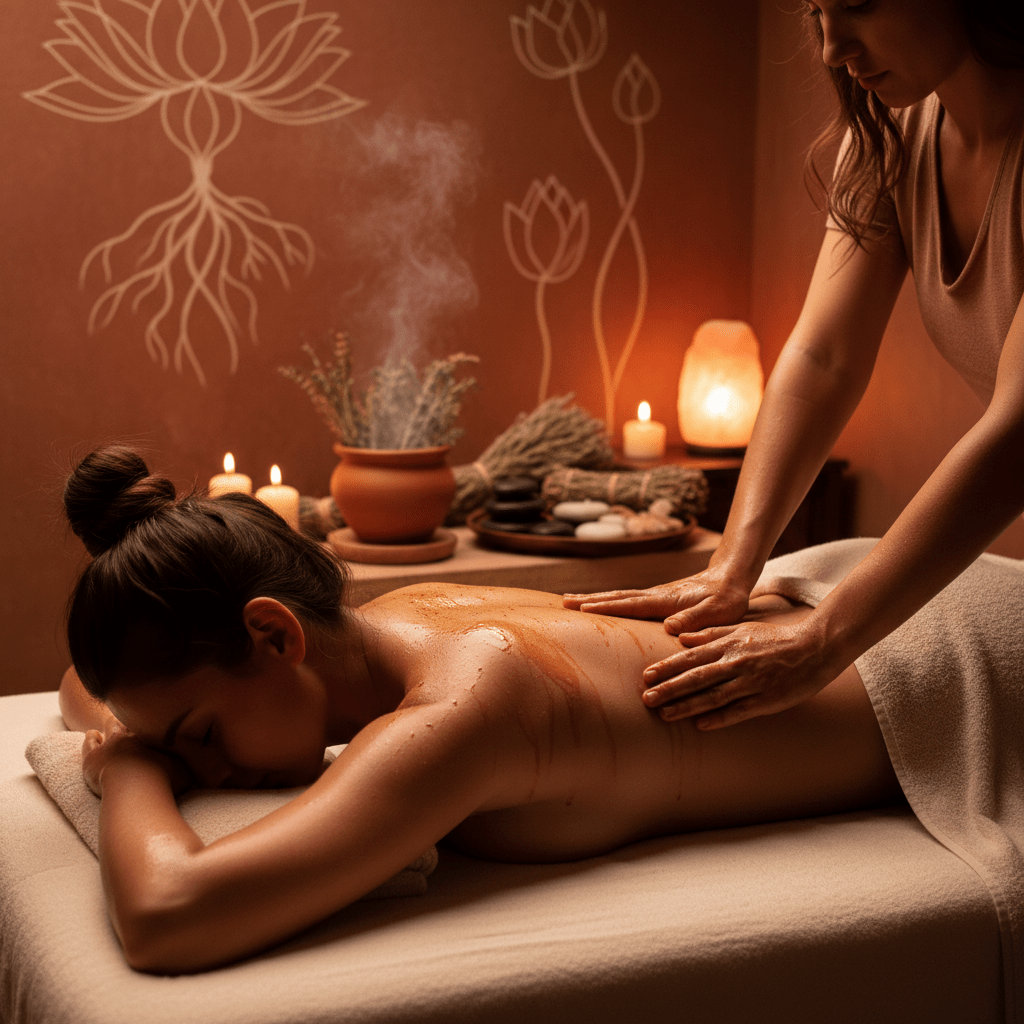
Possibly, yes. And this is where using ashwagandha oil topically fits in nicely. In Ayurveda, ashwagandha oil was used as a massage oil, often with sesame oil as the base. People used it for relaxation, strength, and comfort. That tradition still makes sense today, especially for belly massage or lower back massage during your period.
Why might it help? The herb is often linked with anti-inflammatory and pain-soothing effects. So a warm oil massage may feel helpful for dysmenorrhea, which is the medical word for period cramps. Even if the oil doesn’t erase the pain, the ritual itself can feel grounding. Warm hands. Slow breathing. Less tension. Very underrated.
| Common concern | How ashwagandha oil may fit in |
|---|---|
| Irregular cycles | May support stress balance |
| PMS mood swings | May calm stress reactivity |
| Fatigue | May support steadier energy |
| Menstrual cramps | May be used in gentle massage |
So yes, ashwagandha for hormonal balance is really about support, not a magic fix. But for women whose periods get worse when life gets louder, that support can be meaningful.
If you’re exploring body oils or wellness blends, this is where clean ingredients matter. Aroma Monk’s lab-tested essential oils, carrier oils, and natural attars can be a smart fit for brands making period-care massage oils, stress support blends, or personal care products that need dependable quality.
And if your cycle has been all over the place for a while, it might be worth talking with a health pro too. Herbs can help. But they work best when they’re part of the bigger picture. No drama. Just real life.
Nurturing Fertility: Ashwagandha’s Role in a Preconception Plan
Trying to get pregnant can feel weirdly lonely. One month you’re hopeful, the next you’re googling cycle lengths at 1 a.m. and wondering if your body got the memo. Been there? A lot of women have.
That’s where ashwagandha oil benefits for women start to matter in a very real way. For ashwagandha for female fertility, the biggest idea is not some instant baby fix. It’s more about helping the body feel safe enough to do its job. Less stress. Better sleep. A steadier stress response. That can help the whole hormone picture settle down, which is why ashwagandha keeps showing up in talks about ashwagandha for hormonal balance and adaptogens for women’s reproductive health.
Actually, wait there’s a better way to say it. Think of it like this: if your body is running on alarm mode all day, it may not want to spend energy on ovulation and cycle rhythm. Ashwagandha may help lower that alarm signal by calming cortisol. And when cortisol comes down, the body may have more room to support progesterone and regular ovulation. Not perfect. But helpful.
Why stress matters before conception
High stress can mess with the HPA axis, which is the body’s stress chain. That can throw off cycle timing and make ovulation less predictable. Some women also notice more PMS, more fatigue, and more cycle weirdness when life gets heavy. So yes, the stress piece is a big deal.
Here’s the simple list:
- lower cortisol may support more regular ovulation
- calmer stress signals may help the luteal phase
- better sleep may support hormone rhythm
- less tension may help with natural support for menstrual cycle health
And for women with PCOS, this matters even more. PCOS often comes with stress, anxiety, and cycle trouble all at once. So a herb that helps the body back off the panic button may have real value in a preconception plan.
What about thyroid support?
This part gets overlooked a lot. But it shouldn’t.
Some women trying to conceive have subclinical hypothyroidism. That means TSH is high, but T3 and T4 can still look normal. It can be sneaky. The symptoms are easy to brush off too, like tiredness, cold hands, brain fog, weight gain, and menstrual irregularities. And yes, it can get in the way of conception.
Small studies suggest ashwagandha may support thyroid function in some people with subclinical hypothyroidism by helping raise T3 and T4 while lowering TSH. That doesn’t mean everyone should take it. But it does explain why it gets so much attention in fertility talks.
Egg health and oxidative stress
Now for the part that sounds a little science-y, but stays simple. Your egg cells, or oocytes, can get worn down by oxidative stress. That’s basically damage from too many stress molecules in the body. Ashwagandha has antioxidant activity, so it may help protect cells from that wear and tear.
In plain words, it may help support better egg quality by giving the body a little more protection. Not a miracle. Just support. And in fertility, support matters a lot.
| Fertility concern | How ashwagandha may help |
|---|---|
| Stress-heavy cycle | May calm cortisol and HPA activity |
| Thyroid imbalance | May support thyroid markers in some cases |
| Egg stress | May help protect against oxidative damage |
| Hormone rhythm | May support steadier ovulation signals |
One quick caution: if you’re actively trying to conceive, or think you might already be pregnant, talk with a health pro before using ashwagandha. Safety in pregnancy is not the same thing as general wellness use, and that line matters.
For brands making fertility blends, this is also where ingredient quality really counts. Aroma Monk’s lab-tested essential oils, carrier oils, and natural attars can fit well for body oils, wellness lines, and product formulas that call for clean, traceable ingredients. If you’re building a women’s care line, that kind of sourcing can save a lot of headaches later.
So if you’re planning for pregnancy, think of ashwagandha as one possible support tool. Not the whole plan. Just one part of a calmer, more body-friendly path.
Get a quote from Aroma Monk.
Essential Oil Supplier – Bulk pricing • Samples • Fast response
Beyond the Cycle: Supporting Libido, Mood, and Perimenopause
You know that moment when your body feels off, but you can’t quite pin it down? Maybe sleep is weird. Maybe your mood is jumpy. Or maybe intimacy feels more like a chore than a connection. Lots of women hit that wall, and it can feel lonely.
This is where ashwagandha oil benefits for women get really interesting. It’s not just about periods or fertility. Ashwagandha, or Withania somnifera, has also been studied for ashwagandha for hormonal balance, mood, and sexual health. In one pilot study, healthy women who took ashwagandha root extract for 8 weeks had better scores for arousal, lubrication, orgasm, and satisfaction. They also reported much less sexual distress. That’s not a tiny shift. That’s a pretty big deal for real life.
Why might that happen? Stress is a sneaky thief. When cortisol stays high, desire often drops. The body gets stuck in “protect mode,” and pleasure tends to take a back seat. Ashwagandha may help by calming the stress response, which is why people keep calling it one of the more interesting adaptogens for women’s reproductive health.
And mood? That’s part of the story too. Many women use ashwagandha for a steadier nervous system, not just a better cycle. It may act like a natural anxiolytic, which is a fancy way of saying it can help the body feel less on edge. Not magic. Just support. Sometimes that’s enough to make a week feel more manageable.
What about perimenopause?
Perimenopause can feel like your body is changing the rules without asking. Hot flashes. Sleep problems. Mood swings. A little brain fog too, because why not?
Ashwagandha may help here as well. Early studies on ashwagandha and perimenopause symptoms found improvements in menopause rating scores, especially in mood, body symptoms, and urogenital discomfort. That lines up with what women often want most during this stage: better sleep, fewer mood dips, and a little more calm in the middle of hormonal change.
Here’s the simple version:
- it may help lower stress reactivity
- it may support better sleep
- it may ease mood swings tied to hormone shifts
- it may help women feel more steady during perimenopause
And if you’re already dealing with PCOS, stress, or cycle changes, this can feel even more helpful. Not because ashwagandha fixes everything. It doesn’t. But because it can work alongside the body instead of pushing it harder.
For people making wellness products, this is also where ingredient quality matters a lot. Aroma Monk’s lab-tested essential oils, natural attars, carrier oils, and rose water can fit beautifully into calming body oils, mood-support blends, and personal care formulas made for women’s wellness. Bulk supply helps too, especially if you need steady sourcing for a brand line.
So yes, ashwagandha oil benefits for women go well beyond the monthly cycle. Libido, mood, sleep, and the perimenopause shift can all be part of the picture. And honestly, that makes this old herb feel pretty current.

How to Choose and Use Ashwagandha Oil Effectively and Safely
Ever stood in the supplement aisle and thought, “Why are there so many versions of the same herb?” Same. It gets messy fast. But choosing the right ashwagandha oil is actually pretty simple once you know what to look for.
First, check the label. A good product should say where the herb came from, what part was used, and how much withanolides it has. Look for organic sourcing if you can, plus third-party testing for purity. That testing helps lower the chance of weird fillers or hidden junk. And if the oil is meant for skin use, make sure it has a clean carrier oil like sesame oil or coconut oil, since that affects both feel and use.
Here’s a quick buyer guide:
| What to look for | Why it helps |
|---|---|
| Organic or clean farm sourcing | Better quality control |
| Full-spectrum root extract | Keeps more plant parts together |
| Verified withanolide content | Helps you know what you’re getting |
| Third-party lab tests | Checks purity and safety |
| Quality carrier oil | Matters for massage and skin use |
Now for use. Oral and topical are not the same thing.
- Oral use: Some people add a few drops or a measured amount to warm milk, tea, or a smoothie. This is more common for stress support, sleep, and ashwagandha oil and cortisol balance.
- Topical use: This fits better for massage, sore belly support, or relaxing body care. If you’re using ashwagandha oil topically, start with a small patch test first.
For oral dosing, clinical studies often use 300 to 600 mg a day of standardized root extract, usually split into two doses. Some studies used 300 mg twice daily for 8 weeks or longer. But don’t copy a study dose without checking with a healthcare provider. Your age, meds, thyroid health, pregnancy plans, and cycle issues all matter.
That last part? Not a small thing.
Ashwagandha may not be a fit if you’re pregnant, breastfeeding, taking thyroid medicine, or dealing with autoimmune issues. And if you’re looking at it for ashwagandha for hormonal balance, ashwagandha for female fertility, or ashwagandha and perimenopause symptoms, a clinician can help you decide if it belongs in your plan at all.
If you’re buying in bulk for a product line, Aroma Monk’s lab-tested essential oils, carrier oils, and natural attars can be a good place to start. Clean supply matters. Especially when you’re making wellness products people will trust.
Start low. Go slow. And pay attention to how your body feels.
Important Safety Considerations: Who Should Avoid Ashwagandha?
Look, I get it. A calming herb sounds nice. But not every body wants the same thing, and ashwagandha is one of those herbs that asks for a little caution.
Most people who use it short term only notice mild side effects, if any. Things like drowsiness, headache, stomach upset, loose stools, or a little nausea can happen, and they often show up more when the dose is too high. Start low. Go slow. That old advice still holds up.
But there are some clear no-go zones.
- Pregnancy: avoid it. Ashwagandha may have abortifacient effects, so it’s not the time to experiment.
- Breastfeeding: skip it unless a clinician says otherwise.
- Active autoimmune conditions: that includes rheumatoid arthritis, lupus, multiple sclerosis, and Hashimoto’s in some cases, since it may stimulate the immune system.
It can also interact with medicines, which is where things get a little tricky. Ashwagandha may raise thyroid hormone levels, so if you take levothyroxine or other thyroid meds, talk with your doctor first. It may also lower blood sugar and blood pressure, so it can clash with diabetes or blood pressure drugs. Plus, it can add to the sleepy effect of calming meds.
If you’re using ashwagandha oil benefits for women as part of a broader plan for stress, cycles, or ashwagandha for hormonal balance, a quick check-in with a health pro is smart. Especially if you’re trying to conceive, managing PCOS, or dealing with thyroid issues.
A simple rule works well here: if your body already has a few moving parts, don’t guess. Ask first. That’s not fear. That’s just good care.
Embracing Holistic Balance: Is Ashwagandha Oil Right for You?
So, is this old herb worth a spot in your routine? For a lot of women, the answer may be yes.
Ashwagandha oil can be a calm little ally for stress, sleep, cycle support, mood, and even ashwagandha and perimenopause symptoms. It’s one reason people keep talking about ashwagandha oil benefits for women and ashwagandha for hormonal balance. When stress eases up, the body often gets a better shot at steadier rhythms. That can matter for periods, fertility, libido, and plain old daily energy.
But it’s not a magic fix. Not even close. Think of it as one piece in a bigger wellness picture that also includes good food, movement, sleep, and stress care that actually fits your life. The herb may help, but it can’t replace the basics.
If you’re curious, start with questions. Ask what your body is saying. Talk with a trusted healthcare practitioner, especially if you’re pregnant, trying to conceive, taking thyroid medicine, or dealing with autoimmune issues. That part matters.
And if you’re a brand owner or product maker, clean sourcing matters too. Aroma Monk’s lab-tested essential oils, carrier oils, natural attars, and rose water can support wellness blends and personal care products built on trust.
Old herb. Modern needs. Worth a thoughtful look.
Get a quote from Aroma Monk.
Essential Oil Supplier – Bulk pricing • Samples • Fast response