
The Growing Demand for Natural Mental Wellness: Your Next Product Opportunity
People spent $268.3 billion on mental wellness in 2024, up from $149.9 billion in 2019. That’s a jump of about 79%, according to the Global Wellness Institute, and the same group expects the category to hit $434.6 billion by 2029.
That’s a lot of people looking for a calmer head.
So what are they actually buying? Increasingly, it’s things they can smell, spritz and sip. A Mintel finding reported by Vogue Business says 78% of UK consumers believe fragrance can improve mental well-being. Stress relief and energy are already among the most common fragrance claims worldwide. Shoppers want something that does more than smell nice. They want it to help them feel better after a rough Tuesday.
This is where pure sandalwood water (also called sandalwood hydrosol) gets interesting. It’s the gentle, water-based cousin of sandalwood oil, made during steam distillation. It brings a soft, woody calm to mists, toners, creams and room sprays. And it’s moving past “smells pretty” into functional wellness territory.
Now, a quick honest note. The research on sandalwood aroma is promising but early. We’ll stick to what the evidence really supports, because your customers (and regulators) will notice if you don’t.
This guide is for product developers and procurement managers. We’ll look at what makes sandalwood water worth your attention, how it fits into cosmetic and wellness formulas, and how to buy it without getting burned. Aroma Monk works with brands on exactly this kind of sourcing, so we’ll share what we’ve learned along the way.
Let’s start with what sandalwood water really is.
What Is True Sandalwood Water? A Foundation for Quality
Here’s a fun test. Ask three suppliers for “sandalwood water” and you might get three very different things. One sends a true distillate. One sends water with a few drops of oil mixed in. One sends perfumed water with a sandalwood smell made in a lab.
Same name. Totally different products.
So let’s get clear on what the real thing is.
Sandalwood Water Is a Hydrosol
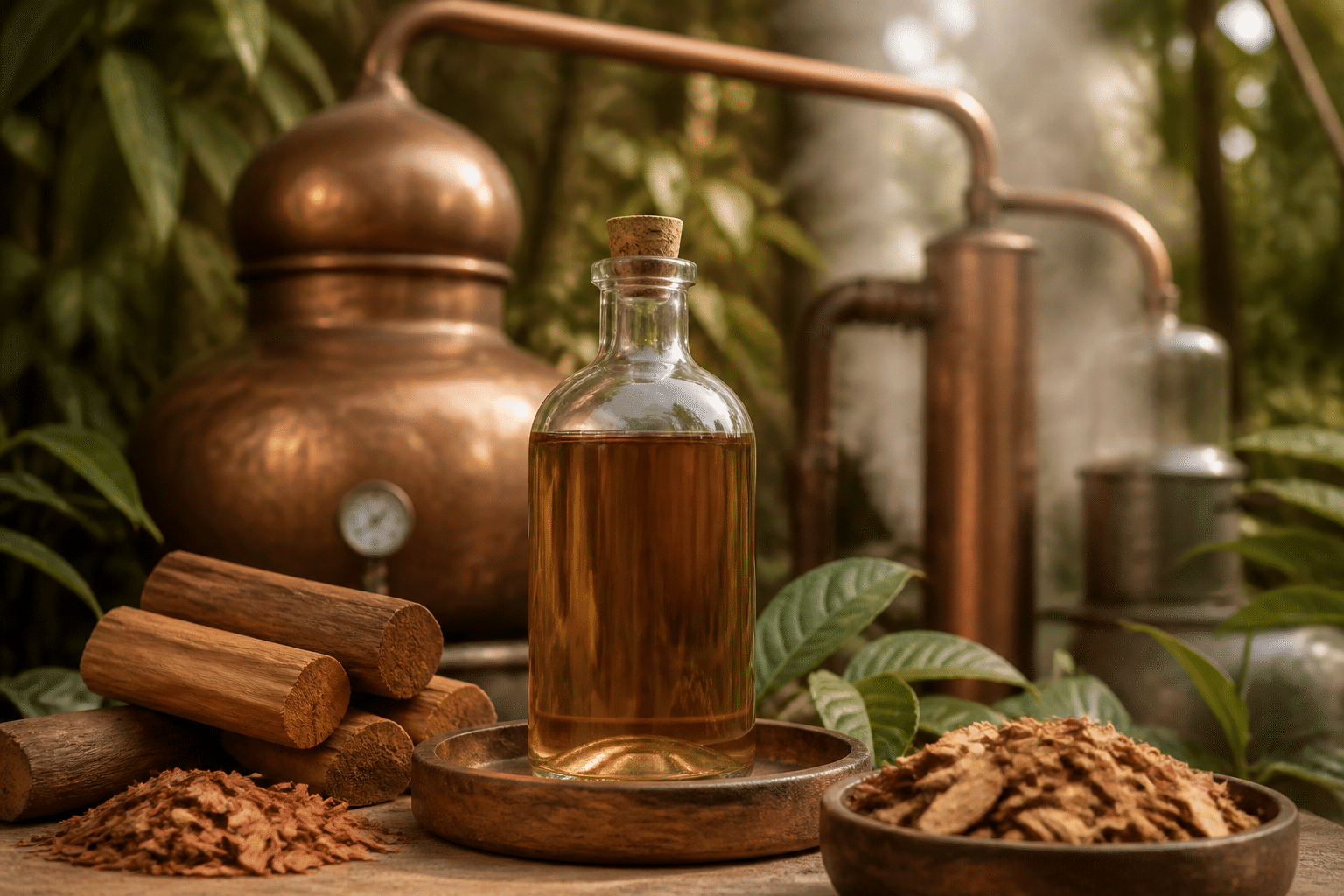
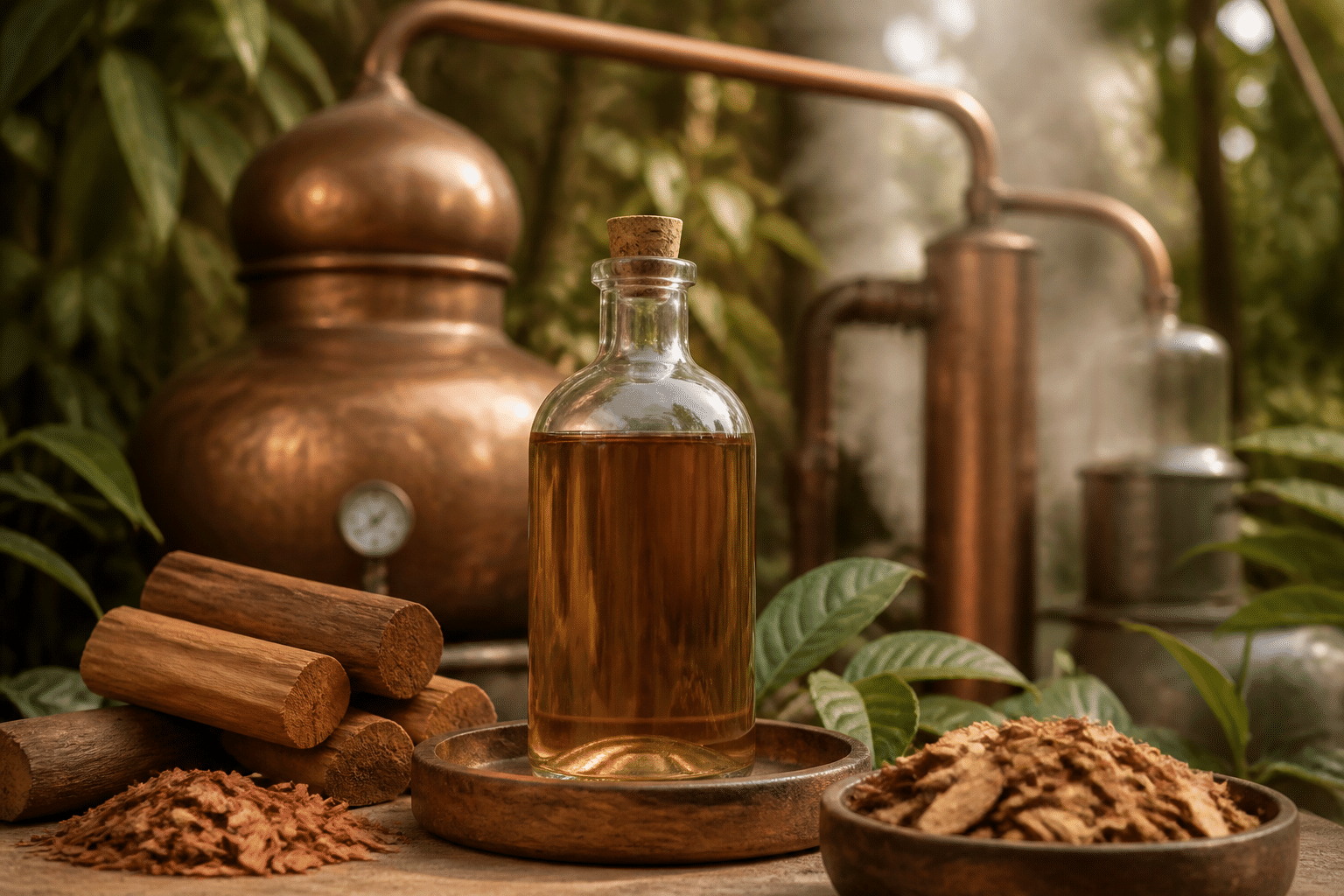
Pure sandalwood water is a hydrosol (some people say hydrolate or aromatic water). It’s the water left behind when Santalum album wood is steam distilled. The oil floats off and gets collected on its own. The water that’s left carries the lighter, more water-friendly parts of the plant.
According to ISO/TR 23199, hydrosols are made by steam distillation or hydrodistillation and hold both essential oil and water-soluble parts. The key point? It forms during distillation. Nobody adds oil to water afterward.
That’s the line between a real hydrosol and a diluted blend.
How Steam Distillation Makes It
The process is simpler than it sounds. Here’s the journey, step by step:
- Boiler: Water is heated to make steam.
- Plant chamber: Steam moves up through sandalwood chips or powder.
- Release: Heat and steam free the aromatic compounds from the wood.
- Condenser: The hot vapor cools back into liquid.
- Separator: Oil separates from the water.
- Collection: The oil is gathered on its own. The aromatic water is filtered, tested and bottled.
That water phase is where the soft, calming scent comes from. It’s gentler than the oil, and the profile is different. A hydrosol keeps only a small part of the oil’s chemistry, so don’t expect it to smell or act like sandalwood oil. Honestly, that’s part of its charm in mists and toners.
Hydrosol vs. Essential Oil vs. Fragrance Water
This table is worth saving for your next supplier call.
| Product | What it is | How it’s made | What to ask for |
|---|---|---|---|
| Sandalwood hydrosol | Water phase from distillation | Formed during steam distillation | Batch record, botanical name, distillation details, GC-MS report |
| Sandalwood essential oil | Concentrated oil fraction | Separated from the distillate | Purity and identity testing |
| Sandalwood oil water | Water with oil added later | Mixed after production, often with a solubilizer | Full ingredient list |
| Fragrance water | Water scented with aroma chemicals or perfume | Blended, not distilled | Fragrance and allergen disclosure |
Quality Markers to Check
There’s no universal legal grade for hydrosols, so words like “pure” and “therapeutic” don’t prove much on their own. Look for paperwork instead:
- Botanical name (Santalum album) and plant part used
- Country of origin
- Distillation method and batch number
- A clear note on any solubilizers or preservatives (a true hydrosol shouldn’t need a solubilizer to hold scent)
- GC-MS results that list markers like α-santalol and β-santalol
- Microbial test results, since water-based products can grow bacteria
One catch. Hydrosol levels of those markers are low, so the lab method matters. Also, any preservative should be named, not hidden.
Next up, we’ll see what the science says about how sandalwood aroma affects mood.
The Science of Serenity: How Sandalwood Water Impacts Mood and Cognition

Let’s be straight with each other. “Calming” looks great on a label. But what does the research really say about sandalwood water benefits? Some promising signals, yes. Solid proof, not yet. And here’s the catch: almost every study used sandalwood oil or isolated santalol, not hydrosol.
So let’s walk through what we know.
Meet Alpha- and Beta-Santalol
These two compounds give Santalum album its famous woody scent. They’re the same markers we flagged in the quality checklist earlier. In sandalwood oil they make up a big share of the profile. In a hydrosol, you’ll find far less. That’s why you can’t copy oil results onto a mist and call it done.
Still, they’re the best place to start when we talk about the calming properties of sandalwood.
How Might Santalol Calm the Brain?
The popular story goes like this. You breathe in the scent, and it travels along smell pathways linked to the brain’s emotion centers. Some lab work suggests santalol may nudge GABA receptors, which act like the brain’s brake pedal. Less “revved up,” more “calm but awake.”
Sounds neat. But I’ll be upfront: that GABA idea comes mostly from lab and animal work. We didn’t find strong human evidence confirming it.
| Step | What’s proposed | How well supported |
|---|---|---|
| 1. Inhale | Santalol molecules reach smell receptors in the nose | Well understood for scents in general |
| 2. Signal | Smell nerves pass the message to emotion-related brain areas | Well understood for scents in general |
| 3. Chemistry | Possible GABA modulation | Early, mostly lab and animal work |
| 4. Result | Calmer mood, steady attention | Small human studies, mixed results |
What Human Studies Actually Found
In a controlled human study of East Indian sandalwood oil, the oil raised pulse rate, skin conductance and systolic blood pressure compared with an odorless placebo. Isolated α-santalol did something different. People rated themselves as more attentive and in a better mood. That’s a hint of “calm alertness,” though the authors said how pleasant the smell felt played a big part.
Then there’s a 2016 pilot study with 32 people under induced stress. Sandalwood oils lowered systolic blood pressure, especially during recovery.
From the research: α-Santalol produced higher self-rated “attentiveness and mood.” A separate study read its body responses as a “relaxing/sedative effect.”
What about cortisol? Honestly, we didn’t find solid human data tying sandalwood aroma to lower cortisol. So we won’t say it does. Same goes for sharper focus. The evidence points to self-rated attentiveness and stress recovery, not proven brain boosting. And natural versus synthetic sandalwood? Still unresolved.
What You Can Safely Say
If you’re building sandalwood water for aromatherapy or a mood-minded mist, keep claims modest:
- Say “calming aroma” or “a moment of relaxation,” not “reduces anxiety.”
- Say “supports a focused, grounded ritual,” not “improves cognition.”
- Never imply it treats a mental health condition.
That still leaves plenty of room. Shoppers want natural ingredients for stress relief, and a soft, woody hydrosol fits right in. Next, we’ll look at how to turn that into real products.
From Benefit to Bottle: Formulating with Sandalwood Water for the Wellness Market
You’ve got a hydrosol with a soft, woody calm. Now what do you actually make with it?
Good news: sandalwood water is flexible. It’s light, it’s water-based, and it plays well in lots of formats. Here’s where I’d start.
Four Product Ideas Worth Prototyping
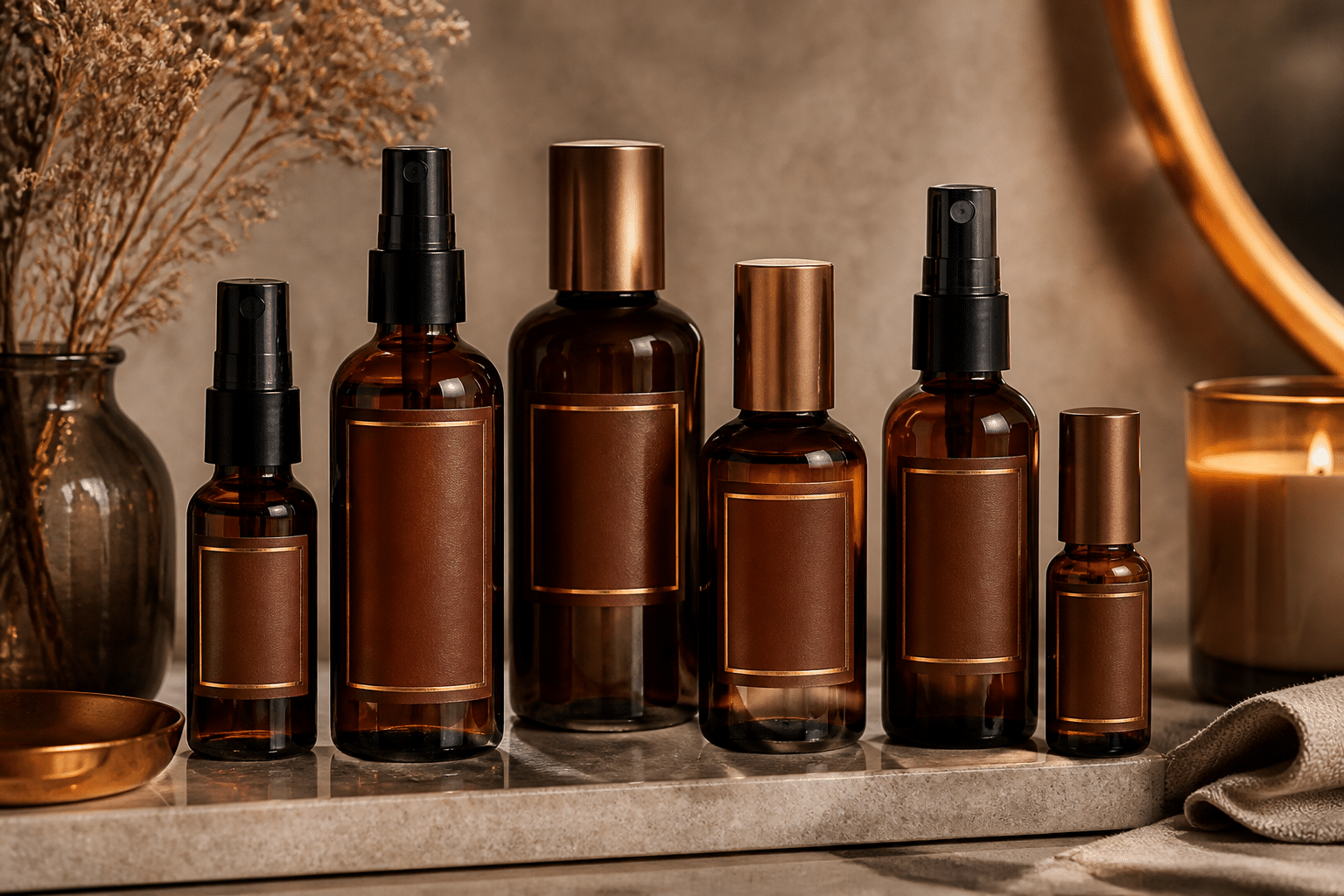
High-end facial mists. This is the easy win. One retail example is a 2-ounce organic sandalwood hydrosol spray sold as a facial mist, a daily toner and a mix-in for moisturizer. Same liquid, three rituals. That’s a smart way to stretch one formula across a line.
Calming room and linen sprays. Think bedtime. A light mist on pillows or a sofa throw feels like a small treat after a long day. Hydrosol scent is softer than oil, which suits linens (nobody wants a heavy smell on their sheets).
Pre-meditation atmosphere sprays. Two or three spritzes before a quiet ten minutes. That’s it. The scent becomes a cue, like lighting a candle, and it fits the “calming aroma” claim we talked about earlier.
An aqueous base in lotions and serums. Swap part of the plain water phase for sandalwood water. TeraVella’s dosage guide suggests starting at 10 to 25% of the total formula for a light botanical note, or 30 to 60% for a more expressive mist, gel or lotion. Start low. You can always add more.
Pairing Sandalwood Water with Other Ingredients
Sandalwood is a solid base note, but it’s even better with a partner. Pairings also give your marketing team a story to tell.
- Lavender for a wind-down, sleep-minded ritual.
- Citrus (like bergamot or sweet orange) for a brighter, morning-focus feel. Check skin sensitivity on leave-on products, though.
- Rose water for a softer, floral beauty angle. Aroma Monk offers rose water, so one supplier can cover both.
- Panthenol or hyaluronic acid for skin feel in mists and toners.
Here’s the matrix I’d hand to a product team.
| Product Type | Key Benefit | Complementary Ingredients | Marketing Angle |
|---|---|---|---|
| Facial mist | Light hydration and a calming scent moment | Rose water, glycerin, panthenol | “Mindful beauty” midday reset |
| Toner | Fresh, soft post-cleanse step | Chamomile hydrosol, propanediol | A calm, two-minute skin ritual |
| Linen and room spray | Soothing bedtime atmosphere | Lavender, gentle woody blends | Wind-down routine for better evenings |
| Pre-meditation spray | Grounding scent cue | Frankincense, light citrus | “Focus-enhancing ritual” |
| Lotion or serum base | Sandalwood hydrosol as part of the water phase | Plant oils, humectants, hyaluronic acid | Cognitive wellness meets skincare |
| Desk or workday mist | Fresh, steady scent for long hours | Citrus, mint | Calm focus for the 3pm slump |
Making It Stable (Because Water Spoils)
Here’s the unglamorous part. Water-based products can grow bacteria, so don’t treat hydrosol as self-preserving. WFAcademy’s hydrosol guide points to pH checks, a compatible preservative, and dark pump or spray packaging. Add the hydrosol during cool-down too, since long heating can dull the aroma.
Also, run a real preservation test before launch. Not a hunch. A test.
Marketing Angles That Fit the Evidence
Shoppers respond to words like “mindful beauty,” “cognitive wellness” and “focus-enhancing ritual.” They’re catchy. But look at what the studies actually showed: better self-rated attentiveness and mood, plus stress recovery. So lean on the ritual and the sensory experience, not medical outcomes.
Some safe-ish lines to test:
- “A woody, calming scent for your reset moment.”
- “Sandalwood aroma, studied for mood and stress recovery.”
- “Your 60-second pause, in a bottle.”
That last one isn’t science. It’s just honest, and it sells.
One more thing before you fall in love with a prototype. Every claim above depends on the water inside the bottle being the real thing. So next, we’ll look at why sourcing and purity decide whether any of this works.
Get a quote from Aroma Monk.
Essential Oil Supplier – Bulk pricing • Samples • Fast response
The Purity Imperative: Why Sourcing Is Critical for Efficacy and Safety
Here’s the uncomfortable truth. Every benefit we’ve talked about so far (the calming aroma, the mood story, the 60-second pause) only holds up if the liquid in your bottle is the real thing. Swap in a fake and you’re selling a nice smell with a nice story. Maybe not even a nice smell.
How Fake Sandalwood Water Sneaks Into the Market
Adulteration isn’t rare, and it isn’t always sneaky. Sometimes it’s just a cheaper shortcut that nobody flags.
Take the wood itself. Amyris balsamifera (often called West Indian sandalwood) is a known stand-in for Santalum album. In a 2021 GC-MS study of six commercial products sold as sandalwood oil, only one matched genuine S. album. Three leaned toward Amyris. If that happens with oil, a lower-priced water is hardly safer.
Other tricks include plain water with a few drops of oil and a solubilizer, lab-made sandalwood scent, or woody oils like cedarwood blended in to boost the smell. Preservatives and alcohol can also be added without a clear label. Not always unsafe, but you can’t make honest claims about something you can’t see.
Here’s a quick spotting guide for your team.
| Red flag | What it might mean | What to ask |
|---|---|---|
| Strong, sharp scent that doesn’t fade softly | Added fragrance or too much oil | Full ingredient and allergen disclosure |
| Cloudy liquid or oily film | Oil mixed in with a solubilizer | Is it a true distillate? Show the batch record |
| No botanical name on the label | Unknown or substituted species | Confirm Santalum album, plant part and origin |
| Price far below the market | Dilution or substitution | Where does the wood come from? |
| “Pure” or “therapeutic” with no paperwork | Marketing words, no proof | Batch CoA and GC-MS report |
| Report covers oil, not water | Wrong test for the product | Test on the hydrosol itself |
Vetting Your Bulk Sandalwood Water Supplier
A good bulk sandalwood water supplier won’t flinch when you ask for proof. A shaky one will start talking about “trade secrets.”
The minimum paperwork, according to supplier qualification guidance, includes a certificate of analysis (CoA) for each batch, a safety data sheet, and identity testing. For higher-value lots, ask for a lab accredited under ISO/IEC 17025.
One warning, though. Hydrosols hold only tiny amounts of santalols, so a missing marker isn’t automatic proof of fraud. It’s a reason to ask questions. And a bare line saying “contains sandalwood” tells you nothing. You want the full chromatogram, the method and the detection limits.
Here’s the checklist I’d hand to procurement.
- Botanical name, plant part, country and distillation method on every batch
- CoA and SDS tied to a batch number
- GC-MS report run on the hydrosol, with chromatogram and compound list
- Screening for synthetic fragrance, solubilizers and other oils
- Microbial and heavy metal results
- Named preservatives (no mystery ingredients)
- IFRA compliance statement if the water goes into a fragranced product
- Retention samples from each lot
- Audit rights and a change-control policy
Why Control From Wood to Bottle Matters
Paperwork helps. But paperwork from a middleman is only as good as the middleman’s honesty.
That’s why a supplier who controls the whole process, from raw wood to filtered, tested, bottled water, is easier to trust. Fewer hands means fewer places for a swap to happen. Batch traceability also lets you track down problems fast instead of guessing. ISO 22716 GMP certification is the recognized baseline for cosmetic manufacturing, covering hygiene, records and quality control.
Aroma Monk manages the chain from sourcing raw materials through lab testing to export delivery, which is the kind of setup procurement teams should look for. Ask any supplier, us included, to show the records, not just describe them.
Once you’ve found a source you trust, the next question is how to keep that supply steady as your product grows.
Securing Your Supply Chain: Partnering for Success in a Competitive Market

Picture this. Your calming mist goes viral on a Thursday. By Monday, your warehouse is empty and your supplier says, “Maybe six weeks?”
That’s the nightmare. And it’s avoidable.
What Reliable Supply Really Looks Like
A good supply chain isn’t just about price. It’s about nothing surprising you. Natural ingredients shift with harvests, so scaling guidance published in 2026 says natural formulas need tighter consistency controls as volumes grow. Same scent. Same color. Every batch.
Here’s what I’d lock down before you scale:
- An approved reference sample, so you can compare every new lot
- Written lead times for normal and peak months
- Reserved production capacity if demand triples
- Safety stock, plus a backup plan if one source fails
A 2026 procurement guide leans on that last point too, suggesting dual-sourcing critical ingredients and keeping backup inventory. Smart advice, though a single trusted partner who holds stock can cover a lot of the same ground.
Why Going Direct Pays Off
Every middleman adds a markup, a delay and one more place for a swap to happen. A direct manufacturer cuts those layers out.
Aroma Monk, for example, handles the chain from raw material sourcing to lab testing to export delivery. For you, that tends to mean:
- Bulk pricing that makes sense. No broker margin stacked on top.
- Shorter lead times. Fewer hands, fewer handoffs.
- Big international orders, handled. Export paperwork and shipping are part of the job, not an afterthought.
It also means one phone call when something goes wrong. Not three.
Custom Blends and Packaging That Make Your SKU Yours
Here’s where it gets fun. If every competitor buys the same off-the-shelf mist, shelf space becomes a price war.
A supplier who offers customization lets you build something different. Maybe a sandalwood and lavender blend for bedtime. Maybe a citrus-leaning desk spray. Maybe your own bottle size, dark glass or pump style. Small tweaks like these create a SKU nobody can copy by ordering from a catalog. Ask early what’s possible at your volume, since not every supplier will flex for smaller runs.
Mini case study (hypothetical): How Brand X Scaled Their Calming Mist Line with a Reliable Supply Partner
Brand X launched one sandalwood facial mist with a small batch supplier. When a wellness influencer shared it, orders jumped fivefold in two weeks. Their old supplier couldn’t promise a date.
So they switched to a direct manufacturer with reserved capacity and batch-level paperwork. Within one season, they added a room spray and a custom lavender blend in their own packaging. Same quality every lot. No stockouts, no scramble.
This is an illustrative example, not a real customer result.
So what’s the takeaway? Treat your supplier like a partner, not a vendor. Next, we’ll wrap up what all of this means for your product line.
Conclusion: Elevate Your Brand with the Authentic Power of Sandalwood Water
Let’s pull it together.
Shoppers want calm. They’re buying mists, sprays and toners that help them feel a little better after a long day. Sandalwood water fits that need with a soft, woody aroma and a story people already love. The research is early, and it mostly comes from sandalwood oil, not hydrosol. But the signals on mood, attentiveness and stress recovery are real enough to build a thoughtful product around, as long as your claims stay modest.
Here’s the part I’d tape to your monitor: the product is only as good as the water in the bottle. A true Santalum album hydrosol, backed by batch records, GC-MS reports and a supplier who can show their work, is what turns a nice idea into a line you can stand behind. Fake it, and the story falls apart. Source it well, and you get something shoppers come back for.
And steady supply? That’s what lets you say yes when a launch takes off.
So what’s your next step? Pick one format. A facial mist, a linen spray, a toner. Then get a real sample in your hands and test it against your own standards. Check the smell. Check the paperwork. Run your preservation tests.
Aroma Monk works directly with product developers, procurement managers and brand owners on bulk orders, custom blends and export delivery. If sandalwood water is on your roadmap, talk with the Aroma Monk team and see what a trusted, traceable supply could do for your next launch.
Ready to build your next calming product?
Request a Bulk Quote | Download Technical Data Sheet
Share your volume, format and packaging ideas, and we’ll help you plan a sample run.
Get a quote from Aroma Monk.
Essential Oil Supplier – Bulk pricing • Samples • Fast response