
Introduction: The Surprising Link Between Sandalwood Water and Flavor
Here’s a number that made me sit up. One 2026 estimate from PW Consulting puts the global gourmand fragrance market at $3.49 billion, and it’s growing around 7% a year. People are buying scents that smell like food. Butter, almond, plum, vanilla.
So where does sandalwood fit in?
If you’ve ever searched for sandalwood water benefits, you’ve probably wondered one thing first: can you actually eat or drink it? Kind of, but mostly in the past. Old Arabic recipes cooked sandalwood in rosewater to make a cooling syrup for hot days. It wasn’t a daily seasoning. It was more of a prized, fancy touch. Today, that same warm, creamy character lives mainly in perfume and skincare.
Here’s the twist that product developers love. In high-end products, “flavor” often isn’t about taste at all. It’s about aroma. Your nose tells your brain what to expect long before anything touches your tongue. Glossier’s 2025 scent You Doux, for example, pairs sandalwood with buttercream, plum butter and toasted almond. Nobody eats it. Yet it feels edible, and that’s the whole point.
This guide is for product developers and procurement managers. We’ll look at how pure sandalwood water can add a soft, rich, almost delicious note to cosmetics and wellness products, and how it can help your line stand apart on a crowded shelf. We’ll start with what this ingredient really is.
Understanding Sandalwood Water: More Than Just a Fragrance
Sandalwood water sounds simple. But there’s a real process behind that soft, creamy scent, and knowing it helps you buy smarter.
How Sandalwood Water Is Made
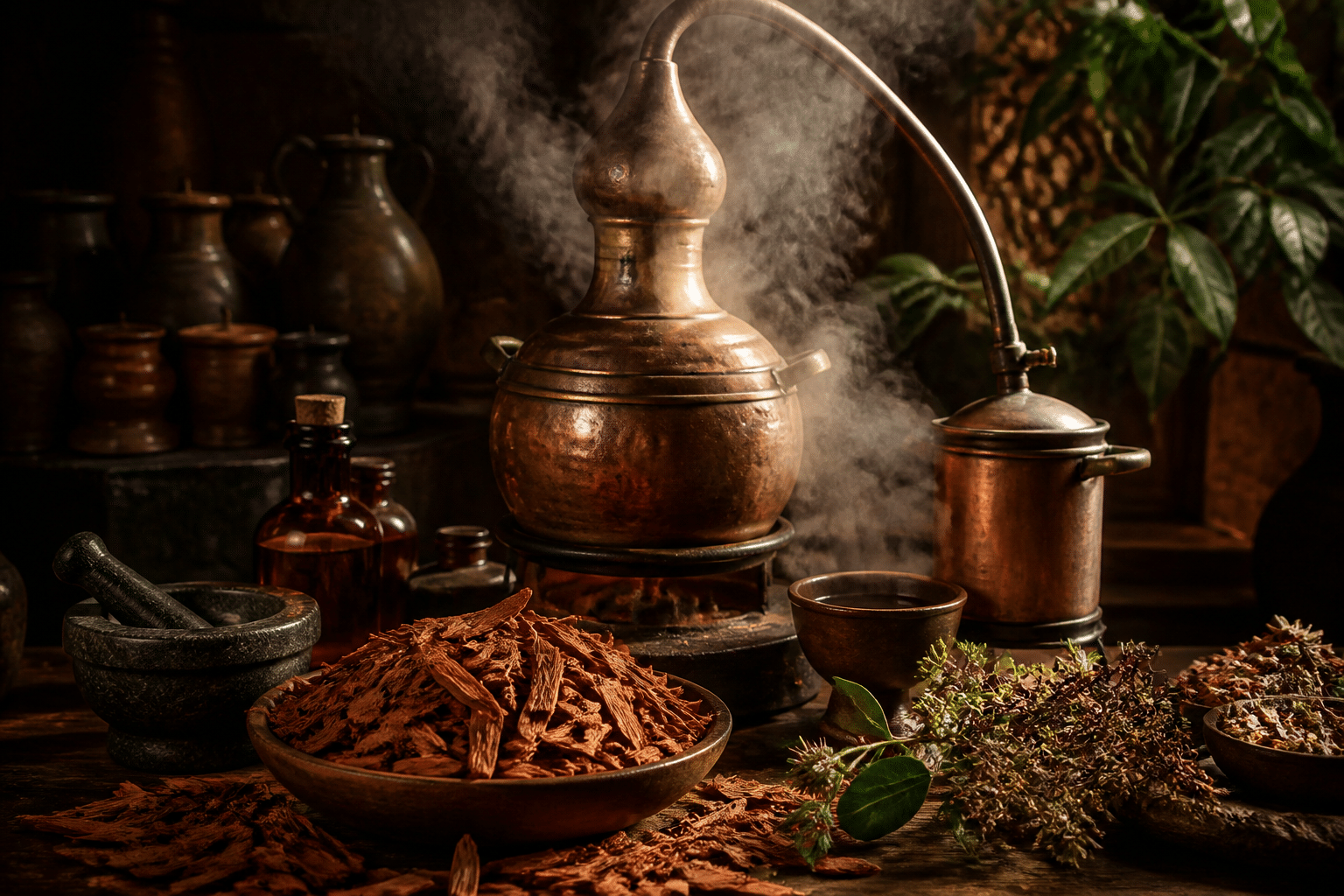
Picture a big still filled with sandalwood chips. Hot steam moves through them and picks up the aroma. Then it cools and turns back into liquid. The oil separates out. The water left behind is the hydrosol, also called sandalwood water.
So it’s a co-product. Distillers are chasing the oil, and the water comes along for the ride. That’s good news for you. The oil side is tiny, since published figures usually put oil yield at roughly 1 to 3% of the wood’s weight. There’s no standard yield for the water, because it depends on how much steam and condensate the distiller collects.
Sandalwood Water vs. Sandalwood Essential Oil
These two get mixed up all the time. They’re not twins.
The famous scent compounds, alpha and beta santalol, make up about 80% of the oil. They don’t dissolve well in water, though. So the hydrosol carries far less of them. Don’t assume the same strength, and ask for a batch test if a seller hints otherwise.
| Header Table | Sandalwood Water (Hydrosol) | Sandalwood Essential Oil |
|---|---|---|
| Concentration | Light, a faint trace of aroma in water | Very strong and dense |
| Main uses | Mists, toners, creams, hair and body products | Perfumery, blends, small-dose scenting |
| Skin use | Gentler, often easier to use at higher levels in a formula | Needs careful dilution, and some people react |
| Cost for bulk use | Usually friendlier, since it’s the co-product | Higher, because mature heartwood is scarce |
| Formulation benefit | Water-based, adds a soft scent without much fuss | Powerful and lasting, but needs an oil-friendly base |
One tip. Because hydrosol is water, it needs proper preservation. A formulation guide suggests testing the finished product, not just the ingredient.
Why Santalum Album Matters
Here’s something buyers miss. “Sandalwood” can mean several different trees, and they smell different.
Santalum album, or East Indian sandalwood, is the one most people want. A specialist floral water supplier describes its hydrosol as soft, warm, gently sweet and smoothly woody. That’s the creamy note that makes a product feel almost edible.
So ask for the Latin name on the spec sheet. Ask for a batch certificate too. If the seller just says “sandalwood,” keep asking.
Next, let’s see how people first put this aroma to work, long before it reached a cosmetics lab.
A Taste of History: The Role of Sandalwood in Traditional Cuisine
Long before sandalwood showed up in face mists, cooks and healers were putting it in drinks. Not often. But they did.
A Cooling Syrup From the Medieval Kitchen
One of the best records we have comes from a medieval Arabic medical-cookery tradition. A modern translation of a sandalwood syrup recipe calls for red and white sandalwood, pounded and cooked in rosewater. The strained liquid was then mixed with sugar to make a syrup. People stirred it into water and sipped it for thirst and fevers.
Here’s the part I like. Sandalwood wasn’t the main flavor. Rosewater and sugar did most of that work. Sandalwood added aroma, a cooling feel, and a bit of prestige. It was the fancy touch, not the seasoning.
Did You Know? That old syrup used about two uqiyyas each of red and white sandalwood, five ratls of rosewater and two ratls of sugar. It was meant to be watered down and served cold, a bit like a very posh squash.
One caution. The online version is a modern adaptation, not a scholarly edition of the original. So think of it as proof that the tradition existed, not a perfect ancient formula.
Sharbat and Sweets: What We Know (and Don’t)
In South Asia, sandalwood is still linked with cooling summer drinks, and chandan sharbat is the name you’ll hear most. I can’t point you to a solid, dated recipe for milk-based sweets scented with sandalwood, though. I’d rather say that than make something up. What we can say is that the pattern repeats: rose, sugar, milk or water, and a soft woody note for a cool, exotic feel.
Why You Shouldn’t Copy This Today
Here’s where we pump the brakes. This was a historical practice. It is not a how-to.
The FDA does list white sandalwood (Santalum album) as a flavoring agent under 21 CFR 172.510. But that covers specific, defined substances made under food rules. It doesn’t make every bottle of sandalwood water safe to drink.
Cosmetic-grade sandalwood water is not meant to be eaten or sipped. Period. If a product is for food or drink, it needs a certified food-grade ingredient, with paperwork to prove it.
There’s a reason the habit faded, too. Sandalwood is slow-growing and costly, and cooks have cheaper, steadier options like rosewater, vanilla and almond. So today the tree’s best work happens in beauty and wellness, not the kitchen. Vet every supplier for your exact use, and let’s look at how that scent still tricks the brain into tasting something sweet.
The Modern Pivot: Using Aroma for Perceived Flavor and Sophistication
Why Your Nose Does Most of the Tasting

Try this. Pinch your nose and pop a jellybean in your mouth. Sweet, sure. But cherry or lime? No idea. Then let go, and the flavor floods back.
That’s retronasal olfaction. When you chew or sip, aroma drifts up the back of your throat to your nose. You’ll often hear that up to 80% of what we call flavor is really smell. The exact number is debated (I wouldn’t put it on a label), but the idea holds up.
There’s fresh science on this, too. A 2025 fMRI study of 47 adults found that food odors lit up both smell and taste areas of the brain. People linked caramel to sweetness 83% of the time, and marshmallow 72%. But smell isn’t a sugar detector. A 2024 study in Chemical Senses found only about 45 to 46% of people tied the smell of sugar water to sweetness. So aroma nudges expectation. It doesn’t change what’s in the bottle.
Here’s the path, step by step:
| Step | What happens | Why it matters for your product |
|---|---|---|
| 1. Scent reaches the nose | Aroma molecules float up from the product | The first impression starts before skin contact |
| 2. Smell signals travel to the brain | Olfactory areas link up with taste-related areas | The brain starts guessing “sweet,” “creamy,” “rich” |
| 3. Memory joins in | Familiar scents bring back food and comfort | Warm, soft notes feel indulgent |
| 4. Expectation forms | The mind decides the product feels luxurious | Perceived value goes up |
What Sandalwood Water Actually Smells Like
Soft. Warm. Gently sweet, with a smooth woody backbone. Creamy is the word people reach for most. Some formulators say “milky” or “nutty,” though that’s more a personal impression than a lab result, so treat it that way.
It’s also quieter than the oil. That’s a plus. Hydrosol gives you a whisper of richness instead of a perfume shout, which is just right for mists, toners and body products where you want comfort, not drama.
A Flavor Background for Things You Don’t Eat
Think of sandalwood water as the warm base layer in a scent story. It’s the cream under the cherry, the toast under the honey. Brands already lean on this. Le Monde Gourmand’s Santal Supreme, listed by Cosmopolitan as a sandalwood-centered gourmand under $30, shows the idea isn’t only for luxury shelves.
So what pairs well? Here are a few combos that formulators and perfumers keep returning to:
- Vanilla, for a softer, more edible feel
- Cocoa, to add roasted depth
- Cardamom, a cool spice that lifts heavy woods
- Coffee, for a dark, milky contrast (one 2025 fragrance listing pairs coffee with sandalwood, cocoa and cardamom)
One honest limit. Sandalwood water won’t make a lotion thicker or sweeter. It sets up the expectation of richness, and that’s all. Used well, that’s plenty for shoppers who want a product to feel special. Next, let’s look at where it fits inside real formulas.
Get a quote from Aroma Monk.
Essential Oil Supplier – Bulk pricing • Samples • Fast response
Practical Applications: Sandalwood Water Benefits in Your Product Line
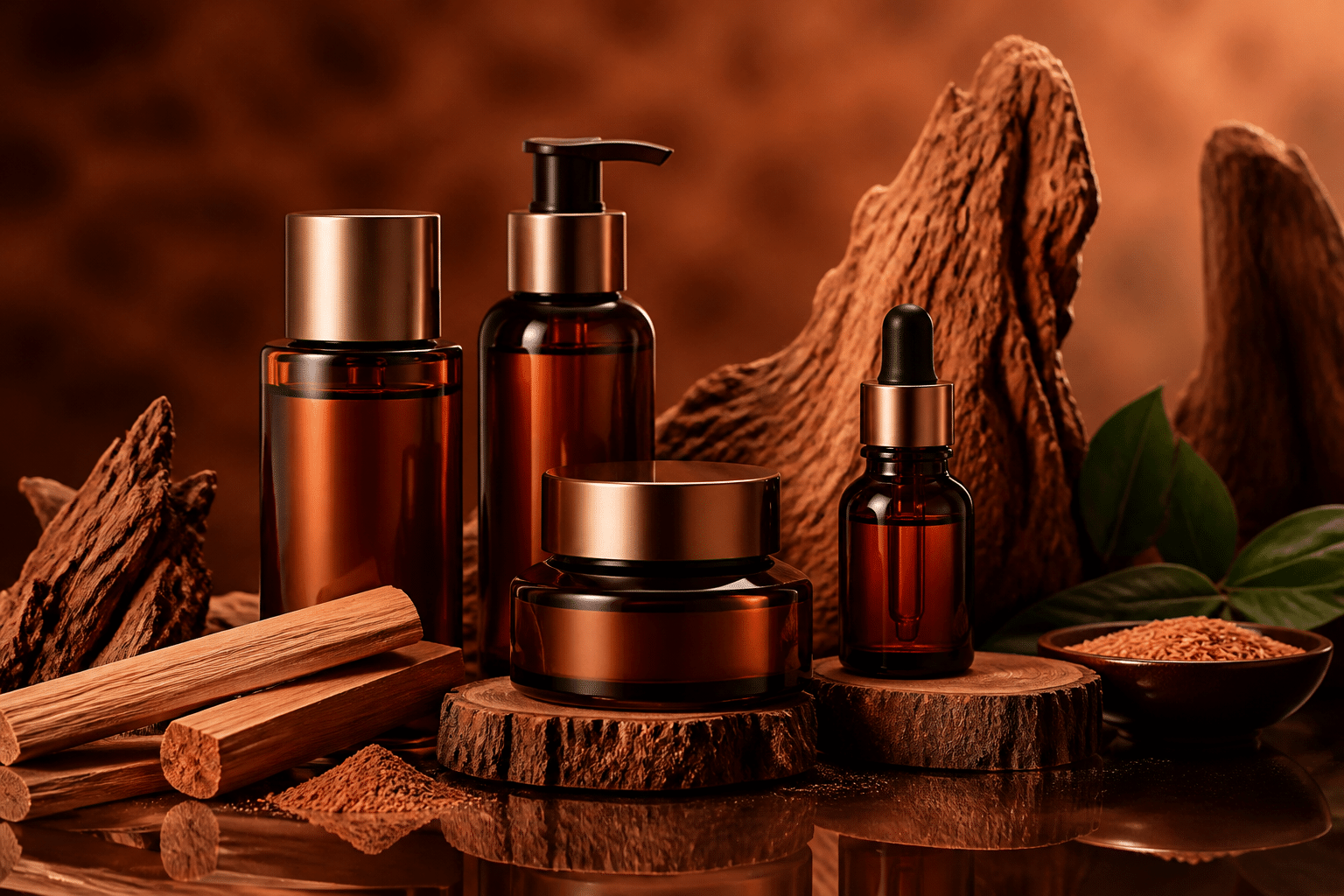
OK, so you know what sandalwood water smells like and why the brain reads it as rich. Now the fun part. Where do you actually put it?
I’ll be upfront. Public examples of finished products that list sandalwood hydrosol as a star ingredient are pretty scarce. One supplier, Bodhana Export, markets Mysore sandalwood hydrosol for luxury skincare, spa, perfumery and wellness formulas. So the door is open, and not many brands have walked through it yet. That’s your chance.
Luxury Skincare: A Soft, Soothing Water Phase
In creams, lotions and face mists, sandalwood water can replace part or all of the plain water. You get a quiet, warm scent without adding a heavy perfume. The product feels special the second the cap comes off.
A few tips from the formulation side:
- Add the hydrosol during cool-down, since heat can strip delicate aromatics.
- Check pH after everything is mixed. Hydrosols usually sit around pH 3.0 to 5.5, though it changes by batch.
- Don’t count on the hydrosol’s own acidity to protect the formula. Pick a preservative for the whole product and run a challenge test.
Also, skip the claims about miracle skin results. The safest story is sensory: a calm, creamy, premium feel.
Wellness and Ambiance: Mists for Calm
This is where hydrosol shines, honestly. Pillow sprays, meditation mists and light room fresheners all want a gentle aroma, not a loud one. Sandalwood water gives that soft woody hush.
Think of a bedtime spray for someone who wants a spa feeling at home. Or a yoga studio mist that doesn’t fight with incense. Use dark glass or a fine-mist airless pump, since packaging that limits light and contamination helps the product last. And label it clearly: for the air and linens, not for drinking.
Natural Fragrance: Alcohol-Free Attars and Solid Perfumes
Clean beauty fans want skin-friendly scents. One 2026 forecast, reported by OpenPR, places the global natural fragrance market at about $6.03 billion by 2030. (Definitions differ from report to report, so treat that as a rough guide.)
Sandalwood water can sit in water-based body mists and light roll-on blends. For solid perfumes and traditional attars, oil-friendly sandalwood and other extracts usually do the heavy lifting, while the hydrosol suits the water side of a hybrid balm or mist. Don’t mix oil and hydrosol without an emulsifier or solubilizer, or it will separate.
Product Idea Matrix
Here’s a quick cheat sheet to spark your next development meeting.
| Product Type | Sandalwood Water’s Role | Complementary Ingredients | Target Consumer |
|---|---|---|---|
| Face cream | Part of the water phase, adds soft creamy scent | Shea butter, vanilla extract | Shoppers who want a premium, calming routine |
| Facial mist | Main base, light woody aroma | Rose water, aloe | Busy commuters and desk workers |
| Pillow mist | Calming scent carrier | Cardamom, lavender | Sleep and self-care fans |
| Meditation spray | Warm, grounding base note | Cocoa, benzoin | Yoga and mindfulness crowd |
| Room freshener | Gentle, non-smoky aroma | Coffee, cardamom | Home spa lovers |
| Body mist | Soft skin-friendly scent | Coconut, tonka bean | Clean beauty buyers |
| Hair mist | Light scent, mild creaminess | Coconut, honey | Natural hair care users |
Pick one or two rows that fit your brand, then ask for samples. Whichever you choose, check the batch paperwork and test it in your own formula first. Next, we’ll look at how to buy this ingredient in bulk without getting burned.
Sourcing for Success: A Procurement Manager’s Guide to Bulk Sandalwood Water
Picture this. The sample bottle smelled lovely. Then pallet three arrives and it smells like cheap cedar. Nobody warns you about that moment, and it’s expensive.
So let’s talk about how to buy sandalwood water in bulk without getting burned.
Start With the GC/MS Report
Fraud is the big risk here. Common tricks include watering the product down, adding synthetic santalol, or sneaking in cheaper woody scents like amyris, cedarwood or patchouli. Some batches even hide solvents or undeclared preservatives.
GC/MS testing separates a sample into its individual compounds and compares them with an authenticated reference. A good lab looks at the balance of alpha and beta santalol, then hunts for odd peaks that don’t belong. A weak profile can also point to dilution.
One catch. Hydrosol holds very little aroma compound, so the lab has to concentrate the sample properly. And GC/MS alone can’t prove where the wood came from. I couldn’t find any public data on how often sandalwood water gets faked, so I won’t invent a number. Just ask for a batch-specific certificate of analysis every time, and keep a sealed reference sample from each delivery.
Why a Direct Manufacturer Makes Life Easier
Every middleman is another place where quality can slip. A direct manufacturer controls the whole chain, from sourcing the wood to distilling it to packing and shipping. That means steadier batches and one phone number to call when something looks off.
Supply gaps hurt, too. Beauty Independent reported that in 2021 some production timelines stretched from four to six months out to six to nine, and freight costs jumped more than five times for certain brands. A supplier who knows their own capacity and lead times can plan with you instead of surprising you. Aroma Monk, for example, runs its own supply chain from raw material to final delivery, with lab testing built in.
Direct buying can also open the door to custom packaging and blends. Brokers rarely offer that.
Certification and Traceability Aren’t Optional
Here’s the awkward truth. There’s no universal “Grade A” for sandalwood hydrosol. ISO 3518:2022 covers Santalum album essential oil, not the water. So you have to build your own proof from several pieces.
Look for ISO 22716, the main cosmetics GMP framework. If you plan natural or organic claims, check for COSMOS or a similar scheme, which European buyers often expect. Then verify each certificate with the body that issued it, and read the scope. A certificate for finished products may not cover sandalwood water production.
Shoppers want to know where ingredients come from, too. So ask for botanical name, country of origin and harvest records.
5 Questions to Ask Your Bulk Sandalwood Water Supplier
| # | Question | What a good answer looks like |
|---|---|---|
| 1 | Is it Santalum album, and can you prove it? | Latin name on the spec sheet, with origin and harvest records |
| 2 | Can I see a batch-specific GC/MS report? | A current certificate of analysis tied to my batch number |
| 3 | Do you control the process from wood to delivery? | A clear yes, with details on distillation and packing |
| 4 | Which certifications do you hold, and for what scope? | ISO 22716 or similar, verifiable with the issuer |
| 5 | What do you test beyond scent? | Microbial results, pH, heavy metals and shelf-life data |
A supplier who answers these quickly is usually a keeper. One who dodges? Walk away. With sourcing settled, we can wrap up what all this means for your product line.
Conclusion: Unlock a New Sensory Dimension with Pure Sandalwood Water
So, can you eat sandalwood water? Mostly no. Not anymore. But that was never really the point of this guide.
Here’s what we found. Sandalwood once flavored syrups and cooling drinks, and it faded from the kitchen because it’s scarce and pricey. Today its real gift is aroma. That soft, warm, creamy scent tells the brain “rich” and “comforting” before anyone touches the product. For a face mist, a pillow spray or a body cream, that’s a big deal.
And scent sells. A YouGov survey of 800 U.S. adults from November 2025 found 88% of perfume users say scent is the top buying factor, and 45% repurchase one or two favorite scents. (That’s fragrance, not every beauty category, so keep that in mind.) Still, a scent people remember is a scent people reorder.
But there’s a catch. The magic only works if the water is the real thing. Proof of Santalum album, a batch-specific GC/MS report, verified certificates and a supplier who can deliver on time, every time. Get those right and your brand earns trust. Get them wrong and a lovely sample becomes a costly headache.
So here’s your next step. Elevate your next product line with the authentic aroma of lab-tested sandalwood water. Contact Aroma Monk to discuss your bulk supply needs and receive a quality specification sheet.
Get a quote from Aroma Monk.
Essential Oil Supplier – Bulk pricing • Samples • Fast response