
Introduction: The Rise of Tea Tree Water as a Powerhouse Ingredient in Clean Beauty
Here’s a funny thing about shoppers right now. They say they want plant-based ingredients, but they don’t always trust the labels. One 2026 market analysis, citing NSF International research, reports that 72% to 74% of consumers prefer products with organic ingredients, while confidence in voluntary labeling stays low. That’s a trust gap. And it lands right on your desk.
The money is following that demand. Grand View Research puts the global clean beauty market at $10.5 billion in 2025, climbing to $11.9 billion in 2026. Different analysts count it differently, so treat any single number as a rough guide. Still, the direction is clear.
So what can a formulator reach for? Tea tree water is a strong contender.
What Tea Tree Water Actually Is
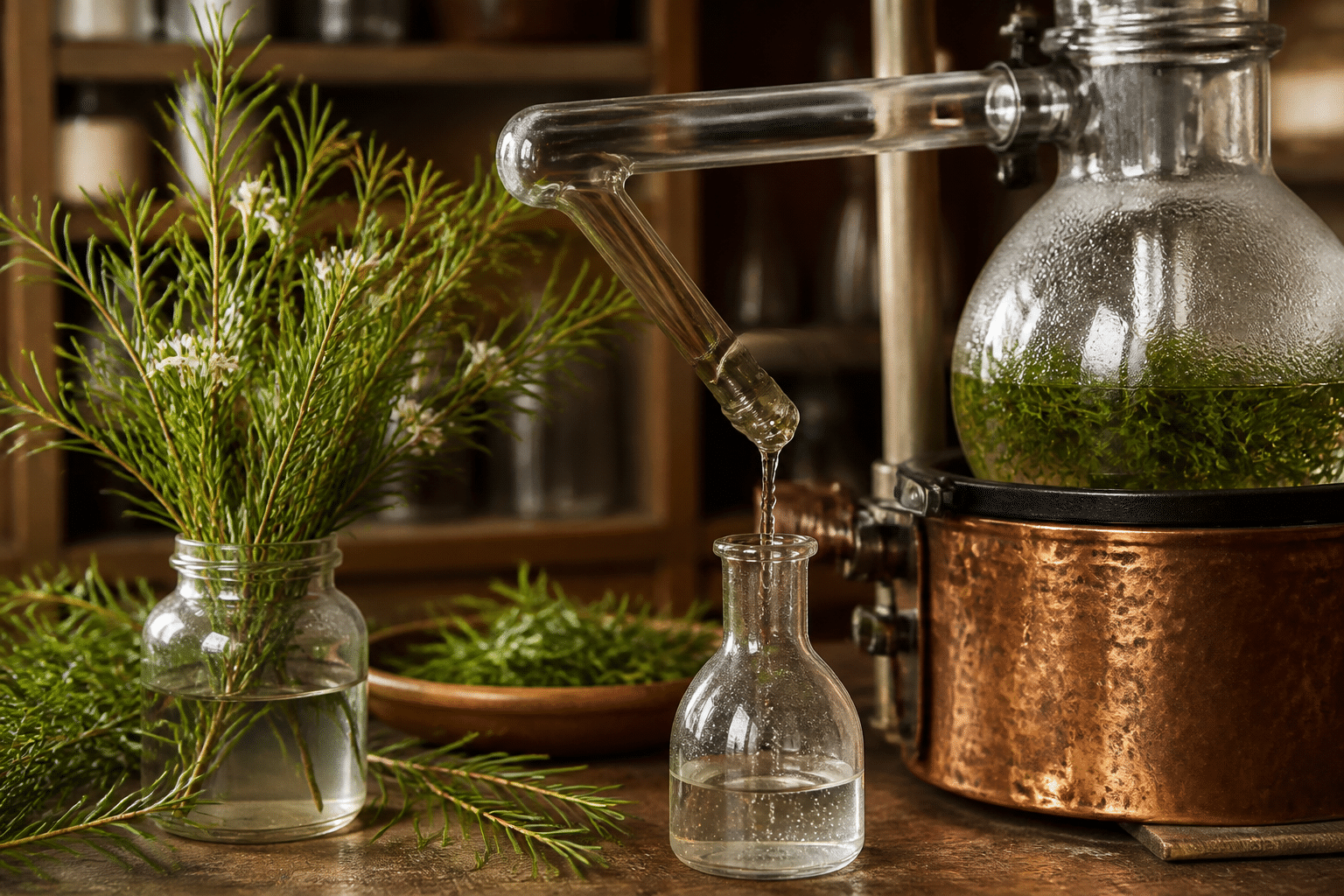
Tea tree water, also called tea tree hydrosol or Melaleuca alternifolia distillate, is the aromatic water collected when tea tree leaves are steam distilled. As the vapor cools, the oil separates out. The water that’s left holds a small amount of volatile compounds plus water-soluble ones. Formula Botanica’s formulator guide explains this split well.
Here’s the big misconception: it’s not just essential oil mixed into water. Adding oil to water won’t recreate a real hydrosol. The chemistry is different, much more dilute, and usually gentler. (It also isn’t automatically self-preserving, which we’ll get to later.)
What This Guide Will Do For You
This article is written for product developers and procurement managers planning a 2027 line. We’ll walk through 8 benefits of tea tree water, from blemish care to scalp products. Plus, we’ll compare it with tea tree oil and look at how to source a pure, well-documented supply.
I’ll be upfront. Some claims for tea tree water are stronger than the evidence, so we’ll flag where the science is thin. That’s what helps you build products you can stand behind. Let’s get into it.
1. Potent Antimicrobial Power for Acne & Blemish Control Formulations
Let’s start with the benefit most brands ask about first. Breakouts.
Tea tree has a long reputation as a natural antibacterial ingredient, and shoppers know it. The tricky part is that the reputation comes mostly from the oil. So let’s sort out what the water brings to the table.
How Terpinen-4-ol Fits In
Terpinen-4-ol is the star compound in tea tree. It’s the one linked to activity against C. acnes, the bacteria formerly called P. acnes and tied to acne breakouts. Tea tree water carries some of it, just far less than the oil does. One technical monograph lists terpinen-4-ol in a hydrosol at roughly 80 to 980 ppm. That’s tiny. Gentle, too.
Here’s a quick way to picture it:
| Step | What happens on skin |
|---|---|
| 1. Apply | A toner or spot mist leaves a thin, water-based film |
| 2. Contact | Small amounts of terpinen-4-ol and other tea tree compounds touch surface bacteria |
| 3. Balance | Blemish-causing bacteria may be reduced on the surface |
| 4. Comfort | Low concentration means less stinging and dryness |
Gentle Enough for Daily Use
This is where tea tree water for skin care earns its keep. Lower concentration usually means a softer feel, so it suits daily toners, face washes and spot treatments for sensitive, acne-prone skin. Brands are already doing it. Mary & May’s blemish toner lists 300,000 ppm tea tree leaf water, and Lush sells an alcohol-free tea tree water toner for spot-prone skin.
The pitch is clean-feeling pores without that tight, stripped finish. For a premium line, that’s a real selling point.
What the Evidence Does and Doesn’t Say
I’ll be straight with you. I couldn’t find a recent clinical study proving tea tree water works against C. acnes. The proof we have is for the oil. A 2026 meta-analysis of seven studies and 445 patients linked topical tea tree oil to lower acne severity. That’s good news for the plant. It isn’t proof for the water.
So keep claims modest: “purifying,” “clarifying,” “for blemish-prone skin.” And ask suppliers for a GC-MS report showing the terpinen-4-ol level in each batch. Next up, we’ll look at how tea tree water handles shine.
2. A Gentle Astringent to Balance Oily and Combination Skin Products
Shine by 2 pm. We’ve all been there.
That’s why oil control is a big business. Future Market Insights estimates oily-skin control products will grow from US$5.002 billion in 2025 to US$11.601 billion by 2035, about an 8.8% yearly rate. Tea tree water fits that shopper well.
Tightening Without the Sting
Old-school astringents lean on alcohol. They feel tight and clean, sure. But L’Oréal Paris, citing the American Academy of Dermatology, says alcohol-based astringents can be too drying, and stripping natural oils may push skin to make even more. Not great.
Tea tree water offers a softer route. It’s mostly water, with a small amount of tea tree compounds, so it can give a fresh, toned feel without that stripped finish. Pores may look smaller because surface oil is gone and skin looks smoother. They don’t actually shrink (nothing in a bottle does that).
What About Long-Term Sebum Control?
Here’s where I’ll pump the brakes. Many brands promise oil control “over time.” But dermatologist James Leyden told The New York Times that astringents mainly work by removing surface oil, not by calming the oil glands. That’s an old quote, and I couldn’t find a newer study proving tea tree water lowers sebum production.
So write claims like “helps remove surface oil” or “for a matte, fresh finish.” Skip “regulates sebum” unless you test it. A Sebumeter study on your finished product would settle it.
Keeping the Acid Mantle Happy
Skin’s surface is slightly acidic. Most formulators aim for roughly pH 4.5 to 5.5 in leave-ons, though your own testing should set the final target. A water-based toner, primer mist or lightweight moisturizer with tea tree water can sit comfortably in that range, and a gentler base helps the skin barrier feel steady.
Watch two things: your pH adjusters and your preservative system. Both can nudge the final number.
Next up, we’ll look at how tea tree water behaves on stressed, sensitive skin.
3. Soothing Anti-Inflammatory Properties for Sensitive Skin & Post-Procedure Lines
Skin that stings after a shave makes an unhappy customer. And sensitive-skin shoppers read every label twice.
What the Science Suggests (and Doesn’t)
Here’s the honest picture. A 2021 study by Li and colleagues analyzed tea tree hydrosol and found about 1.53 mg/mL of terpenoids. Some of those compounds are water-friendly, which is why they show up in the distillate. That makes a calming story believable.
But the paper looked at chemistry and germ-fighting activity. It didn’t prove how the water settles inflamed human skin. So treat “anti-inflammatory” as a promising idea, not a proven fact.
Safer wording? “Calming,” “soothing,” and “for skin prone to redness.” Skip “treats rosacea” or “heals eczema.” Those are medical claims, and nobody has tested tea tree water for them.
Where It Fits: Post-Procedure and Sensitive Lines
Think after-sun sprays, post-shave balms and after-waxing mists. Skin in these moments feels hot, tight and a little raw. A light, water-based mist feels kind there, and tea tree water gives you a recognizable plant story.
Brands already lean this way. TMM Tea Tree markets its pure hydrosol for sensitive, oily or irritated skin, including razor burn and redness. And iUNIK’s Tea Tree Relief Serum pairs tea tree leaf water with centella and niacinamide for calming blemish-prone skin.
Still, “gentle” isn’t “risk-free.” Natural ingredients can irritate some people. Patch test every finished formula, keep fragrance low, and be extra careful with preservation, since compromised skin shouldn’t meet bacteria. For true post-procedure use, like after lasers or peels, ask for clinical sign-off before you promise anything.
Formulator’s Tip: Pair tea tree water with other soothers like chamomile hydrosol or aloe vera. Tea tree brings the fresh, clarifying feel, while chamomile and aloe add comfort and moisture. Start with a mild blend in a toner or mist, then test on sensitive-skin panels before you scale up.
Next, we’ll move from the face to the scalp.
4. Scalp Health Efficacy for Anti-Dandruff and Clarifying Hair Care
Flakes on a black sweater. Nobody’s favorite moment.
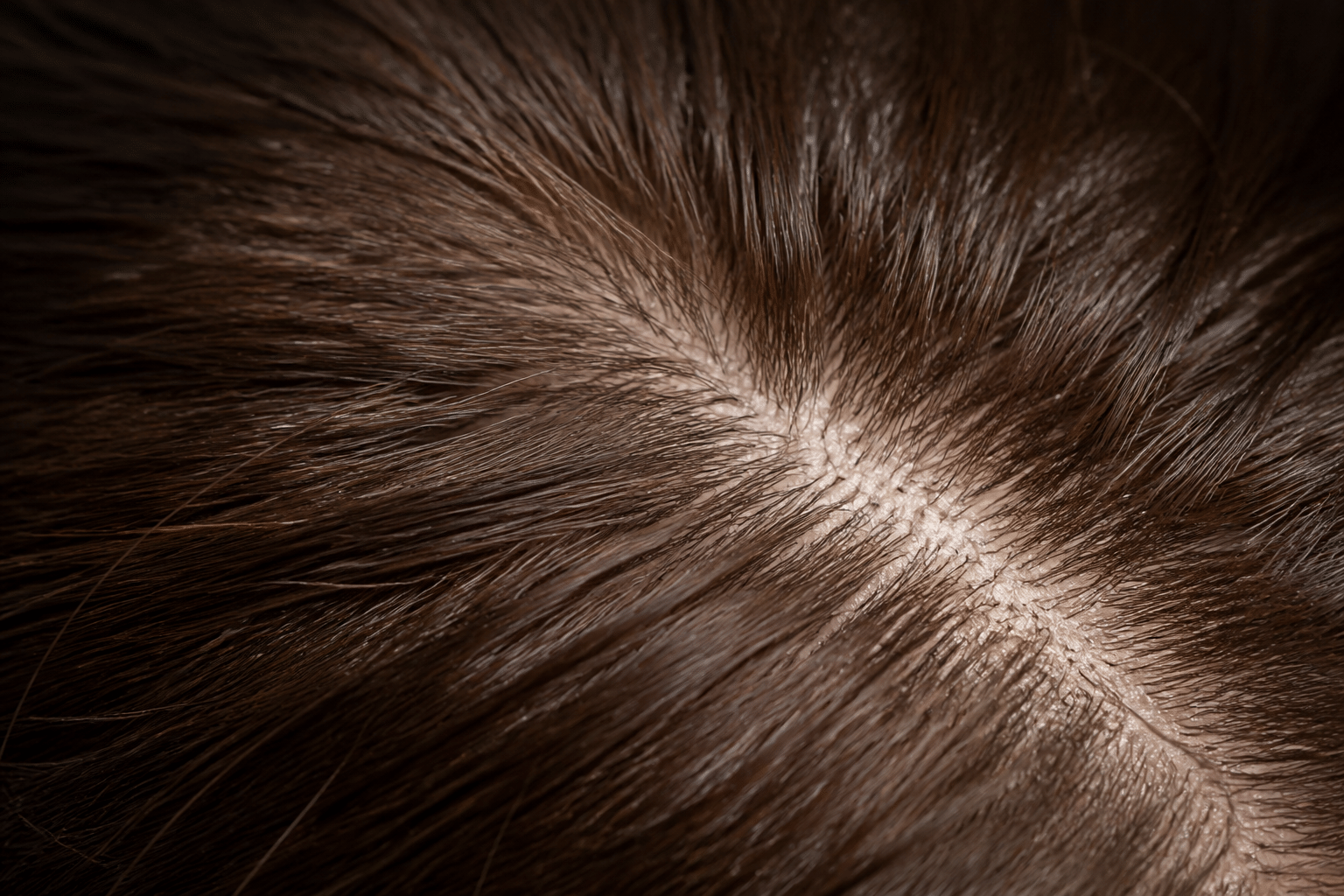
Dandruff and seborrheic dermatitis are mostly linked to Malassezia, a yeast-like fungus that lives on the scalp. M. globosa usually takes the blame. Tea tree has a big reputation here, but I’ll be straight again: the proof leans on the oil, not the water.
What the Research Really Shows
In one trial with 126 people, a shampoo with 5% tea tree oil cut dandruff severity by 41% and was generally well tolerated. That’s encouraging. But it’s the oil.
A lab comparison on Malassezia furfur (a close relative, not M. globosa) found tea tree oil needed 100 mg/mL to match what zinc pyrithione did at 10 mg/mL. So the oil is active, just not the strongest player. And the water holds far less of the good stuff.
I couldn’t find a study testing tea tree water against M. globosa. So don’t claim it matches ketoconazole or zinc pyrithione without your own testing.
Where Tea Tree Water Fits in Clarifying Scalp Care
Here’s where the water earns a spot. Think scalp serums, pre-shampoo mists and co-washes that feel fresh and clean without harsh sulfates.
| Scalp problem | Where it shows up | How tea tree water can help the story |
|---|---|---|
| Product buildup | Around the follicle opening and scalp surface | Light, water-based rinse-away feel |
| Excess oil and flakes | Scalp surface, where yeast thrives | Clarifying, fresh finish |
| Itchy, tight feeling | Dry or irritated patches | Cooling, comfortable application |
Safe wording is “clarifies,” “removes buildup” or “helps reduce visible flakes.” Skip “treats dandruff.” That’s a drug claim in many markets. Also, a water-rich serum needs a proven preservative system, so plan for challenge testing early.
Hair Mists and the Scalp Microbiome Trend
The “skinification” of hair care is real. One analyst estimate puts scalp-microbiome shampoos at $3.8 billion in 2025, with anti-dandruff products making up 34.2% of that. Shoppers want scalp care that feels like skincare.
A leave-in scalp mist with tea tree water fits nicely. It’s light, it won’t weigh hair down, and it gives you a plant story people recognize. Just say “supports a balanced-feeling scalp” rather than “restores the microbiome,” unless you’ve tested it.
Next, we’ll look at why a water-soluble format can beat the oil on the bench.
5. A Water-Soluble Formulation Advantage Over Tea Tree Essential Oil
Oil and water don’t mix. Every formulator learns that the hard way, usually with a cloudy batch and a bad mood.
Why Oil Needs Extra Help
Tea tree oil is hydrophobic. One review of tea tree delivery systems names poor water solubility as a real formulation barrier. So a clear toner or mist with the oil usually needs a solubilizer like Polysorbate 20. Suppliers often suggest mixing the two first, at ratios from 2:1 to 3:1 or higher, before anything touches the water.
Tea tree water skips most of that. It’s already an aqueous ingredient, so it can replace part of the water phase in toners, mists, gels and micellar waters. (Check your supplier’s specs, though. Don’t assume every bottle behaves the same.)
Side by Side: Oil vs. Water
| Formulating with Tea Tree Oil | Formulating with Tea Tree Water | |
|---|---|---|
| What goes in | Oil + water + solubilizer | Hydrosol + water |
| Extra steps | Premix oil with solubilizer first | Add to the water phase |
| Risk of haze or floating oil | Higher | Lower |
| Ingredient list | Longer | Shorter and cleaner |
The Real Win: Cleaner Labels and Gentler Exposure
Here’s a surprise. The solubilizer itself isn’t expensive. Bulk Polysorbate 20 runs roughly US$3.00 to $3.70 per kg, so the direct cost-add is often just a few cents per kg of finished product. The bigger payoff is a shorter ingredient list, which shoppers read closely, plus fewer batches to troubleshoot.
Safety matters too. Tea tree water carries far less of the concentrated oil, so exposure to sensitizing and oxidized oil compounds is usually lower. I couldn’t find solid evidence on phototoxicity, so I won’t promise anything there. And “gentler” still isn’t “risk-free.” You’ll need a patch test and a safety assessment on every finished formula.
Next, we’ll look at a very different use: keeping underarm odor in check.
6. Natural Deodorizing Agent for Next-Generation Personal Care
Sweat doesn’t smell. Bacteria eating the sweat do.
That’s the whole story of body odor. Skin microbes like Corynebacterium and Staphylococcus hominis break down sweat into smelly byproducts. So an ingredient that calms those microbes has a natural home in deodorant.
9.8% yearly growth
Future Market Insights expects aluminum-free deodorant to climb from USD 3.4 billion in 2025 to USD 9.51 billion by 2036. Other analysts count it differently, but they all point up.
Why Tea Tree Water Fits Aluminum-Free Deodorant
Here’s the appeal. Tea tree has a strong reputation as a natural antibacterial ingredient, and the water form is light and gentle. That makes it a good base for sprays, roll-ons and body mists that skip aluminum and baking soda. (Baking soda irritates plenty of underarms, so skipping it is a real selling point.)
Now the honest part. The lab data on odor bacteria is mostly for tea tree oil. I couldn’t find a recent study showing tea tree water cuts human body odor. So use words like “freshening” and “deodorizing,” not “kills odor bacteria,” unless you test it. An in-use odor panel on your finished spray would settle it.
Beyond the Underarm: Feet and Athletic Lines
Feet get sweaty fast. Think foot sprays, post-workout body mists and gym-bag freshening sprays. A water-based format also works for foot soaks, where a mild tea tree note feels clean and familiar.
For athletic personal care, a fast-drying mist is a nice fit. Just remember it’s a water-rich product, so it needs a proven preservative system and challenge testing.
Next, we’ll look at how tea tree water can help the preservation side of your formula.
7. A Preservative Booster for Cleaner, More Stable Formulations
Every formulator knows this tug of war. Shoppers want short, friendly ingredient lists. Water-rich formulas want serious protection from germs.
One Hurdle in a Bigger System
Cosmetic scientists call it “hurdle technology.” You stack several moderate controls instead of leaning on one heavy preservative. Think pH, packaging, clean manufacturing and antimicrobial botanicals. Tea tree water can be one of those hurdles. It replaces part of the water phase and brings a little natural antimicrobial activity along for the ride.
A Cosmetics & Toiletries review found that lavender hydrosol in a body gel gave real protection against bacteria and fungi. But it also said results depend on how diluted the hydrosol is and how much of the active stuff it holds.
Now the honest part. I couldn’t find a study showing tea tree water boosts phenoxyethanol or any other preservative. Its contribution is usually modest, and it shifts from batch to batch. So think helper, not hero.
What It Could Mean for Your INCI List
If challenge testing shows your system holds up, you may be able to trim the dose of a synthetic preservative. That means a shorter, cleaner label and maybe fewer irritation worries. One ingredient doing two jobs (a fresh tea tree story plus some preservation support) is just tidy product development. It can also cut cost and troubleshooting time.
But never skip the test. Run preservative efficacy testing on the finished formula, every time.
Clean Formulation Strategy
Use tea tree water as part of a multi-hurdle system, not as a stand-alone preservative. Start by swapping it into the water phase. Then test lower preservative levels with a challenge test and stability study. If it passes, you get a cleaner INCI list and a clear point of difference on the shelf.
Next, we’ll look at how far this one ingredient can stretch across your range.
Get a quote from Aroma Monk.
Essential Oil Supplier – Bulk pricing • Samples • Fast response
8. Unmatched Versatility Across a Wide Range of Product Applications
Here’s the part procurement teams tend to love. One ingredient, lots of jobs.
One Ingredient, Six Formats
Tea tree water is already water-based. So it slips into the water phase of most things you’d put on a shelf.
| Format | How tea tree water fits |
|---|---|
| 💧 Toner | Replaces part or all of the water phase |
| 🧴 Cleanser | Adds a fresh, clean feel to gels and washes |
| 🎭 Sheet mask | Works as the soaking liquid |
| 🌫️ Facial mist | Stands alone as a simple, light spray |
| 🧻 Makeup remover wipe | Gives wipes a purifying, plant-based story |
| 🧪 Serum | Serves as the aqueous base |
Mists alone are a decent bet. One 2025 estimate puts the global face mist market at $1.8 billion, growing to $3.4 billion by 2034.
What It Means for Your Purchasing
Think about the shelf in your warehouse. Buying bulk tea tree hydrosol once and using it across five or six SKUs means one supplier, one spec sheet and one testing routine. Contract manufacturing guidance suggests shared base formulas and coordinated buying can trim per-unit raw material costs by roughly 15% to 25%. Your results will vary, of course.
One catch. Tea tree water won’t do the same job as a surfactant, humectant or preservative. It’s a shared platform, not a magic fix. And every finished formula still needs its own stability and preservation testing.
Side Doors Worth Opening
Once you’ve qualified a supply, the side projects get easy. A linen spray with a clean, fresh note is a simple line extension. Natural cleaning sprays are another option.
Pet care shows up too. Some pet sprays and grooming products already use tea tree water, and brands often pitch them for itchy or irritated spots. But pets react differently than people, so get a veterinary review before you make any “hot spot” claim. The same goes for baby care. Don’t assume a formula that’s fine for adults is fine for infants.
Next, we’ll put tea tree water and tea tree oil side by side so you can decide which one fits each product.
Decision-Making Matrix: Tea Tree Water vs. Tea Tree Oil for Product Development
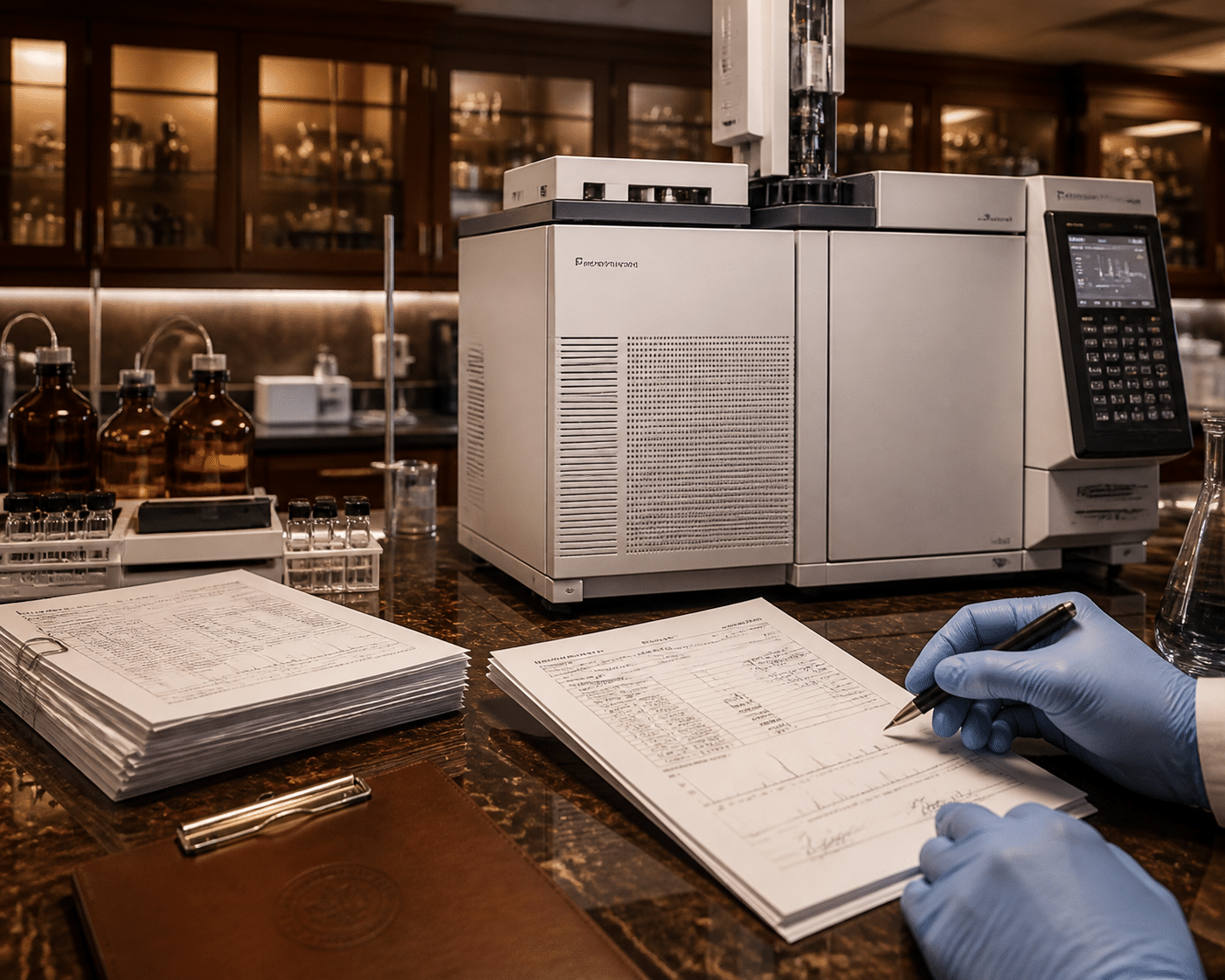
OK, time to settle the big question. Which tea tree ingredient goes in which product?
The table below is a cheat sheet for formulators and buyers. Treat every number as a starting point, not a rule. Your own stability, preservation and safety testing always gets the final vote.
The Side-by-Side Matrix
| Factor | Tea Tree Water (Hydrosol) | Tea Tree Oil |
|---|---|---|
| Solubility | ✅ Water-soluble, goes straight into the water phase | ❌ Oil-soluble, needs a solubilizer or emulsion |
| Formulation complexity | ✅ Low. Add it to the water phase | ⚠️ Higher. Premix, solubilize, then run stability checks |
| Recommended use level | Roughly 20% to 100% in toners and mists, about 1% to 30% in creams and washes | Roughly 0.1% to 0.5% in leave-ons, 0.2% to 1% in rinse-offs |
| Skin sensitization risk | ✅ Usually lower, but patch test anyway | ⚠️ Higher, especially if the oil has oxidized |
| Primary active compounds | Tiny amounts of terpinen-4-ol, 1,8-cineole and alpha-terpineol | Concentrated terpinen-4-ol, gamma-terpinene, alpha-terpinene and more |
| Cost-effectiveness in aqueous systems | ✅ Replaces water, no solubilizer needed | ⚠️ Strong per drop, but adds steps and ingredients |
| Clinical evidence | ❌ Thin for the water itself | ✅ Better, mostly for acne and dandruff |
| Ideal product types | Toners, mists, sheet masks, wipes, gentle washes, scalp mists | Spot treatments, rinse-off shampoos, oil-based balms, concentrated blends |
How to Read the Numbers
Use levels vary a lot by supplier. One organic tea tree water supplier lists a broad range for personal care, which makes sense. A hydrosol is dilute, so you can use plenty of it. The oil is a different animal. A little goes a long way, and I’d start low.
Price is where people get tripped up. A 25-liter pack of tea tree hydrosol from one European supplier runs about €21.44 per liter. Marketplace listings for the oil often sit in a similar US$15 to $33 per liter range. Looks like a tie, right? It isn’t. Compare them by active content, not by volume.
Quick Rules for Choosing
- Building a clear toner or mist? Start with the water.
- Need a stronger tea tree punch in a rinse-off? The oil, properly solubilized, makes sense.
- Want a shorter ingredient list? Water usually wins.
- Can’t decide? Many brands use both, in different SKUs.
And whichever you pick, ask for a GC-MS report. Aroma Monk, for one, supplies lab-tested essential oils, so having documents on hand is a good habit. Next, let’s talk about how to source a tea tree water you can actually trust.
How to Source High-Purity Tea Tree Water for Your Brand
Here’s the nightmare. You approve a sample, place a big order, and the drums arrive smelling like a perfume counter. Not like fresh tea tree. Quality assurance is where sourcing goes wrong, so let’s make it simple.
Start With How It’s Made
First question for any supplier: how was this produced? You want a true Melaleuca alternifolia distillate, collected during steam distillation of the leaves. Not essential oil stirred into water. Not fragrance. Not an extract.
Also ask what else is in the drum. A pure tea tree hydrosol shouldn’t contain added alcohol, solubilizers or hidden preservatives, and the spec sheet should say so plainly. If a supplier dodges that question, move on.
A few quick warning signs:
- Oil droplets, haze or sediment
- A sharp, perfumey smell (real hydrosols are mild)
- No batch number or distillation details
- A price that looks too good
Read the Certificate of Analysis Like a Pro
Ask for a batch-specific Certificate of Analysis (CoA) and a GC/MS report every time. The GC/MS shows what’s actually in the water, including terpinen-4-ol. Ask for the number in ppm or mg/kg, not just “present.” And don’t borrow the oil’s percentage. A hydrosol is far more dilute.
Here’s an illustrative snippet. The values are examples only, so check each line against your own spec.
| CoA section | What to look for | Why it matters |
|---|---|---|
| Product identity | Melaleuca alternifolia leaf, steam distilled | Confirms it’s a real distillate |
| Batch and dates | Lot number, test date, retest date | Gives you traceability |
| Appearance and odor | Clear, mild fresh tea tree scent | Flags added oil or fragrance |
| pH | A stated value and range | Helps your formula planning |
| GC/MS markers | Terpinen-4-ol, 1,8-cineole, alpha-terpineol in ppm | Checks identity and batch consistency |
| Microbiology | Actual counts and limits, not just “pass” | Water-rich materials spoil easily |
| Additives | “None” or each one named | Confirms no alcohol or preservative |
If you want an organic claim, check the certifier’s paperwork too. COSMOS explains that independent certification is what backs up an organic or natural claim, not a logo on a webpage.
Why the Supply Chain Matters
Documents only help if they match what ships. That’s why it pays to work with a supplier that manages the whole chain, from sourcing to final delivery. Aroma Monk, for one, focuses on lab-tested purity, traceability and reliable bulk orders for international buyers. For a bulk tea tree hydrosol order, that means fewer surprises between batches.
Next up, we’ll wrap everything together.
Conclusion: Make Tea Tree Water Your Competitive Advantage in 2027
We’ve covered a lot of ground. Blemish care, oily skin, sensitive skin, scalp care, deodorant, and more. So what’s the big picture?
Tea tree water isn’t a miracle ingredient. I’d be lying if I said it was, and you’ve seen where the evidence gets thin. But it’s a smart, practical one. It gives you a plant story shoppers already know, in a gentle, water-based form that slides right into the formulas you’re already building.
The Short Version
| Business benefit | What it means for your line |
|---|---|
| Product differentiation | A recognizable tea tree story in a milder format than the oil |
| Cleaner ingredient labels | No solubilizer needed, so the INCI list stays shorter |
| Simpler formulation | It goes straight into the water phase |
| Multiple market segments | Acne care, sensitive skin, scalp care and natural deodorant from one supply |
More Than Just an Ingredient
Here’s how I see it. Shoppers want safe, natural products that actually work, and they’re picky about proof. Tea tree water helps you meet that demand, as long as you keep claims honest and test every finished formula. Honest claims build trust. And trust is what’s missing on most shelves right now.
So don’t treat it as a box to tick. Treat it as a strategy. One well-documented raw material can power several products, cut down your troubleshooting, and give your brand a clear point of difference.
Your Next Step
As you plan your next product launch, consider how the multifaceted benefits of pure, lab-tested tea tree water can elevate your brand and streamline your development process.
Ready to talk sourcing? Aroma Monk supplies lab-tested, traceable botanical ingredients in bulk for international buyers. Reach out, ask for a CoA, and see what a reliable supply feels like.
Get a quote from Aroma Monk.
Essential Oil Supplier – Bulk pricing • Samples • Fast response