
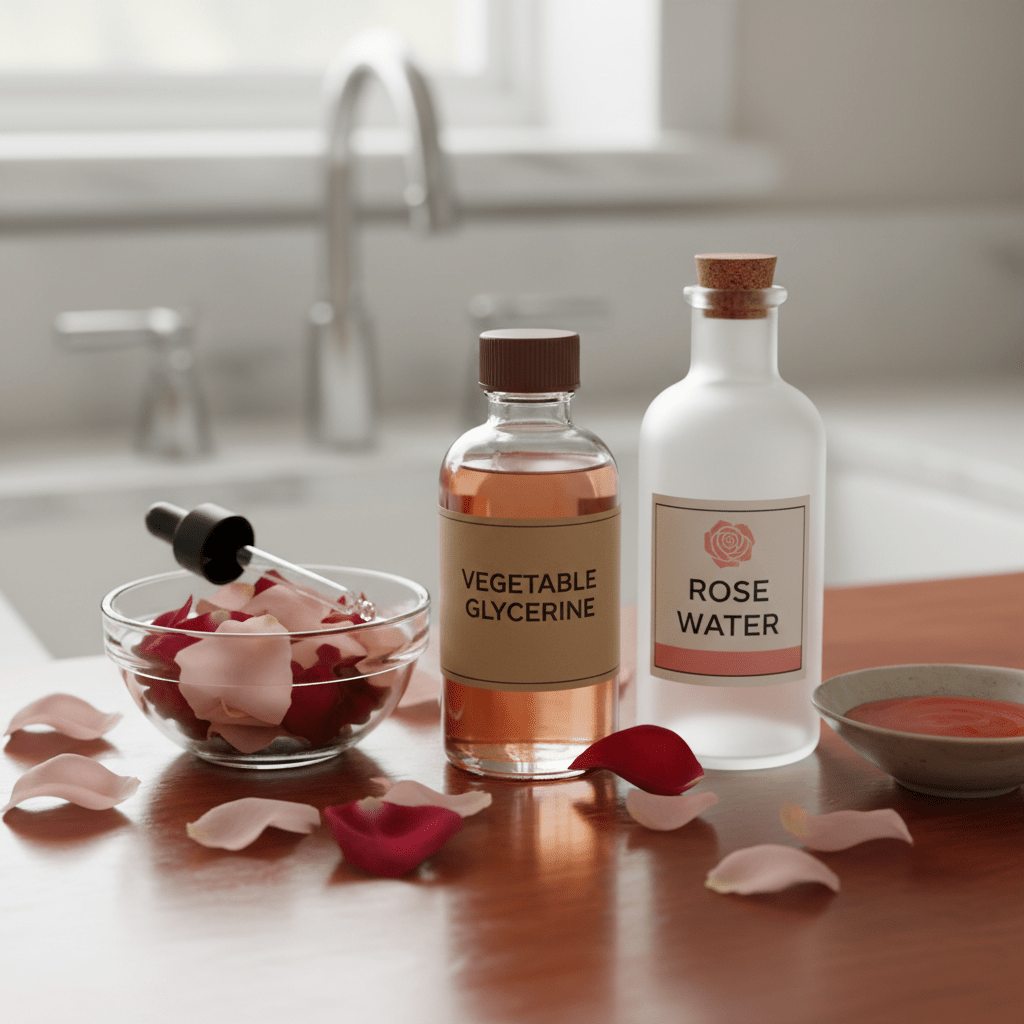
Unlock Radiant Skin: Why Glycerine is Your DIY Skincare Secret Weapon
Ever bought a fancy cream, used it for a week, and thought, “Wait… why am I still dry?” Yeah, we’ve all been there. The good news is that glowing skin does not always need a pricey jar with a gold lid.
That’s where glycerine for skin comes in. It’s simple, budget-friendly, and loved in DIY skincare for a reason. Glycerine is a humectant, which means it pulls water to the skin and helps keep it there. Skin experts have long called humectants a big part of good hydration, and glycerine keeps showing up as one of the best-known ones. In fact, clean beauty interest is still climbing, with about 68% of consumers saying they want skincare made with clean ingredients, and DIY skincare kits are projected to keep growing fast too (clean beauty market stats, DIY skincare kit market forecast).
So what are we covering here? The basics of what glycerine is, glycerine skin benefits, how to use glycerine on skin without messing it up, plus a few easy DIY recipes you can try at home. And yes, we’ll talk about vegetable glycerine for face use, glycerine for dry skin, using pure glycerine on face, glycerine toner recipe ideas, glycerine and rose water blends, and even whether glycerine is good for oily skin. Let’s keep it real and keep it easy.
Aroma Monk readers who love natural skincare ingredients will feel right at home here too. Pairing glycerine with rose water, essential oils, or other plant-based ingredients can make a DIY routine feel way more doable. Not perfect. Just better. And honestly, that’s a pretty nice place to start.
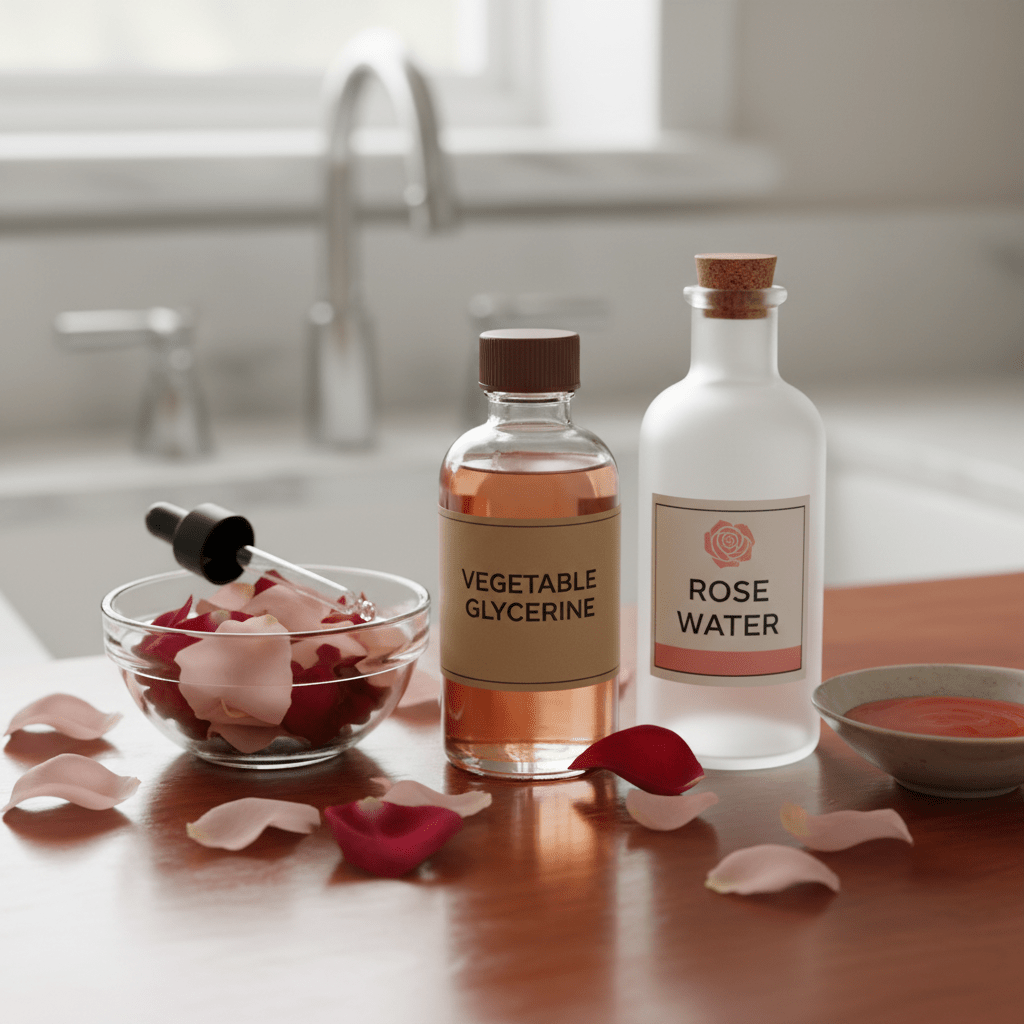
What is Glycerine? Unpacking the Skincare Superstar
Picture this. You make a DIY face mix at home, use it for a few days, and your skin starts feeling softer. Not flashy. Just better. That’s the kind of quiet win glycerine for skin is known for.
Glycerine, also called glycerol, is a simple natural sugar alcohol. It’s a key part of triglycerides, which are the fats found in plants and animals. Sounds a little science-y, I know, but the idea is easy. It’s a small, clear liquid that helps skin hold water.
There are two main types you’ll see. Vegetable glycerine for face use comes from plant oils like coconut, soy, or palm. Synthetic glycerine is usually made from petroleum sources. For skincare, most people pick the vegetable kind because it fits better with natural routines and is easier to pair with other plant-based ingredients like rose water or essential oils.
Here’s the real magic. Glycerine is a humectant. That means it pulls water toward the skin. It draws moisture from the air and from deeper skin layers up to the top layer, or epidermis. That’s why glycerine skin benefits show up so fast for many people, especially if your skin feels tight or thirsty.
And yes, it’s popular for a reason. Clean ingredient skincare keeps growing, and DIY beauty is picking up too. People want simple stuff that works. No giant mystery label. Just a few honest ingredients that do the job.
| Glycerine type | Source | Why people use it |
| Vegetable glycerine | Plant oils like coconut or soy | Best for natural skincare and DIY blends |
| Synthetic glycerine | Petroleum-based sources | Used in some products, but less popular for clean beauty |
If you’re shopping for it, look for USP grade vegetable glycerine with high purity. That’s the kind many DIY makers trust for glycerine toner recipe ideas, glycerine and rose water blends, and DIY glycerine serum recipes.
And one more thing. Glycerine isn’t just for dry skin. It can also work well if you’re wondering, “is glycerine good for oily skin?” We’ll get into that soon. But for now, just know this. It’s simple. It’s affordable. And it’s one of those ingredients that keeps earning its spot on the shelf.
The Science-Backed Benefits of Glycerine for Skin Health
You know that tight, thirsty feeling after washing your face? That little “ugh” moment? Glycerine for skin helps with that fast.
Here’s the big reason people keep reaching for it. Glycerine is a humectant, so it pulls water toward the skin and helps hold it there. That means better hydration, less flaking, and a softer feel on rough spots. Cosmetic dermatology research also shows glycerine helps the skin keep moisture and lowers transepidermal water loss, or TEWL, which is just a fancy way of saying your skin loses less water through the day. That matters a lot if you deal with glycerine for dry skin, or if your face feels itchy after cold weather or too much AC.
And it does more than that. Glycerine helps support the skin barrier, which is your skin’s outer shield. When that barrier is in better shape, it can handle wind, dry air, and other irritants a little better. It also seems to help skin cells mature the right way, which supports a smoother surface over time. Plus, some studies point to soothing effects, which is why using pure glycerine on face recipes often shows up in calming DIY blends.
The neat part? It works for more than one skin type. If you’ve ever wondered, “is glycerine good for oily skin?” the answer is usually yes. It’s lightweight, it’s non-comedogenic, and it can give water-based hydration without that greasy feel. That’s why it shows up in lots of moisturizers at around 5% to 15%, and sometimes higher in stronger formulas.
| Skin benefit | What it can do |
| Deep hydration | Helps skin hold more water |
| Less dryness | Can reduce flaking and rough patches |
| Barrier support | Helps limit water loss and outside irritation |
| Skin comfort | May calm irritation for some skin types |
| Better bounce | Can improve the look of skin softness and elasticity |
I’ve also noticed this: once people try a simple glycerine toner recipe or a glycerine and rose water blend, they usually stop overcomplicating things. Good ingredients. Clean feel. No drama. If you’re building a DIY routine, start small and patch test first. And if you want to pair it with rose water, that’s a lovely place to begin. Aroma Monk’s rose water and pure essential oils can fit right into that kind of routine too.
So yes, the science backs up the buzz. Glycerine for skin is simple, but it pulls its weight in a big way. And honestly? That’s pretty refreshing.
Safety First: How to Use Glycerine Correctly to Avoid Stickiness and Irritation
Ever put something on your face that felt nice for five seconds, then turned into a sticky mess? Yep. Glycerine can do that if you use too much or use it straight from the bottle.
Here’s the deal: always dilute glycerine before putting it on your skin. Pure glycerine is super thick and very thirsty for water. In dry air, it can pull water from the deeper layers of your skin instead of helping, which is the exact opposite of what you want. Weird, right? That’s why people sometimes end up with tacky skin or a tight, dry feel after using it wrong.
A good starting mix is simple:
| Ingredient | Simple ratio |
| Glycerine | 1 part |
| Distilled water or rose water | 4 parts |
That gives you a light blend that works well for a glycerine toner recipe or a quick hydrating mist. If your skin is sensitive, you might want to go even lighter at first. A little goes a long way.
And yes, a patch test matters. Put a small amount on your inner arm or behind your ear, then wait 24 hours. If you get redness, stinging, or a rash, don’t use it on your face. No shortcut is worth a week of regret.
A few common slip-ups to avoid:
- Using using pure glycerine on face without water
- Mixing too much into one batch, which can feel sticky fast
- Skipping the patch test because you’re “sure it’ll be fine”
- Leaving water-based DIY blends out too long
Also, keep your DIY mixes fresh. If you’re making glycerine and rose water blends or a DIY glycerine serum, store them in a clean glass bottle in the fridge and use them within 1 to 2 weeks. If it smells off or looks cloudy, toss it. No mercy.
For anyone asking, “is glycerine good for oily skin?” the answer is still yes, but only when diluted the right way. It gives water-based hydration without the heavy feel, which oily skin usually likes. Aroma Monk’s rose water can be a lovely base here too, especially if you want a soft floral touch in your routine.
So keep it simple. Dilute it. Test it. Then enjoy the glow.
3 Simple & Effective DIY Glycerine Skincare Recipes
Want skin care that feels calm, not complicated? Good. Because this is the fun part.
These three DIY recipes use glycerine for skin in easy ways, and they fit real life. No lab coat. No weird tools. Just a few clean ingredients and a clean jar. Also, clean beauty interest is still strong, with about 68% of consumers saying they want products made with clean ingredients, and the DIY skincare kits market is set to keep growing fast too (clean beauty market stats, DIY skincare kit market forecast).
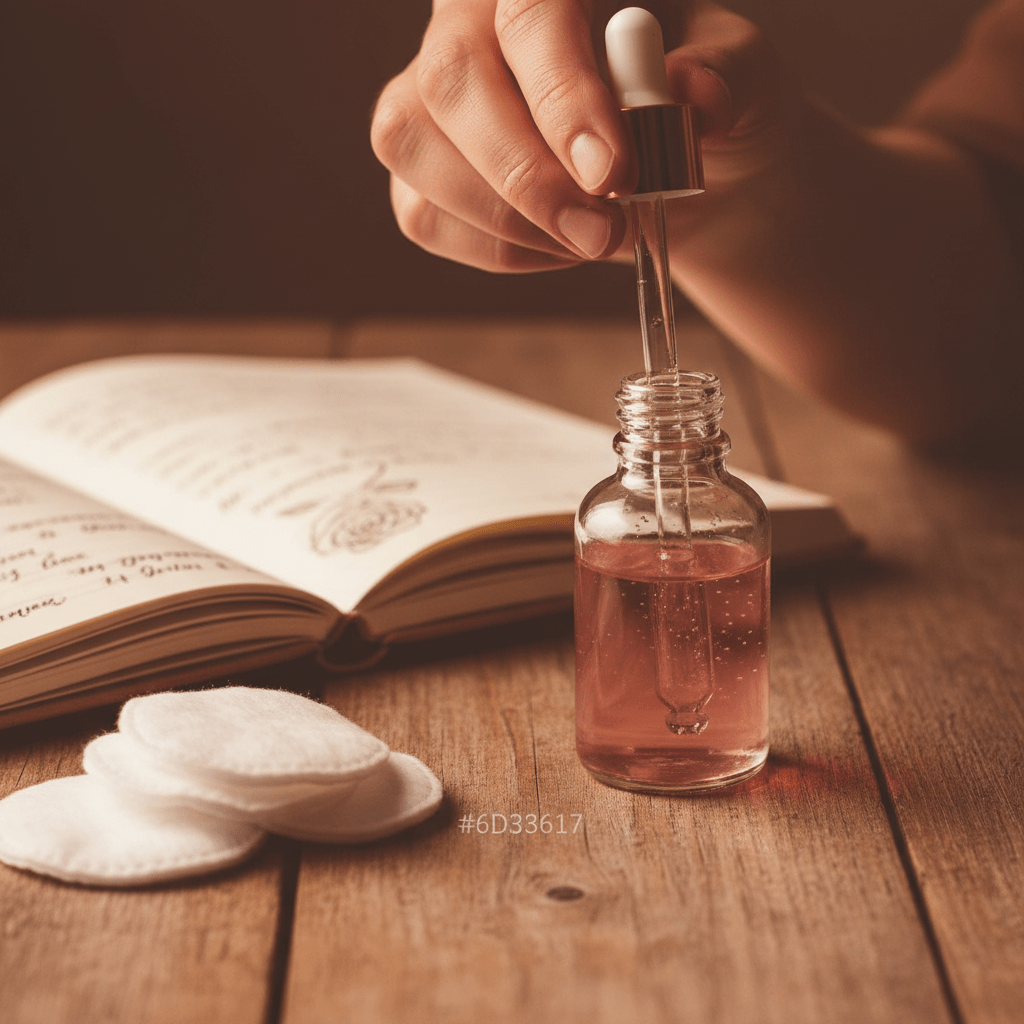
1) Basic Hydrating Toner
This one is the easiest place to start. It works like a post-cleanse drink of water for thirsty skin.
You’ll need:
- 1 part vegetable glycerine for face use
- 4 parts distilled water or rose water
- 1 to 2 drops witch hazel, optional for oily skin
How to make it:
- Pour everything into a small glass bottle.
- Cap it and shake gently.
- Store it in the fridge.
- Use a cotton pad or clean hands after cleansing.
This little glycerine toner recipe is nice for daily hydration, and the rose water gives it a soft, fresh feel. If your skin leans oily, that tiny bit of witch hazel can help it feel lighter. And if you want a softer floral base, Aroma Monk rose water fits beautifully here.
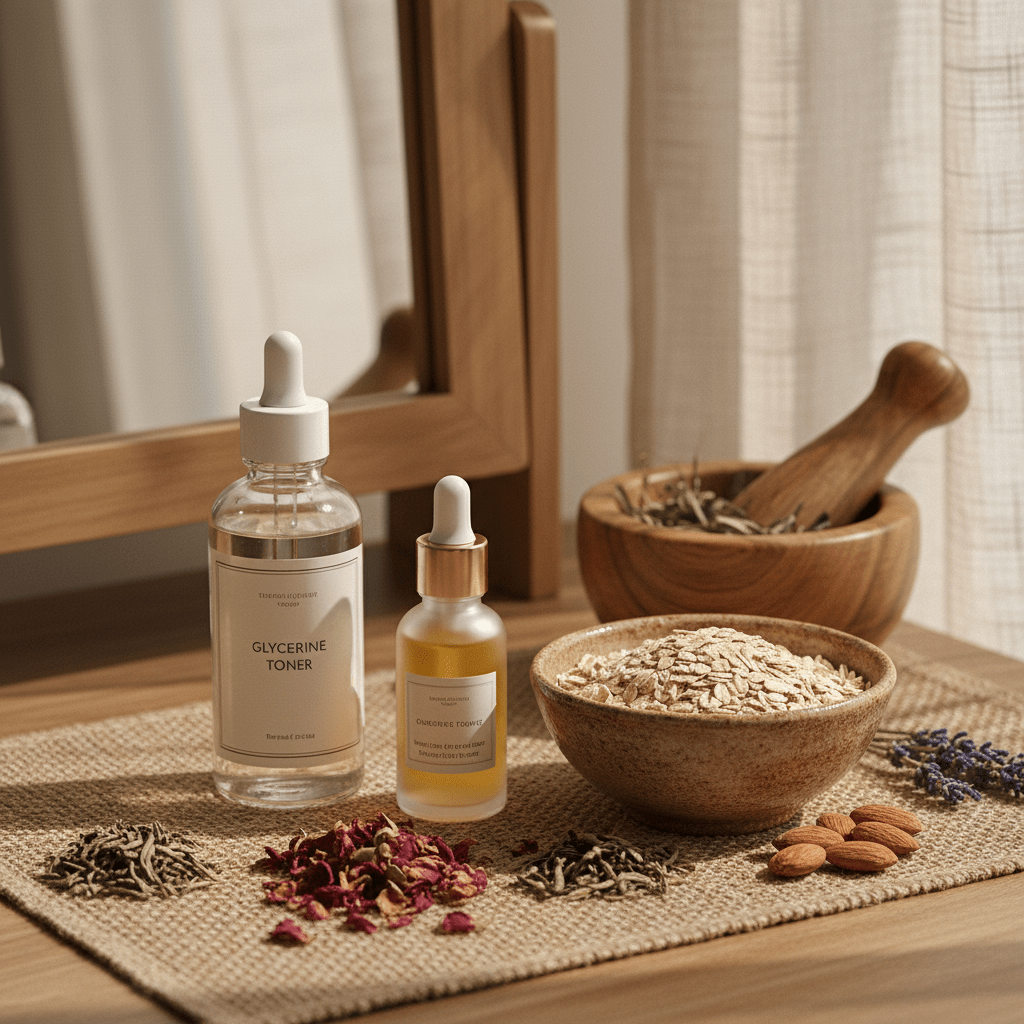
2) Nourishing Glycerine Face Serum
If your skin feels dull or dry, this one has a richer feel. Still simple. Just a bit more comforting.
You’ll need:
- 1 teaspoon glycerine
- 1 teaspoon distilled water
- 1 teaspoon jojoba oil or rosehip oil
- 1 drop lavender essential oil, optional
How to make it:
- Add the water and glycerine to a small bottle.
- Pour in the carrier oil.
- Add the lavender if you want a light scent.
- Shake before each use.
This is a nice DIY glycerine serum for night time. The oil helps seal things in, while glycerine brings in moisture. Use a tiny amount on damp skin. Not too much. Just enough to feel soft, not slick. That’s the sweet spot.
3) Soothing Oatmeal & Glycerine Face Mask
You know those days when your face feels cranky? Red, dry, a little extra? This one helps.
You’ll need:
- 1 teaspoon glycerine
- 1 tablespoon colloidal oatmeal
- 1 to 2 teaspoons water or plain yogurt
How to make it:
- Mix the oatmeal and glycerine in a small bowl.
- Add water or yogurt until it turns into a paste.
- Spread it on clean skin.
- Leave it on for 10 to 15 minutes.
- Rinse with lukewarm water.
This mask is great for sensitive or irritated skin because oatmeal is soothing and glycerine helps hold in moisture. It’s gentle, soft, and honestly pretty underrated.
Get a quote from Aroma Monk.
Essential Oil Supplier – Bulk pricing • Samples • Fast response
| Recipe | Best for | Main benefit |
| Basic Hydrating Toner | Daily use | Light hydration after cleansing |
| Nourishing Face Serum | Dry, dull skin | Richer moisture support |
| Oatmeal Face Mask | Sensitive skin | Calming and softening |
A few quick notes: keep all water-based DIY blends cold, make small batches, and toss them if they smell off or change color. Without a preservative, they usually last about 1 to 2 weeks in the fridge. And if you’re asking, “is glycerine good for oily skin?” the answer is still yes, as long as you keep the mix light and diluted.
If you want to build a simple natural routine, start with one recipe, not all three. Then see how your skin reacts. That’s the real trick.
How to Supercharge Your Existing Skincare with Glycerine
Got a moisturizer you already like, but it still feels a little meh on dry days? Same. That’s where glycerine for skin gets really handy. You don’t need a whole new shelf of products. Sometimes you just need to nudge the stuff you already own in a better direction.
A few drops can go a long way. Mix 2 to 5 drops of diluted glycerine into a coin-sized dollop of your daily moisturizer or body lotion, then rub it between your palms before applying. That little step can make your cream feel more cushiony and help it hold water better. It’s a simple way to boost glycerine skin benefits without making things sticky.
| Easy add-in | How much to use | Best for |
| Daily moisturizer | 2 to 5 drops, diluted | Extra hydration on dry skin |
| Clay mask | 1 small drop | Keeps skin from feeling tight |
| Facial cleanser | A tiny amount | A gentler, less stripping wash |
Clay masks are another good place to try it. Clay can be great for oily skin, but it can also leave your face feeling like the Sahara if you leave it on too long. Add one drop of pure glycerine to your clay mask mix before applying. Just one. That helps balance the dry-down effect, so you get the clean feel without the over-tight finish. And if you’ve been asking, “is glycerine good for oily skin?” this is one of the better ways to use it.
You can also add a small amount to your cleanser. A little glycerine in a gentle face wash can make it feel less stripping, especially if you’re dealing with glycerine for dry skin or winter flakiness. But don’t go wild here. Too much can change the texture and make it weird fast. Nobody wants a slimy cleanser. Nobody.
The reason this works is pretty simple. Glycerine is a humectant, so it pulls water to the skin and helps keep it there. Dermatology sources also point to humectants as a big part of hydration care, and glycerine keeps showing up as one of the best-known ones for that job. With clean beauty interest still strong and DIY skincare on the rise, it makes sense that more people are testing small tweaks like this clean beauty market stats.
If you want an easy place to start, try it with one product first. A moisturizer. Or a clay mask. See how your skin feels for a week. Then decide if it’s worth making part of your routine. That’s the nice thing about glycerine for skin. It plays well with what you already use.
Frequently Asked Questions About Using Glycerine for Skin
Can I leave glycerine on my face overnight?
Yes, you can. But only if it’s diluted first. Pure glycerine on its own can feel sticky and may pull water the wrong way in dry air. That’s why it works best in a DIY glycerine serum or mixed into a moisturizer, not slapped on straight from the bottle. A light blend, used on damp skin, is usually the sweet spot.
Is glycerine good for oily and acne-prone skin?
Yep. In most cases, it is. Glycerine is non-comedogenic, so it won’t clog pores, and it gives oil-free hydration. That matters because skin that’s thirsty can sometimes make extra oil to make up for it. So if you’ve been wondering, “is glycerine good for oily skin?” the short answer is yes, especially in a watered-down mix or a simple glycerine toner recipe. It’s a nice fit for acne-prone skin too, as long as you patch test first.
What’s the difference between glycerine and hyaluronic acid?
Both are humectants. Both pull water to the skin. But glycerine is often cheaper, simpler, and smaller in size, so it can sink into the upper skin layers well. Hyaluronic acid can hold a lot more water, but it usually sits closer to the skin’s surface, depending on the type. Think of glycerine as the quiet everyday helper and hyaluronic acid as the pricier sidekick.
Here’s a quick side-by-side look:
| Ingredient | What it does | Cost | Best for |
| Glycerine | Pulls water into the skin and helps hold it there | Usually low | Dry skin, oily skin, DIY blends |
| Hyaluronic acid | Holds a lot of water on the skin’s surface | Usually higher | Plumping and layering hydration |
And if you’re buying vegetable glycerine for face use, look for USP-grade purity when you can. That gives you a cleaner starting point for DIY skincare. Pair it with rose water, add it to a gentle moisturizer, or keep it simple in a small bottle. That’s often where the best glycerine skin benefits show up.
Aroma Monk’s rose water and pure essential oils can also fit into that kind of routine if you want a softer, plant-based feel.
For a no-fuss routine, start small. Then watch how your skin feels for a week or two. That usually tells you a lot.
Embrace Simple, Powerful Skincare with Glycerine
So yeah, glycerine for skin is one of those rare ingredients that does a lot without making a big fuss. It can help hydrate, soften, and support the skin barrier, and it usually works for dry, oily, and combo skin when you use it the right way. The big trick is simple: dilute it first. Pure glycerine can feel sticky, and in dry air it may pull water the wrong way. But mixed into a toner, serum, or moisturizer, it’s a pretty handy little helper.
And that’s what makes it so good for DIY skincare. You can start with a basic glycerine toner recipe, mix up a gentle DIY glycerine serum, or even add a few drops to products you already own. It’s affordable too, which is probably why more people are reaching for clean, simple ingredients. In fact, about 68% of consumers say they want skincare made with clean ingredients, and the DIY skincare kits market is expected to grow a lot in the years ahead (clean beauty market stats, DIY skincare kit market forecast).
If you’re wondering where to begin, start small. Try glycerine and rose water in a light toner. Patch test. See how your skin feels for a week. That’s usually enough to tell you if it’s a fit. And if you want high-quality rose water or pure essential oils for your blends, Aroma Monk can be a solid place to look.
Simple can work. Sometimes really well.
Get a quote from Aroma Monk.
Essential Oil Supplier – Bulk pricing • Samples • Fast response