
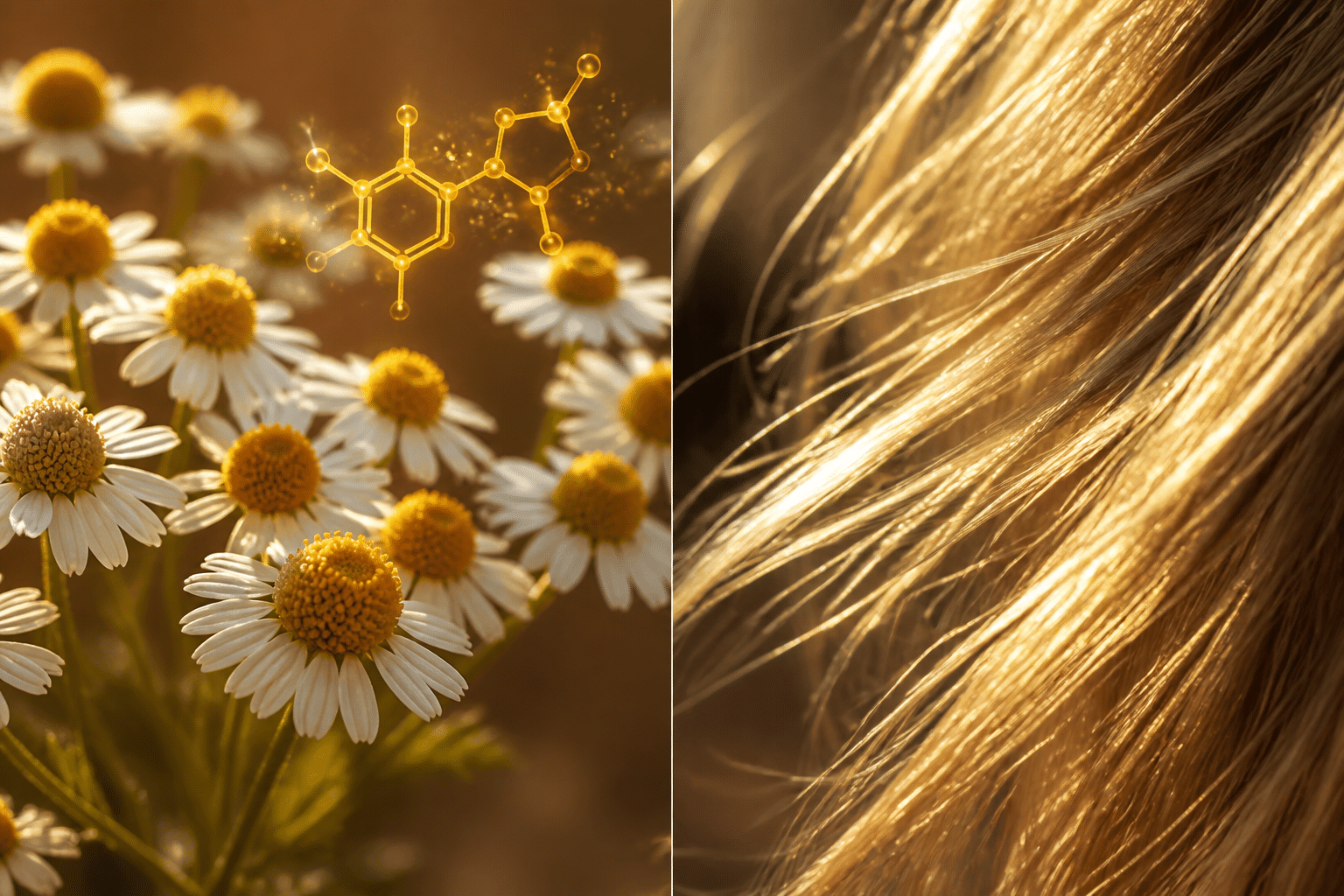
Harnessing Nature’s Lightener: The Untapped Potential of Chamomile Water in Hair Care
Picture this. A customer stands in a drugstore aisle, squinting at the back of a box dye. She’s read the words “ammonia” and “peroxide” and put it right back on the shelf. She isn’t alone. One 2025 industry estimate says more than 41% of global consumers prefer ammonia-free colors. That’s a big crowd of people looking for something gentler.
So where does chamomile water for hair fit in? Most people think of chamomile as a tea rinse your grandma used on summer afternoons. But for brands, it’s a lot more than that. It’s a plant-based story with real shelf appeal, and it can work in shampoos, conditioners, mists and styling products.
Why Brands Are Looking at Chamomile Now
The natural hair care market is growing fast. One report values it at $12.7 billion in 2025, heading toward $24.5 billion by 2035. Shoppers want subtle brightness, golden tones and softer highlights, not a harsh chemical reset.
And the proof is already on shelves. Klorane has built a whole chamomile range for blonde and light-brown hair, which shows people will buy a product when chamomile is the star.
Here’s the honest part, though. Chamomile isn’t bleach. It adds warmth and a sun-kissed glow, mostly on light, blonde or porous hair. That’s actually a strength. You can market it as gentle and botanical without overpromising.
What This Guide Covers
We’ll look at how chamomile works, which form to buy (hydrosol, extract or oil), and how to build and preserve a formula that holds up. We’ll also cover claims, scalp benefits and smart sourcing from a bulk chamomile water supplier. First, let’s look at the science behind that golden glow.
The Science of Sunshine: How Chamomile Naturally Lightens Hair
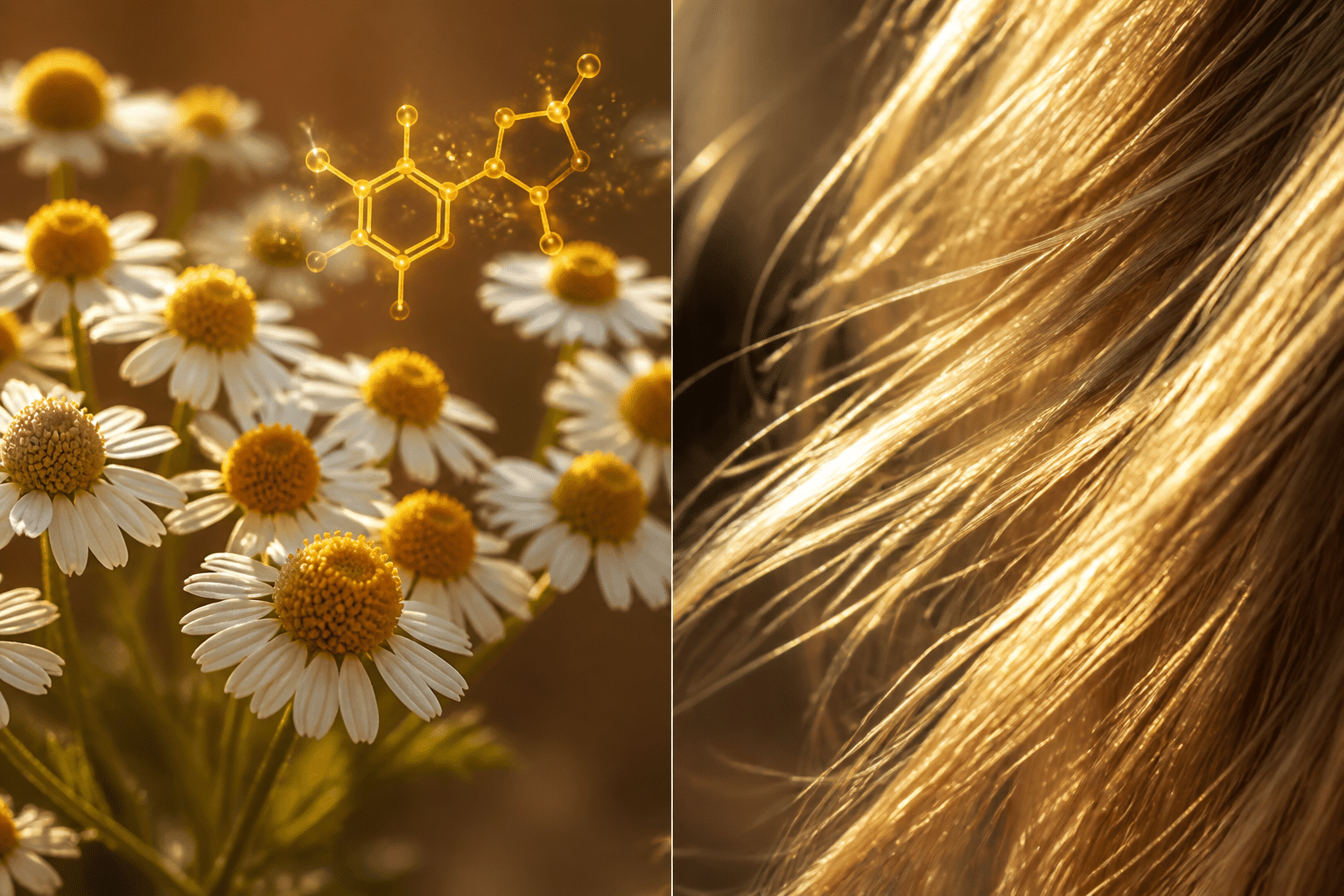
Here’s a fun fact that surprises a lot of formulators. The golden color in chamomile isn’t just pretty. It’s the whole point.
Apigenin: The Golden Star
The compound doing most of the work is apigenin, a yellow flavonoid found in chamomile flowers. Think of it as a natural pigment. When you rinse hair with a chamomile preparation, some apigenin and related yellow flavonoids cling to the outer cuticle. That adds a warm, golden tone and makes light hair reflect more light.
Notice what’s missing there. Nothing is being burned away.
I’ll be upfront: the direct research on apigenin and hair keratin is thin. Nobody has shown a neat chemical reaction between the two. So the safest way to describe it is surface deposition, not deep change. Any brand copy saying apigenin “reacts with keratin” or “breaks down melanin” is probably running ahead of the evidence.
A Gentle Alternative to Bleach
Hydrogen peroxide bleach is oxidative. It opens the hair and destroys pigment inside. Chamomile doesn’t have a strong oxidant in it, so it doesn’t do that. There’s no good evidence that apigenin gets into the cortex and removes existing melanin.
That’s a selling point for safety-minded brands. It also explains why the results are subtle, mostly on blonde, light brown, gray or porous hair. Dark hair? Don’t promise much.
Why Results Build Over Time
The effect is cumulative. One rinse gives a little tint. Several rinses stack up. Many how-to guides, like this one on lightening hair with chamomile, suggest drying hair in the sun or with gentle warmth afterward. The proof for that step is mostly anecdotal, so keep instructions simple and honest: use it regularly, and expect gradual warmth rather than dramatic lift.
What’s Inside Each Type of Chamomile
Not all chamomile is the same. German and Roman types carry different compounds, and that matters when you pick a source. One example: chamazulene isn’t plentiful in the fresh flower. It forms from matricin during distillation, which is why hydrosols and oils can differ from raw flowers.
| Compound | Found in | What it does for hair |
|---|---|---|
| Apigenin | Both, mainly in extractable solids | Yellow pigment that adds golden tone |
| Apigenin glucoside | Both | Changes with heat and pH during processing |
| Quercetin | Both | Antioxidant, but weak proof it lightens hair |
| Alpha-bisabolol | Mostly German | Soothing, not a lightener |
| Chamazulene | German (formed in distillation) | Blue compound, known for calming |
| Esters | Mostly Roman | Aroma and gentle botanical character |
So the color story belongs to apigenin, and extracts carry more of it than waters do. That choice is next.
Choosing Your Ingredient: Chamomile Water (Hydrosol) vs. Extract vs. Essential Oil
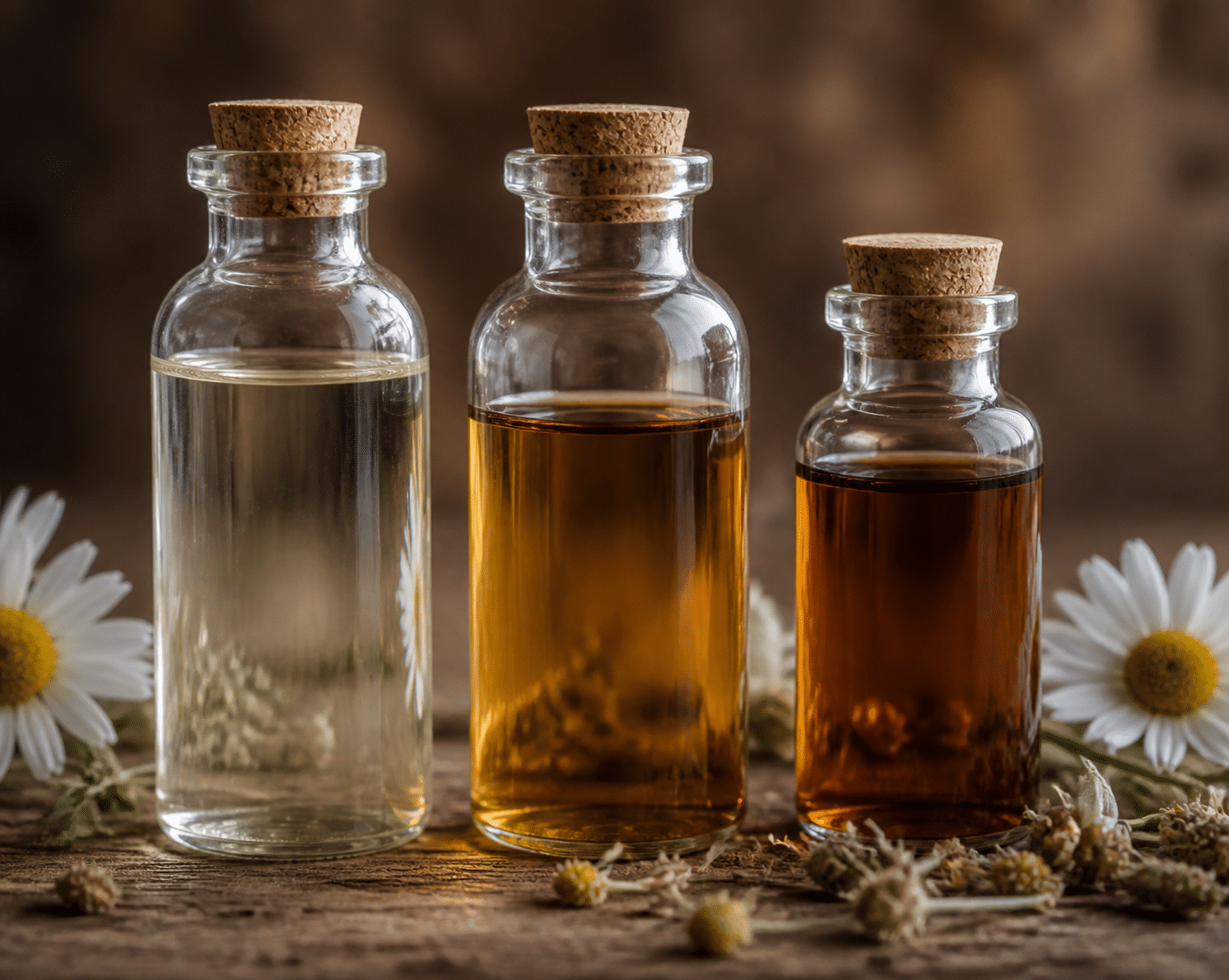
Here’s where a lot of brands trip up. “Chamomile” on a spec sheet can mean three very different things. Pick the wrong one and your golden-glow story falls flat.
So let’s sort them out, one by one.
Chamomile Water (Hydrosol): Easy to Use, Gentle in Strength
Chamomile hydrosol is the water left over after steam distilling the flowers. It’s ready to pour into a formula. No melting, no mixing, no fuss. It blends right into sprays, tonics, mists and rinse-style products because it’s already water-based.
That’s the upside. The catch? It’s light on actives. Apigenin is a nonvolatile flavonoid, and distillation mostly carries over the volatile stuff. So a hydrosol’s color-depositing power is usually low and can swing from batch to batch. It’s lovely for feel, scent and botanical story. It’s not your heavy lifter for golden tone.
Price helps, though. Supplier listings show bulk hydrosol at roughly US$2 to $10 per liter in large orders, depending on origin and certification. And it needs a proper preservative. Never assume it keeps itself safe.
Chamomile Extract: The Heavy Lifter
If you want real apigenin in the bottle, extract is the answer. A standardized liquid or powdered extract holds the extractable solids where the yellow pigment lives. That makes it the best fit for shampoos, conditioners and masks where you want a stronger tint story.
But extracts aren’t all equal. “Liquid extract” says nothing about potency on its own. One might be 1:1, another 1:5, and a cheap one might be mostly diluent. Ask for the solvent, the dry residue and an assay showing apigenin or total flavonoids. Prices run higher too, often around US$10 to $25 per liter or more.
Expect a stronger herbal smell and a yellow-to-brown color. That can be a pain in a clear, lightly scented spray. Plus, flavonoids can oxidize, so think about antioxidants and light-blocking packaging.
Chamomile Essential Oil: Great for Scent, Not for Lightening
This one causes the most confusion. Essential oil smells wonderful and soothes. But it won’t lighten hair. Apigenin isn’t a main part of the oil, so you’re not adding the pigment at all.
The oil is also oil-soluble. Drop it in water and it separates, so you need a solubilizer or an oil phase. German chamomile oil is blue from chamazulene, which can tint a formula. Use it for fragrance and a calming scalp feel, and keep safe dermal use limits in mind.
Form vs. Function: Choosing the Right Chamomile for Your Hair Care Line
| Form | Primary Use | Concentration | Solubility | Cost-Effectiveness | Formulation Notes |
|---|---|---|---|---|---|
| Hydrosol | Sprays, tonics, mists, water phase of rinses | Low and variable apigenin | Fully water-soluble | Lowest cost per liter | Needs strong preservation, opaque packaging, check for dilution |
| Extract (liquid or powder) | Shampoos, conditioners, masks, tint-focused products | Highest apigenin when standardized | Glycerin or glycol extracts mix into water; ethanol types need care | Mid to high cost, best value for actives | Ask for ratio, solvent and apigenin assay; watch color and odor |
| Essential oil | Fragrance, scalp-soothing claims | Almost no apigenin | Oil-soluble only | Costly per use, but small doses | Needs a solubilizer; not a lightening ingredient |
So Which One Should You Pick?
There’s no single winner. Plenty of smart formulas pair a hydrosol for the water base with a standardized extract for the color work. A touch of essential oil can finish the scent.
Next up, we’ll turn these choices into an actual build.
Formulation Blueprint: Incorporating Chamomile Water into Commercial Hair Products
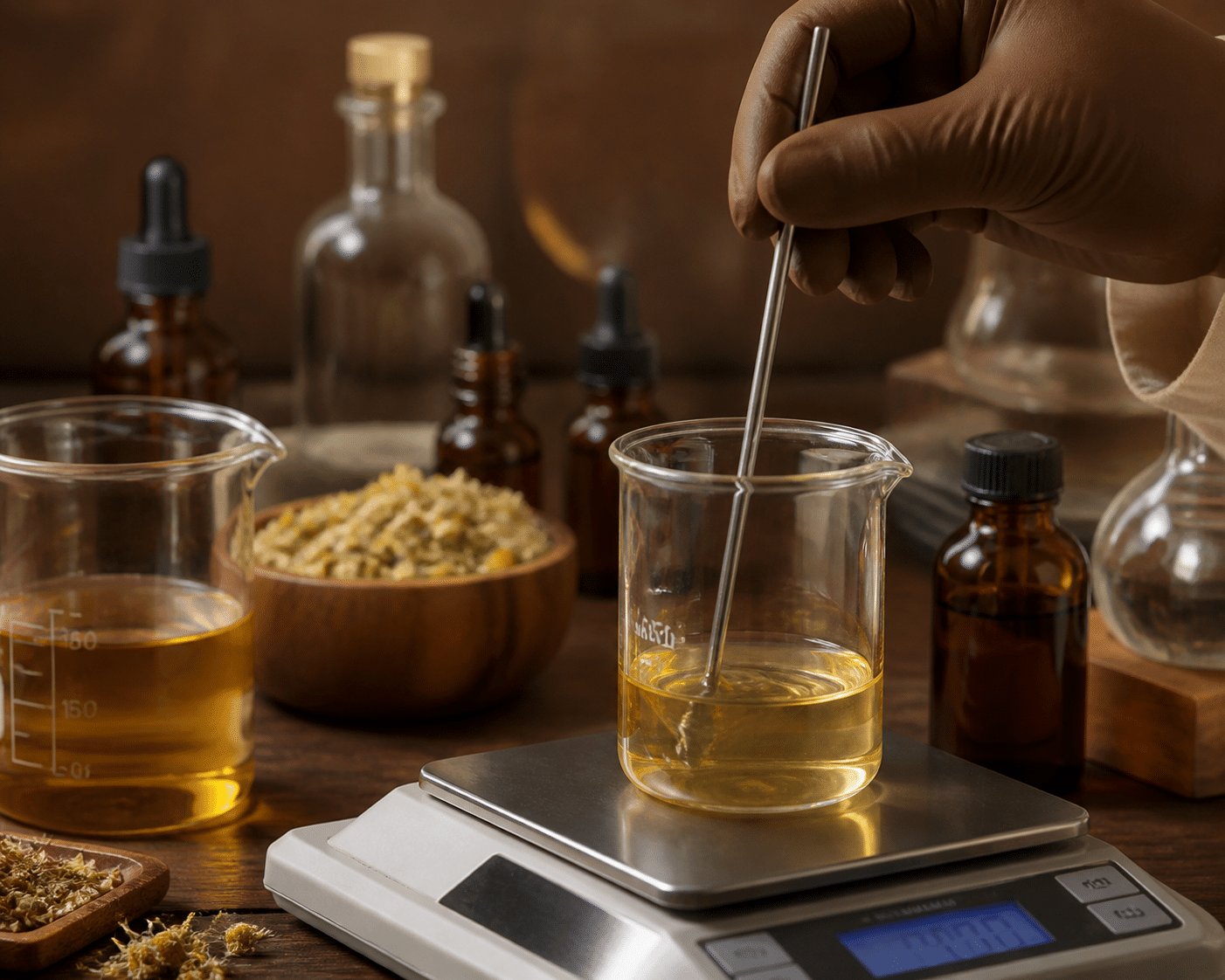
OK, you’ve picked your forms. Now comes the fun part: actually building something people can spray, lather or smooth onto their hair.
I’ll be upfront. These are starting points, not finished recipes. Every base behaves differently, so your chemist still has the final say.
How Much Chamomile Water Goes Where?
The right amount depends on the product. A mist is mostly water, so chamomile hydrosol can take over the whole water phase. A shampoo has to make room for surfactants, so the share shrinks fast.
| Product type | Suggested hydrosol level | Why it works |
|---|---|---|
| Hair mist or tonic | Up to 90% | Water-based, so the hydrosol can be the star |
| Conditioner | 10-30% | Replaces part of the water phase without thinning the cream |
| Shampoo | 5-20% | Surfactants need room to lather |
One thing to remember: hydrosol is light on apigenin. If tint is the goal, add a standardized extract to the mix rather than just pouring in more water.
Partner Ingredients That Pull Their Weight
Chamomile rarely works alone on a shelf. A few partners make the story stronger.
- Calendula: Another soft, golden botanical. It fits the sun-kissed theme and keeps the label plant-forward.
- Honeyquat: A honey-based conditioning ingredient. It helps hair feel softer and easier to comb, which matters because hydrosol alone doesn’t condition much.
- Lemon extract: Popular for the “summer brightening” story. Use a small amount, and test it well, since it lowers pH and can sting sensitive scalps.
Klorane’s chamomile range has already shown that blending chamomile with other botanicals and conditioners is a common way to position premium blonde care.
Sample Formulation Guide: Golden Glow Hair Mist
Here’s a concept to hand your chemist. It’s not a validated recipe.
| Ingredient | Role | Approx. % |
|---|---|---|
| Chamomile hydrosol | Main water phase | 70.0 |
| Purified water | Balance | to 100 (about 19.4) |
| Standardized chamomile extract (glycerin-based) | Color-depositing flavonoids | 3.0 |
| Glycerin or propanediol | Humectant | 3.0 |
| Calendula extract | Botanical partner | 2.0 |
| Honeyquat | Conditioning, softness | 1.0 |
| Broad-spectrum preservative | Microbial protection | Per supplier guidance (about 1.0) |
| Lemon extract | Brightening story | 0.5 |
| Chelating agent | Helps preservative work | 0.1 |
| Citric acid or sodium hydroxide | pH adjustment | q.s. to pH 4.5-5.5 |
Keeping It Stable and Safe
Hydrosol is water. Bacteria love water. So never count on chamomile water to protect itself.
A pH of about 4.5 to 5.5 is the usual range for leave-on hair products, since it helps the cuticle sit flat. Just know it’s chosen for hair feel, not because it’s proven to boost lightening.
Natural preservative systems can work, but they have limits. Natural preservatives need to match your pH and ingredients, and “natural” on a label doesn’t prove anything. So test the finished formula using ISO 11930, the standard made for water-based cosmetics.
A few quick habits help too:
- Use a fine-mist pump or airless pack.
- Pick opaque or UV-blocking bottles.
- Check color, smell, pH and spray performance after heat and freeze-thaw tests.
So what do you tell shoppers once the formula holds up? That’s next.
Get a quote from Aroma Monk.
Essential Oil Supplier – Bulk pricing • Samples • Fast response
Managing Efficacy and Marketing Claims: What to Tell Your Customers
You’ve built the formula. It smells lovely and sprays like a dream. Now comes the part that can trip up even smart brands: what you say about it.
Chamomile water for hair gives a gentle, gradual result. Your words need to match that. Overpromise, and you’ll get angry reviews and returns. Stay honest, and you’ll get loyal fans who like that you didn’t hype things up.
Setting Realistic Expectations
Here’s the plain truth. Chamomile adds warmth and brightness over time. It doesn’t lift hair two shades in one go. There’s also no strong, independent, peer-reviewed trial showing how chamomile changes different hair colors, so any “proof” floating around online deserves a raised eyebrow.
So tell shoppers what to expect: a softer, sun-kissed look that builds with repeated use. Say that results depend on starting color, porosity and past treatments. Short and honest wins here.
Who Your Ideal Customer Really Is
Your best fit is someone with naturally blonde or light brown hair. Gray and porous hair can pick up a golden tone too, since there’s more surface for the yellow pigment to cling to.
What about dark hair? Honestly, expect very little. Plenty of people have tried it (here’s one writer who tested chamomile on black hair), and the pigment just doesn’t have much to show against deep brown or black. Don’t aim your ads at those shoppers.
Here’s a simple guide you can use for product pages, with real, unretouched photos and a short “results vary” note beside each.
| Starting shade | Likely result | Safe way to say it |
|---|---|---|
| Blonde | Warmer, brighter golden tone | “Brightens blonde tones” |
| Light brown | Subtle sun-kissed highlights | “Enhances natural highlights” |
| Dark brown or black | Little to no visible change | Don’t feature it as a target |
Words That Keep You Out of Trouble
In the U.S., cosmetic claims must be truthful and not misleading, and the FDA doesn’t pre-approve them. Claims about changing melanin or the body’s structure can even push a product toward drug territory. That’s a headache nobody wants.
Stick to appearance language. “Enhances highlights,” “brightens blonde tones” and “imparts a sun-kissed glow” all describe how hair looks. “Bleaches” or “breaks down melanin” does not. And watch “chemical-free.” Water and plant extracts are chemicals too. Say “ammonia-free” or “peroxide-free” instead, if it’s true.
Responsible Marketing for Natural Lighteners
- Describe the look, not a chemical change.
- Say “gradual” and “with repeated use.”
- Name the best hair shades (blonde, light brown, gray).
- Add “results vary” near any photo.
- Skip shade counts like “lifts two levels” without controlled color testing.
- Avoid “clinically proven” unless you have the study.
- Use specific terms like ammonia-free, not “chemical-free.”
- Keep antioxidant and scalp wording soft until tested in the finished formula.
Get the claims right, and the scalp story gets easier to tell. That’s where we’re headed next.
Beyond Color: The Added Scalp and Hair Health Benefits of Chamomile
Here’s something shoppers rarely say out loud. They don’t buy a blonde-care product just for color. They buy it because their scalp feels itchy after a beach week, or their ends look dull by Thursday.
That’s where chamomile water for hair gets interesting. The golden tone is the headline, but the comfort story might be what keeps people coming back.
The 3-in-1 Story at a Glance
| Benefit | What it means on the label | How far the proof goes |
|---|---|---|
| Brightens | Warm, golden-looking highlights with repeated use | Best on light, gray or porous hair |
| Soothes | Calming scalp feel | Plausible, but clinical proof is limited |
| Shines | Softer, smoother look | Mostly a formula effect, not chamomile alone |
Soothing the Scalp (Carefully)
Chamomile holds compounds like apigenin, bisabolol and chamazulene that show anti-inflammatory activity in lab work. That’s the reason it’s trusted for calming products. A 2022 review of chamomile points to these skin benefits but also says the evidence for firm clinical use is still limited.
So what about mild dandruff? Honestly, I’d stay humble. Current seborrheic dermatitis guidance leans on antifungal ingredients like ketoconazole, not botanicals. And a hydrosol carries far fewer actives than an extract. So position chamomile as a soothing helper for a comfortable-feeling scalp. Don’t say it “treats dandruff” or “controls inflammation” unless your finished product has its own study behind it.
One more thing. I went looking for quotes from trichologists and dermatologists on this, and I couldn’t find a verifiable independent one. I’m not going to invent one. If you want expert voices on your product page, hire a dermatologist to review your formula and give a real, signed statement.
Softness and Shine: What Chamomile Water Can Do
Chamomile water is light. It can add a fresh, water-based finish and a bit of perceived softness, especially when paired with a humectant like glycerin or a conditioning ingredient like honeyquat (the same partners from our sample mist).
But it won’t replace a real conditioner. It lacks the slip of fatty alcohols or cationic agents. Shine mostly comes from a smoother cuticle, and that’s a job for your whole formula, with a pH around 4.5 to 5.5 helping out. Chamomile is the botanical story on top.
Antioxidants and Everyday Stress
Chamomile has phenolic compounds that act as antioxidants. A study of six commercial chamomile extracts found big differences between products, and flavonoid-rich ones did better at reducing oxidative stress in cell tests. Hydrosols tend to carry much less. So keep this wording gentle, something like “may offer mild antioxidant support,” unless you’ve tested it.
Why Multi-Tasking Sells
Shoppers want holistic hair care now, not only color. One ingredient that brightens, calms and adds a little glow gives you three honest talking points. Just keep each claim as strong as your proof, no stronger. Next, let’s talk about where to buy the stuff.
Sourcing for Success: A Procurement Guide to High-Purity Bulk Chamomile Water
Here’s a slightly scary thought. The “chamomile water” sitting in your 200-liter drum might be plain water, a splash of essential oil and a solubilizer. It smells right. It looks right. But it isn’t a hydrosol.
That’s why buying chamomile water for hair is as much about vetting as it is about price. Let’s walk through how to do it.
Ask for the GC/MS Report First
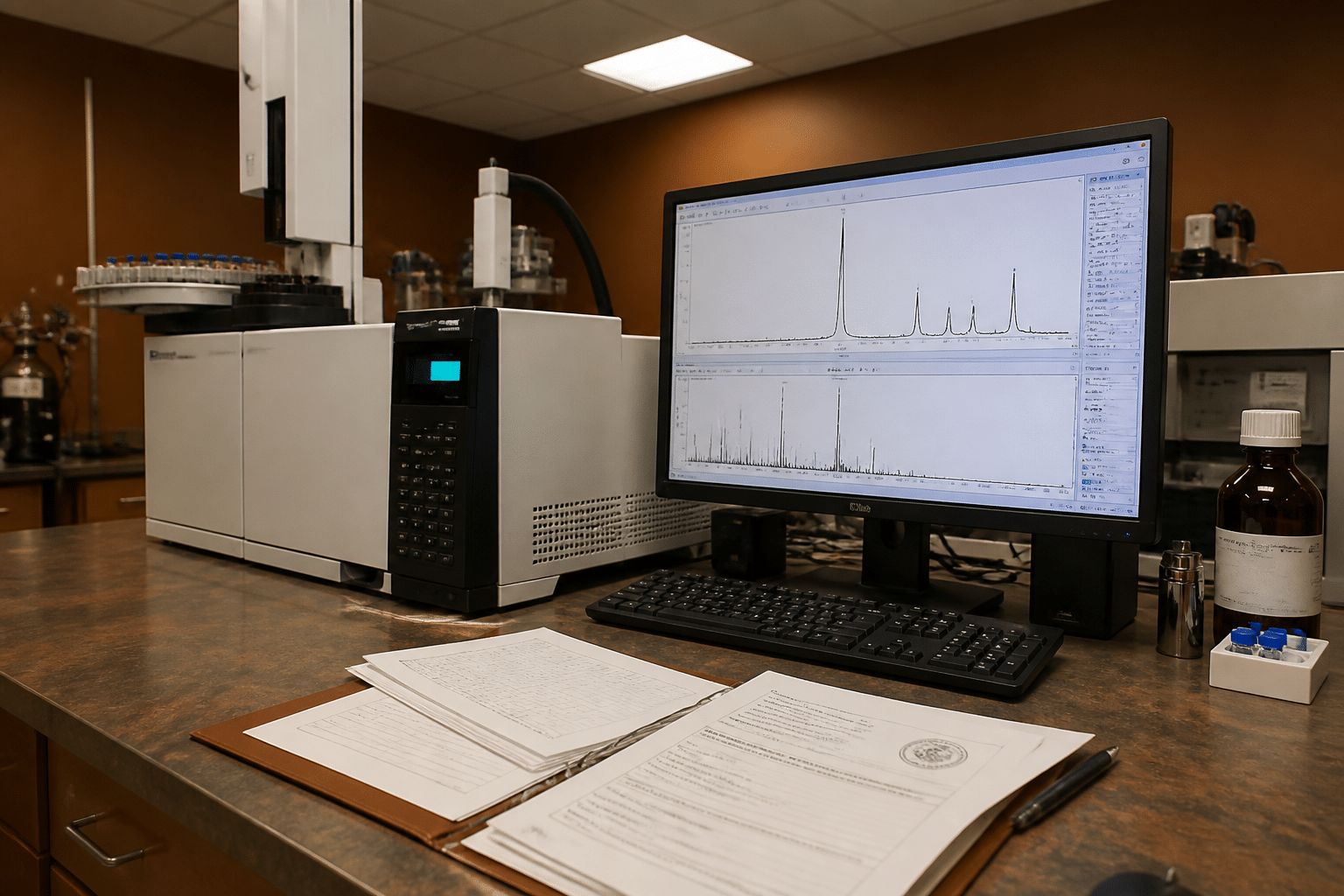
If you only do one thing, do this. Ask for a batch-specific GC/MS report, not a generic spec sheet. It’s the closest thing you have to a lie detector.
For German chamomile, you’d want to see markers like alpha-bisabolol, bisabolol oxides, chamazulene and beta-farnesene. Researchers have used GC/MS markers to authenticate chamomile samples, and some substituted samples showed none of the expected compounds at all. Look at the whole pattern, not one lonely peak. And no detectable volatiles in something sold as fragrant chamomile water? Big red flag.
Also ask for micro results. GC/MS says nothing about safety, and a typical certificate of analysis lists total aerobic count, yeast and mold, and pH too.
Spot a True Hydrosol
A real hydrosol is the water left after steam distillation. That’s it. A supplier like Fresure describes it as the aqueous co-product of distilling the flowers, backed by batch chemical profiles. Compare that to “floral water” made by mixing oil into water.
Ask these questions in writing:
- Which species is it (Matricaria chamomilla or Chamaemelum nobile)?
- Is it steam distilled, and from which plant part?
- Are there any preservatives, and which ones?
- Is the farm, region and harvest year named?
- Is there organic certification, and can I see it?
Origin matters more than people think, since growing location can shift the oil composition. Vague answers like “100% natural” don’t count.
Why a Direct Manufacturer Beats a Middleman
Brokers can be handy. But every extra hand means one more place for dilution, old stock or fuzzy paperwork. A manufacturer who controls harvest, distillation, testing and shipping can trace any lot back to a field. That’s what keeps batch five smelling like batch one.
Aroma Monk works this way, handling the supply chain from raw material sourcing to final delivery, with lab testing and traceability built in.
| Vetting Your Bulk Hydrosol Supplier | What to look for |
|---|---|
| GC/MS report | Batch specific, with chromatogram and markers |
| True distillation | Steam distilled, not oil mixed into water |
| Micro and pH data | Aerobic count, yeast, mold, pH |
| Botanical identity | Latin name and plant part |
| Certification | Organic papers that match the lot |
| Traceability | Farm, harvest year and batch number |
Field to formulation, in one line:
- Harvest at the right flowering stage
- Distill soon after
- Filter and fill in clean conditions
- Test every batch
- Ship in bulk, with papers attached
Once your supply is solid, the last piece is how to bring it all together.
Elevate Your Hair Care Line with the Timeless Appeal of Chamomile
So, back to that shopper squinting at the box dye. What would make her pick up your bottle instead?
Probably a plant she already knows, a promise that feels honest, and a label that doesn’t hide anything. Chamomile water for hair can be that. It adds a soft, golden warmth to light hair. It gives a calming touch for the scalp. And it brings a fresh, light finish that fits sprays, rinses, shampoos and conditioners.
It’s also easy to be upfront about. Chamomile isn’t bleach, and that’s a plus. You can talk about gradual brightness, a comfortable scalp and a botanical story without stretching the truth. Plus, the proof of demand is out there. 65% of consumers always or usually read beauty ingredient labels, so a clear, honest chamomile story gives them something real to read.
Here’s the short version of what to take away:
- Use hydrosol for the water phase and feel, and a standardized extract for the color work.
- Preserve it properly and test the finished formula.
- Keep claims about how hair looks, not what happens to melanin.
- Buy from a supplier who hands over batch-specific GC/MS and micro reports.
That last point is where a lot of projects win or lose. If you’re a procurement or product development manager, now’s a good time to ask for paperwork before you ask for a price. Aroma Monk is a direct manufacturer with lab testing and traceability built in, so you can see where each lot came from.
Ready to formulate with certified-pure chamomile water? Request a sample and technical data sheet from our experts to see the quality for yourself. Contact Aroma Monk and start your next golden-glow idea on solid ground.
Good ingredients, honest words, and a supplier you can trust. That’s the whole recipe.
Get a quote from Aroma Monk.
Essential Oil Supplier – Bulk pricing • Samples • Fast response