
Bhringraj Oil: From Ayurvedic Tradition to Scientific Scrutiny
Ever heard someone call bhringraj the “King of Hair”? That title has been around for a long time in Ayurveda, and honestly, I get why people keep coming back to it. If your hair feels thin, dry, or just plain tired, a traditional Ayurvedic hair oil like bhringraj oil sounds pretty tempting.
But here’s the part that matters. A good story is not the same as proof. And hair care is full of loud claims, old family tips, and a whole lot of hope in a bottle.
So, does bhringraj oil work? That’s the real question.
In this article, we’re taking a calm, close look at the science behind bhringraj for hair growth, scalp health, and even gray hair claims. We’ll look at what Eclipta alba for hair really means, what bhringraj active compounds may be doing, and where the research still feels thin. You’ll also see how it stacks up against minoxidil, at least in the studies we do have.
And yes, we’ll keep it honest. No magic talk. No fake hype. Just the facts, in plain words.
Bhringraj oil has a loyal fan base for a reason. The plant is used in traditional remedies, and recent reviews keep listing Eclipta alba among promising botanicals for hair loss. Plus, the hair care market keeps growing fast, which tells you people are still looking for options that feel natural and familiar. But popularity alone doesn’t tell us if the oil truly helps hair grow better.

That’s where this deep dive comes in. We’ll sort out what’s tradition, what’s lab data, and what’s still guesswork.
If you’re a reader trying to decide whether bhringraj oil belongs in your routine, or a brand looking at natural hair care ingredients, you’re in the right spot. And if you’re sourcing pure plant-based oils for product work, Aroma Monk’s lab-tested essential oils, carrier oils, and natural fragrance ingredients can fit into that kind of clean, quality-first formula work too.
1. What is Bhringraj? The Plant Behind the ‘King of Hair’
You know that one plant people swear by for hair, then casually use for a bunch of other things too? Bhringraj is like that. It’s a small herb with a big reputation.
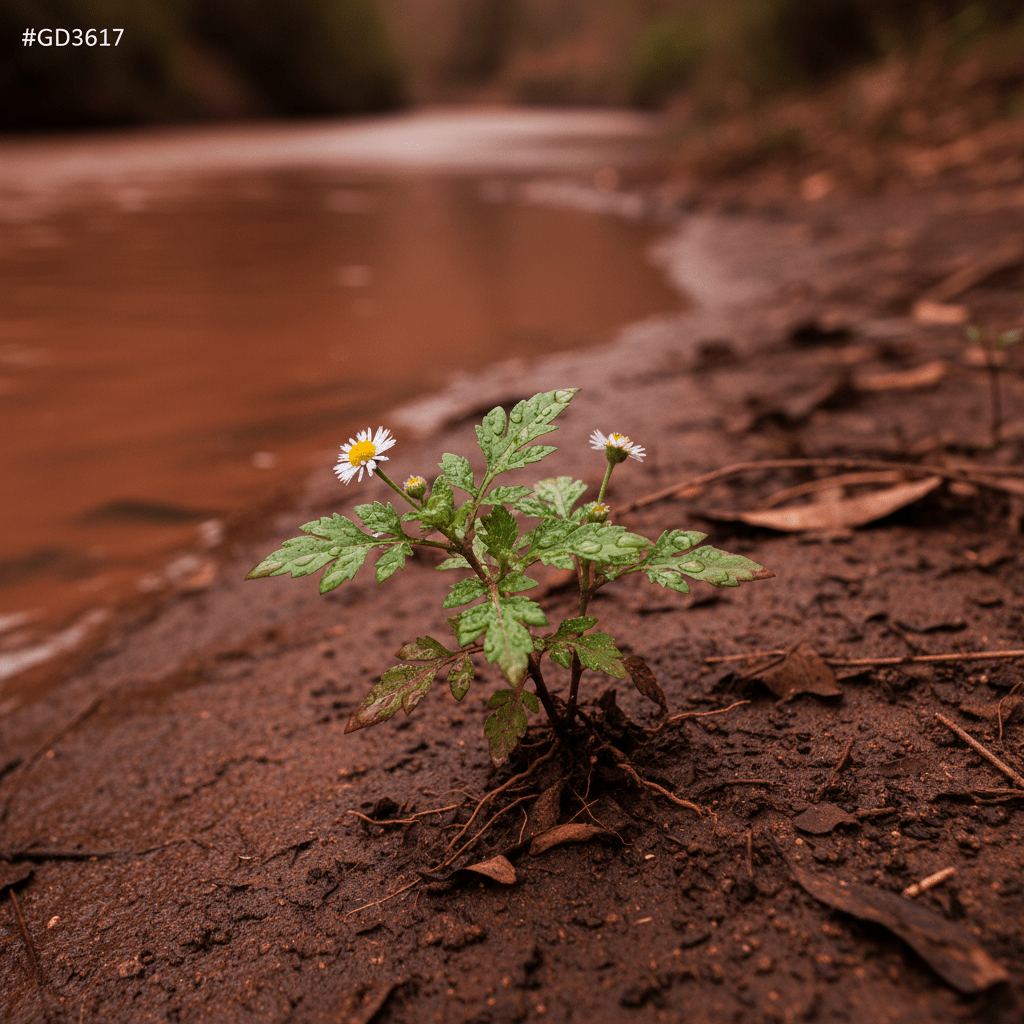
Its botanical name is Eclipta alba, and you may also see Eclipta prostrata. Some folks call it False Daisy. Not a fancy name, but pretty fitting for a little wild plant that grows in wet, muddy places and still gets all this attention. It likes riverbanks, marshy patches, ditches, and low ground in warm regions across Asia and the Americas.
In Ayurveda, bhringraj oil has been used for more than hair. People have also used the herb in remedies for liver trouble, jaundice, and scalp care. So the hair story is only part of it. A pretty big part, sure. But not the whole thing.
Here’s the basic idea: bhringraj oil is usually made by soaking or heating dried bhringraj leaves, or leaf powder, in a carrier oil like coconut oil or sesame oil. This old Ayurvedic taila paka method helps draw out the plant’s compounds into the oil. That’s why you’ll often see bhringraj sold as an Ayurvedic hair oil instead of a plain herb.
And if you’re wondering why it keeps showing up in hair care talks, it’s not just folklore. Modern reviews of phytochemicals for hair loss still list Eclipta alba for hair as a plant worth watching, especially because of compounds like wedelolactone and plant sterols. But that part gets a lot more interesting in the next section.
For now, just remember this: bhringraj isn’t a mystery herb from nowhere. It’s a real plant, with a long history, a messy-looking habitat, and a formula that’s usually built around oil infusion. Simple enough. But the claims? Those are where the real questions start.
If you’re comparing plant oils for product work or personal care blends, Aroma Monk’s lab-tested carrier oils and natural ingredients can fit nicely into that kind of clean, quality-first routine.
2. The Phytochemical Profile: Unpacking the Active Compounds in Bhringraj
So what’s actually inside bhringraj oil? That’s the fun part. And also the tricky part. Because the plant isn’t doing just one thing. It’s more like a small team of plant compounds working together.
The main star people talk about is wedelolactone. It shows up a lot in research on Eclipta alba for hair, mostly because it may help with 5α-reductase activity. In plain words, that means it may help slow the change of testosterone into DHT, the hormone linked with pattern hair loss. Not magic. Just one possible way the plant could help.
But wedelolactone is not alone. Bhringraj also has eclalbasaponins, which are plant saponins, plus flavonoids like luteolin, apigenin, and luteolin-7-O-glucoside. It also carries alkaloids such as ecliptalbine and ecliptine, plus triterpenoids and sterols like ursolic acid, oleanolic acid, β-amyrin, β-sitosterol, and stigmasterol. That’s a mouthful, I know. But each one adds a piece to the puzzle.
Here’s the simple version:
| Compound Group | What It May Do | Why Hair Folks Care |
|---|---|---|
| Wedelolactone | Anti-inflammatory and possible 5α-reductase support | May help with hair loss linked to DHT |
| Flavonoids | Antioxidant support | May help calm scalp stress |
| β-sitosterol | 5α-reductase inhibition | Often studied in hair-loss blends |
| Saponins and triterpenoids | Skin and scalp support | May help the whole formula work better |
A 2023 review on phytochemicals and hair health lists Eclipta alba among plants worth watching for hair loss support PMC review on phytochemicals and hair growth. That does not prove bhringraj oil works for everyone. But it does show the plant has enough bioactive compounds to keep scientists interested.
And that’s the key point. Bhringraj benefits probably don’t come from one superstar ingredient. They seem to come from the mix. Antioxidant compounds may help protect the scalp from stress. Anti-inflammatory ones may calm irritation. Sterols may play a role in hormone-related hair loss. Put together, that blend gives bhringraj oil its reputation as an Ayurvedic hair oil with real chemical activity behind it.
Actually, wait, there’s a better way to say it. Bhringraj is not one-note. It’s a layered plant. And that layering may be why people keep asking, does bhringraj oil work?
For brands and makers, that matters too. If you’re building a hair oil or scalp blend, purity and traceability matter a lot. Aroma Monk’s lab-tested carrier oils, essential oils, and natural ingredients are the kind of raw materials product teams often look for when they want a clean, steady formula base. And if you’re comparing plant ingredients for a new hair care line, that kind of sourcing can save a ton of guesswork.
One more thing. In nature, compounds rarely work solo. They usually act like a group. That’s probably the best way to think about bhringraj active compounds. One helps here, another helps there, and the whole plant may do more than any single extract on its own. Pretty neat, right?

3. The Core Claim: Analyzing Scientific Evidence for Hair Growth Promotion
You know that moment when a folk remedy sounds almost too good to ignore? That’s where bhringraj oil sits for a lot of people. And honestly, I get it. Hair loss can make you try just about anything that seems gentle, old, and plant-based.
So what does the science say?
The strongest early clues come from animal studies. In one well-known study on albino rats, topically applied Eclipta alba extract cut the time it took hair to start growing back. The treated rats also reached full hair cover faster, and skin checks showed more hair follicles in the growth stage. Another mouse study found the petroleum ether extract did better than 2% minoxidil on hair growth scores and hair density in the early days of testing. That’s a pretty loud signal, even if it’s not the same as a human trial.
Here’s the simple hair cycle piece. Hair usually moves through three main phases:
| Phase | What it Means | Why It Matters |
|---|---|---|
| Anagen | Growth phase | Hair is actively growing |
| Catagen | Short transition phase | Growth slows and the follicle shrinks |
| Telogen | Resting phase | Hair is not growing and may shed |
The main idea with bhringraj for hair growth is that it may help push follicles into anagen sooner and keep them there longer. Shorter telogen time, more active follicles, better-looking coverage. That’s the hope, at least.
Actually, wait, there’s a catch. These results mostly come from rats and mice, not large human trials. So while the scientific proof bhringraj oil has is promising, it’s still early. A 2023 review on phytochemicals and hair health lists Eclipta alba among botanicals worth watching for hair loss support, but that’s not the same as saying it works for everyone review of phytochemicals in hair growth.
What about people? There’s a gap here. I couldn’t find strong, large-scale human clinical studies for bhringraj oil and hair regrowth in the sources we have. That matters. A lot. Small pilot work and traditional use can point us in the right direction, but they can’t close the case.
So if you’re asking, does bhringraj oil work, the honest answer is: it may help, especially based on lab and animal data, but we still need better human research before making big claims. That’s why many brands treat it as a supportive Ayurvedic hair oil rather than a proven replacement for medical hair-loss care.
And if you’re comparing bhringraj vs minoxidil, here’s the fair take. Minoxidil has stronger human evidence. Bhringraj has a more natural story, plus some interesting early data, but not enough proof to call it a direct match. Different tools. Different levels of backup.
If you’re building a hair-care formula, that’s where ingredient quality gets real. Aroma Monk’s lab-tested essential oils, carrier oils, and natural fragrance ingredients are a solid fit for brands that want clean raw materials for scalp oils, herbal blends, and cosmetic products.
One last thing. These studies don’t mean bhringraj oil is a miracle. But they do mean the plant deserves attention, not shrugging. And that’s a decent place to be for an old remedy with a modern following.
Get a quote from Aroma Monk.
Essential Oil Supplier – Bulk pricing • Samples • Fast response
4. Beyond Growth: Research on Bhringraj’s Other Scalp & Hair Benefits
You know that annoying white flake moment? The one where you brush your shoulder and hope nobody notices. Bhringraj gets talked about for that kind of thing too, not just hair growth.
And honestly, this is where the plant gets a little more interesting. The evidence is still not huge, but bhringraj oil may do more than just sit pretty in an oil bottle.
One angle is microbes. In lab tests, Eclipta alba leaf extracts showed antifungal activity against Malassezia furfur, the yeast often tied to dandruff. Some herbal hair serum work even found it could create a zone of inhibition that looked close to ketoconazole in a petri dish. That does not mean it replaces an antifungal shampoo. But it does give a real clue about why people with flaky scalps keep reaching for it.
Then there’s the anti-inflammatory side. Wedelolactone and other bhringraj active compounds may help calm irritation by lowering inflammatory signals in the body. That could matter for a scalp that feels itchy, red, or just plain irritated. If you’ve ever scratched your head so much you made it worse… yep, this part makes sense.
Here’s the simple version:
| Possible Benefit | What It May Help With | Why People Care |
|---|---|---|
| Antifungal action | Dandruff linked to Malassezia | May help the scalp feel cleaner |
| Anti-inflammatory action | Itching, redness, dermatitis | May soothe a cranky scalp |
| Antioxidant action | Oxidative stress | May help with early graying theories |
The antioxidant angle is the one people bring up for gray hair. Hair can turn gray faster when oxidative stress builds up around pigment cells. Bhringraj has antioxidant compounds, so the idea is that it may help fight some of that stress. But let’s be fair here. That’s still a theory, not a proven gray-hair fix.
So where does that leave us? Pretty much here: bhringraj oil may have more than one job. It may support a calmer scalp, may help with dandruff-related issues, and may offer antioxidant support. But the proof is stronger in the lab than in people.
If you’re using it, a few habits matter. Massage it in for a few minutes. Use it on a clean scalp. And don’t drench your hair like you’re prepping a salad. A little goes a long way.
For brands building scalp oils or herbal blends, that’s also why ingredient quality matters so much. Aroma Monk’s lab-tested carrier oils and natural ingredients can be a practical fit for clean personal care formulas, especially if you want steady supply and traceable raw materials.
So, does bhringraj oil work for more than growth? Maybe. For scalp comfort, dandruff support, and antioxidant care, the early signs are interesting. Not final. But interesting enough to keep watching.

5. Bhringraj Oil vs. Minoxidil: A Scientific Perspective
This is the big question a lot of people ask. Bhringraj oil or minoxidil? Natural herb or pharmacy staple? And yeah, I get why people compare them. Both show up in hair-loss talks, both get used for thinning hair, and both promise help for the scalp.
But they work in different ways.
Bhringraj oil, or more exactly Eclipta alba for hair, is thought to help through a mix of bhringraj active compounds. Some studies point to possible 5α-reductase blocking, which may lower DHT, the hormone tied to pattern hair loss. It may also help calm inflammation and give follicles a nudge toward the growth phase. That’s the theory, at least. Not a magic trick. Just plant chemistry doing its thing.
Minoxidil is different. It’s a drug that works as a vasodilator and a potassium channel opener. In plain words, it may help increase blood flow around the follicle and keep hair in the growth phase longer. That’s why it has stronger human backing than most herbal oils.
Here’s a quick side-by-side look:
| Feature | Bhringraj Oil | Minoxidil |
|---|---|---|
| Main action | May block 5α-reductase and calm scalp stress | Opens potassium channels and boosts blood flow |
| Evidence type | Mostly animal, lab, and traditional use | Stronger human study support |
| Feel | Natural, oil-based, gentle for many users | Medicated, usually leave-on treatment |
| Side effects | Few reported in the available studies | Itching, dryness, shedding, unwanted facial hair |
A few animal studies are pretty interesting here. In one study, Eclipta alba extract started hair growth faster than controls, and in another nude mouse study, the petroleum ether extract actually outperformed 2% minoxidil on hair growth scores and hair density in early testing. That’s a real eyebrow-raiser. But wait, there’s a catch. These were not big human trials, so we can’t treat them like a final verdict.
So what’s the fair take?
If you want a natural option with a long Ayurvedic history, bhringraj oil may be worth trying. If you want the option with more human data, minoxidil is still the stronger pick. Different lanes. Different backup.
For some people, bhringraj feels like a softer first step. For others, minoxidil is the more direct route. And if you’re building a product line, that split matters a lot. A clean Ayurvedic hair oil blend can fit one audience, while a pharmacy-style treatment fits another.
If you’re sourcing pure oils for scalp blends or cosmetic work, Aroma Monk’s lab-tested carrier oils, essential oils, and natural ingredients can help you build formulas with traceable raw materials and steady quality.
So, does bhringraj oil work as a minoxidil replacement? Not enough proof yet. But as a natural support option, especially for people who want a plant-based routine, it has enough science behind it to stay in the conversation.
6. An Evidence-Based Guide to Choosing and Using Bhringraj Oil
Ever bought a hair oil and then stared at the label like, “OK… but what am I even looking at?” Same here. The bottle can say bhringraj oil, but the real story is in the details.
First, check the base oil. Good bhringraj oil is often made with coconut oil or sesame oil, since those are the classic carriers in an Ayurvedic hair oil. If the label says cold-pressed or herb-infused, that’s usually a nice sign. I’d also skip products with mineral oil if you want a cleaner plant-based blend.
Here’s a quick label cheat sheet:
| What to Look For | Why It Matters |
|---|---|
| Coconut or sesame oil base | Matches traditional bhringraj preparation |
| Cold-pressed or herb-infused | Often points to gentler processing |
| No mineral oil | Keeps the formula more plant-based |
| Clear ingredient list | Makes it easier to spot fillers |
Now for the part people rush through. Application. Don’t just pour it on and hope for the best. Warm a small amount in your hands, part your hair, and massage it into the scalp with your fingertips for about 4 minutes. That scalp massage part matters. Research has linked daily massage with thicker hair strands over time, and it may help the oil reach the scalp better too study on scalp massage and hair thickness.
Then leave it on. Usually 30 minutes to 2 hours is a good starting point. Some people leave it overnight, but if your scalp gets greasy or itchy, shorter is better. Wash it out well after.
And be patient. Really. Bhringraj for hair growth is not a one-week fix. Results tend to depend on the reason for thinning, your overall health, and how often you use it. If hair loss is tied to hormones, stress, nutrition, or illness, oil alone may only help a little.
So, does bhringraj oil work? It can be a smart support step, but consistency matters more than hype. Use it regularly for a few weeks, then judge it with clear eyes. If you want a pure starting point for your own blend or product line, Aroma Monk’s lab-tested carrier oils and natural ingredients can help you build from a cleaner base.

The Verdict: Is Bhringraj Oil a Scientifically-Backed Hair Solution?
So, here’s the short answer: yes, bhringraj oil has real science behind it, but it’s not a magic fix. Not even close.
The strongest support comes from preclinical research. In animal studies, Eclipta alba for hair helped speed up hair regrowth, increased hair density, and pushed follicles into the growth phase faster. That’s a pretty solid start. Plus, lab work suggests bhringraj active compounds may also help with scalp trouble like dandruff and irritation because of their antifungal, antioxidant, and anti-inflammatory effects. Nice bonus, right?
But here’s the catch. We still need larger, placebo-controlled human trials before we can put bhringraj oil on the same level as pharmaceutical treatments like minoxidil. Right now, the scientific proof bhringraj oil has is promising, but still early.
If you want a natural, evidence-informed step for hair care, bhringraj oil is one of the better-known botanicals to try. It may be a smart fit for people who want an Ayurvedic hair oil with tradition and research behind it. And for brands, the growing interest in herbal personal care makes it worth watching too.
Honestly, that’s the best way to see it. Not a miracle. Not hype. Just a plant with good early data and a lot of potential.
If you’re exploring plant-based oils for hair blends, Aroma Monk’s lab-tested carrier oils, essential oils, and natural ingredients can help you build from a cleaner starting point.
Get a quote from Aroma Monk.
Essential Oil Supplier – Bulk pricing • Samples • Fast response