
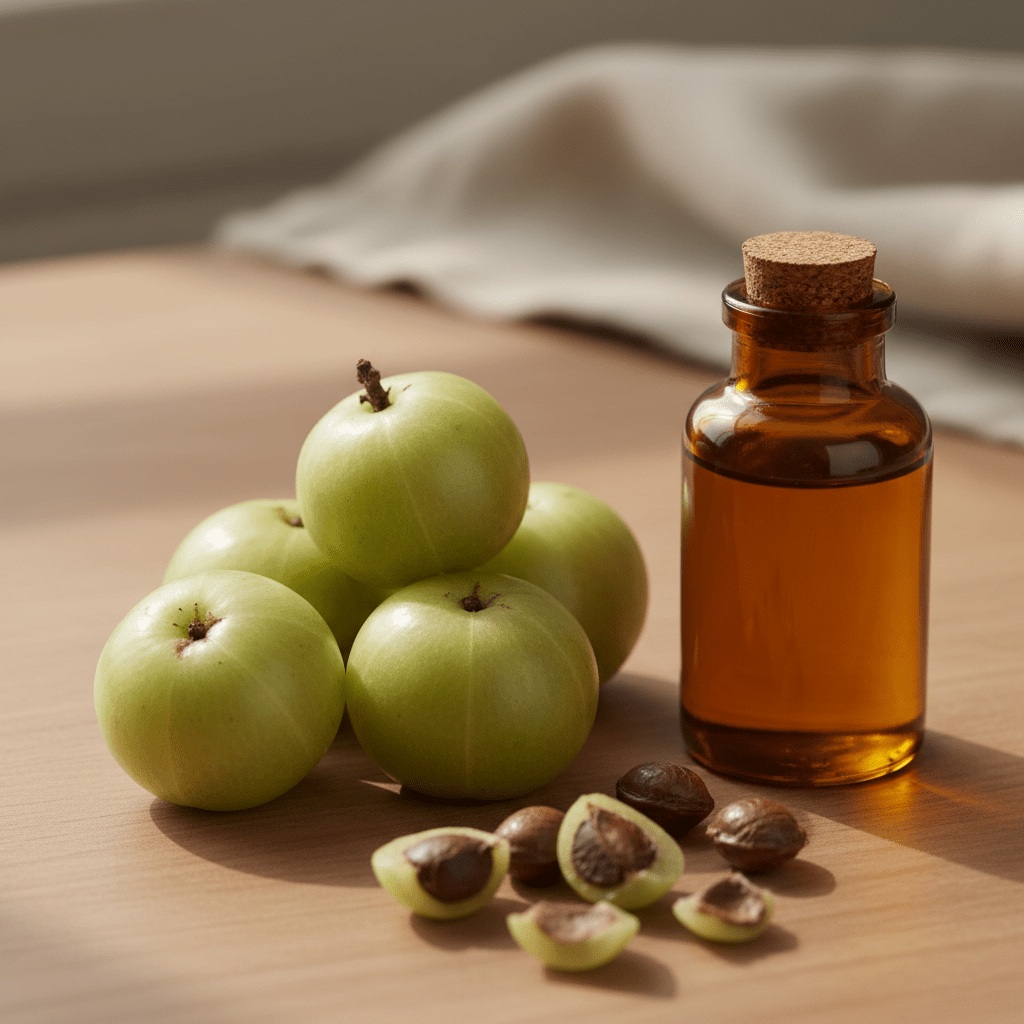
Introduction: The Hidden Power Within the Amla Seed
Ever notice how your skin and joints seem to complain at the same time? One day it’s a red, itchy patch. The next, it’s a stiff knee. That’s inflammation doing its thing, and a lot of people are now looking for calmer, plant-based answers.
And that search is getting bigger. Eczema affects about 9.6% of adults worldwide, rosacea hits around 5% of the global population, and arthritis is still one of the top causes of disability. At the same time, natural and organic personal care keeps growing because people want ingredients they can actually recognize. A recent market report shows that consumers keep pulling toward natural and organic products in their daily routines.
That’s where Amla, or Indian Gooseberry, comes in. In Ayurveda, it’s known as a cooling, Pitta-friendly fruit that people have leaned on for ages. But the seed? That part gets less attention, even though it holds a very concentrated oil called Phyllanthus emblica seed oil.
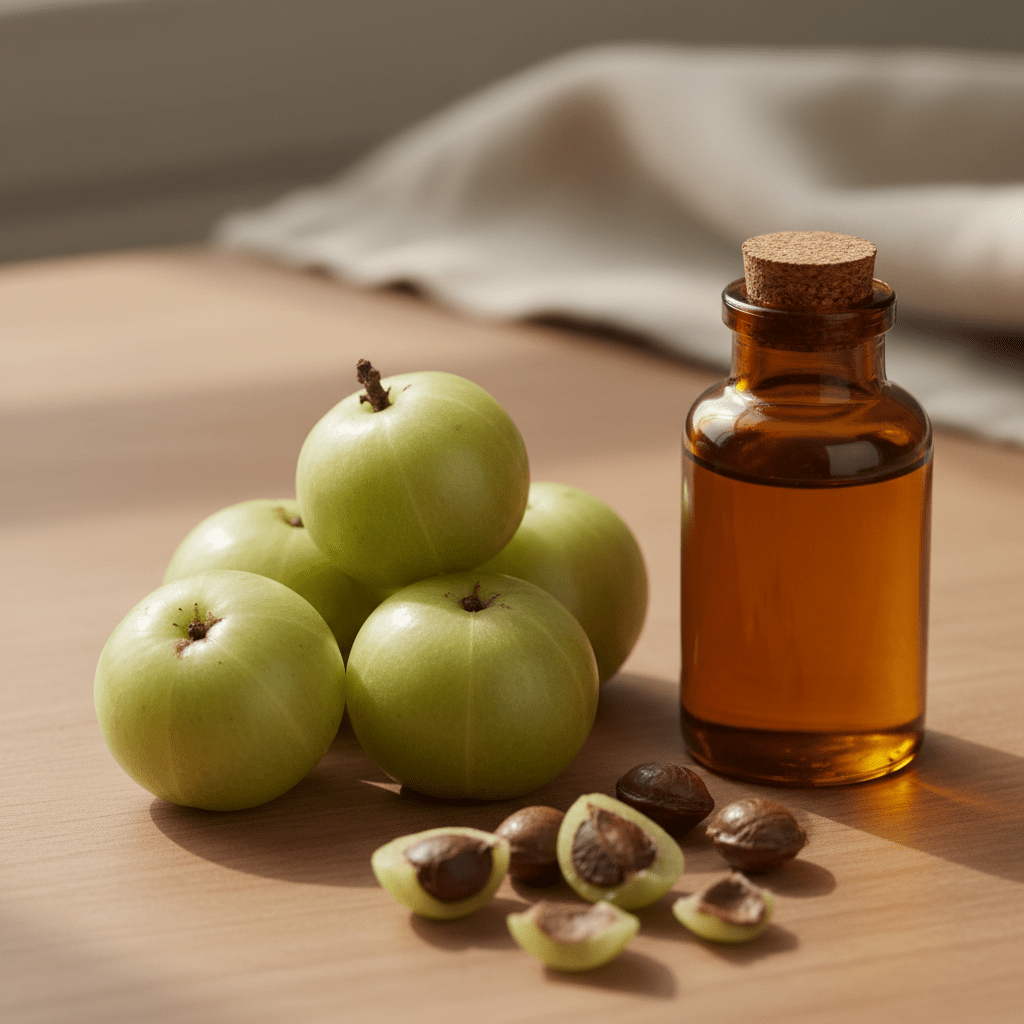
In this article, we’ll look at the real amla seed oil benefits, from amla oil for inflammation and amla seed oil for skin to its place in ayurvedic anti-inflammatory care. Plus, we’ll compare what the science says about gooseberry oil benefits, linolenic acid benefits, and ellagic acid for inflammation. Simple. Clear. No hype.
Section 1: What is Amla Seed Oil? (And Why It’s Not the Same as Amla Oil)
You know what trips people up? The label. It says amla oil, and you think, “Cool, that must be the oil from the amla fruit.” But that’s not always true. Not even close.
Amla seed oil is made in a much more direct way. It’s usually cold-pressed from the seeds of the Phyllanthus emblica fruit, also called Indian gooseberry. Cold-pressing matters because it helps keep the oil in its natural form, without heavy heat or harsh solvent steps. That’s a big deal if you care about the real plant profile.
Now here’s the twist. A lot of products sold as amla oil are not seed oil at all. They’re often base oils like coconut oil or sesame oil with dried amla fruit soaked inside. So the bottle may say amla, but the oil itself is mostly the carrier oil, with fruit bits adding some plant compounds. Different product. Different makeup. Different feel on skin.
And that difference shows up fast in the ingredients list. Pure amla seed oil has its own fatty acid mix. Studies on Phyllanthus emblica seed oil show it’s rich in linoleic acid, oleic acid, and alpha-linolenic acid. Those are the kinds of fats people look at for amla oil for inflammation and amla seed oil for skin, since they help support the skin barrier and calm dry, cranky patches. Plus, amla fruit brings its own polyphenols, like ellagic acid, which is why you’ll also hear about ellagic acid for inflammation in ayurvedic anti-inflammatory care.
Here’s a simple way to think about it:
| Product | Main base | What it really contains |
|---|---|---|
| Amla seed oil | Seed oil | Fatty acids like linoleic acid and ALA |
| Amla fruit-infused oil | Coconut, sesame, or another carrier oil | Carrier oil plus fruit compounds |
So if you’re shopping for gooseberry oil benefits, look closely. Pure seed oil gives you a cleaner fatty acid profile. Infused oil gives you the fruit story in a base oil. Both can have a place, but they’re not the same thing.
That’s why some people use seed oil as a natural treatment for skin inflammation, while others want the softer, more familiar feel of an infused blend. And for brands, this is where sourcing matters too. If you need lab-tested, pure carrier oils or botanical blends for skincare or wellness products, a supplier like Aroma Monk can help with bulk, quality-checked oil sourcing that fits real product development needs. Simple stuff. But it matters.
Section 2: The Science of Amla Seed Oil’s Anti-Inflammatory Action
You know that weird moment when one tiny ingredient starts looking way bigger than it should? That’s amla seed oil for me. At first glance, it looks simple. But under the hood, it has a pretty interesting mix of fats and plant compounds that can matter for calm, unhappy skin.
The biggest player is its fatty acid profile. Cold-pressed Phyllanthus emblica seed oil is known for a strong amount of linoleic acid, plus oleic acid and alpha-linolenic acid, or ALA. One chromatography study found roughly 52.4% linoleic acid, 15.5% oleic acid, and 6.8% alpha-linolenic acid in amla seed oil source. That matters because fatty acids help support the skin barrier. And when the barrier is happier, skin often feels less dry, less tight, and less reactive. That’s one reason people talk about amla seed oil for skin and amla oil for inflammation in the same breath.
Here’s the simple version:
| Main compound | Why people care |
|---|---|
| Linoleic acid | Helps support the skin barrier and lipid balance |
| Alpha-linolenic acid | A plant omega-3 linked to calming inflammatory signals |
| Oleic acid | Adds softness and helps with spreadability |
But the fat profile is only part of the story.
Amla also brings polyphenols like ellagic acid, gallic acid, and tannins. These plant compounds are studied for their role in calming inflammation signals. In plain words, they can help slow down pathways that turn on pro-inflammatory enzymes and cytokines, including COX-2 and TNF-alpha. That’s a big reason amla keeps showing up in ayurvedic anti-inflammatory conversations. It’s not magic. It’s chemistry doing its thing.
Ellagic acid gets a lot of attention for a reason. Research shows it can interfere with NF-kB activation, which is one of the body’s main “start the fire” switches for inflammation. It may also support the Nrf2 antioxidant pathway, which helps the body deal with stress from free radicals source. Gallic acid and other amla tannins seem to work in a similar lane. They don’t erase inflammation like flipping a light switch, but they may help dial it down. That’s why you’ll see people mention ellagic acid for inflammation in both skin care and wellness talks.
Also, amla seed oil brings antioxidant support. Vitamin E, flavonoids, and other antioxidants can help neutralize free radicals before they spark more irritation. Think of free radicals like tiny sparks. Too many sparks, and the whole thing gets cranky. Antioxidants help catch some of those sparks early.
This is where amla oil for joints enters the chat too. Plant omega-3s like ALA are studied for general inflammation support, while omega-3 fats in larger arthritis research have been linked to symptom relief in rheumatoid arthritis. ALA from amla seed oil isn’t the same as fish oil EPA and DHA, so I wouldn’t oversell it for joint care. But it still fits the bigger picture of a plant-rich, anti-inflammatory routine.
So if you’re looking at gooseberry oil benefits, the science points to a combo effect: fatty acids for barrier support, polyphenols for inflammation pathways, and antioxidants for oxidative stress. That combo is why amla seed oil keeps getting attention as a natural treatment for skin inflammation, especially in formulas aimed at dry, irritated, or sensitive skin.
And if you’re a brand or product maker, this is where clean sourcing matters. Aroma Monk can help with bulk, lab-tested botanical oils and other natural ingredients for skincare and wellness products, so you can build formulas with real traceability instead of guesswork. That part? Not flashy. Just smart.

Get a quote from Aroma Monk.
Essential Oil Supplier – Bulk pricing • Samples • Fast response
Section 3: Topical Amla Seed Oil Benefits for Inflammatory Skin Conditions
You know that moment when your skin gets mad at everything? One new product, a little heat, maybe a rough towel… and boom, redness. Or flakes. Or those tiny bumps that seem to show up at the worst time.
That’s where amla seed oil starts looking pretty interesting. It isn’t a magic fix, but it does bring a few things skin often likes: fatty acids, plant antioxidants, and a soft, non-heavy feel. For people searching for amla seed oil benefits, that mix makes it a useful natural treatment for skin inflammation in everyday routines.
Acne-prone skin
Amla seed oil is not a harsh acne zapper. Good. That’s actually the point.
It may help calm the look of redness around pustules because of its anti-inflammatory plant compounds. And since it contains linoleic acid, it may also support a skin barrier that’s been stripped by strong cleansers or too many drying spot treatments. That matters because acne-prone skin usually does better when the barrier stays steady.
Here’s the simple version:
| Skin concern | How amla seed oil may help |
|---|---|
| Red, swollen bumps | May calm visible irritation |
| Dryness from acne products | May help the barrier feel less stripped |
| Oily-but-sensitive skin | Light oils can add comfort without a greasy feel |
And yes, people also talk about its mild antimicrobial support. That can matter for skin that’s dealing with P. acnes bacteria, though I wouldn’t call it a stand-alone acne cure. More like a helpful sidekick. The kind that shows up, does the job, and doesn’t make a scene.
Eczema and psoriasis
This is where amla oil for inflammation gets a lot of attention.
Eczema and psoriasis often come with a damaged skin barrier, itching, tightness, and that annoying flaky look that never seems to leave. The essential fatty acids in Phyllanthus emblica seed oil may help support barrier repair and reduce transepidermal water loss, or TEWL. In plain words, skin may hold onto moisture better.
That’s a big deal for dry, reactive skin. Really.
When skin loses too much water, it can feel raw and start that itch-scratch cycle. Oils rich in linoleic acid and alpha-linolenic acid, two of the key fats in amla seed oil, are often studied in that context. They don’t replace medicine for eczema or psoriasis, but they can fit into a calmer skin-care routine.
Rosacea and general sensitivity
Rosacea skin is fussy. Heat, stress, spicy food, wind, sun, new products… it reacts fast.
Amla seed oil may help here by calming visible redness and supporting the skin’s response to outside triggers. Some people also look at it for capillary support, since very reactive skin often seems to flush easily. Plus, the antioxidant side of the oil may help lower the stress that keeps skin on edge.
That’s one reason amla seed oil gets grouped with ayurvedic anti-inflammatory care. In Ayurveda, amla is seen as cooling and Pitta-balancing, which lines up nicely with skin that feels hot, inflamed, or irritated.
And here’s a small but real point: a lot of people want gooseberry oil benefits without a heavy oil feel. A pure seed oil can be easier to work with than a fruit-infused oil, since the seed version gives you a more defined fatty acid profile and a lighter, more focused formula.
For brands making skincare, that difference matters too. If you’re building serums, facial oils, or barrier creams, a clean bulk supplier like Aroma Monk can help you source lab-tested carrier oils and botanical ingredients with traceability built in. That makes product work a whole lot easier.
Section 4: Systemic Anti-Inflammatory Effects and Traditional Uses
You know how some ingredients start as a skin thing, then somehow end up in the “huh, this might help more than I thought” bucket? Amla does that a lot.
What about joints?
Amla seed oil has a decent amount of alpha-linolenic acid, or ALA, which is a plant omega-3. That’s why people often bring up amla oil for joints and linolenic acid benefits in the same chat. Now, I’m not going to oversell it. Plant ALA isn’t the same as fish oil EPA and DHA, and the joint research is much stronger for those marine omega-3s. But ALA still fits into a broader anti-inflammatory routine, especially for people who want more plant-based support.
That matters for arthritis and stiffness. Omega-3s are often studied as helpers for joint comfort, and recent reviews keep pointing to less pain and calmer inflammation in rheumatoid arthritis. Amla seed oil won’t replace treatment, but it may play a small support role in a plant-forward routine.
A quick look at heart health
Inflammation doesn’t just show up in skin and joints. It can also affect blood vessels.
That’s where the antioxidant side of amla gets interesting. Polyphenols like ellagic acid for inflammation may help protect cells from oxidative stress, which is one of the things tied to low-grade inflammation in arteries. Less stress on the vessel wall is a good thing. Simple as that.
And because amla seed oil contains natural fats plus plant compounds, it may fit into a heart-friendly wellness routine that also includes better food choices, movement, and sleep. Not a cure. Just part of the picture.
The Ayurvedic view
In Ayurveda, amla is known as cooling and Pitta-pacifying. Pitta is linked with heat, irritation, and fiery inflammation in the body. So when people talk about ayurvedic anti-inflammatory care, amla shows up a lot. It’s used to help calm excess heat, whether that shows up as skin flare-ups, acid discomfort, or that “my body feels hot and irritated” feeling people struggle to name.
Seed oil is a more modern wellness use, but it still fits that same cooling idea. Topically, it can feel gentle and nourishing, which is why some brands use it in skin and scalp products aimed at dry, reactive users.
Here’s the simple takeaway:
| Area | Why amla seed oil gets attention |
|---|---|
| Joints | Plant omega-3s may support a calmer inflammatory response |
| Heart and vessels | Antioxidants may help with oxidative stress |
| Ayurveda | Seen as cooling and Pitta-friendly |
So, if you’re looking at amla seed oil benefits beyond the face, this is where it starts to widen out. It may not be the loudest ingredient in the jar, but it’s one of those quiet ones people keep coming back to.
And if you’re a brand building products around gooseberry oil benefits, you’ll want a supplier that knows the difference between a pretty label and a real raw material. That’s where Aroma Monk fits in. They offer bulk essential oils, natural attars, rose water, and other lab-tested ingredients for cosmetics, wellness, and personal care. Handy if you’re sourcing for a new formula and don’t want any guesswork.
Next up, we’ll get into how to use amla seed oil the smart way, plus what to look for on a label so you don’t end up with a bottle of something that’s only pretending to be amla.
Section 5: How to Choose and Use Amla Seed Oil for Maximum Benefits
You know that shelf-full-of-bottles moment? Yeah, we’ve all been there. One says pure, one says organic, one has a leaf on the label, and somehow they all look the same. But with amla seed oil benefits, the bottle details really do matter.
How to pick a good bottle
Start with the label. Look for:
- Cold-pressed
- Unrefined
- Organic if you can get it
- Dark glass bottle
- A clear ingredient list that says Phyllanthus emblica seed oil
Why dark glass? Light can make oils go bad faster. And honestly, nobody wants a bottle that smells weird after a few weeks. Pure seed oil should smell light, nutty, or earthy. If it smells sour, paint-like, or musty, skip it.
Here’s a quick cheat sheet:
| What to look for | Why it matters |
|---|---|
| Cold-pressed | Keeps the oil closer to its natural state |
| Unrefined | Less processing, more of the plant profile stays intact |
| Organic | Helps cut down on unwanted chemical residue |
| Dark glass | Protects the oil from light damage |
How to use it on skin
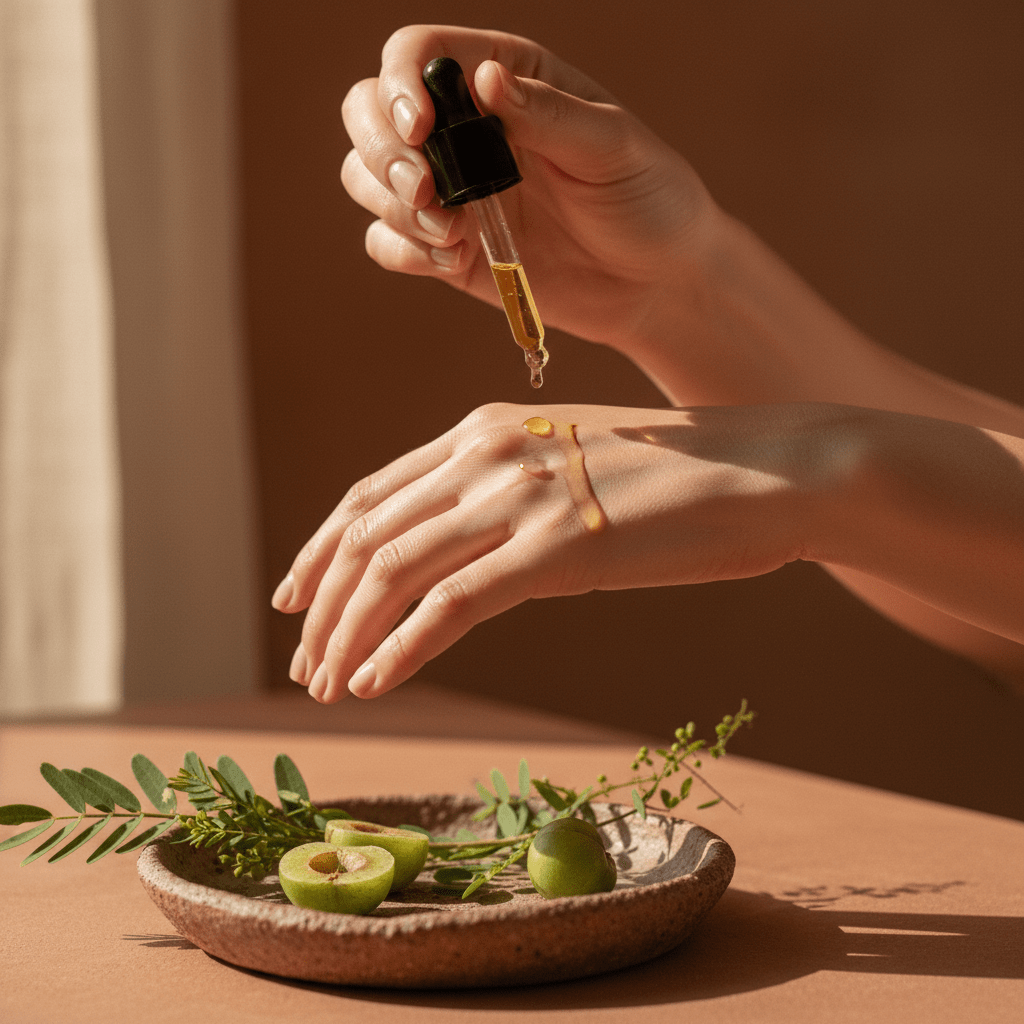
For amla seed oil for skin, less is more.
As a facial serum:
- Clean your face.
- Leave skin a little damp.
- Apply 3 to 4 drops of oil.
- Press it in gently.
- Use it at night, or under moisturizer if your skin is very dry.
For extra dryness: mix 1 to 2 drops into your moisturizer. That’s a nice way to get the feel of a facial oil without using too much.
For spot care: dab a tiny bit on red or inflamed areas. Don’t rub hard. Just pat it in and let it sit.
That simple routine is why people call it a natural treatment for skin inflammation. It’s not loud. It’s not flashy. It just fits into a calm skin routine pretty well.
Patch test first, always
This part sounds boring. But it saves headaches.
Put a small amount on the inside of your arm or behind your ear. Wait 24 hours. If you get redness, itching, or stinging, don’t use it on your face.
That matters even more if you have sensitive skin, eczema, or rosacea. Skin can be picky. Sometimes wildly picky.
How to store it
Keep the bottle:
- In a cool, dark spot
- Tightly closed
- Away from heat and sunlight
Once opened, use it within 6 to 12 months. If the color changes a lot or the smell turns sharp, it’s probably gone off.
So, if you’re looking at gooseberry oil benefits, choose carefully, start small, and give your skin time to respond. And if you’re a brand or buyer looking for clean, lab-tested oils in bulk, a supplier like Aroma Monk can help with sourcing that’s a lot less guessy. That’s a nice relief, honestly.
Conclusion: Integrating Amla Seed Oil into Your Anti-Inflammatory Lifestyle
Some ingredients are all talk. This one isn’t.
Amla seed oil stands out because it’s more than a pretty label. Pure Phyllanthus emblica seed oil brings a real mix of linoleic acid, alpha-linolenic acid, and plant polyphenols like ellagic acid. That’s why people keep using it for amla oil for inflammation, amla seed oil for skin, and even gentle support in ayurvedic anti-inflammatory routines.
It may help calm red, dry, and reactive skin. It may also fit into a bigger wellness plan for joints and everyday inflammation. But here’s the thing. It works best as part of a whole routine, not as a solo act. Good food. Sleep. Less stress. Maybe a better moisturizer too.
So if you’re looking for gooseberry oil benefits with a real plant profile, start with a high-quality, cold-pressed bottle and use it with care. Small steps. Smart choices. That’s usually how the good stuff adds up.
And if you’re a brand or buyer sourcing natural oils in bulk, a trusted supplier like Aroma Monk can help you get lab-tested ingredients with traceability built in. Handy, right?
Get a quote from Aroma Monk.
Essential Oil Supplier – Bulk pricing • Samples • Fast response