
Beyond the Hype: Is Tea Tree Water the Ultimate Ingredient for Your Acne Product Line?
Here’s a number that should get your attention. The global natural and organic cosmetics market was valued at about $40.79 billion in 2024, and one market forecast expects it to hit $72.04 billion by 2030. That’s a growth rate of nearly 10% a year. Forecasts differ depending on how each firm draws the line, but the direction is clear.
So demand is there. The hard part? Standing out.
The Problem Every Acne Brand Faces
Walk into any pharmacy and you’ll see shelves packed with acne products. Most lean on benzoyl peroxide or strong salicylic acid. They can work, sure. But a Cochrane review found the most common side effects of benzoyl peroxide were dryness, irritation, redness, itching and burning. Some long-term users simply quit because of the discomfort.
Meanwhile, shoppers are reading labels like never before. One industry roundup found that 54% of consumers actively look for clean, transparent ingredient lists. Another source says 74% of Americans say natural ingredients matter in personal care.
So you need something gentle. And something that still feels like it does its job.
Where Tea Tree Water Fits In
This is where tea tree water comes in. It’s also called tea tree hydrosol, made by steam distilling Melaleuca alternifolia leaves. The result is a light, water-based liquid with a mild, fresh scent. Think of it as the gentler cousin of tea tree oil.
I’ll be upfront, though (I don’t want to oversell this). Most of the clinical research so far is on tea tree oil, not hydrosol. Hydrosols carry far lower levels of active compounds. So tea tree water is a promising, gentle ingredient with a sensible rationale, not a magic bullet.
What You’ll Get From This Guide
This guide is built for procurement managers and product formulators. We’ll cover how the ingredient works, what the science really says, how to formulate with it, and what to check before you buy in bulk. Let’s start with the basics.
Understanding Tea Tree Water: A Technical Guide to Melaleuca Alternifolia Hydrosol
Let’s get the basics straight. If you’re sourcing for an acne line, you need to know exactly what’s in the drum.
How Tea Tree Water Is Made
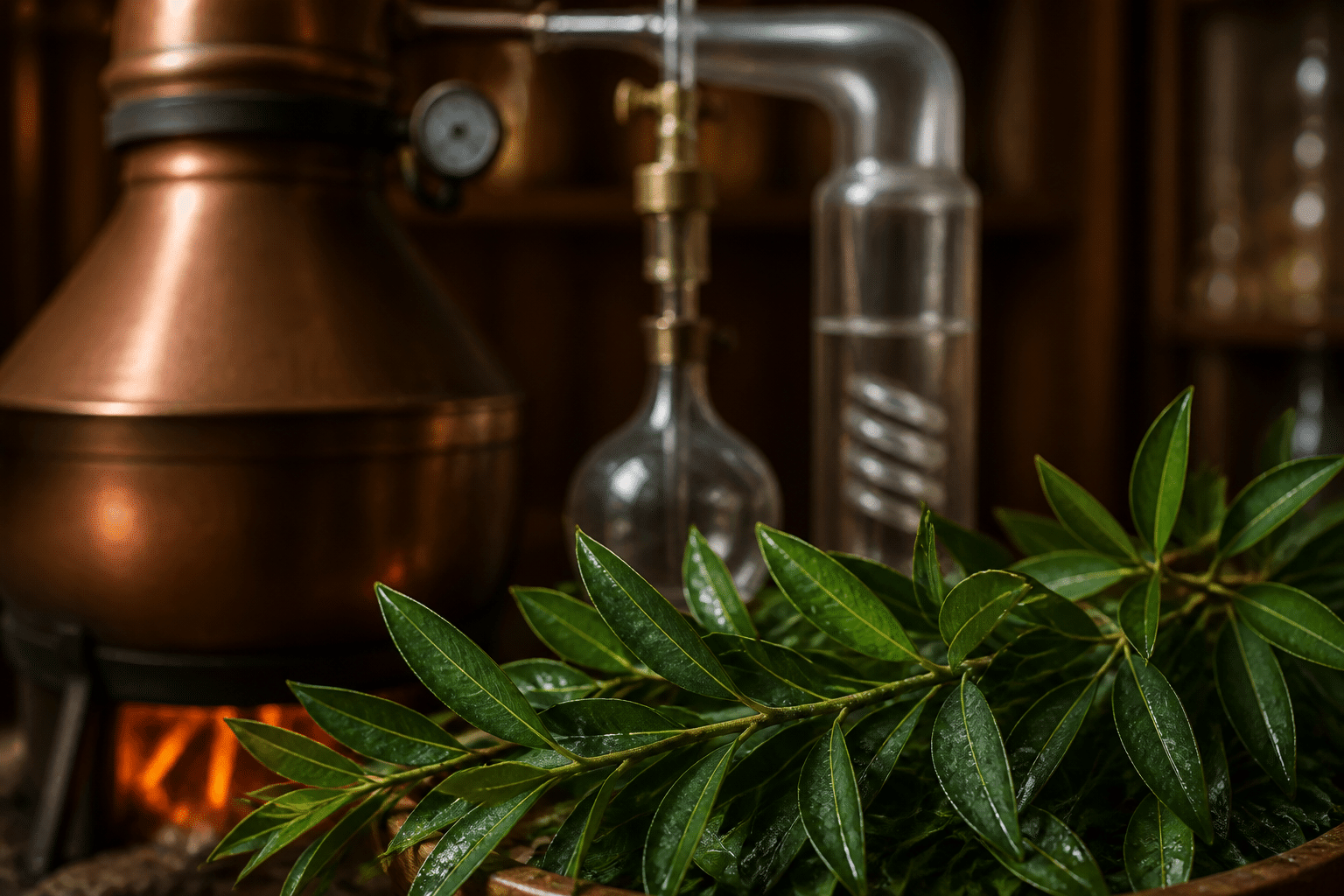
Tea tree water (also called tea tree hydrosol or melaleuca alternifolia water) is a byproduct of steam distillation. Steam passes through the leaves. It carries the plant’s volatile compounds along with it. Then the vapor cools in a condenser and turns back into liquid.
Here’s where it gets interesting. That liquid separates into two layers. The oil floats on top, and the aromatic water stays below. According to this 3D distillation animation from Copper-Alembic, the oil gets collected apart from the hydrosol. What’s left is the water-soluble part of the distillate, with a light, fresh, slightly medicinal scent.
So it’s not just watered-down oil. It’s a different fraction altogether.
Tea Tree Water vs. Tea Tree Essential Oil
This is the part buyers mix up most. Both come from the same plant, but they behave very differently in a formula. Here’s a quick side-by-side.
| Feature | Tea Tree Essential Oil | Tea Tree Water (Hydrosol) |
|---|---|---|
| Terpinen-4-ol level | Roughly 35 to 48% | Roughly 0.01 to 0.1% (varies a lot by batch) |
| Texture | Oily, concentrated | Light, watery |
| Skin safety | Needs careful dilution | Gentler, lower irritation expected |
| Mixes with water? | Not on its own | Yes, it’s the water phase |
| Best uses | Spot treatments, rinse-off products at low levels | Toners, facial mists, cleansers, gels |
| Preservation | Not a water-rich system | Needs a proper preservative system |
The concentration gap is huge, about hundreds of times. A 2021 chemical analysis measured terpinen-4-ol in one tea tree hydrosol at about 0.062%. Oil sits far higher.
Now, about safety. I’d love to say hydrosol is proven to be less irritating, but nobody has run a head-to-head patch test that I could find. That conclusion comes from the lower concentration, so it’s a reasonable inference, not a proven result. For context, Germany’s BfR recommends no more than 1% tea tree oil in cosmetics. Hydrosol sits well below that.
The Key Compound: Terpinen-4-ol
Terpinen-4-ol is the main active marker in tea tree. It’s the compound people point to for antimicrobial and soothing potential. In the oil, it makes up the largest share of the profile. In the hydrosol, it’s also the most abundant component the researchers found, just at much smaller levels.
Why does that matter for acne? Because it travels in water. A water-soluble form drops easily into toners, mists, cleansers and light gels without needing solubilizers or heavy emulsifiers. That makes formulating simpler. It also suits shoppers whose skin is already dry or irritated from stronger actives.
One catch. Levels change from batch to batch, and there’s no universal spec for hydrosol. So ask suppliers for batch data, not just a promise. Next, we’ll look at what the clinical research actually says about all this.
Clinical Efficacy: The Science Behind Tea Tree Water’s Anti-Acne Properties
Here’s the honest starting point. The best human data on tea tree comes from tea tree oil, not tea tree water. I couldn’t find a single published trial that tests the hydrosol on acne. So what follows is the evidence for the plant, plus a fair look at what that might mean for your water-based ingredient.
Fighting the Bacteria Linked to Acne
Acne involves Cutibacterium acnes (the bacteria formerly called Propionibacterium acnes) living in clogged pores. Tea tree is best known for knocking back this kind of microbe. The hydrosol chemistry study we mentioned earlier also reported some antimicrobial activity, though it didn’t test acne bacteria on real skin.
The strongest recent proof is a 2026 meta-analysis of topical tea tree oil. It pooled seven clinical studies with 445 patients. Acne severity dropped more than with controls (odds ratio 0.74, confidence interval 0.63 to 0.88). Side effects were mostly mild and local. The authors still asked for bigger, better trials.
Modest? Yes. But real.
Here’s a quick look at the key studies.
| Study | Sample size | Method | Key finding |
|---|---|---|---|
| Dermatology review summary, randomized trial | 124 people | 5% tea tree oil gel vs. 5% benzoyl peroxide lotion, 3 months | Both cut inflamed and non-inflamed lesions. Tea tree worked slower but caused fewer side effects. No big gap at 3 months. |
| Small face wash and gel study | 18 people | Tea tree oil face wash plus gel, 12 weeks | Total lesions and severity ratings fell. Peeling, dryness and scaling cleared on their own. |
| 2026 meta-analysis | 445 patients across 7 studies | Pooled topical tea tree oil trials | Modest drop in acne severity (OR 0.74). Mild local reactions. |
Notice the pattern? Every row is oil, gel or wash. None is hydrosol.
Calming Redness and Swelling
Inflamed pimples are the ones that hurt and show. Tea tree has a reputation for soothing that, and the trials above counted inflamed lesions as well as clogged ones, so there’s decent support. A 2026 review of medicinal plants also describes tea tree oil as having anti-inflammatory potential, while stressing that the clinical evidence is still limited.
So for tea tree water, the anti-inflammatory story is a sensible rationale. It’s not a proven outcome. Any finished product would need its own testing, with lesion counts, irritation scores and skin-barrier checks.
Balancing Oil Without the Dry, Tight Feeling
This is where hydrosol earns its keep. I’ll be straight: I found no study measuring sebum output after using tea tree water. What we can say is about format. A light water-phase ingredient gives a mild, toner-style astringent feel without the heavy punch of stronger actives. That suits oily skin that’s also sensitive.
Gentleness matters more than people think. Dermatologist Dr. Brian Hibler says an acne routine should be “gentle, cost-effective, and not overwhelming”. Tea tree oil itself still caused dryness and peeling in some users, so don’t market a water-based formula as automatically non-irritating.
What This Means for Your Claims
Keep your wording honest. Say “formulated with tea tree water” and “gentle,” not “clinically proven to clear acne.” Next, let’s get into how to build a formula that gives this ingredient its best shot.
How to Formulate High-Performance Acne Products with Tea Tree Water
OK, you’ve got the science and the honest limits. Now comes the fun part: actually building something people will put on their faces.
Here’s the good news. Tea tree water is the water phase. You don’t need a solubilizer, and you don’t need to wrestle with oil. It just goes in where your water would go.
Usage Rates by Product Type
There’s no official rule for how much hydrosol to use. These ranges are starting points for development, not hard limits, and you’ll want to test your own formula.
One real-world benchmark helps. SKIN1004’s Tea-Trica Purifying Toner lists tea tree leaf water at 126,900 ppm, which is about 12.7% of the formula. Meanwhile, iUNIK’s Tea Tree Relief Toner is marketed with 67% tea tree leaf water. So the range out there is wide.
| Product type | Typical tea tree water use | Notes |
|---|---|---|
| Facial toner or mist | 10 to 70% | Often the main water phase. Easiest place to start. |
| Gel cleanser | 20 to 40% | Swap for part of the water. Keep surfactants mild. |
| Lightweight serum | 10 to 30% | Pairs well with humectants and gel-forming polymers. |
| Clay mask | 30 to 60% | Use it to hydrate the clay. Helps with a drying, tight feel. |
| Spot treatment gel | 10 to 25% | Add your active separately. Hydrosol alone is not a spot fighter. |
These are my practical suggestions, based on how the water phase works and on the commercial examples above. Adjust after stability and skin testing.
Ingredients That Pair Well
Tea tree water is gentle, so it plays nicely with other acne helpers. Think of it as the calm friend at the party.
| Ingredient | What it targets | How it works with tea tree water |
|---|---|---|
| Niacinamide | Barrier support, redness, oil look | Adds comfort. Both are water-friendly. |
| Salicylic acid | Exfoliation inside pores | Gives the acne-focused punch. Keep levels low to limit irritation. |
| Witch hazel | Toning, tightening feel | Boosts the astringent, toner-style feel. Watch for dryness if alcohol is present. |
| Centella asiatica | Soothing, calming | Common in toners that use tea tree leaf water. |
| Glycerin or hyaluronic acid | Hydration | Offsets any tight feeling from stronger actives. |
| Panthenol or allantoin | Skin comfort | Helps sensitive, acne-prone skin feel calmer. |
One tip. Don’t pile everything in. Longer botanical lists make preservation and stability harder, so each ingredient should earn its spot.
pH and Stability
For leave-on acne products, aim for a final pH of about 4.8 to 5.5, with 5.0 to 5.3 being a handy sweet spot. That matches the skin’s mildly acidic surface and works with most preservatives and niacinamide.
I should say that tea tree hydrosol doesn’t have its own magic pH. Your full formula decides it. Citric acid and sodium citrate are a common pair for fine-tuning, as seen in the SKIN1004 toner. Check pH again after 24 to 48 hours, since it can drift. And don’t assume lower is better. Too acidic can sting and upset your preservative.
Preservation Is Not Optional
Here’s where people slip up. Tea tree water is a water-based plant product. It is not self-preserving. Water plus plant material is a happy home for microbes.
So build in protection:
- Use a broad-spectrum preservative that fits your pH (phenoxyethanol with ethylhexylglycerin is one common pattern).
- Add a chelator like disodium EDTA if it suits your formula.
- Run preservative challenge testing, plus stability and freeze-thaw checks.
- Pick pumps or sprays over open jars.
- Keep equipment sanitized and use purified or deionized water.
Protecting the Ingredient in Production
Keep it simple and clean. Store the hydrosol cool and sealed. Add it during the cool-down phase when you can, since heat isn’t your friend with fragile aromatic compounds. Check each incoming batch for smell, color and pH before it goes in a tank.
And about those batch swings we talked about earlier? Ask your supplier for batch records, so what’s in the drum matches what you planned. Next, we’ll look at what to check before you place a bulk order.
Sourcing Excellence: A Procurement Manager’s Checklist for Certified, Pure Tea Tree Water
You’ve nailed the formula on paper. Now comes the part that can quietly wreck it: the drum that shows up at your dock.
Here’s the deal. Hydrosol is easy to fake and hard to spot by smell alone. So let’s build a checklist you can actually use.
Start With the GC/MS Report
Get a quote from Aroma Monk.
Essential Oil Supplier – Bulk pricing • Samples • Fast response
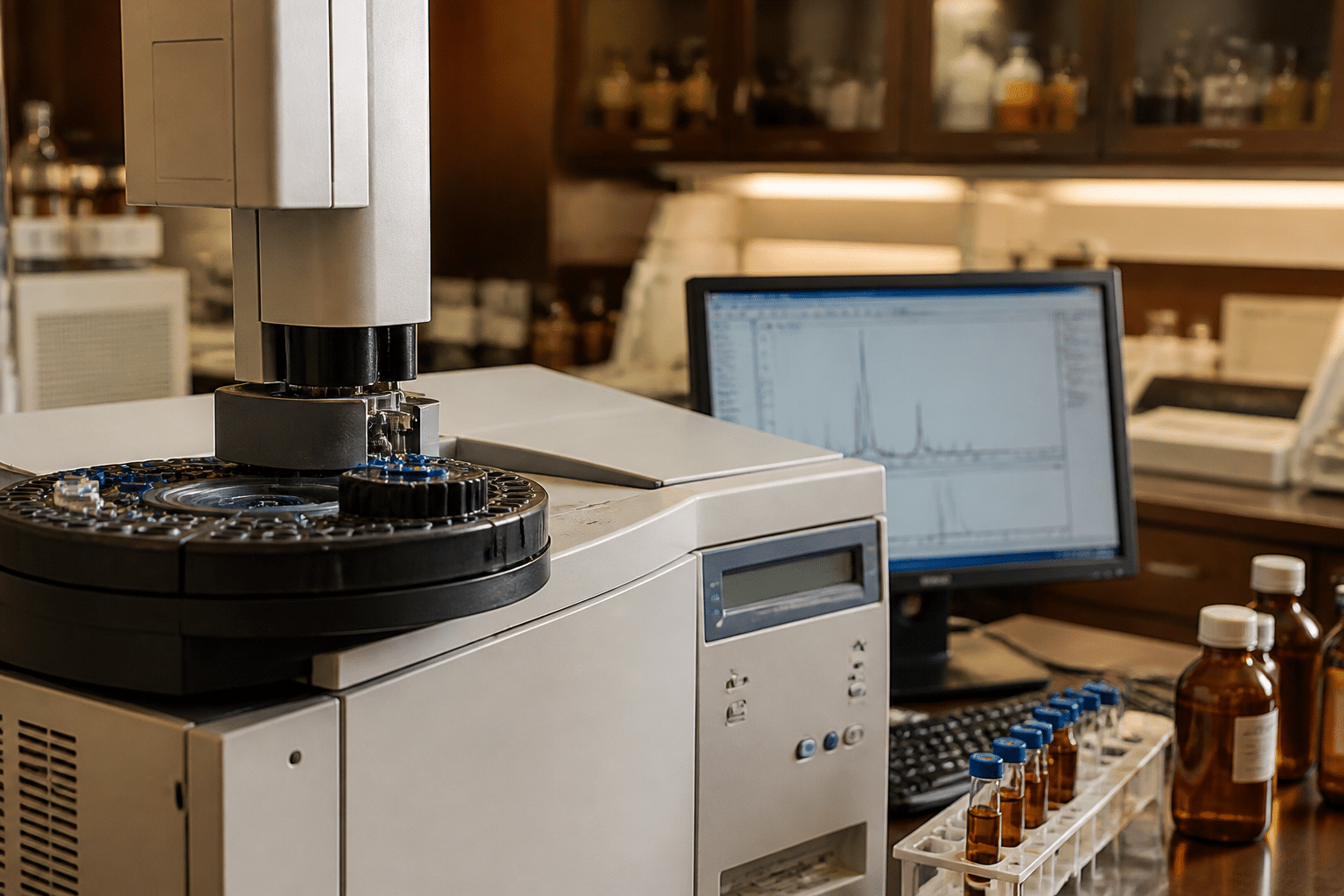
Gas chromatography-mass spectrometry (GC/MS) is the main way labs read the volatile compounds in a sample. Think of it as a fingerprint. But I’ll be honest, reading one takes practice, and a report only helps if you know what to look for.
One catch first. There’s no universal ISO spec for tea tree hydrosol itself. ISO 4730 covers tea tree essential oil, so use it as a rough plausibility guide, not a pass or fail test. A good hydrosol won’t copy the oil’s profile anyway, as we saw earlier.
Here’s what to check on every report:
| What to look for | Why it matters |
|---|---|
| Botanical name and plant part (Melaleuca alternifolia leaf), origin, batch number, distillation date | Ties the report to the exact drum you’re buying |
| Terpinen-4-ol as the main marker | The signature compound. Levels will be low, so ask for past batch ranges |
| A fingerprint of related terpenes (gamma-terpinene, alpha-terpinene, alpha-terpineol, terpinolene) | The pattern matters more than any one peak |
| 1,8-cineole level | In tea tree oil, ISO 4730 keeps it under 10%. A high number can hint at a substitute source |
| Unexplained or foreign peaks | Could point to added fragrance chemicals or solvents |
| Method details: retention indices, library matches, standards, lab accreditation | A report that only says “tea tree detected” isn’t enough |
Also, GC/MS can’t prove the water is clean. It won’t tell you about sterility or whether the preservative works. So ask for microbiology results and preservative challenge data too.
Certifications and Traceability
Certificates are useful, but only when they’re real. Look for ISO 22716 (the main cosmetic GMP standard), plus organic or COSMOS if you’re making those claims. And here’s the part people skip: confirm the certificate directly with the certifier. Check that it covers the specific facility and product, not just the supplier’s general business.
Then ask about the supply chain. Can they trace a batch from the farm, through the still, to the filling line? You want:
- A named origin and harvest or distillation date
- A written manufacturing description
- Batch-specific COA and safety data sheet
- A retained sample for every lot
- Written specs for pH, odor, microbial limits and water quality
If a supplier gets vague on any of these, treat that as your answer.
Warning Signs of a Fake or Weak Hydrosol
Adulteration happens more than most buyers think. Common tricks include:
- Diluted product. Real hydrosol stretched with plain or deionized water.
- Oil plus water. A little essential oil mixed into water with a solubilizer, then sold as distilled hydrosol.
- “Infused” floral water. Around 0.1% oil shaken into water. It’s a different product from a true distillate.
- Synthetic fragrance. Aroma chemicals standing in for real distillation.
- Fortification. Compounds like terpinen-4-ol added to make a weak batch look authentic.
- Undeclared preservatives or solubilizers. These change your labeling, irritation risk and preservative plan.
On top of that, watch for loose naming. “Tea tree water,” “floral water” and “aromatic water” get swapped around even when they’re made differently. Ask for a full INCI statement and a clear note on any solvents or solubilizers.
A strong supplier welcomes these questions. Next, we’ll look at why the market rewards brands that get this right.
Market Insights 2026: The Commercial Advantage of Hydrosol-Based Skincare
Here’s a funny shift. A few years ago, a 10-step routine was a flex. Now? Plenty of shoppers want three products and a clear conscience.
Why Less Is Winning
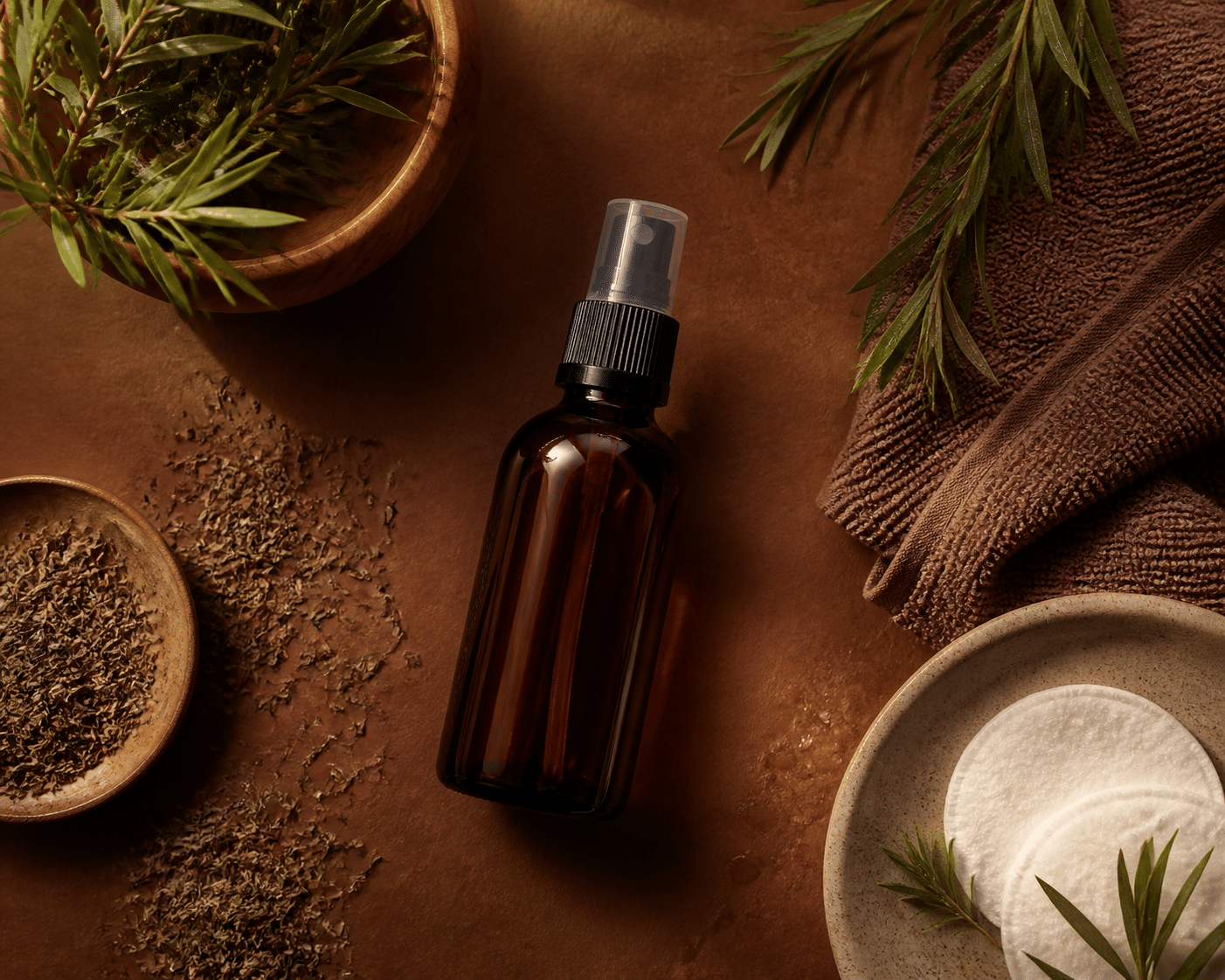
People call it “skinimalism.” Fewer steps, shorter ingredient lists, calmer skin. And honestly, it makes sense. Mintel’s UK research found that 72% of facial skincare users believe brands use ingredients to push products people don’t need. That’s a lot of doubt.
Tea tree water fits this mood well. It’s one recognizable plant, one simple water-based format, and a gentle feel. Think toner, mist or light gel. No giant science lecture needed.
But shoppers still want results. Euromonitor describes buyers who want brands to be both “clean” and “clinical.” So gentle alone won’t cut it. You need a clear job for the product, too.
What the Demand Numbers Say
I went looking for year-over-year search data on “tea tree water” and “natural acne products.” I couldn’t find reliable figures, so I won’t invent a trend line. Check Google Trends yourself with the same country and date range before you build any forecast around it.
What we do have are solid demand signals:
| Signal | What it shows | Source |
|---|---|---|
| 67% of global beauty shoppers check ingredient labels (up from 49% in 2021) | Label reading is growing fast | Dataintelo |
| 65% of UK adults use natural or organic personal care | Natural is mainstream | Mintel UK |
| Only 2% of new UK launches were all-natural | Plenty of room to stand out | Mintel UK |
| Tea tree oil ranks among the best-known natural ingredients in India | Strong name recognition | Mintel India |
See that gap? Shoppers want natural, yet almost no new products deliver it fully. That’s your opening.
Turning a Familiar Name Into Trust
Tea tree already has a reputation for acne. Most people have seen it on a label or heard about it from a friend. That’s free awareness you don’t have to pay for.
So use it wisely:
- Lead with the plain name. “Tea tree leaf water” is easy to read and easy to remember.
- Show your sourcing. Name the origin, the batch data and the certifications you’ve verified.
- Pitch gentleness. Toners and mists feel kind to dry or irritated skin.
- Skip the miracle talk. Remember, the strongest human data is on tea tree oil, not hydrosol. Honest wording builds more trust than big promises.
A brand that’s upfront stands out in an aisle full of bold claims. And that matters when Cochrane’s review already told us why so many people quit harsher acne treatments.
Next, let’s talk about who can actually supply this ingredient at the quality you need.
Why Aroma Monk is Your Ideal Partner for Bulk Tea Tree Water Supply
You’ve got the checklist now. So who actually passes it?
I’ll be straight with you. No supplier is perfect, and you should test every claim, mine included. But Aroma Monk lines up well with the pain points we’ve covered, especially for brands that want tea tree water as a clean, simple water phase.
Testing and Paperwork You Can Check
Purity worries are real, since fake hydrosol is everywhere. Aroma Monk makes its floral waters by traditional steam distillation. It also reports testing for pH, microbial limits and purity, and it offers batch-level COAs and safety data sheets.
One honest note. Batch documents aren’t the same as third-party certification. So ask for current copies of any certificates you care about (organic, GMP or others), and check them with the issuer. A good partner won’t mind.
A Direct Line From Maker to Buyer
Aroma Monk works as a manufacturer selling straight to businesses. That means fewer middlemen, fewer markups and a clearer trail from still to drum. For bulk buyers, that usually helps both cost and traceability.
It exports globally and offers packaging from small formats up to 200 kg drums and IBC totes. One gap: lead times for bulk tea tree water aren’t published. So ask for a written schedule covering production, testing, dispatch and customs before you commit. Sample packs usually go out within a few working days, which is a handy way to test the waters first.
Room to Make It Your Own
Generic suppliers often say no to custom requests. Aroma Monk offers private label support and flexibility in blends and packaging, so your toner or mist doesn’t look like everyone else’s.
Here’s how it maps to your worries:
| Your pain point | What to ask Aroma Monk for |
|---|---|
| Adulterated or weak batches | Batch COA, pH and microbial results, retained sample |
| Global compliance | Current certificates, SDS, full INCI statement |
| Supply gaps | Written lead time, stock status, packaging options |
| Sameness on shelf | Custom blends, private label, packaging choices |
Last, let’s pull it all together and talk next steps.
Elevate Your Acne Line in 2026 with High-Purity Tea Tree Water
So, where does that leave us? Let’s boil it down.
Tea tree water is a gentle, water-friendly ingredient that fits modern acne care well. Shoppers know the name. It drops into toners, mists, cleansers and light gels without fuss. But I’ll say it again: the strong human data is on tea tree oil, not hydrosol. So keep your claims honest, and test your own finished formula.
Here’s the part that matters most. Your product is only as good as the drum you open. A weak or watered-down batch can sink a perfect formula. That’s why the GC/MS report, the microbial results and the batch paperwork aren’t boring extras. They’re the whole game.
Ready to check a batch yourself? Aroma Monk can send a sample along with the paperwork you’d want to see, like the COA and safety data sheet. Ask about lead times in writing, and confirm any certificates you care about with the issuer.
Your Next Step
- Request a Sample & Spec Sheet to test tea tree water in your own toner, mist or gel.
- Speak with Our Ingredient Specialist Today about bulk sizes, private label and custom packaging.
Request a sample and spec sheet from Aroma Monk
Your acne line deserves an ingredient you can trust. Let’s get you one.
Get a quote from Aroma Monk.
Essential Oil Supplier – Bulk pricing • Samples • Fast response