

Why Natural Scalp Care Ingredients are Defining the Future of Hair Products

A few years ago, shampoo was just shampoo. Now? Shoppers read ingredient lists like they’re checking a menu for allergies.
That shift has a name: the skinification of hair. People want to treat their scalp like facial skin, with targeted care, gentle actives and clear labels. And the numbers back it up. Global hair and scalp care is projected to grow from $93.6 billion in 2026 to $150.5 billion by 2033, a 7.0% yearly growth rate. Specialized scalp care is growing a bit faster than that, at roughly 7.1%.
What Shoppers Want in 2026
Let’s be honest. “Natural” on a label isn’t enough anymore.
A 2025 U.S. survey found that 45% of women had dealt with an itchy scalp in the past six months. Another 41% reported dryness. And 66% said they were very likely to try a new scalp-health product. That’s a lot of people with a problem and an open wallet.
But they’re picky. They want ingredients they can recognize, a clear job for each one (calming, oil control, a fresh feel) and honest claims. Nobody wants a “natural” product that stings.
Where Tea Tree Water Fits
This is where tea tree water comes in. Also called tea tree hydrosol or Melaleuca alternifolia leaf water, it’s the water-based liquid collected during steam distillation. It’s lighter and much more dilute than tea tree oil. That makes it a nice fit for mists, toners, conditioners and other water-heavy scalp products.
I’ll be upfront about one thing. Strong clinical proof for the hydrosol itself is thin, and most research covers the oil. So we’ll stick to what can honestly be backed up.
What This Guide Covers
This guide is for product developers, formulators and procurement managers. We’ll cover the science, how to build tea tree water into real formulas, and how to source it in bulk without getting burned. Next, let’s look at what tea tree water actually is.
Understanding Tea Tree Water: The Science of Melaleuca Alternifolia Hydrosol
Picture a copper still on a farm in New South Wales, steam curling up through a pile of tea tree leaves. Most people only care about the oil that comes out. But the water that drips out alongside it? That’s the part we’re here for.
How Steam Distillation Makes Tea Tree Water
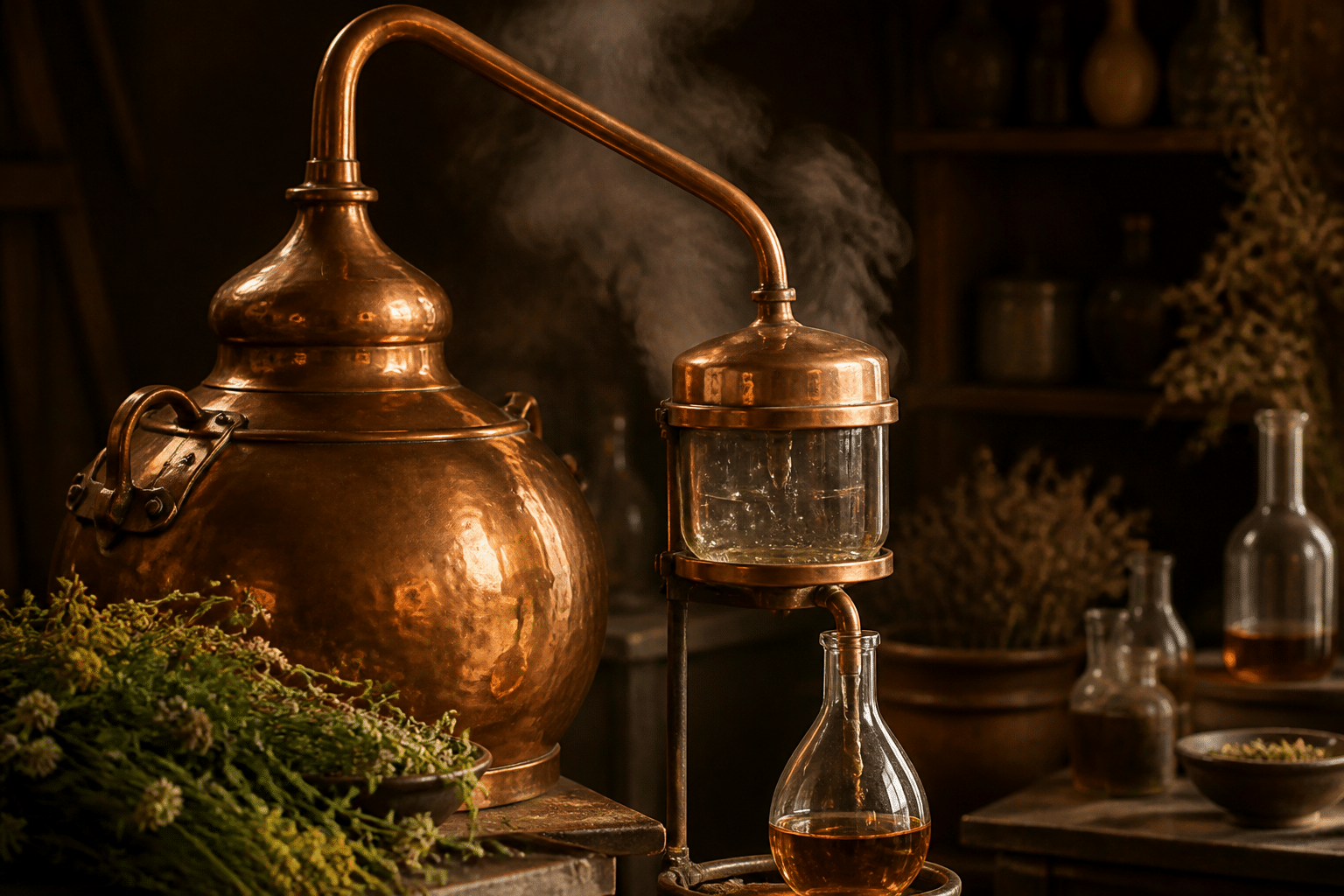
Tea tree water is a co-product. It shows up every time someone makes tea tree essential oil, so nothing special is grown or harvested for it. Hydrosols are the water collected during steam or hydro-distillation of plant material, and they carry a light share of the plant’s water-soluble compounds.
Here’s how it works, step by step:
- Fresh Melaleuca alternifolia leaves go into a still.
- Hot steam passes through the leaves and carries off the volatile compounds.
- The steam cools in a condenser and turns back into liquid.
- The oil floats on top and gets skimmed off. The water underneath is the hydrosol.
Simple. And that last step is why a true hydrosol isn’t just oil stirred into water. It’s what the plant gives up during distillation.
What’s Actually Inside
Tea tree oil is famous for terpinen-4-ol, which usually makes up about 30 to 48% of the oil. The hydrosol also contains terpinen-4-ol and alpha-terpineol, but in tiny amounts. The National Association for Holistic Aromatherapy puts the essential oil components in hydrosols at roughly 0.02 to 0.05%.
Now, a caution. I couldn’t find solid, recent studies that give exact compound levels for commercial tea tree water. It also varies by batch, harvest and still. So ask every supplier for a lot-specific GC-MS report, and don’t trust a promised terpinen-4-ol percentage without one.
Tea Tree Water vs. Tea Tree Essential Oil
| Factor | Tea tree water | Tea tree essential oil |
|---|---|---|
| Solubility | Water-based, mixes into aqueous phases | Oil-based, needs a solubilizer in water products |
| Active concentration | Trace levels, around 0.02 to 0.05% | Concentrated, terpinen-4-ol about 30 to 48% |
| Best uses | Scalp mists, toners, conditioners, light leave-ins | Targeted treatments, diluted blends |
| Safety | Lower exposure to sensitizing terpenes, but reactions still possible | Can irritate or cause allergy, especially when oxidized |
| Cost in water-heavy systems | Often simpler, no extra solubilizer needed | Needs extra ingredients to stay evenly mixed |
The safety row matters. The NCCIH notes that tea tree oil can cause redness or irritation, mostly when the oil is old or has been exposed to heat, light or air. Germany’s BfR suggests no more than 1% tea tree oil in cosmetics. Water is gentler by nature. But “gentler” isn’t “risk-free,” so patch testing still counts.
Why Water-Based Is Easier to Work With
For formulators, the perks are pretty practical:
- Easy to add. It goes straight into the water phase. No hunting for the right emulsifier.
- Lower irritation risk. Much less terpene than the oil, so it suits sensitive-scalp positioning better.
- Softer scent. The aroma is mild and fresh, not sharp and medicinal. That opens the door to mists, toners and daily conditioners where strong oil would overpower things.
One thing to keep in mind: hydrosols are mostly water, so they need real preservation. Don’t count on tea tree water to protect itself. Next, let’s look at what the evidence says it can actually do for the scalp.
Evidence-Based Benefits: The Efficacy of Tea Tree Water for Scalp Health
Here’s the awkward truth about this section. Almost every study on tea tree and scalp health used the oil, not the water.
That doesn’t make tea tree water useless. It just means we have to be careful about what we say it does. So let’s go through the three big benefit areas, what the research actually shows, and where the gaps are.
Antifungal Action and Malassezia
Dandruff and seborrheic dermatitis are linked to Malassezia yeast. It lives on most scalps. But when it overgrows, you get flakes and itch. Tea tree has a long reputation for fighting it.
The best-known proof is a randomized, investigator-blinded trial of 126 people. Folks who used a 5% tea tree oil shampoo daily for four weeks improved their dandruff scores by 41.2%. The placebo group improved by 11.2%. That’s a real gap.
But look closely. That was a 5% oil shampoo. Tea tree water holds only trace amounts of those same compounds (we covered the 0.02 to 0.05% range earlier). So you can’t borrow that result and pin it on a hydrosol. I wouldn’t, and I’d tell my customers not to either.
What about the hydrosol itself? A 2021 study looked at tea tree hydrosol’s chemistry and antimicrobial activity. It’s useful lab work. It’s also not a human scalp trial. Think of it as a reason to keep researching, not a green light for dandruff claims.
Soothing and Anti-Inflammatory Effects
Now the calming side. Lab work on water-soluble tea tree components found they lowered several inflammation markers in human blood cells. Some dropped by around 50%. Interesting, yes. But it was done in a dish, not on a scalp.
There’s also a small 2025 study where nine adults with sensitive scalps used a shampoo with tea tree essential oil for 28 days, and redness and inflammation reportedly improved. Nine people. Oil, not water. So I’d call it a hint, nothing more.
Still, the practical story is nice. A light, water-based mist can feel cooling on an itchy, tight scalp or one dealing with product buildup. Trichologist Sara Hallajian describes tea tree as antimicrobial and antifungal and says it may help clarify the scalp and reduce flakes. That’s an expert opinion about tea tree in general, not controlled proof for the water. Fair enough, though. It matches what many formulators see in sensory testing.
Gentle Clarifying and Oil Balance
This is where tea tree water probably shines most. A hydrosol is mild. It can give a fresh, clean feel to a scalp that gets greasy or coated with styling product, without the harsh stripping some clarifying agents cause.
A few things to keep in mind:
- A healthy scalp is slightly acidic, and the finished product’s pH matters more than the hydrosol alone. You’ll set that during formulation, which we’ll get to next.
- “Helps regulate sebum” has no strong clinical backing for tea tree water. “Leaves the scalp feeling fresh” is much easier to defend.
- Gentle isn’t the same as risk-free. Tea tree materials can still irritate some people.
What You Can Honestly Claim
To keep it simple, here’s how I’d sort the evidence for a label or a sales deck.
| Benefit area | What the research shows | Safer claim wording |
|---|---|---|
| Dandruff and Malassezia | Trial results cover 5% tea tree oil shampoo, not hydrosol | “Helps keep the scalp feeling fresh and clean” |
| Soothing | Lab and small oil-based studies only | “Calming sensory feel” |
| Oil and buildup | No strong hydrosol data | “Light, refreshing clarifying feel” |
| Hair growth | Nothing credible for tea tree water | Skip it |
Medical words like “treats dandruff” or “reduces inflammation” need data on your actual finished product. Without it, stick to sensory and cosmetic language.
So the honest pitch is this: tea tree water is a mild, refreshing, formulator-friendly ingredient with plausible scalp appeal. Not a proven treatment. Next, let’s get practical and look at how to build it into real formulas.
A Formulator’s Guide: Integrating Tea Tree Water into Hair Care Product Lines
OK, time to get hands-on. You know what tea tree water is and what it can honestly claim. Now, how do you actually put it in a bottle?
One quick warning first. I couldn’t find a published, universal use level for tea tree water. So the ranges below are common starting points for bench trials. They’re not rules. Test every one in your own base.
Starting Use Levels by Product Type
Here’s the matrix I’d hand a new formulator on day one.
| Product Type | Recommended Concentration | Key Benefit | Formulation Tip |
|---|---|---|---|
| Shampoo | 3 to 10% | Fresh, clean scalp feel | Replace part of the formula water. Check viscosity and the salt curve after adding it. |
| Scalp serum or tonic | 10 to 50% | Cooling, light, quick-absorbing feel | Pair with panthenol or niacinamide for a calmer story. Keep the pH mildly acidic. |
| Conditioner | 2 to 8% | Light botanical feel without heavy oil | Build the emulsion first. Add the hydrosol under controlled shear and temperature. |
| Hair or scalp mist | Up to 95% | Refreshing, no-weight spritz | Use a pump or fine-mist sprayer. Preserve it well, since it’s almost all water. |
| Pre-shampoo scalp treatment | 20 to 50% | Prep for buildup and flakes | Check local rules before adding salicylic acid. Some markets treat it as a drug ingredient. |
Why such a wide spread? Because the job changes. In a shampoo, tea tree water is a supporting player, so 3 to 10% is plenty. In a mist, it’s the star. In a serum, it sits in the middle and shares the stage with soothing actives.
Start low. Smell it, feel it, then go up.
pH, Stability and Compatibility
Tea tree water goes into the water phase. That’s the easy part. The trickier part is keeping the finished product stable and clean.
pH. Scalps are slightly acidic, so most finished leave-ons and conditioners aim for roughly 4.5 to 5.5. That’s a common target, not a law. Ask your supplier for the hydrosol’s own pH on the certificate of analysis, and record it for every lot. Batches can drift.
Surfactants. In shampoos at 3 to 10%, the hydrosol is mostly water, so it usually plays nicely. Still, check viscosity, clarity and foam after adding it. Hydrosol solids and salts can shift thickness more than you’d guess.
Conditioning agents. Real products give us clues. Paul Mitchell’s Tea Tree Hair and Body Moisturizer lists Melaleuca alternifolia leaf water next to cetrimonium chloride and polyquaternium-37. CHI’s tea tree conditioner combines dicetyldimonium chloride, polyquaternium-37, guar hydroxypropyltrimonium chloride and amodimethicone. Those are precedents, not proof your blend will behave. So measure viscosity, wet and dry combing, deposition and odor after accelerated aging.
Preservation. Here’s the part people skip. Tea tree water is not a preservative. It’s a nutrient-friendly, water-heavy ingredient. Published cosmetic research on hydrosol preservation points to challenge-test benchmarks of at least a 2-log bacterial reduction after 2 days and a 3-log reduction after 7 days. Run that test on the finished product, not just the water phase.
A few habits that help:
- Pick a full preservative system for your pH, surfactants and polymers. Phenoxyethanol blends and benzoate-sorbate systems are common starting points.
- Add a chelator like disodium EDTA when it fits.
- Use pump, tube or airless packaging instead of open jars.
- Set microbial limits on incoming hydrosol so you aren’t preserving a problem.
Three Product Concepts Worth Prototyping
Now the fun part. Here are three ideas that match what the evidence can support.
Pre-Shampoo Scalp Treatment
Think of a light serum applied to a dry scalp 10 minutes before washing. Tea tree water at 20 to 50% gives a cool, fresh feel, and the pre-wash step loosens buildup before the shampoo even touches it. If you add an exfoliating active, check the rules in each target market. And keep the wording cosmetic. “Preps a flaky-feeling scalp” is safer than “treats dandruff.”
Post-Workout Clarifying Scalp Spray
This one’s almost too easy. Sweat, dry shampoo, helmet hair… people want a quick reset. A mist at 70 to 95% tea tree water, plus a little glycerin or betaine for comfort, sprays on in seconds. Make the claim about feel: “refreshes and cools.” Skip anything about oil regulation.
Soothing Leave-In for Sensitive Scalps
A light leave-in at 2 to 8% tea tree water, paired with panthenol and a gentle conditioning base, fits the sensitive-scalp crowd. But keep the fragrance low and the claims modest. Tea tree materials can still bother some people, so run patch testing before launch.
That covers the bench. Next comes a different challenge: finding a bulk supplier who can prove every lot is a true hydrosol.
Get a quote from Aroma Monk.
Essential Oil Supplier – Bulk pricing • Samples • Fast response
Sourcing & Quality Control: A Procurement Manager’s Checklist for Bulk Supply
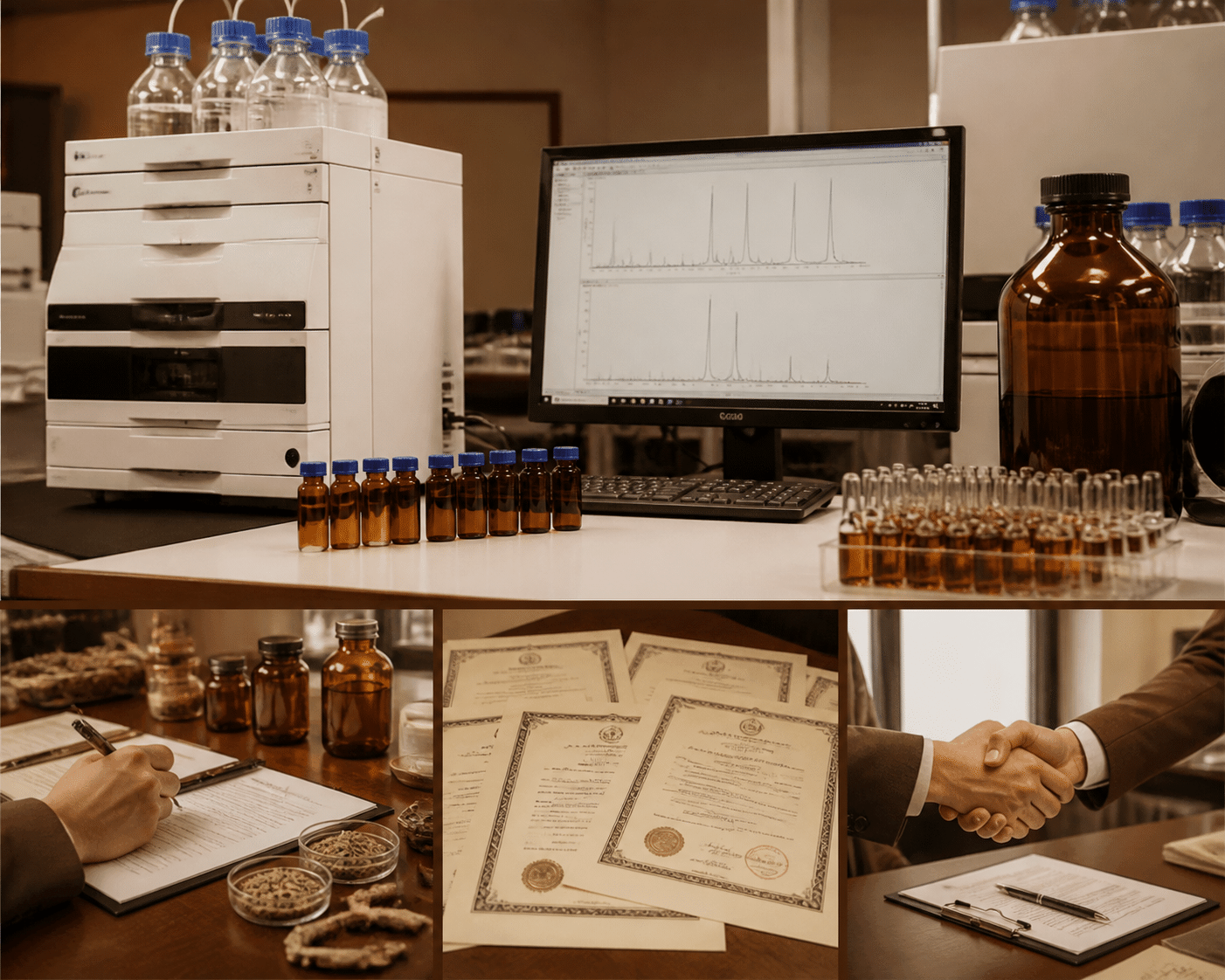
Here’s a scenario that keeps procurement managers up at night. The first drum arrives, the paperwork looks great, and the sample smells perfect. Three months later, a batch comes in cloudy, smells like a cheap candle, and your conditioner starts separating on the shelf.
So how do you avoid that? You vet the supplier before the first purchase order, not after. Let’s walk through what to check.
Why Pure, Unadulterated Hydrosol Matters
There’s no single worldwide law that defines a “true hydrosol.” That’s a big deal. It means the name on the label proves very little. “Tea tree water” and “natural floral water” can both describe anything from a real steam-distilled product to plain water with a splash of oil.
A true hydrosol is the water collected during steam distillation. It is not made by stirring essential oil into water, even if a solubilizer is added to make it look clear. That second version is a diluted essential oil, and its safety depends on how much oil is really in there, not on what the bottle says.
Watch for these red flags:
- Water that’s been “boosted” with tea tree oil after distillation
- Hidden synthetic solubilizers or fragrance materials
- Vague labels with no botanical name (you want Melaleuca alternifolia)
- A supplier who can’t explain how the product was distilled
- Promises of a fixed terpinen-4-ol percentage with no lab report
Ask for a written statement that no essential oil was added after distillation. Honest suppliers won’t blink at that.
The Documents to Demand
Paperwork isn’t glamorous. But it’s your best protection. Here’s the short list I’d ask for before approving any supplier.
| Document | What it tells you | What to look for |
|---|---|---|
| Certificate of Analysis (COA) | Batch-specific quality data | Lot number, production date, botanical name, pH, appearance, odor |
| GC-MS report | The volatile fingerprint | Full compound list, retention indices, method details |
| Microbial test results | Whether the batch is clean | Total aerobic count, yeast and mold, specified pathogens |
| Distillation record | Proof it’s a true hydrosol | Plant part, method, batch traceability |
| SDS and technical data sheet | Handling and transport info | Current transport classification, not a copied essential oil SDS |
| Preservative and allergen disclosure | What else is in the drum | Every added ingredient, named |
A couple of tips on reading these.
First, GC-MS can’t prove authenticity by terpinen-4-ol alone. One 2025 study actually reported terpinen-4-ol at 16.27% in a tea tree leaf hydrosol, alongside lots of other terpenes. So there’s no single “correct” number. A better test is to compare each new chromatogram against a reference range from several authentic batches. A report that looks like a concentrated essential oil should make you suspicious.
Second, microbial limits. The main benchmark is ISO 17516, which sets the total aerobic count at 1,000 CFU per gram or mL for ordinary cosmetics. It drops to 100 for products near the eyes or for kids under three. It also expects no E. coli, Pseudomonas aeruginosa, Staphylococcus aureus or Candida albicans in a gram or mL. Many buyers add tighter limits for yeast and mold in their contracts. That’s fine, just write it down.
And if a supplier says their hydrosol is “naturally self-preserving”? Ask for the lab data. Claims don’t count as testing.
I’d also pair GC-MS with simple checks like pH, density, refractive index and total organic carbon. Cheap tests, big peace of mind.
Supply Chain Questions for B2B Buyers
A good COA is only half the story. Bulk buying adds a few more questions.
- Batch-to-batch consistency. Hydrosols shift with harvest season, still type and storage. Agree on an approved range for pH, odor and GC-MS profile, then reject anything outside it.
- Traceability. Can the supplier track each lot back to the farm and the distillation date? Lot numbers should follow the drum all the way to your dock.
- Scalable supply. Ask what happens when your order triples. Can they hold capacity? Do they have backup stock?
- Certifications. Look for organic or ISO credentials that match your target markets, and check that they’re current and cover the exact product, not just the company.
- Packaging and shipping. Tamper-evident HDPE drums or IBCs with lot labels work well. Use ocean freight for routine orders and keep air freight for samples.
- Shelf life. Set a minimum remaining shelf life at arrival and use first-expired, first-out stock rotation.
One more thing, and I’d say this is the step people skip: get a pre-shipment sample approved, and keep a sealed reference sample from every lot. If something goes wrong in six months, that little bottle settles the argument fast.
Suppliers who control the whole chain, from raw material sourcing to final delivery, tend to answer these questions more easily. That’s the kind of setup Aroma Monk runs, with lab testing, traceability and export support for bulk buyers. Whoever you choose, hold them to this checklist. It’s also smart to confirm shipping costs, customs codes and import rules with a freight forwarder, since those vary by country.
With your sourcing sorted, there’s one thing left: pulling it all together into a plan for your product line.
The Future of Your Hair Care Line is Clear: Powered by Tea Tree Water
So where does all this leave you? Somewhere pretty practical, I think.
What We Learned
Tea tree water is a mild, water-based ingredient that fits right into what scalp shoppers want in 2026: clear labels, a clear job, and no sting. It works well in mists, toners, conditioners and light leave-ins. It brings a fresh, clean feel to the scalp.
But let’s keep it honest. The strong clinical proof still belongs to tea tree oil, not the hydrosol. So the smart path is cosmetic, sensory language, paired with real testing on your finished product. That’s not a weakness. It’s how you build trust.
Why Formulators Like It
Here’s the real draw. You get a gentler take on tea tree without the usual headaches of the oil. No extra solubilizer. A softer scent. Less terpene exposure. It slips straight into the water phase.
Still, a few things never change:
- Preserve it properly and run challenge tests.
- Patch test before launch.
- Ask for a lot-specific GC-MS report every time.
Pick Your Supplier Like It Matters
Your product is only as good as the water going into it. A cloudy batch or a diluted oil dressed up as a hydrosol can sink a launch fast. So partner with a bulk supplier who shows you the paperwork, explains the distillation and tracks every lot.
That’s where Aroma Monk comes in. They manage the chain from sourcing to delivery, with lab testing, traceability and export support for international buyers.
Ready to start? Visit Aroma Monk to request a sample, ask for technical data sheets or get bulk pricing for your next scalp care line.
Get a quote from Aroma Monk.
Essential Oil Supplier – Bulk pricing • Samples • Fast response