
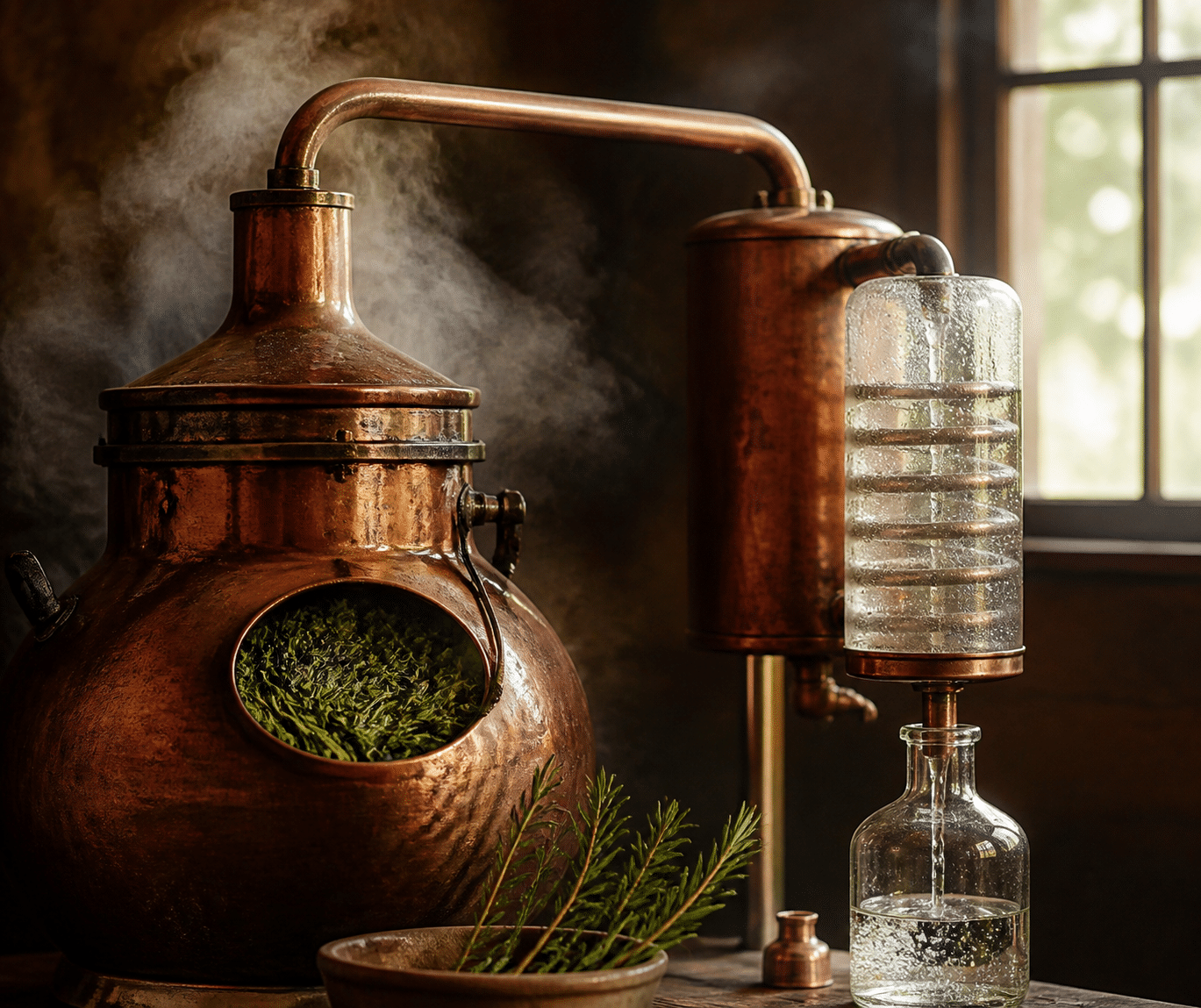
The Rise of Tea Tree Water in Natural Formulations: Beyond the Hype
Last spring, a product developer I know pulled a “tea tree toner” off her supplier’s shelf and smelled it. Sharp. Strong. Like cheap shampoo. Turns out it was mostly water with a splash of essential oil, not a true hydrosol at all. She’d almost built a whole line around it.
That story isn’t rare. And it shows why tea tree water is getting so much attention right now.
Why Shoppers Keep Asking for Cleaner Labels
People read labels more than they used to. A 2024 survey found that 74% of U.S. consumers say natural ingredients matter in personal care products. They want to know what’s inside, where it came from, and what it actually does.
Market snapshot: The global natural cosmetic ingredients market was valued at $10.6 billion in 2025. It’s projected to reach $21.7 billion by 2033, a 9.5% yearly growth rate, according to Grand View Research.
Tea tree water (also called tea tree hydrosol or Melaleuca alternifolia water) fits this mood nicely. It’s gentle, light, and works in toners, mists, cleansers, and wellness sprays.
The Catch: Not All Tea Tree Water Is the Same
Here’s the problem. The market has real hydrosol, and it has look-alikes. Some are watered-down. Some are just oil mixed into water. Telling them apart isn’t easy when all you have is a label and a sales pitch.
That’s the big challenge for brands today. Pay for the real thing, and you get a better product. Buy an imitation, and you risk weak performance, odd smells, and unhappy customers.
What This Guide Will Cover
This guide is written for procurement and product development managers. We’ll walk through how to spot authentic tea tree water, how to source it in bulk, how to formulate with it, and how to market your products without getting into trouble. Let’s start with what “true” actually means.
Understanding True Tea Tree Hydrosol vs. Market Imitations
So what makes a tea tree water “true”? It starts in a still, not a mixing tank.
How Real Tea Tree Hydrosol Gets Made
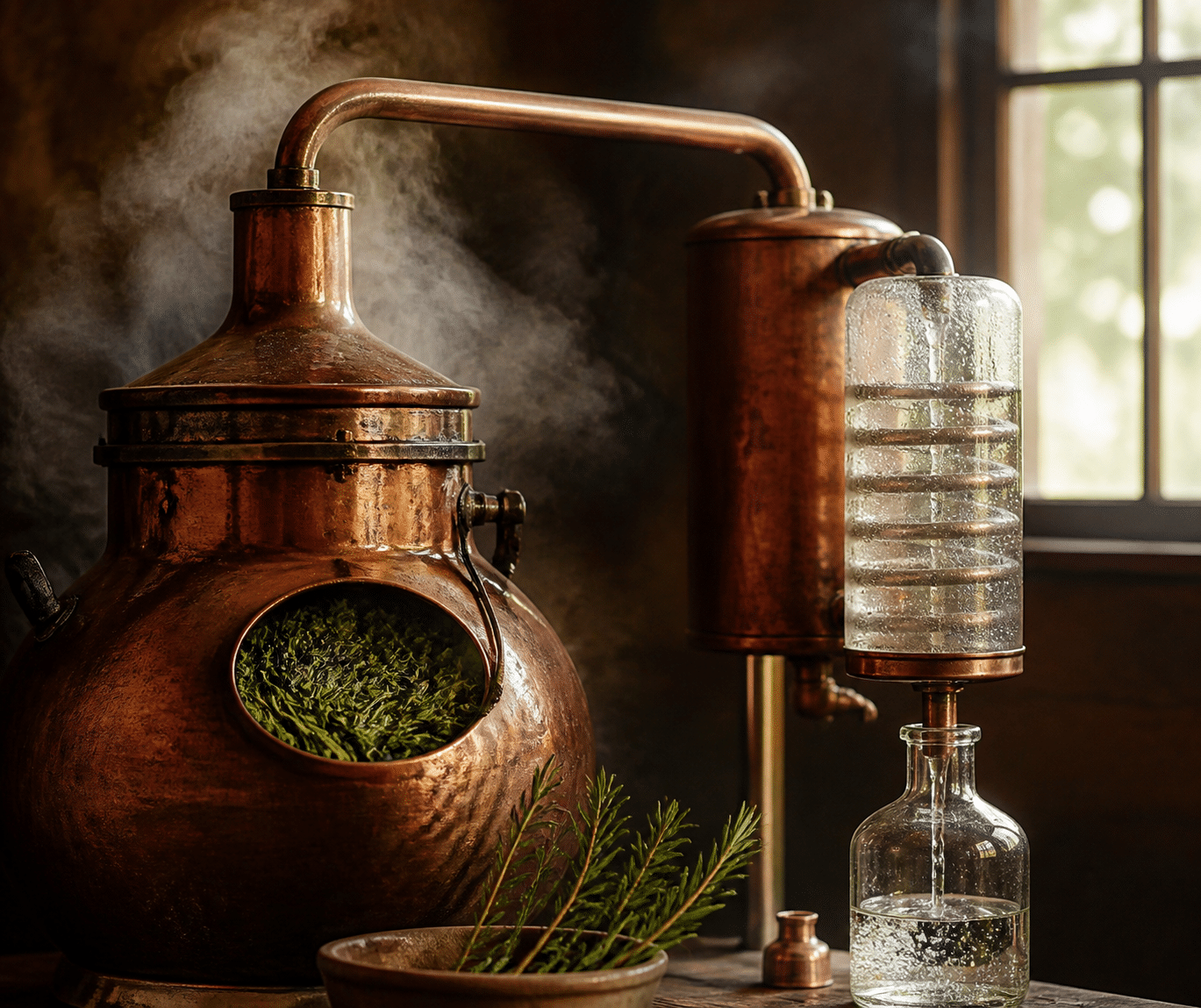
Steam does the work. Fresh Melaleuca alternifolia leaves go into a still, and hot steam passes through them. The steam pulls out tiny aromatic compounds. Then it travels through a condenser and cools back into liquid.
That liquid is a mix of two things. One is tea tree essential oil, which floats on top. The other is the aromatic water underneath. That water is the hydrosol. A 2021 peer-reviewed study describes it as the water phase made alongside tea tree oil during steam distillation.
Here’s the neat part. The water keeps some of the plant’s water-soluble compounds. In that same study, terpinen-4-ol was the most plentiful compound measured in the hydrosol, at about 624 µg/mL (roughly 0.062%). That’s a published example, not a rule for every batch. Leaf quality, distillation settings, and storage all change the final profile.
And it’s much milder than the oil. Hydrosol has only a trace of volatile compounds, mostly water. That’s why it feels so light on skin.
Three Things Sold as “Tea Tree Water”
Now for the messy part. Not everything with that name came from a still. I’ve seen three main types, and they’re really different.
| Type | How it’s made | What’s inside | What to watch for |
|---|---|---|---|
| True hydrosol | Co-product of steam distillation | Water plus small amounts of water-soluble plant compounds | Needs a batch report and a good preservative plan |
| Diluted essential oil solution | Tea tree oil mixed or dispersed into water | Oil droplets or solubilized oil in water | Can be harsher on skin, may separate, and isn’t a distillate |
| Synthetic fragrance “tea tree water” | Water plus lab-made scent | Fragrance chemicals, maybe added terpenes | Strong smell, no real plant chemistry, more irritation risk |
Floral waters are a gray zone too. Calli Skin notes that these are often just water with fragrance or diluted essential oils, while a real hydrosol keeps some constituents from distillation. It’s a brand source, so treat it as helpful background and not gospel.
Why does this matter for skin? A diluted oil can pack a stronger punch in a small area, and that’s where irritation tends to start. Synthetic scent adds nothing but smell. A real hydrosol is gentler, but it still isn’t magic. It’s water, so it needs proper preservation like any other water-based ingredient.
What Tea Tree Water Can Do in a Formula
Brands usually reach for tea tree water for three reasons.
- Antimicrobial support: The same 2021 study looked at hydrosol’s antimicrobial activity and compared it with the oil. It’s a plausible bonus in toners and cleansers, but it doesn’t replace a real preservative.
- Soothing, anti-inflammatory feel: It’s often used in products for blemish-prone or easily bothered skin and scalp.
- Astringent, refreshing finish: It leaves skin feeling clean and light, which is why it shows up in toners, mists, and scalp sprays.
Here’s my honest take, though. Most of the hard clinical evidence is about tea tree oil, not tea tree water. I wouldn’t borrow those results for a hydrosol claim. Tea tree water has good supportive value as an aromatic, gentle ingredient. Just don’t oversell it.
So how do you tell a real one from a fake before you buy? That’s what the next section is about.
Section 2: The Procurement Manager’s Checklist for Sourcing Bulk Tea Tree Water
Here’s a rule I’d tape to every procurement desk: never buy on a smell test alone. Sharp and strong can still be fake. Paper, on the other hand, is hard to fake well.
So let’s build a checklist you can use before the first purchase order goes out.
The Paperwork to Request From Every Supplier
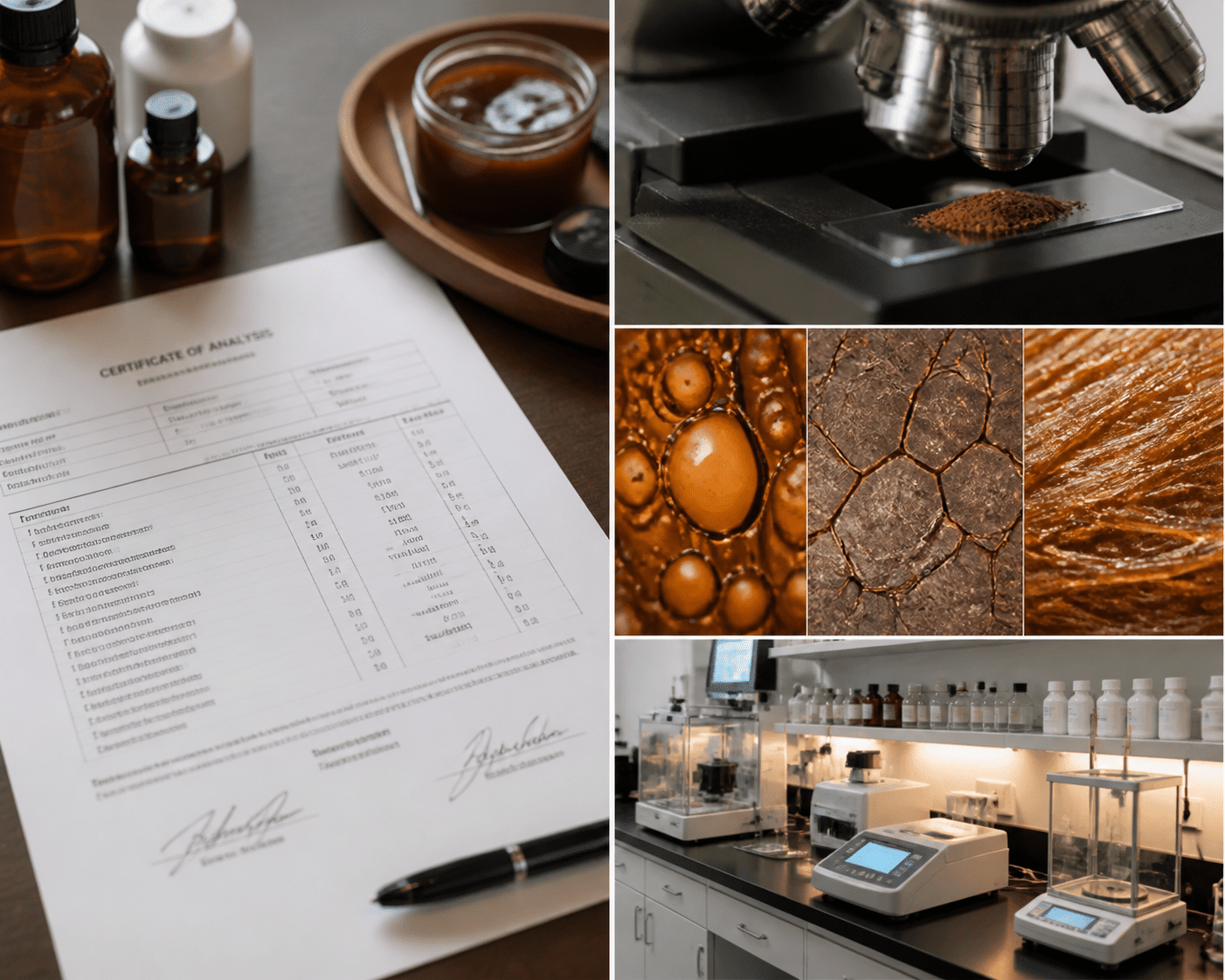
Ask for these before you ask for a price. A good supplier will send most of them without fuss.
- Certificate of Analysis (CoA) for the hydrosol batch. It should be for your lot, not a generic sample sheet.
- GC/MS report for the matching essential oil batch. This shows the oil that was distilled alongside the water.
- Hydrosol-specific chromatogram, if they have one. Ask for the raw chart and peak table, not just a “passes” stamp.
- Manufacturing method and distillation record. This separates a real distillate from oil stirred into water.
- Organic or other certifications. Check the certificate number and expiry date, and make sure the certifier covers this exact product.
- Microbiology results, preservative details, and allergen declaration.
- Batch number, country of origin, storage conditions, and expiry or retest date.
One catch worth knowing. The oil report doesn’t prove the water is good. Hydrosol is mostly water with only trace volatiles, so it needs its own testing. And the Australian Tea Tree Industry Association points out that the ISO 4730 oil standard only checks identity. It doesn’t judge purity, traceability, or how something was made. A reconstructed product could still land inside the numbers.
Want a sense of what an oil report looks like? Here’s a public tea tree oil GC/MS report from Shay and Company. Lot 13213 lists terpinen-4-ol at 40.89%, which is the main marker. It’s oil data, so use it as a reading practice sheet, not a hydrosol benchmark.
How to Read a Tea Tree Water CoA
Don’t panic when you open one. Most CoAs come down to a handful of lines.
| Marker on the CoA | What it tells you | What to look for |
|---|---|---|
| Appearance | Clarity and visible contamination | Clear to slightly hazy liquid, no sediment, no floating bits or oil slick |
| Odor | Identity and freshness | Mild, herbal, tea-tree-like. A harsh, perfumey blast can mean added oil or fragrance |
| pH | Stability and preservative fit | Often around 4.5 to 5.5, but get the supplier’s own written range. A sudden drift between batches is a red flag |
| Total plate count, yeast and mold | Microbial cleanliness | Low or “not detected,” with the test method named |
| Pathogen screening | Safety | Absence of the organisms the lab tested for |
| Terpinen-4-ol and other volatiles | Real distillation fingerprint | Reported as absolute amounts (µg/mL or mg/L), not only relative percentages |
| Batch, date, expiry | Traceability | Matches the number printed on your drum |
See that second-to-last row? Relative percentages can fool you. A GC peak that’s 16% of the volatiles isn’t 16% of the liquid. Ask for absolute numbers.
Transparency, Traceability, and Quality Control
Honestly, this is where good suppliers pull ahead. Can they tell you which farm the leaves came from? Which still ran that batch? Who tested it, and when?
Ask these questions directly:
- Can you trace this lot from farm to filling line?
- Do you follow cosmetic GMP (ISO 22716) in your facility?
- Who does the testing, in-house or an outside lab?
- Will you keep a retain sample of my batch?
- What happens if a lot fails on arrival?
A supplier who dodges these is telling you something. Brokers can add layers and cut visibility, so I lean toward direct manufacturers who manage the whole chain. Aroma Monk, for example, handles everything from raw material sourcing to delivery, with lab testing and traceability built in.
Once your sourcing is locked down, the next job is making the stuff behave in a formula.
Section 3: Formulation Science: Creating Stable and Effective Products
You’ve got a good batch of tea tree water on the dock. Great. Now comes the part where plenty of brands trip: making it behave inside a finished product.
Tea tree water is mostly water. That one fact drives almost every choice below.
Getting the pH Right
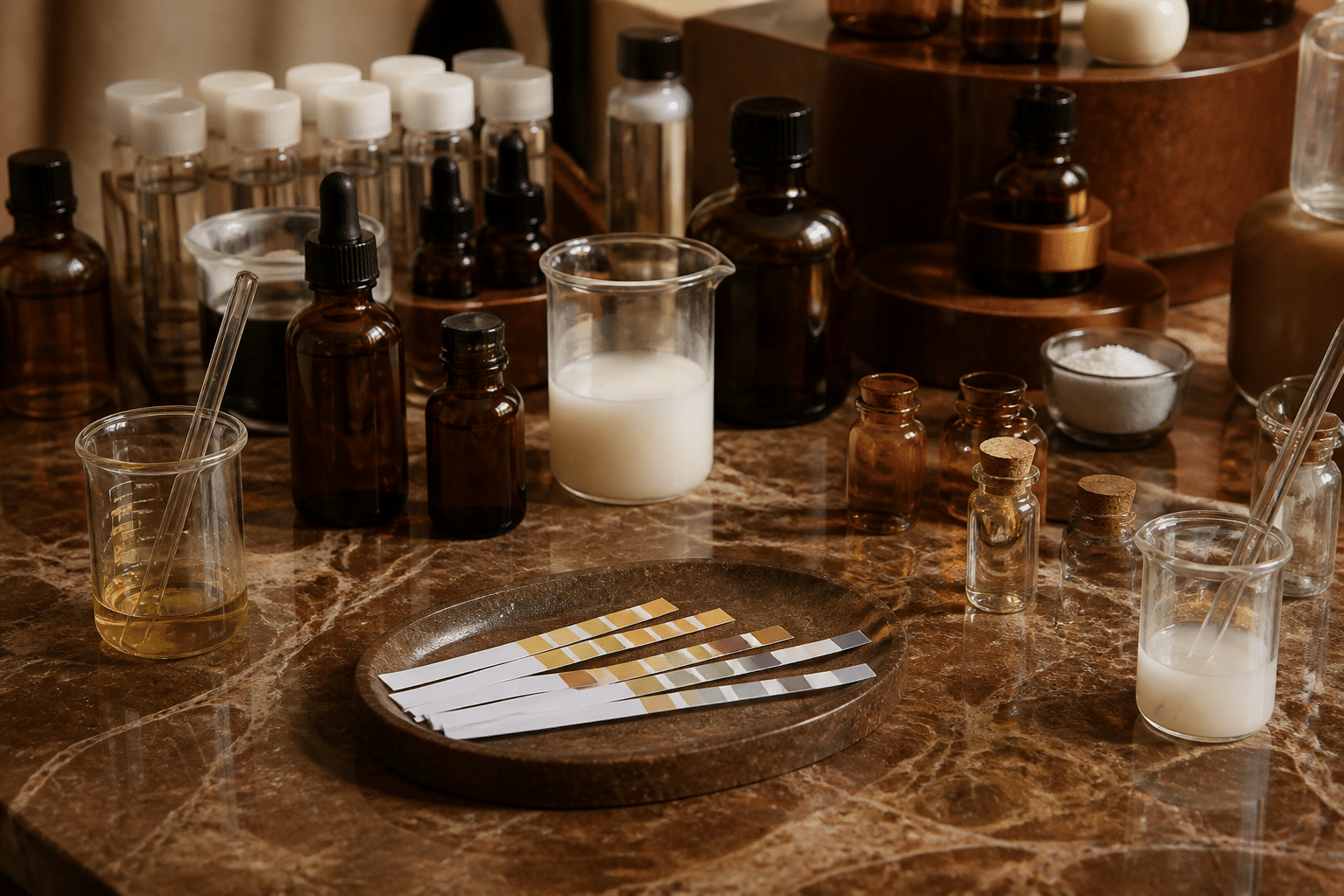
Skin sits on the slightly acidic side, so most leave-on products aim for a similar zone. Your preservative also has a pH range where it works best. The goal is to land where both are happy.
Here’s a starting guide. These are common formulating habits, not strict rules, so confirm with your own stability tests.
| Product type | Typical target pH | Notes |
|---|---|---|
| Toners and mists | 4.5 to 5.5 | Closest to skin. Easy to keep stable if the preservative fits |
| Cleansers (gel or foaming) | 5.0 to 6.0 | Surfactants often like a little higher pH |
| Serums | 4.5 to 5.5 | Check how other actives behave at this level |
| Creams and lotions | 5.0 to 6.0 | Emulsifiers can limit how low you can go |
Need to adjust? Use a small amount of citric acid solution to bring pH down. Use a dilute sodium hydroxide or sodium citrate solution to bring it up. Add a little at a time, mix well, and recheck. Then test again after 24 hours, because pH can drift.
One more tip. Measure the pH of every incoming hydrosol batch. Industry guidance says a shift of about 0.5 pH unit can be an early sign that microbes are growing.
Preservation: Don’t Skip This Part
I’ll say it plainly. Tea tree water is not self-preserving. It smells strong and clean, which tricks people into thinking it protects itself. It doesn’t. Research on rose and orange blossom hydrosols found that aroma compounds and cold storage alone didn’t keep microbes away.
So what actually works? A few options:
- Radish root ferment filtrate (often sold as Leucidal). It’s the most documented natural pick for tea tree hydrosol. Supplier data lists a pH range of about 4 to 8, added during cooling below 40°C.
- Pentylene glycol. A 2026 hydrogel study used it as a mild preservative and humectant. Versions without it grew mold within days, even in the fridge.
- Sodium benzoate and potassium sorbate. These can work if your formula stays acidic enough, around pH 5.
- Benzyl alcohol and dehydroacetic acid blends. Often more dependable than fermentation-only systems, especially in leave-on products.
Here’s the catch. Radish ferment alone may not be enough. Always run a preservative efficacy (challenge) test on the finished formula, plus stability testing in the final packaging. Pump bottles and airless packs beat open jars, too.
How Much Tea Tree Water to Use
The amount depends on the job it does in the formula.
| Use | Typical range | What it means |
|---|---|---|
| Main water phase in a mist or toner | Up to 100% of the water portion | The hydrosol replaces plain water. It still needs a preservative |
| Toner, essence, or cleanser as a feature ingredient | About 5 to 20% | A common range, per Skintique’s ingredient guide |
| Water phase in creams and lotions | About 5 to 30% | Swap part of the water. Watch emulsion stability and pH |
A quick honest note: those ranges are formulating practice, not proof of results. Most clinical work covers tea tree oil. Use a higher tea tree water level because it feels good and smells right, not because a study promised an outcome.
With pH, preservation, and rates sorted, you’re ready to look at actual starter formulas.
Section 4: Commercial Formulation Frameworks with Tea Tree Water
Get a quote from Aroma Monk.
Essential Oil Supplier – Bulk pricing • Samples • Fast response
OK, time to get practical. Below are three starter frameworks you can screenshot and hand to your chemist. They’re ranges, not final recipes. Your hydrosol batch, your preservative, and your packaging will all shift the numbers, so treat each card as a first draft for the bench.
One rule applies to all three. Add the tea tree water during cool-down, below 40°C. Heat can strip the light aromatic compounds, and it’s also where most natural preservatives want to go in.
Recipe 1: Clarifying Toner for Blemish-Prone Skin
This is the one most brands ask for first. It’s a light, leave-on toner where tea tree hydrosol shares the water phase with witch hazel.
CLARIFYING TONER FRAMEWORK
INCI name Range Job Aqua q.s. to 100% Carrier Melaleuca Alternifolia (Tea Tree) Leaf Water 30 to 50% Main aromatic water phase Hamamelis Virginiana (Witch Hazel) Water 20 to 30% Astringent feel Propanediol 3 to 5% Solvent for salicylic acid, humectant Glycerin 2 to 3% Hydration Niacinamide 2 to 4% Skin comfort, optional Panthenol 0.5 to 1% Soothing Salicylic Acid 0.5 to 2% Exfoliating active Preservative system Per supplier Must be challenge tested Citric Acid or Sodium Hydroxide As needed pH adjustment
Here’s the catch, and it’s a big one. Salicylic acid usually needs a pH around 3 to 4 to do its job. That’s lower than the 4.5 to 5.5 range we talked about earlier. So pick a preservative that works at low pH (sodium benzoate or a benzyl alcohol blend, for instance) instead of assuming radish ferment will cover it.
Dissolve the salicylic acid in the propanediol first. Don’t just sprinkle it in water. Also check witch hazel specs, since some distillates contain alcohol.
Want a bonus ingredient? A 2026 acne review reported that 5% green tea extract reduced inflammatory lesions. A small dose in a toner won’t match that, so I’d treat it as a nice extra, not a promise.
One more thing. In the U.S., a salicylic acid acne product may count as an OTC drug, not a cosmetic. We’ll get to that next.
Recipe 2: Soothing Scalp Mist
Scalp sprays are where tea tree water really shines, since a mist can be mostly hydrosol. I’m calling this “soothing” on purpose. In the U.S., “anti-dandruff” is a drug claim, so the cosmetic version leans on comfort and freshness.
SOOTHING SCALP MIST FRAMEWORK
INCI name Range Job Melaleuca Alternifolia (Tea Tree) Leaf Water 40 to 60% Main water phase Mentha Piperita (Peppermint) Water 10 to 20% Cooling, fresh feel Aqua q.s. to 100% Carrier Aloe Barbadensis Leaf Juice 3 to 5% Soothing, light moisture Panthenol 1 to 2% Scalp comfort Propanediol 2 to 3% Humectant, helps preservation Zinc PCA 0.5 to 1% Oily scalp positioning Preservative system Per supplier Must be challenge tested
The peppermint water gives that tingly cooling feel customers love. Check the exact INCI spelling for your peppermint supplier, because naming varies a bit. Keep the pH near 4.5 to 5.5, and use a fine-mist pump so fingers never touch the liquid. Airless packs are even better.
Recipe 3: Gentle Purifying Facial Cleanser
Cleansers are a different animal. The surfactants do the heavy lifting, and tea tree water replaces part of the water.
GENTLE PURIFYING CLEANSER FRAMEWORK
INCI name Range Job Aqua q.s. to 100% Carrier Melaleuca Alternifolia (Tea Tree) Leaf Water 20 to 40% Aromatic water phase Cocamidopropyl Betaine 6 to 10% Mild main surfactant Decyl Glucoside 4 to 8% Gentle co-surfactant Glycerin 2 to 3% Hydration Panthenol 0.5 to 1% Soothing Sodium Chloride 0.5 to 1.5% Thickener, adjust by trial Preservative system Per supplier Must be challenge tested Citric Acid As needed Target pH 5.0 to 6.0
Be honest with yourself about the benefit here. A cleanser sits on skin for maybe 30 seconds, then rinses off. So the antimicrobial boost from tea tree water is modest at best. Think of it as a pleasant, lightly aromatic upgrade.
Also watch viscosity. Hydrosol batches can have slightly different mineral content, and that changes how salt thickens the gel. Test each new lot.
All three cards need the same finish line: challenge testing, stability in final packaging, and a safety review. And since a few of these claims sit close to drug territory, the next section covers what you can and can’t say.
Section 5: Regulatory Compliance & Marketing Claims for Your Brand
You can make a perfect formula and still get in trouble over one sentence on the box. It happens more than you’d think. So let’s talk about what you can say, and what you can’t.
Cosmetic Claims vs. Drug Claims
In the U.S., the FDA looks at what your product is meant to do. Not whether the ingredient is natural. A tea tree water toner that cleanses, refreshes, or helps skin look clearer is usually a cosmetic. Say it treats acne, clears pimples, or kills acne-causing bacteria, and it starts to look like an OTC drug. Tea tree water isn’t an FDA monograph acne active, so that’s a problem.
This is also why the salicylic acid toner from the last section needs a second look. Salicylic acid at acne-treatment levels is a drug active, so that product may need to follow drug rules.
Here’s a quick cheat sheet.
| Do | Don’t |
|---|---|
| “Refreshes blemish-prone skin” | “Treats acne” |
| “Helps skin look clearer” | “Clears pimples in 7 days” |
| “Helps reduce the appearance of blemishes” | “Prevents breakouts” |
| “Lightly aromatic, soothing mist for the scalp” | “Cures dandruff” |
| “Made with steam-distilled tea tree hydrosol” | “Kills acne bacteria” (a tea tree oil result, not a hydrosol one) |
| “Leaves skin feeling clean and light” | Before-and-after acne photos or lesion counts without drug compliance |
One warning. Even a safe phrase like “helps reduce the appearance of blemishes” won’t save you if the rest of your ad screams “acne treatment.” Regulators read the whole picture.
Labeling and INCI Naming
Use the official ingredient name, not a catchy one. For tea tree water, that’s usually Melaleuca Alternifolia (Tea Tree) Leaf Water. Spelling varies a bit between databases, so check the current INCI dictionary and your supplier’s paperwork before printing.
A few simple rules:
- Never list the hydrosol as Leaf Oil. They’re different ingredients.
- The FDA requires common or usual ingredient names, generally in order from most to least.
- In the EU, Regulation (EC) No 1223/2009 requires an ingredient list under the heading “Ingredients,” using recognized INCI names.
- EU fragrance allergens (like limonene or linalool) must be listed separately if they pass 0.001% in leave-on products or 0.01% in rinse-off ones. Get an allergen declaration for each batch.
There’s no blanket “tea tree warning” rule. But your safety assessor may still call for cautions like “avoid contact with eyes.”
Backing Up What You Say
Here’s the honest part. Most published acne data is about tea tree oil. Don’t borrow it for a water claim. In the EU, “natural” isn’t an excuse either, since claims need evidence that fits your finished product.
So keep a file: batch CoAs, microbiology results, stability data, and any tolerance or consumer testing. A supplier like Aroma Monk, with lab-tested lots and full traceability, makes that file easy to build. It also gives you something solid to show a regulator, a retailer, or a curious customer.
Once your claims and labels are clean, the last step is choosing who supplies the water.
Elevate Your Product Line with Pure, High-Performance Tea Tree Water
Remember that product developer with the “tea tree toner” that smelled like cheap shampoo? Her story has a happy ending only if she asks the right questions. And now you’ve got them.
Here’s the short version. Buy true tea tree hydrosol, not diluted oil or scented water, and ask for a batch CoA to prove it. Measure pH, pick a preservative that fits, and run challenge tests, because tea tree water is still water. Then keep your claims honest. “Refreshes blemish-prone skin” is safe. “Treats acne” isn’t.
Get those three things right and something nice happens. Your toner, scalp mist, or cleanser stands out on a crowded shelf. Shoppers want natural products that actually work, and a real tea tree hydrosol gives you a story you can back up with paperwork. That’s rare.
Better ingredients won’t fix a bad formula. But a bad ingredient will wreck a good one every time. So the water you start with is a formulation decision, not just a sourcing one.
Ready to test it yourself?
Partner with a bulk supplier you can trace and verify. Contact Aroma Monk to request a sample and CoA for our certified tea tree water, and start your next formulation with confidence.
Get a quote from Aroma Monk.
Essential Oil Supplier – Bulk pricing • Samples • Fast response