
The Rising Tide of Gentle Skincare: Why Chamomile Water is a Key Ingredient for Your Next Product Line
Picture a shopper standing in a drugstore aisle, squinting at a toner label. She’s got sensitive skin, a short patience for long ingredient lists, and she’s been burned (literally) before. What does she grab? Something that sounds calm. Something that feels honest.
That shopper is your customer, and there are a lot of her. Published forecasts put the sensitive skincare market at roughly $38.2 billion in 2024, heading toward $56.4 billion by 2031. Other firms give different totals, but most land on growth of about 6 to 8% a year. Facial care is the biggest slice, too.
Behind that demand sits a shift in how people shop for natural products. “Natural” alone doesn’t close the sale anymore. People want gentle, proven, and clearly labeled.
Where Chamomile Water Fits In
This is where chamomile water for face care gets interesting. Chamomile hydrosol is the water left behind when chamomile flowers are steam distilled. It’s light, soft-smelling, and easy to work into toners, mists, and serums. For brands chasing a chamomile toner for sensitive skin, it gives you a familiar, comforting story that shoppers already trust.
I’ll be upfront about one thing, though. Chamomile is a soothing, refreshing ingredient, not a medicine. The best brands keep their claims modest and let the feel of the product do the talking.
The Sourcing Problem Nobody Warns You About
Here’s the catch. Anyone can write “chamomile water” on a spec sheet. Finding pure chamomile hydrosol that’s tested, consistent, and available in bulk? That’s harder. Watered-down batches, fragrance add-ons, and mixed-up species all show up in the market.
If you’re a product developer or procurement manager, you’ve probably felt this already. So let’s start with what a real hydrosol actually is, and why it matters for your formula.
Beyond the Tea Bag: Understanding the Science of Pure Chamomile Hydrosol
Most people hear “chamomile” and think of tea. A warm mug, a tea bag, a quiet evening. Pure chamomile hydrosol is a different thing entirely.
What a Hydrosol Really Is
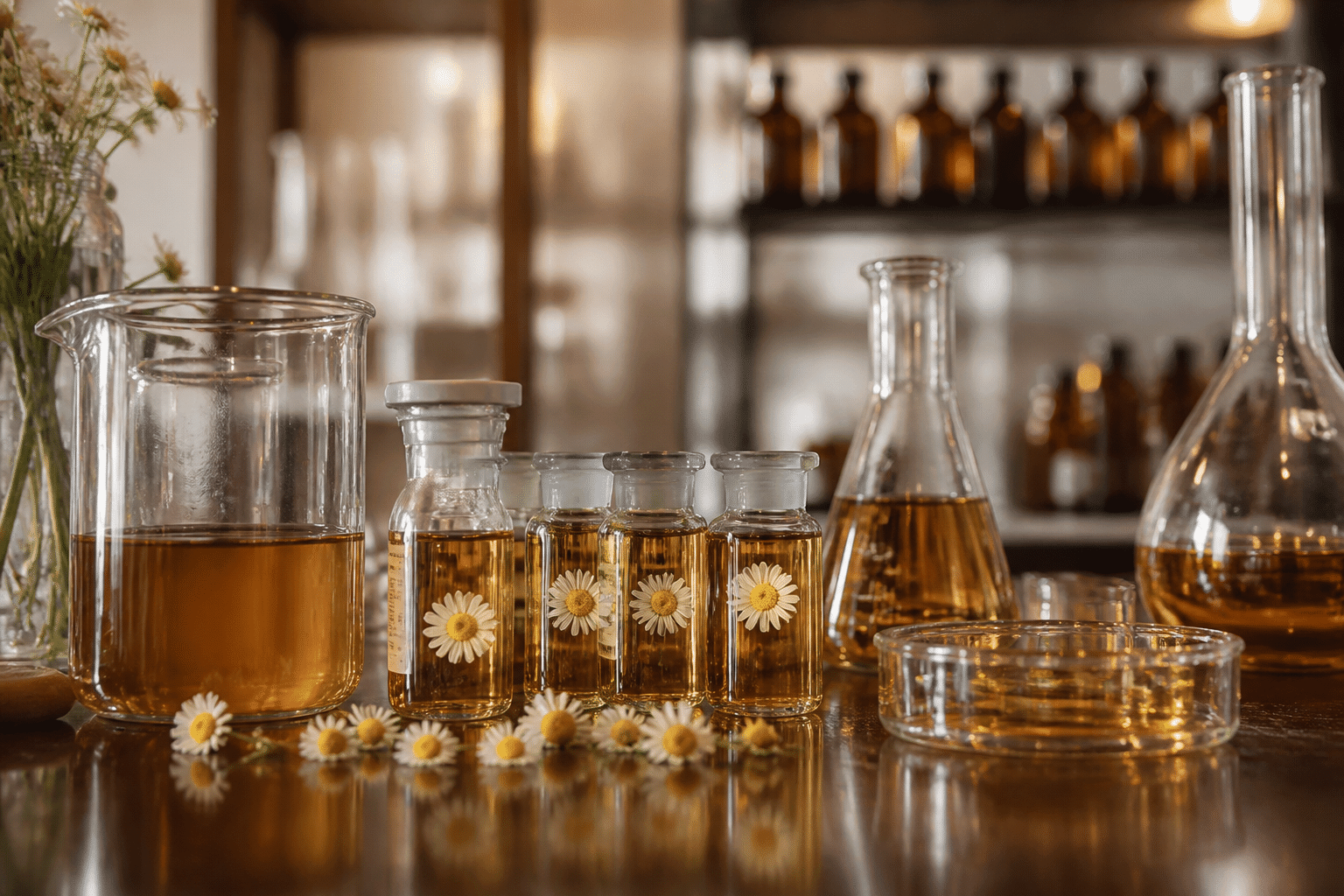
A chamomile hydrosol is the aromatic water collected when chamomile flowers are steam distilled. Steam passes through the flowers and picks up tiny plant compounds. Then it cools back into liquid. A small layer of essential oil floats on top, and the water underneath is the hydrosol.
So how is it different from the other two? An infusion (your tea) steeps flowers in hot water and pulls out heavier, water-loving compounds. An essential oil is the concentrated oily layer. The hydrosol sits between them: mild, light, and much less concentrated than the oil.
That last part matters. Most oil compounds don’t dissolve well in water, so their levels in a hydrosol are low and they shift from batch to batch. If a supplier claims a big bisabolol number in a water product, ask for GC/MS data. One independent hydrosol screening reported samples with synthetic ingredients and labels that didn’t match the chemistry inside.
| Step | What happens |
|---|---|
| 1. Harvest | Flowers are picked and dried or used fresh |
| 2. Steaming | Steam moves through the plant material |
| 3. Cooling | Vapor condenses into liquid |
| 4. Separation | Essential oil is removed from the water |
| 5. Testing and packing | The hydrosol is checked, preserved, and bottled |
What’s Inside the Water
You’ll hear three names a lot: bisabolol, chamazulene, and apigenin. Bisabolol and chamazulene are the ones linked to chamomile’s calming reputation. A pharmacology review notes that German chamomile holds bisabolol and matricin, and that matricin turns into chamazulene during heating or distillation. Apigenin is a flavonoid. It usually shows up in extracts more than in distilled water, so don’t assume it’s in your hydrosol.
Here’s my honest take. Most of the soothing evidence comes from lab studies and isolated compounds, not finished hydrosols. So “supports soothing formulas” is a safer claim than “anti-inflammatory.” Also, chamomile belongs to the daisy family, and a dermatology review warns it can cause allergic contact dermatitis in some people.
German vs. Roman: A Formulator’s Guide
They’re both called chamomile. They’re not twins.
| German (Matricaria recutita) | Roman (Chamaemelum nobile) | |
|---|---|---|
| Key compounds | Bisabolol, bisabolol oxides, chamazulene | Mostly esters of angelic and tiglic acids, less chamazulene |
| Typical feel | Soft, slightly sweet, herbal | Brighter, apple-like |
| Best use | Calming toners for sensitive skin | Light mists and gentle everyday toners |
A 2022 review found far more chamazulene in German chamomile oil than Roman. Those numbers describe the oil, not the water, so don’t copy them into a hydrosol spec. Species also don’t swap cleanly: authentication research separates them using volatile markers. Both matter once you start buying, which is where the next section picks up.
The Formulator’s Advantage: Marketable Benefits of Using Chamomile Water in Facial Toners
So you know what’s in the bottle. Now the fun question: what can you actually say about it? Chamomile water gives you three solid stories to tell, and each one can be told honestly.
| Benefit | What it means for your toner | Safe way to say it |
|---|---|---|
| 🌊 Calming | Comforting feel for easily upset skin | “Soothes the feel of skin” |
| 💧 Hydrating and balanced | Preps skin without a tight, stripped feeling | “Gentle, refreshing, alcohol-free” |
| 🛡️ Protective | Fits “calm and protect” city-skin stories | “Supports a calming daily routine” |
Calming Skin That Gets Cranky Fast
Sensitive, acne-prone, and redness-prone shoppers all want the same thing from a toner: no stinging. Chamomile’s comforting reputation fits that need nicely. In one phase I human study, a chamomile-based topical caused no redness, burning, or itching across four weeks and improved skin hydration. Thirty people finished it. Small study, and it wasn’t a plain hydrosol toner, but the direction is encouraging.
Now the catch. Please don’t write “treats rosacea” anywhere. The FDA says a claim to treat or prevent disease can turn a cosmetic into a drug. Words like “soothes,” “refreshes,” and “helps skin feel comfortable” are much safer. Sensitive-skin shoppers still get the message. You just skip the legal headache.
Gentle Hydration Without the Stripping
A good toner preps skin for the next step. It shouldn’t leave it squeaky. Because a hydrosol is mostly water, it makes a soft, light base, and you can pair it with humectants like glycerin and panthenol for that cushiony feel.
On pH, there’s no single number. Supplier data runs from roughly 4.0 up to 5.8, so your certificate of analysis is the boss. Most toners aim near 4.8 to 5.5, and hydrosol formulation guidance suggests measuring the finished product and adjusting with lactic or citric acid if needed. That’s close to skin’s natural comfort zone, which is why gentle skin-friendly pH is a story worth telling. (Check it again during stability testing. I’ve seen formulas drift.)
Where “Calm and Protect” Fits
Urban shoppers love anything that sounds like a shield against city air. Chamomile contains flavonoids, which are often linked to antioxidant talk. But remember what we covered earlier: apigenin shows up more in extracts than in distilled water. And most antioxidant data comes from extracts and lab work.
So be careful with “anti-pollution.” Here’s what works better:
- “Calm and protect” as a routine idea, not a lab promise
- Pairing the hydrosol with a proven antioxidant, like a vitamin E derivative, if you want a real protection claim
- Backing any bigger claim with finished-product testing
There’s a reason to keep it modest, too. Mintel research points out that shoppers see botanical ingredients as gentle and comfortable, and sensitive-skin buyers care most about non-irritating formulas. Gentle plus honest wins.
Benefits are great, but they only show up if the water in your drum is the real thing. That’s the next hurdle.
The Procurement Challenge: How to Source Certified, Bulk Chamomile Water
Here’s a story that plays out more than it should. A buyer finds a great price on chamomile water, orders a drum, and the first sample smells a little too perfumey. Nobody can say why. The paperwork says “pure.” The chemistry says something else.
So let’s build a vetting process that catches this before the drum shows up.
Start With the GC/MS Report
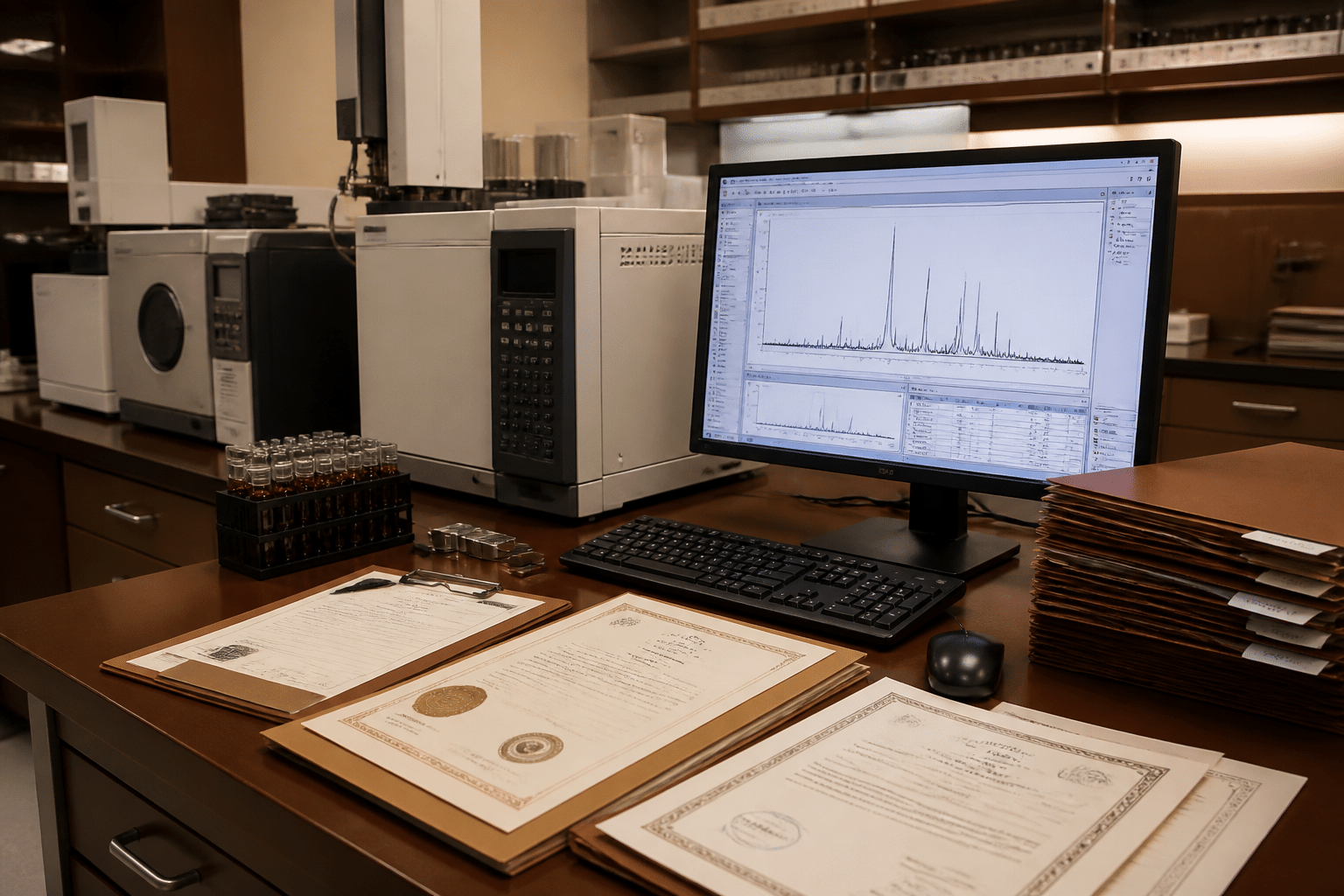
If you only ask for one document, make it the GC/MS report. It’s a lab test that sorts out the tiny aroma compounds in the water and shows what’s really in there. A good one can reveal added fragrance, boosted oils, or the wrong species.
But a one-line “pass” stamp is not a report. You want the full chromatogram and the compound table. Here’s how to read it without a chemistry degree:
| What to check | What good looks like | Red flag |
|---|---|---|
| Batch number and date | Matches the batch you’re buying | Generic report with no batch link |
| Botanical name | Matricaria chamomilla or Chamaemelum nobile, clearly stated | Just “chamomile” |
| Full chromatogram | Whole peak chart plus compound table | Pass/fail summary only |
| Marker compounds | Plant markers like bisabolol oxides and farnesene show up | Chamomile markers missing |
| Big surprise peaks | Low-level, plant-like profile | One loud peak from a common fragrance chemical |
| Lab and method | Named lab, method, and reference library | No lab name |
One caution (and I mean this): GC/MS is strong at spotting odd volatile profiles. It can’t prove how much water was added, and it isn’t a safety test. Pair it with pH, microbial limits, and a retained sample from an earlier batch.
Certifications and Farm-to-Facility Proof
Certificates won’t make water pure by themselves. But they tell you how a supplier runs the place. Look for ISO quality systems, GMP manufacturing practices, and organic certification if you plan to claim it. Ask to see the actual documents, not a logo on a website.
Transparency matters just as much. You should be able to trace each batch back to the farm, the harvest date, and the distillation run. If a supplier goes quiet when you ask where the flowers came from, that’s your answer.
Need a ready-made template? The COSMOS raw-material questionnaire is a good model for organic checks. For regulatory paperwork under EU rules, the IKW supplier questionnaire is built for cosmetic ingredients. Suppliers like Aroma Monk, which manage the chain from raw material sourcing to final delivery and promote lab-tested, traceable products, are the kind of partner that should welcome these questions.
10 Questions to Ask Your Bulk Hydrosol Supplier
Print this, tape it to your monitor, and send it before you request pricing.
- Which species is it, and how is that confirmed?
- What’s the country of origin and harvest date?
- Is it steam or hydro-distilled, from fresh or dried flowers?
- How is it preserved, and at what level?
- Can I see a batch-specific GC/MS report with the full chromatogram?
- Do you offer batch-to-batch consistency reports?
- What are your microbial limits, and do you have challenge-test data?
- Are pesticide, heavy-metal, and allergen results available?
- Which certifications do you hold (ISO, GMP, organic), and can I see them?
- What happens if you change the source, process, or packaging? Will you tell me first?
Direct or Distributor?
There’s no single right answer. Distributors are handy for small validation lots, though one beauty-sourcing guide says low-MOQ orders can cost roughly 20 to 40% more per unit. Buying direct from the distiller usually costs less per kilo and gives you audit access, but the minimums are bigger. Plan on testing a small lot first, then moving to direct as your volumes grow.
Once your water passes the paper test, the next job is turning it into a stable, well-preserved toner.
Get a quote from Aroma Monk.
Essential Oil Supplier – Bulk pricing • Samples • Fast response
From Lab to Bottle: Formulation Best Practices for Chamomile Water Toners
Your water passed the paper test. Great. Now it has to behave inside a real formula, and that’s where good ingredients sometimes trip.
How Much Chamomile Water Should Go In?
There’s no single right number. It depends on what you’re making.
For a simple toner or mist, the hydrosol is the base, often 85 to 95% of the formula. One starter recipe I like is 94% chamomile hydrosol, 3% glycerin, 2% panthenol and 1% preservative. A hydrating version might sit near 85%, while a clarifying toner with niacinamide could drop to about 75%. Treat these as starting points, not finished formulas. Your pH, preservative and stability tests make the final call.
What about a 100% hydrosol mist? You can do it, but the water still needs a preservation plan. Ask your supplier what’s already in the drum before you add anything.
In serums and lotions, chamomile water usually replaces part of the water phase. The percentage gets lower, and honestly it depends on what you can support with testing.
Ingredient Synergy: Pairing Chamomile Water for Maximum Efficacy
| Partner | Examples | What it adds | Watch out for |
|---|---|---|---|
| Humectants | Glycerin, sodium hyaluronate, panthenol | Cushiony, hydrated feel | Too much glycerin gets tacky |
| Other hydrosols | Rose, witch hazel | Softer scent, a classic toner story | Check witch hazel for alcohol if you want “alcohol-free” |
| Soothing extracts | Aloe vera, green tea | Extra comfort cues | Color, scent and pH shifts |
Rose water is an easy blend partner, and Aroma Monk also supplies it, so a two-hydrosol toner can come from one supply chain. Just keep the label simple. Every extra botanical is one more thing to test.
Preservation: The Part You Can’t Skip
Hydrosols are mostly water. Water grows things. “Natural” doesn’t mean self-preserving, so plan your system early. This natural preservatives guide is a handy overview of the options.
Common choices include:
- Dermosoft 1388 Eco, a plant-based organic acid system that works best at pH 4.0 to 5.5
- Sodium benzoate plus potassium sorbate, which Villa Floriani’s chamomile toner uses, but only in acidic formulas
- Euxyl K 712, recommended at pH 5.5 or below
PH matters here more than people expect. A preservative that works at 5.0 might do nothing at 6.0. Add a chelator like sodium phytate, then run a real challenge test on the finished toner. A supplier’s brochure isn’t proof.
Common Formulation Mistakes to Avoid
- Copying essential oil numbers into a hydrosol spec
- Skipping the preservative challenge test
- Measuring pH once and never again
- Heating the batch past your preservative’s limit
- Stacking five soothing extracts and calling it “simple”
- Making disease claims on the label
Get these right and you have a stable, honest toner. Next, let’s look at why shoppers keep reaching for products like it.
5. Seizing the Market: Consumer Trends Driving Demand for Chamomile Skincare
Your toner can be perfect and still sit on a shelf. Shoppers have to want it first. So let’s look at what they’re asking for right now.
Skinimalism and Clean Beauty: Short Lists Win
Shoppers are tired of 40-ingredient labels. I’ll admit I don’t have a clean “skinimalism” number to hand you, but the nearby data points the same way. A Mintel trends summary says 57% of US consumers buy natural and organic products to avoid unnecessary ingredients or chemicals. Plus, Mintel’s UK research found 65% of UK adults use natural and organic beauty or personal care items, and they want ingredient transparency.
A chamomile toner fits that mood. One hero ingredient. A short label. Easy to explain.
What Chamomile Brands Are Doing
I can’t verify sales figures for these, so treat them as marketing lessons, not proof of results. Prices below come from a chamomile toner buying guide and brand pages.
| Brand | Angle | Price |
|---|---|---|
| Thayers Witch Hazel & Chamomile Toner | Alcohol-free, familiar botanicals | $12 to $15 |
| Cocokind Chamomile Toning Mist | Chamomile water plus prebiotics, hydration story | About $16 |
| Byoma Redness Relief Soothing Toner | Chamomile as one part of a barrier-care system | $14.99 for 100 ml |
| For You Apothecary | Small brand using hydrosol plus extract | Not listed |
See the pattern? Big names and indie shops both keep prices under about $16 and lean on “gentle” plus one modern twist.
Social Media: Calm Looks Good on Camera
Chamomile has a built-in look: pale flowers, soft light, a fine mist. That helps on Instagram. In a November 2024 dataset, #chamomile had roughly 686,275 posts. That shows interest, though not how well any post performed.
I couldn’t find verified search-volume data for “gentle toner” or “chamomile for skin” either. Pull your own export from Google Trends before you build a launch plan around it.
Content that tends to suit this product:
- “Flower to toner” sourcing clips
- Mist and texture close-ups
- Label explainers (hydrosol vs. extract vs. fragrance)
- Simple post-cleanse routine videos
Honest labels beat hype here, which brings us to what all this means for your next move.
Conclusion: Partnering for Purity and Profitability in Your Skincare Line
So where does this leave you? Chamomile water is a gentle, easy-to-explain ingredient that shoppers already trust. It fits a toner beautifully. The science behind it is promising, though honest claims like “soothes the feel of skin” will always serve you better than big medical promises.
But here’s the thing I’d tape above every desk. A toner is only as good as the water in the drum. Species, preservation, pH, and a real GC/MS report all trace back to one choice: who you buy from. That’s not a small purchasing detail. It’s a business decision that shapes your brand’s reputation.
The global natural cosmetic ingredients market was valued at about $10.6 billion in 2025, with a forecast of $21.7 billion by 2033. Growth like that rewards brands that can prove what’s in the bottle. “Natural” is turning into “proven.”
My advice for a first launch? Start small. Run a pilot batch, test it hard, and pick a certified supplier who can keep every batch the same as you scale. Going direct to the manufacturer usually gives you the traceability, consistency, and audit access that distributors can’t always match.
Aroma Monk manages the chain from sourcing to delivery, with lab-tested, traceable products and bulk export support. If chamomile water is part of your next skincare idea, we’d be glad to talk specs, testing documents, and supply volumes.
| Ready for the next step? |
|---|
| Request a Sample & Purity Report or Consult with Our Formulation Experts at Aroma Monk. No pressure, just a real conversation about your formula. |
Get a quote from Aroma Monk.
Essential Oil Supplier – Bulk pricing • Samples • Fast response