
The Resurgence of Ancient Botanicals: Why Sandalwood Water Is Your Next Hero Ingredient
Here’s a number that stuck with me. In a 2024 survey of 1,000 Americans, 74% said organic ingredients matter in personal care, and 45% said they’d pay more for certified products. People read labels now. They want to know what’s in the bottle, where it came from, and whether it does more than one job.
That’s pushing brands toward plant waters. One report put the global hydrosols market at $1.5 billion in 2024, heading to $2.3 billion by 2030. Rose leads the pack with about 28% share. Sandalwood? Still quiet. Niche, a little mysterious, and honestly, that’s the opportunity.
So what is sandalwood water? Think of it as the gentle, water-friendly cousin of sandalwood essential oil. It’s the aromatic water left behind after steam distillation (sandalwood hydrosol, if you like the technical name). It brings a soft, woody, calming scent, and it mixes easily into mists, toners, and creams, where oil can be stubborn. Straight talk, though: the research on the hydrosol itself is thinner than the research on the oil. We’ll be upfront about that as we go.
This guide is for product developers, formulators, and procurement managers. We’ll look at what sandalwood water really is, what you can and can’t say about it, how to work it into a formula, and how to buy pure, bulk sandalwood water without getting burned. Ready to see if it belongs in your next launch?
What is Sandalwood Water? Understanding the Science of Santalum album Hydrosol
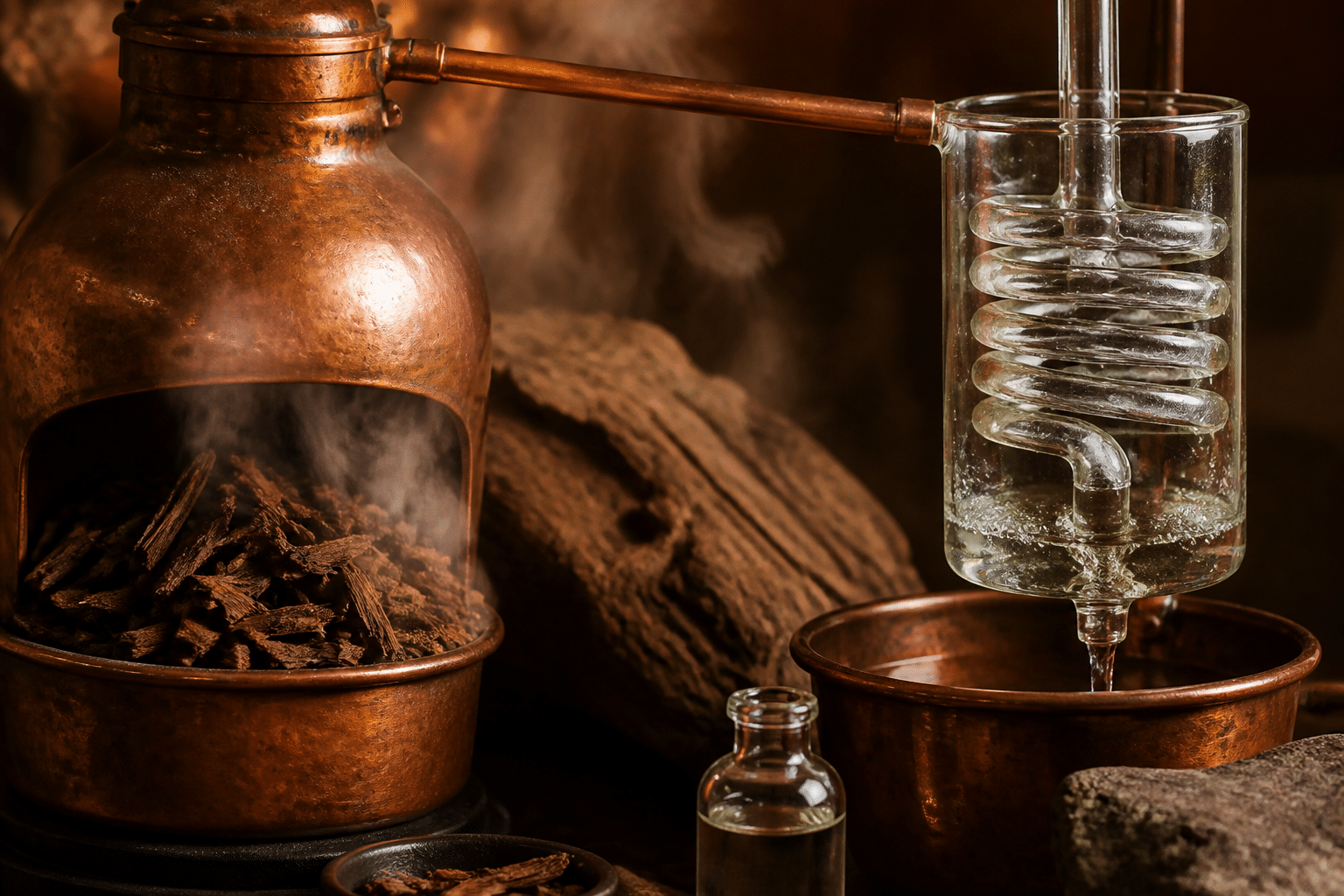
Picture a copper still, steam curling up through chips of sandalwood heartwood. Most people watch for the oil. But the water that drips out beside it is a product too.
How steam distillation makes sandalwood water
Sandalwood water is the aromatic water collected during steam distillation. It’s a co-product of making sandalwood essential oil. Here’s the basic path, based on the Science Learning Hub’s distillation explainer:
- Water is heated until it makes steam.
- The steam moves through the wood.
- It picks up volatile plant compounds.
- A water-cooled condenser turns the vapor back into liquid.
- The oil separates and floats off. The aromatic water left behind is the hydrosol.
Want to see it move? This 3D animation from Copper Alembic shows each step.
So what’s actually in the water? Honestly, nobody has mapped it well. Most studies look at the oil, not the hydrosol. You can expect trace amounts of santalols (the signature sandalwood compounds), a few other volatiles, and some water-soluble plant material. Santalols barely dissolve in water, so levels run far lower than in the oil. Don’t copy oil numbers onto a hydrosol spec sheet.
Sandalwood water vs. oil vs. scented water
These three get mixed up all the time. They’re not the same thing.
| Feature | Sandalwood water (hydrosol) | Sandalwood essential oil | Sandalwood-scented water |
|---|---|---|---|
| How it’s made | Condensed water from steam distillation | Oil separated during distillation | Water mixed with fragrance or oil |
| Dissolves in | Water | Oil | Water, often with a solubilizer |
| Strength | Gentle, light | Very concentrated | Depends on the added scent |
| Scent | Soft, woody, calm | Deep, rich, creamy | Can smell flat or sharp |
| Best used in | Toners, mists, creams | Oil blends, perfumes, balms | Often cheap body sprays |
| Risk | Needs proper preservation | High cost, strong dose | May hide synthetic fragrance |
That last column matters. A bottle labeled “sandalwood water” might just be fragrance in tap water. Same name, very different ingredient.
Why pure Santalum album matters
For a premium formula, you want true, 100% pure hydrosol, and you want the Latin name on the paperwork: Santalum album. “Sandalwood” alone could mean a cousin species, or something woody that only smells close. Any of those can change your scent, your claims, and your customer’s trust.
So ask for proof. A batch-specific certificate of analysis is the starting point. Aroma Monk applies the same lens to its lab-tested oils and rose water: purity you can trace, not just a pretty label.
Next up, we’ll look at what sandalwood water might actually do for skin, and what the evidence can and can’t support.
The Science-Backed Skin Benefits of Sandalwood Water for Modern Formulations

Let’s get one thing out of the way. Most sandalwood research looks at the oil, not the water. So when we talk about benefits here, we’ll say which findings are about the oil, which are about extracts, and which are just traditional use. That’s the honest way to build a claim you can defend.
Calming sensitive skin: the soothing story
Sandalwood has a long reputation for cooling, comforting skin. The lab work gives that some backing. A 2026 study on S. album essential oil found it blocked two inflammation-related enzymes, 5-LOX and PLA2, in vitro. Research summarized by the Tisserand Institute also showed sandalwood oil lowered inflammatory signals in human skin cells.
Here’s the catch. That’s oil. Hydrosol carries far less of the active stuff, so you can’t copy those results onto a bottle of sandalwood water.
A water-based option does exist, though. A 2025 lab study on an S. album water extract reported antioxidant activity and mild blocking of enzymes tied to skin aging and irritation. An extract isn’t a hydrosol either. But it gives you a reason to take water-friendly sandalwood seriously.
So what can you say? “Soothing,” “comforting,” and “traditionally used for calm skin” are fair. “Treats rosacea or eczema” is not. For a sensitive skin line, pair sandalwood water with a short, fragrance-light formula and patch testing.
Gentle toning without the alcohol sting
Old-school toners lean on alcohol, and sensitive skin hates that. A hydrosol base skips the sting.
Supplier specs help here. Aurvanah Botanicals lists its sandalwood water at pH 5.0 to 6.0, and Meena Perfumery lists 5.5 to 6.5. Skin’s surface is naturally a bit acidic, so a mildly acidic water sits comfortably next to it. There’s no official pH standard for sandalwood water, though, so trust the batch certificate over any generic range.
And the “astringent” part? I couldn’t find direct studies on it. What you can honestly claim is a fresh, light feel and skin that looks smoother after use. Skip “shrinks pores.” Pores don’t really work that way.
Clarifying support for breakout-prone skin
This is where people get overexcited. The same 2026 study found the oil stopped growth of Gram-positive bacteria at very low doses (15.625 to 62.5 µg/mL). Neat result. But a hydrosol holds only trace volatiles, so it isn’t a stand-in for that dose.
I also found no independent clinical case studies on sandalwood-water products for acne or sensitive skin. Brand pages mostly offer marketing claims and pH numbers. A 2023 review of the Santalum genus points to antimicrobial potential, again mostly from oil and extracts.
The safest line: sandalwood water is traditionally used in calming, blemish-focused formulas, and human evidence for the hydrosol itself is still thin. If you want stronger claims, test your own finished product.
Quick claim guide for your team
| Benefit | Evidence level | Safe wording |
|---|---|---|
| 🌿 Calming | Oil and extract studies, not hydrosol | “Soothing,” “comforting” |
| 💧 Gentle toning | Supplier pH data, no direct astringent studies | “Alcohol-free, light, refreshing” |
| 🎯 Clarifying | Oil studies only | “Supports a clearer-looking complexion” |
Next, we’ll turn these benefits into an actual formula.
Cosmetic Formulation Guide: Integrating Sandalwood Water into Your Product Line
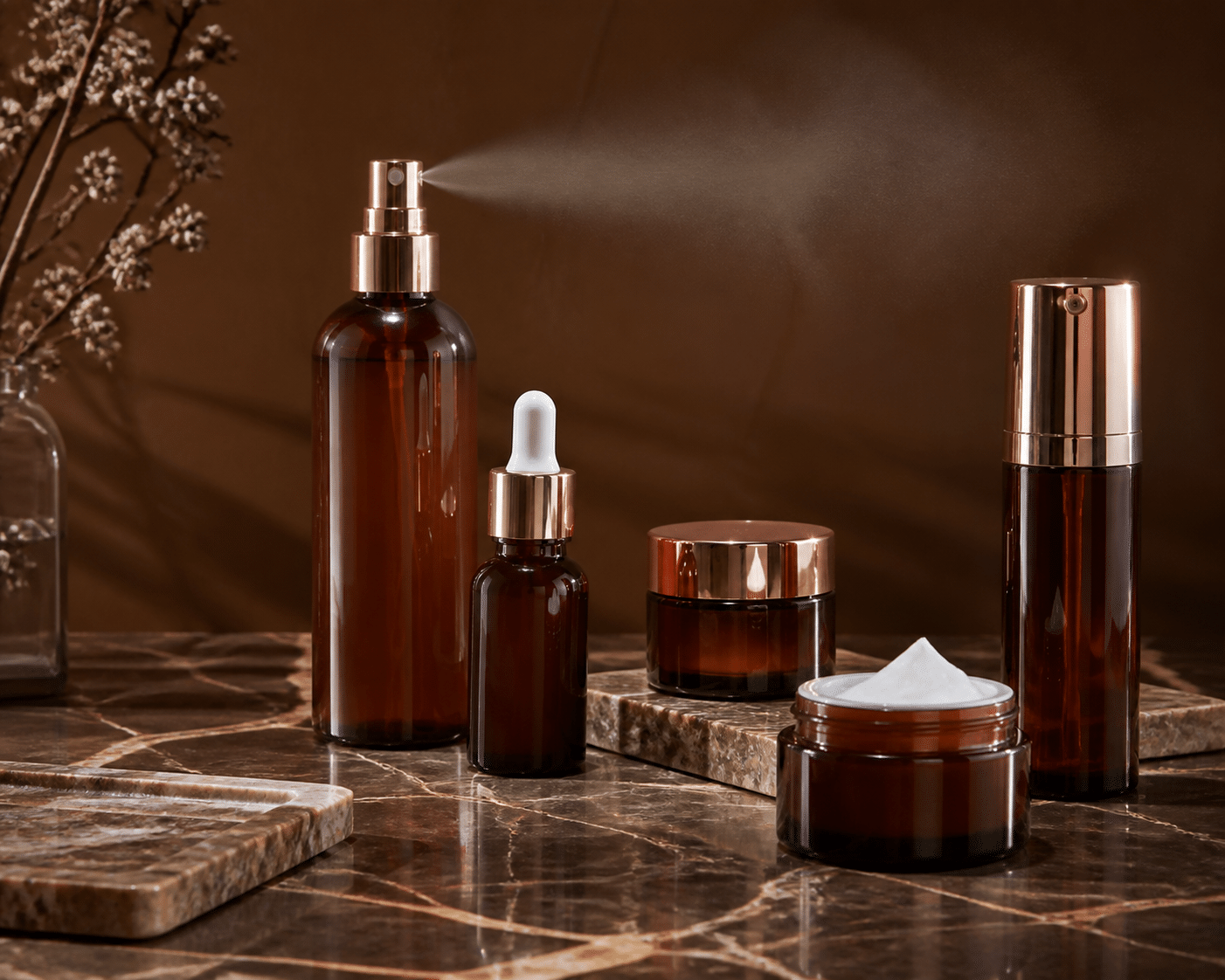
So the sample bottle is sitting on your bench. Now what? The good news is that sandalwood water is easygoing. It’s water-based, mildly acidic, and plays well with lots of formats. But where it shines, and where it just sits there smelling nice, is worth sorting out before you book a pilot batch.
Best product applications for sandalwood water
Think of it as a base ingredient first and a fragrance second. It can replace some or all of the plain water in a formula, and it brings a soft, woody calm along for the ride. Here’s the formulation matrix I’d hand to a development team.
| Product type | What sandalwood water brings |
|---|---|
| Facial mists | Light, alcohol-free feel and a soft woody scent that needs no added fragrance |
| Toners | A gentle water base with a mildly acidic pH, so no sting for sensitive skin |
| Water-based serums | A calming, aromatic carrier for your water-soluble actives |
| Micellar waters | A soft sensory profile in the water phase (check surfactant compatibility first) |
| Clay mask activators | A swap for plain water that adds scent and a more comforting feel on skin |
| Post-shave lotions | An alcohol-free, cooling-feeling base that suits freshly shaved skin |
Notice that every row leans on feel, not medical claims. That’s on purpose. As we covered earlier, the hydrosol evidence is thin, so sensory language keeps you safe.
Smart ingredient pairings
Sandalwood water is a team player. A few combos worth testing on the bench:
- Hyaluronic acid: A hydrating duo for mists and serums. The water carries the humectant, and the scent stays soft.
- Niacinamide: Often used for a smoother, more refined look to pores. Check your finished pH, since niacinamide has its own comfort zone.
- Rose water: A dual-calming pairing. Rose is the familiar crowd-pleaser, and sandalwood adds a deeper, quieter note. (Aroma Monk offers both, which makes sampling the blend simple.)
- Glycerin and panthenol: Classic, cheap partners for toners that need a little extra cushion.
Start with one pairing at a time. Changing three things at once makes it hard to know what actually worked.
Usage levels, pH, and preservation
There’s no official usage limit for hydrosols, so you’re working from good practice. Toners and mists commonly use 50 to 100% of the water phase, while creams and lotions tend to land lower, around 30 to 50%, because emulsifiers can be picky. For sandalwood water, I’d start at roughly 70 to 95% in a toner or mist and 20 to 40% of the total formula in a cream. Treat those as starting points, not rules.
Then there’s pH. Supplier sheets put sandalwood water in the mildly acidic range, so most skin-friendly formulas fit without much fuss. Still, your finished pH depends on everything else in the bottle. Measure it. Don’t guess.
Now the part nobody gets to skip: preservation. Water-heavy products are an open invitation to bacteria and mold, and hydrosols aren’t reliably self-preserving. A broad-spectrum system is a must. Phenoxyethanol with ethylhexylglycerin at about 0.8 to 1% is a common choice, usually with a finished pH around 4.0 to 5.5. Whatever you pick, run a preservative challenge test on the finished product. These tests typically run 28 days, and water-rich formulas are the ones that tend to struggle.
One more thing. Preservative can’t rescue a contaminated raw material, so buying clean hydrosol from a controlled supplier matters before you ever open the batch sheet.
Next, we’ll look at what a formula like this can do for your brand on the shelf.
Get a quote from Aroma Monk.
Essential Oil Supplier – Bulk pricing • Samples • Fast response
The Commercial Advantage: How Sandalwood Water Drives Brand Value and Differentiation
A nice scent is good. A story that fits on a label is better. Sandalwood water gives you both, and that’s where the money is.
Three stories your brand can tell
The Ayurvedic story. Brands like Sahajan show how Indian wellness traditions can feel current, not dusty. Sandalwood has centuries of use in South Asian beauty rituals. Just don’t oversell it. “Ancient secret” claims fall flat without testing behind them.
The sustainable luxury story. Sandalwood water is a co-product of oil distillation. That’s a tidy, honest angle: a traceable Santalum album source, nothing wasted. But only say it if your supplier can prove the chain.
The water-first story. Alcohol-free, plant-water bases fit how people now shop. Rose is the familiar name. Sandalwood is the quieter, deeper one.
Here’s how those stories could look on a bottle:
| Mockup concept | Callout on pack | Story it carries |
|---|---|---|
| Frosted glass mist | “Powered by Pure Sandalwood Hydrosol” | Purity and plant-water base |
| Amber toner bottle | “Ayurvedic Soothing Elixir” | Heritage and ritual |
| Minimal serum tube | “Steam-distilled Santalum album, traceable origin” | Sustainable luxury |
Making a higher price make sense
Shoppers will pay for a story, but only if the product delivers. A 2025 McKinsey analysis says efficacy is still the top purchase factor, with ingredient origin right behind it. Younger buyers lean in harder: willingness to pay more for certified products reaches 62% among 18 to 29-year-olds.
So what do those shelf prices look like? Here’s a rough ladder (retail, not wholesale, and not a forecast for your launch):
| Tier | Typical price per unit | Example |
|---|---|---|
| Mass and indie | $7.50 to $30 | Etsy sandalwood creams and serums |
| Premium | $48 to $95 | Sandalwood moisturizers, serums and masks |
| Luxury | $99 to $155 | Agent Nateur’s sandalwood-rose body and youth serums |
A pure hydrosol base can help you climb that ladder, since you’re paying a bit more per kilo but earning more per bottle. Still, a premium price needs proof. Add patch testing, a consumer perception study, and clear sourcing.
Standing out on a crowded shelf
The market is growing, which also means it’s getting noisy. Here’s the picture from the estimates I found (definitions differ, so treat them as ballpark):
| Segment | Starting point | Growth signal |
|---|---|---|
| Clean beauty | $8.7 billion in 2023 | Forecast $39.0 billion by 2033 |
| Natural beauty | $13.17 billion in 2023 | About 4.4% growth projected for 2024 |
| Clean skincare share | 41.7% of clean beauty sales | Skincare is a top clean category |
Most of those brands reach for rose, aloe, or plain water. A pure sandalwood hydrosol gives you a sensory signature competitors can’t copy overnight. Honestly, there’s no proof yet that shoppers search for it by name. That’s the gamble, and the opening.
Aroma Monk already supplies rose water, so many buyers sample both and compare. Next, we’ll cover how to source authentic sandalwood water in bulk without getting burned.
Procurement Best Practices: Sourcing Authentic, Bulk Sandalwood Water
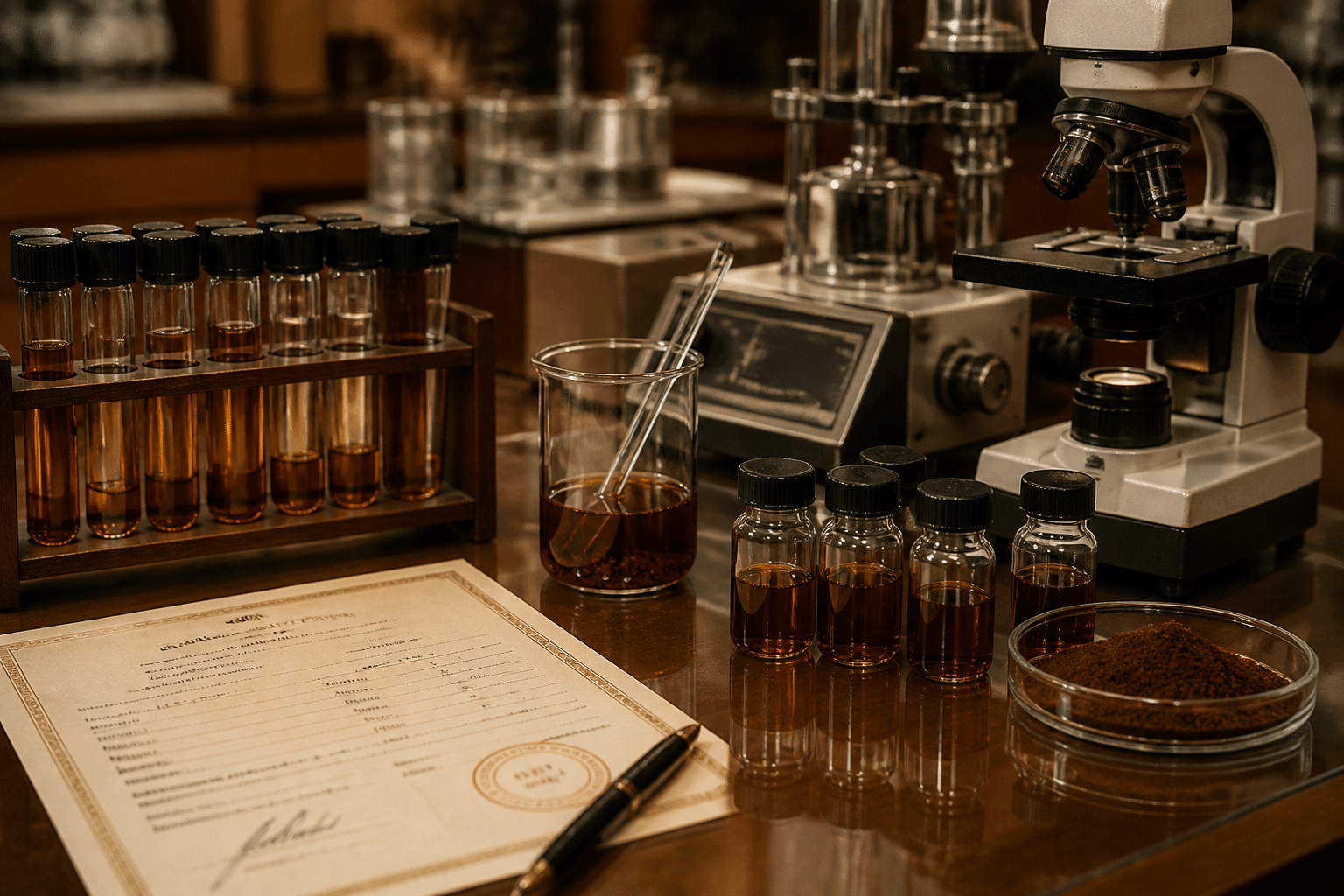
Picture this. A 200 liter drum shows up at your dock, smells lovely, and has a label that says “sandalwood water.” Three weeks later, your toner batch is cloudy. Nobody can tell you what was in that drum.
It happens more than it should. Sandalwood is pricey, so shortcuts tempt sellers. Common ones include watering down the real distillate, adding synthetic sandalwood fragrance, or swapping in a woody lookalike like cedarwood. Lab testing, not your nose, is what catches these tricks, because aroma alone can be faked.
So let’s build a vetting routine you can actually use.
Questions to ask every supplier before you order
Start with these. A good supplier answers fast and in writing. A shaky one gets vague.
| Question | What a good answer looks like |
|---|---|
| Which species is it? | Santalum album, written out in Latin, not just “sandalwood” |
| Where does the wood come from? | Country and region, plus plantation or permit paperwork |
| When was it distilled? | A batch number and a real distillation date |
| Is it a true hydrosol? | Yes, steam-distilled. No added fragrance, oil or solubilizer |
| How is it preserved? | Named preservatives and amounts, or proof of stability if preservative-free |
| Can I get the full lab report? | The actual report, not a one-page spec sheet |
If you want this as a printable list for your team, we’ve turned it into a Supplier Vetting Checklist PDF.
How to read a COA and an SDS
A certificate of analysis (COA) is only useful if you know what you’re looking at. Here’s a made-up snippet, with notes on what each line tells you.
| COA line (example) | What it tells you |
|---|---|
| Botanical name: Santalum album, wood | The species and plant part are named, so no guessing |
| Batch 0425-SW / Distilled: April 2025 | You can trace this drum back to one run |
| pH: 5.6 at 25°C | Mildly acidic, and it should match what you get in your own lab |
| Specific gravity: 0.998 at 25°C | A big drift between batches can hint at dilution |
| Total aerobic count: under 100 CFU/mL | Water-rich products live or die on this number |
| Yeast and mold: under 10 CFU/mL | Same story |
| E. coli, S. aureus, P. aeruginosa, C. albicans: absent | The safety checks that matter most |
| GC-MS: trace santalols detected | Fingerprint of real sandalwood, at hydrosol levels, not oil levels |
Look for named test methods and a signed lab. Also remember a COA covers one batch, so it won’t replace your own challenge test on the finished product.
The safety data sheet (SDS) is the other half. Check the ingredient list, handling and storage notes, and any allergen information. If the SDS lists ingredients your COA never mentioned, ask why.
Certifications can help too, but verify them. The COSMOS database of certified raw materials lets you look up a claim yourself instead of trusting a PDF logo.
Why buying direct from the maker pays off
Brokers can be handy. But each extra hand between the still and your warehouse is another place where documents get lost and quality drifts.
Going direct to the manufacturer shortens that chain. You get one team that knows the batch history, answers COA questions, and can adjust packaging or order size. That’s the approach Aroma Monk takes with its lab-tested essential oils and rose water, managing the path from raw material sourcing to final delivery, with export-ready bulk supply and traceable purity. Buyers already sampling its rose water often find it easy to add sandalwood water to the same conversation.
One thing left to cover: bringing all of this together for your next launch.
Elevate Your Brand with the Purity and Power of Sandalwood Water
So where does that leave us? Sandalwood water is a soft, woody, alcohol-free ingredient that fits toners, mists, and serums with ease. The research on oil and extracts backs up its calming reputation. The hydrosol itself still needs more study, so keep your claims honest: soothing, comforting, refreshing. That’s a promise you can keep.
The business case is just as clear. Shoppers want natural products that actually work, and they want a story they can trust. One report valued the natural cosmetic ingredients market at $10.6 billion in 2025, heading toward $21.7 billion by 2033. A pure Santalum album hydrosol gives you a way to stand out in that crowd.
But it only works if the bottle holds the real thing. Ask for the Latin name. Read the COA. Test your finished formula. And buy from a maker who can show you the whole chain, from raw wood to your dock.
Ready to try authentic sandalwood water in your next formulation? Request a sample, a full documentation pack, and a bulk supply quote from the team at Aroma Monk.
Get a quote from Aroma Monk.
Essential Oil Supplier – Bulk pricing • Samples • Fast response