
Introduction: Beyond the Glow – Rediscovering Candles as a Tool for Wellness
You know that soft candle glow? It feels calm right away. But here’s the part people often miss: not every candle helps your space feel better.
A lot of scented candles are made with paraffin wax and synthetic fragrance. That can mean indoor air full of stuff you probably don’t want hanging around. Some candle smoke can give off VOCs like formaldehyde, benzene, and acrolein, especially in rooms with poor airflow (EPA candle emissions notes). Weird, right? Something made for relaxing can end up doing the opposite.
That’s why beeswax candles have been getting so much love again. Pure beeswax candles bring warm light, a natural honey scent, and a cleaner feel that fits wellness routines much better than many cheap scented candles. People also like them because they usually burn slower and make less soot than paraffin. And if you’re into natural aromatherapy candles, they’re a lovely place to start.
Actually, wait, there’s a better way to think about it. Beeswax candles aren’t magic, but they do give you a simple swap that feels more natural, more honest, and a lot more soothing. In this guide, we’ll look at beeswax candles benefits, how to use beeswax candles for aromatherapy, and what to watch for when you want healthy candles that truly support your home.
1. The Problem with Paraffin: What’s Really in Your Scented Candle?
You light a candle to relax. Simple enough. But if that candle is made with paraffin, the air in your room may be getting a little messier than you think.
Paraffin wax is a petroleum byproduct. That means it comes from crude oil. Not exactly the same vibe as a calm bath and a cup of tea, right? When paraffin candles burn, they can release chemicals like benzene, toluene, formaldehyde, acetaldehyde, acrolein, naphthalene, styrene, xylenes, and PAHs. The EPA candle emissions notes also points to trace emissions like formaldehyde, acetaldehyde, acrolein, and naphthalene.
And then there’s fragrance. A lot of scented candles use synthetic scents that can give off VOCs. Some people notice headaches, watery eyes, or just that weird heavy feeling in a closed room. Others may react like they do to other allergens. Plus, some fragrance chemicals are talked about as possible hormone disruptors, which is why many shoppers now look for non-toxic candles instead.
Soot is another big one. Poorly made paraffin candles can leave black marks on jars, walls, and even ceilings over time. That soot is more than a cleanup annoyance. It can add fine particles to indoor air, which is not great for anyone with breathing trouble. Beeswax candles usually make less soot, but paraffin tends to be the dirtier burn.
Here’s the deal:
| Candle Type | Main Base | Common Concerns | Air Feel |
|---|---|---|---|
| Paraffin | Petroleum wax | VOCs, soot, synthetic fragrance | Heavier, smokier |
| Beeswax | Natural wax from bees | Can still make some smoke if the wick is off | Cleaner, softer |
Not every paraffin candle is a disaster. But if you burn one in a small room with the windows shut, the mix of smoke and fragrance can build up fast. So if you want a more peaceful ritual, switching to pure beeswax candles is a pretty easy first step. And honestly, that swap can make your home feel a lot more like a wellness space.
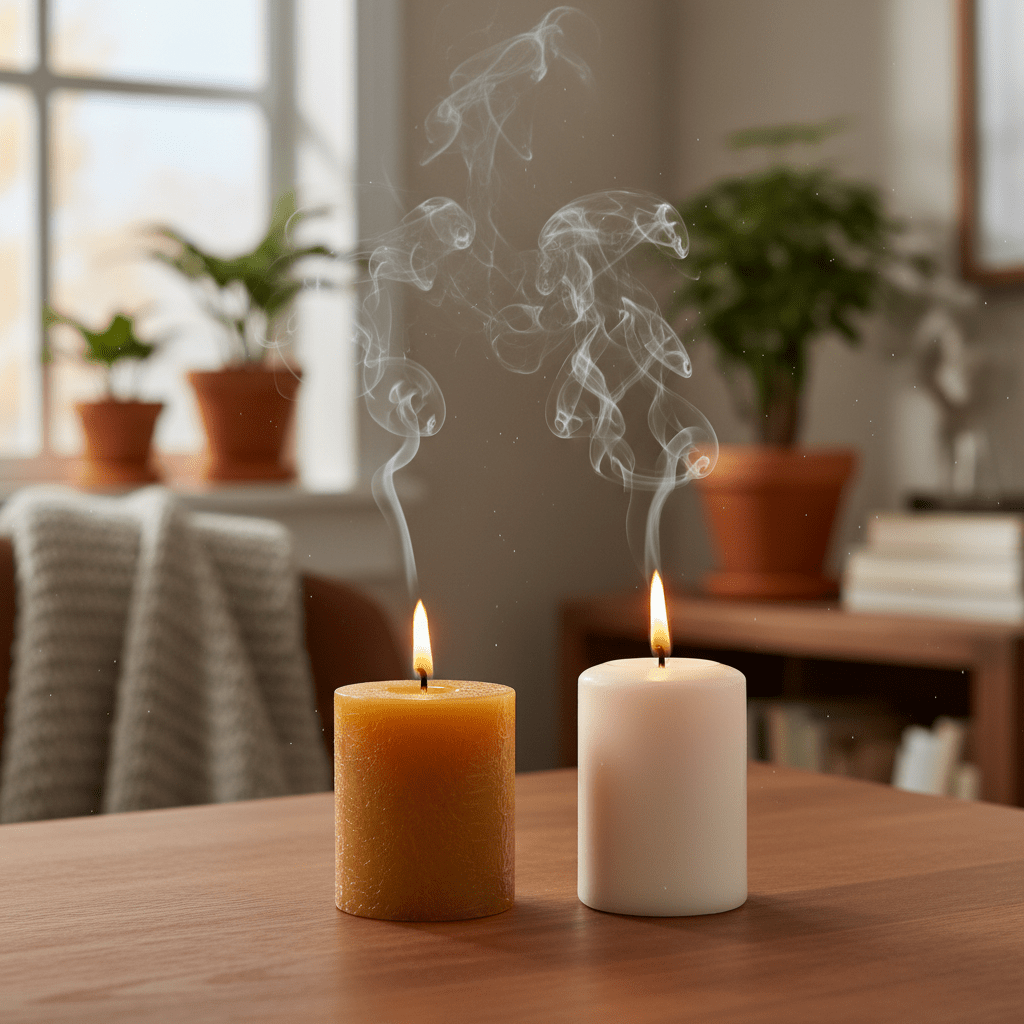
2. The Golden Standard: Why Beeswax is Nature’s Perfect Candle
There’s a reason beeswax candles have that almost old-school charm. They feel simple. Honest. Like something your grandma would have kept on a side table near the window.
And that feeling starts with where beeswax comes from. It’s a natural byproduct of honey production, so it’s tied to the work bees are already doing. That makes pure beeswax candles a nice fit for people who want non-toxic candles and materials that break down more easily after use. Not perfect, no. But a lot kinder to the planet than many cheap wax blends.
The burn is where things get really interesting. Beeswax has a higher melting point than paraffin, so it usually burns slower and lasts longer. That means fewer candle swaps, less mess, and a steadier glow. The light itself also sits closer to sunlight on the color scale, which is why beeswax candles can feel so warm and soft in a room. Cozy, but not sleepy-cozy. More like calm and clear.
Now, you might hear people talk about beeswax as one of the air purifying candles. The claim is that it releases negative ions that help pull dust, dander, and pollen out of the air. That idea gets repeated a lot in wellness spaces, but the science is weak. So I’d treat that part carefully. What we do know is simpler: beeswax candles usually burn cleaner than paraffin, with less soot and fewer unwanted bits floating around.
Here’s a quick look at why people choose them:
| Beeswax Candle Trait | What It Means | Why People Like It |
|---|---|---|
| Natural origin | Made from bee wax after honey work | Feels more pure and earthy |
| Slower burn | Higher melting point | Lasts longer |
| Soft light | Near sunlight on the spectrum | Feels warm and easy on the eyes |
| Low soot | Cleaner burn than paraffin | Less black smoke and cleanup |
| Natural scent | Light honey notes | Works well as a honey candle |
And that light honey scent? It’s one of the nicest surprises. Pure beeswax candles often carry tiny traces of pollen, nectar, and propolis from the hive. That’s what gives them their gentle smell without needing synthetic fragrance.
If you’re using beeswax for aromatherapy, this is where it shines most. It gives you a calm base for a ritual, even before you add anything else. Some makers also create beeswax essential oil candles, but a lot of people like them plain because the wax itself already feels grounding.
So if you want healthy candles that look good, burn slowly, and fit a more natural home, beeswax is a pretty strong place to start. And if you’re a brand or maker looking for pure aroma ingredients to pair with them, Aroma Monk’s essential oils and natural attars can fit beautifully into that kind of product line.
3. The Synergy: Can You Truly Use Beeswax Candles for Aromatherapy?
You know that feeling when a room just settles? Not fancy. Not fake. Just calm. That’s what people are usually after with beeswax candles, and honestly, there are two pretty simple ways they do it.
First, some folks love pure beeswax candles on their own. That soft honey smell is gentle, warm, and a little earthy. No big perfume cloud. Just a quiet scent that feels close to nature. Second, others go for beeswax essential oil candles, where the wax holds a natural oil blend and adds a bit more aroma. Both can work for natural aromatherapy candles. But they work in different ways.
And here’s the part that surprises people: a beeswax candle will not smell as strong as a synthetic candle. That’s normal. Actually, that’s kind of the point. A lower scent throw often means fewer harsh additives and less heavy fragrance in the air. If you want healthy candles, subtle is usually a good sign, not a flaw.
| Approach | What You Smell | Best For |
|---|---|---|
| Pure beeswax candles | Light honey and wax notes | Quiet, gentle rituals |
| Beeswax essential oil candles | Beeswax plus plant oil scent | Meditation, baths, evening wind-down |
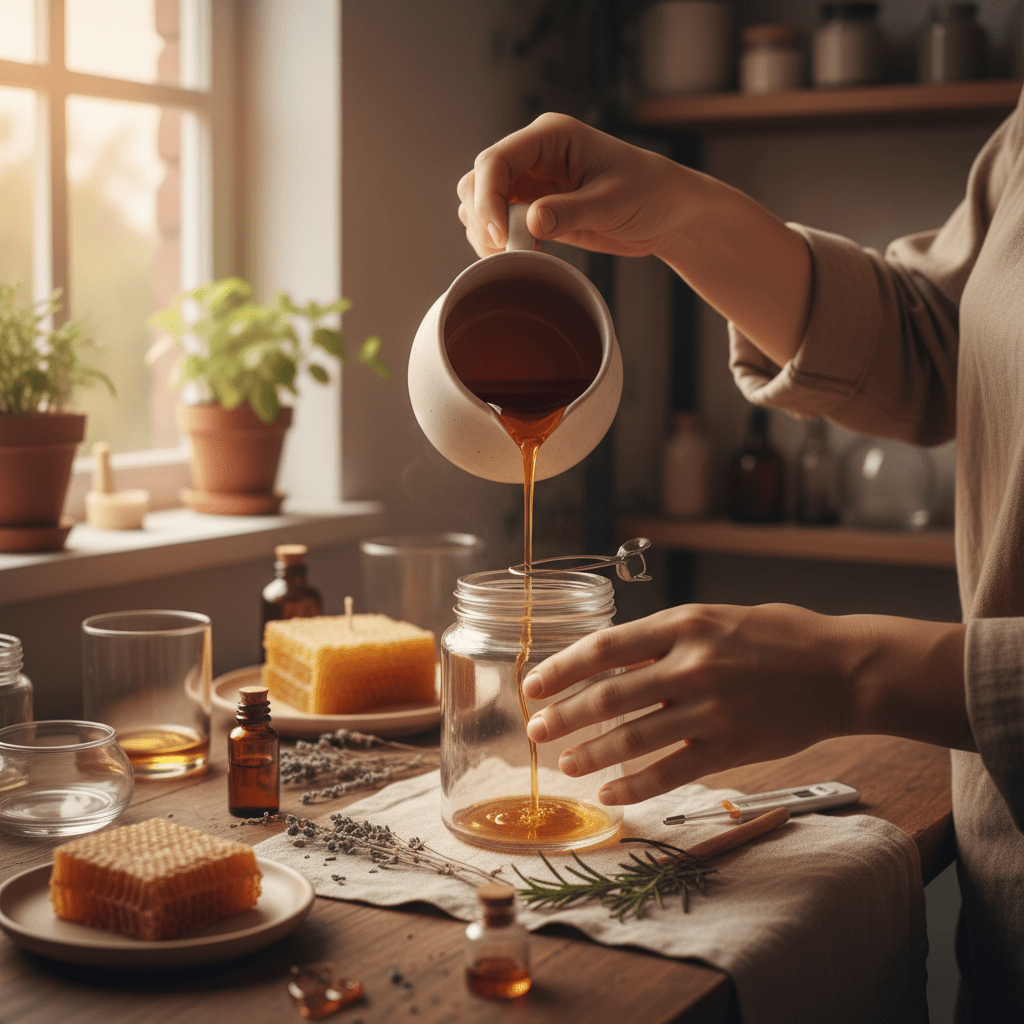
But not every beeswax essential oil candle is made well. The oil matters. So does the maker’s process. Good essential oils should be pure, not watered down with mystery stuff. And they need the right flash point too, since oils can burn off if they’re added too hot. Most candle makers add them around 70 to 80°C, which helps keep the scent from disappearing before the candle even cools.
I’d also look at the blend itself. Oils like lavender, patchouli, and ylang-ylang tend to do better in beeswax. Some lower flash point oils can be trickier. Eucalyptus globulus, for example, is often not the best pick for candle making. Funny how something that smells amazing in a diffuser can act very differently in wax, right?
If you’re buying or making one, here’s what to check:
- Is the wax mostly or fully beeswax?
- Are the essential oils pure and lab tested?
- Does the maker say when the oils are added?
- Is the wick sized right for a clean burn?
- Does the candle smell natural, not loud?
And one more thing. If you use beeswax for aromatherapy, keep the session short. One to three hours is a good range. Trim the wick to 1/4 inch. Let the first burn reach the edge of the container so it doesn’t tunnel. Small stuff, but it makes a big difference.
So yes, you can absolutely use beeswax candles for aromatherapy. Just keep the expectations real. They’re not trying to smell like a candy shop. They’re trying to feel calm, clean, and close to the earth. That’s a pretty nice trade.
If you’re a brand making your own line, this is also where good ingredients matter a lot. Aroma Monk’s pure essential oils and natural attars are a strong fit for beeswax candle blends, especially if you want a cleaner, more natural scent story for your product line.
4. A Conscious Buyer’s Guide: How to Choose Authentic Beeswax Candles
Ever bought a candle that looked perfect online, then smelled like a closet and burned like a tiny smoke machine? Yeah. Been there.
That’s why buying beeswax candles takes a little eye for detail. The good news? You don’t need to be a candle expert. You just need to know what to look for.
Start with the wax itself. 100% pure beeswax candles usually have some natural color shift. They can look golden yellow, deep amber, or even pale cream if they’ve been filtered or lightly bleached. Color alone won’t tell you everything, but a strong fake-looking color with a super sweet scent can be a red flag. Real beeswax often smells soft and honey-like, not perfume-heavy. And if you see a faint white film on top, that might be beeswax bloom. It’s normal. Actually, it’s often a good sign of purity.
Here’s a quick cheat sheet:
| What to Look For | What It Usually Means |
|---|---|
| Light honey scent | Likely real beeswax, not strong fragrance |
| White bloom on top | Natural beeswax change, often a purity sign |
| Yellow to cream color | Normal for pure or lightly filtered wax |
| Very glossy, perfect finish | Might be blended with other waxes |
The wick matters too. A clean burn starts there. Look for 100% cotton wicks or wood wicks with no metal core. Metal-core wicks are a no-go if you want healthier candles and less junk in the air. A good wick helps the candle burn steady, with less soot and less flicker. Tiny thing. Big deal.
Also, ask where the wax came from. The best makers are open about their beeswax sourcing. Local beekeepers are a great place to start, especially if they care about healthy bee populations and gentle harvesting. Transparent brands usually tell you if the wax is raw, filtered, or blended. And if a label just says “beeswax candle” but won’t say more… well, that’s a clue too.
One more thing for brands and DIY makers. In the U.S., candle labels must list basic details like the product name, maker, and net weight, but they don’t have to spell out wax type. So if you’re shopping for non-toxic candles or making your own line, ask direct questions. Don’t assume.
If you want candles for using beeswax for aromatherapy, start with a clean base and pair it with trusted ingredients. That’s where a supplier like Aroma Monk can help, since their pure essential oils and natural attars are made for people who care about quality and source clarity.
And honestly, that’s the whole game. Real wax. Clean wick. Honest sourcing. Simple enough, but surprisingly hard to find.
Get a quote from Aroma Monk.
Essential Oil Supplier – Bulk pricing • Samples • Fast response
5. Creating Your Aromatherapy Ritual: A Practical Guide
You know that little moment when the room goes quiet and the candle starts to pool? That’s the sweet spot. Not magic. Just a calm routine that works.
And honestly, how to use beeswax candles the right way is half the win. Start with the first burn. Let the wax melt all the way to the edges of the jar before you blow it out. If you stop too early, it can tunnel down the middle and waste good wax. A simple rule is about 1 hour for every inch of candle width. Tiny habit. Big payoff.
Here’s a simple first-burn flow:
- Trim the wick to 1/4 inch.
- Light the candle in a draft-free spot.
- Let the melt pool reach the sides.
- Burn for 1 to 3 hours.
- Snuff it out, then let it cool.
Now for the fun part. Aromatherapy recipes. These are easy blends for beeswax essential oil candles:
| Wellness goal | Oil blend | Mood |
|---|---|---|
| Relaxation | Lavender + a touch of ylang-ylang | Soft and sleepy |
| Focus | Peppermint + eucalyptus | Bright and clear |
| Energy | Sweet orange + lemon | Fresh and sunny |
But keep it gentle. Beeswax holds scent in a soft way, so these natural aromatherapy candles should feel calm, not loud. If you’re making your own, use pure oils and add them when the wax cools a bit. That helps the scent stay in the candle instead of disappearing into the air too soon.
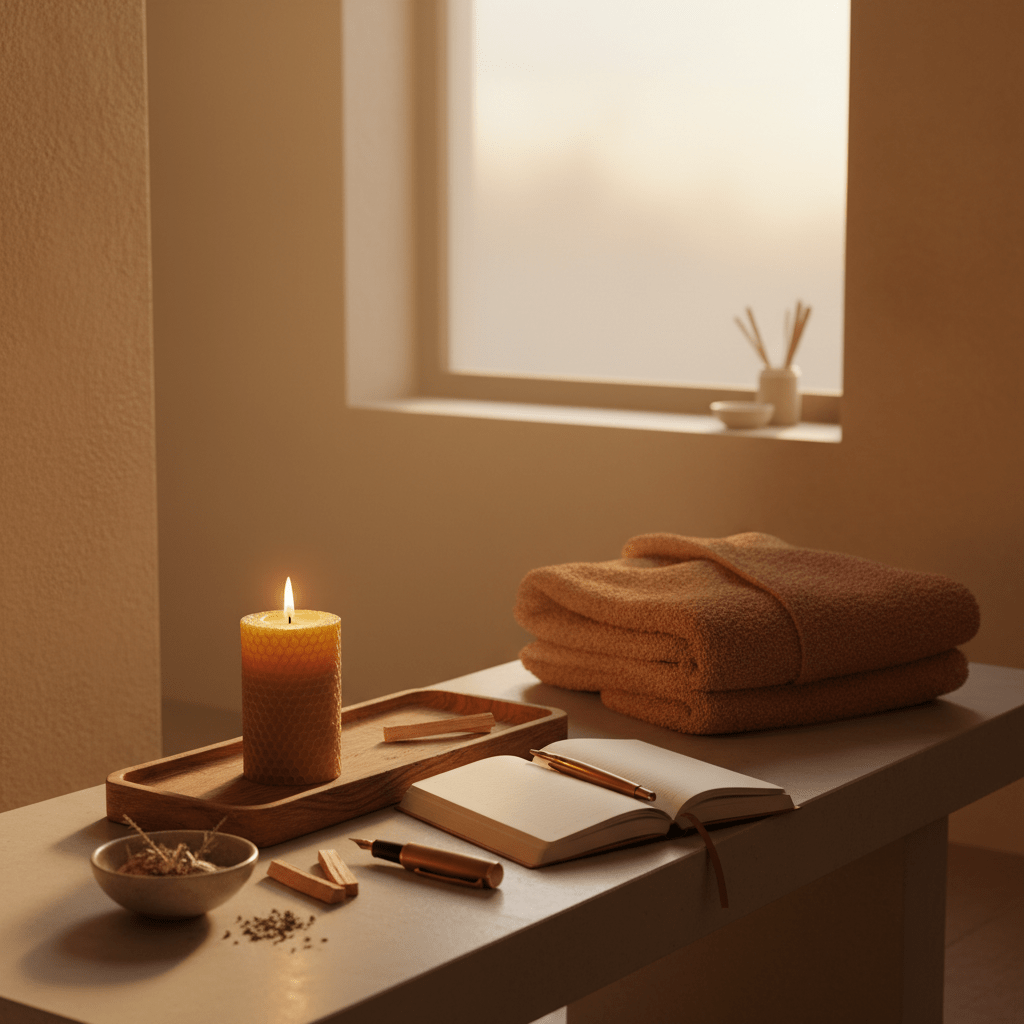
I like pairing a candle with something simple. A few minutes of journaling. A short meditation. Or a warm bath with no phone nearby (harder than it sounds, I know). That combo turns a nice smell into a real reset.
If you’re building a product line or buying in bulk, Aroma Monk’s 100% pure essential oils and natural attars are a solid match for healthy candles and wellness blends. Clean ingredients make the whole ritual feel better. And when the candle, the scent, and the moment all line up? That’s the part people come back for.
6. Debunking Myths & Answering FAQs about Beeswax Candles
You know what gets me? People hear “beeswax candles” and сразу think they’re either too fancy, totally scentless, or all basically the same. Nope. Not even close.
Myth 1: Beeswax candles are too expensive.
At first glance, sure, they can cost more than cheap paraffin candles. But they usually burn longer, so the cost per hour often looks a lot better. Say a paraffin candle costs $12 and burns for 30 hours. That’s 40 cents an hour. A $18 beeswax candle that burns for 50 hours comes out to about 36 cents an hour. Not a huge gap. Sometimes even less. Plus, you’re paying for a cleaner, slower burn.
Myth 2: Beeswax candles have no scent.
Actually, they do. Just not the loud, perfume-heavy kind. Pure beeswax candles have a soft honey smell that feels warm and natural. It comes from tiny traces left in the wax, like pollen, nectar, and propolis. So if you’re used to strong synthetic fragrance, the scent may seem quiet at first. But that’s kind of the charm.
Myth 3: All beeswax candles are the same.
Not even a little. Purity matters. So does sourcing. And the wick matters too. A real beeswax candle should list 100% beeswax, with a cotton or wood wick and no metal core. If the label is vague, or the scent smells oddly sugary, you may be looking at a blend with paraffin or other fillers.
Here’s a quick cheat sheet:
| Question | Good sign | Watch out for |
|---|---|---|
| Is it pure beeswax? | Says 100% beeswax | No clear wax info |
| Does it smell natural? | Light honey scent | Heavy perfume blast |
| Is the wick clean? | Cotton or wood wick | Metal core wick |
One more thing. Some people worry about beeswax bloom, that soft white film on the surface. It looks odd, but it’s usually a sign of natural wax, not a flaw.
So if you want healthy candles or natural aromatherapy candles, don’t just buy the prettiest jar. Read the label. Ask questions. And if you make your own product line, Aroma Monk’s 100% pure essential oils and natural attars can pair well with authentic beeswax bases for a cleaner finish and a better scent story.
Conclusion: Illuminate Your Wellness Journey, Naturally
If you’ve made it this far, you probably already feel the shift. Beeswax candles are not just pretty light. They can give you a cleaner burn, a softer scent, and a calmer kind of aromatherapy that fits real life.
And that’s the big win. Switching to beeswax candles is a small change, but it can make your home feel more peaceful and less full of synthetic fragrance. Whether you choose pure beeswax candles, honey candles, or beeswax essential oil candles, you’re picking a more natural path for daily routines.
There’s no need to make it complicated. Start with one candle. Try it during your evening tea, your bath, or a 10-minute journal break. Light it. Sit still. See how it feels.
If you want a gentle first step, choose a 100% beeswax candle and keep the first burn slow and steady. Simple. Calm. Honest. That’s a pretty good place to begin.
Get a quote from Aroma Monk.
Essential Oil Supplier – Bulk pricing • Samples • Fast response