
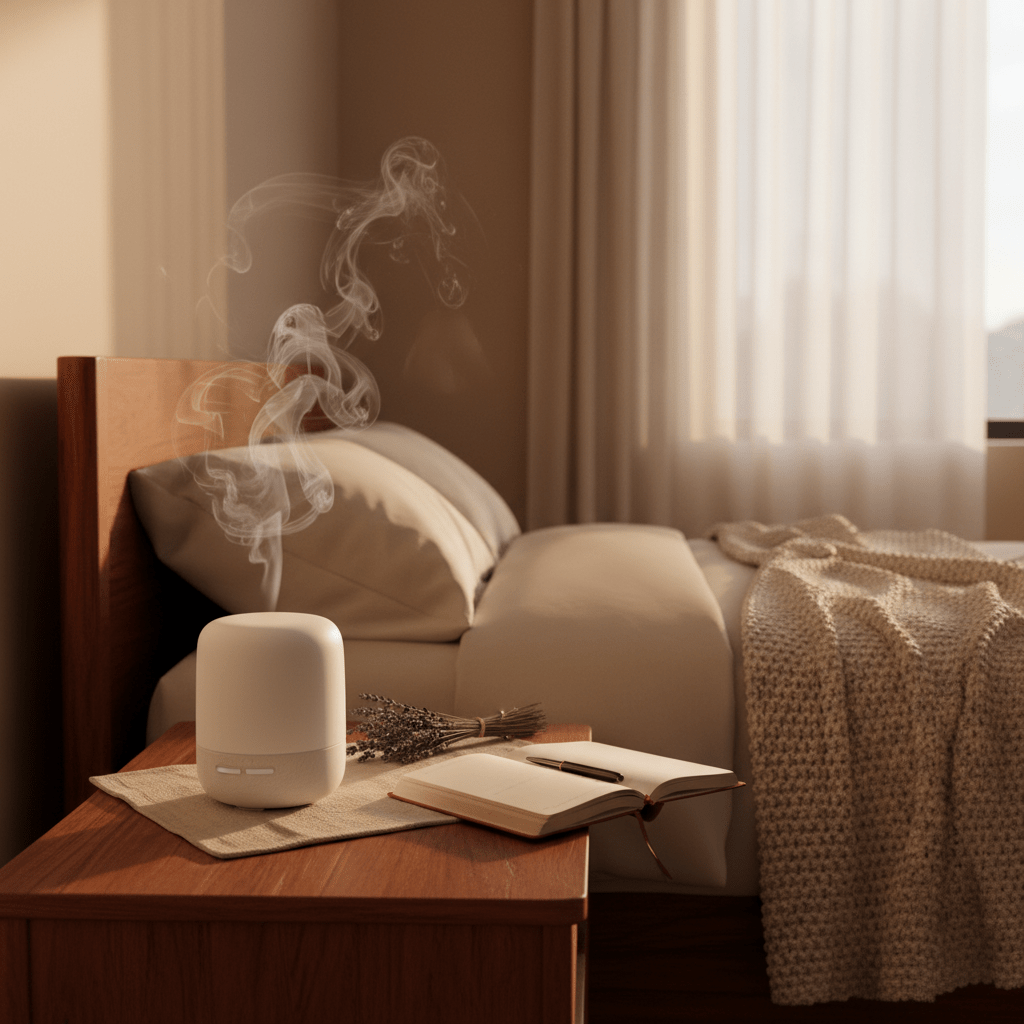
Tired of Stress? Your Guide to Natural Relaxation with Aromatherapy
You know that feeling when your shoulders stay up by your ears all day? Yeah, that one. A lot of us are living there now.
Stress has become a daily thing for many adults. In the APA’s recent Stress in America survey, 62% of adults said they felt a lot of stress, and 69% pointed to misinformation as a big stressor. That matches what many of us feel at work, at home, and even on our phones. Too much. Too fast. Too loud.
That’s where an aromatherapy oils diffuser can help. It’s a simple way to bring calm into a room without a huge routine. You add a few drops of oil, turn it on, and let the scent do its thing. Simple. Nice. Very low fuss.
This guide covers the basics without making it weird or complicated. We’ll look at how an oil diffuser works, what oils are good for stress, a few calming essential oil blends, and how to use an oil diffuser for relaxation in a safe, smart way. We’ll also touch on choosing an aroma diffuser that fits your space and your budget.
And if you’re wondering whether this is just trend talk, fair question. The global aromatherapy market keeps growing, and that usually happens when people find real day-to-day value in something. Not magic. Just a little breathing room.
If you make wellness products or buy oils in bulk, Aroma Monk also offers lab-tested essential oils, natural attars, and rose water for B2B needs. But for now, let’s get you a calmer room first.

Understanding Aromatherapy: How Diffusers Turn Scent into Serenity
Ever notice how one smell can flip your mood fast? Fresh coffee. Rain on dry pavement. Lavender on a pillow. Scent does that stuff to us.
That’s the heart of aromatherapy. It uses plant extracts, often essential oils, to support health and well-being in a gentle, natural way. People use it for sleep, calm, focus, and plain old comfort. And with stress this high, it makes sense that more folks are trying simple tools at home. In the APA’s 2025 survey, 62% of adults said they felt a lot of stress. That’s a lot of tense shoulders.
So where does an aromatherapy oils diffuser fit in? Pretty neatly, actually. An ultrasonic diffuser mixes water with a few drops of oil, then uses fast vibrations from a tiny disc to break that mix into a cool mist. No heat. No flame. Just a soft scent drifting through the room. Nice, right?
Here’s the simple brain part too. Smell has a straight path to the parts of the brain that deal with memory and feelings, like the amygdala. That’s why calming scents can sometimes feel like they work almost right away. Weirdly fast. But in a good way.
There are a few common diffuser types:
| Diffuser type | How it works | Good points | Trade-offs |
|---|---|---|---|
| Ultrasonic | Water + oil + vibrations | Quiet, low cost, adds a little humidity | Dilutes the oil |
| Nebulizing | Oil goes in pure | Strong scent, no water needed | Louder, uses more oil |
| Evaporative | Oil spreads through air flow | Simple and portable | Weaker scent, pad changes needed |
| Heat | Warmth releases scent | Easy to use | Heat can change the oil |
For most homes, ultrasonic is the one people reach for first. It’s gentle, quiet, and helps keep the oil closer to its natural state. Plus, the tiny bit of added moisture can be nice in dry rooms. Not too much. Just enough.
And if you’re thinking about choosing an aroma diffuser for a bedroom, office, or small studio, that’s the smart place to start. Keep it simple. Test one oil. See how the room feels. Then build from there.
The Science of Scent: How Inhaling Essential Oils Calms Your Brain
You know that odd little moment when a smell hits you and your whole mood shifts? Maybe it’s lavender on fresh sheets. Or orange peel on your fingers. Or that clean, woody smell in a spa that makes you slow down without even trying. Weird, right? But there’s a reason.
Your nose has a direct line to the emotional part of your brain. Scent signals move through the olfactory nerves and head straight to the limbic system, which helps handle memory, feelings, and stress. That means an aromatherapy oils diffuser can do more than make a room smell nice. It can help set a calmer tone fast.
Here’s the simple version. When you breathe in essential oils, tiny scent molecules travel up to your olfactory bulb. From there, the message goes to places like the amygdala and hippocampus. Those are the parts linked to fear, memory, and mood. So if you’re using an aromatherapy oils diffuser with the right oils, your brain may respond with more ease and less tension. That’s one reason people ask about what oils are good for stress and keep reaching for calming scents at home.
Some oils may also nudge your brain toward feel-good messengers like serotonin and dopamine. That sounds fancy, but really it just means your body can start to feel a bit safer and more settled. Lavender is the classic example. Its main compound, linalool, has been studied for calming effects, and that’s a big reason lavender oil diffuser benefits get talked about so much. Citrus oils are popular too. They often contain limonene, which gives that bright, fresh smell people love in daytime blends.
A few calming oils and their scent vibes:
| Oil | Scent profile | Why people use it |
|---|---|---|
| Lavender | Soft, floral, a little herb-like | Good for winding down and sleep time |
| Bergamot | Bright citrus with a floral edge | Often used for anxious, busy days |
| Roman chamomile | Sweet, apple-like, gentle | Nice for bedtime blends |
| Frankincense | Warm, woody, earthy | Helps a room feel grounded |
| Vetiver | Deep, smoky, rooty | Good for heavy, restless evenings |
And yes, blends matter. A few drops of lavender with bergamot can feel lighter than lavender alone. Frankincense can add depth. Chamomile can soften everything. That’s why people look for best diffuser oils for anxiety and build their own calming essential oil blends instead of using just one scent all the time.
The part I like most? You don’t need a giant routine. Just a small diffuser, a few drops, and a quiet minute. If you want natural stress relief with aromatherapy, start simple. Try one oil. Then mix it up. See how your room feels. And if you make wellness products or need bulk oils for your line, Aroma Monk’s lab-tested essential oils, natural attars, and rose water can fit that kind of work too.
Turn the diffuser on. Breathe. Let your brain catch up.

Get a quote from Aroma Monk.
Essential Oil Supplier – Bulk pricing • Samples • Fast response
Top 7 Essential Oils for Your Stress-Relief Diffuser
You know that one smell that makes your shoulders drop a little? For me, it’s usually lavender. For you, it might be orange peel, clean sheets, or that woody scent from a nice spa. Funny how fast the body reacts.
And that’s why a good aromatherapy oils diffuser can be such a handy little tool. It turns a few drops of oil into a soft mist, so the scent spreads through the room without heat or flame. If you’ve been looking for essential oils for stress, this is the part where things start to get real practical.
Here are 7 oils people reach for again and again.
1. Lavender
Lavender is the all-star here. Soft. Floral. A little herb-like. It’s the oil most people think of for sleep and calm, and there’s a reason it keeps showing up in lavender oil diffuser benefits talk. A 2023 review of 44 trials found lavender helped lower anxiety, which lines up with what a lot of people feel at home.
The main compound in lavender is linalool. That’s the part researchers keep studying for calming effects. It seems to help quiet stress signals and support a more settled mood. Not magic. Just a scent that many nervous systems seem to like.
Best blend partners: bergamot, clary sage, and Roman chamomile.
2. Bergamot
Bergamot smells bright and cheerful at first, then it softens. Kind of like sunshine with a calm edge. It’s one of the best diffuser oils for anxiety if you want something that feels uplifting but not sharp.
People often use it during long workdays or on gloomy afternoons. I’ve seen it in blends for heavy moods, too. Citrus oils can feel a little like an open window in a stuffy room. Nice shift.
Best blend partners: lavender, frankincense, and ylang ylang.
3. Roman Chamomile
Roman chamomile is gentle. Sweet, apple-like, and very easy on the nose. If your brain feels overworked at night, this one can feel like a soft blanket. It’s often used in calming essential oil blends for bedtime.
This is a good pick if you want to slow the whole room down. Not just the smell. The mood too. Some people like it on nights when they’re tired but still wired. You know the feeling.
Best blend partners: lavender, geranium, and bergamot.
4. Ylang Ylang
Ylang ylang is rich and floral, with a deep sweet-balsamic smell. A little goes a long way. Too much can feel heavy, so start small. Really small.
People use it for tension, emotional stress, and those moments when the mind won’t stop buzzing. It tends to feel soothing in the evening, especially when paired with something lighter. It can also help a blend feel more lush and round.
Best blend partners: bergamot, jasmine, and vetiver.
5. Frankincense
Frankincense smells warm, woody, and kind of steady. If lavender is the soft blanket, frankincense is the deep breath. It’s a nice oil when you want a more grounded feeling, almost like your room is saying, “Hey, slow down a minute.”
This one works well for quiet time, prayer, journaling, or just sitting still for a few minutes. People like it because it feels centered. Calm, but not sleepy.
Best blend partners: lavender, bergamot, and sandalwood.
6. Clary Sage
Clary sage has an earthy, slightly nutty smell. It’s another favorite in natural stress relief with aromatherapy because it feels balancing and soft at the same time. Some people reach for it when their mind feels cluttered or their mood feels off.
It blends nicely into both bright and grounded mixes, which makes it pretty flexible. A little goes a long way here too. Start with just a few drops.
Best blend partners: lavender, geranium, and ylang ylang.
7. Vetiver
Vetiver is deep, smoky, and earthy. It’s the one people call the oil of tranquility, and honestly, that name fits. If your mind is racing or you feel rattled, vetiver can make a blend feel heavier in a good way. More anchored.
It’s especially nice at night or after a hard day. Not everyone loves the smell on its own, but mixed with lavender or bergamot, it can be amazing. Earthy. Quiet. Steady.
Best blend partners: lavender, clary sage, and bergamot.
Quick Blending Guide
If you’re wondering what oils are good for stress, the answer is often the simple ones first. Start with 2 or 3 oils. That’s usually enough.
A good rule for a diffuser is 2 to 4 drops per 100 ml of water. If you’re testing a blend, try 10 drops total first. That way you can tweak it without wasting oil or making the room smell like a perfume shop from 1998.
Here’s an easy way to think about blend notes:
| Note type | What it does | Example oils | Simple share |
|---|---|---|---|
| Top note | First smell you notice | Bergamot, orange | 30% |
| Middle note | Main heart of the blend | Lavender, chamomile, clary sage | 50% |
| Base note | Lasting anchor | Vetiver, frankincense | 20% |
A simple evening blend could be:
- 4 drops lavender
- 3 drops bergamot
- 2 drops frankincense
- 1 drop vetiver
That mix feels soft, bright, and grounded. A nice all-around start for an aromatherapy oils diffuser.
A few safety notes
Keep the room airy. Especially if you have pets or kids around. Cats are extra sensitive to many oils, and some scents can bother dogs too. If you’re pregnant, breastfeeding, or dealing with asthma, ask a health pro first.
And go slow. More oil does not always mean better results. Sometimes it just means a headache.
If you want to keep building your own blends, Aroma Monk offers lab-tested essential oils, natural attars, rose water, and other fragrance oils for bulk and B2B needs. That can be handy if you’re making products, stocking a wellness line, or just want a dependable source for quality oils.
A small diffuser. The right oil. A quieter room. That’s a pretty good place to begin.

Your Personal Sanctuary: Crafting Calming Diffuser Blends
You know that moment when a room just feels too loud, even when nobody’s talking? Yeah. That’s usually my sign to stop, breathe, and make the air a little kinder.
A good aromatherapy oils diffuser can help with that. Not by fixing your whole day. But by giving your brain a softer place to land. And honestly, that’s a pretty sweet win.
Here’s the deal: the best blends are usually simple. Start with 2 or 3 oils. Keep the total at about 6 to 10 drops for a standard 100 to 200 ml diffuser. If your diffuser is tiny, use less. If it’s a bigger room, you can nudge it up a bit. But don’t go wild. More scent can turn into a headache fast.
1. Sleepy Slumber
This one is for nights when your mind keeps chatting long after your body wants to stop.
- 5 drops lavender
- 3 drops Roman chamomile
This mix smells soft, floral, and a little sweet. Lavender brings the calm, while chamomile rounds it out and makes it feel extra gentle. I’d use this one in a bedroom, maybe 30 minutes before bed, as part of how to use an oil diffuser for relaxation.
2. Anxiety Soother
You know that shaky, wired feeling? This blend is for that.
- 4 drops bergamot
- 3 drops frankincense
- 2 drops ylang ylang
Bergamot adds a bright lift. Frankincense gives it a steady base. Ylang ylang brings a rich floral note that softens the whole thing. It’s one of those best diffuser oils for anxiety mixes that feels both uplifting and grounded. Nice combo. Very room-saving.
3. Focus & Calm for Work
This one is for Monday brain. Or Tuesday brain. Or really any day your to-do list is acting rude.
- 4 drops clary sage
- 3 drops lavender
- 1 drop vetiver
Clary sage helps the blend feel clear but not sharp. Lavender keeps it calm. Vetiver gives it a deep, earthy finish that helps the room feel less jumpy. If you’re trying natural stress relief with aromatherapy at your desk, this is a solid pick.
4. Soft Reset
Sometimes you don’t want sleepy. You just want better.
- 4 drops lavender
- 2 drops bergamot
- 2 drops frankincense
This one works well after work, after a long call, or after one of those days where the group chat has been too much. It feels clean, balanced, and easy to live with.
5. Grounded Evening Blend
This one is deeper and cozier.
- 3 drops vetiver
- 3 drops frankincense
- 2 drops lavender
Vetiver and frankincense carry the base, while lavender keeps things from getting too heavy. It’s a nice choice if you want the room to feel still. Not sleepy exactly. Just quieter.
A simple way to build your own blend
If you’ve been wondering what oils are good for stress, think in layers. That’s the easiest way to make a blend that smells full, not flat.
| Note type | What it does | Examples | Easy share |
|---|---|---|---|
| Top note | First smell you notice | Bergamot, orange, lemon | 30% |
| Middle note | Main heart of the blend | Lavender, chamomile, clary sage | 50% |
| Base note | Lasting anchor | Vetiver, frankincense, sandalwood | 20% |
A quick example: if you’re making a 10-drop blend, try 3 drops top note, 5 drops middle note, and 2 drops base note. That gives the scent a nice shape. Not too sharp. Not too flat.
The best part? You can tweak it. If it feels too heavy, add more bergamot. If it feels too bright, add lavender or frankincense. Blend making is a little like cooking. Taste, adjust, repeat.
And if you’re buying oils for products, bulk use, or a wellness line, Aroma Monk offers lab-tested essential oils, natural attars, and rose water with bulk supply options. That can be handy if you want clean ingredients you can trust.
Start small. Test one blend. Then one more. A calmer room might be a few drops away.
Best Practices: Getting the Most From Your Aromatherapy Oils Diffuser
You know that tiny moment when a room feels off, but you can’t quite say why? Too stale. Too sharp. Too much like last Tuesday’s stress is still hanging around.
That’s where a good aromatherapy oils diffuser can help, if you use it the right way. And no, it’s not about blasting the air with as much scent as possible. Actually, wait, that usually backfires. The sweet spot is cleaner oils, the right drop count, and a little patience.
Start with real oil quality
This part matters more than people think. Go for 100% pure essential oils from a brand that shares lab test results. Don’t settle for fragrance oils if your goal is natural stress relief with aromatherapy. Fragrance oils can smell nice, sure, but they’re not the same thing as plant-based oils. If you’re using an aromatherapy oils diffuser for calm, you want oils that are meant for that job.
A lot of people ask about “therapeutic grade” oils. Here’s the thing: that term isn’t a real official standard. So look for batch testing instead. If a seller can show lab reports, that’s a much better sign than fancy words on a label.
How many drops should you use?
For most standard diffusers, start with 2 to 4 drops per 100 ml of water. If you want a stronger scent, you can move up a little, but don’t rush it. With essential oils for stress, more is not always better. Too much can feel heavy fast.
A simple guide:
| Room size | Water tank size | Drop range |
|---|---|---|
| Small room | 100 ml | 2 to 4 drops |
| Medium room | 200 ml | 4 to 6 drops |
| Larger room | 300 ml or more | 6 to 8 drops |
For a bedroom, office, or reading nook, that usually works well. If you’re choosing an aroma diffuser, think about the room first. Tiny diffuser, tiny room. Bigger space, a little more mist.
Try on and off timing
A smart trick is intermittent diffusion. Try 30 minutes on, 30 minutes off. Why? Your nose gets used to smells pretty fast. It’s called olfactory fatigue, which is just a fancy way of saying you stop noticing the scent after a while.
So give your nose a break. It keeps the blend fresh and helps you notice if the scent is still helping. I like this especially for how to use an oil diffuser for relaxation in the evening. Less is more. Weirdly enough, that’s usually true here.
Keep safety in the mix
Clean your diffuser regularly. Oil buildup can clog it and make the mist weaker. A quick wipe after use and a deeper clean every few days is a good habit.
Also, keep diffusers away from pets, especially cats. Cats are more sensitive to many oils, and some can make them sick. Same goes for birds. If you have little kids, place the diffuser out of reach. And if you’re pregnant or breastfeeding, check with a health pro before using oils like clary sage.
If you want best diffuser oils for anxiety or calming essential oil blends, Aroma Monk offers lab-tested essential oils, natural attars, rose water, and other fragrance oils in bulk. That can help if you’re making products or just want dependable oils for your own routine.
Small steps. Clean oil. Right drops. A calmer room starts there.

Embrace a Calmer You, One Scent at a Time
Stress is loud. Some days it feels like your brain has 14 tabs open and one of them is playing music for no reason. But a small daily ritual can help. That’s where an aromatherapy oils diffuser fits in.
A diffuser turns a few drops of oil into a soft mist, so your room feels calmer without a big routine. It can help with natural stress relief with aromatherapy, bedtime, focus, or just taking the edge off a rough afternoon. And the market keeps growing, which makes sense when so many people are looking for easy comfort. The APA’s 2025 survey found 62% of adults felt a lot of stress.
If you’re just starting, keep it simple. Lavender is a classic for sleep and calm. Bergamot feels bright and light, which makes it great for tense days. Frankincense adds a deep, steady note that helps a room feel grounded. Those three alone can give you a lot of room to play with calming essential oil blends.
Not sure what oils are good for stress? Start with one oil. Then try a blend. Watch how the room changes. Small thing. Big mood shift.
And if you want a source for essential oils for stress, Aroma Monk offers lab-tested essential oils, natural attars, and rose water for B2B buyers who need clean, reliable ingredients.
So go ahead. Pick one oil, turn on your diffuser, and make it part of your day. Morning, evening, or that weird in-between time when everything feels a little too much. A calmer habit can start right there.
Get a quote from Aroma Monk.
Essential Oil Supplier – Bulk pricing • Samples • Fast response