
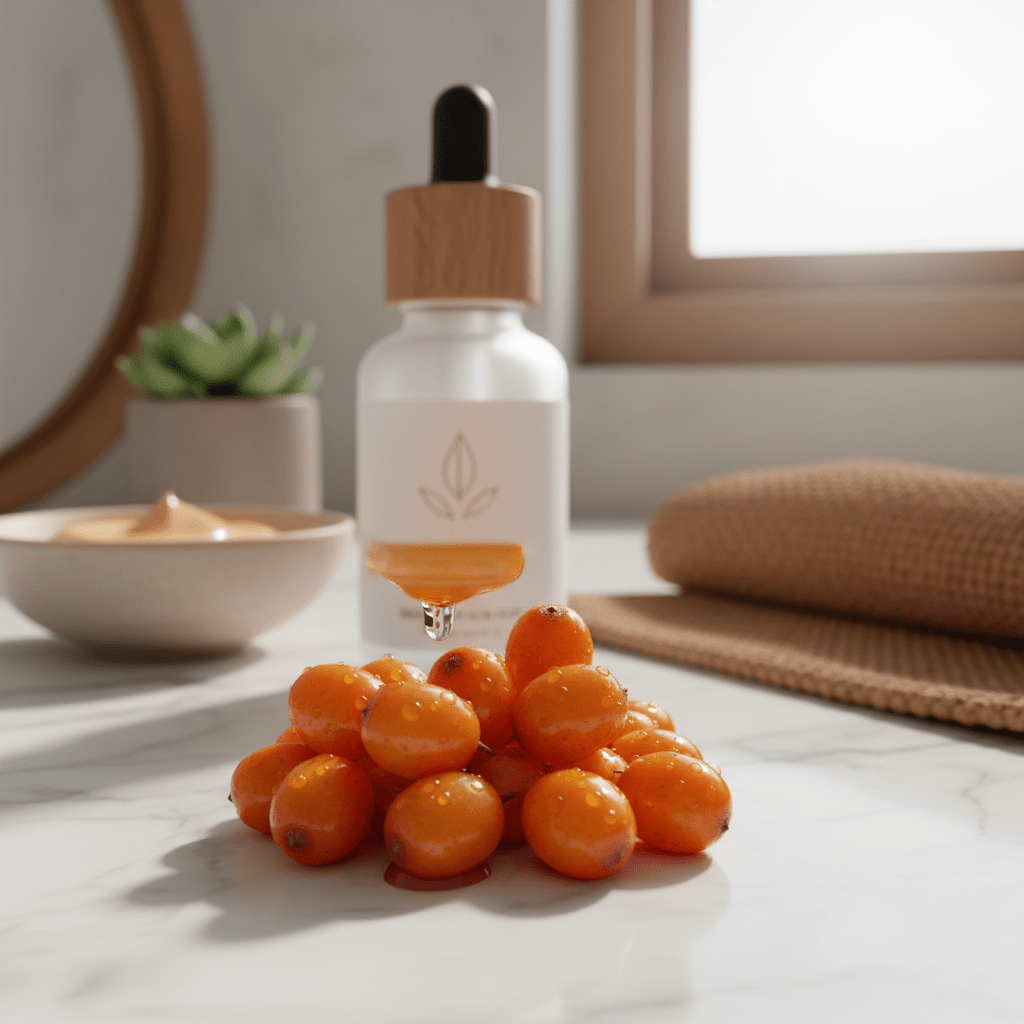
Frustrated with Acne? This Unlikely Natural Oil Might Be Your Answer
Acne can feel rude. One day your skin looks calm, and the next day it’s throwing a tiny rebellion on your chin, jaw, or forehead. And if you’ve tried benzoyl peroxide or salicylic acid, you probably know the tradeoff: dry patches, stinging, peeling, and that tight, squeaky-clean feeling nobody asked for.
You’re not alone in that mess. Acne still shows up for about 50% of women in their 20s, 33% in their 30s, and 25% in their 40s, so this isn’t just a teen thing anymore adult acne stats. That’s why more people are looking at sea buckthorn oil for face care as a gentler natural acne treatment.
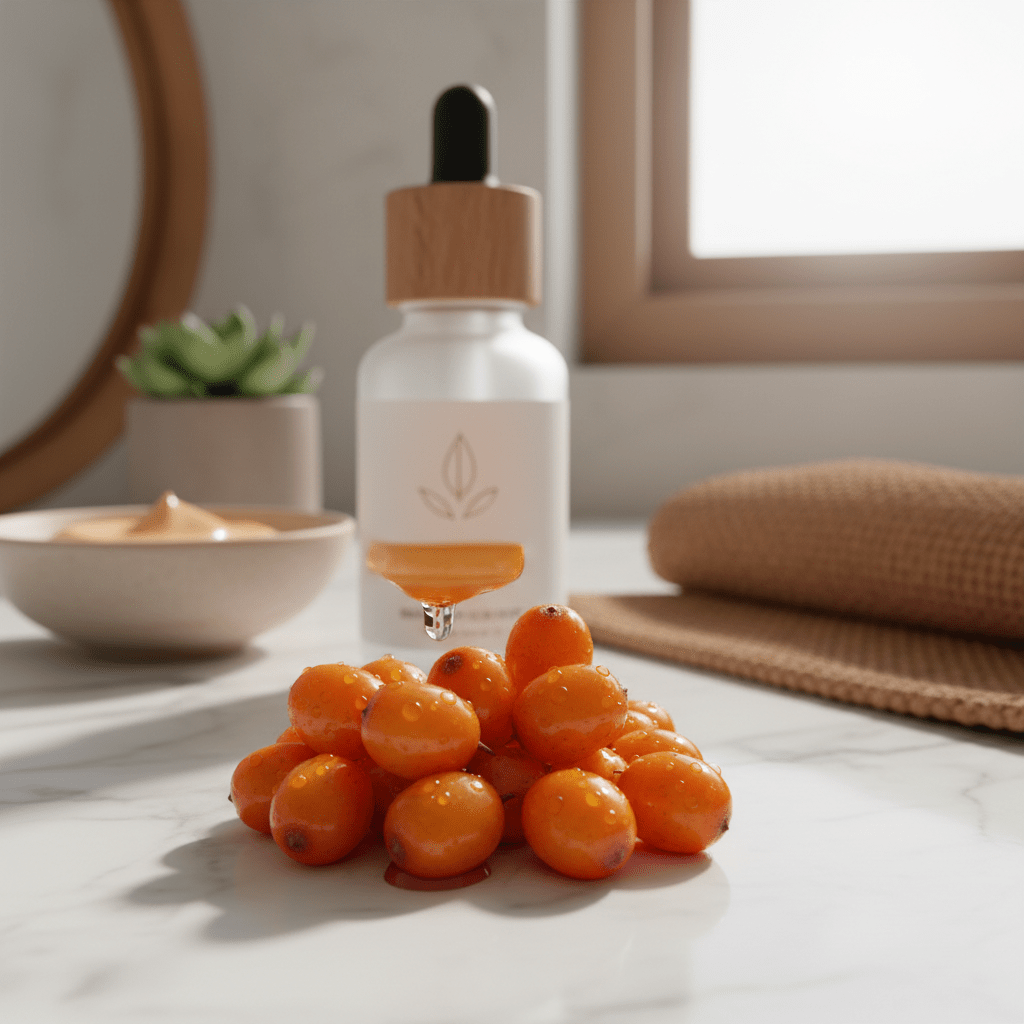
This bright orange oil is packed with skin-loving nutrients. Sea buckthorn benefits for skin include barrier support, moisture help, and fatty acids that may calm irritated, acne-prone skin. And yes, we’ll get into the tricky part too: sea buckthorn seed oil vs berry oil, which one works better, and what to watch for if you’ve got oily skin.
In this guide, we’ll cover the science, how to choose the best sea buckthorn oil for acne-prone skin, and how to use sea buckthorn oil for acne scars or breakouts without making things worse. Short version? Let’s figure out if this oil deserves a spot in your routine.
What is Sea Buckthorn Oil? A Nutrient Profile Breakdown
If orange juice had a wild cousin, this might be it.
Sea buckthorn oil comes from the berries and seeds of the Hippophae rhamnoides shrub. People have used it for ages in traditional medicine, mostly for skin comfort and general wellness. And honestly, once you look at what’s inside, it’s easy to see why it got so much attention.
This oil is packed with skin-friendly nutrients. Sea buckthorn benefits for skin start with a hefty dose of vitamin C, vitamin E, carotenoids, and rare omega fatty acids. The berries can hold about 400 to 450 mg of vitamin C per 100 g, while oranges sit closer to 50 mg per 100 g, so yeah, that’s a pretty wild gap sea buckthorn vitamin C comparison.
Here’s the simple version:
| Type | Where it comes from | Main skin perks | Texture and color |
|---|---|---|---|
| Sea buckthorn berry oil | Fruit pulp | Rich in carotenoids and omega-7 | Bright orange, richer, more staining |
| Sea buckthorn seed oil | Seeds | More omega-6 and omega-9, lighter feel | Paler, lighter, usually less staining |
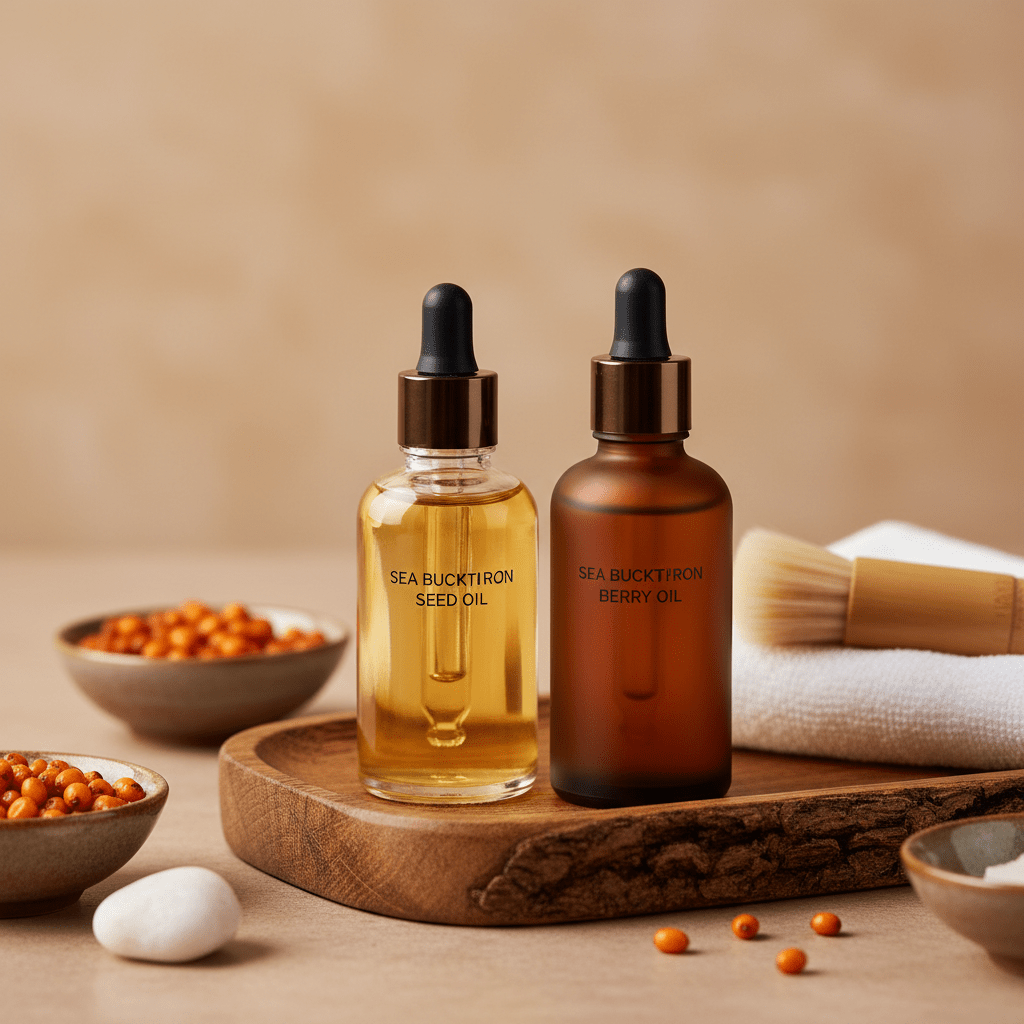
That sea buckthorn seed oil vs berry oil split matters more than most people think. Berry oil is the bold one. It’s known for omega-7, also called palmitoleic acid, plus those orange plant pigments that can give skin care products their bright color. Seed oil is a bit quieter, but it brings a nicer balance of omega-3, omega-6, and omega-9, which can feel better if your skin gets greasy fast.
So is sea buckthorn oil good for oily skin? It can be, but the type you pick matters. Seed oil usually feels lighter. Berry oil is better if you want more of that rich, nutrient-dense feel and don’t mind the stain risk. If you’re testing sea buckthorn oil for face care, start small. Tiny amount. One drop too many can turn your sink orange, and nobody wants that before work.
Omega-7 gets a lot of love for a reason. It may support the skin barrier, help with dryness, and calm that tight, irritated feeling that makes acne routines so annoying. Some lab research also points to antimicrobial action against acne-causing bacteria, which is why sea buckthorn oil for acne keeps popping up in natural acne treatment talks. Not magic. But interesting.
And if you’re building a sea buckthorn oil routine, keep the formula simple. Look for clean, lab-tested oils from brands that give you clear sourcing and extraction details, especially if you want the best sea buckthorn oil for acne-prone skin. For businesses like Aroma Monk, this kind of ingredient quality matters even more, since purity and traceability can make or break a skincare line.
The Science: How Sea Buckthorn Oil Fights Acne and Heals Skin
You know that maddening moment when a pimple gets redder by the hour? Yeah, that part. Sea buckthorn oil for face care gets talked about so much because it may help with the stuff that makes acne feel extra annoying: redness, swelling, clogged pores, and those stubborn marks that hang around after the breakout is gone.
Here’s the deal. Sea buckthorn oil has two big skin helpers working at once. First, it brings fatty acids like linoleic acid, plus antioxidants such as vitamin E and carotenoids. Those help calm the look of angry skin and support the skin barrier. A 2019 review in PMC also notes that palmitoleic acid, or omega-7, showed bactericidal activity against P. acnes in lab testing. Not a miracle. But pretty interesting.
Why it may calm inflamed acne
Inflamed acne is the kind that gets sore, red, and puffy. The kind you keep touching even though you know better. Sea buckthorn benefits for skin here mostly come from its fatty acids and antioxidants. They may help ease that stressed-out skin feeling and support the barrier, which matters a lot if your routine already leaves you dry or stingy.
Think of it like this:
- Less barrier stress
- Less tightness
- Less flaking
- A calmer skin feel overall
And that matters because harsh acne products often leave skin irritated. A lot of adults with acne already deal with dryness and sensitivity, so a gentler natural acne treatment can feel like a relief instead of another battle.
Can oil really help oily skin?
Yep. Weird, right?
But oily skin is often not just about “too much oil.” The makeup of the oil matters too. Acne-prone skin tends to have lower linoleic acid in sebum, and that can make pores more likely to clog. Sea buckthorn seed oil is the one people often look at here because it has more linoleic acid and oleic acid, while berry oil is richer in omega-7 and bright orange pigments.
So if you’re asking, is sea buckthorn oil good for oily skin? The answer is usually yes, if you pick the right type and use a tiny amount. Seed oil tends to feel lighter. Berry oil is richer and can stain, so it’s better for people who want a more nourishing feel or plan to use it at night.
How it may help skin heal faster
This part is my favorite.
Sea buckthorn oil for acne isn’t just about calming red bumps. It may also help with healing after the breakout. Carotenoids and vitamin E support skin repair and cell turnover, so active spots may settle down a little faster and post-acne marks can fade more smoothly over time.
That said, skin does not move fast. At all. Adult skin cell turnover often takes about 28 to 40 days, and many dermatology sources suggest giving a new skincare product 8 to 12 weeks before judging it. So if you’re using sea buckthorn oil for acne scars, patience has to be part of the plan.
Sea buckthorn seed oil vs berry oil: which one fits your face?
| Type | Best for | Feel on skin | Main skin angle |
|---|---|---|---|
| Seed oil | Oily or acne-prone skin | Lighter | Linoleic acid, sebum balance |
| Berry oil | Dry, dull, or stressed skin | Richer | Omega-7, carotenoids, barrier support |
If you want the best sea buckthorn oil for acne-prone skin, seed oil is often the safer first try. If your skin is dry but still breaks out, you might prefer a diluted berry oil in a moisturizer. Start small. Really small. One drop can go a long way.

A simple sea buckthorn oil routine
Try mixing a tiny bit into a lightweight gel moisturizer first. That gives your skin hydration without feeling heavy. If you use it as a spot treatment, it can work well on a few angry pimples. But if your goal is redness, barrier support, and a more even look, all-over use may make more sense.
And if you’re a skincare brand or product maker, this is where ingredient quality matters a lot. Aroma Monk’s lab-tested, pure natural oils fit that kind of formula work well, especially if you’re building a clean beauty line and want traceable raw materials you can trust.
If you want to explore sea buckthorn oil for face care, start with one patch test, one simple product, and one week of notes. Your skin will tell you a lot.
How to Choose the Best Sea Buckthorn Oil for Acne-Prone Skin
You know that tiny panic when you buy a new oil and your face starts acting weird by day two? Yeah. Nobody wants that.
For acne-prone skin, the first pick is usually sea buckthorn seed oil. It feels lighter, and it has more linoleic acid, which may fit oily skin better. Berry oil is richer and more orange, so it can feel heavier. That can be nice for dry or marked skin, but if your T-zone shines by lunch, seed oil is usually the safer bet. So if you’re asking, is sea buckthorn oil good for oily skin? Seed oil usually gets the nod first.
Here’s a quick cheat sheet:
| Type | Best for | Feel | Main note |
|---|---|---|---|
| Seed oil | Oily or breakout-prone skin | Light | More linoleic acid |
| Berry oil | Dry skin or post-acne marks | Rich | More color, more pigment |
But the oil type is only half the story. Quality matters a ton. Look for labels that say CO2 extracted, cold-pressed, or unrefined. Those words usually mean the oil was handled in a way that keeps more of its natural nutrients. Organic is a nice bonus too, especially if you want a cleaner sea buckthorn oil routine.
And yes, the color can surprise you. Berry oil is a deep orange-red, so it can stain skin, pillowcases, and even a white T-shirt if you go wild with it. A tiny amount helps. Mix it into a lightweight gel moisturizer, use it at night, or start with a seed oil if you want less mess. Funny enough, the stain risk is often the first thing people notice. Not the acne help. The pillowcase. Classic.
If you want the best sea buckthorn oil for acne-prone skin, go simple:
- Pick seed oil first if your skin gets greasy fast
- Choose berry oil if your skin feels dry and stressed
- Buy CO2 extracted or cold-pressed oil
- Check for unrefined and organic on the label
- Use a small amount at night first
And if you’re buying for a brand or product line, Aroma Monk’s lab-tested natural oils are a smart place to start. That kind of traceability matters when you want clean, reliable ingredients without the guesswork.
Get a quote from Aroma Monk.
Essential Oil Supplier – Bulk pricing • Samples • Fast response
Your Step-by-Step Guide: How to Use Sea Buckthorn Oil in Your Routine
You know that little voice that says, “Let’s try one more thing”? Acne brings it out fast. And if your skin already feels cranky, the last thing you want is a new oil that makes things worse.
So let’s keep this simple.
The golden rule: patch test first
Before you put sea buckthorn oil for face all over your skin, test it first. That part is boring, yes. But it saves you from a bad surprise.
Try this:
- Put a tiny bit on the side of your neck or behind your ear.
- Leave it alone for 24 to 48 hours.
- Watch for itching, burning, swelling, hives, or a rash.
If your skin stays calm, you’re probably in good shape. If it gets angry, wash it off and skip it. No hero points for forcing it.
3 easy ways to use it
1. As a spot treatment
Press 1 drop on a single active pimple. This works best for one or two angry spots, not a whole face full of breakouts.
2. Mixed into moisturizer
This is the sweet spot for most people. Add 1 to 2 drops to a lightweight gel moisturizer. That way you get the sea buckthorn benefits for skin without the heavy feel. For acne-prone skin, this is often the best starting move.
3. As the last step at night
If your skin feels dry, press a tiny amount over your moisturizer to seal in water. Think of it like a soft cover, not a thick coat. A little goes a long way.
A simple acne-friendly evening routine
Here’s a basic sea buckthorn oil routine you can try:
| Step | What to use | Why it helps |
|---|---|---|
| 1 | Gentle cleanser | Washes off oil and makeup without stripping skin |
| 2 | Hydrating toner | Adds water back to skin |
| 3 | Treatment serum, optional | Use only if your skin already handles it well |
| 4 | Lightweight moisturizer | Keeps skin soft and less irritated |
| 5 | 1 to 2 drops of sea buckthorn oil | Helps seal in moisture and support the skin barrier |
If your skin gets oily fast, don’t smear it everywhere on day one. Start with just a few drops mixed into moisturizer. That’s usually the safest way to test sea buckthorn oil for acne without making your face feel slick.
And if you’re wondering about how to use sea buckthorn oil for acne scars, the answer is steady use, not heavy use. Keep it in your routine for a few weeks and pay attention to redness, roughness, and how your skin feels after cleansing.
A few quick do’s and don’ts
- Do use a clean, small bottle.
- Do start slow.
- Do choose best sea buckthorn oil for acne-prone skin with clear sourcing.
- Don’t overdo it.
- Don’t use it on broken skin if it stings.
- Don’t expect overnight magic. Skin moves at its own pace.
If you like keeping your routine natural and simple, this oil can fit in nicely. And if you’re building products or buying ingredients in bulk, Aroma Monk’s lab-tested natural oils are a smart place to look for clean, traceable raw materials.
One last thing. If your acne is painful, cystic, or not getting better, it’s worth checking with a dermatologist. Sea buckthorn oil can be a nice helper, but it’s not the only tool.
Managing Expectations: Realistic Results and Potential Side Effects
You know that moment when you try a new skin thing and stare at the mirror way too hard? Yep. We’ve all done it. With sea buckthorn oil for face care, the trick is not to expect overnight magic. Skin usually moves slow. Kind of annoying, but that’s the truth.
If you’re using sea buckthorn oil for acne, the first changes people often notice are less redness and less “my face feels mad at me” energy. That can show up in about 2 to 4 weeks. Bigger changes, like smoother texture or softer-looking marks, usually take 8 to 12 weeks. Your skin has its own pace, and it doesn’t care that you’re impatient before a weekend event.
But wait, there’s another thing people worry about: purging.
A purge is not the same as a bad reaction. If your skin is clearing out clogged bits, you may see a few bumps pop up in the same spots you usually break out. A bad reaction looks different. Think itching, burning, swelling, rash, or redness that spreads beyond your usual acne zones. If that happens, stop. Seriously. No need to tough it out.
| Skin change | What it may mean |
|---|---|
| Small breakout in usual spots | Could be a short purge |
| Itching or burning | More like irritation or allergy |
| Swelling or hives | Stop use and get help |
| Better calm and less redness | A good sign the oil may be working |
And if you’re already on prescription acne care like Accutane or tretinoin, check with a dermatologist before adding a new oil. Your skin barrier may already be touchy. Also, while rare, allergies can happen with natural products too. Natural doesn’t mean problem-free. I wish it did.
One more thing that matters here is daily life stuff. Sea buckthorn oil can stain. That bright orange color is lovely in a bottle and a little rude on a pillowcase. So if you’re trying it for the first time, use a tiny amount, go slow, and keep notes for a few weeks. That’s the best way to tell if your sea buckthorn oil routine is helping or just making a mess.
And if your acne is painful, deep, or keeps getting worse, don’t wait around hoping an oil fixes everything. Get medical advice. Natural acne treatment can be a nice support, but it’s not the only tool.
Embracing Sea Buckthorn Oil for a Healthier, Clearer Complexion
Sea buckthorn oil for face care isn’t some magic potion. But it does bring a lot to the table. It can help calm angry skin, support the barrier, and give your face a better shot at healing after breakouts. Plus, the mix of vitamins and fatty acids makes it a strong helper in a natural acne treatment routine.
If you’ve been stuck between harsh spot treatments and a face that feels dry all the time, this oil may be worth a closer look. The key is picking the right kind. Sea buckthorn seed oil vs berry oil matters, and so does how you use it. Seed oil usually feels lighter, while berry oil is richer and more orange. So for many people with oily or acne-prone skin, the seed version is the safer first try.
And here’s the part I like most: you don’t have to rush it. A simple sea buckthorn oil routine, a patch test, and a little patience can tell you a lot. If you’re wondering how to use sea buckthorn oil for acne scars or fresh breakouts, start small and stay consistent.
Tiny steps. Real skin habits. That’s the move.
If you’re ready, try a patch test tonight and see how your skin feels over the next few weeks. Slow and steady usually wins here. And if you want a clean, lab-tested ingredient for product making or bulk supply, Aroma Monk’s natural oils are a solid place to start.
Get a quote from Aroma Monk.
Essential Oil Supplier – Bulk pricing • Samples • Fast response