
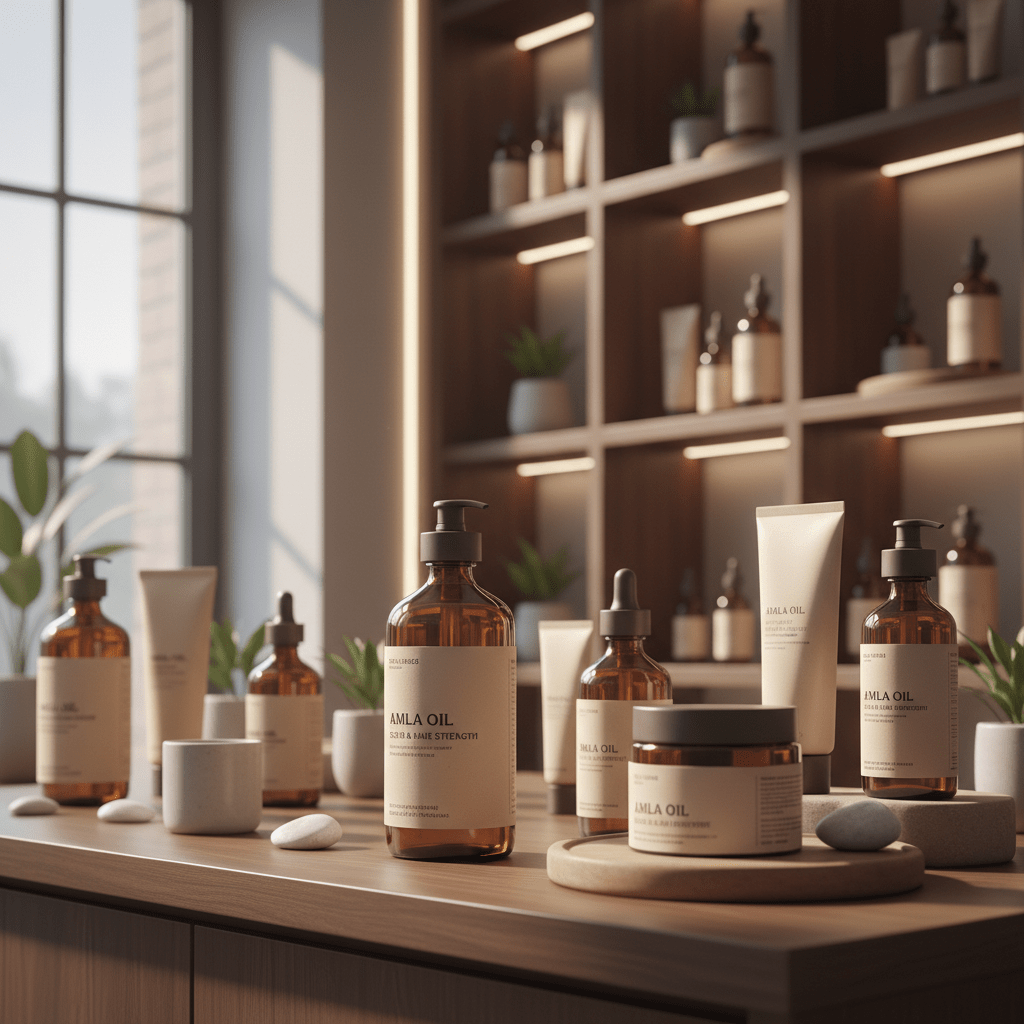
The Amla Oil Puzzle: Why a Tiny Seed is Causing a Big Stir in Beauty
Ever stood in the beauty aisle and thought, “Wait… which amla oil am I even buying?” You’re not alone. The label looks simple, but the bottle usually isn’t.
Amla oil has gotten a lot more popular as people look for cleaner hair and skin care. In fact, India’s hair oil market is huge and keeps growing, and amla hair oil is expected to rise fast too, thanks to more people wanting natural products and clearer ingredient lists. A lot of buyers now skip parabens, silicones, and mineral oil, and they want to know exactly what’s inside the bottle. Market growth and clean-beauty demand in hair oils
But here’s the part that trips people up: amla oil can come from the fruit pulp or the seed. Those are not the same thing. Not even close.
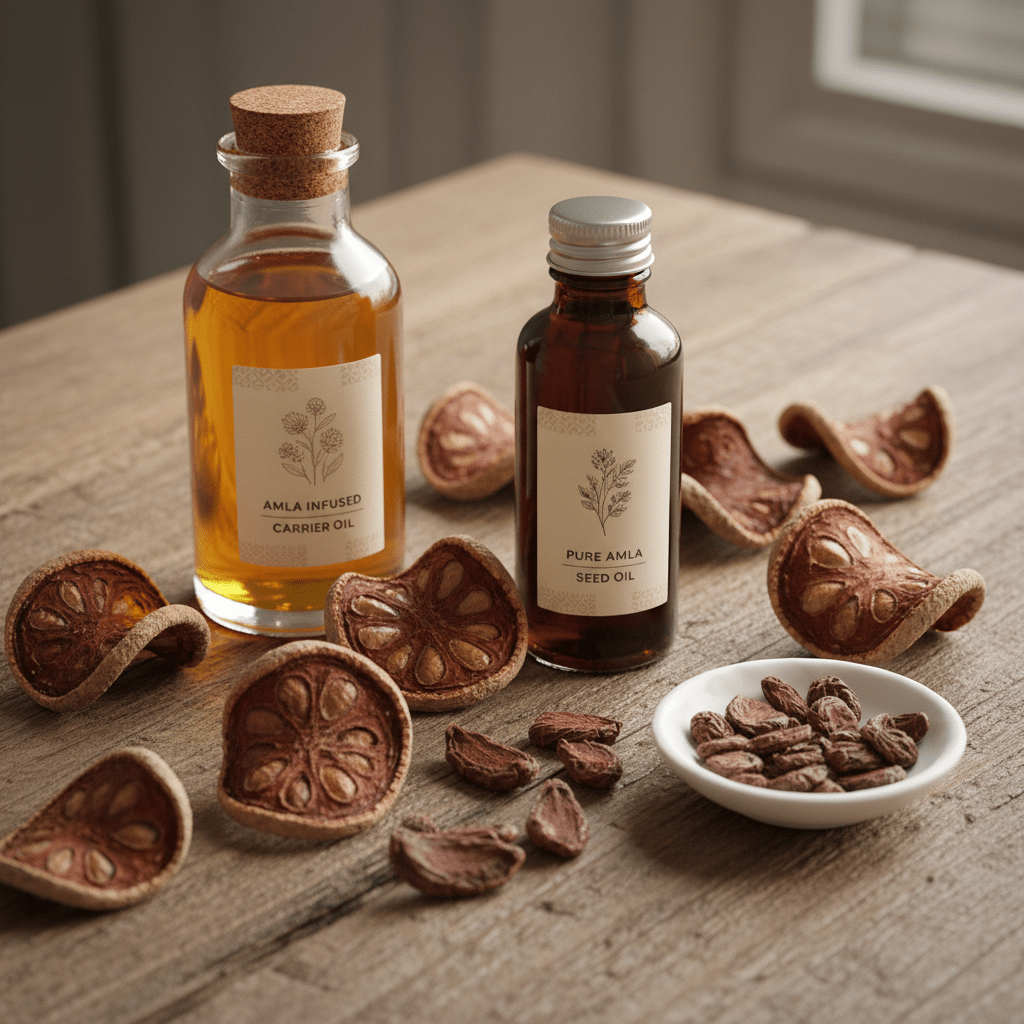
Traditional amla fruit oil is usually a carrier oil infused with amla fruit pulp. True amla seed oil, though, is cold-pressed from the seed itself. That means the feel, the fatty acids, and the skin and hair uses can be pretty different. One may work better for thick, dry hair. The other may be a better fit for lighter scalp care or face use.
And yeah, the label game can get messy. Some products say “amla oil” but don’t say what’s really inside. So in this guide, we’ll break down the amla oil comparison in plain language, look at the benefits of amla oil for hair and skin, and help you pick the right one without guessing. If you’ve been wondering how to use amla berry oil or asking, “is amla oil a carrier oil?” this is your starting point.
Understanding Traditional Amla Oil: An Infusion of the Fruit
If you’ve ever picked up a bottle that says “amla oil” and wondered why it smells a little like coconut, sesame, or even mineral oil… yep, that’s the trick.
Most store-bought amla fruit oil is not pure amla seed oil at all. It’s usually a fruit infusion. People dry the amla pulp, then soak it in a base oil for a long time. That’s the old-school method, and it’s still common today.
Here’s how it usually goes:
- The amla fruit pulp is dried.
- The dried pulp is steeped in a carrier oil like sesame, coconut, sunflower, almond, or mineral oil.
- The mix sits for a stretch so the oil picks up some of the fruit’s plant compounds.
- Then it gets filtered and bottled.
Simple enough. But the base oil matters a lot.
That’s the part a lot of people miss. In an amla oil comparison, the carrier oil does a ton of the heavy lifting. Sesame oil brings one feel. Coconut oil brings another. Mineral oil? Totally different vibe. So even if two bottles both say “amla oil,” they may act very differently on hair and skin.
Traditional Ayurveda has used sesame oil for oil blends like this for ages, and it’s not just seen as a filler. It’s part of the whole preparation. But from a modern label-reading point of view, this also means the final bottle may be more about the carrier oil than the amla itself.
And here’s the thing. A lot of marketing copy makes it sound like fruit-infused oil contains lots of vitamin C. That’s a bit slippery. Vitamin C is water-soluble and pretty fragile, so it does not move well into oil during infusion. Some oil-friendly plant compounds can transfer, but the final blend still depends mostly on the carrier base.
So if you’re asking is amla oil a carrier oil, the short answer is: the fruit oil version usually is. It’s amla soaked into another oil, not pressed straight from the seed.
That doesn’t make it bad. Not at all. It just makes it different.
For thick, dry hair, amla fruit oil can feel rich and coating, which some people love. For lighter scalp care or facial use, though, it may feel too heavy, especially if coconut oil is the base. That’s why reading the ingredient list matters so much.
If you’re shopping for amla oil for skin or trying to figure out how to use amla berry oil, don’t stop at the front label. Flip it over. If you see a carrier oil listed first, you’re probably looking at a fruit infusion. And if you want something purer, the seed oil version is the one to look for next.
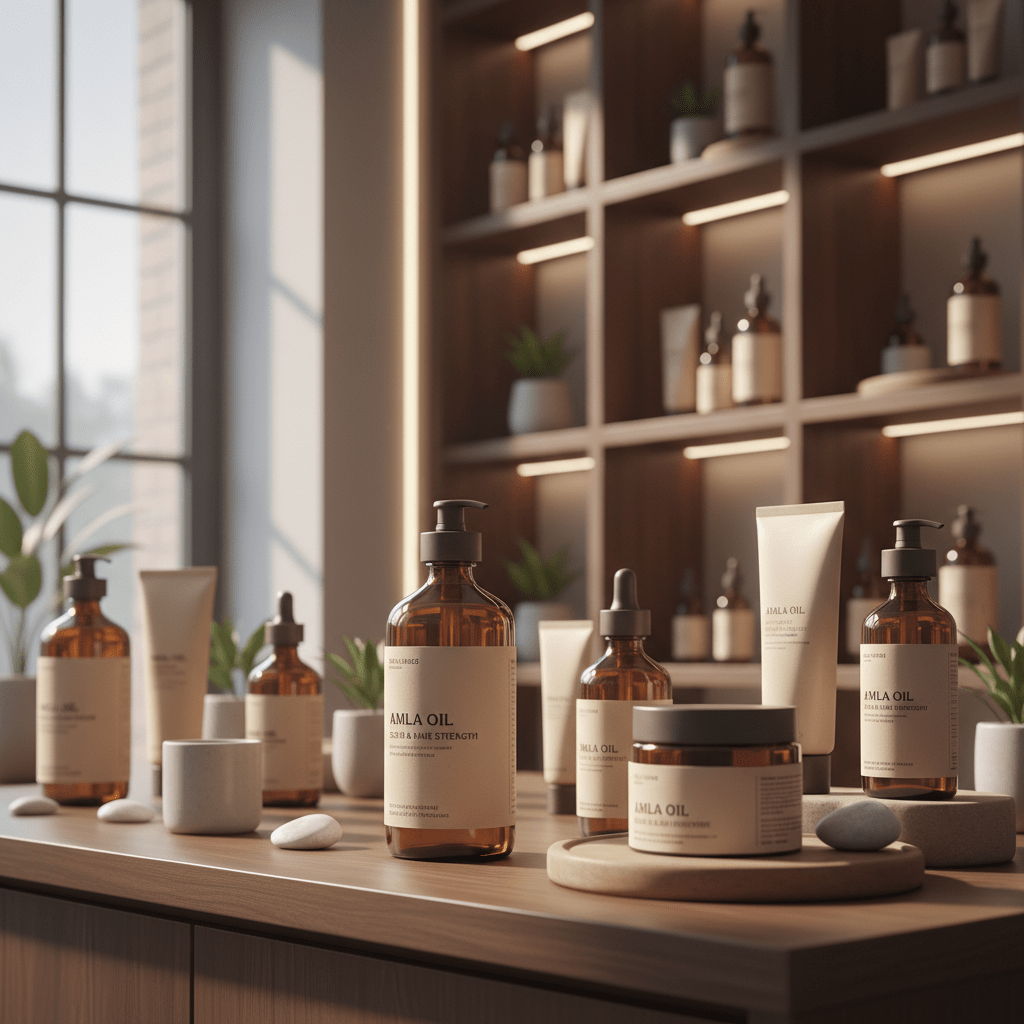
The Real Deal: What is Amla Seed Oil and Why is it Different?
You know that moment when you buy something that says “natural,” then the label starts acting shady? Yeah, this is one of those moments.
Amla seed oil is the pure oil pressed straight from the seed of the Indian gooseberry, which is also called amla or Phyllanthus emblica. No fruit pulp soaking. No mystery base oil doing most of the work. Just the seed oil itself.
And that changes a lot.
Most good cold-pressed amla oil is made by crushing the seeds without heat or harsh chemicals. That matters because heat can mess with delicate fats and plant compounds. Cold-pressing helps keep the oil closer to its natural form, which is why many people like it for both hair and skin.
Here’s the simple version of the amla oil comparison:
| Type | How it’s made | What it usually feels like | Best fit |
|---|---|---|---|
| Amla fruit oil | Amla pulp soaked in a carrier oil | Rich, heavier, depends on the base oil | Thick, dry hair |
| Amla seed oil | Seeds cold-pressed into pure oil | Light, smooth, fast to sink in | Scalp care, face, lighter hair use |
That light feel is not just a nice bonus. It comes from the oil’s fatty acid mix. Pure seed oil is often rich in linoleic acid, plus oleic acid and other fatty acids. Published data shows linoleic acid can make up about 45% to 51% of the oil, while oleic acid often sits around 11% to 28% in cold-pressed amla seed oil profiles. That’s a big reason it tends to feel lighter than fruit-infused blends.
So why do people care so much now? Because the clean beauty crowd is reading labels like detectives. India’s hair oil market is already valued at about USD 1.8 billion and keeps climbing, while amla hair oil is expected to grow faster as more buyers want simple, transparent formulas and fewer extra additives market growth details here.
But wait, there’s a real skin story here too. Linoleic acid is a big deal for the skin barrier, and acne-prone skin often has lower levels of it. That’s one reason pure amla seed oil gets attention for facial use, while heavier fruit oils may feel too rich for some people.
If you’re shopping for amla oil for skin or trying to figure out how to use amla berry oil, look for a label that says “Phyllanthus emblica seed oil” or “Emblica officinalis seed oil” and nothing else. If you see coconut, sesame, sunflower, almond, or mineral oil listed, you’re usually looking at a fruit infusion, not pure seed oil.
And for brands that need clean, lab-tested ingredients in bulk, this is where a supplier like Aroma Monk fits in well. When you want natural oils with traceable quality and reliable supply, the source matters just as much as the final bottle.
Simple rule. If the bottle says seed oil only, you’re likely getting the real thing. If it lists another oil first, it’s probably a blend.
Amla Seed Oil vs. Fruit Oil: A Head-to-Head Comparison
You know that moment when two bottles look the same, but they act totally different on your shelf? That’s amla oil in a nutshell. Same plant. Very different feel.
Here’s the short version. Amla fruit oil is usually made by soaking amla pulp in another oil. Amla seed oil is pressed from the seed itself. So one is a blend, and the other is the real seed oil.
That change matters more than people think.
| What to compare | Amla fruit oil | Amla seed oil |
|---|---|---|
| Source | Amla fruit pulp | Indian gooseberry seed |
| Extraction | Fruit is dried, then infused into a carrier oil | Seeds are cold-pressed into pure oil |
| Main makeup | Depends on the base oil, like sesame, coconut, sunflower, almond, or mineral oil | Rich in linoleic acid, plus oleic acid and other fatty acids |
| Texture | Heavier, richer, more coating | Light, smooth, sinks in faster |
| Best for | Deep conditioning, thick or dry hair, pre-wash oiling | Scalp care, fine hair, face use, lighter daily use |
| Label clues | Often lists another oil first | May say Phyllanthus emblica seed oil or Emblica officinalis seed oil |
The biggest difference is the base. In fruit oil, the carrier oil does a lot of the work. Sesame gives a heavier, more traditional feel. Coconut can feel rich too. Mineral oil? That’s a whole different story, and not in a cute way.
With cold-pressed amla oil, the seed is doing the heavy lifting. Published data shows linoleic acid can make up about 45% to 51% of the oil, which helps explain why it feels lighter and absorbs faster seed oil fatty acid data. That lighter feel makes it a better fit for people who don’t want their scalp or face to feel greasy.
And for skin? This is where the difference gets even clearer. Linoleic acid helps support the skin barrier, and acne-prone skin often runs low on it. So if you’re looking at amla oil for skin, the seed oil version may be the better pick for oily or breakout-prone skin, while a fruit infusion can feel too heavy on the face.
For hair, it depends on the job you want done. If your hair is thick, dry, or rough at the ends, amla fruit oil can feel comforting and sealing. If your hair is fine, flat, or your scalp gets oily fast, amla seed oil usually makes more sense. It’s the lighter one. The cleaner-feeling one. The one that won’t sit there all day acting like it owns the place.
A quick label check helps a lot:
- If the front says “amla oil” but the back lists sesame or coconut first, it’s probably a fruit infusion.
- If the label says only Phyllanthus emblica seed oil, that’s the true seed oil.
- If you see fragrance, dyes, or a long list of extras, pause and read again.
So if you’re asking is amla oil a carrier oil, the answer is usually yes for fruit oil, but not for seed oil. And if you’re trying to figure out how to use amla berry oil, start with your goal. Heavy conditioning? Fruit oil may work. Scalp massage, face use, or lighter hair care? Seed oil is the better match.
That’s the whole puzzle, really. One is an infused blend. The other is a pure seed press. Same family, different job.
For brands and buyers who need clean, traceable ingredients in bulk, that difference matters even more. Aroma Monk’s lab-tested oils and supply chain support can help product teams source the right base oil for the right formula, without guesswork.
Get a quote from Aroma Monk.
Essential Oil Supplier – Bulk pricing • Samples • Fast response
Which Amla Oil is Right for You? Matching the Oil to Your Goal
You know that feeling when you buy a bottle, try it once, and think, “Wait… this is way too heavy for my hair”? Been there. And with amla seed oil versus amla fruit oil, that mix-up happens a lot.
So let’s keep this simple. Pick the oil based on what you want it to do.
If your hair is thick, dry, or rough
A traditional amla fruit oil blend can be a nice fit here. It’s usually made with a carrier oil like sesame or coconut, so it feels richer and more coating. That can help if your strands are thirsty and your ends feel like straw by Friday afternoon.
For deep conditioning, pre-wash oiling, or overnight hair masks, this kind of oil often works well. It can also be more wallet-friendly, especially if you’re using a lot of product at once. If your hair drinks up heavier oils and never looks greasy, this one may be your lane.
If your goal is scalp care or hair growth support
This is where cold-pressed amla oil really shines. Pure amla seed oil is lighter, so it sits better on the scalp without that sticky, greasy feel. Plus, it’s rich in linoleic acid, which is a big deal for skin and scalp comfort.
In plain words, it tends to absorb faster and feel cleaner. That matters if you massage oil into your scalp a few times a week and still want to go out in public without looking like you lost a fight with a frying pan.
And yes, people often ask about the benefits of amla oil for hair. The seed oil version is usually the better pick if you want a lighter touch, especially for fine hair, oily roots, or scalp-focused routines. A little goes a long way.
If you want something for your face or skin
Go with amla seed oil again. Here’s why: it has a high amount of linoleic acid, often around 45% to 51%, which lines up well with skin that gets oily or breaks out easily fatty acid profile of cold-pressed amla seed oil.
That matters because linoleic acid helps support the skin barrier, and acne-prone skin often has less of it. So if you’re looking at amla oil for skin, the seed oil version usually feels more skin-friendly than a heavier fruit infusion. It sinks in faster too. Nice bonus.
Fruit-infused oils can still be fine for some people, but if the base oil is coconut or another rich carrier, it may feel too heavy on the face. And for some skin types, that can be a breakout waiting to happen.
Quick pick guide
| Your goal | Better choice | Why |
|---|---|---|
| Deep conditioning | Amla fruit oil | Rich, coating, good for dry strands |
| Scalp massage | Amla seed oil | Light, non-greasy, easier to wear |
| Face use | Amla seed oil | High linoleic acid, faster absorption |
| Budget-friendly hair oiling | Amla fruit oil | Often cheaper and more filling |
| Fine or oily hair | Amla seed oil | Less heavy, less buildup |
If you’re still wondering is amla oil a carrier oil, the answer depends on the bottle. Fruit oil usually is. Seed oil usually isn’t.
Here’s the easiest way to shop: read the back label first. If it says Phyllanthus emblica seed oil or Emblica officinalis seed oil, you’ve likely found the real seed oil. If you see sesame, coconut, sunflower, almond, or mineral oil first, you’re probably looking at a fruit infusion.
And if you’re buying in bulk for a brand, that label detail matters even more. Aroma Monk works with clean, lab-tested oils and can help teams source the right natural ingredient for hair care, skin care, or private label blends without guesswork.
One last thing. If your plan is hair growth support, face care, and a lighter everyday feel, amla seed oil is usually the better bet. If you want a richer pre-wash oil for thick, dry hair, amla fruit oil may be the easier match.
Different jobs. Different oils. Pretty simple once you know what to look for.
How to Use Amla Oils for Maximum Hair and Skin Benefits
You know that moment when you open a bottle and think, “OK, now what do I actually do with this?” Yep. That’s where most people get stuck.
For hair, start simple. Use amla seed oil more sparingly than amla fruit oil. A few drops on your fingertips is usually enough for a scalp massage. Part your hair, rub it in gently, and let it sit for 20 to 30 minutes before shampooing. If your hair is thick and dry, amla fruit oil can work as a pre-wash treatment too, since it feels richer and coats the strands more.
Here’s a quick routine:
- Warm 1 to 2 teaspoons of oil in your palms.
- Massage it into the scalp for 3 to 5 minutes.
- Pull the rest through the lengths if they’re dry.
- Leave it on for 20 to 60 minutes.
- Wash with a gentle shampoo.
But don’t drench your head. More oil is not better. It just means more shampoo later, and nobody needs that drama.
For skin, amla seed oil usually fits better. Try 1 to 2 drops as a facial oil after cleansing, or mix a tiny bit into your moisturizer. You can also use it for a light facial massage at night. Because it’s rich in linoleic acid, it tends to feel lighter and works better for oily or breakout-prone skin than a heavy fruit infusion seed oil fatty acid profile.
Before you use any new oil, do a patch test. Put a small drop on the inside of your elbow or behind your ear. Wait 24 hours. If you get redness, itching, or bumps, stop. Easy.
A few common mistakes to skip:
- Using too much product
- Putting a heavy fruit oil on acne-prone skin
- Buying a fruit infusion with mineral oil when you wanted a cleaner formula
- Skipping the ingredient list and trusting the front label
And if you’re trying to figure out how to use amla berry oil for your routine, the label matters as much as the oil itself. If you want a lighter feel for hair and skin, cold-pressed amla oil is usually the safer pick. If you want a richer pre-wash treatment, a fruit infusion may work better.
The bigger beauty market backs this shift too. India’s hair oil market is around USD 1.8 billion and continues to grow, with more people seeking simple, transparent formulas and fewer additives.
For brands and bulk buyers, that means ingredient clarity matters a lot. Aroma Monk works with lab-tested natural oils and bulk supply, so product teams can choose the right base oil without guesswork.
One last tip: if a bottle says “amla oil” but lists sesame, coconut, or mineral oil first, it’s probably a fruit infusion. If it says Phyllanthus emblica seed oil on its own, you’re likely holding the real deal.
Debunking Myths & Answering Your FAQs About Amla Oil
You know that moment when a bottle says “amla oil,” but it also looks dark, thick, and a little mysterious? Yeah. That’s where a lot of the confusion starts.
Does amla oil darken hair?
Sometimes it can look that way, but it’s usually the amla fruit oil blend, not pure amla seed oil. Fruit infusions are often dark because of the pulp, the base oil, or added color. That can leave a temporary tint on hair or scalp. It’s not the same as a hair dye.
Can I leave it on overnight?
You can, but not always. If you’re using a heavy fruit infusion, overnight use may feel greasy and hard to wash out. For cold-pressed amla oil, a few drops or a short scalp massage often does the job. If your skin or scalp is sensitive, start with 20 to 60 minutes first. No need to go full bedtime shampoo struggle mode.
Is amla oil a carrier oil?
It depends on the type. Amla fruit oil is usually a carrier oil infused with amla pulp, so yes, it acts like a carrier blend. Amla seed oil is different. It’s a true oil pressed from the seed itself, usually with no extra base oil.
Do all amla oils work the same?
Nope. Not even close. That’s the big myth. One bottle may be a rich infusion in sesame or coconut oil. Another may be pure Phyllanthus emblica seed oil. Same plant family. Very different feel. Very different use.
And no, amla oil won’t make hair grow overnight. I wish. But hair care usually takes time, patience, and a bottle that actually matches your goal.
How do I read the label?
Look at the ingredient list, not just the front label.
| Label clue | What it usually means |
|---|---|
| Phyllanthus emblica seed oil or Emblica officinalis seed oil | True amla seed oil |
| Coconut, sesame, sunflower, almond, or mineral oil listed first | Amla fruit oil infusion |
| “Fragrance,” dye, or long extra ingredient list | More processed blend |
A simple rule helps here. If the bottle names one seed oil and nothing else, that’s the cleaner pick. If it lists another oil first, you’re probably buying an infusion.
That label check matters more now because the hair oil market keeps growing, and buyers want clear formulas with fewer extras. India’s hair oil market is valued at about USD 1.8 billion and is projected to keep rising, while demand for Ayurvedic and natural hair oils has climbed as people skip parabens, silicones, and mineral oil market growth and clean-beauty trends.
If you want a lighter oil for scalp care or face use, amla seed oil is usually the better match. If you want a rich pre-wash oil for thick, dry hair, amla fruit oil may fit better.
And if you’re still unsure, start small. Read the back. Do a patch test. Then give it a real try.
That’s the whole trick, honestly. Simple ingredients. Clear labels. Better results.
For brands and bulk buyers, this same rule applies even more. Aroma Monk offers lab-tested oils and bulk supply support, so product teams can source the right natural ingredient with less guesswork.
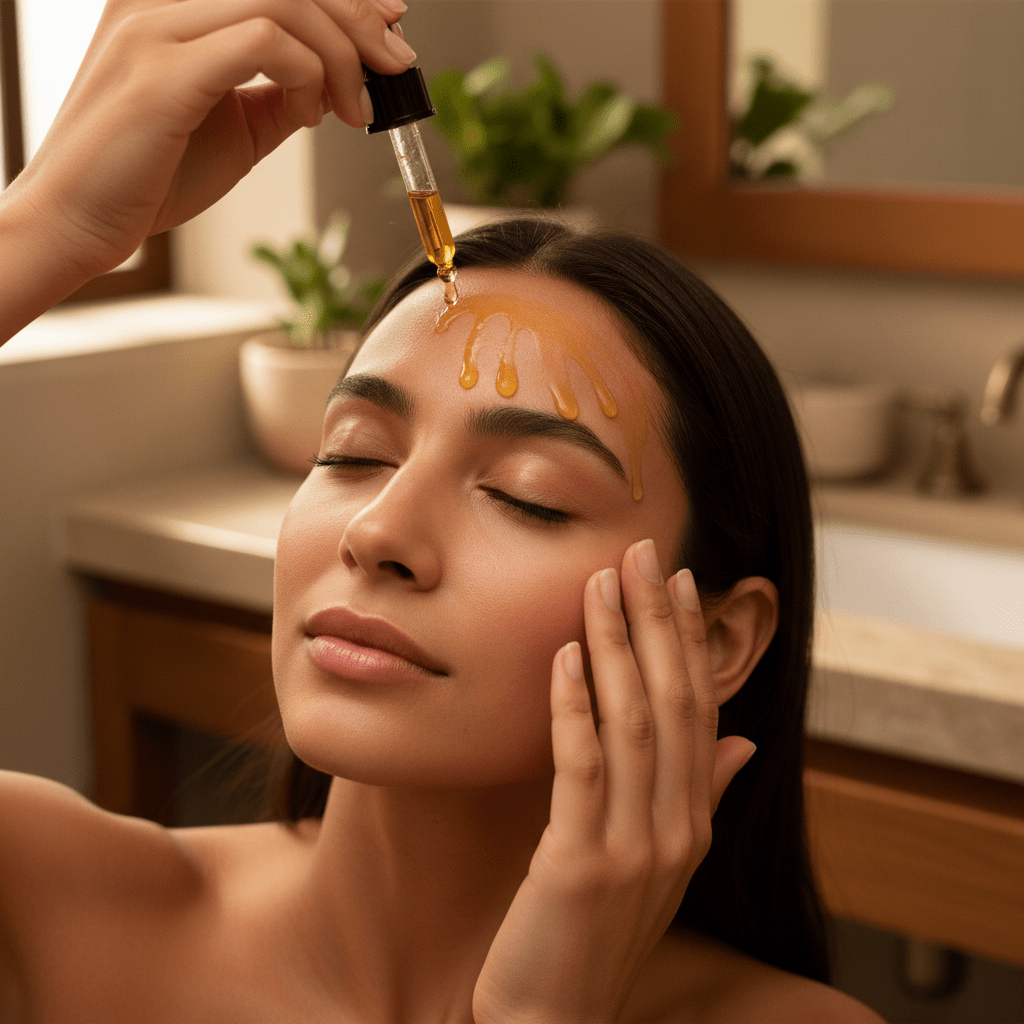
The Final Verdict: Embrace the Power of the Right Amla
So here’s the short version. If you want a rich, coating oil for thick or dry hair, amla fruit oil can work well. But if you want a lighter feel for scalp care, face use, or fine hair, amla seed oil is usually the better pick.
That’s the real amla oil comparison in one breath. Fruit oil is usually an infusion, and its feel depends a lot on the base oil. Seed oil is a pure, cold-pressed oil with a fatty acid mix that leans high in linoleic acid, which is why it feels lighter and sinks in faster.
And the market is clearly moving toward clearer labels too. India’s hair oil market is valued at about USD 1.8 billion and keeps growing, while shoppers keep asking for clean formulas and ingredient transparency natural hair oil market trend data.
So check your bottle. Read the back, not just the front. If you see Phyllanthus emblica seed oil, you’re likely getting the real seed oil. If sesame, coconut, sunflower, almond, or mineral oil shows up first, you’re probably holding a fruit infusion.
That little habit can save you a lot of guesswork. And yeah, it makes shopping feel a lot less messy.
If you’re still unsure, start with your goal: thick hair, dry ends, scalp care, or skin. Then choose the oil that fits. Simple as that.
Get a quote from Aroma Monk.
Essential Oil Supplier – Bulk pricing • Samples • Fast response