
The Surging Demand for Natural Ingredients: Why Floral Waters Are Taking Center Stage
Ever flip a skincare bottle over just to see what’s actually inside? You aren’t the only one.
These days, it feels like everyone is obsessing over “clean” beauty labels. And honestly? It’s about time. But while customers are busy scanning ingredient lists for nasty chemicals, brands are facing a totally different problem behind the scenes.
Here’s the messy truth no one puts on Instagram.
Scaling up is hard. really hard.
You might have a killer formula for a hydrating mist, but finding consistent white label floral water manufacturers who don’t cut corners? That feels like finding a needle in a haystack. I’ve heard horror stories from product managers who got a sample that smelled like a garden, only to receive a bulk shipment that smelled like… well, a swimming pool.
Sourcing authentic, bulk floral water isn’t just about clicking “order” anymore. It’s about trust.
So, let’s figure this out together. In this post, we’re going to walk through the big trends changing the market right now. We’ll also look at how to find a partner—like the folks at Aroma Monk—who can actually deliver the purity your customers expect without the supply chain headaches.
1. The Foundation: Distinguishing True Hydrosols from Imitations
Let’s be real for a second. The term “floral water” gets thrown around way too loosely these days. You see it on labels everywhere, from high-end boutiques to the discount bin at the drugstore.
But here is the question that keeps product developers up at night: Are you buying the real deal, or just expensive scented tap water?
To understand the difference, we have to look at how it’s made. True floral water—the pros call it a “hydrosol”—is a specific thing. It isn’t made by mixing things together. It’s made by taking them apart.
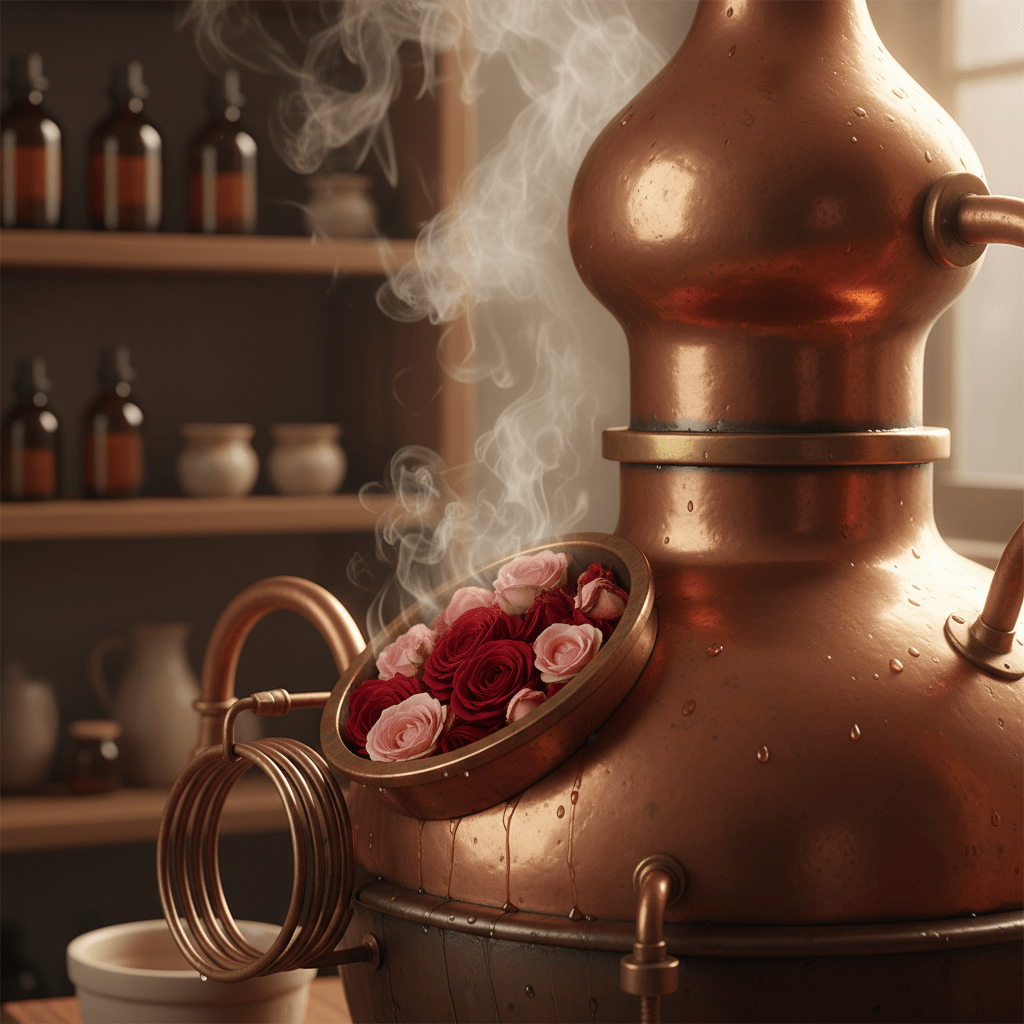
It happens during the distillation process for floral waters. Picture a big vat of fresh rose petals (or lavender, or chamomile) getting steamed. The steam rises, carrying all the good plant stuff with it. When that steam cools down, it turns back into liquid.

Two things come out of that process:
- Essential Oil: This floats on top. It’s super concentrated.
- Hydrosol (Floral Water): This is the water underneath. It’s packed with the same plant DNA but is way gentler.
This distinction is a big deal.
Why? Because some suppliers try to cut corners. They take plain water, mix in a few drops of essential oil (or worse, synthetic fragrance), add a chemical solubilizer to make it mix, and stick a label on it. That is not a hydrosol. It doesn’t have the same pH balance, and it definitely doesn’t have the same therapeutic benefits.
Real white label floral water manufacturers know that the magic is in the steam.
Consumers are getting smarter, too. They are looking for that organic hydrosol manufacturer stamp of approval because true hydrosols are multi-functional workhorses. They are safe enough to spray on a baby, gentle enough to use as a facial toner without stinging, and pure enough to splash into a fancy cocktail or dessert.
If you use a fake “floral water” for that? It just won’t work.
This is why vetting your floral water suppliers is the first step in scaling. When you work with partners like Aroma Monk, you aren’t just buying liquid in a drum. You are buying the result of a precise distillation process. We make sure the raw material is 100% pure so the final product is potent and shelf-stable without needing a chemistry set of additives to keep it fresh.
If the foundation isn’t pure, the final product flops. Simple as that.
2. Trend Spotlight: The Most In-Demand Floral Waters & Their Applications
So, you know how to spot the real stuff. Good. But now comes the million-dollar question: What should you actually sell?
Trends move fast. One minute everyone wants tea tree, the next minute it’s all about mushroom extracts. It’s enough to make your head spin.
But as effective white label floral water manufacturers will tell you, there are three main buckets you need to pay attention to. If you are in natural skincare manufacturing, here is where the smart money is going.
The Unbeatable Classics
First, you have to respect the elders. There is a reason some ingredients have been around for centuries. They just work.
- Rose (Rosa damascena): This is the undisputed queen. It’s not just for grandma’s perfume anymore. It’s a hydration powerhouse. Brands buying rose water wholesale know that it balances pH and soothes redness like nothing else. It’s pretty much a requirement for any toner line.
- Lavender (Lavandula angustifolia): The calming backup singer that steals the show. It’s naturally antibacterial, which makes it perfect for acne-prone skin that’s too sensitive for harsh acids.
If you don’t have these in your lineup, you’re leaving money on the table. They are the safe bet that keeps the lights on.
The Rising Stars
Here is where cosmetic ingredient trends get interesting. Customers are digging deeper now. They want specific solutions for specific problems, and they are willing to pay for them.

We are seeing a huge spike in demand for these:
- Neroli (Orange Blossom): This smells incredible—like warm sunshine and oranges. But it’s also an astringent, meaning it tightens pores without drying you out. It’s huge for oily skin types who hate that “tight” feeling.
- Helichrysum (Immortelle): Okay, it’s a tongue twister to say. But this is the healer. It’s famous for helping with scars and bruising. A lot of post-procedure skincare lines are starting to grab this up.
- Cornflower: Ever wake up with puffy eyes? This is the fix. It’s gentle enough to use right on the eyelid. A lot of brands are repackaging this as a “screen fatigue mist” for office workers.
The Niche Differentiators
This is my favorite part. The “Weird but Cool” category.
If you want to launch private label hydrosols that stand out on a crowded shelf, you can’t just sell what everyone else is selling. You need a unique selling proposition (USP).
- Cucumber Hydrosol: It cools skin on contact. Think summer sun care lines.
- Frankincense: This is big for the anti-aging crowd (or “pro-aging,” as we like to say now). It tones older skin beautifully.
- White Sage: It’s gaining traction in the wellness space for “clearing energy” and skin simultaneously.
The Sourcing Headache
Here is the catch though.
Finding bulk floral water for Rose is easy. Finding high-quality, organic White Sage or Helichrysum? That is a nightmare if you don’t have the right connections.
Most floral water suppliers only stock the top two or three sellers because they are afraid of inventory risks. That leaves you stuck with a boring product line.
This is where hydrosol sourcing becomes a strategy, not just a chore. Partners like Aroma Monk don’t just hold the popular stuff; they manage the supply chain for the tricky items too. Because they handle everything from the raw material export to the final delivery, you can actually get your hands on these niche ingredients without waiting six months for a shipment that might get stuck in customs.
Get a quote from Aroma Monk.
Essential Oil Supplier – Bulk pricing • Samples • Fast response
3. Sustainability & Traceability: The New Currency for Cosmetic Ingredient Trends
Here is the cold, hard truth: It used to be enough to just have a cute bottle and a catchy name.
Not anymore.
Today’s customers are basically detectives. They flip the box over. They scan QR codes. They ask the hard questions like, “Where did this actually come from?” and “Who grew it?”
If you stare blankly when they ask that, you don’t just lose a sale. You lose trust. And in the beauty game, trust is everything.
This shift is huge for white label floral water manufacturers. Sustainability isn’t just a nice-to-have bonus feature anymore; it is the price of admission.
Why “Where” Matters (The Terroir Effect)
Let’s talk about something fancy for a second—terroir.
You usually hear wine snobs use this word. It’s French for “land,” but it really means “sense of place.” It turns out, flowers are just like grapes. Where they grow changes everything.
Think about it. A Rose Damascena grown in a rainy, mineral-rich valley is going to smell totally different than one grown on a dry, sunny hillside. The soil, the rain, and even the bugs nearby change the chemistry of the plant.
This directly impacts the quality of your bulk floral water.
If your supplier treats every flower the same, you end up with a flat, boring product. But when you nail the hydrosol sourcing by picking the right region? That is when you get that complex, rich aroma that makes customers say, “Wow.”
Receipts or It Didn’t Happen
So, how do you prove you have the good stuff?
You need the paperwork.
In the world of cosmetic ingredient trends, transparency is the new currency. Your customers want to know if that Lavender was wild-harvested responsibly or if it came from a massive industrial farm.
Working with a transparent organic hydrosol manufacturer gives you a powerful marketing weapon: the truth.
Imagine being able to tell your customers, “This mist was distilled from petals picked at dawn in this specific region in India.” That is a story. And stories sell products.
This is where rigorous lab testing comes in. It’s not the sexiest part of the job, but it’s vital. Partners like Aroma Monk don’t just ship you a drum of liquid and wish you luck. They provide the documentation—the “receipts”—that prove the origin and purity of the batch.
Having that paper trail does two things:
- It protects you from liability (safety first!).
- It gives your marketing team gold standards to brag about.
If you are building a brand in natural skincare manufacturing, don’t settle for a mystery liquid. Demand to know where it came from. Your customers definitely will.
4. The Evolution of the Supplier: How White Label Floral Water Manufacturers Are Becoming Strategic Partners
Remember the old days?
Back then, a supplier was just a vendor. You sent them money, they sent you a drum of liquid, and you never spoke again until you needed a refill.
But that model is dead.
Today, if you are serious about natural skincare manufacturing, your supplier needs to be more like a partner and less like a vending machine. The market is too crowded and the supply chain is too fragile to go it alone.
So, let’s talk about how to interpret the menu of services out there. Because if you don’t know what to ask for, you probably won’t get it.
The Great Debate: White Label vs. Private Label
First, we have to clear up a massive confusion. I hear people use these terms interchangeably all the time, but they are totally different strategies.
White Label is about speed.
Think of it like buying a plain white t-shirt and sewing your logo on the tag. The manufacturer already has a formula that works—say, a standard rose mist. You pick it, brand it, and sell it.
- Pros: It’s fast. It’s cheaper. The minimums are usually lower.
- Cons: You are selling the exact same liquid as five other brands. Zero differentiation.
Private Label is about control.
This is where you act like a chef. You want a specific blend—maybe Lavender mixed with a hint of Chamomile and preserved with radish root ferment. You work with white label floral water manufacturers (who often offer private label services too) to create something unique from scratch.
- Pros: You own the formula. No one else has your product.
- Cons: It takes months. It costs more. You have to commit to bigger volume.
If you want private label hydrosols that actually disrupt the market, you usually have to take the harder road.
More Than Just “Bulk Water”
The best suppliers have evolved. They realized that brands don’t just need ingredients; they need help running a business.
Now, savvy floral water suppliers possess capabilities that used to belong to expensive consultants.
Take hydrosol sourcing, for example. A partner like Aroma Monk doesn’t just hold inventory. They actively manage the export logistics. Do you know how hard it is to get organic plant material through customs without it sitting on a hot tarmac for three days? It’s a nightmare.
A strategic partner handles that headache for you.
They also handle the paperwork. I’m talking about safety data sheets, certificates of analysis, and organic certifications. If you try to launch a product in the EU or California without this stuff, good luck. You need a supplier who speaks “bureaucracy” fluently so you don’t have to.
The Vetting Checklist: How to Pick a Winner
So, how do you find one of these magical partners?
Don’t just look at the price per gallon. That is a trap. Here is the framework I use when evaluating bulk floral water sources:
- The Capacity Test: Ask them, “If my order volume triples next month, can you handle it?” If they hesitate, run. You need a partner who can scale with you.
- The “Receipts” Check: Ask for the documentation before you buy. A real partner will send you recent lab tests immediately. If they make excuses, they are hiding something.
- The Trend IQ: Do they understand the market? If you ask about white label floral water manufacturers offering niche hydrosols like Helichrysum and they look confused, they aren’t innovative enough for you.
Finding the right partner—someone who delivers purity, handles the logistics, and actually picks up the phone—changes everything. It turns a supply chain struggle into a competitive advantage.
5. Innovation in Preservation and Formulation: The Future of Hydrosol Products
Water is life. But in skincare? Water is a risk.
Here is the tricky part about dealing with bulk floral water. Bacteria love it.
If you just bottle pure rose water and stick it on a warm shelf, it’s going to go bad. Like, really fast. In the old days (and by that, I mean five years ago), brands would just dump standard preservatives like parabens into the mix to kill the bugs. Problem solved, right?
Not anymore.
Today, if a customer sees a long, scary chemical name on your bottle, they put it back.
This shift is forcing white label floral water manufacturers to get creative. We are seeing a massive move toward “clean” preservation systems. Instead of the harsh stuff, formulators are using ingredients like radish root ferment filtrate, propanediol, or aspen bark extract.
These are natural, they work, and they look great on a label. But they are also trickier to work with. You can’t just guess the ratios.
The Rise of “Hydrosol-Plus”
But preservation is just defense. Let’s talk offense.
The most exciting trend in natural skincare manufacturing right now is what I call the “Hydrosol-Plus” product.
Brands are realizing that plain water is a wasted opportunity. Why use dead water as a filler when you can use active plant water? We are seeing product developers take a base of private label hydrosols and supercharge it with high-performance actives.
- Hydration Boosters: Mixing Rose water with Hyaluronic Acid.
- Brightening Toners: Blending Neroli hydrosol with Niacinamide.
- Anti-Aging Mists: Combining Frankincense water with Peptides.
It turns a basic refresher mist into a serious skincare treatment.
Packaging That Protects
All of these natural ingredients are delicate. They don’t like air, and they definitely don’t like sunlight.
That is why you are seeing so much dark violet glass (biophotonic glass) and airless pumps lately.
It’s not just because they look expensive—though that helps. It’s because these packages keep air out of the bottle. When you have an organic hydrosol manufacturer supplying you with preservative-free or low-preservative stock, you need that extra layer of protection to keep the product fresh.

This is why hydrosol sourcing is about more than just the liquid. When you work with pros like Aroma Monk, you start with a lab-tested, stable foundation. That makes it a whole lot easier to start adding fancy actives without worrying that your formula is going to fall apart in a month.
How to Choose Your Partner and Capitalize on the Floral Water Boom
Okay, let’s bring this all home.
We’ve covered a lot of ground, from the chemistry of steam distillation to the headache of international shipping. But here is the bottom line:
The market isn’t just changing; it has already changed. Customers are over the fake scents and hidden chemicals. They want the real deal—authentic, sustainable, and effective.
If you are ready to jump in, you don’t need to overcomplicate it. Here is a simple 3-step game plan to get you started:
- Pick Your Lane: Don’t try to be everything to everyone. Decide if you are the “luxury anti-aging” brand using Frankincense or the “cool summer” brand using Cucumber. Define your niche first.
- Audit the Source: This is the big one. If your floral water suppliers can’t tell you exactly where the petals grew, walk away. You need a partner who offers total transparency.
- Check the “Extra” Capabilities: Can they handle private label hydrosols with custom blends? Do they have the lab reports ready?
This is the difference between generic vendors and true white label floral water manufacturers.
And honestly, this is where a partner like Aroma Monk shines. Whether you need rose water wholesale or a rare traditional attar, we handle the messy part of hydrosol sourcing—the testing, the vetting, and the logistics. You get the pure product (and the paperwork to prove it), so you can focus on building your brand.
The demand for clean beauty isn’t slowing down. In fact, it is just getting started. The brands that win tomorrow are the ones building honest partnerships today.
So, are you ready to bloom?
Get a quote from Aroma Monk.
Essential Oil Supplier – Bulk pricing • Samples • Fast response