
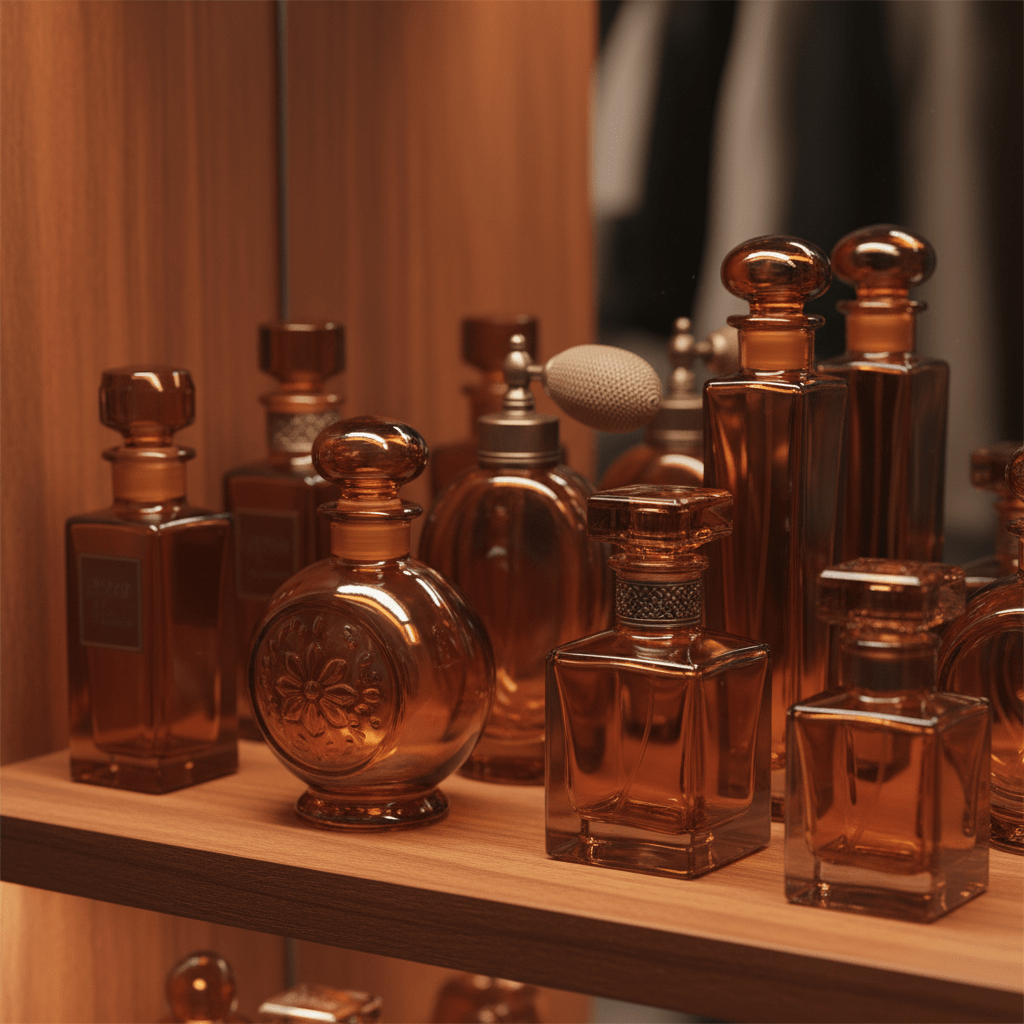
Starting Your Perfume Line: The Critical First Choice Between White Label and Private Label
So, you have this vision. Maybe it’s a scent that reminds you of fresh rain on pavement, or perhaps it’s a bold floral mix that screams confidence. You’re ready to create your own fragrance brand. It’s thrilling, right?
But then you start Googling. And wow, it gets confusing fast.
You keep seeing two terms popping up everywhere: “white label” and “private label.” They catch a lot of people off guard because they sound pretty much the same.
Actually, they’re totally different.
Picking the wrong one is like ordering a custom suit and getting a “one size fits all” t-shirt. It covers you, sure, but it doesn’t fit you. I’ve seen too many new founders get stuck here, paralyzed by the jargon. They just want to know how to find the best private label perfume company without wasting money on the wrong manufacturing model.
Here is the plan. We’re going to clear up the confusion. We’ll compare the two options side-by-side so you can decide what actually makes sense for your budget and your brand. Whether you are hunting for low MOQ private label perfume or planning a massive launch, you need to get this first step right.
Let’s figure this out.
The Fast-Track Option: What Is White Label Perfume?
Think of white label perfume like buying a frozen pizza and serving it at your own dinner party. You didn’t make the dough. You didn’t slice the pepperoni. You just heated it up and put it on a nice plate.
That is white label in a nutshell.

When you look for ways to create your own fragrance brand, this is usually the first door you see. A manufacturer has already made the scent. They tested it. They bottled it. It’s sitting on a shelf right now. They let you—and a bunch of other brands—buy it and stick your own label on the glass.
Why It Is So Popular
Let’s be honest. Creating a new smell from scratch is hard work. It takes months, sometimes years. White label skips all that.
- Speed: You can launch fast. I’m talking weeks, not years.
- Money: It costs way less. You don’t pay for research or failed experiments.
- Safety: These scents are already selling. You know people like them.
Many perfume manufacturing companies USA and abroad have huge catalogs of these pre-made scents. You just point and say, “I’ll take number 42.”
The Big Catch
But wait. There is a downside. And for some of you, it’s a dealbreaker.
You do not own the scent.
Since you didn’t create the formula, you have no rights to it. That manufacturer can sell the exact same “Number 42” to your biggest competitor.
Imagine this. Your customer loves your “signature” floral perfume. They pay $80 for it. Then, they find a bottle at the drugstore for $15 that smells exactly the same. That is awkward. It hurts your brand trust.
Also, you can’t change anything. You can’t say, “Hey, can we add a bit more sandalwood?” or “I really want to use a high-quality natural attar base.” With white label, you get what you get. If you care about using specific, pure ingredients—like the certified essential oils from suppliers like Aroma Monk—white label might feel too limiting. You lose that control over quality sourcing.
So, if you want something that is yours and yours alone, stick around. The next option might be your winner.
Building a Unique Brand: What is Private Label Perfume?
If white label is a frozen pizza, private label is hiring a chef to cook a secret family recipe just for you. Actually, wait—it’s even more than that. It’s you and the chef inventing a totally new dish together.
Here is the simple definition. Private label means the product is bespoke. It is made from scratch.
You work with private label fragrance manufacturers to spec out exactly what you want. The scent isn’t sitting on a shelf somewhere. It doesn’t even exist yet. You create it.
The Superpower: You Own It
When you choose custom perfume manufacturing, you usually own the rights to the formula. That is a huge deal.
It means if you mix Jasmine Sambac, a touch of Oud, and a specific vanilla, no one else can legally copy that exact mix and sell it. It belongs to your brand. It is your intellectual property.
This gives you power. You can tell a real story. You can tell your customers, “We sourced this specific rose oil because it smells like nothing else on earth.” It feels authentic because it is authentic.
But Here Is the Reality Check
Okay, so why doesn’t everyone do this? Because it is harder.
- It takes time. You aren’t launching in three weeks. You might test samples for months.
- It costs more. You have to pay for the lab time and the development fees.
- You have to make choices. There are a million decisions to make.
But this is also where the magic happens. Since you control the recipe, you can demand the best stuff. You aren’t stuck with whatever generic synthetic oil a factory had lying around to save pennies.
For example, maybe you want your brand to be known for purity. You can choose to use a high-quality natural attar or certified essential oils. This is where a supplier like Aroma Monk fits in. They provide the raw, lab-tested ingredients—like 100% pure rose water or specific carrier oils—that elevate a fragrance from “nice” to “luxury.”

When you go private label, you get to say, “No, I want this specific oil from that transparent source.”
Is It Worth It?
If you are learning how to start a perfume line with the goal of being around for ten years, yes.
Finding the best private label perfume company to work with means you are building an asset. You aren’t just flipping products. You are creating a brand that has value because nobody else can do exactly what you do.
So, we have the easy way (white label) and the unique way (private label). Now, let’s look at the numbers. Because your budget is probably going to make this decision for you.
Get a quote from Aroma Monk.
Essential Oil Supplier – Bulk pricing • Samples • Fast response
White Label vs. Private Label: A Side-by-Side Comparison for Aspiring Brands
You know that stuck feeling where both options sound good and your brain just goes, “Uh… both?” Yeah. This is that moment.
So let’s lay it out clean. No fluff. Just how white label and private label perfume stack up on the stuff that really matters for a new or growing brand.
Quick Snapshot: How They Compare
| Factor | White Label Perfume | Private Label Perfume |
|---|---|---|
| Customization Level | Very low – pick from ready-made scents | Very high – you shape the scent, story, and sometimes base |
| Exclusivity | Shared – same scent sold to many brands | Exclusive – formula can be yours only |
| Cost & Investment | Lower upfront, fewer fees | Higher upfront, dev fees, sampling rounds |
| Speed-to-Market | Fast – often 2–8 weeks | Slower – often 3–12+ months |
| Brand Scalability | Fine for small lines or testing ideas | Strong for long-term, defensible brand growth |
Okay, now let’s break this down in normal language.
1. Customization Level: How Much Can You Actually Change?
With white label, you’re basically shopping a catalog. You
- pick a scent from a list
- maybe choose bottle style from a few options
- put your logo on it
That’s mostly it.
You can’t tweak the formula, can’t swap out cheap synthetics for a more premium natural attar, and you usually can’t say, “Hey, I want this exact rose water as my base.” It’s more like renting a scent, not building one.
Private label flips that. You sit down with private label fragrance manufacturers and say things like:
- “I want a fresh, city-after-rain vibe”
- “No harsh chemicals, more natural oils”
- “I want the dry-down to feel warm and cozy, not sharp”
And they work with you to get there. Sometimes you can even ask them to use specific high-quality ingredients from suppliers similar to Aroma Monk, who focus on pure, lab-tested oils and attars for brands that care about traceable quality across their perfume sourcing and production.
So if your vision is very specific and you want your line to smell like you and no one else, private label wins this round.
2. Exclusivity: Who Else Can Sell “Your” Scent?
This one is huge for your brand story.
White label: the scent is shared. The same exact formula might sit in 10, 50, or 100 different bottles with different labels. Feels a bit like fast fashion. It works, but it’s not rare.
Private label: the scent can be locked to you. Not always, so ask the question clearly. But usually with custom perfume manufacturing, you either get:
- full ownership of the formula, or
- an exclusivity deal where that exact blend is only sold to you in your market
This matters long term. If you want real loyalty and higher price points, people need to believe, “I can only get this smell from this brand.” That’s where defensibility comes in. Your scent becomes part of your IP, not just another bottle anyone can copy.
3. Cost & Investment: What Will This Really Run You?
Let’s talk money, because that’s what usually calls the shots.
White label costs usually look like:
- Low or zero development fees
- Lower minimum order quantities (sometimes a few dozen bottles)
- You mostly pay for the units and packaging
This is great if you’re testing the waters, trying out low MOQ private label perfume style minimums, or just want to see if your audience even likes perfume from you.
Private label costs usually look like:
- Development or lab fees for creating the scent
- Multiple sample rounds (which cost time and some cash)
- Higher minimum orders once the scent is approved
But here’s the flip side. With private label, you’re building an asset. Over time, a unique, owned formula that sells well can be a big deal for your brand value. This is the kind of thing bigger companies buy, license, or expand into new markets with.
So short term, white label is kinder to your wallet. Long term, private label can pay off more if you want a real, stand-out brand.
4. Speed-to-Market: How Fast Can You Launch?
If your plan is, “I want my perfume ready by Black Friday this year,” your choice might already be made.
White label timing:
- Choose scent → Order samples → Approve → Place order
- You can often be live in a few weeks to a couple of months
This is super helpful if you’re just learning how to start a perfume line alongside other things like skincare or candles. Or if you just want to test if your people even buy fragrance from you at all.
Private label timing:
- Discovery call about your vision
- First round of samples
- Usually a few more rounds to tweak strength, notes, and performance
- Stability and safety checks, then production
This can easily run 3–12 months, especially if you’re picky. And honestly, you should be a bit picky here. This is your future best-seller we’re talking about.
So if you’re in a big rush? White label is the sprint. Private label is the marathon.
5. Brand Scalability: Where Do You Want This To Go?
Here’s where you zoom out a bit.
White label is awesome for:
- Market testing new scent ideas
- Small side projects
- Limited drops or seasonal collections
But if one of those scents really takes off, scaling it can be tricky, because nothing about it is truly yours. A competitor can undercut you with the same smell at a lower price, and your brand story gets shaky.
Private label, on the other hand, is built for long-term scaling:
- You can create full families of scents around your hero formula
- You can expand into white label vs private label cosmetics later with matching body oils, mists, or skincare using similar notes
- Your unique scents become part of what your brand is famous for
And if you choose good raw materials from a reliable supplier and a strong manufacturer, quality tends to stay stable as you grow. You’re not just reselling someone else’s idea. You’re building something you can keep improving.
So… Which Path Sounds More Like You?
Here’s a simple way to self-check.
White label might fit you if:
- You’re on a tight budget right now
- You want to test demand fast
- You don’t mind your scent not being totally exclusive
- You’re okay focusing more on branding, packaging, and marketing than ingredient stories
Private label probably fits you better if:
- You see perfume as a core part of your brand for years
- You care a lot about ingredient sourcing and quality
- You want to tell deep, honest product stories
- You’re willing to invest more time and money upfront to stand out
Neither path is “wrong.” They’re just different tools.
A lot of smart founders actually blend both: they start with white label to learn their customers’ taste, then switch their best-selling idea into a private label version with better oils, more control, and a stronger story once they’re ready to invest.
If you’re already excited about things like natural attars, rose water, and pure essential oils, and you like the idea of working with suppliers like Aroma Monk for clean, traceable bases, you’re probably leaning toward private label without even meaning to.
Next up, let’s talk about how to spot the best private label perfume company for your stage, so you don’t get stuck with a partner that can’t grow with you.
5 Questions to Ask Before Choosing Your Perfume Manufacturing Partner
Choosing a manufacturer is a bit like dating. You really, really don’t want to marry the first person who buys you dinner.
You need to ask the tough questions to find the best private label perfume company for you. If you skip this part, you might end up with a garage full of bottles you can’t sell—or worse, a product you’re embarrassed to put your name on.
Grab a notebook. Here are five things you need to ask yourself (and your potential partners) before you sign anything.
1. What Is My Real “Why”?
Be honest. Are you trying to cash in on a trend quickly, or are you building a legacy?
If you just want to sell something that smells nice to your Instagram followers next month, that is totally fine. Many perfume manufacturing companies USA based have great white label options for this. It’s fast, easy, and low risk.
But if you want to create your own fragrance brand that competes with the big luxury houses, you need to think long-term. You need a partner who can grow with you, not just sell you stock.
2. What Is My Actual Budget?
This is the awkward conversation nobody likes having.
Custom perfume manufacturing is an investment. You aren’t just paying for the liquid; you pay for the lab time, the revisions, and the safety testing. If you have $500, you are looking at white label. If you have $5,000 or $50,000, private label opens up for you.
And ask about minimums. If you are hunting for low MOQ private label perfume, your list of partners gets shorter. Some factories won’t turn on the machines for less than 1,000 bottles. Make sure you can afford the entry ticket.
3. How Unique Does the Scent Need to Be?
Is your brand story generic, or is it personal?
If your marketing is “Smell like a summer garden,” a stock scent works. But if your story is “This scent captures the exact smell of the rose garden my grandmother planted in 1995,” you can’t buy that off a shelf. You have to build it.
Private label fragrance manufacturers are the only ones who can take that memory and turn it into a formula that belongs to you.
4. How Much Control Do I Want?
Some founders want to be like a chef in the kitchen. They want to pick every ingredient. They want to argue about the base notes.
If you are the hands-on type, make sure your partner allows that. This is crucial for perfume sourcing and production. You might want to use very specific, high-purity ingredients—like a certified natural attar or 100% pure rose water from a transparency-focused supplier like Aroma Monk.
If your manufacturer only works with their own generic duties, you’re going to be frustrated. Ask if you can specify your own raw materials.
5. What About Other Products?
Okay, this one catches people off guard. You start with perfume. But what happens in a year when you want to launch a matching body lotion or a candle?
This is the white label vs private label cosmetics puzzle. Some manufacturers only do alcohol-based perfume. If you dream of a full lifestyle brand, look for a partner who can handle different bases or is willing to sell you the fragrance concentrate so you can use it elsewhere.
The Bottom Line
Take your time here. The best private label perfume company isn’t always the one with the flashiest website. It’s the one that answers these questions in a way that fits your wallet and your dream.
Once you know what you want, you can start the fun part: actually making the stuff.
How to Vet and Select the Best Private Label Perfume Company
Finding a factory is easy. Google gives you a million results for perfume manufacturing companies USA and overseas. But finding a partner? That is the hard part.

A bad manufacturer can kill your brand before you sell bottle number one. Maybe they ship late. Maybe the scent changes from batch to batch. Or maybe they just stop answering your emails.
To find the best private label perfume company for your specific needs, you have to look past the sales pitch. Here is exactly what you need to check.
1. The “Nose” Check: Who Is Actually Making It?
Some factories are just production lines. They are great at filling bottles, but they don’t know art.
You need to know if they have an in-house perfumer or fragrance expert. When you are paying for custom perfume manufacturing, you need someone who understands how base notes interact with top notes. Ask them, “Who designs the scent?” If the answer is “our sales team picks it,” run away.
2. The Boring (But Safe) Stuff
I know, nobody wants to talk about regulations. It’s dry. But it keeps you out of court.
Make sure your partner follows IFRA (International Fragrance Association) standards. They should also know the FDA rules if you are in the US. If they look confused when you ask about safety documentation or allergens, that is a massive red flag. You need paperwork that proves your product is safe to spray on skin.
3. The Money Talk: MOQs and Hidden Fees
Most new founders get stuck on the Minimum Order Quantity (MOQ).
If you are just figuring out how to start a perfume line, you can’t order 10,000 units. Look for partners offering low MOQ private label perfume programs. Some will overlook their high minimums if you pay a higher price per bottle initially.
Also, ask for the total cost. Does the price include the bottle? The cap? The box? Usually, the quote you get is just for the liquid. Don’t get blindsided by a bill for 500 caps you didn’t know you had to buy separately.
4. Ingredient Transparency
This is where the good brands separate from the cheap ones.
Perfume sourcing and production is all about the raw materials. If a manufacturer is secretive about where their oils come from, be careful. You want a partner who values transparency.
Ask them: “Can we use specific, high-quality ingredients?”
For instance, maybe you want your signature scent to use a real, certified natural attar or 100% pure rose water rather than a synthetic copy. You need a manufacturer willing to work with reputable suppliers—like Aroma Monk, for example—who provide lab-tested, pure ingredients. If your manufacturer forces you to use their own low-grade, untraceable oils just to save them money, you lose control over your quality.
5. Can They Grow With You?
Think ahead. If you crush it with perfume, maybe next year you want to explore white label vs private label cosmetics to expand into lotions or body oils.
Does this factory do that? Or will you have to find a whole new partner and try to match the scent all over again? Picking a partner with diverse capabilities saves you a ton of headaches down the road.
Take your time vetting these companies. Send emails. Get on the phone. The right partner will ask you questions, too.
The Private Label Perfume Journey: From Concept to Customer
It feels like alchemy, doesn’t it? You have an idea in your head, and somehow it needs to turn into a bottle on a shelf. For most people figuring out how to start a perfume line, the middle part is a total mystery.
But honestly? It’s just a process. Whether you are doing custom perfume manufacturing or just dipping your toes in, the steps are pretty much the same. Understanding this roadmap is the best way to find the best private label perfume company because you’ll know exactly what to ask for.
Here is how the magic actually happens, step by step.
Step 1: The Fragrance Brief
This isn’t a legal document. It’s a mood board. You don’t need to know chemistry. You just need to know your vision.
You tell the manufacturer: “This is for a woman in her 30s who loves hiking but works in the city.” You talk about feelings. Is it moody? Fresh? Create your own fragrance brand by starting with the story, not the chemicals.
Step 2: Scent Development & Revisions
This is the fun part. The lab sends you a small sample. You smell it on a tester strip. Then you smell it on your skin. Then you wear it for a day.
Maybe it’s too sweet. Maybe the wood note disappears too fast. You give feedback, and they tweak it.
This is also where perfume sourcing and production details matter. If you want a luxury product, you might push for better ingredients here. For example, instead of a generic rose scent, you can ask to use high-grade, lab-tested raw materials—like the natural attars or pure rose water you’d find from suppliers like Aroma Monk. Using real, traceable oils makes the scent deeper and more expensive-smelling.
Step 3: Bottle & Packaging Design
While the lab perfects the juice, you pick the outfit.
Private label fragrance manufacturers usually have a catalog of bottles, caps, and sprayers. You pick the combination that fits your vibe. If you want to stand out, the weight of the cap and the clarity of the glass matter more than you think.
Step 4: Regulatory Approval & Stability Testing
Okay, this part is boring. But it is super important.
Before you can sell a single drop, the formula needs to be tested. Will it turn brown if it sits in the sun? will it irritate skin? Good partners handle all this safety paperwork for you so you don’t get sued.
Step 5: Full-Scale Production
Once you sign off on the scent and the safety tests pass, they flip the switch.
They mix the big barrels of fragrance concentrate with alcohol. They let it macerate (soak) so the notes blend. Then they fill, cap, and box your order.
And just like that, you have a product ready to ship.
Your Fragrance, Your Future: Making the Right Choice
Here is the honest truth. There is no “perfect” path, just the one that fits your wallet and your timeline right now.
If you just want to see if people will buy from you, white label is brilliant. It’s fast, it’s cheaper, and it gets you in the game. But if you are ready to create your own fragrance brand that builds real loyalty, private label is where the magic happens. It’s the only way to own your formula and tell a story that is yours alone.
Finding the best private label perfume company comes down to asking those tough questions we talked about. Look for private label fragrance manufacturers who care about what goes in the bottle just as much as you do. Whether that means insisting on safe, high-purity ingredients—like the certified natural attars or essential oils you can get from suppliers like Aroma Monk—or finding a partner who supports low MOQ private label perfume runs, don’t settle.
You have the checklist. You know the red flags. Now, go find the partner who can help you bottle that vision.
Get a quote from Aroma Monk.
Essential Oil Supplier – Bulk pricing • Samples • Fast response