
Harnessing Nature’s Antiseptic: The Rising Demand for Tea Tree Water in B2B Formulations
The natural cosmetics market is forecast to grow from $42.5 billion in 2025 to $45.1 billion in 2026, with a 5.2% yearly growth rate through 2035. Other forecasts run higher, closer to 9%. Either way, the direction is clear.
Shoppers are reading labels. A 2025 survey found that 65% of beauty consumers always or usually read ingredient labels, and 62% hunt for ingredients they want or want to avoid. They want gentle. They want natural. And they want proof.
That’s where tea tree water comes in. It’s the soft, water-based cousin of tea tree oil, and it fits toners, mists and cleansing gels without the punch of the neat oil. Brands searching for a natural antiseptic for skin are looking at it more and more.
But here’s the catch. Finding pure, reliable tea tree hydrosol in bulk isn’t simple. Some products are just water with a little fragrance. Others lack batch data. And honestly, a lot of the claims floating around aren’t backed by solid science (I’ll be upfront about that as we go).
So this guide is built for procurement managers and product developers. We’ll cover what the ingredient really is, what the science does and doesn’t say, how to use it, and how to check quality before you place a big order. Aroma Monk works with these same questions every day, so we’ll keep it practical.
1. What is Tea Tree Water? Demystifying the Hydrosol for Product Developers
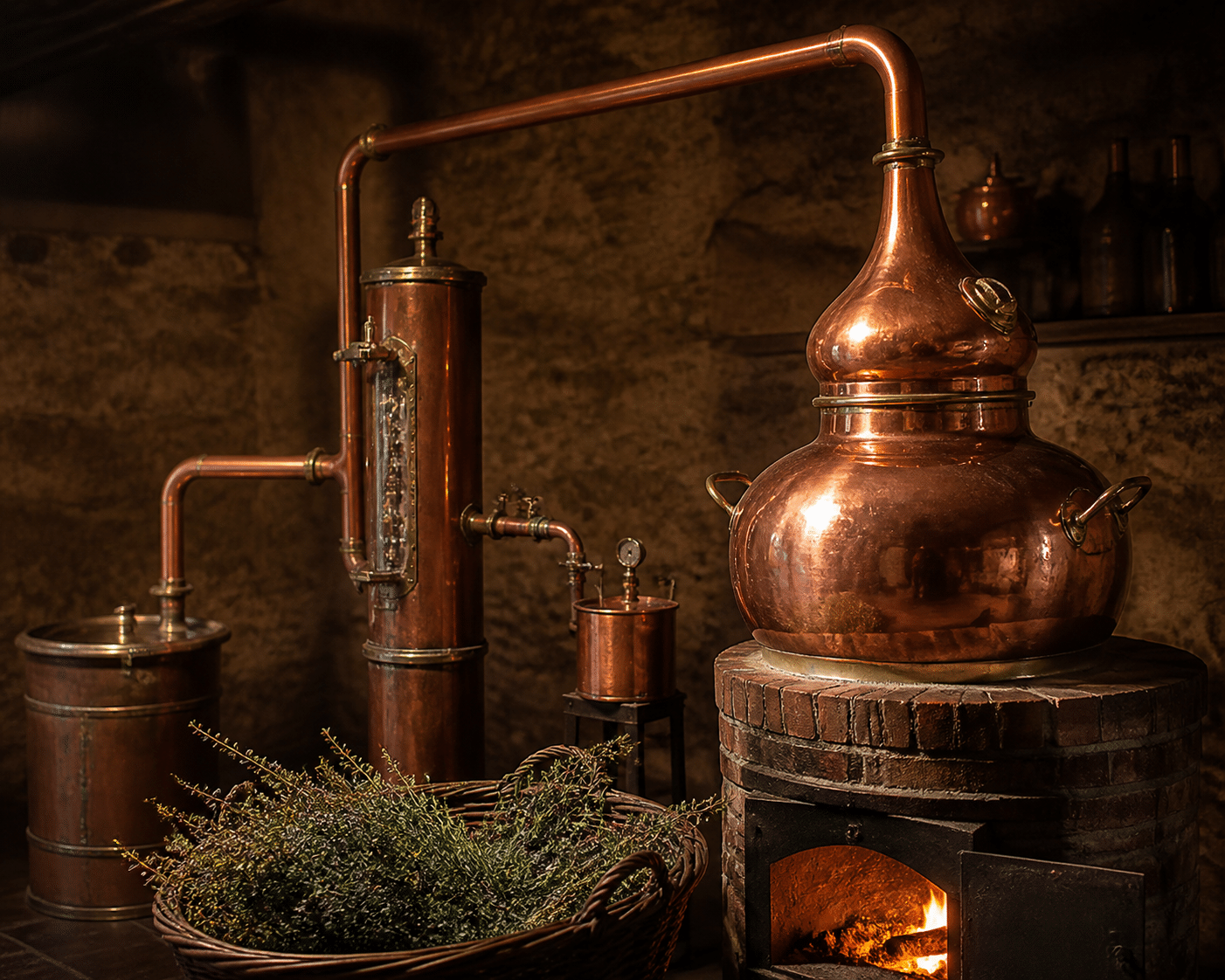
Picture a distillation still at work. Steam rises through Melaleuca alternifolia leaves, picks up their aromatic compounds, then cools back into liquid. What you get isn’t one product. It’s two.
How Tea Tree Water Is Made
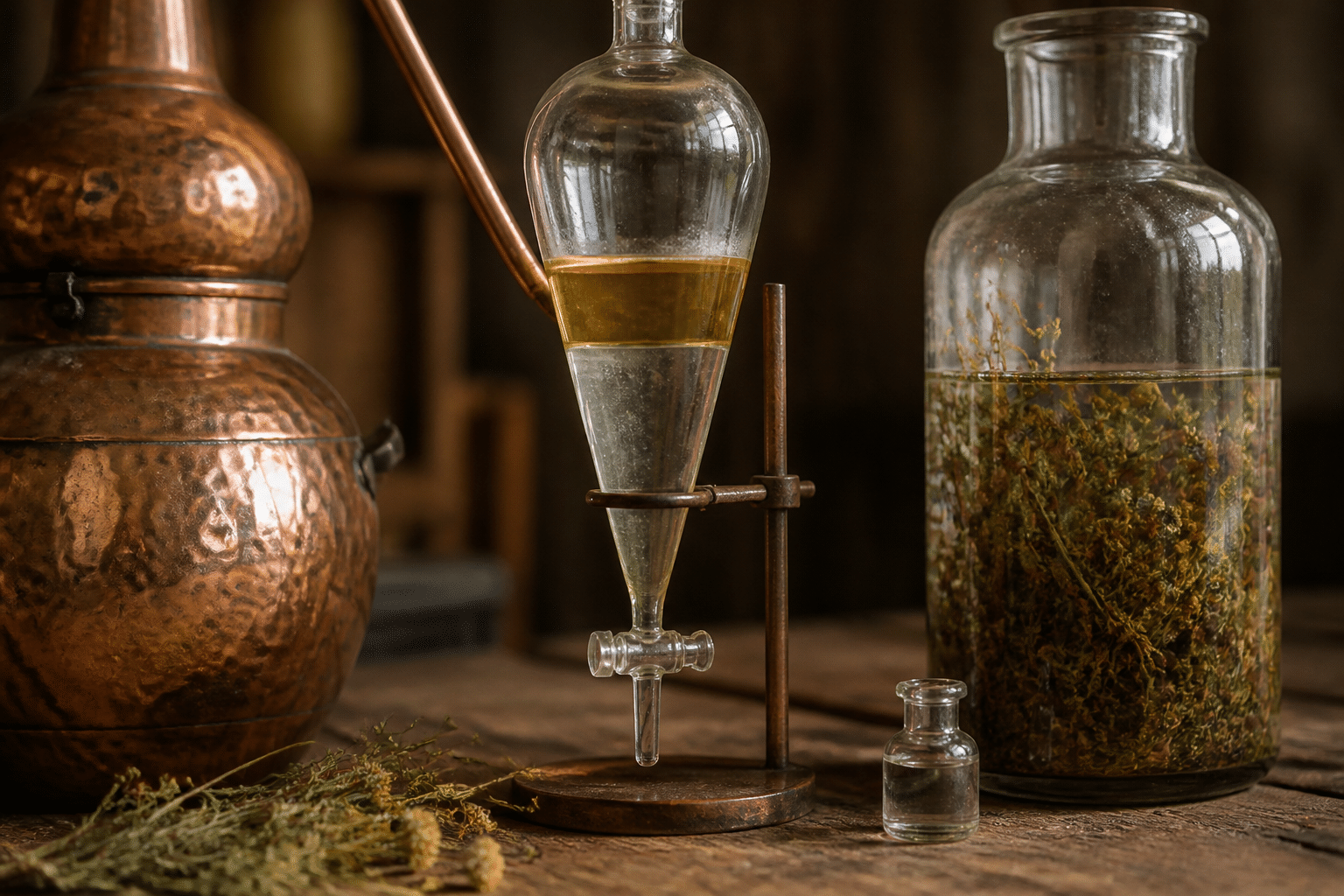
Tea tree water, also called tea tree hydrosol, is the watery layer that forms alongside the essential oil during steam distillation. The oil floats on top and the water settles below. Both are real products of the same run.
So no, it isn’t just essential oil mixed into water. A true hydrosol is a co-product. It carries the water-soluble, more polar aromatic compounds that get pulled over with the steam. If you’d like to see the setup, this short steam distillation video shows vapor moving to the condenser and separating.
Here’s the process in plain steps:
| Step | What happens |
|---|---|
| 1. Leaves and twigs loaded | Fresh Melaleuca alternifolia goes into the still |
| 2. Steam passes through | Steam carries off water and volatile compounds |
| 3. Vapor cools | A condenser turns it back into liquid |
| 4. Layers separate | Essential oil and hydrosol settle apart |
| 5. Hydrosol collected | The water layer becomes tea tree water |
What’s Actually Inside
The headline compound is terpinen-4-ol. Formulators also watch for 1,8-cineole, another tea tree constituent that gets checked on test reports. Here’s the thing, though. The amounts are very different from the oil.
One peer-reviewed analysis found about 624.2 µg/mL of terpinen-4-ol in the hydrosol, roughly 0.062%. The essential oil sat at 35 to 48%. That’s hundreds of times lower.
This is why tea tree water has a softer profile. It’s gentler on the nose and, in many cases, easier to work into toners and mists. But gentle doesn’t mean risk-free, so you still need patch testing and your own safety checks. And please don’t lift essential-oil claims and stick them on the hydrosol.
Why It’s Not Just Fancy Water
Deionized water is a blank page. It hydrates a formula and does little else. Tea tree water replaces that blank phase with something that has a botanical identity, a light herbal scent and a measurable set of plant compounds.
Suppliers often report a mildly acidic pH, around 4.5 to 6.0, which suits many skin-friendly formulas. Treat that as a starting guess, not a promise. Every batch should be checked with a real pH reading and a certificate of analysis.
Think of it as a functional water base. It gives you hydration plus a story your customers can read on the label. Next, let’s look at what the science really says about its antiseptic claims.
2. The Science Behind Tea Tree Water’s Antiseptic & Anti-Inflammatory Power
Here’s the honest starting point. Most of the big antiseptic claims about tea tree come from studies on the essential oil, not the water. So let’s separate what we know from what we’re guessing.
How Terpinen-4-ol Fights Microbes
Terpinen-4-ol is the main active in tea tree. A well-known review of tea tree’s antimicrobial properties explains the basic idea: the compounds damage microbial cell membranes. The membrane gets leaky. Important stuff spills out, and the cell can’t work properly.
That’s the mechanism behind the activity people talk about against C. acnes (the bacteria formerly called P. acnes) and S. aureus. Think of it like poking holes in a water balloon. Not elegant, but it works.
Now the catch. Terpinen-4-ol is far more concentrated in the oil. The water carries a small fraction of it, so we can’t assume the same punch.
What the Evidence Covers (and Doesn’t)
I went looking for recent human studies on tea tree water itself. I didn’t find any showing it kills acne bacteria on skin. Not one. What exists is smaller and more indirect.
- A 2025 rat study tested a gel with 10% M. alternifolia hydrosol on wounds. Treated wounds healed fully in 14 days. That’s encouraging, but it’s an animal study, not an acne or pathogen trial.
- A 2026 lab study found antibacterial action from the essential oil against organisms like E. coli and Streptococcus uberis. Again, oil, not water.
| Microbe | Evidence for tea tree oil | Evidence for tea tree water |
|---|---|---|
| C. acnes (acne bacteria) | Supported by lab and clinical work | No direct data found |
| S. aureus | Supported in lab testing | No direct data found |
| E. coli | Shown in 2026 lab study | No direct data found |
| Streptococcus uberis, S. agalactiae | Shown in 2026 lab study | No direct data found |
| Candida | Reported in lab research | No direct data found |
So what about tea tree water for acne? A 2026 meta-analysis of seven tea tree oil studies with 445 people reported fewer acne lesions compared with controls. That’s real support for the oil. For the hydrosol, it’s a maybe, and your own testing has to fill the gap.
Calming Redness: The Anti-Inflammatory Angle
Tea tree is often described as soothing, and the idea makes sense. Fewer irritating microbes can mean less redness. Lab work on the oil also points toward calming effects.
But I couldn’t find a head-to-head study comparing tea tree water with witch hazel or chamomile. So “more soothing than chamomile” isn’t a claim you can back up today.
What you can say is softer. Words like “contains water-soluble tea tree constituents” or “made for soothing routines” hold up much better. Sensitive and blemish-prone skin products are a natural fit for that tone.
A Preservative Booster? Not So Fast
Some suppliers pitch tea tree water as a natural preservative helper. I’d be careful here. A 2024 stability check on 11 plant hydrosols found tea tree water stayed microbe-free for up to 13 months, but that tested storage, not pathogen-killing power.
So treat it as a functional ingredient, never your only preservative. Your finished formula still needs a proper preservative system and challenge testing. Ask every supplier, Aroma Monk included, for batch-specific data before you build claims around it.
Next up: where this ingredient actually fits in a product line.
3. Commercial Applications: Integrating Tea Tree Water into Your Product Line
Get a quote from Aroma Monk.
Essential Oil Supplier – Bulk pricing • Samples • Fast response
So you’ve got a sample bottle sitting on your bench. Now what? Good news: tea tree water is one of the easier botanical ingredients to slot into a formula. You mostly swap it in for plain water and see what happens. (Of course, “see what happens” means testing. More on that below.)
Toners, Mists and Cleansers: The Easy Wins
The simplest use is as the base of a toner or mist. Some brands go all in. Wildcare sells a facial mist made from 100% steam-distilled tea tree in spring water and suggests using it within six months of opening. That’s a nice proof that a single-ingredient hydrosol can sit on a shelf as a finished product.
For your own formulas, DIY Cosmetica lists 10 to 100% of the water phase for toners and similar products. I’d start lower, around 20 to 50%, and only go up after irritation, odor and preservation checks. Cleansing gels and spot gels usually sit in a 10 to 50% range.
Here’s how a starter line could look:
| Product concept | Format | Suggested starting level | Watch out for |
|---|---|---|---|
| Tea Tree Clarifying Toner | Leave-on toner | 20 to 50% of water phase | Scent strength, preservation |
| Soothing After-Shave Mist | Light spray | 20 to 40% of water phase | Sting on freshly shaved skin |
| Purifying Scalp Serum | Leave-on scalp serum | 10 to 30% of water phase | Residue, patch testing |
| Tea Tree Spot Gel | Gel | 10 to 50% of water phase | Viscosity changes |
Those levels are development starting points, not rules. Your own testing decides.
Niche Products Worth a Test Batch
OK, this is where it gets fun. After-shave balms and mists are a natural fit because tea tree water has a light herbal scent and feels fresh. Scalp products work too, as rinse-off or leave-on sprays aimed at a clean, refreshed scalp.
Natural deodorant sprays and gentle hand sprays are also on the table. But I’d keep the claims small. We covered earlier that there’s no solid human data showing tea tree water treats dandruff or kills germs on skin. So skip words like “anti-dandruff” or “sanitizing” and use phrases like “refreshing” or “made for daily cleansing routines.”
Sprays need extra care too. The EU safety opinion on tea tree oil, SCCS Opinion 1681/25, excludes sprayable products because of inhalation worries. That’s about the oil, not the water. Still, ask your supplier for residual oil data and run your own safety assessment.
Swapping the Water Phase in Creams and Lotions
Emulsions are trickier but doable. Many suppliers suggest replacing part of the aqueous phase in oil-in-water creams and lotions with tea tree water, often around 5 to 30% in early trials. Add it during the cool-down phase, below 40°C, unless your supplier says otherwise.
Now, you’ll hear people say a hydrosol swap boosts stability. I wouldn’t promise that. Hydrosols are water-based and can be preservative-free, so a cream needs a proper preservative system, viscosity checks and challenge testing every time you change the recipe. Texture usually stays light at lower levels, though. That’s the upside.
Next, let’s talk about how to buy this stuff without getting burned.
4. A Procurement Manager’s Guide to Sourcing High-Purity Bulk Tea Tree Water
You can’t smell your way to a good supplier. I mean, you can try. But a pleasant tea tree scent tells you almost nothing about what’s in the drum.
So let’s talk about paperwork, red flags and supplier checks.
Start With the Paperwork
Ask for a batch-specific Certificate of Analysis (CoA) before anything else. Not a generic one. One that matches your lot number, has a date, and shows real numbers instead of just “complies.”
Then ask for a GC-MS report. That’s gas chromatography-mass spectrometry, a test that lists the volatile compounds in the water. It shows whether terpinen-4-ol and other tea tree constituents are really there, and in what amounts.
Here’s a catch that trips people up. ISO 4730:2025 is the benchmark for tea tree essential oil. There’s no dedicated ISO standard for the hydrosol. So if a supplier says their water “meets ISO 4730,” that’s a yellow flag. Those limits don’t automatically apply to the water phase.
Spotting Fake or Watered-Down Tea Tree Water
Not every bottle labeled tea tree water is a true hydrosol. A real one is the water collected during steam distillation. Some products are something else wearing the same label.
Watch for these red flags:
- Plain deionized water with almost no detectable tea tree compounds
- Essential oil mixed into water with polysorbate, PEG solubilizers or alcohol
- Synthetic fragrance chemicals copying the tea tree smell
- Other cheaper hydrosols, like eucalyptus or rosemary, swapped in
- Preservatives or alcohol that aren’t listed on the spec sheet
- A CoA with no microbiology results, no date, or the wrong lot number
One more thing. A solubilized oil product isn’t automatically bad. It’s just a different ingredient, and it should be sold and priced as one.
Who’s Behind the Drum?
Good documents come from good suppliers. Look for GMP practices and ISO 22716 (the cosmetics manufacturing standard). Check that the testing lab is accredited, ideally to ISO/IEC 17025.
Traceability matters just as much. You want to follow the batch from the farm to the still to the factory. If a supplier can’t tell you where the Melaleuca alternifolia was grown, that’s a problem.
And ask about capacity. Can they ship the same quality in January and again in August? Can they handle your volume if your launch takes off? Suppliers like Aroma Monk, which manage sourcing through delivery and run lab testing on their products, tend to answer these questions without dodging.
The 5-Point Quality Check
Print this one out and keep it near your supplier emails.
| Check | What to ask for | Red flag |
|---|---|---|
| 1. Identity | Botanical name, plant part, steam distillation method | Vague “tea tree extract” wording |
| 2. Batch CoA | Dated, lot-matched, with actual pH and numbers | “Complies” with no data |
| 3. GC-MS report | Volatile profile, lab name, method | Only an essential oil chromatogram |
| 4. Safety and purity | Microbiology, heavy metals, preservative status | No microbial results |
| 5. Supply chain | GMP/ISO 22716, traceability, bulk capacity | No origin details or lead times |
Got a supplier that passes all five? Great. Next, let’s look at whether you should reach for the water or the oil.
5. Tea Tree Water vs. Tea Tree Oil: A Strategic Choice for Formulators
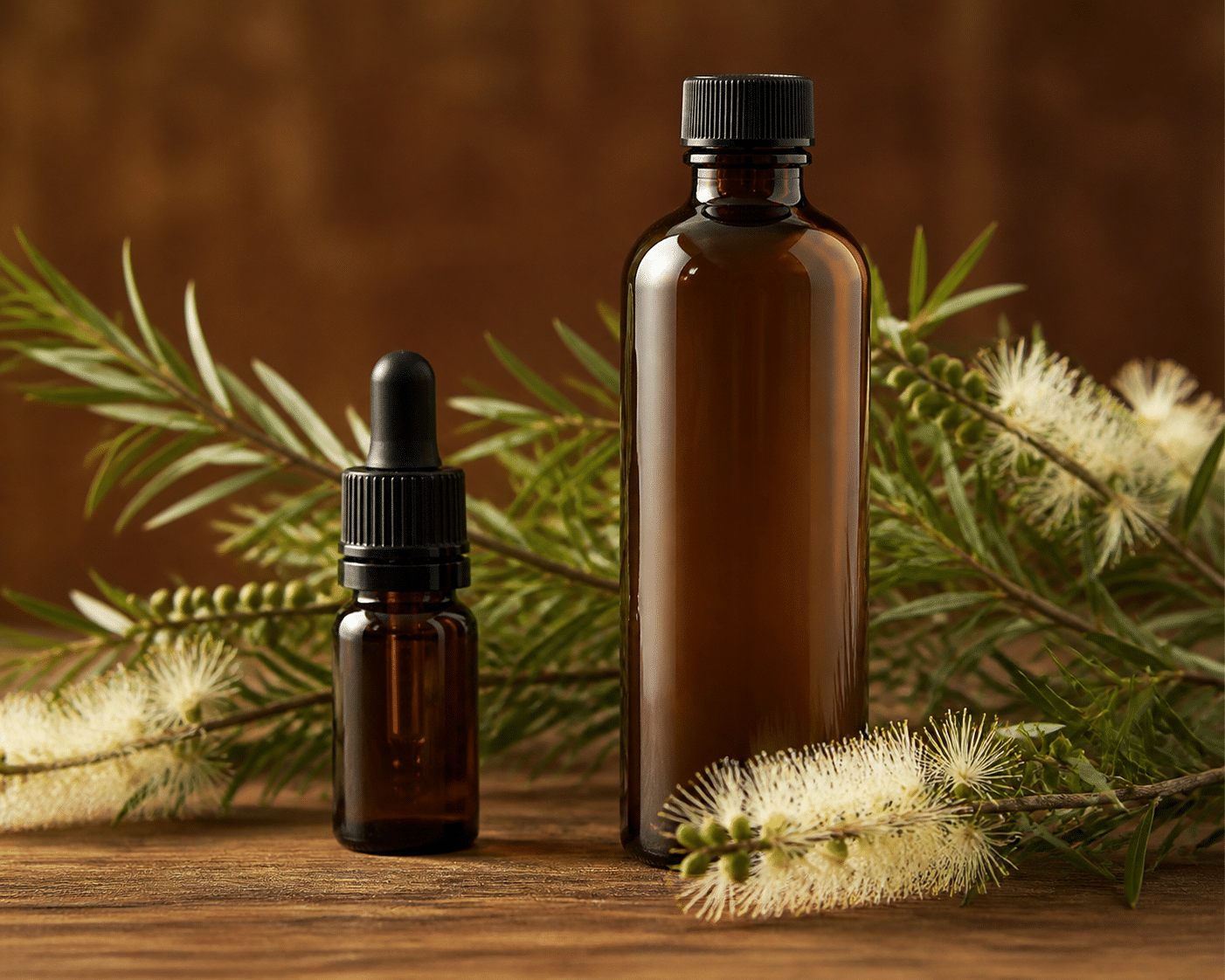
Here’s a question I hear a lot: “Why not just use the oil?” Fair. The oil is stronger, and it has the research behind it. But stronger isn’t always better for your formula.
Where Each One Fits
Think of the hydrosol as your water phase with a personality. It suits toners, mists, cleansing gels and scalp sprays where gentleness matters. The oil is the targeted tool. You’d reach for it in emulsions or oil-based products, in tiny, carefully measured amounts.
The two aren’t rivals, really. They do different jobs.
| Factor | Tea tree water (hydrosol) | Tea tree essential oil |
|---|---|---|
| Potency | Low. About 0.062% terpinen-4-ol | High. 35 to 48% terpinen-4-ol |
| Safety profile | Gentler, but still needs patch testing and supplier data | Strict dermal limits, higher chance of sensitization |
| Formulation use | Water phase of toners, mists, gels, light lotions | Oil phase, emulsions, rinse-off and targeted products |
| pH | Often reported at 4.5 to 6.0, verify per batch | Not applicable (no water phase) |
| Cost | Lower raw cost per kilo, plus preservation needs | Higher raw cost, used at very low levels |
Safety and Rules
The oil comes with real guardrails. Under the EU opinion, limits for tea tree oil run from 2.0% in shampoo and 1.0% in face wash down to 0.1% in face cream. They apply to adults only, and sprays are left out.
The water is easier to live with. People often use hydrosols neat, and many brands sell them that way. But “gentler” isn’t “risk-free.” Residual oil content varies, so ask your supplier for documentation and run your own safety assessment. Don’t assume the oil’s limits vanish just because the product is watery.
The Cost Question
On paper, the oil looks pricier. A 2026 supplier directory lists bulk cosmetic-grade tea tree oil at roughly $15 to $40/kg, with certified or Australian-origin lots higher. Hydrosol listings, like this marketplace offer, land closer to $7 to $8.50/kg. (Individual offers, not audited averages, so treat them loosely.)
But here’s the twist. The oil is potent, so you use a little. The water makes up a big share of your formula, so you use a lot. Plus, hydrosols need a solid preservative system and shorter shelf-life planning. A cheaper drum doesn’t always mean a cheaper finished product.
What the water gives you is a functional base and a clear label story. Many teams use both: hydrosol in everyday, high-volume products, and carefully dosed oil in the targeted ones. Just keep your claims honest, since the water doesn’t carry the oil’s antimicrobial punch.
Conclusion: Elevate Your Brand with Pure, Certified Tea Tree Water
So where does that leave us? Tea tree water isn’t a miracle ingredient, and I’d never pitch it as one. But it’s a useful one. It gives you a gentle, traceable water base with a real botanical story, and that’s something shoppers can read right on the label.
The wins for your team are pretty clear:
- Differentiation: a toner, mist or scalp spray that stands out from plain-water formulas.
- Honest performance: a soothing, refreshing ingredient, backed by proper testing instead of borrowed oil claims.
- A stronger brand story: verified origin, clean paperwork and claims you can defend.
The key is the supplier. Purity and steady supply decide whether your launch goes smoothly or turns into a headache.
Aroma Monk manages sourcing, lab testing and delivery for bulk buyers, so you get the documents you need before you commit.
Request Your Bulk Tea Tree Water Sample & CoA
Ask for the batch CoA, the GC-MS report and your sample. Then test it in your own formula. That’s the best next step.
Get a quote from Aroma Monk.
Essential Oil Supplier – Bulk pricing • Samples • Fast response