
The Growing Demand for Natural Relaxation: Why Sandalwood Water is Your Next Winning Ingredient
People are tired. Really tired. And they’re spending money to fix it.
The global health and wellness market is estimated at $7.83 trillion in 2026, up from $7.15 trillion last year. That number includes mindfulness, aromatherapy, sleep support and stress-relief products. I’ll be honest, a trillion-dollar figure is hard to picture. But if you zoom in on physical products built around mental wellbeing, one forecast has that segment growing from $8.6 billion in 2025 to $27.4 billion by 2034. That’s roughly 15% a year.
So shoppers want calm. And they want it from ingredients they can read, pronounce and trust.
Beyond Lavender: A Fresh Option for Calming Products
Lavender has had a good run. It’s everywhere, from pillow sprays to hand creams, and that’s exactly the problem for brands trying to stand out. Enter sandalwood water, also called sandalwood hydrosol. It’s the aromatic water left behind when sandalwood (usually Santalum album) is steam distilled. Soft, warm, a little creamy. Think of it as a natural relaxation ingredient with a more grown-up personality than the usual florals.
Now, a quick reality check. The research on sandalwood and stress is promising, but it’s still early. One small human study looked at sandalwood aroma and stress recovery, and most of the work so far involves the essential oil, not the water. We’ll be upfront about that as we go, because good claims need good backing.
What You’ll Get From This Guide
This guide is written for product developers, procurement managers and brand owners who want to know if sandalwood water belongs in their lineup. We’ll cover:
- What sandalwood hydrosol really is, and how it’s made
- What the science says (and doesn’t say) about calm and relaxation
- How to use it in mists, creams and gels
- How to source bulk sandalwood water with confidence, from purity checks to paperwork
- How it stacks up against other calming hydrosols
Let’s start with the basics: what’s actually in the bottle?
Beyond the Oil: What Exactly is Sandalwood Water and How is it Made?
Here’s something that surprises a lot of people. When sandalwood gets distilled, the oil isn’t the only thing that comes out. There’s water too. And that water is a real product, not a leftover.
How Steam Distillation Makes Two Products at Once
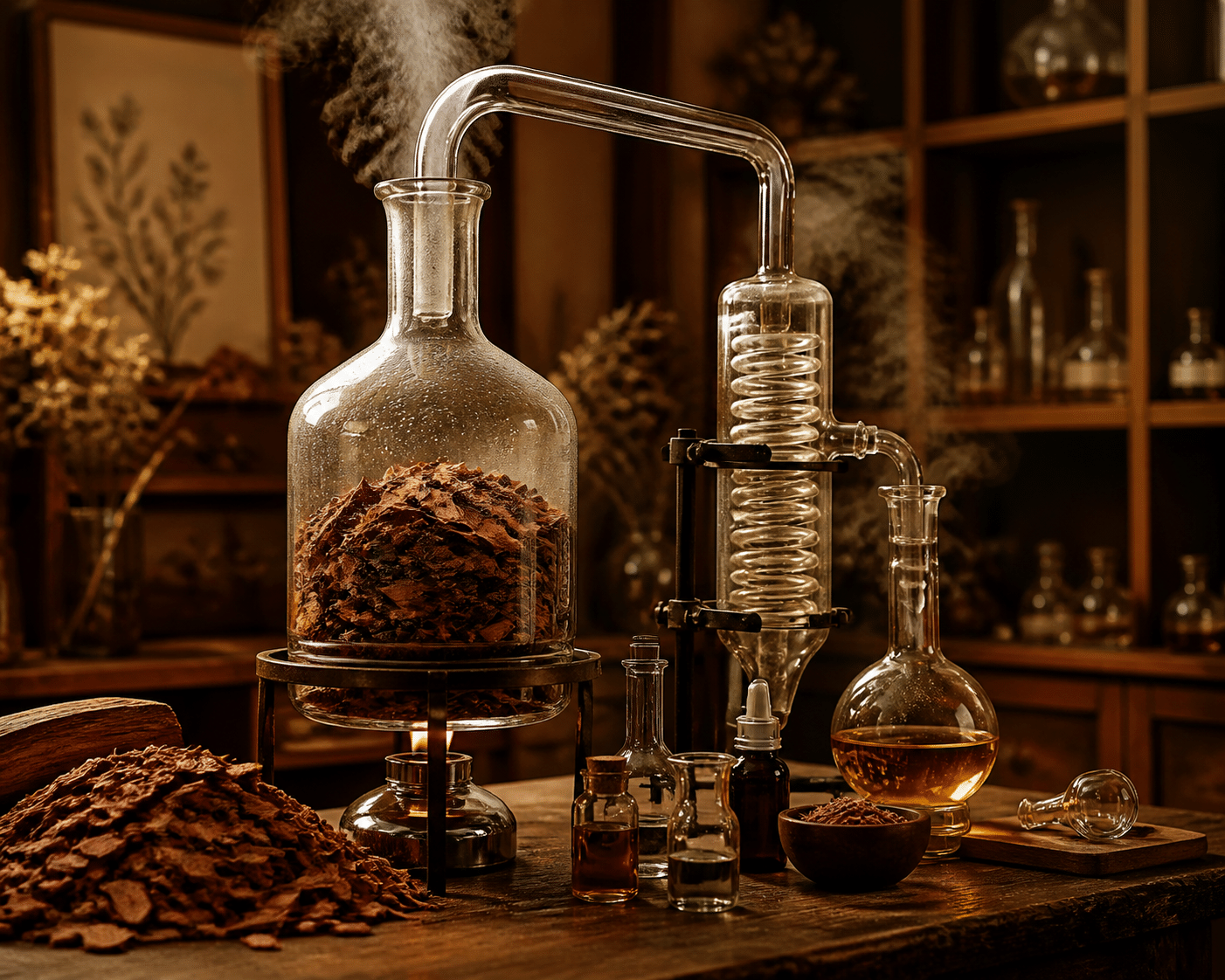
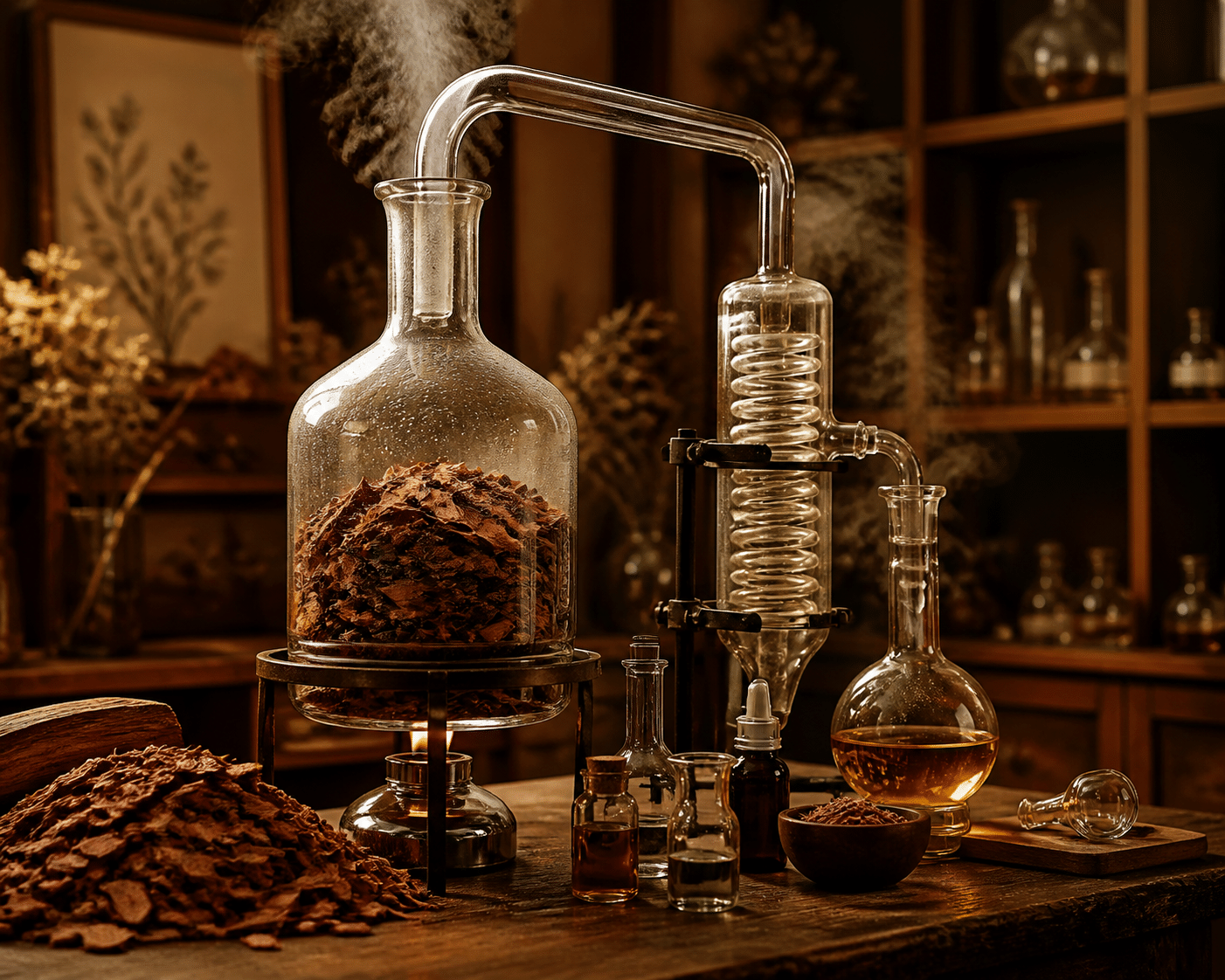
The process is simpler than it sounds. Steam passes through chipped sandalwood heartwood (usually Santalum album). The heat pulls out aromatic molecules, and the steam carries them into a cooling coil. There, it turns back into liquid. That liquid settles into two layers: a thin layer of essential oil and a much larger layer of fragrant water. That water is the hydrosol.
Here’s the flow, step by step:
| Step | What happens | What you get |
|---|---|---|
| 1. Load the still | Chipped sandalwood heartwood goes into the chamber | Raw material |
| 2. Add steam | Steam passes through the wood and lifts out aromatic compounds | Vapor carrying aroma |
| 3. Cool it down | The vapor runs through a condenser and turns to liquid | Oil and water mixed |
| 4. Separate | Oil floats or sinks away from the water | Essential oil + hydrosol |
So a true hydrosol is a co-product. It’s collected straight from the still. It isn’t a bottle of water with a few drops of oil shaken in. That difference matters, and it’s easy to miss on a supplier’s spec sheet.
One expert voice on this: distiller Ann Harman says she finds that distilling for a quality hydrosol takes longer than distilling for the essential oil. So a good hydrosol often needs a deliberate run, not just a quick oil pull.
What’s Actually Inside the Water
Now, the chemistry. Sandalwood oil is packed with santalols. A recent review puts α-santalol at roughly 40 to 60% of the oil. That’s the stuff behind the warm, creamy woody smell.
But santalols don’t mix well with water. So the hydrosol only holds the small part of the aroma that’s water-soluble or light enough to stay in the condensate. General industry guidance puts dissolved aromatic material in hydrosols at around 0.05 to 0.2%. That’s a general range for hydrosols, not a sandalwood-specific number.
What does that mean for you? Two things:
- The water has its own gentler profile, with polar, water-friendly compounds the oil doesn’t carry in the same amounts.
- Never borrow the oil’s “90% santalol” figure to describe the water. It’s a different product.
I’ll also be straight about one thing. I couldn’t find research showing a true hydrosol works better than a simple oil-and-water mix. The honest difference is chemical and in how it’s made, not a proven therapeutic edge.
Why Authentic Santalum Album Matters
The wood you start with shapes everything. Species, age, origin and distillation all change what ends up in the water. Australian sandalwood (Santalum spicatum), African sandalwood and plain woody fragrance don’t share the same chemical fingerprint as Santalum album.
And fakes are a real problem. One study of six commercial products sold as sandalwood oil found none met the ISO profile, especially for α-santalol. If the oil is that shaky, the water can be too.
The risks of synthetic or inferior stand-ins are pretty simple:
- A flat, sweet scent that fades fast in your formula
- Claims you can’t back up on the label
- Possible trouble with customers, retailers or regulators
So ask for species, plant part and origin in writing. We’ll get into how to check all that in the sourcing section, but first let’s look at what the science says about calm.
The Science of Serenity: How Sandalwood Water Promotes Relaxation
Sandalwood has been burned, rubbed and sipped in sacred spaces for centuries. Nice story. But does the science back it up? Partly, and we’ll be honest about which parts.
What Santalols Seem to Do in the Body
The stars here are α-santalol and β-santalol, the two main aroma compounds in sandalwood oil. Researchers keep coming back to them because animal work suggests they may act on the nervous system. One lab study found that inhaled α–santalol can move into the brain and may add to a sedative effect. Another found less waking time and more deep sleep in animals after inhalation.
So how does it calm you down? Nobody knows for sure. The usual guess is smell signals traveling to the brain’s emotion centers, which then nudge heart rate and blood pressure. Some reviews point to GABA, a calming brain chemical. But a 2022 review says it’s still unknown whether sandalwood’s main compounds work through GABA at all.
So “may support relaxation” is fair. “Acts on the GABA pathway” isn’t.
What the Human Studies Actually Show
Here’s the best human evidence we’ve got, and it’s small.
Key finding: In a 32-person study, Western Australian sandalwood oil lowered salivary cortisol during recovery from a stress task. Sandalwood oils also reduced systolic blood pressure.
That’s promising. It’s also from 2016, and it tested essential oil, not water. A 2026 review of aromatherapy research flagged a big gap: most studies never measured stress chemicals like cortisol at all. Older work was mixed too. One study found sandalwood oil raised pulse rate and blood pressure, and α-santalol boosted attentiveness and mood more than it produced sleepiness.
Here’s a quick guide for claim writing:
| Claim | Safe to say? |
|---|---|
| “Supports a calm, relaxing mood” | Yes, as a soft aromatherapy claim |
| “Early research on sandalwood oil shows lower cortisol” | Yes, if you name the oil and the small study |
| “Sandalwood water lowers stress” | No, not proven for the water |
| “Treats anxiety or insomnia” | No |
Tension, Sleep and a Quiet Mind
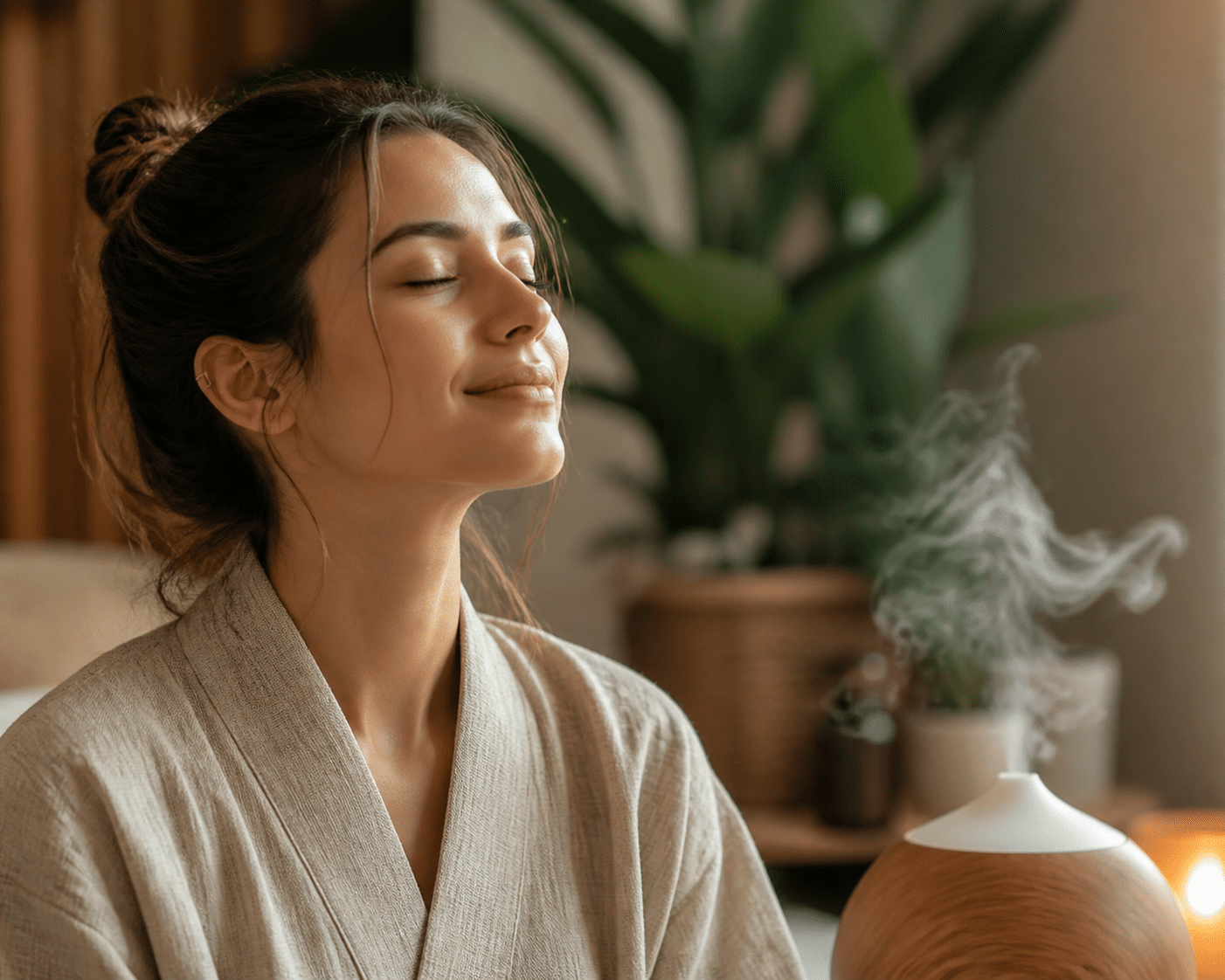
In aromatherapy, sandalwood’s reputation is easy to explain. It’s warm, soft and slow, the opposite of a sharp citrus pick-me-up. People reach for it in the evening, before bed, or during meditation. Traditional use in India and across Asia leans the same way, with sandalwood tied to prayer, stillness and ritual. Modern studies haven’t proven that old habit, but they haven’t ignored it either.
This is where sandalwood water gets interesting for a brand. It carries a gentler version of that aroma, which suits a facial mist spritzed during a wind-down routine or a pillow spray. Think of it as a ritual ingredient first, and a science claim second.
Next up: how to turn that ritual into real products.
From Concept to Counter: Integrating Sandalwood Water into Your Product Line
You’ve got the ingredient. You’ve got the story. Now what do you actually make with it?
Here’s the good news. Sandalwood water is easy to slot into products you probably already sell. The tricky part is getting the formula right, so let’s walk through it.
Four Product Ideas That Make Sense
Some of these are obvious. Some are a little less so.
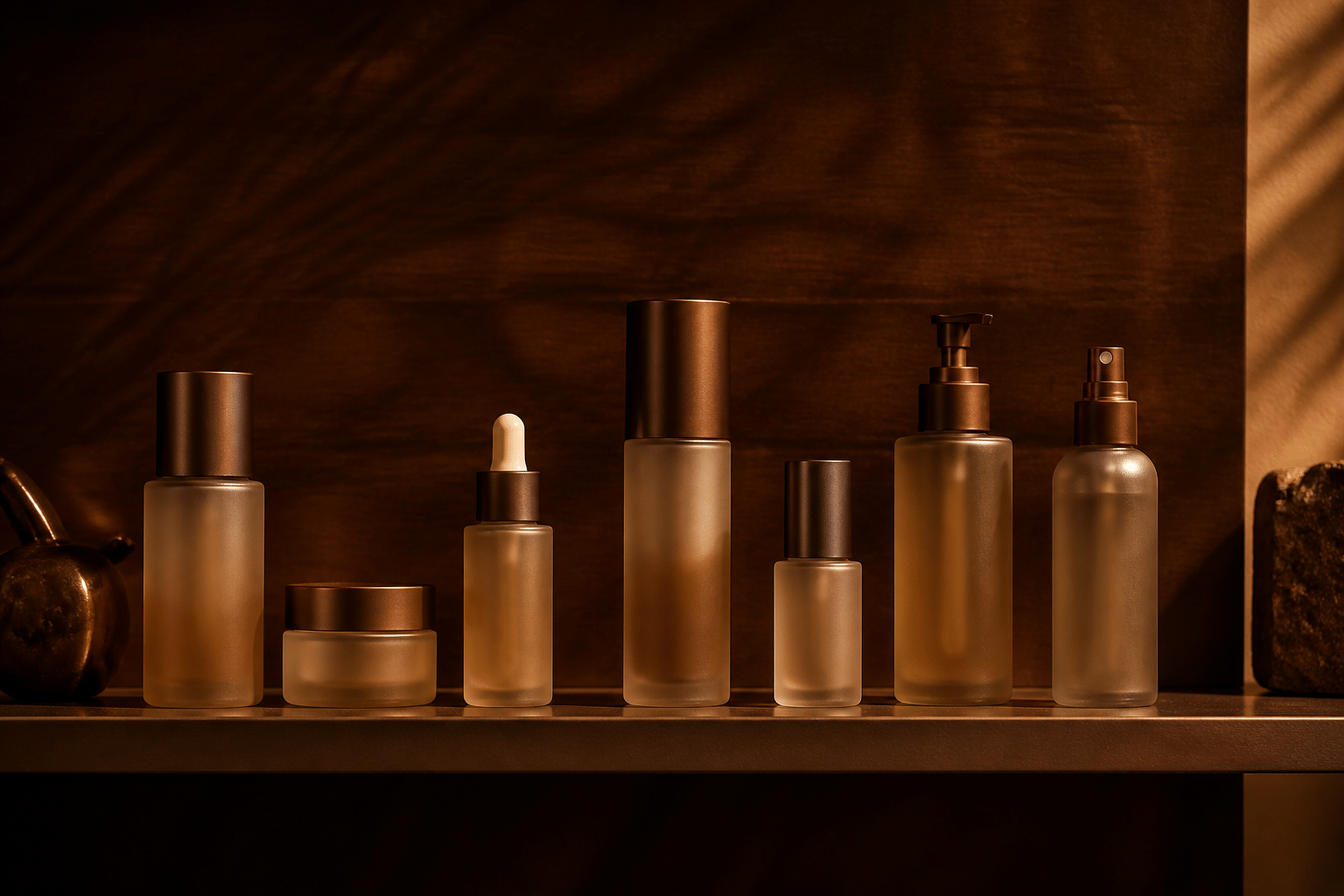
- Calming facial mist: This is the natural starting point. A woody, soft mist for a midday reset or an evening wind-down. Think luxury glass bottle, fine-mist pump, minimal label.
- Post-shave soothing tonic: Sandalwood’s warm scent already reads as grooming. One technical monograph for Australian sandalwood hydrosol lists toners, mists, masks, shaving products and post-wax products as suitable uses. A men’s line (or a unisex one) fits nicely here.
- Pillow or room spray: A wellness room spray gives you the ritual angle without any skin-contact worries.
- Aqueous base in lotions or serums: Swap part of the plain water in your formula for sandalwood water. You get a gentle scent and a better story, with no extra step for your customer.
If you’re sketching a lookbook, picture three mockups side by side: a frosted-glass facial mist, a matte black grooming tonic, and a wellness spray with a linen-style label. Same ingredient, three very different shelves.
Formulation Basics: Usage Rates and pH
There’s no single industry rule for how much hydrosol to use. It depends on scent strength, preservative system and the claims you want to make. These are starting ranges from recent formulation guidance and the monograph above. They’re development ranges, not safe-use limits.
| Product type | Starting range | Notes |
|---|---|---|
| Facial mists and toners | 30 to 95% | Can replace most or all of the water phase. Start lower if the aroma runs strong. |
| Creams and lotions | 10 to 60% | Try 10 to 25% first. Higher levels need careful emulsion and stability testing. |
| Gels and light serums | 30 to 60% | Leaves room for humectants and gelling agents. |
| Masks and rinse-off products | 10 to 50% | Often limited by scent and cost. |
Keep an eye on pH, too. Your preservative may only work in a certain range, and your finished formula has to stay inside it.
Preservation Isn’t Optional
I’ll say it plainly: a hydrosol is basically flavored water, and bacteria love water. You can’t count on the scent to protect it. In fact, one reported sandalwood hydrosol sample had a total plate count of 22 million. Yikes.
So you need a broad-spectrum system. Options that suit natural formulas include:
- Geogard ECT, often used around 0.6 to 1%
- Geogard 221 (benzyl alcohol plus dehydroacetic acid), which suits creams, lotions and gels
- Sodium benzoate and potassium sorbate, but only in acidic formulas, since they work best below about pH 5 to 6
Then test the finished product with ISO 11930 or USP <51> challenge testing. Also test each hydrosol lot as it arrives, and use fine-mist pumps instead of open jars.
Smart Pairings That Add Something
Sandalwood water plays well with others. A few combos worth sampling:
- Hyaluronic acid: A hydrating and calming mist. The hydrosol brings the mood, the humectant brings the moisture.
- Chamomile extract: A natural fit for a bedtime pillow spray or an evening serum.
- Rose water: Soft and floral on top of sandalwood’s woody base, a classic pairing in traditional Indian perfumery.
One caution. Keep your claims soft. “Supports a calm, relaxing ritual” is fine. Anything that promises to treat stress or sleep problems isn’t, and we covered why above.
So you know what to make and how to build it. Next comes the harder question: where do you buy the water itself?
Get a quote from Aroma Monk.
Essential Oil Supplier – Bulk pricing • Samples • Fast response
Sourcing with Confidence: A Procurement Manager’s Guide to Bulk Sandalwood Water
You found the perfect sample. The scent is warm and soft. Then the first full drum arrives and it smells like a candle shop. We’ve all been there, and it’s a gut punch.
Buying sandalwood water in bulk is where good ideas either hold up or fall apart. So let’s talk about how to buy it without regret.
Why GC/MS Testing Is Non-Negotiable
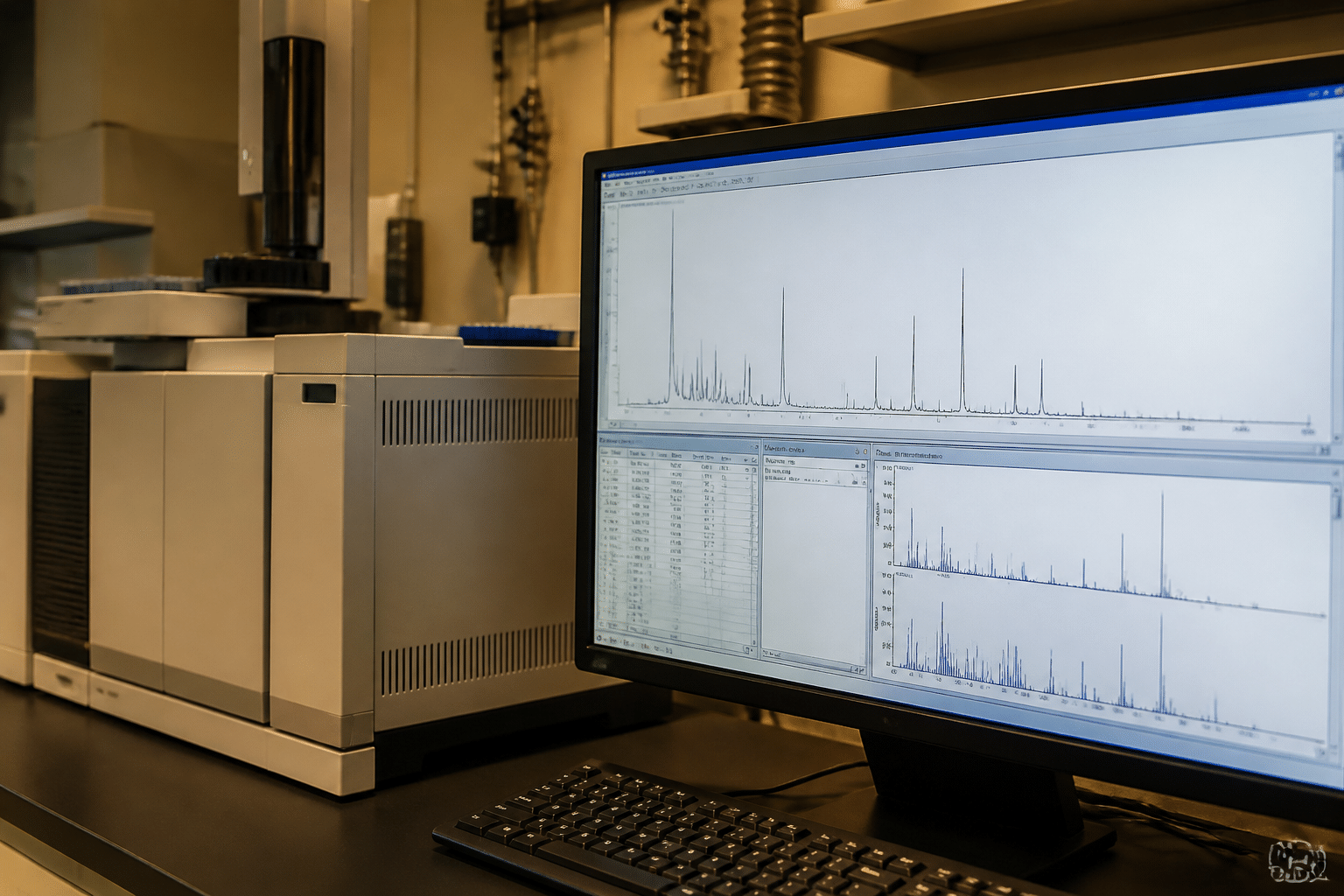
Smell can fool you. A skilled nose is great, but it can’t prove what’s in the drum.
This is where GC/MS (gas chromatography-mass spectrometry) comes in. It separates a sample into its individual aroma compounds and identifies each one. That lets a lab compare your batch against an authentic Santalum album profile. It can also flag added essential oil, synthetic woody fragrance, or a different species swapped in.
Here’s the catch, though. A clean report isn’t automatic proof of purity. Some synthetic materials are hard to spot without a reference standard. So pair the report with paperwork, a sensory check and your own retained sample.
When you review a report, look for:
- The Latin name, plant part and batch number
- The lab’s name, method and the full chromatogram (not just a summary)
- A clear statement on whether the profile matches the declared species
And remember what we covered earlier. There’s no sandalwood-specific international standard for hydrosol composition. ISO 3518:2022 covers the essential oil, not the water. So your own written specification matters even more.
Sustainability and CITES: The Paperwork Behind the Wood
Sandalwood is slow-growing and heavily pressured. That makes ethical sourcing a real question here, not a marketing line.
Trade in listed species runs on permits. CITES regulates international trade through permits and certificates, and the exact document depends on the species, country of origin and export route. For an Appendix II product, the exporting country’s authority generally has to confirm the material was legally acquired and that export won’t harm the species.
A supplier saying “CITES compliant” isn’t enough. Ask for the actual permit number, the issuing authority, and proof it covers your product and quantity. Permits also expire, usually within six months of being issued. Missing or wrong paperwork can mean seized shipments and long delays. Ouch.
Also ask about traceability. Can the supplier trace the wood back to a harvest, a plantation and a distillation log? If they can’t, that’s your answer.
5 Must-Haves in a Bulk Sandalwood Hydrosol Supplier
Here’s the short version you can pin above your desk.
| Must-have | What to ask for |
|---|---|
| 1. Batch-specific CoA | Lot number, production date, pH, appearance, odor, microbial limits and test methods |
| 2. Independent GC/MS | Full chromatogram, lab name, and how synthetics and other species were ruled out |
| 3. Legal and ethical sourcing | CITES permit details, traceability records and audited (not self-declared) certifications |
| 4. Batch consistency | Retained samples, written specifications and clear remedies for failed lots |
| 5. Reliable bulk capacity | Stated yield, lead times, minimum order size and safe packaging and shipping |
One more thing. Ask whether the product is a true hydrosol or a reconstituted mix with added oil, alcohol or solubilizers. And approve a sample with your own testing before you sign anything.
Suppliers who manage the full chain, from raw material to delivery, usually find these answers easier to give. Aroma Monk, for example, works with lab-tested, traceable natural aroma products and supplies bulk and export buyers. That’s the kind of setup worth looking for.
So you know what to buy and who to buy from. Next, let’s see how sandalwood water stacks up against other calming hydrosols.
Competitive Analysis: Sandalwood Water vs. Other Calming Hydrosols
Picture a buyer scanning a shelf of calming mists. Lavender, rose, chamomile, lavender again. Nothing wrong with any of them. But they blur together fast.
So how does sandalwood water really stack up? Let’s put the big three florals next to it.
Scent and Science: How the Four Compare
The biggest gap is the smell. Lavender, rose and chamomile are floral or herbal. Sandalwood is warm, soft and woody. It’s a different mood entirely.
The chemistry differs too. Lavender’s calming reputation leans on linalool and linalyl acetate, and research summaries link linalool to reduced anxiety-related activity. Chamomile brings bisabolol (German) or esters (Roman). Sandalwood’s signature is santalols. Here’s the honest part, though: lavender has the stronger evidence base for stress aromatherapy, and most studies on all four use essential oils, not hydrosols. Sandalwood is the underdog on proof. It wins on story.
| Hydrosol | Scent Profile | Key Benefit | Best For (Product Type) | Target Market |
|---|---|---|---|---|
| Sandalwood | Warm, woody, soft and creamy | Calm, grounded ritual feel | Facial mists, post-shave tonics, pillow sprays | Premium, unisex, minimalist buyers |
| Rose | Soft, sweet, classic floral | Gentle, traditional toning feel | Toners, mists, light serums | Mainstream skincare, often women |
| Lavender | Fresh, herbal, clean | Best-known bedtime association | Pillow sprays, body mists, sleep kits | Broad, mass-market |
| Chamomile | Mild, apple-like, herbal | Soothing, sensitive-skin story | Calming toners, baby and gentle-care lines | Sensitive-skin and gentle-care shoppers |
Where Each One Fits on the Shelf
Lavender is the safe bet for sleep. Rose is the classic toner. Chamomile suits “gentle” lines. Sandalwood fits something else: the grown-up wind-down.
Price and supply matter here too. One listing at H&B Oils Center had 2 oz of sandalwood hydrosol at $12.59, while 8 oz of lavender was $13.79. That’s roughly $6.30 an ounce against $1.72. Meanwhile, Eden Botanicals listed organic rose hydrosol at $126 per gallon in September 2026. These aren’t apples-to-apples quotes, so treat them as hints. Still, sandalwood costs more and has less steady supply. That’s a reason to lock in specs early.
If you already stock rose water (Aroma Monk, for one, offers it), sandalwood can sit beside it as a deeper, warmer partner rather than a replacement.
Why Sandalwood Reads as Premium and Gender-Neutral
Woody scents used to be filed under “men’s.” That’s changing. One 2026 market report says Gen Z shows a 42% higher preference for gender-neutral fragrance positioning than older groups. Floral still sells well. But it carries a built-in audience.
The data on who buys woody hydrosols specifically is thin, so test it with your own customers. Even so, the angle is clear. Sandalwood water lets you offer a calming facial mist ingredient that feels earthy, quiet and a little luxe. No pink bottle required.
OK, so you know the field. Time to talk about what to do next.
Elevate Your Brand with the Power of Authentic Sandalwood Water
Let’s pull this together.
Shoppers want calm, and they want it from ingredients they can understand. Sandalwood water fits that need. It’s soft, warm and a little different from the usual florals. It slides into mists, creams, gels and sprays without much fuss. And it gives your brand a quiet, premium story that lavender and rose don’t quite tell.
But I’ll be straight about one thing. The science is early, and most of it covers the oil, not the water. So the smart move is to sell the ritual and the sensory experience, keep your claims soft, and let the quality do the talking.
And quality is where everything is won or lost. Customers notice. In a September 2025 survey, 96% of U.S. consumers said brand transparency matters for earning their loyalty, and 64% said they’d switch brands if quality slipped. A fake or flat hydrosol won’t survive that kind of scrutiny. A pure, traceable, well-documented one just might build a following.
Your Next Step: Ask for Proof Before You Commit
Here’s a simple plan you can start this week:
- Request a sample of the sandalwood water you’re considering.
- Ask for the batch-specific CoA and the full GC/MS report.
- Check the species, plant part, origin and CITES paperwork.
- Test the sample in your own base, then run preservative and stability checks.
That’s it. Four steps. They’ll show you fast whether a supplier is the real deal, and whether authentic sandalwood water changes how your formula feels and smells.
If you’d like a partner who’s built around lab-tested, traceable natural aroma products, Aroma Monk supplies bulk and export buyers and can walk you through sourcing certified-pure hydrosols for your range. Start the conversation, ask the tough questions, and see what the documents say.
Get a quote from Aroma Monk.
Essential Oil Supplier – Bulk pricing • Samples • Fast response