
The Next Wave in Natural Hair Care: Why Sandalwood Water is the Premium Ingredient Your Brand Needs
People are reading labels now. Really reading them. Shoppers in 2026 pick up a bottle, flip it over, and put it back if they don’t know what’s inside.
The numbers back this up. One 2026 market report values organic hair care at $12.48 billion in 2025, heading to $13.60 billion this year. Different research firms count “natural” in different ways, so the exact totals don’t match. But they all point the same direction: roughly 6 to 9% growth a year.
From “Free From” to “Good For”
Here’s the shift I keep noticing. The clean beauty talk used to be about what you leave out. No sulfates, no parabens, no mystery stuff. Now shoppers want to know what the plant ingredients actually do. Mintel’s 2026 U.S. hair care report describes demand for botanicals, hydration and multifunctional products all at once. Plant-based isn’t enough anymore. It has to have a job.
Where Sandalwood Water Fits
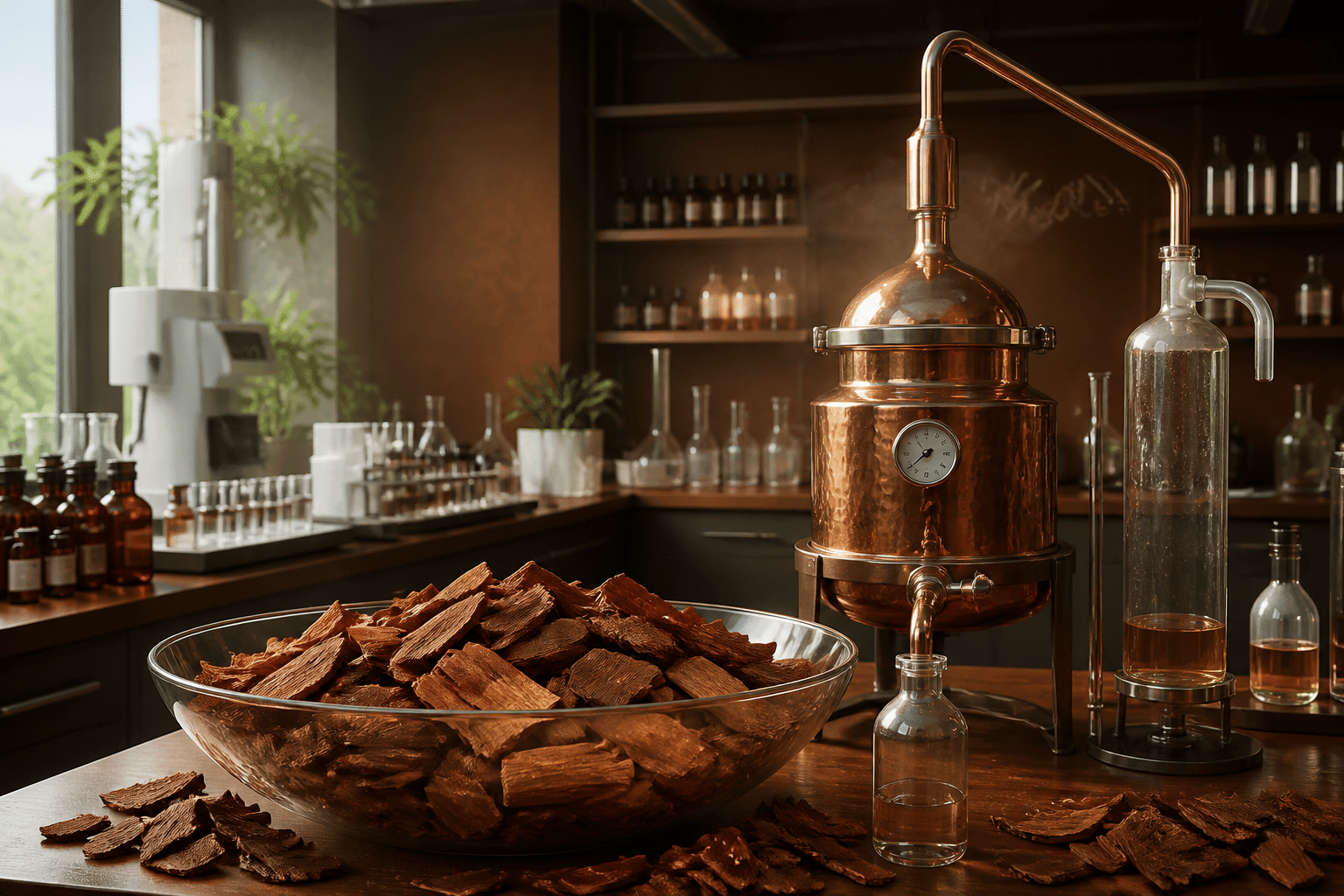
Sandalwood water (also called sandalwood hydrosol, or Santalum album hydrosol) is the soft, aromatic water left behind when sandalwood heartwood is steam distilled. Most people think of it as a pretty scent. I did too. But it can be more than that: a cooling, comforting water-phase ingredient for scalp mists, rinses, shampoos and leave-in sprays.
Now, a quick reality check. The science on sandalwood water itself is still thin, and I’ll be upfront about that as we go. We won’t promise hair growth or treat anyone’s dandruff. What we can offer is a premium sensory story backed by honest, careful claims.
What This Guide Covers
This guide is for product developers, procurement managers and brand owners who want to bring pure sandalwood water into high-performance hair care lines. We’ll look at the history, the evidence, the formulation basics, the market story and how to spot a bad supplier. Let’s get into it.
1. Understanding Sandalwood Water: From Ancient Remedy to Modern Cosmeceutical
Here’s a simple question. What are you actually buying when a supplier says “sandalwood water”? The answer changes a lot depending on who’s selling it.
How Real Sandalwood Water Is Made
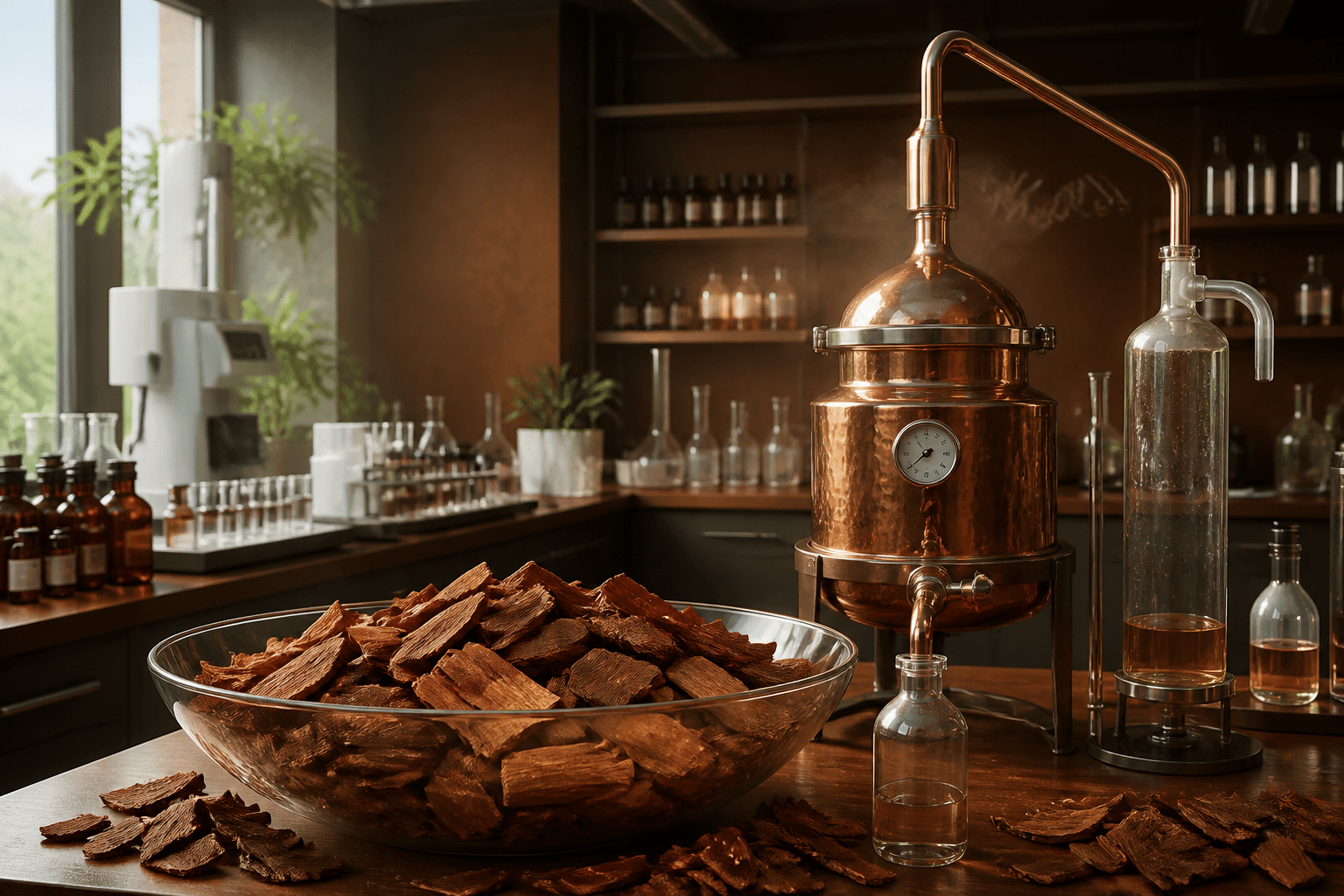
True sandalwood water is a hydrosol. It’s the aromatic water collected when sandalwood heartwood, usually Santalum album, is steam distilled. Steam moves through chipped or powdered wood and picks up tiny aroma compounds. Then it cools in a condenser and turns back into liquid. One patent on sandalwood processing describes exactly this: steam through powdered wood, cooled to give both oil and hydrosol.
Here’s the whole process in plain steps:
| Step | What happens |
|---|---|
| 1. Prepare the wood | Heartwood is chipped or powdered |
| 2. Make steam | A boiler heats water and sends steam through the wood |
| 3. Carry the aroma | Steam lifts out volatile compounds like α-santalol and β-santalol |
| 4. Cool it down | A condenser turns the vapor into liquid |
| 5. Separate | The oil rises and is collected; the water left behind is the hydrosol |
So the oil and the water are twins from the same still.
Hydrosol vs. Oil vs. “Fragrance Water”
This is where buyers get tripped up. Three very different things can all get called sandalwood water.
| Type | What it is | What to know |
|---|---|---|
| Sandalwood hydrosol | Water collected from distillation | Carries only trace, diluted santalols. A supplier monograph lists them in parts per million |
| Sandalwood essential oil | The concentrated, oil-soluble fraction | Strong, costly, and not the same as the water |
| “Sandalwood” fragrance water | Water plus synthetic fragrance | No real distillate inside |
Now, a fair warning. I’d love to tell you the hydrosol holds special water-soluble actives the oil lacks. The evidence doesn’t back that up. The real difference is concentration: the hydrosol is a gentle, diluted version of the aroma. That’s still a lovely thing for a scalp mist. Just keep your claims honest.
A Long History With Water
Sandalwood has deep roots in Ayurvedic hair care ingredients and wider Indian tradition. A historical review documents its use in India from at least the fifth century BCE. People ground it with water into a cooling paste for the temples, hot skin and fever heat. It was also used as a perfumed skin preparation.
But let’s be careful here. Those pastes weren’t steam-distilled hydrosol, since that technology came later. I also couldn’t find a verified ancient text describing sandalwood water used on hair. So skip the “the Vedas said so” line.
What you can say is true and still pretty compelling: a plant with a centuries-old reputation for cooling and calming, now offered as a light, modern water. Next up, we’ll look at what science really says about it.
2. The Science of Sandalwood Water: Clinically-Relevant Benefits for Hair and Scalp
Let’s talk about what the research really says. Some of it is exciting. Some of it is a stretch. I’ll keep the two apart.
Soothing Science: Where the Santalols Come In
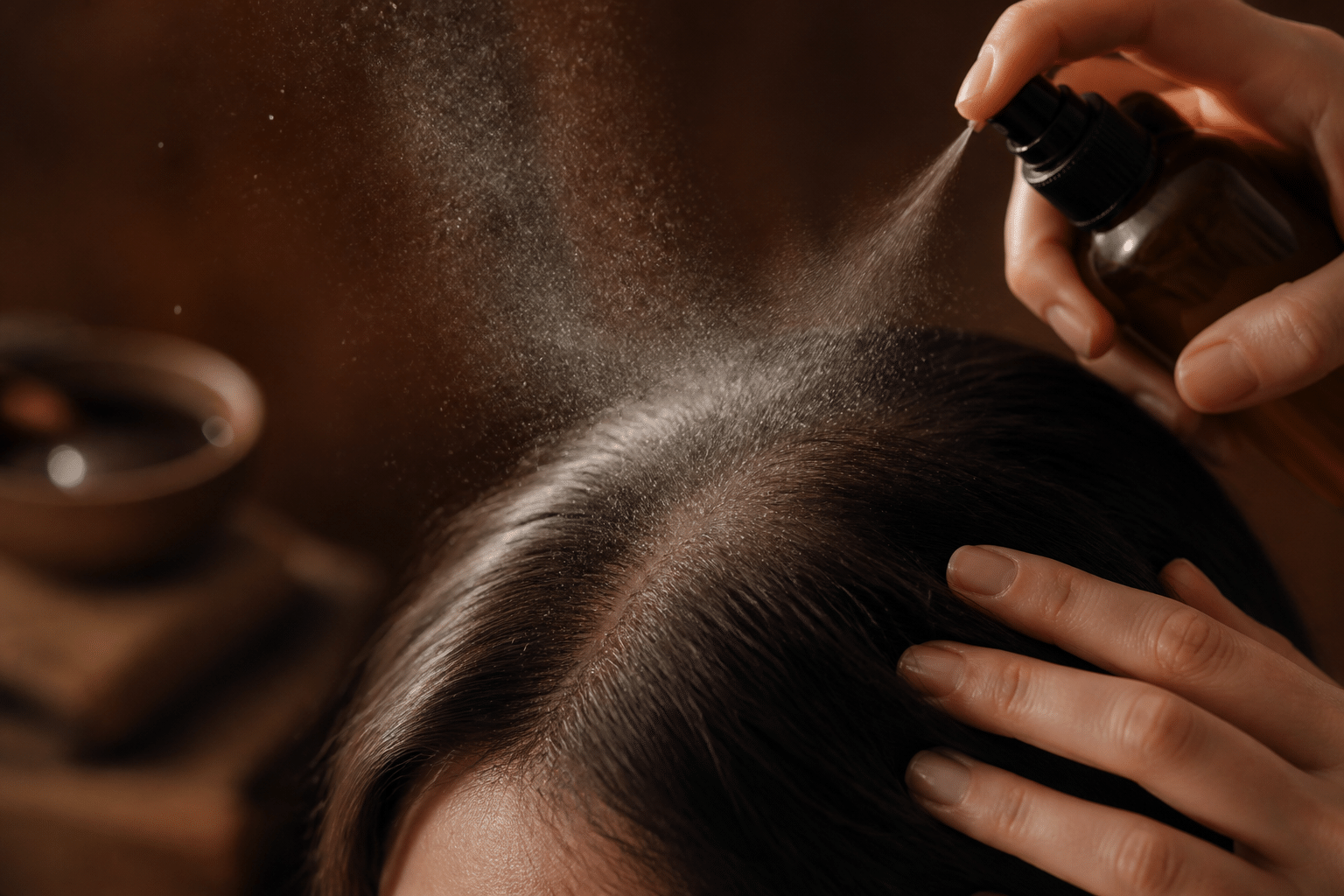
Most of the good data is about sandalwood oil, not sandalwood water. That’s the catch. Still, it helps explain why the hydrosol has a calming reputation, since it carries tiny amounts of the same santalols.
A 2026 lab study tested S. album oil against bacteria and also saw effects on inflammation-related enzymes. Older work on human skin-cell models found that α-santalol and β-santalol dialed down inflammatory signals tied to skin irritation. And in a psoriasis tissue model, a very low dose of S. album oil (0.002%) cut several inflammation markers, by 56% to 83%.
Cool, right? But these were oils in dishes, not hydrosol on real heads. So we can say there’s a reason to expect a soothing feel. We can’t say it treats dandruff, psoriasis or redness. Not yet.
Oily Roots, Microbes and the Honest Gaps
Here’s where I have to pump the brakes. I looked for solid proof that sandalwood water works as an astringent or controls sebum. I didn’t find any. The same goes for hydrosol-specific antimicrobial data.
So how do you position it? As a light, fresh water-phase ingredient in a scalp mist or rinse that feels clean and cooling on oily roots. That’s a sensory benefit, and it’s true. Pair it with a proven oil-balancing ingredient if sebum control is your goal.
One more thing. Even if a hydrosol has some antimicrobial action, don’t count on it to preserve your formula. You still need a real preservative system and a challenge test.
Hydration and Hair Feel
Sandalwood water is mostly water. It adds a little moisture and a lovely, soft scent, but I wouldn’t call it a true humectant. If you want less frizz and softer strands, team it with proven humectants and conditioning agents like aloe or glycerin. Then sandalwood water carries the sensory story while those ingredients do the heavy lifting.
Finished pH matters too. Most leave-on hair products aim for roughly pH 4.5 to 5.5, which helps the cuticle lie flatter for smoothness and shine. I couldn’t verify one standard pH for pure sandalwood water, so measure each batch yourself.
Quick Reference: Problem vs. Honest Solution
Dandruff and seborrheic symptoms show up in roughly half of adults, depending on how you define them. So the need is real. But the claims should stay cosmetic.
| Scalp/Hair Problem | Sandalwood Water Solution (Honest Version) |
|---|---|
| Itchy, irritated-feeling scalp | Offers a cooling, comforting feel. Lab data on santalols gives a soothing rationale, but it’s not proof of treatment |
| Oily roots | Adds a light, fresh water phase for mists and rinses. Sebum-control claims aren’t backed up yet |
| Scalp buildup or odor | Provides a clean, woody scent experience in rinses and tonics |
| Dry, frizzy ends | Gives light moisture and fragrance. Add proven humectants for real frizz control |
| Sensitive scalp | May feel gentle, but patch test every formula |
Honestly, that table is a good filter for your marketing team. If a claim isn’t in the right-hand column, leave it out. Next, we’ll turn this into something you can actually pour into a batch.
3. Formulation Guide: Incorporating Sandalwood Water into Your Hair Care Line
OK, time to get practical. You’ve got a bottle of sandalwood water on the bench and a launch date creeping closer. What do you do with it?
Short answer: it works best as a water-phase ingredient. Think of it as a swap for plain deionized water, not an add-in like an oil or extract. That one idea shapes almost every decision below.
Three Ways to Use It
Scalp tonics and serums. This is the easiest home for sandalwood water. A light, leave-on tonic lets the scent and cooling feel take center stage. Most development teams start at 10 to 25% of the formula, according to a dosage guide for hydrosols. Bold serums can go higher. I’d test 10%, 25%, 50% and 75%, plus a plain-water control, then let your sensory panel decide.
Shampoos and conditioners. You can replace part of the deionized water. But rinse-off products wash away fast, so a big dose of a pricey hydrosol mostly gets sent down the drain. Keep it modest, around 10 to 20%. One French brand, Madame d’Alexis, goes the other way. Its long-hair shampoo skips added water and uses rose, chamomile and orange blossom hydrosols instead. That’s a premium story, just an expensive one.
Hair mists and leave-ins. Here sandalwood water can be the star. Supplier guidance often allows up to 100% of the water phase. That’s a formulation option, not a promise of stability, so check everything.
Pairings That Make Sense
Sandalwood water is gentle and fairly quiet on its own. Pair it with ingredients that bring something different.
- Rose water: Adds a floral softness and a hydrating feel. The scent blend is classic and easy to sell. (Aroma Monk offers rose water too, so you can source both from one place.)
- Hyaluronic acid: A proven humectant that holds water on the hair. Sandalwood water supplies the experience, and hyaluronic acid supplies the moisture.
- Tea tree oil: Popular in scalp care for its fresh, clean reputation. Use a tiny amount, solubilize it properly, and patch test. Don’t borrow its claims for your sandalwood water.
- Aloe or glycerin: Cheap, reliable and great for softness.
Example Formulation Skeletons
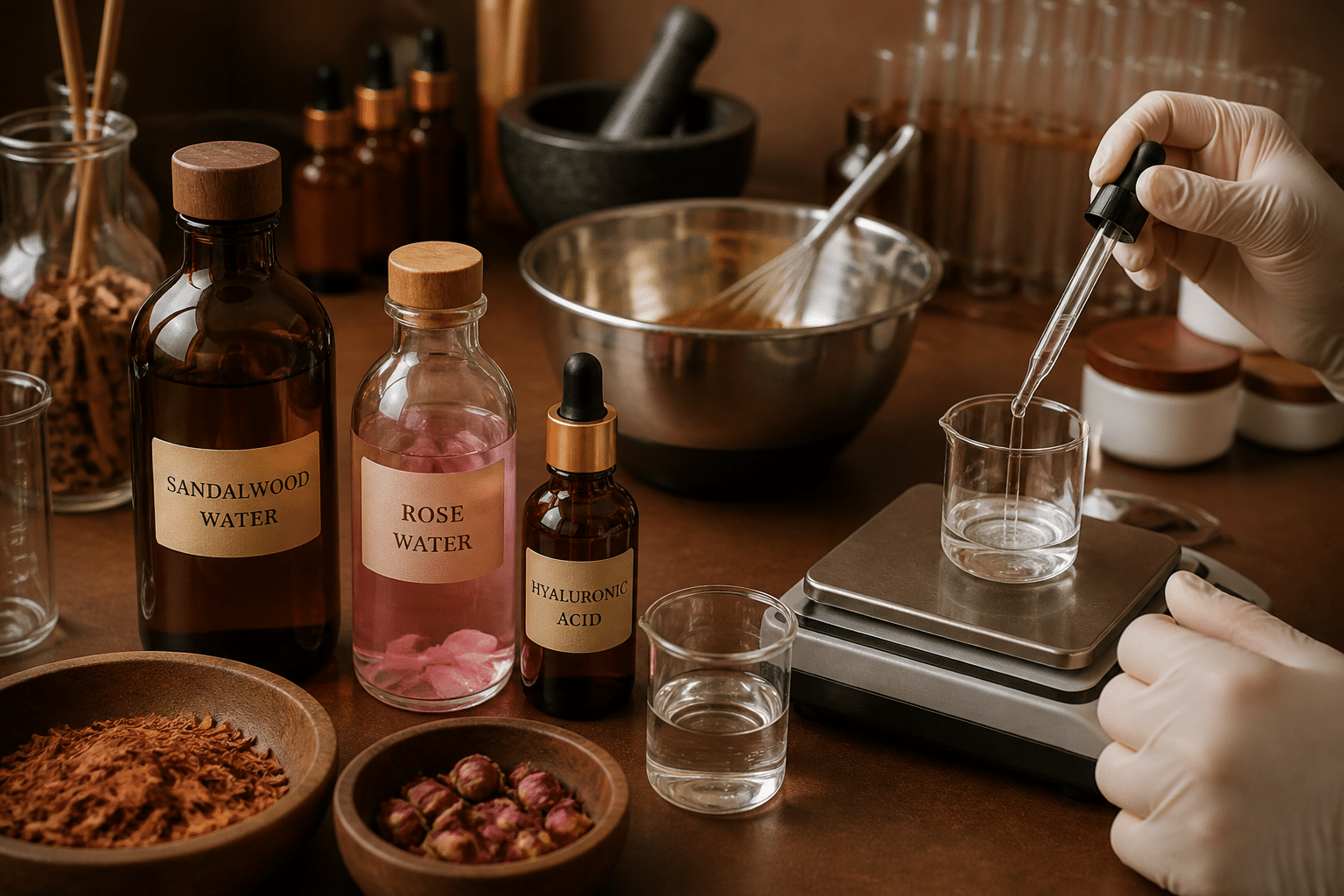
These are starting points for bench trials, not finished formulas. Your preservative supplier will set the real percentages.
Soothing Scalp Tonic
| Ingredient | Starting range | Job |
|---|---|---|
| Sandalwood water | 30 to 50% | Cooling, aromatic base |
| Rose water | 20 to 30% | Hydrating feel, floral note |
| Aloe vera liquid | 5 to 10% | Soft, hydrating comfort |
| Glycerin | 2 to 3% | Humectant |
| Hyaluronic acid solution | 0.1 to 0.5% | Moisture retention |
| Tea tree oil (optional, solubilized) | 0.1 to 0.2% | Fresh scent, scalp-care story |
| Chelating agent | Per supplier | Supports preservation |
| Broad-spectrum preservative | Per supplier | Microbial safety |
| Purified water | To 100% | Balance |
Daily Hydrating Hair Perfume Mist
| Ingredient | Starting range | Job |
|---|---|---|
| Sandalwood water | 70 to 100% of water phase | Main scent and feel |
| Glycerin | 0.5 to 1% | Light moisture |
| Panthenol | 0.5 to 1% | Conditioning |
| Hyaluronic acid solution | 0.1 to 0.3% | Moisture retention |
| Preservative | Per supplier | Microbial safety |
| Fragrance or sandalwood oil (optional, solubilized) | Low, per IFRA | Scent boost |
Technical Notes You Shouldn’t Skip
pH. Aim for roughly 4.5 to 5.5 in the finished leave-on. But measure after you add sandalwood water and everything else, since pH can drift. Write down the batch pH every time.
Preservation. This is where teams get burned. A hydrosol is mostly water, and that’s an invitation for microbes. Don’t count on the aroma compounds to protect you. One 2025 study on lavender found the hydrosol alone worked less well than a system that combined it with essential oil. And industry guidance on natural preservation treats low pH, chelators and good packaging as helpers, never replacements for testing.
So build in a full preservative system. Use airless pumps or sealed sprays. Then run a challenge test on every finished formula.
Once your skeletons are stable, the next job is telling shoppers why they should care.
Get a quote from Aroma Monk.
Essential Oil Supplier – Bulk pricing • Samples • Fast response
4. Market Positioning in 2026: Telling a Compelling Story to Consumers
Your formula is stable. The preservative passed. Now comes the question that keeps founders up at night: what do you actually say about it?
Here’s my take. Shoppers don’t buy ingredients. They buy a story they can believe in. So let’s build one that’s honest and still pretty irresistible.
Scalp First, Hair Second
You’ve probably heard the phrase “skinification of hair.” It just means people now treat the scalp like facial skin, with targeted steps and ingredient-led routines. Croda’s 2026 scalp trend analysis points to microbiome balance, barrier care, hair longevity and sensorial wellness as the stories growing fastest.
That’s good news for sandalwood water. It’s light, fresh and fits a mist or tonic you’d spritz on the roots. The pitch writes itself: healthy scalp, better-looking hair. Root to tip.
But keep the verbs cosmetic. “Refreshes,” “comforts,” “lightly scents.” Skip “treats” and “repairs,” since we covered why back in the science section.
Sell the Ritual, Not Just the Result
This is where sandalwood really earns its spot. That soft, woody aroma turns a daily step into a small pause. Kline describes the scalp-care boom as premium, science-backed and wellness-driven, with routines built around massage and sensory moments. Beauty Independent also expects more aromatherapy-style scalp rituals in 2026.
I’ll be straight with you, though. I couldn’t find a solid survey showing sandalwood water ranks among shoppers’ most-wanted hair ingredients. So don’t lead with a stat you can’t back. Lead with the experience instead: a quiet scent, a cool mist, a minute for yourself.
And don’t promise less stress or better sleep unless you’ve tested it on real people.
Build Trust With Origin
Purity is a story shoppers can check. Mintel’s sustainable beauty research shows younger buyers care a lot about transparency and brand ethics. For sandalwood, that matters even more, because the tree has a sensitive sourcing history.
A credible origin story names the specifics:
- The species (Santalum album) and the plant part used
- The country or region of origin
- How the water was made (steam distillation)
- Batch records and testing
- Plantation or legally harvested sourcing
If you can’t prove a line, don’t print it. We’ll get into how to verify all of this with suppliers in the next section.
Product Naming Inspiration
Names do heavy lifting on a shelf. Here are a few ideas, plus a quick reality check on each.
| Name idea | Best format | Story angle | Claim caution |
|---|---|---|---|
| Ayurvedic Balance Scalp Essence | Leave-on scalp tonic | Heritage meets modern scalp care | “Balance” is fine as a feel. Don’t promise sebum control |
| Sacred Wood Hydrating Mist | Hair and scalp mist | Sensory ritual, woody and calm | Pair with real humectants before saying “hydrating” |
| Sandalwood Rescue Serum | Light scalp serum | Comfort for tired, stressed-feeling scalps | “Rescue” can sound like treatment, so soften it with cosmetic wording |
One more tip. Ayurvedic roots are a lovely theme, but keep the copy to what history actually supports: a cooling, perfumed plant with a long reputation. That’s plenty.
5. A Procurement Manager’s Checklist: Sourcing Authentic, Bulk Sandalwood Water
You’ve nailed the formula and the story. Now comes the part that can quietly wreck both: the supplier.
Sandalwood is one of the most faked scents on the planet. So “sandalwood water” on a spec sheet can mean a real hydrosol, a bit of oil dispersed in water, or plain fragranced water. Let’s make sure you get the real thing.
Prove It: Purity Verification
Start with paperwork, but not just any paperwork. Ask for a current, batch-specific Certificate of Analysis (CoA). It should name the species (Santalum album), the plant part, the origin, the batch number, pH and microbial results.
Then ask for a GC-MS report for that same batch. This is the chemical fingerprint. A genuine distillate should show α-santalol and β-santalol, confirmed against reference standards. Remember that a hydrosol is far more dilute than the oil, so the numbers won’t look like oil numbers. A good lab will tell you what to expect for water.
Here’s the catch, though. GC-MS isn’t magic. One published review%20866-874.pdf) cautions that it can catch major volatile fakes but may miss things like PEG, castor oil and coconut oil. So for big orders, add a second test such as FTIR, or send a sample to an independent ISO/IEC 17025 lab.
Also ask the blunt question: “Did you add sandalwood oil after distillation?” If the answer is a long pause, you’ve learned something.
Protected Tree, Real Paperwork
Sandalwood trees are slow growing and heavily protected in many places. Illegal harvesting is a real problem. A shaky supply chain isn’t just an ethics issue. It can sink a launch and your brand’s reputation with it.
Ask for legal harvest permits, plantation or farm records and country-of-origin documents. Check whether your species and destination need CITES permits, and ask to see them. A vague line like “fully compliant” doesn’t count. The paperwork should match the invoice and the shipment.
Can They Handle Bulk?
A great 5 liter sample means nothing if the 500 liter order drifts in scent. Ask about production capacity, batch-to-batch consistency, and how they test every lot. Then ask how they ship. Export experience matters because documents, packaging and lead times can trip up first-time buyers.
Some suppliers, like Aroma Monk, run the whole chain from sourcing raw materials to final delivery, with lab testing built in. That’s the kind of setup worth looking for, because there’s one team answering for quality at every step.
Supplier Vetting Checklist
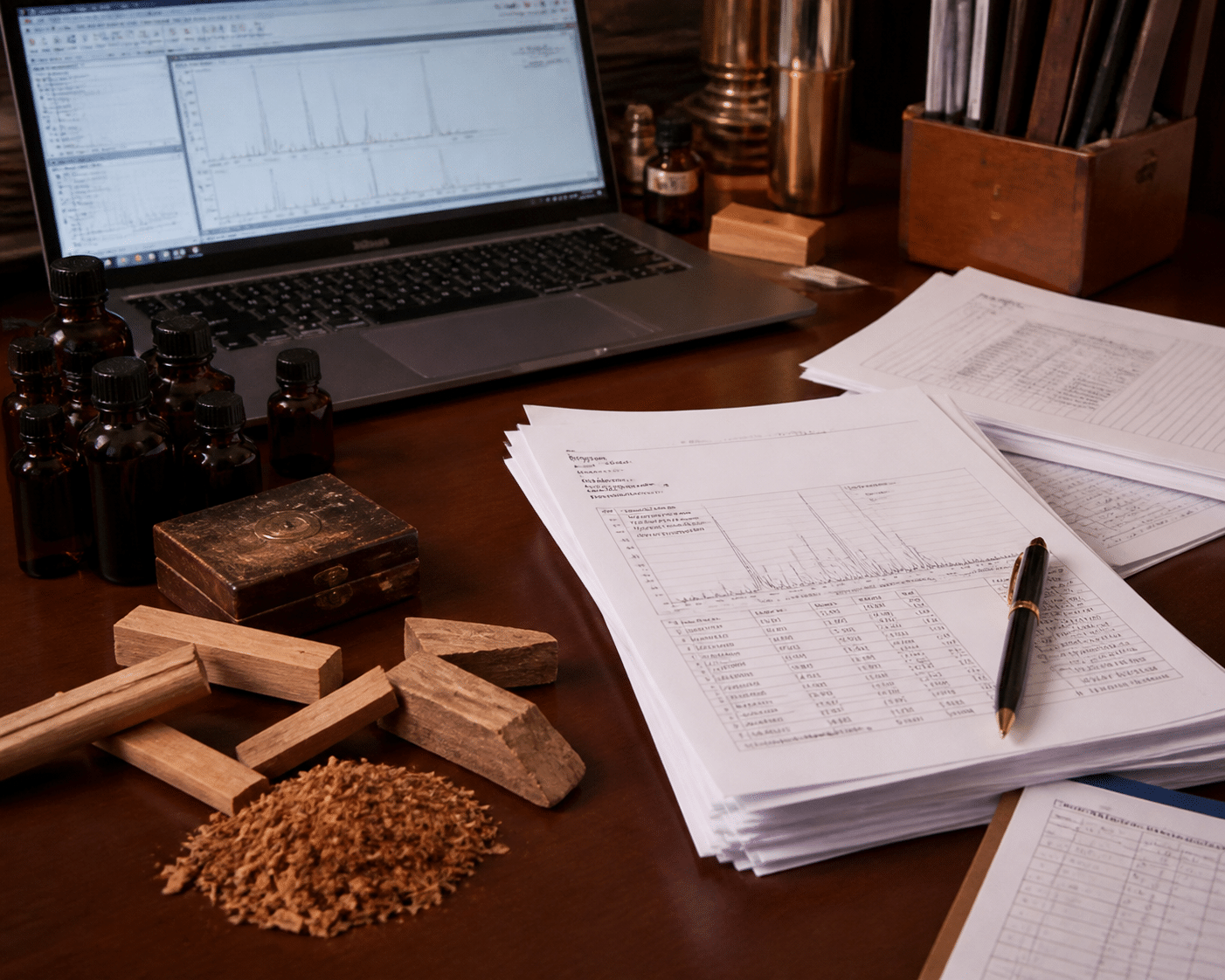
Print this out and use it on every supplier call.
| Check | What to ask for | Red flag |
|---|---|---|
| Provides GC-MS reports per batch | Dated, batch-specific report with method and santalol results | “Typical profile” or a generic, undated file |
| Demonstrates sustainable sourcing | Plantation or legal harvest records, origin documents, CITES paperwork where it applies | “Fully compliant” with no documents |
| Offers bulk volume with consistent quality | Stated capacity, retained samples, lot-to-lot data | Great sample, no volume history |
| Has export experience | Shipping documents, packaging specs, lead times | Never shipped outside their home country |
| Holds quality certifications | ISO 22716 (cosmetic GMP) with a valid scope and expiry date. ISO 9001 helps too, but it doesn’t prove authenticity | Certificate with no site address or expiry date |
| Gives microbial and preservation data | Microbial results, pH, shelf life, SDS | No microbial testing on a water-based raw material |
| Uses change control | Notice before any change in species, origin or distillation site | Silent switches |
One last tip: order samples from two or three suppliers and test them side by side. The differences can be eye-opening.
Once you’ve found a supplier who passes all this, you’re ready for the final step.
Elevate Your Hair Care Line with the Purity and Power of Sandalwood Water
So, where does all this leave us?
Sandalwood water is a market-ready ingredient with a story shoppers can feel. It fits the shift toward natural hair care ingredients that do a job. The research is still thin on the water itself, and I’d rather say that out loud than oversell it. But the picture is clear enough to act on.
Here’s the honest recap:
- Scalp comfort: a cooling, calming feel, backed by a lab-based reason to expect it
- Fresh, balanced feel on oily roots: a light water phase for mists and rinses (a sensory benefit, not a proven sebum fix)
- Gentle hydration: soft moisture, best paired with aloe, glycerin or hyaluronic acid
- A premium ritual: that woody, quiet scent turns a daily step into a small pause
Keep your claims cosmetic, preserve every batch properly, and let the sensory experience do the selling.
The brands that win in 2026 won’t be the ones with the loudest promises. They’ll be the ones that can prove what’s in the bottle. And that starts with your supplier.
Ready to Source the Real Thing?
Get pure, lab-tested sandalwood water for your next launch
Aroma Monk handles the full chain, from sourcing raw materials to final delivery, with lab testing and traceability built in. Ask for a sample, a batch-specific CoA and GC-MS report, and see how it performs in your own formula.
Request a Sample & CoA or Consult with a Sourcing Expert at Aroma Monk
Order two or three samples, test them side by side, and trust your bench results. Then go build something people want to spritz on every morning.
Get a quote from Aroma Monk.
Essential Oil Supplier – Bulk pricing • Samples • Fast response