

Unlocking Liquid Gold: Why the Extraction Method of Sea Buckthorn Oil Matters
Ever bought a plant oil that looked great on the label, then wondered if it was actually worth the price? You’re not alone.
Sea buckthorn has a bit of a glow-up story. This bright orange berry, also called Hippophae rhamnoides, has become a big deal in skincare and wellness because its oil is packed with helpful fats and antioxidants. Market reports show the sea buckthorn market is growing fast, especially in cosmetics and personal care, while the fruit itself is often praised for having far more vitamin C than oranges [market growth data and product demand vitamin C profile in sea buckthorn.

But here’s the thing. Not all sea buckthorn oil is the same. Some oils come from the seed. Some come from the berry pulp. Some are cold pressed. Some are CO2 extracted. And yes, that changes the final oil a lot.
That’s what this article is here to clear up. We’ll walk through how sea buckthorn oil is made, from sea buckthorn harvesting to the final bottle, and we’ll keep it simple. No fluff. No mystery. Just the facts you need to spot a pure product and skip the shady stuff.
Because if you’re buying sea buckthorn oil for your skin, your formula, or your brand, the extraction process matters more than most labels let on. One oil can be fresh and clean. Another can be weak, oxidized, or mixed in a way that hides what’s really inside.
So let’s sort it out together.
The Source: Understanding the Two Types of Sea Buckthorn Oil
Here’s where a lot of buyers get tripped up. Sea buckthorn oil sounds like one thing, but it usually comes in two very different forms.
One comes from the berry pulp. The other comes from the seed. Same plant. Very different oils.
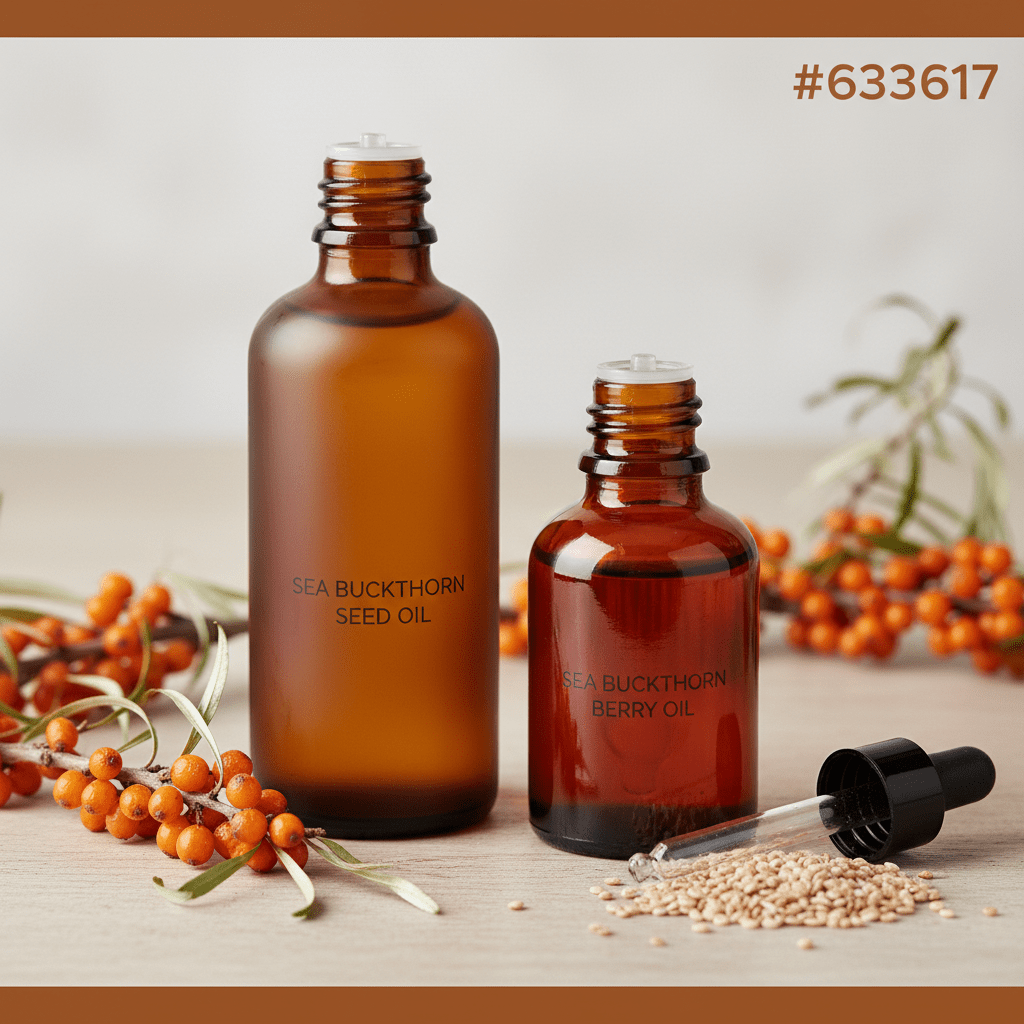
Sea buckthorn berry oil, also called pulp oil, is the deep orange-red one you’ll often see in skincare products. That color is not just for show. It comes from carotenoids and a lot of Omega-7, especially palmitoleic acid. This is the part many skin-focused brands love because it’s often linked with a richer feel and a more vibrant look in formulas.
Seed oil is the calmer one, so to speak. It’s usually pale yellow to golden and has a more even fatty acid mix. Sea buckthorn seed oil is known for its balance of Omega-3, Omega-6, and Omega-9. If you’re looking at sea buckthorn oil for general nourishment or a formula that needs essential fatty acids, this version often makes more sense.
And yes, the use case matters a lot. A topical skincare blend may favor pulp oil, seed oil, or both together. An internal supplement may lean toward the type that matches the brand’s goal for fatty acid support. Some products even blend the two so you get both the bright, carotenoid-rich fruit side and the balanced seed side in one bottle.
That blend idea is pretty common for a reason. The fruit oil brings the bold color and Omega-7 story. The seed oil brings a steadier fatty acid profile. Different jobs. Different strengths.
| Type of sea buckthorn oil | Main source | Main fatty acids | Usual look | Common use |
|---|---|---|---|---|
| Berry or pulp oil | Fruit pulp | Omega-7, carotenoids | Deep orange-red | Skin care, mucosal support, mixed blends |
| Seed oil | Seeds | Omega-3, Omega-6, Omega-9 | Pale yellow to golden | General nutrition, skin barrier support, blends |
If you’re buying sea buckthorn oil for a brand, ask one simple question first: is this seed oil, fruit oil, or a mix of both? That one detail changes sea buckthorn oil quality, color, scent, price, and how it’s usually used.
And if a supplier just says “pure sea buckthorn oil” without naming the plant part, that’s a little too vague for comfort. Ask for a COA, batch info, and the extraction method too. Clean sourcing starts there.
Step 1: The Harvest – Sourcing High-Quality Berries
You know that moment when a pretty ingredient turns into a real headache? Sea buckthorn berries do that to growers all the time.
The bushes are packed with sharp thorns. The berries cling on hard, too. So sea buckthorn harvesting is slow, scratchy work, and it usually takes either careful hand-picking or a more mechanical setup to get the fruit off without wrecking it. Some farms cut berry-loaded branches, freeze them, and then shake the berries loose later. It sounds a little odd, but it works. And it saves a lot of squished fruit.
Timing matters just as much as the picking method. Harvest too early, and you miss peak color, flavor, and oil yield. Wait too long, and you risk soft fruit, lower potency, and more spoilage. Most growers aim for fully colored berries that are still firm, usually in early to mid-autumn. That’s the sweet spot.
Where the berries grow also changes the final sea buckthorn oil quality. Himalayan and European varieties can differ in berry size, oil content, and nutrient profile. Wild-harvested fruit can sound romantic, sure, but organic farmed berries often give brands more traceability and steadier batch quality. For B2B buyers, that traceability is a big deal.
Here’s a quick look at what buyers usually ask about:
| Harvest factor | Why it matters |
|---|---|
| Manual vs. mechanical picking | Affects berry damage, cost, and speed |
| Harvest timing | Changes oil yield and nutrient strength |
| Geography | Can shift color, flavor, and bioactive levels |
| Organic or wild-harvested | Impacts traceability and brand story |

If you’re buying Hippophae rhamnoides oil for cosmetics or personal care, ask where the berries came from and how they were picked. That one question can tell you a lot about the sea buckthorn oil extraction process before it even starts.
And if a supplier can’t explain the harvest? That’s a red flag. Clean oil starts with clean fruit.
Step 2 (Method A): Supercritical CO2 Extraction – The Gold Standard
Now this is where things get pretty cool. And a little sci-fi, honestly.
Supercritical CO2 extraction uses carbon dioxide, but not as a gas you breathe out or a liquid you pour. It gets pushed into a special in-between state with high pressure and mild heat. Then it acts like a gentle wash, pulling the oil out of the plant material without soaking it in harsh chemicals.
Think of it like a super picky cleaner. It grabs the good stuff and leaves a lot of the junk behind.
That’s why many people see CO2 extracted sea buckthorn oil as the top shelf option. The process can keep delicate parts of the oil, like carotenoids and tocopherols, in better shape than harsher methods. It also leaves no solvent residue, which is a big plus for buyers who want a cleaner ingredient for skincare or wellness formulas. A recent review on sea buckthorn oil notes how the CO2 method stands out for purity and recovery of useful compounds, and it fits right in with the growing demand for sea buckthorn oil in cosmetics and personal care (market demand and oil growth data).
Here’s the simple version:
| Step | What happens |
|---|---|
| 1 | Dried sea buckthorn seeds or pulp go into a sealed chamber |
| 2 | CO2 gets pressurized and warmed |
| 3 | The supercritical CO2 passes through the plant material |
| 4 | It pulls out the oil and plant compounds |
| 5 | The pressure drops, and the CO2 turns back into a gas |
| 6 | The oil is left behind, ready for collection |

The result is usually a very pure sea buckthorn oil with strong color, good aroma, and solid shelf life. It’s also a friendlier process for the planet than many old-school solvent methods, since carbon dioxide can be reused in the system.
But here’s the tradeoff. This method isn’t cheap. It needs special machines, trained operators, and tight control of pressure and temperature. So the final product usually costs more. A lot more, sometimes. If you see a higher price tag on CO2 extracted sea buckthorn oil, that’s often tied to the extraction process itself, not just fancy packaging.
For brands, that price can still make sense. Especially if you’re making premium skincare, facial oils, or a bulk ingredient line where sea buckthorn oil quality has to be clear and consistent. For buyers, it’s one of the best signs that you’re getting a cleaner, more carefully made oil. Not the only sign. But a strong one.
If a supplier says their oil is CO2 extracted, ask for the COA too. That’s where you’ll see batch details, purity notes, and whether the oil really matches the claim. And if you’re sourcing for a formula through Aroma Monk or any other bulk supplier, that paper trail matters just as much as the shiny label.
Clean oil. Better traceability. Less guesswork.
That’s the kind of sea buckthorn oil most serious buyers want.## Step 2 (Method B): Cold-Pressing – The Traditional Approach
Ever seen a label brag about “cold-pressed” and felt a little better right away? You’re not alone. That phrase sounds clean, old-school, and a bit more honest than a lot of fancy oil talk.
Cold-pressing is simple in theory. Seeds, and sometimes berry pulp, get fed into a machine called an expeller press. Then they’re squeezed hard. No big chemical bath. No solvent soak. Just pressure doing the work.
Here’s the part that really matters: the oil has to stay cool. Usually, that means below 120°F, or 49°C. Why? Because heat can hurt the delicate parts of sea buckthorn oil, like fatty acids and vitamins. If the press runs too hot, the oil can lose some of what made it valuable in the first place. And that’s a bummer, honestly.
Cold-pressed sea buckthorn oil has a few nice perks:
- No solvents
- A pretty simple process
- A more natural story for buyers
- Good fit for brands that want a “minimally processed” claim
But it’s not perfect. Not even close.
The yield is usually lower than CO2 extraction, so you get less oil from the same amount of fruit or seed. That can push the price up. Also, if the oil is exposed to too much air during pressing or filtering, oxidation can creep in. Then the freshness drops faster than you’d like. Nobody wants rancid plant oil. Nobody.
Here’s a quick side-by-side look:
| Cold-pressing factor | What it means |
|---|---|
| Heat control | Keeps oil closer to its natural state |
| Solvent use | None |
| Yield | Lower than CO2 in most cases |
| Oxidation risk | Can rise if air exposure is high |
| Common appeal | Clean-label, simple, solvent-free |
For buyers, cold-pressed sea buckthorn oil can be a solid middle ground. It’s often a good fit for skincare lines, carrier oil blends, and brands that want a plainspoken ingredient story without the cost of supercritical equipment.
But you still need to ask the right questions. Is it seed oil or berry oil? Was it filtered well? Was it packed in a dark bottle? And yes, ask for a COA. A cold-pressed label sounds nice, but the paper trail tells you a lot more about sea buckthorn oil quality.
If you’re sourcing for a cosmetic formula or a bulk blend, Aroma Monk can help you compare lab-tested oils and choose the one that matches your product goals. Clean sourcing beats guesswork every time.
Get a quote from Aroma Monk.
Essential Oil Supplier – Bulk pricing • Samples • Fast response
Step 2 (Method C): Solvent Extraction – The Conventional Method to Be Aware Of
Ever wonder why some oils cost way less than others, even when the label looks fancy? This is where the story can get a little messy.
Solvent extraction is a common way to pull oil out of plant material. A chemical like hexane is often used because it breaks the oil loose fast and leaves a high amount behind. The plant matter is soaked, the oil dissolves into the solvent, and then the solvent is heated off so the oil can be collected.
Sounds tidy. But here’s the catch.
Even after evaporation, tiny solvent traces can stay in the final oil. That’s the part health-minded buyers worry about most. Nobody wants a botanical oil with leftover processing chemicals, even in small amounts. And if a brand is using the oil for skin care, wellness products, or internal use, that question gets louder real quick.
This method is popular for one big reason: yield. It’s efficient. It pulls a lot of oil from the raw material, which helps keep production costs down. So you’ll often see solvent-extracted sea buckthorn oil in cheaper products, or in oils that are not meant to be used for therapeutic blends or daily consumption.
| Solvent extraction factor | What it means |
|---|---|
| Common solvent | Hexane |
| Main benefit | High yield |
| Main concern | Residual solvent risk |
| Usual market fit | Low-cost or industrial oil |
| Buyer note | Ask for a COA and residual solvent test |
If you’re comparing sea buckthorn oil quality, this is one of the easiest ways to sort the good stuff from the budget stuff. Look for labels that clearly say CO2 extracted sea buckthorn oil or cold pressed sea buckthorn oil. If the method isn’t listed, ask. Plain and simple.
For Aroma Monk-style sourcing, that kind of clarity matters. Bulk buyers in cosmetics and personal care usually want traceable, lab-tested oils they can trust. And if the supplier can’t say how the oil was made? That’s a red flag worth listening to.
Comparing the Methods: Which Sea Buckthorn Oil Extraction Process is Best?
So, which oil actually wins?
If you’re buying sea buckthorn oil for skincare, a wellness line, or a bulk ingredient order, the answer depends on what you care about most. Purity? Nutrients? Price? Shelf life? That’s the real tug-of-war.
Here’s the simple breakdown.
| Method | Purity | Nutrient care | Yield | Cost | Environmental impact |
|---|---|---|---|---|---|
| Supercritical CO2 | Highest | Best for heat-sensitive parts | Good | Highest | Pretty friendly, since CO2 can be reused |
| Cold-pressed | Very good | Good, if heat stays low | Lower | Mid-range | Lower chemical use, simple process |
| Solvent-extracted | Mixed | Can be weaker | Highest | Lowest | Uses chemical solvents |
Supercritical CO2 is usually the best pick for premium sea buckthorn oil quality. It gives a very clean oil, no solvent residue, and strong care for things like carotenoids and tocopherols. If you’re making a facial oil, a therapeutic blend, or a higher-end product where purity matters most, this is the method many buyers want. And yes, it usually costs more. That price is part of the story.
Cold-pressed sea buckthorn oil is a solid mechanical option. It’s solvent-free, easy to understand, and often fits brands that want a more natural label story. The tradeoff? Lower yield. So you may pay more for less oil, and the oil can pick up oxidation faster if the process isn’t handled well.
Solvent extraction gives the highest yield and the lowest production cost. But it’s also the one to watch closely. If a label doesn’t say the extraction method, there’s a decent chance the oil could be solvent-extracted. That doesn’t always mean bad quality, but it does mean you should ask for a COA and residual solvent test. No guessing. No shrugging.
For most buyers, the verdict is pretty clear:
- Best for purity and nutrient density: supercritical CO2 extracted sea buckthorn oil
- Best mechanical alternative: cold pressed sea buckthorn oil
- Best for low-cost volume: solvent extraction, but only with full transparency
And one more thing. Sea buckthorn is getting more attention for a reason. Market research shows the broader sea buckthorn market is growing fast, and the fruit itself is known for having about 10 to 15 times more vitamin C than oranges, depending on the cultivar and ripeness. That kind of buzz makes quality checks even more important. More demand can mean more shortcuts too.
So if you’re sourcing sea buckthorn oil for a formula or a bulk order, ask these three things first:
- Is it seed oil, berry oil, or a blend?
- What extraction method was used?
- Can you send the batch COA?
If those answers come fast and clear, you’re in better shape. If not, keep looking. For brands that want lab-tested oils with clean sourcing, suppliers like Aroma Monk can help make that search a lot easier. And honestly, that saves time, money, and a whole lot of label drama.## Step 3: Refining, Purification, and Quality Control
You know that moment when an oil looks a little cloudy and you’re not sure if that’s a good sign or a bad one? Yeah, this is where that gets sorted out.
After extraction, sea buckthorn oil is not always ready for the bottle right away. Crude oil can still hold tiny bits of plant solids, waxes, and other stuff that makes it look rough or act less stable. So the next step is usually filtering. Sometimes it also goes through winterization, which is a fancy way of chilling the oil so waxes clump up and can be removed. Simple idea. Big payoff.
That cleanup step matters for sea buckthorn oil quality. It can help the oil look clearer, feel smoother, and stay steadier on the shelf. Especially for cold pressed sea buckthorn oil, where a little extra plant material may still be hanging around after pressing. And for brands making skincare, that cleaner look often matters just as much as the fatty acid profile.
But filtering is only part of the story. Good buyers also want third-party lab testing. Not just a pretty label. A real Certificate of Analysis should show the fatty acid mix, purity, and checks for heavy metals, pesticides, microbes, and leftover solvents. That’s how you know if you’re really getting Hippophae rhamnoides oil that matches the claim.
| Important if the oil was not CO2 or cold-pressed | Why it matters |
|---|---|
| Fatty acid profile | Confirms if it’s sea buckthorn seed oil or sea buckthorn berry oil |
| Heavy metals and pesticides | Helps spot unsafe contamination |
| Microbial tests | Matters for cosmetic and wellness use |
| Residual solvents | Important if the oil was not CO2 or cold pressed |
| Oxidation markers | Tells you if the oil is fresh |
Also, storage is a bigger deal than people think. Sea buckthorn oil can lose strength fast if light and air keep hitting it. That’s why good brands often bottle it in dark glass, sometimes even Miron violet glass, which helps block light. Tight caps help too. No loose lids. No clear plastic sitting on a sunny shelf. That’s basically an invitation for oxidation.
If you’re sourcing for a formula or buying in bulk, ask for the COA and the bottle spec sheet before you place the order. Aroma Monk-style suppliers that test every batch and package oils with care make life a lot easier. Less guessing. Less waste. Better sea buckthorn oil from start to finish.
How to Choose Your Bottle: Making an Informed Decision
Ever stood in front of a shelf and thought, “Why does one bottle cost three times more?” Yeah. That tiny price gap can hide a lot.
Here’s the simple truth: the sea buckthorn oil extraction process shapes the oil’s purity, strength, and safety. It also changes how the oil smells, looks, and holds up over time. So if you’re buying sea buckthorn oil for skin care, wellness, or a bulk formula, the method matters more than the label hype.
A few quick checks can save you a lot of guesswork:
| What to check | What you want to see |
|---|---|
| Extraction method | CO2 extracted sea buckthorn oil or cold pressed sea buckthorn oil |
| Plant part | Sea buckthorn seed oil, sea buckthorn berry oil, or a clear blend |
| Source | Organic or wild-harvested when possible |
| Proof | A batch COA with testing details |
If you want the cleanest option, look for CO2 extracted sea buckthorn oil. If you want a simpler mechanical process, cold pressed sea buckthorn oil is a solid pick. But don’t stop there. Ask if it’s seed oil or fruit pulp oil, because those two oils do very different jobs in a formula.
And one more thing. If the brand shares a COA, that’s a good sign. It shows they’re willing to back up their claims about Hippophae rhamnoides oil instead of just tossing around pretty words like “pure” and “premium.”
Sea buckthorn is getting more attention for a reason, too. Market research shows the wider sea buckthorn market is growing fast, and the fruit is often cited as having about 10 to 15 times more vitamin C than oranges, depending on the cultivar and ripeness. That’s a big deal, but only if the oil you buy is made well.
So here’s the takeaway. If you want better skin support, steadier quality, and fewer surprises, buy the bottle that tells you the whole story. Not just the shiny one. Not just the cheap one. The one with clear sourcing, clear testing, and a clear extraction method.
That’s how you turn sea buckthorn oil from a guess into a smart buy.
Get a quote from Aroma Monk.
Essential Oil Supplier – Bulk pricing • Samples • Fast response