

The Growing Demand for Gentle, Efficacious Ingredients in Modern Hair Care
Here’s a number that caught my eye. Grand View Research put the natural hair care market at $10.17 billion in 2024, and it expects about $16.99 billion by 2030. Other reports guess lower growth, closer to 6% or 7% a year, because everybody defines “natural” a little differently. But the direction is the same. Up.
Part of that growth comes from something people call the skinification of hair care. Shoppers now treat the scalp like facial skin. Sam Shefer, Ph.D., president of Salvona Technologies, said it plainly in Cosmetics & Toiletries: “Consumers now treat the scalp like facial skin, fueling demand for targeted, skin-grade treatments.” So a shampoo isn’t just a cleanser anymore. Buyers want gentle, soothing, hydrating, and a label they can actually read.
That’s where chamomile water for hair comes in. Chamomile hydrosol is a steam-distilled, water-based botanical that most people already recognize and trust. For formulators, it can replace part of the water phase, add a soft herbal feel, and support a soothing scalp story. A premium, multi-purpose ingredient. Not a miracle worker, though (we’ll get to the limits later).
Thing is, chamomile isn’t the only herbal hydrosol on the shelf. Rose, lavender, and rosemary all compete for the same spot in your formula. So this article compares chamomile water with those options in plain terms. The goal is simple: help cosmetic formulators and procurement managers pick the right ingredient for the job.
What is Chamomile Water? A Formulator’s Guide to Quality and Composition

Let’s clear something up first. Chamomile water isn’t cooled chamomile tea. It’s a different thing, and the difference matters when a batch has to pass stability testing.
How a True Hydrosol Is Made
A true hydrosol is the water collected during steam distillation (or hydrodistillation) of chamomile flowers. Steam passes through the plant material and carries off the volatile parts. When that steam cools, it separates into two layers: a tiny amount of essential oil and a larger amount of scented water. That water is the hydrosol. Bioflore lays out this basic process well.
Here’s the same flow in plain steps:
| Step | What happens | What you get |
|---|---|---|
| 1. Load | Chamomile flowers go into the still | Plant material |
| 2. Steam | Hot steam moves through the flowers | Steam carrying volatile compounds |
| 3. Cool | Steam passes through a condenser | Liquid water and oil |
| 4. Separate | Oil floats on top and is drawn off | Essential oil plus hydrosol |
A tea or infusion skips all of that. You just soak the flowers in hot water. And that’s why Formula Botanica warns that “floral water” on a label doesn’t prove anything got distilled. Water with added extract or fragrance can wear the same name.
The Compounds Behind the Soothing Story
Three names come up again and again: apigenin, chamazulene, and bisabolol.
Apigenin is a yellow flavonoid. In a mouse study, topical apigenin calmed inflammation and improved skin hydration. Bisabolol showed similar soothing action in lab and mouse work. Chamazulene is the blue compound tied to German chamomile oil.
Now the honest part. Most of this research used extracts, oils, or isolated compounds. I couldn’t find a solid study measuring apigenin and bisabolol across retail chamomile hydrosols. Apigenin isn’t very volatile, so a hydrosol may carry far less of it than a chamomile extract. So think “gentle and soothing positioning,” not “proven scalp treatment.”
Roman vs. German Chamomile
The species on your spec sheet changes the chemistry. German chamomile (Matricaria recutita) is linked to bisabolol, bisabolol oxides, and chamazulene. Roman chamomile (Chamaemelum nobile) leans toward sweet, fruity esters. A 2022 review found apigenin and its derivatives at roughly 0.39% in German chamomile versus 0.12% in Roman. Those are plant numbers, not hydrosol numbers, though.
| German | Roman | |
|---|---|---|
| Known for | Bisabolol, chamazulene, apigenin | Fruity, soft aroma |
| Good fit | Soothing, bisabolol-led stories | Sweeter scent profiles |
So don’t guess from the name alone. Ask for the species, plus a batch-specific certificate of analysis. Quality is in the paperwork, and we’ll look at how those benefits play out in real products next.
Core Benefits of Chamomile Water in Commercial Hair Care Products
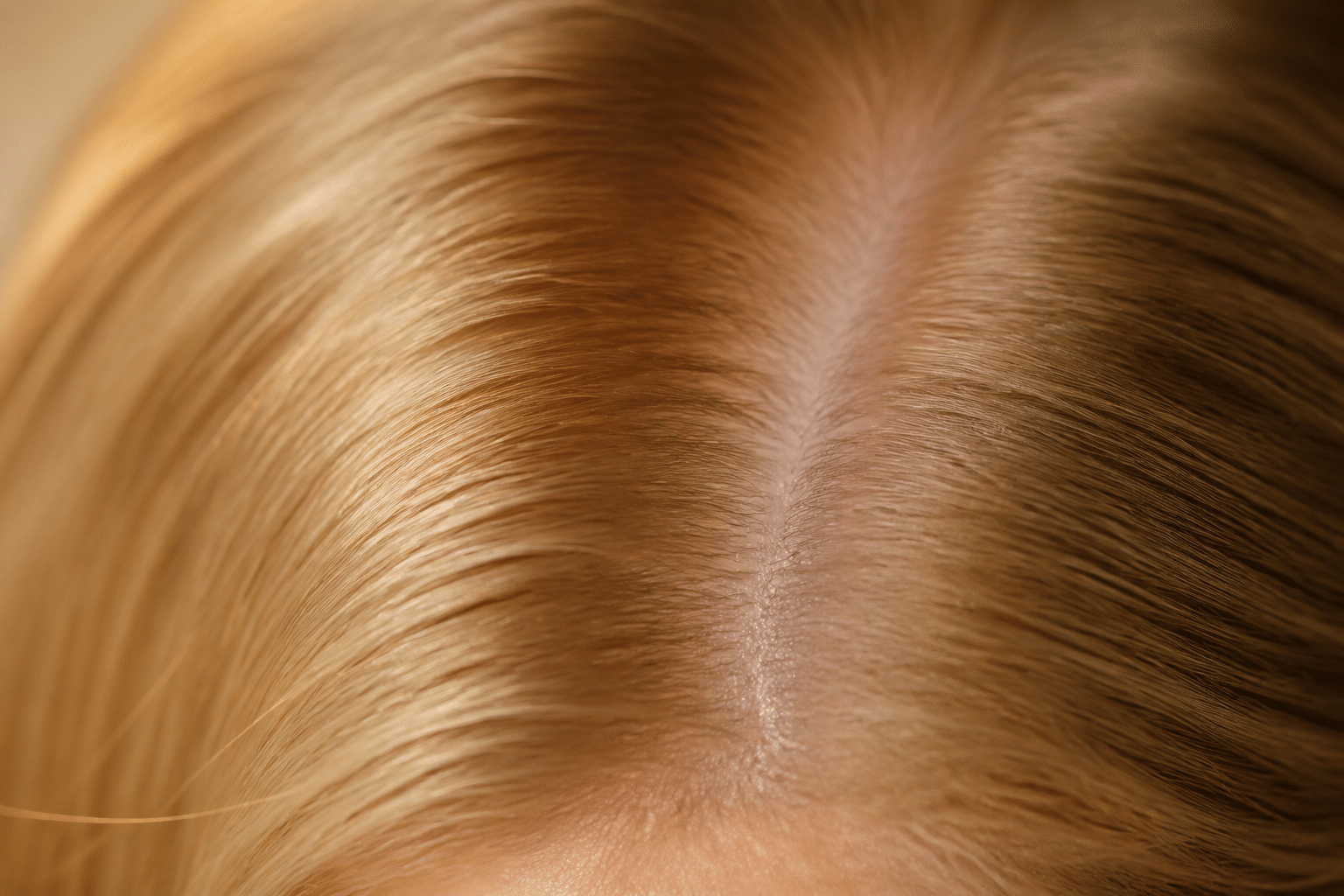
So what does chamomile water actually do inside a bottle? Three things, mostly. It soothes, it brightens a little, and it conditions gently. Let’s take them one at a time, with the honest limits attached.
Soothing Support for Sensitive Scalps
This is the benefit most buyers ask about first. The lab and mouse work on apigenin and bisabolol that we covered earlier gives a believable reason to position chamomile as calming. A 2025 mouse study on alpha-bisabolol found less skin thickening and fewer inflammatory cells in psoriasis-like lesions. Cool. But it was mice, and it wasn’t a hydrosol.
So keep your claims modest. “Helps soothe” and “gentle for sensitive scalps” are fair. “Treats inflammation” is not.
Where does it fit best? Here are the product types that benefit most:
- Sensitive scalp shampoo
- Scalp-soothing serums and mists
- Post-treatment care (after coloring or styling)
- Gentle baby hair wash
- Leave-in scalp refreshers
Brightening Blonde, Light Brown, and Gray Tones
Chamomile has a long reputation for golden highlights. Klorane explains that apigenin, a yellow pigment, coats the hair cuticle and can make hair look lighter without going deep into the strand. Intea says something similar: the pigment binds to the cuticle, reflects light, and builds up with repeated use.
Those are supplier explanations, not independent color measurements. Also, a hydrosol may carry far less apigenin than an extract. So I’d treat the effect as a soft, gradual glow on blonde, light brown, or lightly graying hair. Not bleach. And it won’t cancel orange brassiness the way a purple shampoo can. Think “warm, sunlit look,” and a Blonde Brilliance Conditioner can say exactly that.
Gentle Conditioning and a Natural Sheen
This one is more about how the formula behaves. Chamomile water can replace part (or all) of the plain water in a recipe. It mixes well with glycerin, panthenol, aloe, and hyaluronic acid, and you add it during cool-down, usually below 40°C, to keep the soft herbal scent. One supplier listing puts the pH around 5.4 to 5.8, which sits nicely with mildly acidic hair care.
What does the shopper notice? Hair that feels softer and looks a bit shinier, with less tangling in a leave-in or detangling spray. It’s a light touch. Don’t promise repair.
A few good homes for it:
- Leave-in conditioners
- Detangling sprays
- Lightweight hair masks
- Rinse-off conditioners with a “naturally brightening” story
The benefits are real but gentle, and that’s the whole appeal. Next, we’ll see how chamomile stacks up against rose, lavender, and rosemary.
Technical Comparison: Chamomile Water vs. Other Key Herbal Hydrosols
Get a quote from Aroma Monk.
Essential Oil Supplier – Bulk pricing • Samples • Fast response
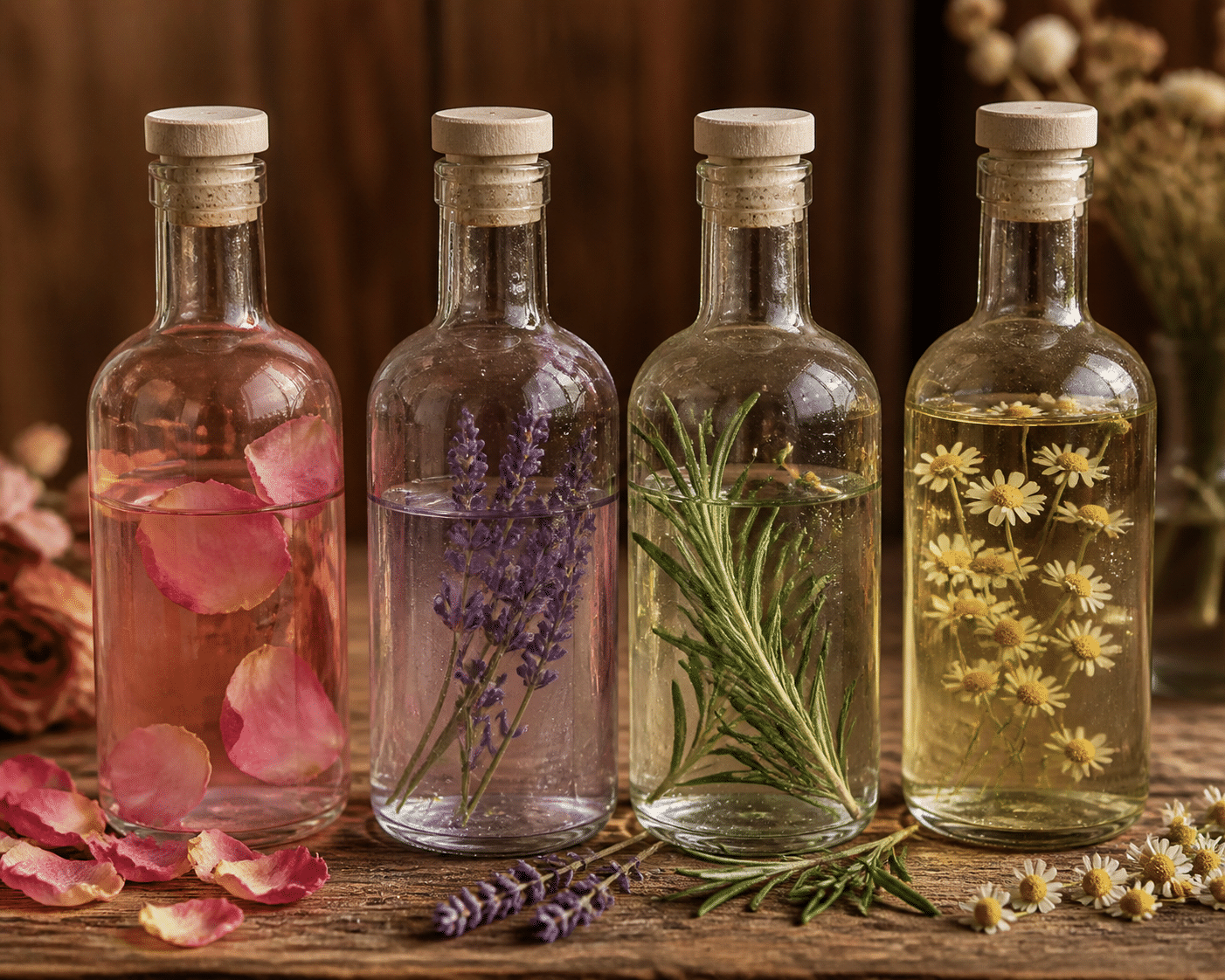
Picking a hydrosol is a bit like casting a movie. Everyone auditions for the same role (the water phase), but each one brings a different personality. So let’s put chamomile next to rose, lavender, and rosemary and see who fits which brief.
Chamomile vs. Rose Water: Sensitive Scalp or Dull Hair?
Rose water vs chamomile water for hair care is the matchup I hear about most. Both smell lovely. Both are gentle. But they point in different directions.
Rose is the familiar one, and its chemistry is rich. A 2024 rose hydrosol study identified 86 volatile substances, including alcohols, phenols, and aldehydes. Rose is usually pitched for hydration, toning, and a soft, polished feel. Those are positioning stories more than hydrosol-specific proof, though, so keep the wording light.
Chamomile leans toward calm and brightness. So here’s a simple rule of thumb: sensitive scalp or blonde and light brown hair, go chamomile. Dry, dull-looking lengths where scent and softness lead the story, rose makes sense. Aroma Monk already supplies rose water for cosmetic use, which makes a side-by-side trial easy.
Chamomile vs. Lavender Water: Irritation Relief or Scalp Purity?
Lavender has the stronger lab story on microbes. A 2024 review described a lavender-related hydrosol containing 1,8-cineole, camphor, and linalool. In a nano-emulsion, it needed only 0.06% v/v to stop Bacillus cereus and 0.75% v/v for E. coli. Nice numbers. Still, that was a test-tube result on one preparation.
Chamomile goes the other way. A 2025 meta-analysis found no significant antimicrobial effects for chamomile in the clinical literature it reviewed. That covers chamomile broadly, not chamomile water. And I couldn’t find a head-to-head study of lavender’s antimicrobial action against chamomile’s soothing action. They measure different things.
So the practical split looks like this. Choose chamomile for irritation-relief positioning. Choose lavender for a fresh, “clean scalp” and relaxing aroma story. Neither one replaces a preservative system. Hydrosols are mostly water, and water grows things.
Chamomile vs. Rosemary Water: Soothing or Stimulating?
Rosemary is the energetic cousin. Its hydrosol carries camphor, verbenone, and 1,8-cineole among its main volatiles, and in a 2022 comparison of mint-family hydrosols it showed stronger antioxidant activity than lavender. That’s a decent data point for a “protective” story.
Now the catch. Rosemary is traditionally pitched as stimulating and circulation-boosting for growth and strengthening products. I didn’t find a hair-growth trial on rosemary hydrosol itself. So “invigorating scalp tonic” is fair. “Grows hair” is not.
Chamomile is the opposite mood: calming, gentle, no tingle. If your brief says soothing, pick chamomile. If it says strengthening or energizing, rosemary fits better.
Side-by-Side Comparison Table
One note on pH first. A study of plant hydrolates measured values from 3.31 to 5.42, depending on species and preservation. Lavender and rosemary examples from a practical guide came in at 4.3 and 5.1. Treat every number below as a starting point. Your batch, and your finished formula, are what count.
| Hydrosol | Key Actives | Primary Benefit | Best For (Product Type) | Formulation pH (raw hydrosol) |
|---|---|---|---|---|
| Chamomile | Bisabolol, apigenin, chamazulene (German type) | Soothing, gentle brightening | Sensitive scalp shampoo, scalp mists, blonde-tone conditioners | Mildly acidic, often listed near 5.4 to 5.8 |
| Rose | Citronellol, geraniol, linalool | Hydrating feel, toning, soft scent | Dull or dry hair sprays, leave-ins, masks | About 3.3 to 5.4 range |
| Lavender | Linalool, 1,8-cineole, camphor | Antimicrobial lab data, relaxing aroma | Clean-scalp tonics, calming rinses | Example near 4.3 |
| Rosemary | Camphor, verbenone, 1,8-cineole | Stimulating positioning, antioxidant activity | Scalp tonics, strengthening and growth-style formulas | Example near 5.1 |
No single winner here. The best pick depends on the claim you want to make and the shopper you’re talking to. Next, we’ll look at what procurement and R&D teams should check before buying any of them.
Sourcing and Formulation: What Procurement and R&D Managers Must Know
You can pick the perfect hydrosol on paper and still get burned by a bad drum. It happens more than people admit. So let’s talk about buying it right, and then using it right.
Verify Quality Before You Buy
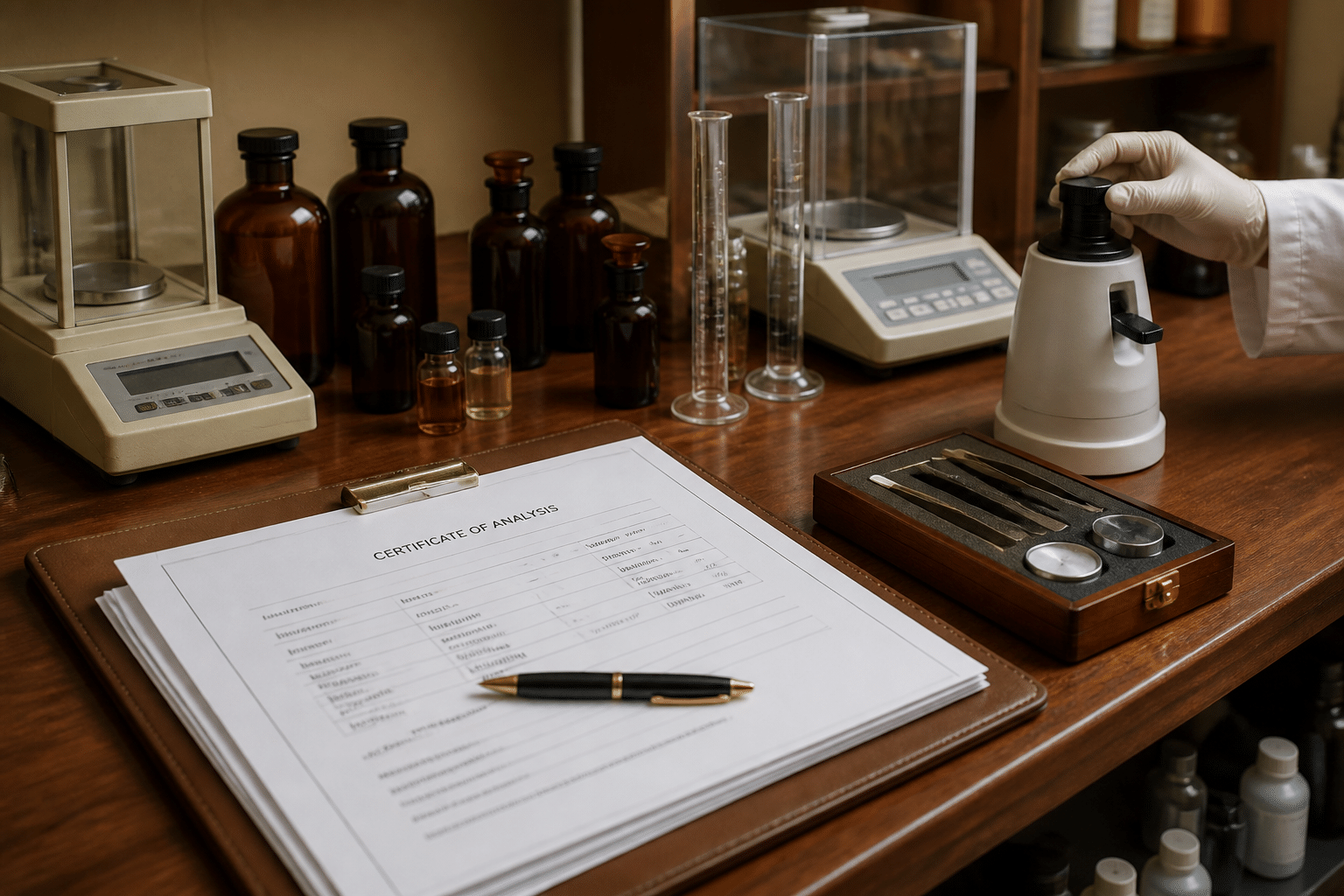
Start with the paperwork. Ask for the latest batch-specific certificate of analysis (COA), not a generic data sheet. A good one lists the botanical name, batch number, pH, density, odor, and microbial counts. Here’s a sample chamomile hydrosol COA so you know what real test data looks like. Another supplier spec sheet lists total microbial count at no more than 1,000 CFU/mL, with named germs absent.
Also ask one blunt question: is this a steam-distilled hydrosol, or water with added fragrance, extract, or a solubilizer? Get the answer in writing.
Here’s a quick checklist you can hand to your team:
| Check | Ask for | Red flag |
|---|---|---|
| Identity | Species (Matricaria recutita or Chamaemelum nobile), plant part, origin | Just “chamomile water” |
| Method | Steam or hydrodistillation stated | “Floral water” with no process |
| Purity | No added fragrance or solubilizers | Strong, perfume-like smell |
| Appearance | Clear to slightly opalescent | Oil droplets, heavy cloudiness |
| Numbers | pH, density, microbial counts, test dates | “Conforms” with no values |
| Preservation | Preservative system named | Silence on the topic |
| Batches | Different COA for each lot | Same COA reused |
One odd value doesn’t prove cheating. But it should trigger a call and a retest.
Why a Direct Manufacturer Helps
Buying through three middlemen means three chances to lose the story. Who distilled it? When? Was it diluted along the way? A direct manufacturer can answer those questions fast, and that’s what batch traceability is really about.
Stable supply matters too. A launch can stall if lot two smells nothing like lot one. A bulk buyer’s guide to hydrosols is worth a skim before you negotiate. Aroma Monk, for example, handles the chain from raw material sourcing to final delivery, runs lab testing, and ships to international buyers in bulk. Customized packaging is possible too. Ask any supplier you’re vetting for the same.
Formulating and Preserving Chamomile Water
Treat chamomile water as part of the water phase. Not a preservative. Not an active you can overdose.
Supplier guidance varies, so these are starting points for your own trials:
- Shampoo: about 10% to 30% of the formula
- Conditioner or mask: about 20% to 50% of the water phase
- Scalp mist or light serum: about 20% to 80%, depending on what else is in it
Add it during cool-down, often below 40°C, to keep the soft scent. Then check the finished pH, because the raw hydrosol’s number won’t decide it. A formulator’s guide to hydrosols covers both points.
Creams and gels need extra care. Check viscosity, emulsion stability, and odor drift, since watery ingredients can thin a gel or shake up an emulsion.
And please run a preservative challenge test, plus accelerated and real-time stability checks. Water grows things. Skip this step and you’re gambling with your shelf life.
Marketing Your Product: Translating Chamomile Water’s Benefits into Compelling Claims
Good science means little if the label oversells it. So let’s turn the gentle benefits we covered into claims shoppers believe (and regulators won’t flag).
Soothing and Calming Claims That Hold Up
Sensitive scalp shoppers want comfort, not medical promises. Rahn’s scalp-care research found that itch, dryness, tightness, and fit for a specific scalp type are big shopper concerns. That data came from Chinese consumers, though, so don’t assume it fits every market.
So write “soothes and refreshes the scalp” or “helps relieve feelings of tightness.” Skip “treats inflammation.” Those mouse studies we looked at weren’t hydrosol trials, and they weren’t human. Keep the claim as modest as the proof.
Natural Radiance and Blonde Care Stories
Plenty of shoppers are nervous about bleach. A gentle story speaks to them. Talk about appearance, not chemistry: “enhances the look of golden tones” or “leaves blonde hair looking brighter.”
Be careful with “lightens hair.” Customers may expect real color lift. Under EU Regulation 655/2013, cosmetic claims must be truthful and backed by evidence. A small consumer test or color measurement on your actual formula is cheap insurance.
Purity Words That Build Trust
“Steam-distilled hydrosol” and “pure plant water” tell people how the ingredient is made. One brand marketing guide suggests pairing phrases like “steam-distilled floral water” with behind-the-scenes sourcing stories. Good advice. Just use the words only if the COA backs them up.
“Chemical-free” is trickier. Water is a chemical, and savvy shoppers know it. “Made without added fragrance” is safer and more specific. A supplier like Aroma Monk, with lab-tested, traceable batches, gives you paperwork to stand behind every word.
Three Mock Product Concepts
Here’s how those ideas might look on a shelf:
| Concept | Format | Tagline | Safe claim |
|---|---|---|---|
| Calm Crown Scalp Tonic | Scalp mist | “Quiet comfort for sensitive scalps.” | Soothes and refreshes the scalp |
| Golden Hour Hair Mist | Leave-in spray | “Sun-kissed shine, no bleach.” | Enhances the look of golden tones |
| Pure Petal Rinse | Herbal hair rinse | “Steam-distilled chamomile. Nothing fake.” | Made with steam-distilled hydrosol, no added fragrance |
With your claims set, the last step is picking the right hydrosol for your line.
Choosing the Right Hydrosol to Elevate Your Hair Care Line
So, where does that leave you? Rose, lavender, and rosemary all earn their spots on a formulator’s shelf. Rose brings a soft, polished feel. Lavender has the stronger lab story on microbes. Rosemary fits energizing, scalp tonic briefs.
But chamomile water holds its own corner. If your brief says soothing, gentle, and a little brighter on blonde or light brown tones, it’s usually the best fit. Keep the claims modest, though. Think “helps soothe” and “enhances the look of golden tones,” not “treats” or “lightens.”
Here’s the part I’d tape to the wall. Your finished product is only as good as what goes into the tank. A fake floral water, a reused COA, or a batch that smells nothing like the last one can sink a launch. Real steam-distilled hydrosol, clear paperwork, and batch-by-batch testing keep your claims honest (and your shelf life safe).
My advice? Run a side-by-side trial in your own base. Test odor, pH, preservation, and stability, then pick the hydrosol that performs best in the finished formula, not the cheapest one on the quote.
To make sure your next hair care launch works and sells, partner with a trusted bulk supplier. Contact Aroma Monk for certified, lab-tested chamomile water samples and wholesale inquiries.