
The Ancient Secret to Modern Scalp Problems: Is Amla Oil the Answer?
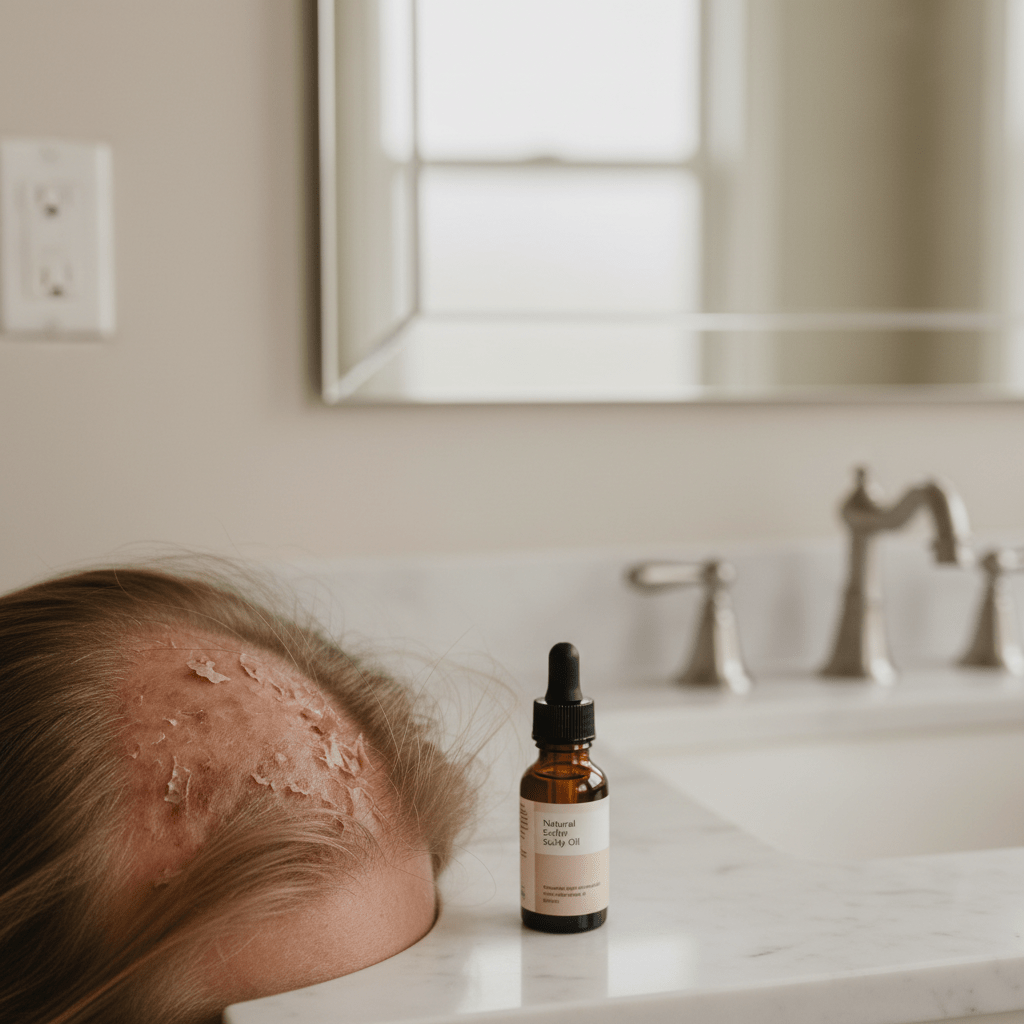
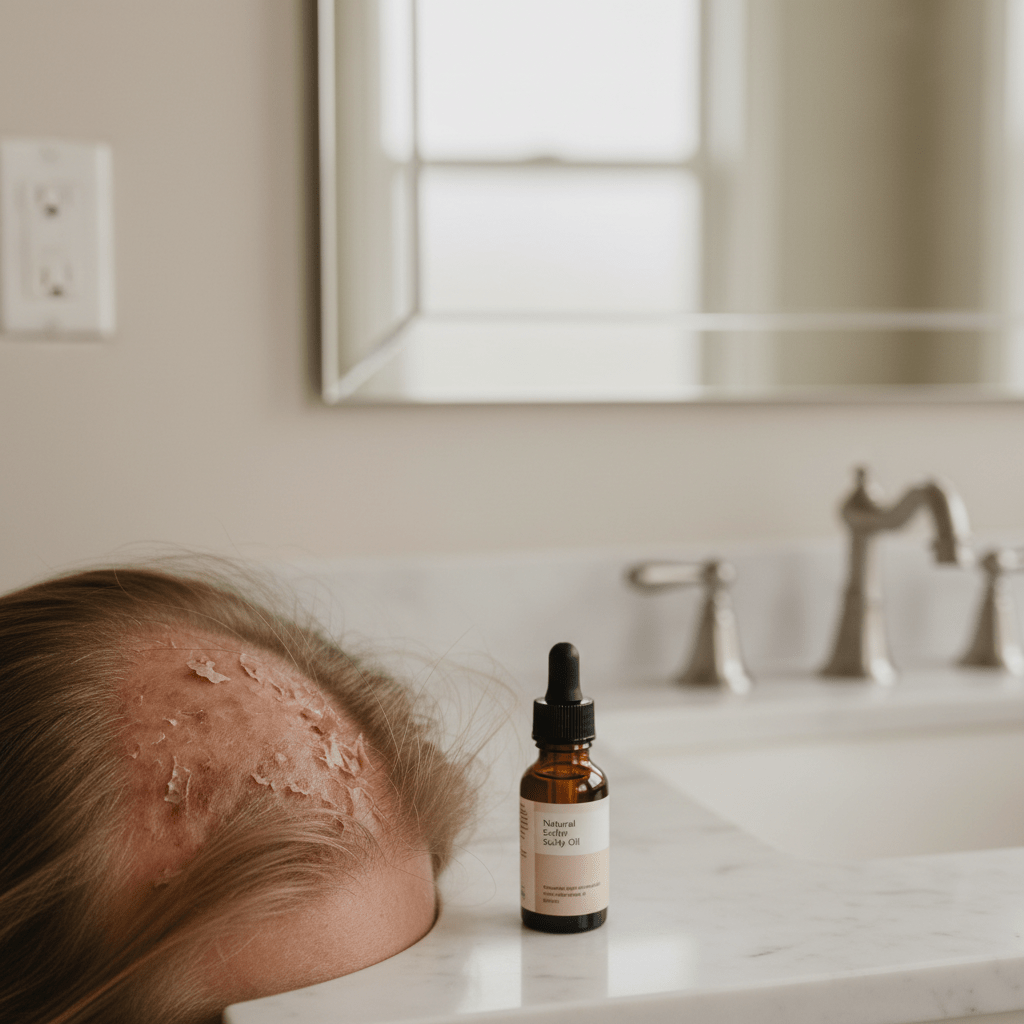
Ever had one of those days where your scalp feels itchy by noon, flakes show up on your shirt, and your hair just looks… tired? Yeah, same. It’s annoying. And it’s not just a small beauty gripe either. Dandruff affects about 4.38% of people around the world, and hair loss is way more common than most of us like to admit.
That’s one reason people keep reaching for amla essential oil for hair. Or, more often, what’s sold as amla oil. This old Ayurvedic hair oil comes from Indian gooseberry, a fruit that’s been used for hair care for ages. People use it for shine, scalp comfort, and to help strengthen hair follicles with amla in a gentle, natural way.
But here’s the real question. Can this traditional ingredient actually help with today’s scalp problems like flakes, itchiness, thinning hair, and dull strands? And what does the science say about amla oil benefits for scalp health?
That’s what we’re here to sort out. No hype. No weird claims. Just a clear look at what amla is, why it’s still so popular, and how it may fit into a natural scalp treatment routine.
If you’ve been curious about indian gooseberry oil for hair growth or looking for an amla oil for itchy scalp routine, you’re in the right place. Let’s figure it out together.
Clearing the Confusion: Amla Oil vs. Amla Essential Oil
This part trips people up a lot. And honestly, I get why.
You see “amla oil” on a bottle, then another label says “amla essential oil,” and it sounds like the same thing. It’s not. Not even close.
| Type | What it is | How strong it is | Best use |
|---|---|---|---|
| Amla carrier oil | Amla fruit or powder soaked into a base oil like coconut or sesame | Mild to medium | Scalp massage, hair masks, everyday care |
| Amla essential oil | A highly concentrated extract made with methods like CO2 extraction or distillation | Very strong | Small amounts, usually mixed into a carrier oil |
Most products sold as amla oil for hair are actually infused oils. That means the fruit sits in a base oil and gives it some of its plant goodness, like antioxidants and fatty support. It’s richer, thicker, and easier to use right on the scalp.
Amla essential oil is a different story. It’s made to pull out the tiny aromatic parts of the plant, usually through CO2 extraction or steam distillation. The catch? Amla is not a common plant for true essential oil in the first place, since it does not have a lot of volatile compounds. So if a label claims “amla essential oil for hair,” it’s worth reading closely.
Why does this matter so much? Because strength changes everything. A carrier oil can usually go on the scalp with little fuss. But an essential oil needs dilution first. Straight-on use can bother skin fast, especially if you already deal with flakes or an amla oil for itchy scalp routine.
So if you’re looking at amla essential oil for hair, ask one simple question: is this an infused amla carrier oil, or a true essential oil extract? That one detail changes how you use it, how much to use, and how careful you need to be.
If you want a natural scalp treatment that feels gentle, start with the carrier oil version. If you’re buying pure essential oils for blends, Aroma Monk’s lab-tested oils and carrier oils can help you build safer DIY formulas without the guesswork.
The Scientific Powerhouse: What Makes Amla a Scalp Superfood?
You know that annoying moment when your scalp feels greasy and dry at the same time? Weird, right? But that mix is pretty common. And it’s one reason amla keeps showing up in natural scalp treatment routines.
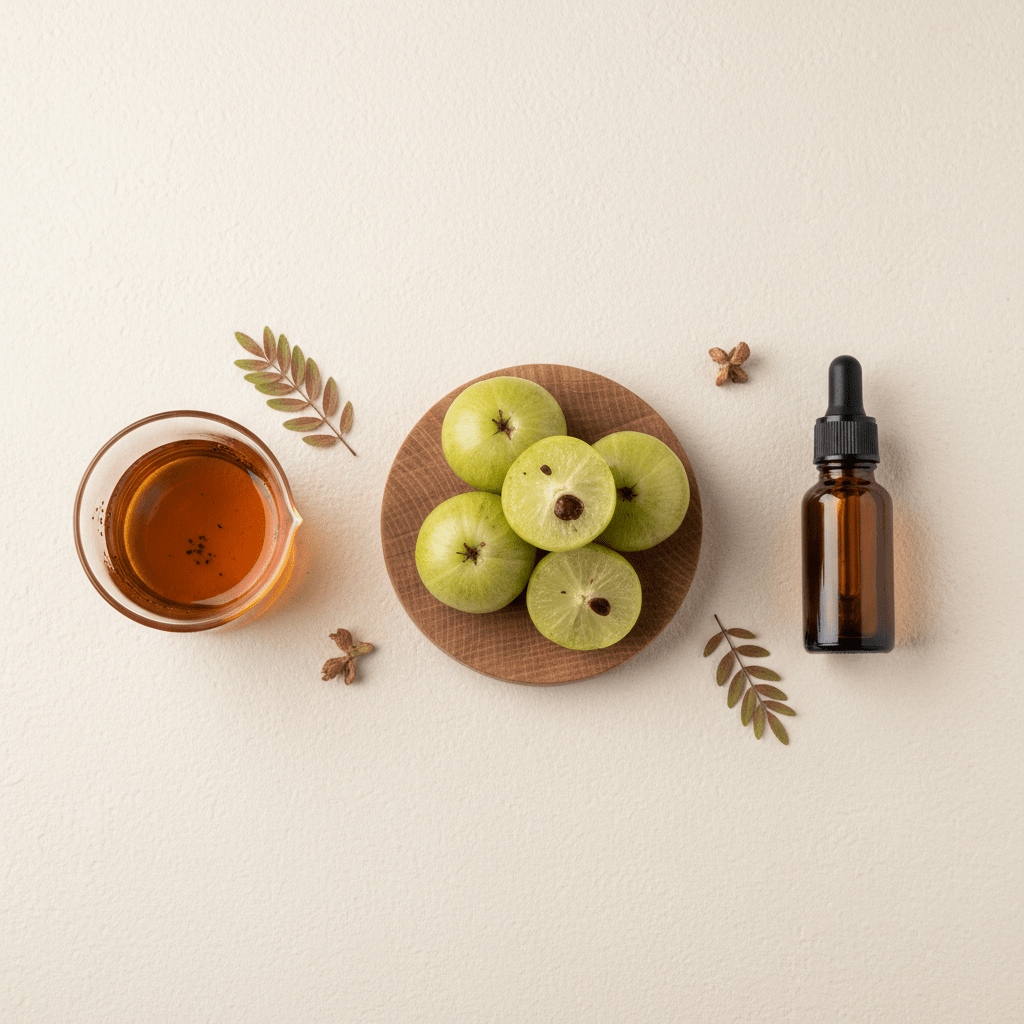
Amla, or Indian gooseberry, is packed with vitamin C. That matters because vitamin C helps fight free radical damage, which can wear down hair follicles over time. Think of it like everyday wear and tear. Sun, stress, pollution, heat tools… they all add up. So when people talk about how amla oil benefits for scalp health, this antioxidant support is a big part of the story.
But vitamin C is only one piece. Amla also has tannins and other polyphenols. These plant compounds have astringent properties, which means they can help tone the scalp and may help with oil balance. If your roots get slick by lunch, that part may sound pretty nice. And for people using amla oil for itchy scalp care, that scalp-calming feel is one reason the oil stays popular.
There’s more. Amla has flavonoids and other compounds with anti-inflammatory and antimicrobial activity. That matters because scalp irritation and dandruff often go hand in hand with inflammation and yeast overgrowth. In one review, amla was found to contain more than 200 phytochemicals with antioxidant, antimicrobial, and anti-inflammatory activity, which helps explain why it’s still used in Ayurvedic hair oil formulas today.
Here’s the simple version:
- Vitamin C helps protect follicles from oxidative stress
- Tannins may help with oil control
- Flavonoids may calm irritation
- Antimicrobial compounds may help with dandruff-prone scalps
That’s why amla essential oil for hair and amla-infused oils are often used to strengthen hair follicles with amla and support a cleaner, more comfortable scalp. It won’t fix every hair issue by itself. But as part of a steady routine, it can be a solid natural scalp treatment.
And if you’re building a DIY amla hair mask, this is the point where the ingredient mix starts to matter a lot. Some people pair amla with coconut oil for dryness, while others use lighter oils for oily roots. The base oil changes the feel, so choose one that fits your scalp, not your neighbor’s.
A little patience helps too. Scalp care is rarely a one-night miracle. But when the ingredients are good, the routine feels easier to stick with. And honestly, that’s half the battle.

5 Science-Backed Benefits of Amla Essential Oil for Your Scalp
You know that scratchy, “why is my head doing this?” feeling? Been there. And if your scalp is itchy, flaky, or just plain unhappy, amla essential oil for hair is one of those old-school remedies people keep coming back to for a reason.
Here’s the deal. Amla, or Indian gooseberry, has plant compounds that may help your scalp feel calmer and look healthier. In one review, researchers noted more than 200 phytochemicals in amla, with antioxidant, antimicrobial, and anti-inflammatory activity. That’s a big deal for scalp care, because scalp trouble rarely shows up alone.
1. It may calm itch and redness
If your scalp feels hot or irritated, amla oil for itchy scalp care can feel pretty soothing. Its anti-inflammatory compounds may help ease that annoyed, inflamed feeling that comes with dryness or dandruff. Not magic. Just steady comfort.
2. It may help fight dandruff
Dandruff often links back to yeast on the scalp, especially Malassezia. Amla’s antimicrobial nature may help keep that balance in check. So if you’ve been trying to figure out how to use amla oil for dandruff, this is one reason it keeps showing up in natural scalp treatment routines.
3. It may help strengthen hair follicles with amla
Free radicals can wear hair down over time. Amla is rich in vitamin C and antioxidants, which may help protect follicles from everyday stress. That’s why people often use indian gooseberry oil for hair growth as part of a long-term care plan. Hair still needs time, though. No overnight miracle stuff here.
4. It may help balance scalp oil
Amla has mild astringent properties, which means it may help with oily roots without making the scalp feel stripped. If your hair gets greasy fast but your ends still feel dry, that balance can be really nice. Weird combo, but super common.
5. It may support a healthier growth environment
Scalp massage matters too. When you work amla oil into your scalp, you’re not just adding nutrients. You’re also helping the skin feel cared for, which can support a better environment for hair growth. Some people even turn it into a DIY amla hair mask with coconut oil, aloe vera, or yogurt. Simple. Cheap. Kind of soothing, honestly.
Quick look at the benefits
| Benefit | What it may help with | Best for |
|---|---|---|
| Soothes scalp | Itch, redness, dryness | Sensitive scalps |
| Fights flakes | Dandruff, scalp buildup | Flaky scalps |
| Supports follicles | Hair fall, weak strands | Thinning hair |
| Balances oil | Greasy roots | Oily scalps |
| Nourishes scalp | Better hair care routine | Most scalp types |
If you’re shopping for a natural scalp treatment, look for a product that’s clearly labeled and well made. Aroma Monk’s lab-tested essential oils and carrier oils are a smart place to start if you want clean ingredients for blends, masks, or scalp massage oils. And if you’re mixing at home, keep the dilution gentle. Your scalp will thank you.
Get a quote from Aroma Monk.
Essential Oil Supplier – Bulk pricing • Samples • Fast response
How to Safely and Effectively Use Amla Essential Oil for Hair
You know that moment when your scalp feels a little off, but you’re not sure what to do first? Too much oil. Too much itching. Or maybe both at the same time. Yep, that weird combo shows up a lot.
Here’s the simple part. If you’re using amla essential oil for hair, do not put it on straight from the bottle. Mix 2 to 3 drops into 1 tablespoon of a carrier oil like jojoba, argan, or coconut oil. That keeps it gentler on skin and helps cut down the chance of irritation. Jojoba is nice for oily scalps, while coconut oil feels richer for dry ones. And argan sits in the middle pretty well.
Actually, wait. If your scalp is super sensitive, start even lighter.
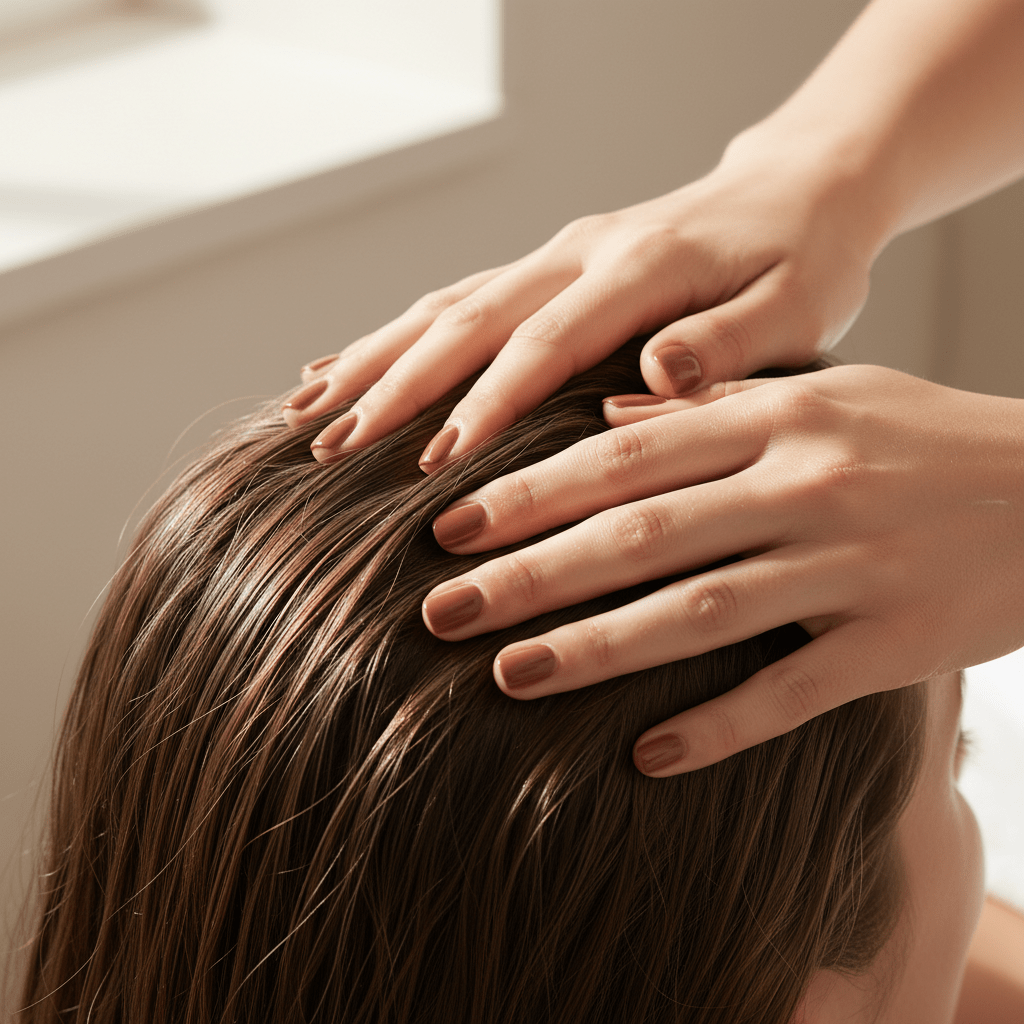
1. Do a gentle scalp massage
This part is easy, and kind of nice too.
- Put a few drops of the blended oil on your fingertips.
- Start at the front hairline.
- Use your fingertips, not your nails.
- Move in slow circles across the scalp for 3 to 5 minutes.
- Keep the pressure light and steady.
That little massage helps spread the oil around and makes the routine feel more relaxing. A lot of people like this as part of a natural scalp treatment because it turns a boring task into a small reset. Not fancy. Just calming.
2. Try it before shampoo day
One of the easiest ways to use amla oil is as a pre-shampoo treatment. Put it on 30 to 60 minutes before washing your hair. That gives the scalp time to soak in the oil without leaving it on all day.
If your roots get greasy fast, this method usually feels less heavy than an all-night oiling session. If your scalp is dry, you can pair amla with a thicker base oil and make a simple DIY amla hair mask. A lot of people mix it with coconut oil, aloe vera, or even yogurt for a softer feel.
3. Add a tiny bit to your shampoo
This works best if you’re in a hurry.
Add 1 drop to the amount of shampoo you use in your palm. Don’t pour the oil into the whole bottle unless you really know your mix ratio. That’s a fast way to make the formula slippery and uneven.
This can be a low-effort way to work amla oil benefits for scalp care into your week. It’s not as deep as a mask, but it can still support a cleaner-feeling scalp routine.
4. Use it once a week as a deep mask
If you want to build a steadier habit, a weekly mask is a solid option. Coat the scalp and the first few inches of hair, leave it on for about 45 minutes, then wash it out.
This is the kind of routine that fits well with Indian gooseberry oil for hair growth care and with strengthen hair follicles with amla goals. It won’t fix everything overnight. But routines like this tend to work better than random one-off treatments.
| Method | How long to leave it on | Best for |
|---|---|---|
| Pre-shampoo oiling | 30 to 60 minutes | Most scalp types |
| Shampoo boost | During wash | Busy days |
| Weekly hair mask | About 45 minutes | Dry or dull hair |
| Scalp massage | 3 to 5 minutes | Comfort and even spread |
And if you’re shopping for ingredients to make your own blend, Aroma Monk’s lab-tested essential oils and carrier oils are a smart pick for clean, simple formulas. Good oil matters. Especially when your scalp is already fussy.
One last thing. If a blend stings, burns, or makes itching worse, wash it out right away and stop using it. Your scalp will let you know pretty fast when it’s unhappy.
DIY Amla Essential Oil Recipes for a Thriving Scalp
You know that night when your scalp feels itchy, your roots look flat, and you just want one simple fix? Yeah, this is the part people usually skip to. And honestly, I get it.
Amla oil is popular for a reason. People use it in an Ayurvedic hair oil routine because it can feel soothing, light, and easy to mix into other blends. Plus, scalp problems are common. Dandruff affects about 4.38% of people around the world, and hair thinning is a big reason many folks start looking for a natural scalp treatment in the first place.
So let’s keep this simple. Here are three easy DIY amla hair mask and oil ideas you can try at home.
1. Dandruff-Busting Scalp Serum
Best for flakes and buildup.
Mix:
- 1 tablespoon jojoba oil
- 2 drops amla essential oil for hair
- 2 drops tea tree oil
- 2 drops rosemary oil
Jojoba is a nice base for this because it feels close to natural scalp oil. Tea tree is often used for dandruff-prone scalps, and rosemary is a crowd favorite for hair care. If you want a scalp blend that feels fresh without being too heavy, this one makes sense.
Massage it into the scalp for 3 to 5 minutes. Leave it on for 30 to 45 minutes, then wash it out.
2. Hair Growth Stimulating Mask
This one is for people who want to strengthen hair follicles with amla.
Mix:
- 1 tablespoon castor oil
- 1 tablespoon coconut oil
- 2 drops amla essential oil for hair
- 1 tablespoon yogurt or aloe vera gel
Castor oil feels thick and rich. Coconut oil adds slip. Yogurt or aloe vera can make the mask feel softer on dry hair. This is the kind of blend people often reach for when they’re thinking about indian gooseberry oil for hair growth and want a deeper weekly treatment.
Put it on the scalp and the first few inches of hair. Leave it for about 45 minutes, then shampoo well.
3. Soothing Itchy Scalp Treatment
If your scalp gets annoyed fast, keep this one gentle.
Mix:
- 1 tablespoon sweet almond oil
- 2 drops amla essential oil for hair
- 1 drop peppermint oil
Sweet almond oil feels smooth and light. Peppermint gives a cool tingle, which some people love for an itchy scalp. But go easy. Too much peppermint can feel like too much.
Use this as a short pre-shampoo treatment, not an all-day oil.
| Recipe | Best for | Leave on |
|---|---|---|
| Scalp serum | Flakes, dandruff | 30 to 45 minutes |
| Growth mask | Dry, weak hair | About 45 minutes |
| Itchy scalp blend | Mild irritation | 20 to 30 minutes |
A small note before you mix anything. Always patch test first. And if you want pure ingredients for your blends, Aroma Monk’s lab-tested essential oils and carrier oils are a smart pick for clean DIY care.
Also, don’t overdo it. A little goes a long way. Your scalp usually likes calm, not chaos.
Choosing a Quality Oil & Understanding Potential Side Effects
You know that moment when a bottle looks fancy, but the label feels a little fuzzy? Yeah, that happens a lot with hair oils. And with amla essential oil for hair, the details really matter.
First, look for a clear label. Good products should say “100% Pure Essential Oil” or “CO2 Extracted” if they truly are an essential oil. Also check the plant name. For amla, that’s Emblica officinalis or Phyllanthus emblica. If the bottle just says “hair oil” and stops there, I’d be careful. A real essential oil should also come in a dark glass bottle, not clear plastic. Light can mess with plant oils fast.
If you’re buying amla oil benefits for scalp support, the bottle should tell you what’s actually inside. Not vague stuff. Real stuff.
A quick patch test first
This part is boring. But it saves headaches.
- Put 1 drop of diluted oil on the inner arm.
- Cover it and wait 24 hours.
- Check for redness, itching, bumps, or burning.
- If it looks or feels irritated, wash it off and don’t use it on your scalp.
That little test helps you spot a reaction before it spreads across your whole head. And yes, even natural oils can bother skin.
Who should be extra careful?
Some people can get allergic contact dermatitis, which is a skin reaction that can cause redness, itching, or a rash. It’s rare, but it does happen. Pregnant or nursing people should talk with a doctor before using strong essential oils. Same goes if you have very sensitive skin, eczema, or a history of reactions.
And if your scalp already feels angry, keep things gentle. A mild natural scalp treatment usually works better than piling on more products.
Here’s a simple rule: start low, go slow, and pay attention. If the oil helps, great. If it stings, that’s your sign to stop.
For brands or product makers, this is also where quality sourcing matters. Aroma Monk’s lab-tested essential oils and carrier oils can help cut down on guesswork when you’re building scalp blends, DIY amla hair mask formulas, or other personal care products.
One more thing. If your shedding feels sudden, patchy, or heavy, don’t just keep oiling it and hoping for the best. A doctor can help you figure out what’s going on.
Embrace the Power of Amla for a Balanced, Healthy Scalp
If your scalp has been acting up, you’re not alone. Dandruff affects about 4.38% of people worldwide, and hair loss worries a lot of us more than we say out loud. That’s why amla essential oil for hair keeps getting attention. It may help calm itch, ease flakes, and support stronger hair at the root.
Amla, or Indian gooseberry, is also used in a classic Ayurvedic hair oil routine. It’s gentle, simple, and easy to work into real life. Not perfect. But pretty solid.
The big thing is consistency. A healthy scalp usually needs steady care, not a one-time fix. So if you want to try it, start small. Mix a few drops into a carrier oil and do a short scalp massage once a week. Or make a simple DIY amla hair mask and see how your scalp feels.
That’s the nice part. You don’t have to do everything at once.
If you’re looking for clean ingredients for your own routine, Aroma Monk’s lab-tested essential oils and carrier oils are a smart place to start. Try one gentle blend this week, and give your scalp a little attention. It might thank you.
Get a quote from Aroma Monk.
Essential Oil Supplier – Bulk pricing • Samples • Fast response