
Beyond the Basics: Why Sandalwood Water is the Go-To Ingredient for Flawless Complexion in 2026
Last month I scrolled through a trade-show ingredient list and counted rose water on nearly every toner label. Rose water. Again. Then witch hazel. Then rose water with a little more rose water.
If you develop skincare products, you know the feeling. The usual natural toner ingredients are everywhere, and it’s hard to stand out when your shelf looks like everyone else’s.
The demand is real, though. The natural skincare market was estimated at $45.5 billion in 2025 and is projected to hit $48 billion in 2026, with shoppers reading labels more closely than ever. And they have specific worries. In one 2025 U.S. study, 43% of women reported dark spots and 35% reported uneven skin tone. Buyers want a natural toner ingredient that looks honest on the label and helps skin look more even.
That’s where pure sandalwood water comes in. Also called sandalwood hydrosol, it’s the aromatic water left over when sandalwood heartwood is steam distilled. It feels premium, it has a story, and early lab work on santalol, a main sandalwood compound, points to some interesting skin-brightening potential.
I’ll be straight with you though. The science is promising, not settled. Direct human studies on sandalwood water and complexion are still thin, so smart brands will claim carefully. That honesty is part of what makes this ingredient worth a closer look.
So here’s what this guide covers:
- How true sandalwood hydrosol is made, and how to spot fakes
- What the research says about santalol and skin tone
- How to build safe, marketable claims and use it in toners, serums and creams
- What to check when sourcing in bulk, plus how it stacks up against rose water and witch hazel
Whether you’re a product developer or a procurement manager, you’ll leave with a clear checklist. Let’s start with where this ingredient actually comes from.
From Wood to Water: Understanding the Production and Purity of True Sandalwood Hydrosol
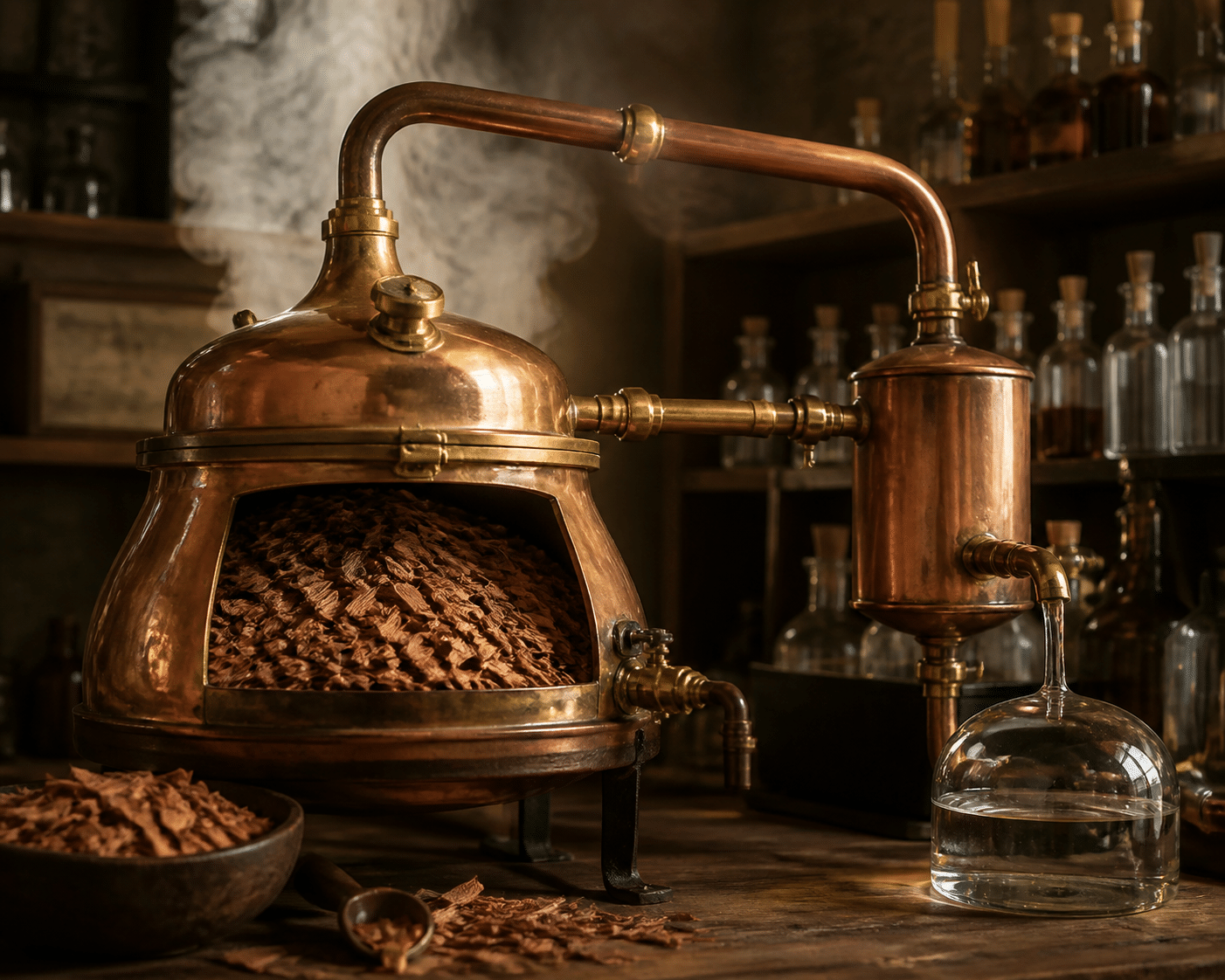
Picture a copper still, a pile of aged sandalwood chips, and a lot of patient waiting. That’s basically where real sandalwood water starts.
Let’s walk through how it’s made, then talk about the fakes.
How Steam Distillation Makes Sandalwood Hydrosol
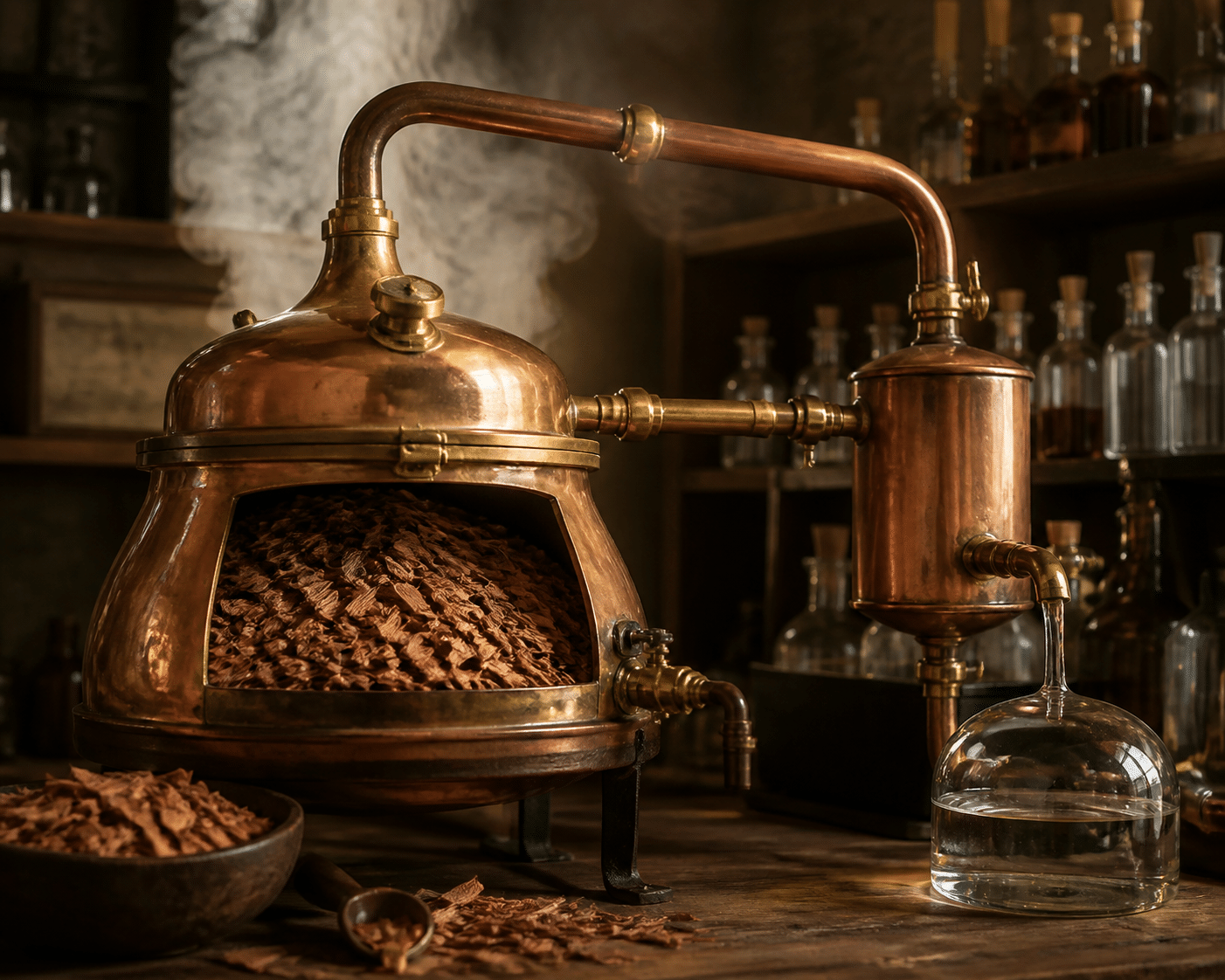
Sandalwood water isn’t just plain water with a few drops of scent stirred in. It’s a co-product of distillation. Here’s the simple version:
| Step | What happens |
|---|---|
| 1. Prep | Mature heartwood is chipped or powdered |
| 2. Load | The wood goes into a still |
| 3. Steam | Steam passes through the heartwood and carries volatile compounds upward |
| 4. Cool | The vapor hits a condenser and turns back into liquid |
| 5. Separate | A tiny oil layer floats on top, and the aromatic water underneath is the hydrosol |
| 6. Finish | The water is collected, filtered, preserved if needed, tested and packed |
Think of the hydrosol as the plant’s own water, carrying along the small water-soluble and volatile bits that travel with the steam. A sandalwood producer explains this extraction process if you want to see it described from the source side.
One honest caveat, though. Hydrosol is mostly water. The aromatic fraction is light, and it varies a lot from batch to batch.
Spotting Fakes and Adulterated Sandalwood Water
Here’s where quality-minded brands lose sleep. Sandalwood is slow-growing and pricey, so shortcuts are everywhere. Common ones include:
- Stretching real hydrosol with plain water
- Adding synthetic sandalwood scents like javanol, polysantol or ebanol
- Swapping in cheaper wood oils such as Amyris
- Blending a little real distillate with aroma chemicals to fake the smell
This isn’t just theory. A chemical study of commercial sandalwood oils found that none of the six tested met the ISO profile. Some “sandalwood” products matched Amyris markers instead. And some were found with phthalate solvents.
So what should you ask a supplier for?
- The Latin name (Santalum album, not just “sandalwood”)
- Country of origin and plant part used
- Batch number and distillation date
- A batch-level GC-MS report and microbial results
A nice smell proves nothing. Your nose can be fooled, a chromatogram is harder to fool.
Sandalwood Water vs. Sandalwood Essential Oil
People mix these up all the time. They’re related, but they aren’t the same ingredient.
| Sandalwood hydrosol | Sandalwood essential oil | |
|---|---|---|
| What it is | Aromatic water from distillation | Concentrated oil layer from distillation |
| Strength | Light, mostly water | Very concentrated |
| Santalol content | Low and variable, rarely reported | Around 41 to 54% alpha-santalol in ISO-grade S. album oil |
| Best use | Toners, mists, water phase of serums and creams | Fragrance, small-dose boosts |
| Handling | Needs preservation | Oil-based, used at tiny levels |
The big takeaway? Don’t borrow oil numbers and slap them on a water label. A hydrosol is a gentle, water-based ingredient. Treat it that way, and it’ll fit your formulas much better.
Next up, we’ll look at what the lab research really says about santalol.
The Science of Santalol: How Sandalwood Water Chemically Improves Complexion
Here’s the part everyone wants to jump to. What’s actually going on at the molecular level?
I’ll keep it honest. Most of the data below comes from lab work on sandalwood oil, not from people using sandalwood water on their faces. Think of it as a plausible story, not a finished one.
Meet the Main Players: Alpha- and Beta-Santalol
Sandalwood’s signature compounds are alpha-santalol and beta-santalol. A 2023 analysis of commercial sandalwood oils found alpha-santalol at roughly 17 to 55% and beta-santalol at 7 to 21%, depending on species and product.
Those are oil numbers. Hydrosol carries far less, and nobody has a standard range for it. So don’t copy them onto a water label.
| Compound | What it is | Skin function it’s linked to | Evidence strength |
|---|---|---|---|
| Alpha-santalol | Main sesquiterpene alcohol in S. album | Tyrosinase inhibition in lab tests, antioxidant activity | Preclinical |
| Beta-santalol | Second major santalol | Supports the overall anti-inflammatory and antimicrobial profile | Mostly indirect |
| Sandalwood hydrosol (whole water) | Light aromatic fraction | Soothing, toning, sensory appeal | Early lab data, few human studies |
Calming Redness and Blemishes
Uneven tone isn’t only about dark spots. Redness and breakouts leave their own marks. A 2023 review of the Santalum genus describes antioxidant, anti-inflammatory and antimicrobial properties in sandalwood oil, which is why it shows up in so many soothing products.
That’s a reason to be interested. It isn’t proof that your toner will clear a blemish.
The Tyrosinase Angle
Tyrosinase is the enzyme that helps your skin make melanin. Slow it down, and in theory you get less pigment buildup.
In one enzyme study, santalol blocked tyrosinase through competitive inhibition. The researchers called it preliminary and said clinical trials were still needed. A review put alpha-santalol’s IC50 at 171 micrograms per millilitre, though again, that’s for oil constituents.
Now the hydrosol bit. A 2025 thesis reported 82% inhibition at 1 mg/mL in one assay and 71% intracellular inhibition under its test conditions. Interesting? Definitely. Ready for a “clinically proven” badge? Not even close.
So the fair summary is this: santalol has a believable mechanism for supporting a more even-looking tone, and direct human proof is still missing. Next, we’ll look at how to turn that into claims you can safely print.
Formulating for Success: Translating Sandalwood Water Benefits into Marketable Claims
So you’ve got a promising ingredient and honest science. Now comes the fun part: turning it into words a shopper will actually want to read. Let’s go through three benefits that fit sandalwood water well, and how to say each one without writing a check your lab can’t cash.
Benefit 1: Brightening and Evening Skin Tone
“A Gentle Botanical Step Toward a More Even-Looking Tone.”
This is the headline benefit for radiance lines. Shoppers care about it, too. A 2024 U.S. skincare report found 29% of respondents picked even skin tone as a skincare priority.
Here’s the catch. The tyrosinase work we covered is lab data, and nobody has shown that a sandalwood toner fades dark spots or repairs sun damage. So skip “treats sun damage.” Try “helps skin look brighter” or “supports a more even-looking complexion” instead. Same appeal, much lower risk.
Benefit 2: Soothing and Calming Action
“Cooling Comfort for Sensitive-Feeling Skin.”
This one might be the easiest to sell. People with sensitive skin hunt for gentle, simple formulas, and a post-cleansing toner or after-sun mist is a natural home for a fragrant water.
Brands already lean this way. Santal Bliss markets its sandal water as calming and cooling after cleansing, and Sensuous Beauty pairs sandalwood with neroli for a soothing, hydrating floral water. Notice the pattern. They talk about how skin feels.
I’d stay away from “therapeutic” or “heals irritation.” Those sound like drug claims. And if you want to say “reduces redness,” test your finished product first, because a raw hydrosol isn’t your product.
Benefit 3: Gentle Toning and Pore Refinement
“Toning Without the Sting of Alcohol.”
This is your differentiator for natural brands. Plenty of shoppers have been burned (literally) by harsh astringents. One market report estimates around 72% of beauty buyers prefer natural, clean ingredients, though its method isn’t very transparent, so I wouldn’t print that number on a label.
For pores, be modest. Sandalwood water is a mild, water-based tonic, not a pore shrinker. “Leaves skin feeling fresh and smooth” is honest. “Alcohol-free toning” is honest too, and it’s a claim you can verify by reading your own ingredient list.
Quick Claim Cheat Sheet
| Benefit | Safer wording | Risky wording |
|---|---|---|
| Tone | “Helps skin look brighter and more even” | “Erases pigmentation” or “whitens skin” |
| Soothing | “Calming and refreshing after cleansing” | “Heals irritation” or “therapeutic” |
| Toning | “Alcohol-free toning for a smoother look” | “Shrinks pores” or “clinically proven” |
One more thing. Whatever you claim, back it with a batch report from your supplier. Aroma Monk, for one, promotes lab-tested, traceable ingredients, and that kind of paperwork is what keeps your copy defensible. Next, we’ll get into how to actually build these claims into a formula.
Application Blueprint for Product Developers: Integrating Sandalwood Water into Your Line
You’ve got the claims. Now you need a formula that doesn’t fall apart on the bench. I’ve seen lovely concepts die because nobody tested the pH until week eight.
Here’s a practical way to put sandalwood water into the products you’re probably already making.
Toners and Facial Mists: Keep It Simple
This is the easiest home for sandalwood water. A toner or mist is mostly water anyway, so the hydrosol can be the star.
One sandalwood hydrosol supplier suggests up to 100% for toners. Another preservative-free listing gives a wider range of 1 to 100%, so your own certificate of analysis should win any argument. Honestly, 100% isn’t always better. Try a few levels and see how it smells and feels.
Want a more layered scent? Pair it with a softer hydrosol. Sensuous Beauty already blends sandalwood with neroli, and rose or lavender water could work too. Just test every blend on its own, since each water changes pH and aroma.
Serums, Creams and Lotions: Make the Water Work
Here’s a thought. In most creams, water is just filler. With sandalwood hydrosol, you can turn that water phase into something with a story and a scent.
In gels and serums, a formulation guide on hydrosol dosage points to starting around 10 to 25% of the total formula. For creams and lotions, suppliers often suggest 30 to 50% of the water phase (not the whole product, which trips people up).
I’d test three levels, say 10%, 25% and 50%, then check:
- pH and color
- Scent after a few weeks
- Thickness and emulsion stability
- Microbial results
Pair it with proven brighteners like niacinamide for a tone-focused serum. Let those ingredients carry the heavy lifting. Sandalwood water adds the botanical feel.
Clay Masks and Gentle Cleansers
Powdered clay mixed with plain water works, but it’s boring. Mix it with sandalwood water at the counter or in a pre-made paste, and you get a soothing, scented mask. Good for sensitive-feeling skin that hates harsh stuff.
In cleansers, swap part of the water for hydrosol. It adds a calm sensory feel, and it won’t strip skin the way a heavy astringent might. Keep your surfactants mild, though, because the hydrosol can’t fix a harsh base.
Quick Reference Table
| Product type | Starting inclusion | Primary benefit |
|---|---|---|
| Toner or facial mist | 50 to 100% of the water phase | Gentle toning, fresh feel |
| Serum or gel | 10 to 25% of the total formula | Botanical water phase, tone-focused story |
| Cream or lotion | 30 to 50% of the water phase | Soothing, scented base |
| Clay mask | Replaces mixing water | Calming activation of powder |
| Gentle cleanser | Part of the water phase | Mild, non-stripping feel |
These are starting points, not rules. Your supplier’s data sheet comes first.
Don’t Skip Preservation and pH
One warning, and it’s a big one. A hydrosol is water, and water grows things. Plan a broad-spectrum preservative and run a challenge test on the finished product. Hydrosols tend to be acidic, often around pH 3.0 to 5.5, so check the final pH after everything is mixed, and pick a preservative that works at that range.
Get this right, and the formula side gets easy. Next, let’s talk about buying it in bulk without getting burned.
The Procurement Manager’s Checklist: Sourcing Authentic, Bulk Sandalwood Water
A supplier sends you a sample. It smells gorgeous, like warm wood and a quiet temple. You’re sold. Then the first full pallet arrives and it smells like… something else entirely.
We’ve all heard that story. So here’s a checklist to keep it from happening to you.
GC/MS Reports Are Non-Negotiable
If a supplier can’t hand over a batch-level GC/MS report, walk away. Your nose isn’t a lab. And as we saw earlier, even commercial sandalwood oils have failed ISO checks, so a nice scent proves very little.
When the report lands on your desk, look for these things:
- The Latin name Santalum album, plus the plant part and production method
- Alpha- and beta-santalol listed, ideally with absolute units like mg/L
- No weird spike from one lone fragrance chemical
- The lab’s method, chromatogram, batch number and sampling date
- A lab with ISO/IEC 17025 accreditation, if you can get it
One honest warning. GC/MS can’t prove purity all by itself, especially for a water that holds only trace volatiles. And please don’t compare the numbers to oil ranges. A quality-marker paper on cis-alpha-santalol shows why that marker matters for authenticity, but hydrosol will always read lower. Pair the report with microbial, pH and preservative data.
Sustainable Sourcing and Traceability
Sandalwood grows slowly, and it’s regulated. Santalum album sits in CITES Appendix II, so international trade can need permits. India also controls felling, transport and sale through state forest laws, and the rules differ from state to state.
So ask for legal-source papers, transit permits and chain-of-custody records. FSC or organic certificates are nice, but they aren’t automatic proof that a hydrosol is real or legally sourced. And “sustainably harvested” on a brochure? That’s just marketing until someone can show you the audit trail.
This is where a partner like Aroma Monk fits, since it manages the chain from raw material sourcing to final delivery and promotes traceability.
Bulk Consistency and Paperwork
One good sample means nothing. What you need is the same scent, color and chemistry in batch ten as in batch one. Ask for retained samples from several lots, then compare them side by side. Confirm lead times and how the supplier ships internationally, too.
The documents matter just as much. Expect a batch CoA, TDS, SDS and the GC/MS report at a minimum. Buyers in Europe also need data for their product safety files, and CBI’s guide to technical dossiers lays out what a complete ingredient package looks like.
Your Quick Sourcing Checklist
| Criteria | What to ask for | Red flag |
|---|---|---|
| GC/MS verified | Batch report with Latin name and santalol data | “Smells authentic” is the only proof |
| Sustainable source | Legal-origin papers, permits, CITES documents | Vague “eco-friendly” wording |
| Traceable supply chain | Origin, harvest date, processing site, chain-of-custody records | Supplier won’t name the source |
| Bulk consistency | Multi-batch comparisons, CoA, SDS, TDS | Results change lot to lot |
Have your checklist ready, and the buying part gets much less stressful. Next, let’s see how sandalwood water stacks up against the toner staples you already know.
Comparative Analysis: Sandalwood Water vs. Rose Water & Witch Hazel
You’ve probably got rose water and witch hazel on your shelf already. So why add a third toner water? Fair question. Let’s put them side by side and see where each one actually earns its spot.
What Makes Each Water Different
The short version: they each do a different job.
Sandalwood water is the brightening-story ingredient. Its aroma comes from sesquiterpenes like alpha- and beta-santalol, and the lab work we covered points toward a more even-looking tone. But it’s still preclinical, so I wouldn’t say it beats the other two at anything as a proven fact.
Rose water is the classic. Its scent comes mostly from compounds like phenylethyl alcohol, geraniol and citronellol, and it’s linked to mild antioxidant and soothing activity. Human evidence for rose water by itself is thin, and geraniol and citronellol are recognized fragrance allergens in the EU, so check your labeling rules.
Witch hazel gets its punch from tannins, especially hamamelitannin. Those tannins give it that tight, astringent feel, which is why it’s a go-to for oily and breakout-prone skin. Recent research also ties its polyphenols to antioxidant activity. The flip side? That same astringency can sensitize some people.
Side-by-Side Comparison
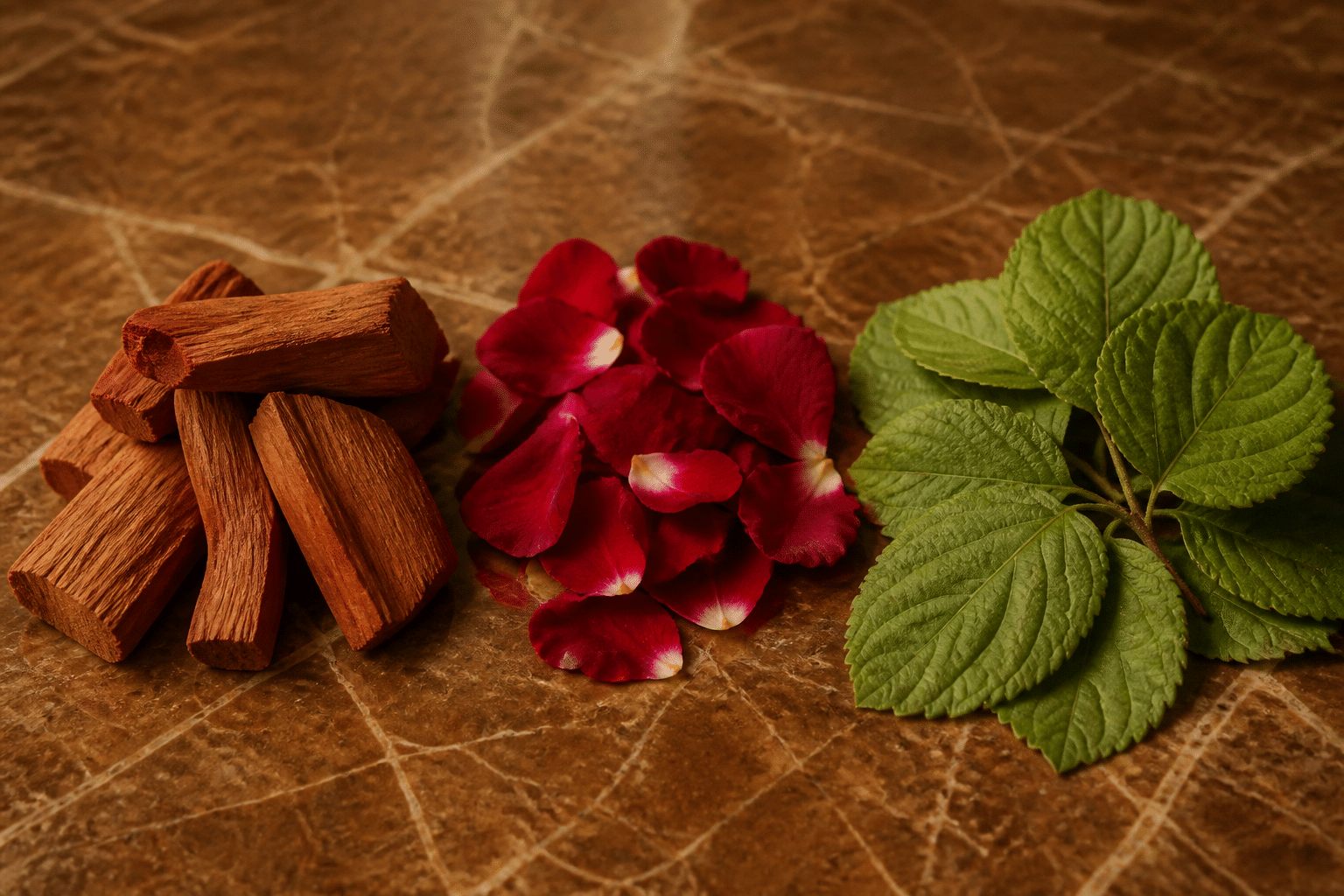
| Ingredient | Primary benefit | Best for (product line) | Key actives | Market positioning |
|---|---|---|---|---|
| Sandalwood water | Tone-focused, calming botanical water | Radiance toners, brightening serums, premium mists | Alpha- and beta-santalol (trace levels, varies by batch) | Premium, luxe or cosmeceutical-style |
| Rose water | Hydration and soothing | Everyday toners, mists, gentle cleansers | Phenylethyl alcohol, geraniol, citronellol, flavonoids | Mass market to mid-range, broad appeal |
| Witch hazel | Astringent oil control | Oily or breakout-prone lines, pore-focus toners | Tannins (hamamelitannin), gallic acid, catechins | Mass market, functional |
One thing to keep straight. Sandalwood’s “best for brightening” is a positioning choice backed by early lab data, not a clinical result. Write your copy that way.
Cost and Positioning: What It Means for Your Margins
Price matters here, and it’s where the three really split apart. In one bulk supplier listing, witch hazel hydrosol ran about $1.41 per pound while rose hydrosol came in near $18.18 per pound. That’s roughly 13 times more. I couldn’t find a reliable public price for sandalwood water, but since sandalwood is slow-growing and regulated, expect a premium. Get real quotes.
So here’s how I’d think about it:
- Going broad and gentle? Rose water is the safe pick. Shoppers know it, trust it and don’t need a lesson.
- Going after oil control? Witch hazel does that job cheaply, though patch-test for sensitivity.
- Going premium with a tone story? Sandalwood water gives you something the shelf doesn’t already have.
They don’t have to compete, either. A line with a rose water hydrating mist, a witch hazel clarifying toner and a sandalwood radiance toner covers three different shoppers. Aroma Monk already supplies rose water in bulk, so building a two-water range from one source is realistic. Next, we’ll wrap up what this all means for your brand.
Elevate Your Brand with the Proven Efficacy of Pure Sandalwood Water
So where does that leave you? Let’s boil it down to three business wins.
First, differentiation. Rose water and witch hazel fill most toner shelves. A pure sandalwood hydrosol, with a real origin story and a premium feel, gives your line something shoppers haven’t seen a hundred times.
Second, timing. People are reading labels and hunting for natural ingredients that help skin look more even. A clean, alcohol-free toner with Santalum album hydrosol fits that mood without any stretching.
Third, trust. Honest claims build loyalty. When your copy says “helps skin look brighter” and your supplier hands over a batch-level GC/MS report, nobody can poke holes in your story.
Here’s the straight truth about the science. Sandalwood water benefits go well beyond basic toning: soothing, a fresh sensory feel and a believable tone-focused mechanism backed by early lab work. But the proof is preclinical. That isn’t a weakness if you claim carefully. It’s what lets a premium position hold up over time.
The bottom line? Quality is the whole game here. A fake or watered-down hydrosol wrecks everything above, and a verified one makes it all work.
Ensure the quality and efficacy your next product launch deserves. Contact Aroma Monk today to discuss your bulk supply needs and request a sample of our pure, lab-certified sandalwood water.
Request Your Sandalwood Water Sample from Aroma Monk