
The Growing Demand for Scientifically-Backed Natural Antimicrobials in Cosmetics
Picture a product developer on a Monday morning. The brief says “clean, natural, and keeps skin looking clear.” Then someone from marketing asks if the label can say “antibacterial.” Sound familiar?
That’s the squeeze B2B teams feel right now. Shoppers want short, recognizable ingredient lists. Retailers and regulators want proof. And “natural” doesn’t automatically mean it works.
The market is clearly moving this way. Grand View Research estimated the global natural cosmetic ingredients market at $10.6 billion in 2025, heading to $11.5 billion in 2026, with 9.5% yearly growth projected through 2033. But swapping out synthetic antimicrobials is hard. That’s why a Personal Care Products Council white paper points to rising interest in multifunctional ingredients, the kind that offer antimicrobial support plus things like skin conditioning or deodorizing.
Enter sandalwood water. Most people think of it as a pleasant scent and nothing more. I’d argue that’s selling it short.
Sandalwood water (the hydrosol from Santalum album) comes from a plant rich in santalols. A peer-reviewed review of the Santalum genus links α-santalol and β-santalol to antibacterial activity against bacteria like Staphylococcus aureus. I’ll be upfront, though: most of that research is on the oil and extracts, not the water. We’ll sort out what that means for you.
So here’s the plan. This article gives product developers and procurement managers a clear look at sandalwood water benefits, the science behind them, and what to check before buying in bulk.
What is True Sandalwood Water? A Guide to Hydrosol Purity and Quality
Here’s something that trips up a lot of buyers. Two bottles can both say “sandalwood water,” smell kind of nice, and be totally different inside. One is a real hydrosol. The other might be fragranced water with a pretty label.
How Real Steam Distillation Works
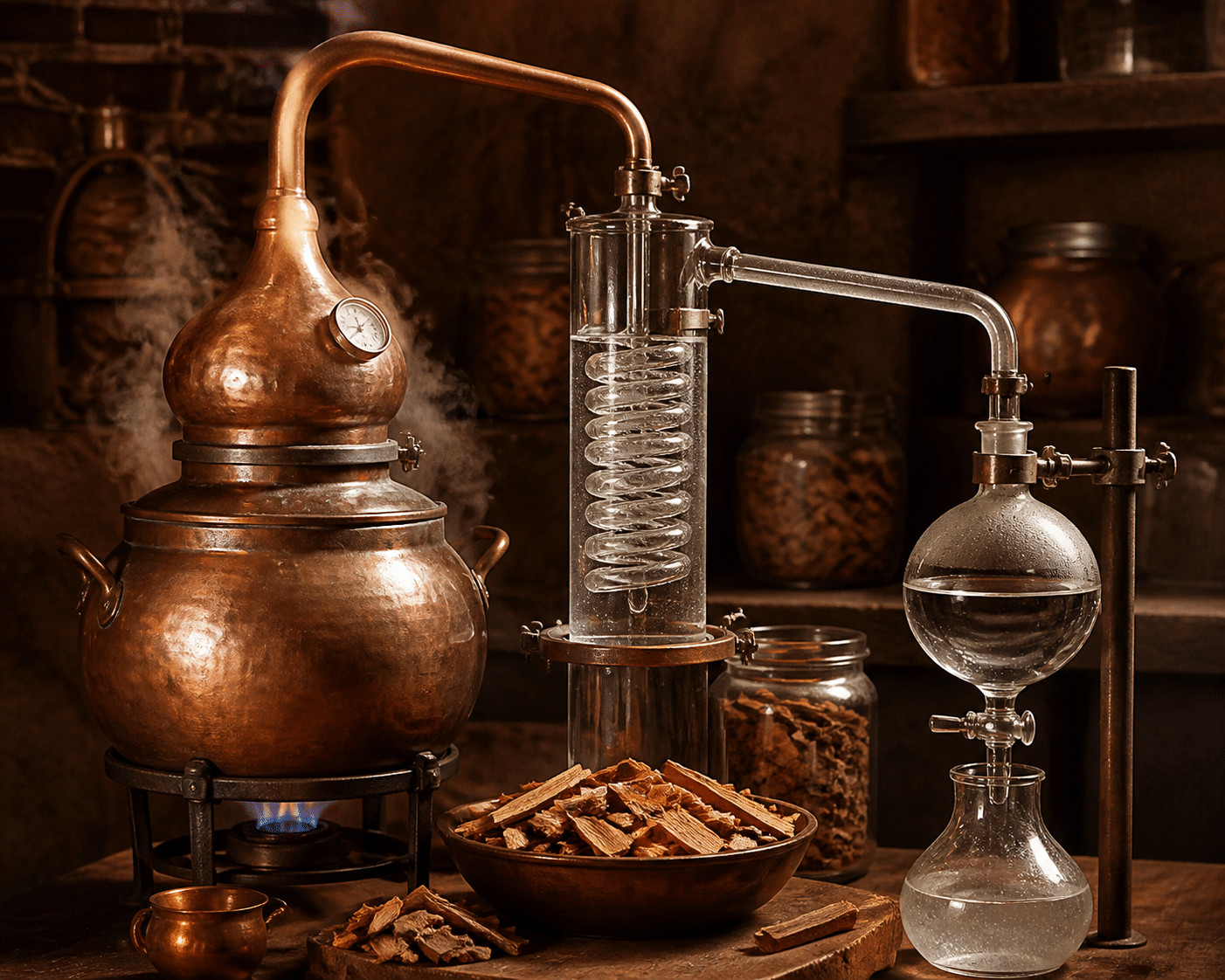
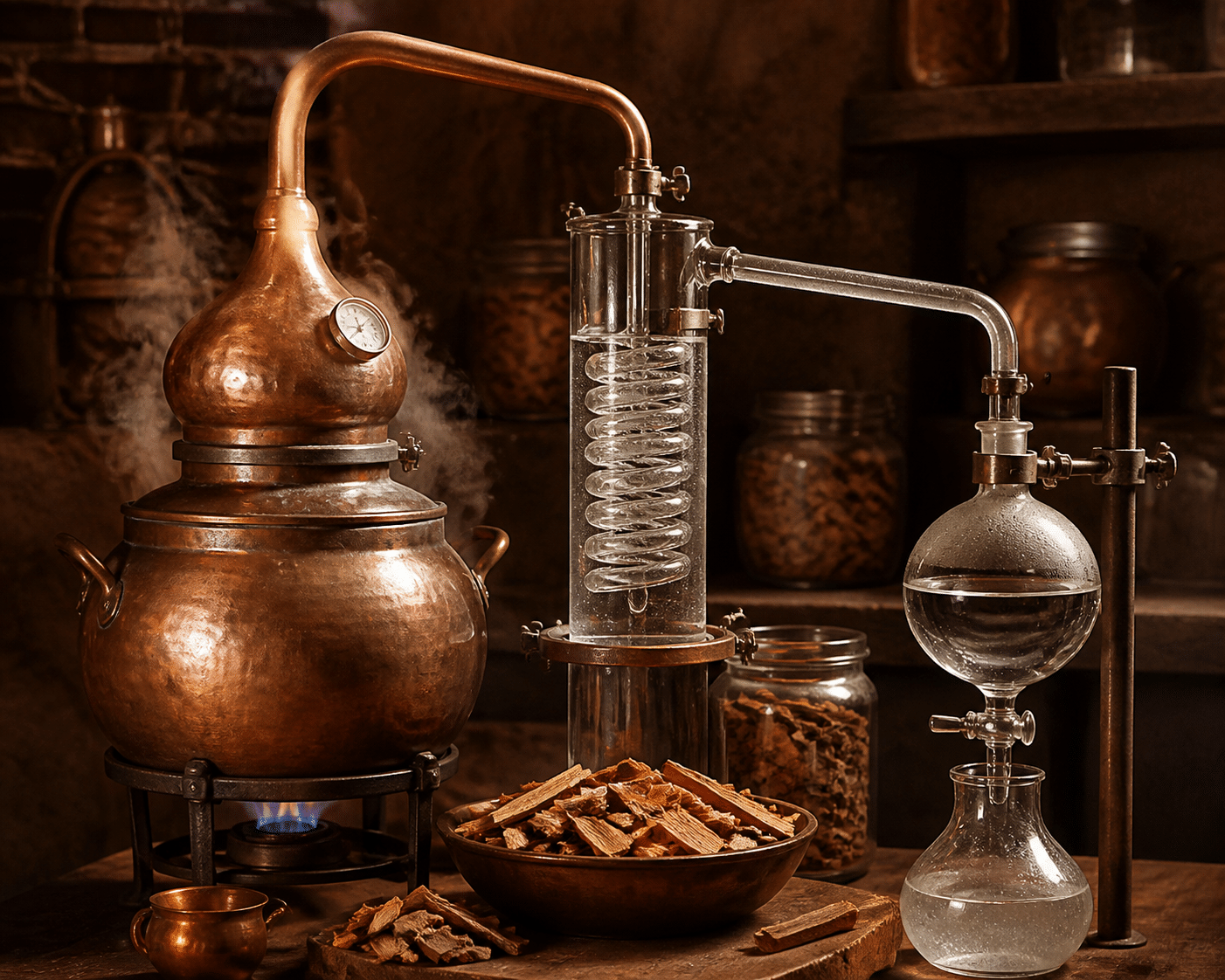
A true hydrosol is a byproduct of steam distillation. Steam passes through sandalwood heartwood, picks up volatile aromatic compounds, then cools back into liquid. The oil separates out. What’s left is the water, carrying tiny amounts of water-soluble and lightly aromatic material.
It’s gentle and subtle. That’s the point.
A simple infusion is different. Someone soaks wood or powder in water, or worse, stirs in a few drops of essential oil. No distillation, no real hydrosol. Here’s a quick side-by-side:
| True steam distillation | Simple infusion or diluted oil | |
|---|---|---|
| Process | Steam passes through heartwood, then condenses | Wood soaked in water, or oil mixed into water |
| Output | Hydrosol plus separated oil | One mixed liquid |
| Scent | Soft, light, slightly woody | Often too strong or flat |
| Oil droplets | Little to none | Common, or oil needs a solubilizer |
| Paper trail | Batch and distillation records | Usually vague |
Because hydrosols are over 99% water, they carry very little sandalwood. One supplier listing shows α- and β-santalol at only 0.03 to 0.07% combined. So a super strong sandalwood smell? Honestly, that’s a warning sign.
Why Santalum Album and Origin Matter
Many woods get called sandalwood. For a real Santalum album product, you want the botanical name, the plant part (heartwood is preferred), and the country and region of origin on paper. Related species share some compounds, so “it contains santalol” isn’t proof of identity.
Origin changes the chemistry too. Recent GC-MS work reports meaningful variation by provenance, so no single peak ratio fits every batch. That’s why consistency from one lot to the next is something you need to check, not assume.
Why Third-Party GC/MS Testing Is Non-Negotiable
Sandalwood is one of the most adulterated materials out there. A study of six commercial sandalwood oils found that none met the ISO profile, and only one contained both α- and β-santalol. If that’s what happens with oil, water is an easy place to hide a shortcut.
So ask for a batch-specific GC/MS or GC-FID report from an independent lab. A good one shows:
- A chromatogram tied to your lot number
- Santalols and supporting compounds like farnesol
- No odd terpenes, synthetic fragrance compounds or carrier solvents
- A clear statement on added preservatives or essential oil
Hydrosol-specific acceptance ranges are still thin, so make your supplier define its own spec and explain the method. “GC-tested” with no lab name or numbers? Not good enough.
Next, let’s look at what the science says these compounds actually do.
The Science Behind the Soothing: Unpacking Sandalwood’s Antiseptic & Antibacterial Compounds
OK, time for the chemistry. Don’t worry, we’ll keep it plain.
Meet the Santalols
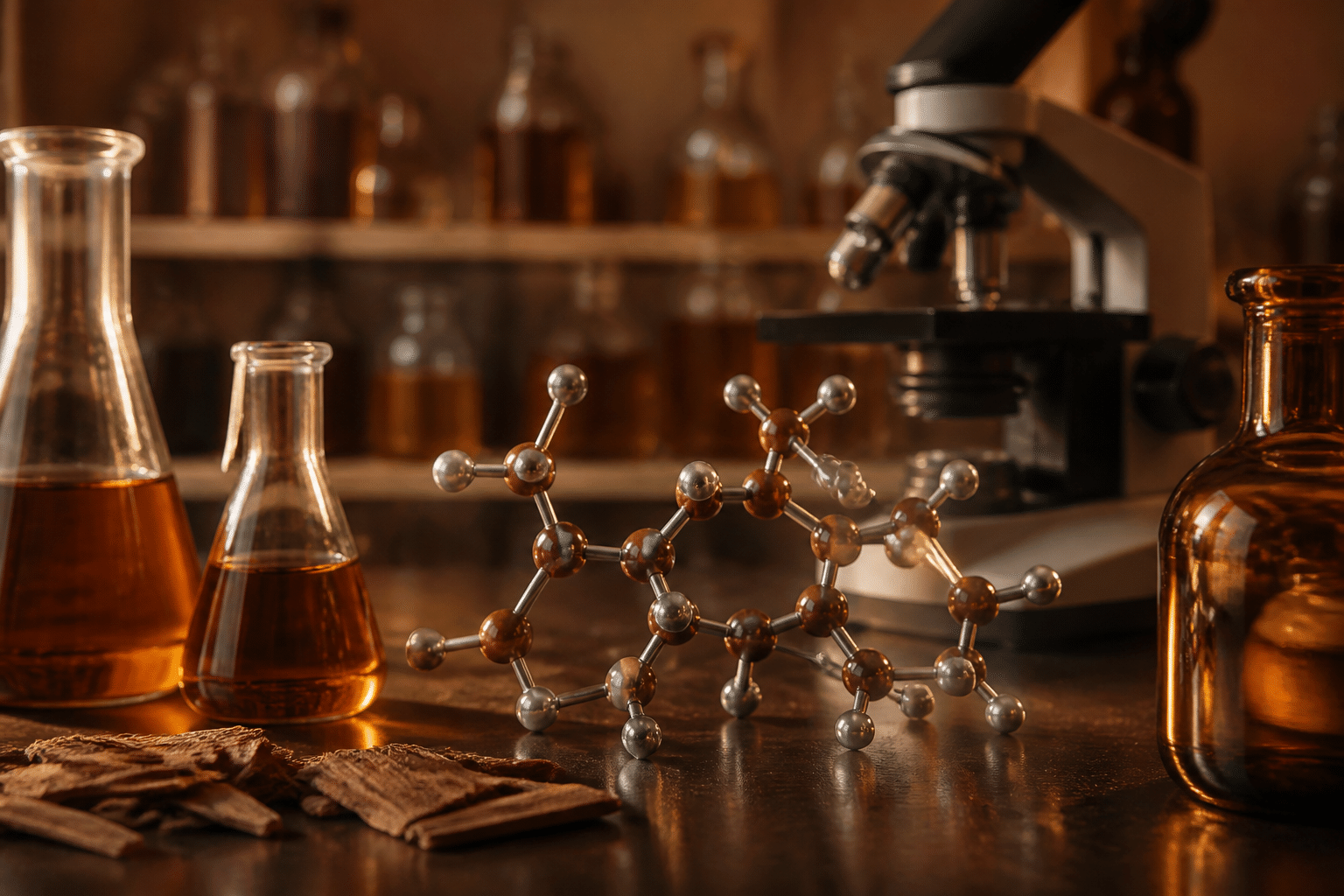
Two compounds do most of the talking in sandalwood: α-santalol and β-santalol. They’re sesquiterpene alcohols, which is a fancy way of saying they’re oily, plant-made molecules that don’t mix well with water. That detail matters later.
In sandalwood oil, ISO 3518:2002 expects about 41 to 54% α-santalol and 16 to 24% β-santalol. Hydrosol is a different animal. Here’s how the pieces line up:
| Compound | Typical share in oil (ISO 3518) | In a hydrosol | What research suggests |
|---|---|---|---|
| α-santalol | About 41 to 54% | Trace (0.03 to 0.07% combined with β) | Antibacterial activity in lab tests, including against S. aureus |
| β-santalol | About 16 to 24% | Trace (see above) | Antibacterial activity in lab tests |
| Farnesol, lanceol and other supporting compounds | Smaller amounts | Trace, varies by batch | Used mainly as identity markers |
See the gap? Please don’t copy oil numbers onto a water spec sheet. Hydrosols are mostly water, so the santalols show up in tiny amounts.
How Santalols Seem to Work (and What Studies Show)
The best guess is about membranes. Santalols are fat-loving, so they can slip into a bacterium’s outer layer. A technical summary on cis-α-santalol describes how that could make the membrane leaky, let ions and energy molecules escape, and slow the cell’s metabolism until it can’t keep going.
But I’ll be straight with you. That’s a proposed mechanism. The same summary notes the exact way cis-α-santalol works isn’t fully pinned down yet.
So what about actual bacteria? A 2026 PubMed-indexed study reported in-vitro antibacterial activity from sandalwood essential oils against Gram-positive clinical isolates. That fits with S. aureus, a common skin bacterium. For P. acnes (now called Cutibacterium acnes), the research I pulled was thinner. I wouldn’t promise a specific result there without your own testing.
And the big caveat: almost all of this work used oil or concentrated extracts. Not water.
The Soothing Side: Antibacterial Plus Anti-Inflammatory
Here’s where sandalwood gets interesting for blemish-prone or irritated skin. That 2026 study also found the oils affected eicosanoid-related enzymes, which are part of the body’s inflammation pathway. It’s a more specific lead than the old “sandalwood is calming” line.
Dermatologists have noticed it too. Francesca Fusco, MD, of Wexler Dermatology, told Refinery29, “Sandalwood oil has significant anti-inflammatory and antiseptic properties.” Notice she said oil. Same pattern.
So the dual action looks like this:
- Antibacterial: santalols may disrupt bacterial membranes in lab settings
- Anti-inflammatory: sandalwood oils may influence inflammation-related enzymes
- Gentle feel: a hydrosol delivers this in a light, water-based form
Put together, that’s a sensible story for a multifunctional ingredient in toners and mists for clear-looking skin. It’s not proof that a low-solids sandalwood water acts as an antiseptic. Treat it as a promising helper, then confirm it with finished-formula testing.
Next up, let’s see how that plays out inside real formulas.
Formulating for Efficacy: Sandalwood Water Benefits in Cosmetic & Personal Care Products
OK, let’s put sandalwood water on the bench. Lab data is nice, but you’ve got a launch date, and your team needs to know where this stuff actually goes in a formula.
Three Formulation Ideas to Start With
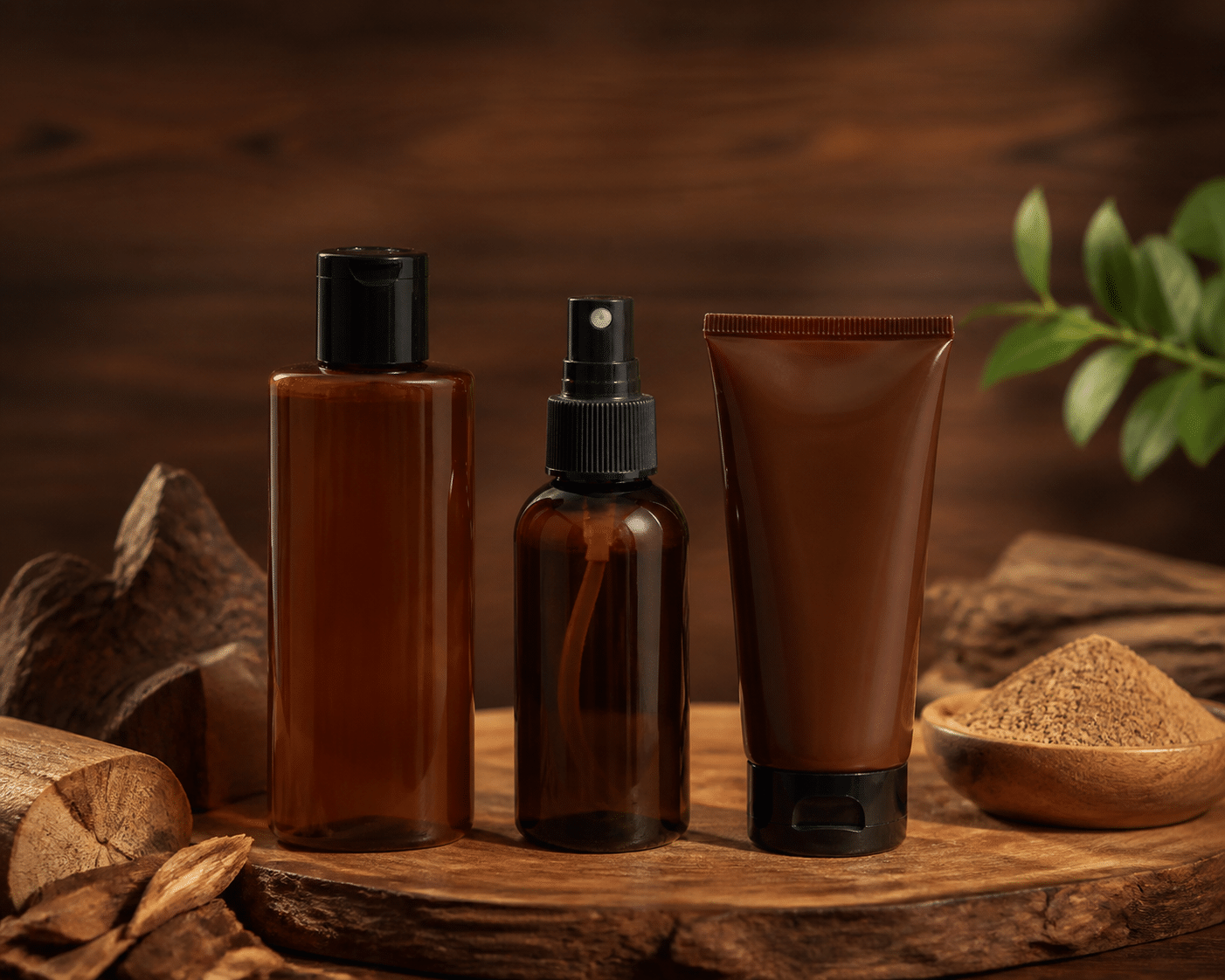
Hydrosols fit best where water is the star. Think toners, mists, after-shaves, light gels and cleansers. Here are three starter ideas, laid out like quick formulation cards:
| Formulation idea | Key ingredients | Benefits to aim for |
|---|---|---|
| 1. Anti-Blemish Toner | Sandalwood water, alcohol-free witch hazel, niacinamide, a tested preservative system | Fresh feel, oil-balancing look, clearer-looking skin |
| 2. Soothing Post-Shave Gel | Sandalwood water, aloe vera juice, a light gelling polymer, glycerin | Cooling feel, calmer look after shaving, soft woody scent |
| 3. Gentle Micellar Water | Sandalwood water, mild non-ionic surfactant, glycerin, chamomile hydrosol | Easy makeup and dirt removal, low-sting feel, light scent |
A calming mask works the same way. Swap part of the water phase in a clay or gel mask for sandalwood water, and you get a gentler sensory profile without adding more fragrance.
Use levels? Supplier advice varies a lot. Formulators Inc suggests up to 100% for toners and 30 to 50% for creams and lotions. For gels, I couldn’t find a standard range, so start around 10 to 50% of the water phase and adjust for pH, thickness and feel. Treat all of these as starting points, not specs.
One tip for blemish-prone formulas: pairing with tea tree is a natural idea, and Down Under Enterprises already markets tea tree hydrosol for toners and mists. Just remember tea tree oil is much stronger than a hydrosol and can irritate, so keep levels low and patch test.
One Ingredient, Three Jobs
Here’s where sandalwood water gets interesting for your costing sheet. It can pull triple duty:
- Active-style helper: a calming, soothing story backed by santalol research (mostly on oil, as we covered)
- Natural fragrance: a soft woody note that can cut back on added perfume
- Water phase upgrade: a swap for plain deionized water, so the water itself carries a benefit
That last one is sneaky good. You’re not adding a new line to the ingredient list, just making an existing one work harder. For clean beauty ingredients lists, shorter and smarter wins.
But (and it’s a big but) don’t expect a strong scent or strong activity. It’s a hydrosol, so it’s mild by design.
Can It Help With Clean Preservation?
This is the question I get asked most, and I want to be careful here. Sandalwood water is not a proven preservative. Full stop.
What it might do is support one. Preservation is a balancing act: Future Market Insights reports broad-spectrum systems held 44.0% of the market in 2025, with growing interest in organic acids, esters and blended approaches. A multifunctional ingredient like sandalwood water could sit inside a blend like that as a booster, and maybe help you lean on a lighter preservative load. Maybe.
So here’s the practical path:
- Build your base preservation system first.
- Add sandalwood water and re-check pH, color and scent.
- Run challenge testing on the finished formula.
- Only then decide what the label and marketing can say.
Get that last step right, and you avoid claim trouble later. Speaking of which, claims and rules are coming up soon, along with how to buy the stuff in bulk without getting burned.
The Procurement Manager’s Checklist: Sourcing Bulk Sandalwood Water for Quality and Reliability
You’ve read the science. You’ve sketched a formula. Now comes the part that can sink a launch: buying the stuff. A bad lot of sandalwood water won’t just smell off. It can stall your whole production schedule.
So let’s make this practical. Think of it as the questions you’d want answered before a purchase order leaves your desk.
Questions to Ask Before You Request a Quote
Start with the basics. A real supplier answers these fast, and in writing.
- Country and region of origin: Where was the wood grown, and by whom?
- Distillation date: When was this batch made? Water-based materials don’t age like oils do.
- Storage conditions: What temperature, what container, and for how long before shipping?
- Certifications: Which ones, issued by whom, and do they cover cosmetic ingredient production?
Origin deserves extra attention. Santalum album is under real pressure, and a 2025 review notes that export of wood from India is banned. So ask for plantation records, permits and export papers, not just a friendly “sustainably sourced” line.
As for certificates, ISO and GMP are common. But confirm the number, scope and expiry date with the issuing body yourself. A certificate for food manufacturing, for example, may say nothing about cosmetic ingredients.
How to Read a COA Before You Commit
Ask for the full Certificate of Analysis and a current GC/MS report before any PO. (We covered what a good chromatogram shows earlier, so here’s the COA side.)
A useful COA is batch-specific, dated, and tied to the lot number on the drum. Look for actual numbers, units and test methods. “Pass” alone tells you nothing.
| What to check | What good looks like | Red flag |
|---|---|---|
| Lot number and dates | Matches your shipment, shows production and expiry | Missing or reused across lots |
| Lab name | Named, ideally ISO/IEC 17025 accredited | No lab listed |
| Appearance, odor, pH | Numeric pH with a stated range | Vague words only |
| Microbiology | Total count, yeast and mold, named pathogens | No limits at all |
| Preservatives | Clear statement of what’s added | Silence on the topic |
| GC/MS link | Report matches the same lot | Generic or recycled chromatogram |
Here’s my rule of thumb. If two COAs from different months look identical down to the decimals, get suspicious. Real batches wiggle a little.
Can They Deliver, Batch After Batch?
Great paperwork means little if the second shipment looks nothing like the first. So test the supply side too.
- Ask for lead times on 100 kg, 500 kg and larger orders, plus the minimum order quantity.
- Ask about yearly capacity and what happens during shortages.
- Request at least three recent batch COAs to judge consistency.
- Get change-control terms in writing, so you’re told before origin, site or process changes.
- Approve a sample, then independently test your first commercial lot.
The IKW supplier questionnaire for cosmetic ingredients is a handy starting template. It covers specifications, analysis certificates and regulatory declarations, and you can add sandalwood-specific fields on top.
Keep everything together in one supplier file: questionnaire, certificates, permits, COAs and your own test results. It’s boring work. It’s also what saves you in an audit.
Next, we’ll look at the rules that shape what you can say about the finished product.
Navigating Global Compliance: Regulatory Considerations for Products with Sandalwood Water

You’ve got the formula and the supplier. Now the label and the marketing copy have to survive a regulator’s read. Not the fun part, I know.
Labels and INCI Names by Market
Every major market wants ingredients listed by INCI name. Here’s a quick snapshot for the three markets most B2B teams ask about:
| Market | Name on the label | Key points to check |
|---|---|---|
| United States | Santalum Album (Sandalwood) Wood Water | FDA looks at intended use, so wording and ads matter as much as the ingredient list |
| European Union | Same INCI name, matched to your supplier’s file | Needs a Cosmetic Product Safety Report and a Product Information File under Regulation (EC) No. 1223/2009 |
| Canada | Same INCI name | Notify Health Canada after first sale and check germ-killing claims before launch |
One wrinkle: hydrosol INCI names aren’t always uniform. Some supplier files say “Santalum album distillate water.” So use the name your supplier documents, then verify it against the current INCI database before anything goes to print. The Canada row is general guidance, so confirm details with Health Canada or a regulatory consultant.
Claims: Cosmetic or Drug?
This is where launches get stuck. In the EU, words like “antibacterial,” “antiseptic” and “kills bacteria” can be treated as biocidal claims, which pulls a product out of cosmetics law. The US works the same way in spirit. As FDA’s cosmetics versus drugs view explains, intended use drives the category, including wording and consumer perception.
So stick to appearance language, like “helps skin look clearer” or “helps skin feel refreshed.” Skip “treats acne” and “antiseptic.”
Pro Tip: Test the finished formula, not just the raw material. Santalol studies on oil don’t prove your toner does anything. Match each claim to a human-use or consumer study on the actual product, and keep that evidence in your claim file.
Allergens, Safety Reports and Paperwork
Sandalwood water is dilute, but allergen rules still apply. Farnesol, which we mentioned earlier as a supporting compound, sits on the EU’s fragrance allergen list. If it shows up above the set thresholds, it goes on the label. The safety assessor needs the full chemical profile, not just a friendly product name.
That’s why the EU Cosmetics Regulation puts so much weight on the safety report. Your assessor will ask for:
- Botanical identity and origin
- Method of distillation
- Preservatives and any carriers
- Microbiological limits and contaminant results
- Allergen declarations
Missing one piece can delay registration by weeks. Buyers in Europe increasingly expect a full technical dossier with INCI details, traceability and regulatory notes.
This is where a documentation-ready supplier saves real time. Aroma Monk, for example, promotes lab-tested, traceable products and manages the chain from sourcing to delivery. Ask any supplier for the same paper trail up front, so your regulatory team isn’t chasing PDFs at 5pm on a Friday.
Next, let’s pull it all together.
Elevate Your Formulations: Partnering for Purity, Efficacy, and Supply Chain Confidence
So, where does that leave us? Sandalwood water is a pretty promising ingredient. It gives you a soft woody scent, a calming story, and a way to make your water phase work harder, all while keeping the label short and clean. The santalol research is real. It’s also mostly on oil, not water, and we’ve said that more than once for a reason.
Here’s the honest takeaway. The benefits only show up when the hydrosol is the real thing. That means true Santalum album, steam distilled, with batch-specific GC/MS data and a supplier who can show you where the wood came from. Without that, you’re paying for fragranced water. Then you test the finished formula and keep your claims on the appearance side.
The good news? You don’t have to chase all of this alone. A manufacturer that handles sourcing, distillation, testing and export under one roof makes the paperwork much easier. Aroma Monk works that way, with lab-tested products, traceability and bulk supply for international buyers. Ask for the same proof from anyone you talk to, including us.
Ready for Your Next Step?
Pick the one that fits where your team is right now:
| Your stage | Next step | What to ask for |
|---|---|---|
| Testing a concept | Request a Sample | A small lot, plus the matching COA and GC/MS report |
| Building your file | Download Spec Sheet | pH range, microbial limits, INCI name, origin and storage details |
| Planning production | Get a Bulk Quote | Pricing, minimum order quantity, lead times and export paperwork |
Ready to get started? Visit Aroma Monk to request a sample, grab the spec sheet, or ask for a bulk quote. Tell us about your toner, mist or cleanser, and we’ll help you work out the rest.