
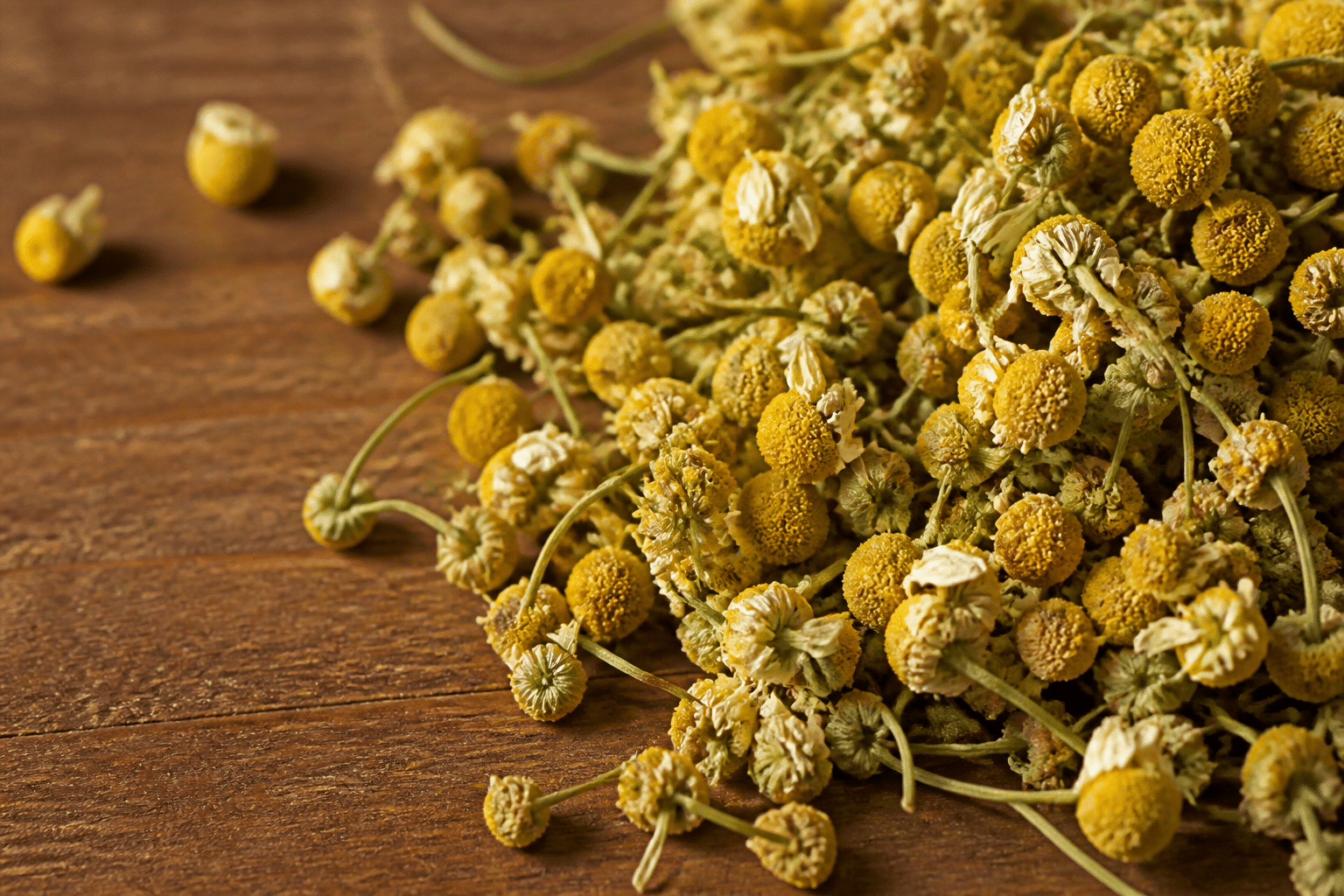
The Untapped Potential of Chamomile Water in Modern Hair Care
Ever notice how many hair products promise “gentle” and then leave your scalp itchy by day three? Shoppers notice too. They want hair care that feels natural, treats the scalp kindly, and still works.
The numbers back this up. Mordor Intelligence estimates the global natural hair care market at $24.05 billion in 2025, and premium products already make up 55.51% of that revenue. Plus, CivicScience found that 61% of U.S. adults have at least some interest in clean beauty. Interest isn’t loyalty, though. The product still has to perform.
That’s where chamomile water gets interesting.
People know chamomile for three things. It can give blonde and light brown hair a soft golden glow. It can calm a cranky, irritated-feeling scalp. And it can leave hair looking shinier. There’s some early science too. In a 2015 study of 45 people after hair transplants, a shampoo with bisabolol (a calming compound found in chamomile) reduced scabbing and redness. Fair warning: that was a full shampoo, not chamomile water on its own, so we’ll keep our claims honest.
So here’s the plan. This guide is for cosmetic brands and formulators, not for someone steeping tea bags in a kitchen. We’ll look at how to build a chamomile water for hair that stays stable, holds up on the shelf, and scales past a small test batch. Let’s start with why this ingredient can set your line apart.
Section 1: Why Chamomile Water is a Winning Ingredient for Product Differentiation
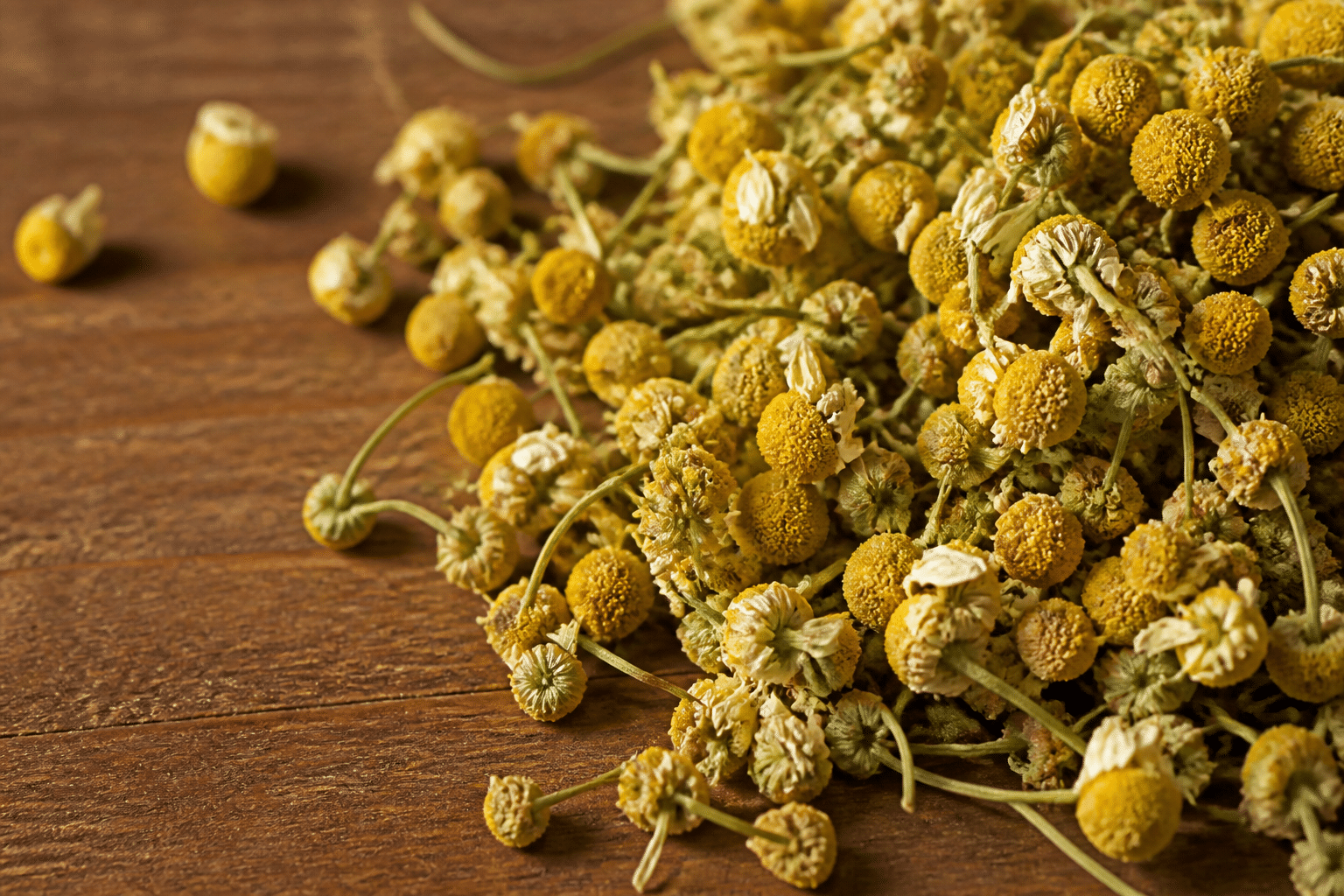
Here’s a question for your next product meeting. What makes your hair water different from the five others on the shelf? “Natural” won’t cut it anymore. Chamomile gives you a real story, backed by real compounds.
What’s Actually Inside the Flower
Chamomile isn’t one magic molecule. It’s a mix, and each part does a different job. A 2023 review of Matricaria chamomilla describes alpha-bisabolol as both anti-inflammatory and antibacterial, which is why researchers link it to dandruff and scalp comfort. Here’s a quick cheat sheet for your team:
| Compound | What it does | Where it fits | Claim caution |
|---|---|---|---|
| Apigenin | Yellow-gold flavonoid linked to a soft golden tone | Rinses and leave-in mists for blonde and light brown hair | Temporary to semi-temporary. Never say “permanent bleaching” |
| Bisabolol | Calms the look and feel of redness and irritation | Scalp serums, sensitive-scalp shampoos | Say “soothes irritated-feeling scalps,” not “treats dermatitis” |
| Chamazulene | Blue compound tied to soothing positioning | Mostly chamomile essential oil in hair products | Forms during steam distillation, so a flower infusion may carry little |
That last row surprises people. Chamazulene isn’t really sitting in the fresh flower. It’s created when the plant is distilled. So if you’re making a water from dried flowers, lean on apigenin and bisabolol for your story, and test before you claim more.
Three Shoppers Who Are Already Looking
First, the blonde and light brown crowd. They want warmth without a salon bill or harsh bleach. Established brands like Klorane already sell chamomile lines that gently lighten and bring out golden highlights, so the demand is proven. A chamomile rinse for blonde hair is an easy concept to explain, and “builds gradually with repeated use” is an honest promise.
Second, people with touchy scalps. These shoppers read labels like detectives. Calming language backed by a known ingredient earns their attention fast.
Third, parents. Gentle children’s hair care is a category where trust matters more than hype. Chamomile feels familiar and kind, which helps. (It also means your preservation and testing need to be spotless, but we’ll get there.)
One Base, Many Products
The best part? You don’t need to build a new formula for every idea. Chamomile water is a flexible starting point:
- A simple rinse: the easiest entry product, great for a first launch.
- A leave-in mist or serum base: swap plain water for chamomile water and add humectants or soothing actives.
- An active in shampoos and conditioners: use it as part of the water phase for a gentle, botanical angle.
One ingredient, three price points. That’s smart range building for any line of natural hair care ingredients. Next up: where to source the raw material, because flowers versus oil is a bigger decision than it looks.
Section 2: Sourcing Superior Raw Materials: Dried Flowers vs. Essential Oil
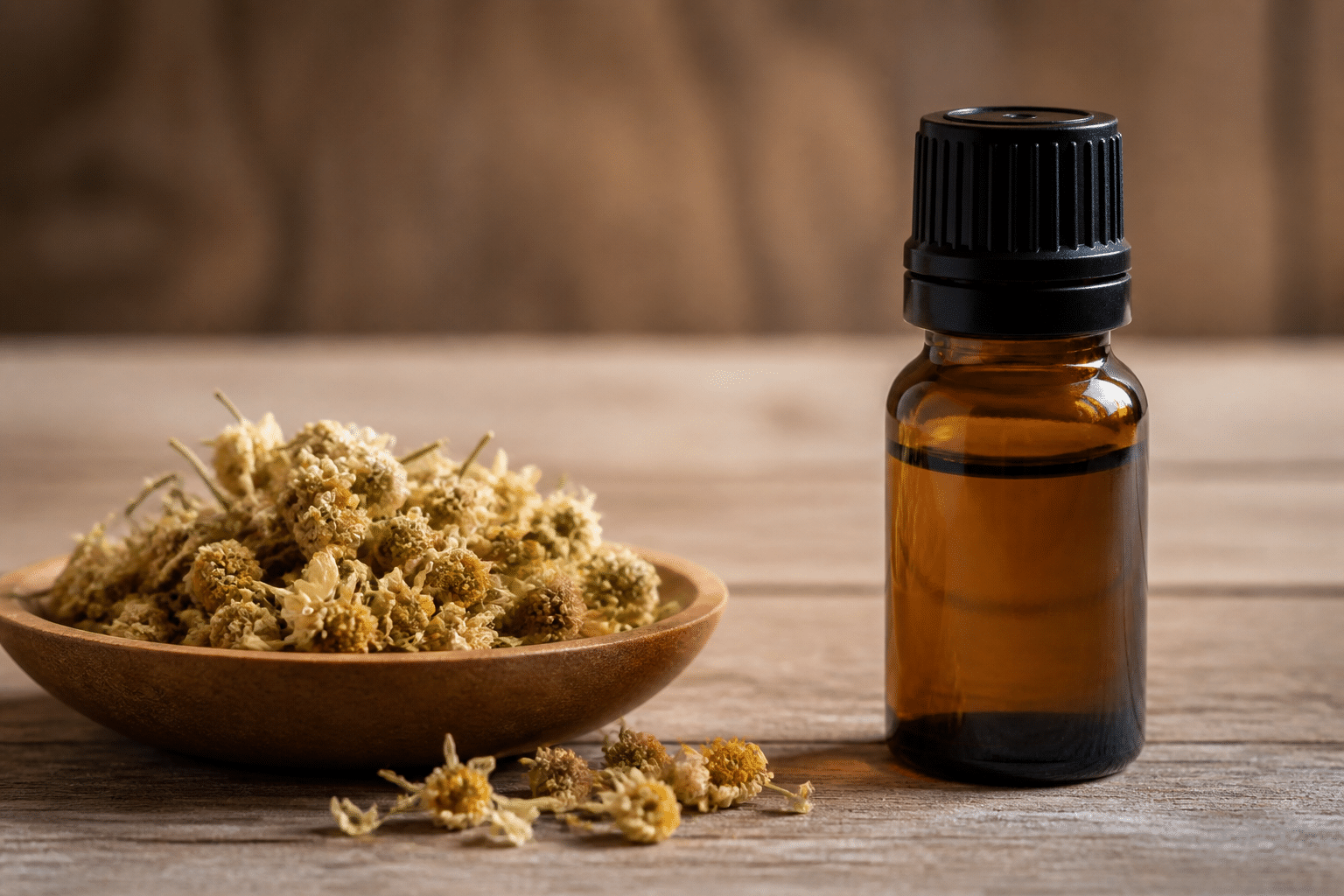
Here’s a mistake I see a lot. A team picks “chamomile” off a supplier list, orders whatever’s cheapest, and finds out three months later that they bought the wrong plant in the wrong form. Ouch.
So let’s get this part right before any mixing starts.
Roman vs. German: Two Different Plants
Both are called chamomile. They aren’t the same thing. According to a review of chamomile chemistry, Roman chamomile (Chamaemelum nobile) has an oil rich in esters, which gives it that soft, sweet, apple-like smell. German chamomile (Matricaria recutita) leans on sesquiterpenes like bisabolol, and that’s the one most people picture for scalp comfort.
For a water-based hair product, German chamomile flowers are usually the better fit. Oils don’t mix well with water. If you want oil in a clear water product, you’ll need a solubilizer and a stronger preservation plan. Dried flowers steep right into water, no fuss.
Flowers or Oil? A Side-by-Side Look
I’d love to hand you an exact price gap. I can’t. I couldn’t find reliable like-for-like bulk quotes, and a single marketplace listing with a minimum-unit price won’t tell you much. What I can say is that oil is expected to cost far more per kilogram, because it takes a lot of flowers to distill a little oil. Ask suppliers for quotes per kilogram, same species, same grade, same volume.
| Dried flowers | Essential oil | |
|---|---|---|
| Cost | Lower per kilogram | Much higher per kilogram |
| Scalability | Easy to scale, but needs steady harvests | Scales well once a trusted lot is locked in |
| Formulation control | Gives a natural infusion with variable color and body | Precise dosing, but needs a solubilizer in water |
| Aroma profile | Mild, herbal, hay-like | Stronger; Roman is apple-sweet, German is deeper |
| Best for | Rinses, mists, traditional infusions | Fragrance accents, scalp serums, small-dose boosts |
Chamazulene shows up here too. It forms during distillation, so it lives in the oil, not the fresh flower. That’s a good reason not to promise “blue chamomile” benefits from a flower infusion.
Your Procurement Checklist
Print this one out for your buyers:
- Origin: country and region, plus the exact botanical name on paperwork
- Grade: cut size and foreign matter limits for flowers; clear chemotype for oils
- Harvest date: fresher flowers usually smell and look better, so ask for it
- Batch lab data: a GC/MS report for oils, plus contaminant tests for pesticides and heavy metals (here’s what a real Roman chamomile CoA with GC data looks like)
- Certifications: organic, if you plan to claim it, with a valid certificate
- Traceability: lot numbers that match what ships to you
A line that just says “100% pure” isn’t proof of anything. Look for the actual report.
So Which One Wins?
For most chamomile water for hair, start with dried German chamomile flowers. They’re cheaper, easier to scale, and a natural match for water. Add oil later if you want a stronger scent or a scalp-focused serum.
Once you’ve picked, you’ll want a supplier who handles both forms and shares full batch data. Aroma Monk, for example, supplies lab-tested essential oils in bulk with traceable sourcing, which makes that vetting step a lot less painful. Next up: turning your raw material into a stable, shelf-ready formula.
Section 3: The Formulation Process: Creating a Stable and Effective Chamomile Hair Water
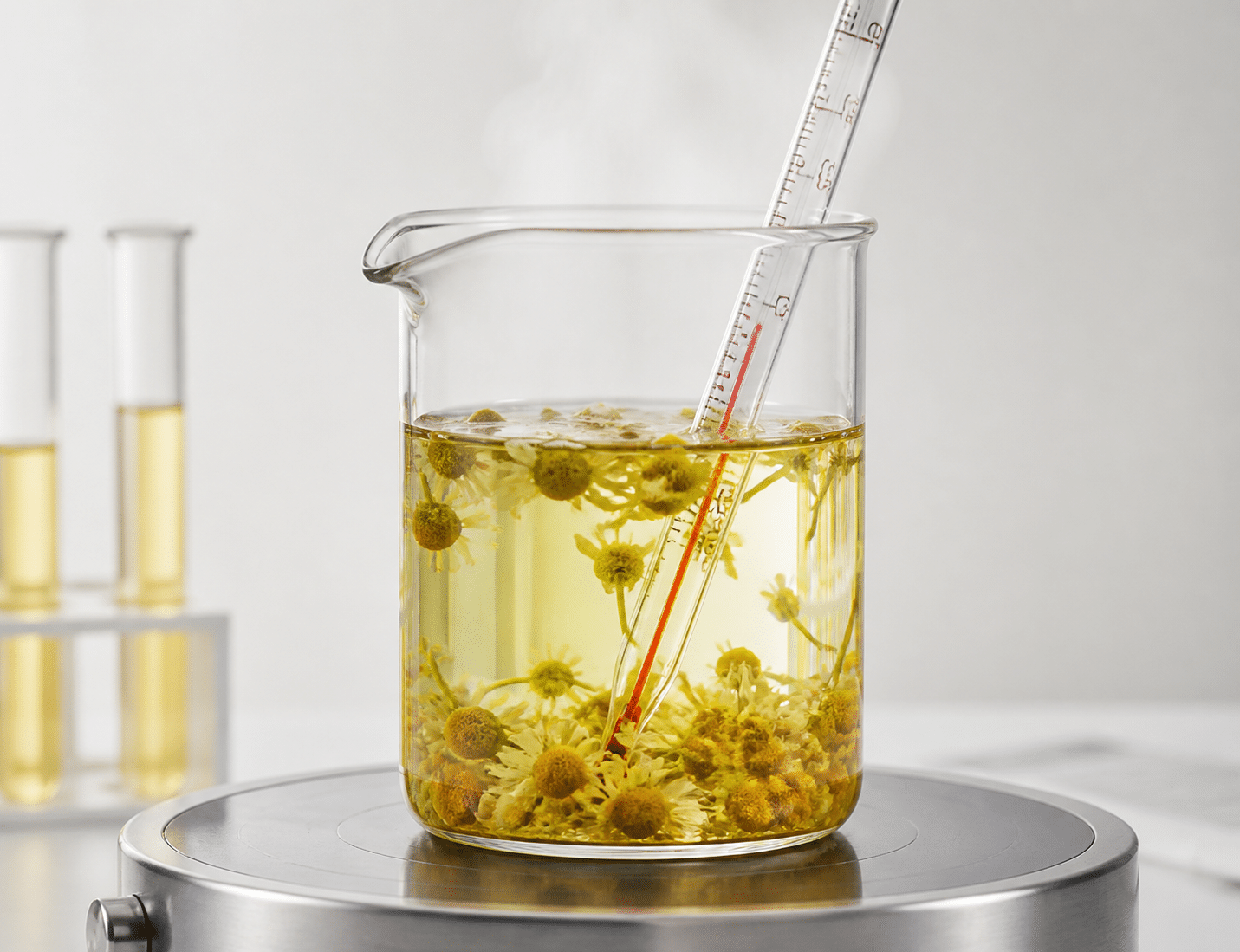
Here’s where a lot of promising products fall apart. Not at the idea stage. At the bench. A cloudy batch, a funny smell by week three, a pH that drifts overnight. Let’s build yours so none of that happens.
The Base Recipe: Hot Water Infusion
First, a small correction to the “just boil it” advice you’ll see in every DIY post on how to make chamomile tea for hair. Boiling isn’t your friend here. Recent extraction research found that apigenin and luteolin peaked around 40°C and dropped off at higher temperatures, including 60 to 100°C. Another study put the sweet spot for extraction time at about 30 minutes. Hard boiling also pulls out more tannins, color and odor you probably don’t want.
So here’s a starting point. It’s a development recipe, not gospel, and you should verify it with your own flowers.
| Step | What to do | Target |
|---|---|---|
| 1. Weigh | Dried German chamomile flowers, authenticated | 1 to 3% of batch weight (2 kg flowers per 98 kg water at 2%) |
| 2. Heat water | Clean, purified water | 45°C |
| 3. Infuse | Covered vessel, slow stirring | 30 minutes |
| 4. Filter | Strain right away, then fine filter | No plant bits left |
| 5. Cool | Bring down to room temperature before adding anything else | About 25°C |
| 6. Preserve | Add your preservative system | See below |
| 7. Test pH | Adjust, wait, retest | 4.5 to 5.5 |
If you’re going to claim anything about apigenin content, test it with a proper lab assay. Don’t guess.
Preservation: The Part You Can’t Skip
Water plus plant material is basically a snack bar for microbes. Weird, right? “Natural” doesn’t protect itself.
For a clean beauty angle, you’ve got a few options:
- Potassium sorbate: usually used around 0.2 to 0.6%. Water-soluble and cheap, but stronger against yeast and mold than bacteria.
- Sodium benzoate: often about 0.05 to 0.3%. Works best in acidic formulas, and it’s commonly paired with potassium sorbate.
- Leucidal Liquid: a popular radish-ferment option for natural lines. Ask your supplier for the exact use rate and pH range, since I won’t guess at it.
Supplier ranges like these are listed in this preservative reference. Treat them as a starting line. A preservative challenge test on your actual formula is what proves it works. Pick the preservative first, and let its working pH guide your next step.
Balancing pH for Healthy Hair
Hair and scalp like mildly acidic products, and 4.5 to 5.5 is the range most formulators aim for. It helps the cuticle lie flat, which means smoother, shinier strands. Plus, it’s where sorbate and benzoate do their best work. Happy coincidence.
Here’s how to test and adjust:
- Calibrate your pH meter with fresh buffer solutions.
- Measure the cooled chamomile water with preservative already mixed in.
- If it’s too high, add a diluted citric acid solution (around 20 to 30%) a few drops at a time, as this formulation guide suggests.
- Stir, wait, and remeasure. Then check again after 24 to 48 hours, because botanical liquids like to drift.
If you overshoot and need to raise it, use a very dilute base. Never pour in concentrated stuff.
Once your base holds steady, you can start building more interesting products on top of it.
Get a quote from Aroma Monk.
Essential Oil Supplier – Bulk pricing • Samples • Fast response
Section 4: Advanced Applications: Elevating Your Hair Care Line with Chamomile
A simple rinse is a fine first launch. But your base is stable now, so why stop there?
This is where chamomile water starts earning its keep. One batch can feed a mist, a scalp treatment and a pre-wash product. Here are three concepts to hand your formulators, plus a few pairings and a few warnings I wish someone had given me earlier.
Three Formulation Inspiration Boxes
Think of these as starting sketches, not finished formulas. Percentages need your own stability, safety and preservative testing.
Concept 1: Silk Shine Leave-In Mist
Key ingredients: chamomile water, rose water, hydrolyzed silk protein, glycerin, panthenol
Primary benefit: soft, shiny, lightly conditioned hair with a gentle golden look on light shades
Concept 2: Soothing Scalp Elixir
Key ingredients: chamomile water, niacinamide, panthenol, calendula extract, propanediol
Primary benefit: a calmer, more comfortable feeling scalp
Concept 3: Clarifying Pre-Shampoo Treatment
Key ingredients: chamomile water, aloe vera, green tea extract, a chelator such as sodium phytate, a little lactic acid
Primary benefit: a fresh, lighter feeling scalp before the wash
Niacinamide isn’t random in that elixir. Scalp serum coverage from SELF names it as a soothing, anti-inflammatory favorite in current products.
Pairings Worth Testing
Rose water adds hydration and a softer scent, and it keeps the formula plant-based. Aroma Monk supplies rose water alongside its essential oils, so one vendor can cover two ingredients.
Calendula is a classic calming partner. Hydrolyzed silk protein adds slip and shine. Green tea is another good match, and a 2025 review of hair-related botanicals lists it among the promising ones.
Here’s the catch, though. The evidence backs these ingredients one at a time, not as a proven combo. So don’t claim “synergy” unless you’ve tested it.
Proteins bring their own headaches. They feed microbes, and challenge testing guidance from Cosmeta is a good reminder to retest every time you add something rich. Watch for haze too, especially when silk meets polyphenol-heavy extracts like green tea.
Emulsions vs. Clear Aqueous Formulas
The two formula types behave differently, so plan for each.
For emulsions (conditioners and lotions):
- Chamomile water can replace part of the water phase.
- Heat is the enemy. Since our earlier extraction data showed apigenin dropping off above 40°C, add chamomile water in the cool-down phase, not the hot one.
- Check viscosity after 24 hours. Botanical liquids can thin things out.
For clear aqueous products (mists and toners):
- Chamomile water can be the main ingredient, often well over half the batch. Start there and adjust.
- Oils and fragrance need a solubilizer, or the mist turns cloudy.
- Use a chelator and an airless pump or dropper if you can. Fingers and open bottles invite contamination.
One rule for both: finish with pH, then recheck the preservative. Every new ingredient can nudge it.
Once your concepts hold up on the bench, the next question is whether they survive a bigger tank.
Section 5: Quality Control and Scaling for Commercial Success

A great 2 kg test batch proves very little about batch number 40. Chamomile is a plant. Plants change. So before you order a single tank, let’s build the checks that keep every bottle the same.
The QC Checks Every Batch Needs
Start with microbes, because water plus botanicals is an open invitation. The FDA points to widely accepted limits of 1,000 CFU per gram or mL for ordinary topical products, and 100 CFU for eye-area products or anything made for children under three. Harmful germs like E. coli, Staph aureus, Pseudomonas and Candida should be absent. Test for yeast and mold on their own too, since chamomile flowers can carry plenty.
Stability comes next. A common screen stores samples at 40°C for three to six months, with checks at set pull points while a control sits at room temperature. Look for separation, haze, scent drift and color change. Decide what counts as a failure before you open the first bottle. Otherwise you’ll talk yourself into “it’s fine.”
Then consistency. Keep a retained sample from your approved batch and compare every new one against it, side by side. Same color? Same smell? Same pH after 48 hours? Good.
| Check | What to record | When |
|---|---|---|
| pH | Reading at release and again after 24 to 48 hours | Every batch |
| Viscosity | Compare to reference batch | Every batch, then in stability |
| Aroma | Mild, herbal, no sour or musty notes | Every batch |
| Color | Visual match to reference, plus any haze or sediment | Every batch |
| Microbial | Total count, yeast and mold, named pathogens | Every batch |
| Preservative | Challenge test on formula changes | Any new ingredient, supplier or package |
This is the core of our QC Checklist for Aqueous Botanical Products, so print it for your lab.
From Bench to Bulk Tank
Scaling isn’t just multiplying numbers. A 500 L tank mixes, heats and cools differently than a beaker. Our recipe infuses at only 45°C, so a simple stainless vessel can work for pilot runs. But a jacketed tank gives you steady heating and controlled cooling, which matters when apigenin drops off above 40°C and long hold times invite microbes. I’d test one pilot batch at the bigger size first. Always.
Good Manufacturing Practices tie it all together. ISO 22716 is the usual standard, and it basically means written procedures, clean equipment, labeled lots and records you can trace.
Packaging deserves the same care. Plant solids can clog sprayers, and acidic botanical water can react with some materials. So test stability in the real bottle, not just glass lab jars. Airless pumps help keep fingers out, too.
Why Your Supplier Can Make or Break Scale
Here’s the quiet truth: most production delays start at receiving, not in the tank. A late shipment, a flower lot that smells off, or a missing report can freeze a whole run.
So look for a supplier who gives you a batch-specific CoA, matching lot numbers, clear botanical names and notice before any change. Consistent, well-documented chamomile means your own QC numbers stay steady. Aroma Monk, for example, backs its lab-tested products with traceable sourcing and bulk export experience, which is the kind of paper trail your buyers and auditors will ask for.
Once your process and supply line are locked, you’re ready for the last step.
Partnering for Purity: Your Next Step to a Successful Chamomile Hair Product
So where does that leave us? Chamomile water has real promise. It fits the clean beauty shift, it gives you a story shoppers can understand, and it works for rinses, mists and scalp products alike.
But the idea alone won’t carry a launch. Success comes from a few boring, careful things done well: a gentle infusion, a preservative system you’ve actually tested, a steady pH, and QC checks on every batch. And underneath all of it sits the raw material. If your flowers or oils change from lot to lot, everything else wobbles.
That’s why certified, pure and consistently supplied chamomile isn’t optional. It’s the base of a brand people trust. Skip the paperwork, and you’re guessing. Get it right, and your numbers stay steady from batch 1 to batch 40.
This is where Aroma Monk comes in. They supply lab-tested chamomile flowers and essential oils in bulk, with traceable sourcing, batch-specific documentation and export experience. Procurement managers and product developers can ask for samples, review the lab data, and test it all on their own bench before committing to a bigger order.
Ready to take the next step? Request Bulk Quote & Samples and tell them about your product type, target volume and market. Your future formula will thank you.
Get a quote from Aroma Monk.
Essential Oil Supplier – Bulk pricing • Samples • Fast response