
Tapping into the Spiritual Wellness Market with Authentic Sandalwood Water
People want a pause button, and they’re spending real money to find it. Cognitive Market Research puts the global spiritual and wellness products market at $5.84 billion in 2025, heading toward $11.22 billion by 2033. That’s an 8.5% yearly growth rate. (Broader estimates run far higher, since some firms count services and experiences too. I’m sticking with the product number because it’s the one that matters for ingredients.)
So what’s driving it? Shoppers don’t just want a nice scent anymore. They want a moment. A mist before meditation. A calming ritual at night. And they want the ingredients behind it to be real.
Why Buyers Care About What’s Inside
The numbers back this up. NielsenIQ’s 2025 Global State of Health & Wellness survey found that 70% of consumers say it’s important that health and wellness products are eco-friendly or ethically made. And 63% would pay more for them. Ethical sourcing isn’t a nice extra. It’s part of the sale.
Sandalwood water, also called sandalwood hydrosol or chandan jal in India, fits this moment well. It carries centuries of ritual meaning, and it’s gentle enough for a face mist, a pillow spray, or a bath.
The Sourcing Problem Nobody Warns You About
Here’s the catch. Genuine sandalwood water is hard to find. The market is full of lookalikes: plain water with fragrance added, diluted batches, or blends scented with synthetic sandalwood notes. They smell fine on day one. But they can’t deliver the authenticity your customers are paying for, and your brand takes the hit when they find out.
If you’re a procurement or product development manager, you’ve probably felt this already. Lab reports that don’t match samples. Vague labels. Suppliers who can’t say where the wood came from.
What This Guide Covers
This guide walks you through the whole picture. We’ll look at what true sandalwood water actually is, why it matters spiritually, and where the product opportunities are. Then we’ll get practical: how to source high-purity bulk sandalwood water, what to check on a lab report, and how to work it into finished products. Let’s start with the basics.
Beyond the Fragrance: Defining True Sandalwood Water (Hydrosol)
Pour some plain water into a spray bottle, add a few drops of fragrance, and call it sandalwood water. Easy, right? Sadly, plenty of sellers do just that.
Real sandalwood water is a different thing. Let’s break down what it is, how it’s made, and how you can tell the real stuff from the fakes.
How Real Sandalwood Water Is Made
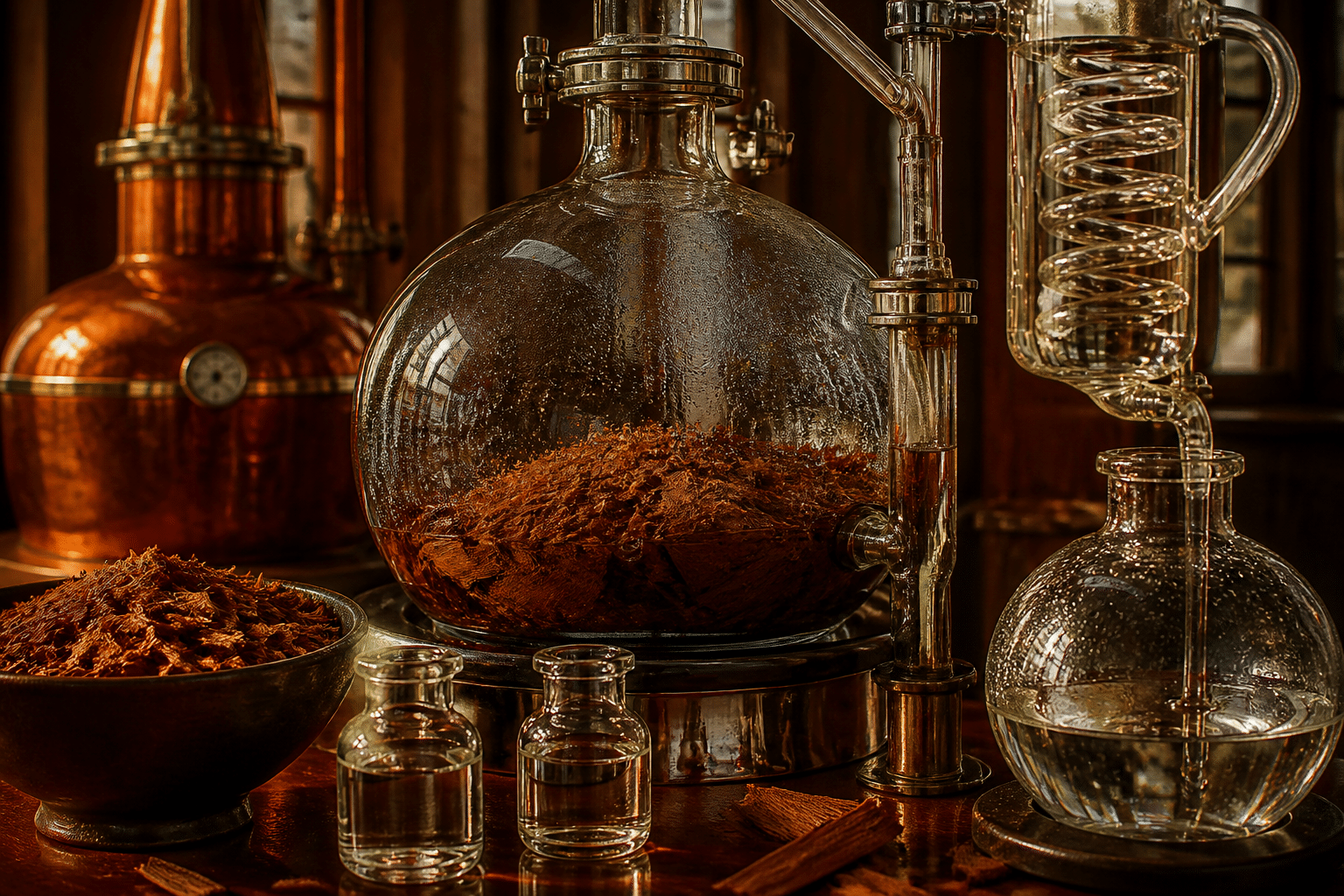
True sandalwood water starts with heartwood from Indian sandalwood (Santalum album). The wood is chipped or powdered, then steam distilled. Steam passes through the wood and carries off the volatile aroma compounds. When the steam cools, it turns back into liquid and separates into two layers: a small amount of essential oil, and a much larger amount of fragrant water.
That water is the hydrosol. Think of it as the plant’s own water, carrying a soft, gentle trace of the wood. It’s a co-product of making sandalwood oil, not a recipe someone mixed up afterward. Industry guidance such as ISO/TR 23199 describes these products as aqueous co-products of distillation, and it separates true hydrolates from “floral waters” made by simply heating plant material in water.
So the name on the label matters less than the process behind it. A bottle that says only “sandalwood floral water” isn’t proof of anything.
True Hydrosol vs. the Lookalikes
Here’s a quick side-by-side of what you’ll run into on the market.
| True hydrosol | Water + essential oil | Synthetic fragrance spray | |
|---|---|---|---|
| How it’s made | Steam distillation of S. album heartwood | Oil mixed into water, often with a solubilizer | Aroma chemicals blended into water |
| What’s inside | Water-soluble volatiles plus tiny oil droplets | Oil and water forced together | Lab-made scent molecules |
| Natural plant profile | Yes, though in small amounts | Only the oil’s profile | No |
| Typical risk | Dilution, old batches | Sold as a “hydrosol” when it isn’t | Strong scent, no real sandalwood |
And here’s the catch. A fake can smell great. Synthetic sandalwood notes are often loud and long-lasting, which is exactly why your nose can’t be your only test. Pure Oils India has a handy breakdown of hydrosols versus floral waters for bulk buyers if you want more detail.
Why a GC-MS Report Matters
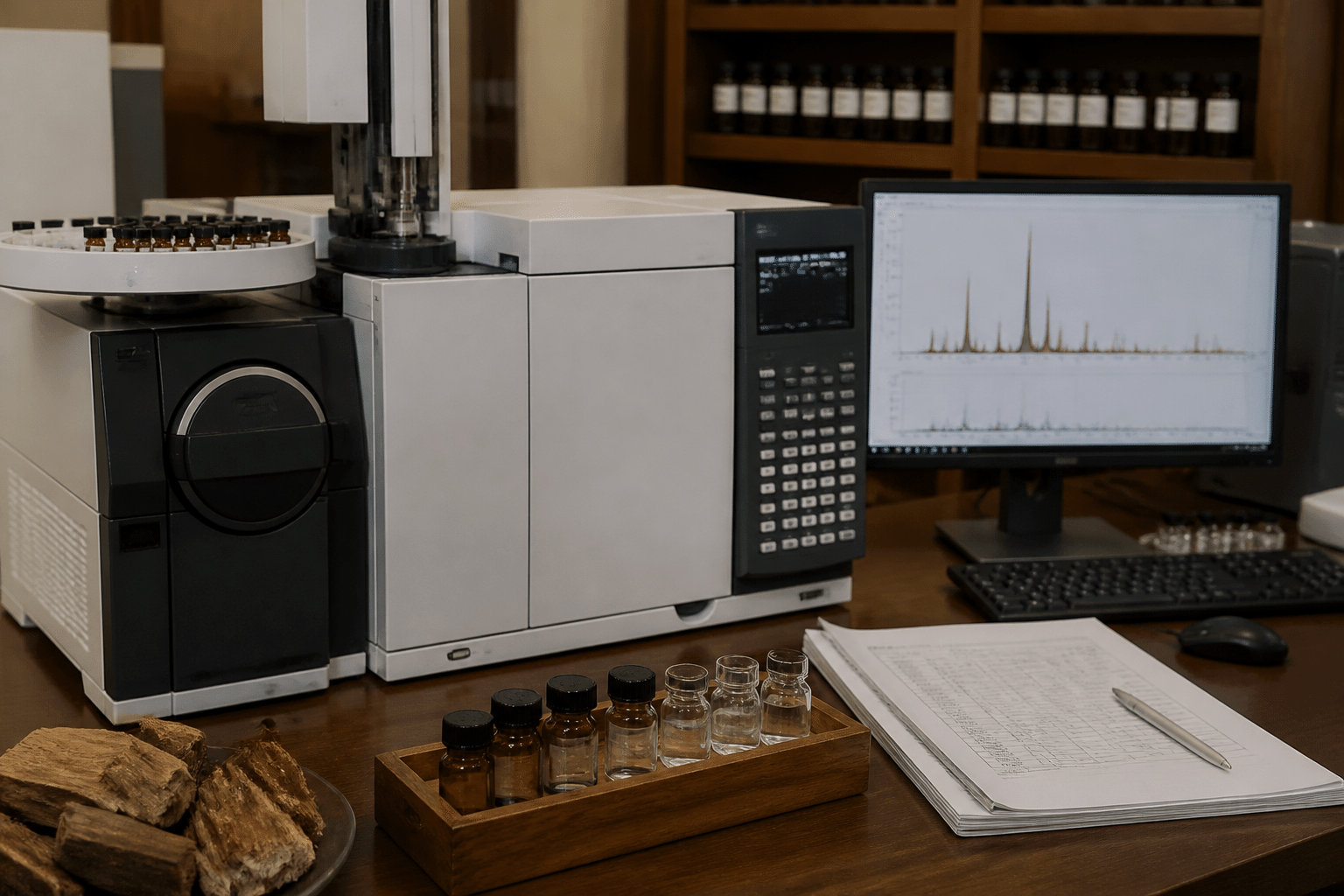
So how do you really know? You ask for a batch-specific GC-MS report. It lists the volatile compounds in the water and gives you a chemical fingerprint.
For Santalum album, you want to see alpha-santalol and beta-santalol, the signature sandalwood compounds. Related ones like santalenes and bergamotol often show up too. You also want the method, the individual concentrations, and any signs of unexpected synthetic odorants or extra solubilizers.
One warning, though. Hydrosols hold far less than essential oil, so don’t judge them against an oil spec. That “90% santalols” number you’ll hear is for oil, not water. And I haven’t found a universal marker range for sandalwood hydrosol, so compare each report against an authenticated reference batch.
This is the kind of paperwork good suppliers hand over without a fight. Aroma Monk, for example, promotes lab-tested, traceable products for this reason. Once you know what the real thing looks like on paper, the next question is why people have valued it for so long.
A Sacred Legacy: The Spiritual and Ritualistic Significance of Sandalwood

Sandalwood was sacred long before anyone put it in a spray bottle. Your customers may not know the history. But they feel it, and that’s part of why the scent sells.
Chandan in Hindu and Buddhist Practice
In India, sandalwood is called chandan (or candana in Sanskrit). Recent reviews of Santalum album point to the Atharva Veda as an early mention of sandalwood paste, linked with ceremony and medicine. I can’t hand you a hymn number, since the review doesn’t give one. So take it as a general pointer, not a verbatim quote.
Later Hindu ritual is easier to picture. Cooling sandalwood paste is rubbed on a stone, then used to make tilak, the mark on the forehead. It’s also used to anoint deities and prepare offerings. A 2025 review describes sandalwood in homa too, offerings placed into sacred fire, and notes its place in Hindu, Buddhist, and Jain ceremonies.
Buddhist texts mention it as well. A searchable collection of Buddhist sources finds sandalwood in the Jātaka tales, the Lotus Sutra, and the Mahā Buddhavaṃsa, including powdered sandalwood offered to the Buddha. Same wood, different traditions. Purification, devotion, and a calm mind.
Sandalwood water is the soft, liquid cousin of that paste. Gentle enough to mist, easy to carry, and still tied to the same story.
From Temple to Yoga Mat
So how does a temple ingredient end up in a studio? Easily, it turns out. People already use sandalwood to mark the start of a meditation, set up a yoga space, or wind down at night. Its warm, woody scent feels grounding, and a quick mist becomes a small signal to the body: slow down now.
What does the science say? Honestly, not as much as marketing might suggest. A 2021 PLOS ONE study, summarized by HerbalGram, tested a sandalwood and lavender blend on adolescents under exercise-induced stress, and the results leaned positive. But it was a blend, not sandalwood alone. And I couldn’t find a solid recent study showing sandalwood improves focus.
So keep your claims experiential. “Calming ritual” and “grounding scent” are safe. “Boosts concentration” isn’t.
A Scent With Global Roots
India isn’t the only place that loves sandalwood. It’s been a base note in perfumery for centuries, and it’s a long-time favorite in traditional attars, which are used widely in Muslim communities across South Asia and the Middle East. That cross-cultural appeal helps if you’re building a product line for more than one market.
| Setting | How sandalwood shows up |
|---|---|
| Hindu worship | Paste for tilak, anointing, offerings |
| Buddhist practice | Incense and powdered offerings |
| Yoga and meditation | Mists, incense, calming scent rituals |
| Traditional perfumery | Attars and base notes |
That’s the heritage. Next, let’s look at how brands are turning it into products people actually buy.
The Modern Ritual Market: Product Opportunities with Sandalwood Water
Get a quote from Aroma Monk.
Essential Oil Supplier – Bulk pricing • Samples • Fast response
So you’ve got real sandalwood water. Now what do you make with it?
Good news: it’s flexible. A bottle of true hydrosol can become a face mist, a pillow spray, or the water base of a calming lotion. And the market already likes these formats. Croda Beauty’s body care trend report says shoppers are layering scrubs, mists, and balms, and that sticks and sprays are growing because they’re easy to carry and fun to use.
Three Products Worth Building First
Hydrating facial mists for “spiritual skincare.” This is the obvious starting point. Sandalwood hydrosol has a soft, warm scent, and a quick spritz after cleansing feels like a tiny ceremony. Keep your claims about the experience, like “grounding” and “calming,” not about treating anything.
Aura and linen sprays. Think yoga mats, meditation corners, and pillows. These sprays sit in a sweet spot because people already use scent to mark the start of a practice. Plus, they’re easier to formulate than skincare, since they don’t need to meet the same skin-feel standards.
A base for calming serums and lotions. Swap some of the plain water in a lotion for sandalwood hydrosol, and you get a story and a scent in one step. (Preservation matters a lot here. We’ll cover that later.)
| Product Type | Target Audience | Key Selling Point | Complementary Ingredients | Potential Price Point |
|---|---|---|---|---|
| Facial mist | Skincare fans, yoga students | Calming pause in a daily routine | Aloe, rose hydrosol, glycerin | $18 to $32 (my estimate) |
| Aura or linen spray | Meditators, crystal healers | Marks the start of a ritual | Lavender, palo santo, frankincense | $15 to $28 |
| Calming serum or lotion | Mindful living shoppers | Heritage scent plus gentle care | Squalane, jojoba, oat extract | $30 to $55 |
| Roller or travel mist | Commuters, gift buyers | Portable, easy to try | Carrier oils, rose | $12 to $22 |
Those price points are rough guesses based on how premium wellness mists tend to sit. Test them with your own audience.
Who’s Actually Buying This
Picture someone who does yoga three mornings a week, keeps a few crystals on the nightstand, and reads ingredient lists in the store aisle. That’s your core shopper. They care about authenticity, and they’ll pay more to get it. Euromonitor data, reported by the Centre for the Promotion of Imports, found that 68% of European consumers choose beauty products that support both physical and mental well-being. That’s my read, not a direct quote, but it fits the pattern.
These buyers spot fakes fast. If your label says “sandalwood” and the scent smells like a candle shop, they’ll notice. And they’ll tell friends.
Building a Ritual Kit
Here’s where margins get fun. A single mist is nice. A kit is a gift.
Try bundling:
- A sandalwood water mist
- A small crystal, like rose quartz or clear quartz
- A few sticks of incense
- A short journal with prompts for evening reflection
- A card that tells the sandalwood story
The kit sells the routine, not just the liquid. Rituals Cosmetics built a whole brand around that idea, with giftable collections inspired by seasonal traditions. You can do a smaller, more focused version of it.
A few tips: keep the set to four or five items, use refillable packaging if you can, and print the origin on the box. Next up, how to find a supplier who can actually back that story.
The Procurement Manager’s Guide: Sourcing High-Purity Bulk Sandalwood Water
Picture this. A sample arrives, smells lovely, and the paperwork looks fine. Then the first full pallet shows up and it smells like a different product. We’ve all heard that story, and it’s why a bulk sandalwood water order needs more than a nice sniff test.
Here’s how to vet a supplier before money changes hands.
A Supplier Vetting Checklist
Start with three things: where the wood came from, how the water was made, and what the lab says. A good supplier answers all three without drama. A shaky one gets vague fast.
| What to check | What good looks like | Red flag |
|---|---|---|
| Raw material identity | Botanical name (Santalum album), plant part, country of origin on paper | Just “sandalwood” on the label |
| Production method | Steam distillation, collected as an oil co-product, with dates | “Floral water” with no process details |
| Batch-specific GC-MS report | Sent for every batch, no strings attached | “Available on request, for a fee” |
| Ingredient list | Full and clear, including any preservative or solubilizer | Missing or “proprietary” |
| Reference sample | Retained sample you can compare later | No samples kept |
The lab report point is the big one. If a supplier hesitates to share batch data, that tells you plenty. Aroma Monk, for instance, builds its offer around lab-tested, traceable products for this reason.
What Certifications Really Tell You
Certifications are useful, but only if you know what each one covers.
Let’s start with CITES, because it trips people up. As of 2026, Santalum album is not listed in the CITES Appendices, so real Indian sandalwood hydrosol doesn’t normally need a CITES permit. But red sandalwood (Pterocarpus santalinus) is listed, and a sloppy label could blur the two. India’s own export rules can also apply. So don’t ask “Do you have CITES paperwork?” Ask for a botanical identity statement and origin records instead. If you’re importing into the US, check the USDA’s CITES guidance for your exact situation.
For quality, look for:
- ISO certification, such as a quality management system, which shows processes are documented.
- GMP, which covers clean, controlled manufacturing.
- Organic certification, if your brand makes organic claims. NSF reports that 74% of U.S. consumers call organic ingredients important in personal care.
Always ask for the certificate itself, with a current date and the exact product scope. A logo on a website proves nothing.
Questions to Ask Before You Sign
Paperwork shows the past. These questions show how a supplier behaves when things get busy. We’ve packed them into a downloadable PDF called 10 Questions to Ask Your Bulk Sandalwood Hydrosol Supplier, but here’s the short version:
- Can you name the botanical species and origin for every batch?
- Do you send a GC-MS report with each shipment, free of charge?
- Is the hydrosol a true distillation co-product, or is it compounded?
- What preservative system do you use, and at what pH?
- How steady is your wood supply across the year?
- What’s the lead time for an international order, and what happens if it slips?
- Can you scale from a pilot batch to full production volumes?
- Do you keep retained samples for each batch?
- Will you tell me before you change anything in the process?
- Can you do custom blends or white-label packaging?
Pay attention to how fast and how plainly they answer. Honestly, a short, specific reply beats a glossy brochure every time.
Once you’ve found a partner you trust, the next job is getting that water to behave inside your formula.
Formulation & Application Insights for Product Developers
You’ve got a good supplier and a good story. Now the water has to behave in the bottle. This is where plenty of promising launches wobble, so let’s keep it practical.
How Much Sandalwood Water Goes In?
There’s no official dosage chart for sandalwood hydrosol, so treat these as starting points for your own bench trials, not tested specs.
| Product type | Starting amount | Notes |
|---|---|---|
| Toner or facial mist | 50 to 100% of the formula (to 100%) | Add humectants like glycerin or sodium PCA at low single digits |
| Pillow, aura or linen spray | 80 to 95% | Scent is the point, so skin feel matters less |
| Lotion or cream | 10 to 30% of total formula | Replaces part of the plain water phase |
The scent of a hydrosol is soft. In a cream, it can fade fast. So if you want it noticed, add a small, properly solubilized aroma accent and check it after a few weeks on the shelf.
Keeping It Stable Without Harsh Chemicals
Here’s the honest truth. “Preservative-free” water products are a gamble. Water plus botanicals is a happy home for microbes, and refrigeration alone won’t save you.
Start with pH. Supplier specs for pure sandalwood hydrosol, like Aurvanah Botanicals’ listing, sit around pH 5.0 to 6.0. Measure every batch, because it drifts. Adjust only after everything’s mixed in, then recheck.
For preservation, a few natural-leaning options work:
- Radish root ferment (Leucidal) at roughly 2 to 4%. It’s fine as one piece of a system, but weaker against yeast and mould, as this ingredient overview hints.
- Cosmos-approved blends like Geogard, usually more dependable on their own.
- Sodium benzoate with potassium sorbate, which only works around pH 4 to 5.5. A simple mist recipe uses this pair and tells you to check pH after mixing.
Whatever you pick, run ISO 11930 challenge testing on the finished product. Use amber or opaque bottles, and keep your filling area clean. Boring? Yes. Worth it? Absolutely.
Blending for Intention
This is the fun part. Sandalwood water plays nicely with others, and pairing it with a second scent lets you name a mood on the label. Keep claims experiential, like “grounding” or “calming.”
Sandalwood Water Aroma Pairing Guide
| Intention | Pair with | Starting ratio | Feels like |
|---|---|---|---|
| Grounding | Vetiver essential oil | 1 drop per 100 ml of sandalwood water | Earthy, deep, slow |
| Clarity | Frankincense hydrosol | 60% sandalwood, 40% frankincense | Clean, resinous, quiet |
| Devotion | Rose hydrosol | 60% sandalwood, 40% rose | Warm, soft, heartfelt |
| Calming | Lavender essential oil | 2 drops per 100 ml of sandalwood water | Gentle, familiar, sleepy |
These are my starting ratios, so adjust by nose. Essential oils won’t mix into water on their own. Use a skin-safe solubilizer, and keep the total scent level low.
Aroma Monk offers essential oils and rose water, plus custom blends, which makes testing these pairings simpler. Once your formula holds up, the last step is tying the whole story together.
Conclusion: Unlock Commercial and Spiritual Value with Authentic Sandalwood Water
Here’s the short version. Shoppers want a pause in their day, and they want proof that what’s in the bottle is real. Those two wants are meeting in the middle, and that’s a big opening for brands that get it right.
The market is heading the same way. Natural cosmetic ingredients were valued at $10.6 billion in 2025, and Grand View Research expects them to reach $21.7 billion by 2033. Plus, Akeneo’s research, reported by Retail Tech Innovation Hub, found that 72% of consumers say strong supply chain transparency at least moderately raises their trust in a brand. (Forecasts differ by report, so treat them as direction, not promises.)
So where does that leave you? Success comes down to one thing. Sourcing pure, ethically made sandalwood water from a bulk partner who gets quality and keeps the supply steady. A pretty story can’t cover for a weak batch.
Your 3 Step Action Plan
- Find your niche. Pick one lane first, like facial mists, aura sprays, or a ritual kit. Know who you’re making it for.
- Vet your suppliers. Use the checklist from earlier. Ask for the botanical name, the origin, and a batch-specific GC-MS report every time.
- Tell the true story. Celebrate the heritage, print the origin, and keep your claims about the experience, like calming and grounding.
That’s it. Not simple, exactly, but clear.
If you’re ready to see what traceable, lab-tested sourcing looks like, explore Aroma Monk’s bulk natural aroma ingredients and start your next ritual product on solid ground.
Get a quote from Aroma Monk.
Essential Oil Supplier – Bulk pricing • Samples • Fast response