
Introduction: The Story Behind the Scent, Why Ancient Ingredients Resonate in 2026
Think about the last time you picked up a face mist and flipped the bottle over. You probably read the label. You’re not alone. A 2025 Cosmetics Design report found that 71% of beauty shoppers always check ingredient labels, and its source called ingredient transparency “the new storytelling frontier.”
So shoppers are reading. And they’re asking questions. Who grew this? How was it made? Why does it matter to anyone’s culture?
Here’s the catch for B2B brands. Shelves are packed. Rose, aloe and green tea mists all start to sound the same after a while. A “natural” badge doesn’t set you apart anymore (honestly, it hasn’t for years). Thing is, 74% of Americans say natural ingredients matter in personal care, so everybody is making the same promise.
That’s where sandalwood water comes in. It’s not just a soft, woody-smelling liquid. It carries centuries of temple rituals, cooling home remedies and careful craft. Used well, it’s a narrative your customers can feel and actually verify.
But a story only works if the product behind it is real. I’ll admit, plenty of heritage language out there is just decoration.
So here’s where we’re headed. We’ll look at what true sandalwood water is, then follow its spiritual roots and its place in Ayurveda. After that, we’ll turn all that heritage into a product line, and talk about sourcing it with integrity. Let’s start with the basics.
1. Defining Authenticity: What is True Sandalwood Water (Hydrosol)?
Quick confession. I used to think sandalwood water was just sandalwood oil stirred into a bottle of water. Nope. That shortcut is exactly what a true hydrosol is not.
How a Real Hydrosol Is Made
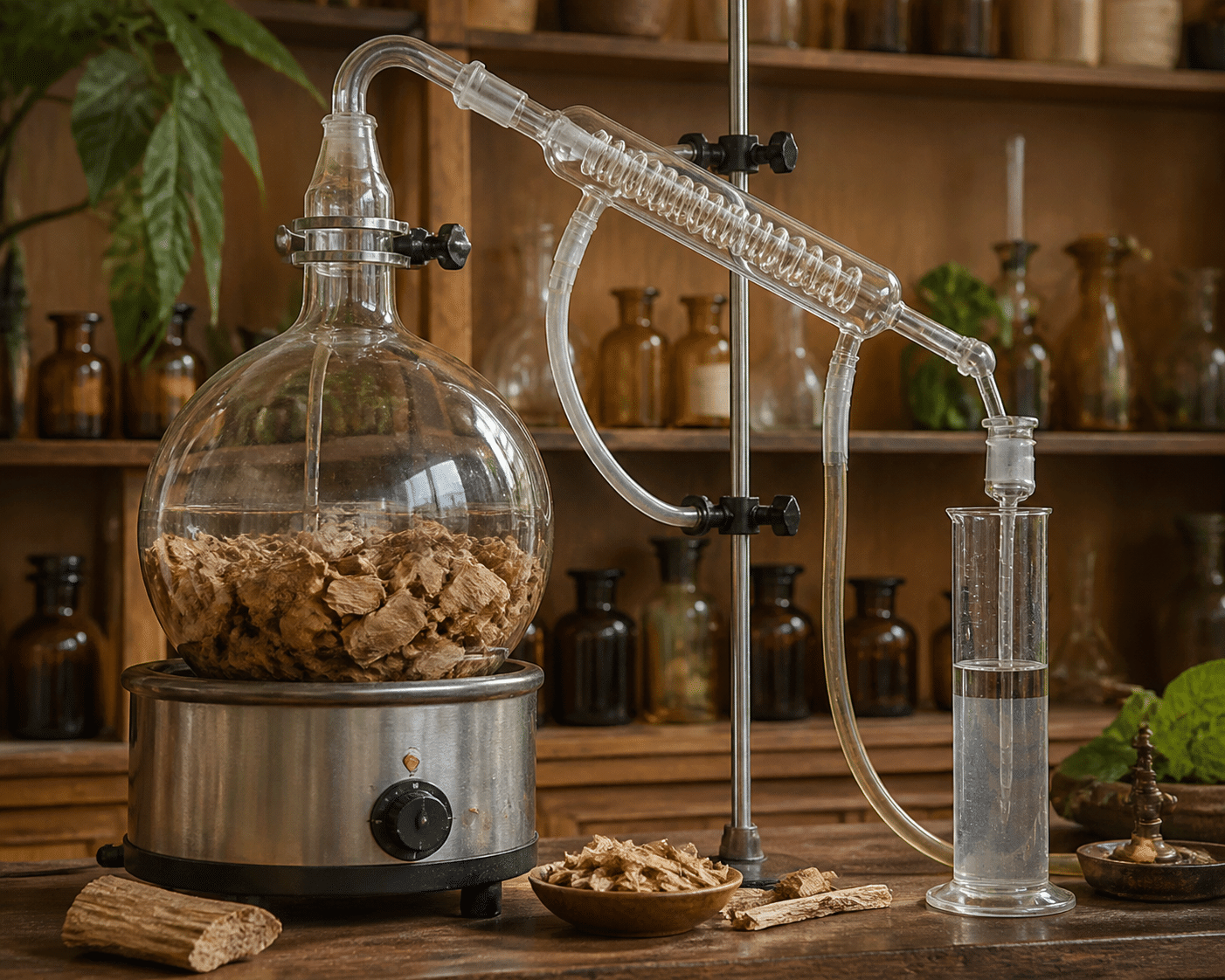
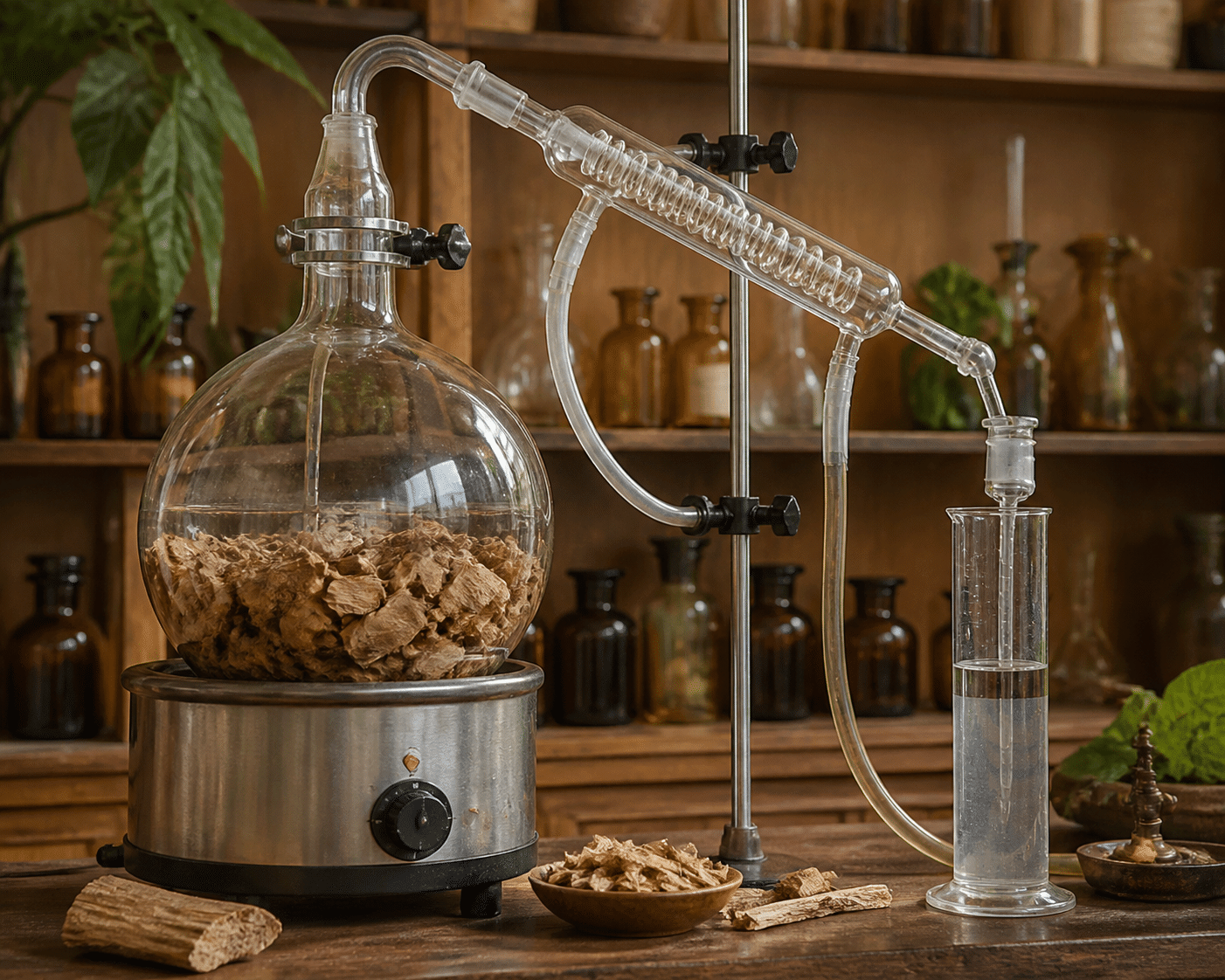
Sandalwood hydrosol (also called sandalwood distillate, or Santalum album water) comes from steam distillation. Steam passes through sandalwood heartwood and picks up aromatic compounds. Then it hits a cooled condenser and turns back into liquid. Iowa State’s distillation procedure shows how that liquid lands in a receiver, where the oil layer separates from the water underneath. That water is the hydrosol.
The Science Learning Hub sums it up in five words: heat, evaporate, cool, condense, collect.
Here’s why it matters. A hydrosol holds a tiny amount of oil plus water-soluble aromatic compounds. Oil and water don’t mix, so a bottle of “sandalwood water” made by adding oil or fragrance is just scented water. The real thing smells soft, mild, woody and a little sweet. It shouldn’t punch like neat sandalwood oil.
Quality Markers Procurement Managers Should Check
There’s no ISO standard written just for sandalwood hydrosol. I looked. So buyers need to stack up several checks. Scent and pH alone prove nothing, since both can be adjusted after production. One supplier’s published spec lists a pH of 5.0 to 6.0, which is a handy reference, but it’s a supplier number, not a rule.
| Test | Standard | Why It Matters |
|---|---|---|
| Botanical ID and origin | Santalum album heartwood, named country, legal source papers | Cheaper species and mislabeled wood are common substitutes |
| Additive disclosure | Written list of preservatives, solubilizers, alcohol and fragrance | “Pure” claims fall apart if something was added |
| GC-MS report | Batch-specific, with santalol profile checked | Shows what’s really in the bottle, not just a generic spec sheet |
| Microbial testing | Aerobic count, yeast and mold, preservative challenge test where relevant | Water-based products can grow bacteria fast |
| pH and appearance | Roughly 5.0 to 6.0, clear to slightly milky, colorless to pale yellow | Cloudiness or sediment is a red flag |
| Batch traceability | Lot number, production date, certificate of analysis | You need a paper trail if anything goes wrong |
Aroma Monk, for example, promotes lab-tested, traceable products across its range. That’s the bar worth asking any supplier to meet.
True Hydrosol vs. Imposters
So what actually separates the real thing from a lookalike?
| Feature | True Sandalwood Hydrosol | Imposter |
|---|---|---|
| Made by | Steam distillation of heartwood | Water plus fragrance, diluted oil or another botanical water |
| Scent | Soft, warm, restrained | Loud, flat or oddly sweet |
| Ingredient list | Short and fully declared | Vague, with “parfum” doing the heavy lifting |
| Proof | Batch GC-MS and microbial data | A generic spec sheet, if anything |
Now the benefits. Sandalwood has a long traditional link to cooling and calming. A 2025 lab study found antioxidant and antimicrobial potential in Santalum album extracts. But it was in-vitro, not on people. I couldn’t find a strong human trial showing sandalwood water treats inflammation or anxiety, so keep your wording careful.
The risks of a fake are easier to spot. Poor preservation invites microbial growth. Undeclared fragrance can irritate skin. And a product that only smells right gives customers nothing real.
Once you know what’s in the bottle, the story behind it gets a lot more interesting.
2. Sacred Roots: The Spiritual and Ceremonial Significance of Sandalwood

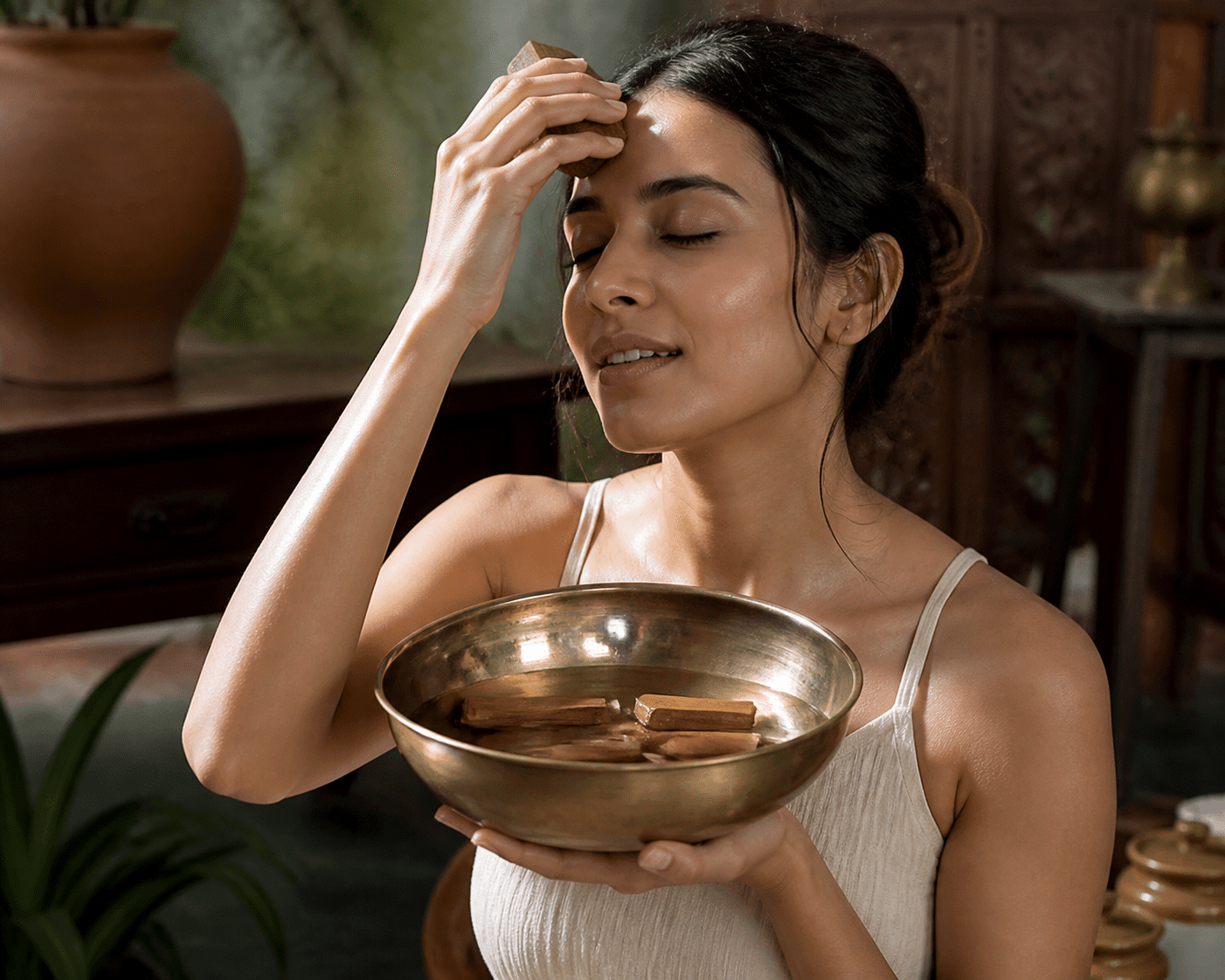
Picture a temple courtyard early in the morning. Someone rubs a piece of sandalwood heartwood against a flat stone with a few drops of water. Slowly, a cool, pale paste appears. That’s chandanam, and it’s been made this way for a very long time.
More Than a Perfume
In Hindu worship, that paste isn’t decoration. It gets pressed onto the forehead as a tilak, placed on images of deities during puja, and offered with flowers, incense and lamps. Afterward it’s often shared as prasada. People see it as an offering first and a fragrance second.
Buddhism holds it close too. Sandalwood shows up in the Pali Canon in stories about fragrant pastes, perfumes and anointing. It’s also tied to funeral customs in Hindu tradition, where fragrant wood is linked to honoring the departed and guiding the soul onward. Practices differ by family, region and temple, so I won’t pretend there’s one rule.
Here’s a tip for brand teams. Visitors shouldn’t touch an image, apply paste or collect materials in a temple without permission. If your packaging or ads borrow this imagery, treat it with the same respect.
A Scent for Stillness
Sandalwood has a calm reputation, and it’s earned over centuries. One traditional Sanskrit maxim, quoted in a cultural discussion of sandalwood, says: “When rubbed repeatedly sandal continues to diffuse its fragrance.” People use it as a metaphor for staying graceful under pressure. (I love that, honestly.)
That’s why you see sandalwood near meditation cushions and prayer beads. The quiet, woody scent has long been linked to focus and a sense of connection.
Now, a careful note. I couldn’t find a strong human trial showing sandalwood water lowers anxiety. So say “traditionally associated with calm,” not “reduces stress.” The story is strong enough without a medical promise.
And the market is paying attention. Grand View Research valued spiritual wellness apps at $2.5 billion in 2025 and expects $2.8 billion in 2026. It’s apps, not beauty. But it shows people want mindful moments, and a face mist can be one of them.
A Wood Fit for Kings
Sandalwood was never ordinary. It grows slowly, and the best heartwood takes decades to mature. So it became a prized trade good tied to temples, courts and healers. The South China Morning Post’s long read on sandalwood’s history, medicinal uses and Buddhist ties is a good starting point if you want the full journey.
Scholar James McHugh calls it one of South Asia’s most important religious aromatics. His study, Sandalwood and Carrion, shows how smell shaped Hindu, Buddhist and Jain life.
| Role | What It Meant |
|---|---|
| Temple offering | Purity, reverence, cooling |
| Forehead mark | Devotion, identity |
| Funeral custom | Honor, passage of the soul |
| Royal and trade good | Status, rarity |
So what’s the takeaway for your brand? Sandalwood water brings real spiritual weight to the shelf. Carry it with care, and let documented sourcing back up the story.
Next, we’ll look at how the same wood moved from temple to treatment room in Ayurveda.
3. A Legacy of Healing: Sandalwood Water in Ayurvedic and Traditional Medicine
Get a quote from Aroma Monk.
Essential Oil Supplier – Bulk pricing • Samples • Fast response
Ever put a cold cloth on a sweaty forehead and felt your whole body exhale? That’s roughly what Ayurveda says sandalwood does. Same idea, just older. Much older.
Chandana and the Cooling Tradition
In Ayurveda, sandalwood is called Chandana. It’s known as a cooling herb, and that matters because of pitta. Pitta is the “fire” energy in the body, tied to heat, redness and irritation. When pitta runs hot, you might see flushed skin, rashes or that burning, prickly feeling after too much sun.
Sandalwood is the classic fix. Ayurvedic references on sandalwood describe Chandana lepa, a fresh paste ground on a stone with water or rose water. It’s applied to skin for heat, irritation, rashes and headache. There’s also Chandana hima, a cold infusion made by soaking sandalwood powder in water. One modern preparation guide suggests about 3 to 5 grams in 200 ml of water, soaked for 6 to 8 hours, then strained.
Here’s the part brand teams should notice. Classical texts don’t really mention a bottled “sandalwood water.” Today’s version is best seen as a modern cousin of that cold infusion. So don’t call your mist a classical recipe unless it truly is one.
A Calming Tonic for the Mind
The cooling idea doesn’t stop at skin. Ayurveda also treats sandalwood as a gentle tonic for a “hot,” overworked mind. Traditional uses include easing tension headaches, quieting restless thoughts and settling the body before bed. Forehead and temple pastes were the usual method.
That’s exactly why sandalwood fits so well with modern “anti-stress” and wind-down product ideas. A mist spritzed at night feels like a small ritual. And rituals sell.
But (and I’ll be blunt here) tradition isn’t proof. I couldn’t find a reliable human study showing sandalwood water improves sleep or lowers anxiety. So “traditionally used to calm the mind” is fine. “Cures insomnia” isn’t.
“Light, unctuous, not dry, smearing oil like ghee, of pleasant smell, suitable for the skin, mild, not fading, tolerant of warmth, absorbs great heat, and pleasant to touch: these are the qualities of sandalwood.”
A classical Ayurvedic description of sandalwood, as quoted in James McHugh’s research
Does Modern Science Back It Up?
Sort of. And that’s useful for product developers. Sandalwood heartwood holds compounds like santalols, plus phenolics and terpenoids. Lab work, like the 2025 study I mentioned earlier, links them to antioxidant and antimicrobial activity. That lines up nicely with the old uses for irritated, hot skin. The calming side is thinner. Fragrance and traditional use point that way, but human data is missing.
| Traditional Ayurvedic Use | What Tradition Says | Modern Science Status |
|---|---|---|
| Cooling heat and burning feelings | Pacifies pitta, used as paste or cold infusion | Plausible, but no strong human trial found |
| Rashes and skin irritation | Applied as lepa to calm redness | Lab studies show antioxidant and antimicrobial potential |
| Tension headache | Cool paste on forehead and temples | Traditional use only |
| Calming the mind, restful sleep | Nervine tonic, used before rest | No reliable human evidence found |
The market sees the pull. One report put Ayurvedic cosmetic products at $1.83 billion in 2025, heading toward $3.12 billion by 2029. Demand is real. Just keep your wording careful, and let the heritage do the talking.
Next, let’s turn all of this into an actual product line.
4. From Ritual to Retail: Translating Cultural Value into Your Product Line
You’ve got the history. You’ve got the hydrosol basics. Now comes the part your finance team cares about: what do you actually put on the shelf?
Here’s my take. Sandalwood water works best when the product gives people a small ritual, not just a pretty bottle. Let’s look at four ideas.
Four Product Ideas Worth Sketching
Each idea below uses sandalwood hydrosol for what it does well: a soft, woody scent and a light, watery feel. Nothing here needs a medical promise.
| Product Type | Key Benefit | Marketing Story Angle |
|---|---|---|
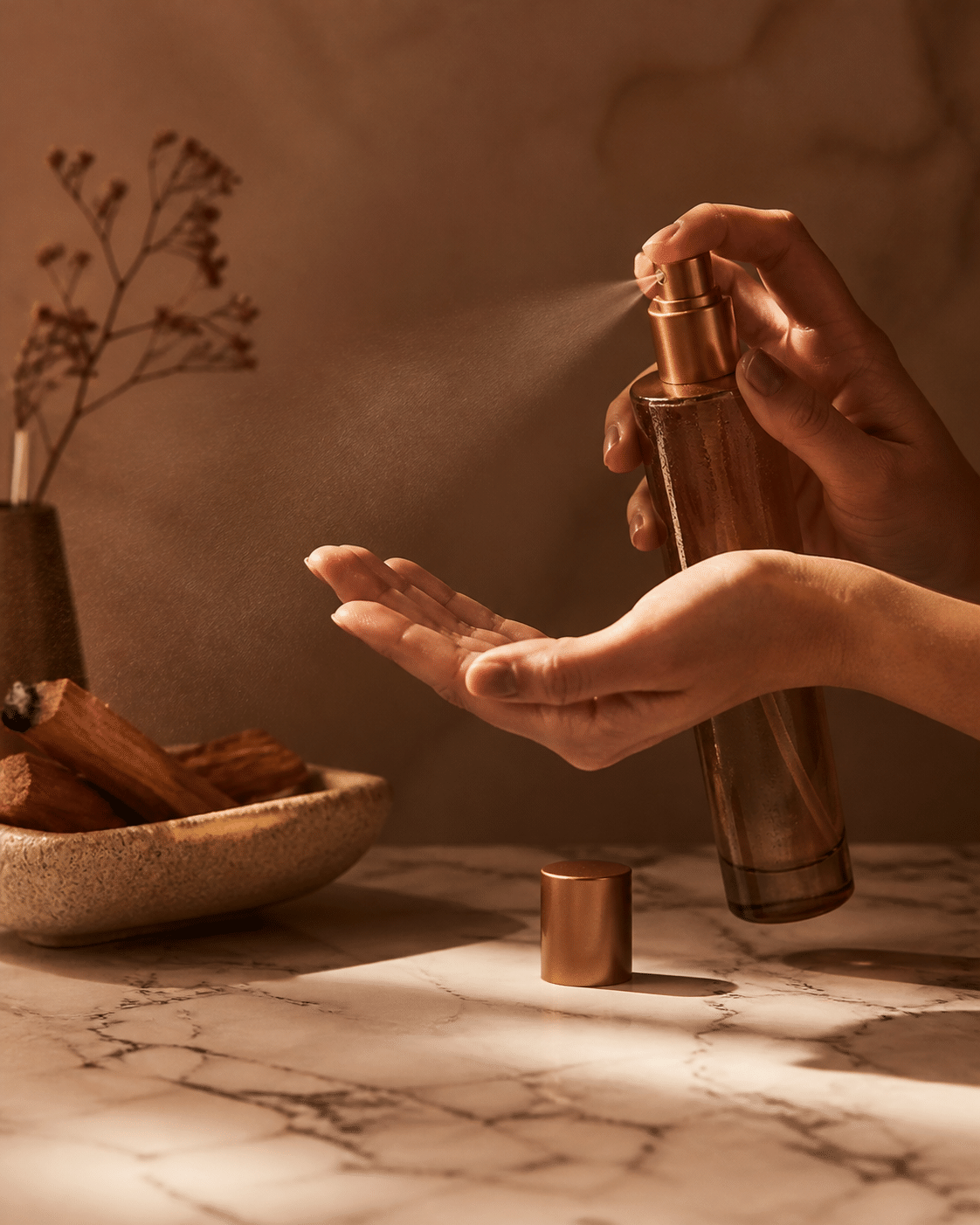
| Meditation mist | Soft, woody aroma for a pause in the day | Sandalwood near meditation cushions and prayer beads, a scent linked to stillness for centuries |
| Post-shave toner | Refreshing, comfortable feel after shaving | The cooling tradition of chandana, a cold infusion for skin that feels warm |
| Calming facial essence for sensitive skin | Light hydration, fragrance-light and gentle in feel | A modern cousin of the cold infusion, made simple |
| Aqueous phase in a luxury cream | Replaces plain water with something that has a story | “Made with sandalwood hydrosol” on the front, batch details on the back |
A quick formulation note, because it trips people up. Hydrosols are water-based, so they need a proper preservation system and real challenge testing. Technical guidance on floral waters and hydrolats points out how easily they can pick up bacteria and fungi. Distilled doesn’t mean self-preserving.
Words That Tell the Story (Without Overpromising)
Good copy borrows the heritage and leaves out the cure-all language. A few lines to try:
- “A Ritual of Calm in Every Bottle”
- “Sustainably Sourced, Spiritually Significant”
- “Harnessing Ancient Ayurvedic Wisdom”
That last one is tricky. I’d soften it to “Inspired by Ayurvedic tradition,” since a bottled mist isn’t a classical recipe (we covered that earlier). And please skip “treats,” “heals” and “reduces anxiety.” Under EU cosmetics rules, claims have to be truthful and backed by evidence. Sensory words are safer: “warm,” “woody,” “refreshing,” “soft.”
Why Luxury Shoppers Respond
The modern luxury buyer wants more than a result. She wants to know what she’s holding. Authenticity, mindfulness and a feeling of connection all play a part.
But feelings alone won’t hold a customer. A May 2025 analysis from The Interline argues that provenance you can verify is becoming a driver of repeat purchases, especially with Gen Z. So the story pulls them in, and the proof keeps them. Name the region. Share the lab report. Explain the distillation. That’s where trust gets built.
Aroma Monk, for example, highlights lab testing and traceability across its range. Whatever supplier you use, you want that same kind of paper trail to point to.
A Brand That Does It Well
Take Forest Essentials, the Indian luxury brand. It doesn’t sell “sandalwood” as a loose ingredient. It sells the ritual around it. Its Soundarya Ubtan nods to the old South Asian ubtan tradition, which was historically made with turmeric, sandalwood, gram flour and milk. Cosmopolitan India’s look at old-school Indian beauty covers how brands like this, and Kama Ayurveda, present familiar practices in modern formats.
What can you borrow? Three things:
- Sell the ritual, not just the botanical.
- Use a clear sensory signature (scent, texture, packaging).
- Keep the language calm and restrained.
That last point matters most. Luxury whispers, it doesn’t shout.
Of course, none of this works if the water in your bottle isn’t what it says it is. So next, let’s talk about where to find the real thing.
5. Sourcing with Integrity: How to Procure Authentic, Sustainable Sandalwood Water
Here’s an uncomfortable truth. Sandalwood is slow. A tree takes decades to mature, and for a long time people cut it faster than it could grow back. That’s why India clamped down hard on harvesting and trade.
So if your brand sells a heritage story, your sourcing has to be clean. Otherwise the story falls apart the first time someone asks a hard question.
Why Sustainability Is Part of the Story
Indian sandalwood has been heavily controlled for years because of illegal harvesting and overexploitation. Today the rules are tighter, and they still shift. Commercial export of raw timber and unprocessed logs is prohibited. Sandalwood oil sits under a “restricted” category that needs an export licence. Meanwhile, states like Karnataka and Maharashtra have loosened cultivation and sale rules for private growers, as Down To Earth’s report on sandalwood’s comeback explains.
In plain terms, you want wood from a licensed plantation, an authorized government auction or another legal source. Not a mystery sack.
The CITES question is messier. I found sources that flatly disagree on whether Santalum album is listed. I’m not going to guess. Check the official CITES Species+ database and get written confirmation from India’s Management Authority before anything ships.
Also, don’t take “hydrosol is exempt” on faith. Ask for a written tariff classification, since water isn’t treated exactly like wood or oil.
The Supplier Vetting Checklist
Think of this as a quick filter for procurement and supply chain teams. A supplier who can’t answer these in writing probably isn’t ready for your volumes.
| Ask For | What Good Looks Like | Red Flag |
|---|---|---|
| Species and plant part | Verified Santalum album heartwood, stated clearly | “Sandalwood” with no species or part named |
| Legal origin papers | Plantation or auction records, transport documents | “Trust us, it’s legal” |
| Certificate of Analysis | Batch-specific, with lot number and production date | A generic spec sheet |
| GC-MS report | Santalol profile checked per batch | No analytical data at all |
| Microbial testing | Aerobic count, yeast and mold, challenge test if needed | “Natural, so it’s safe” |
| Additive disclosure | Full list of preservatives, alcohol, solubilizers, fragrance | Vague “parfum” or silence |
| Distillation details | Steam method, water-to-wood ratio, whether the water was diluted afterward | Won’t discuss process |
| Traceability | Retention samples, tamper-evident packs, recall plan | No lot system |
One more thing. I couldn’t find a trustworthy global figure for how much sandalwood is adulterated, so I won’t invent one. Lab testing beats any industry guess.
Sandalwood Varieties: A Quick Guide
Not every “sandalwood” is the same plant. Your supplier should name the species on every document.
| Species | Notes for Buyers |
|---|---|
| Santalum album | The Indian sandalwood tied to the heritage story in this article |
| S. spicatum | A different species, often used as a cheaper substitute |
| S. austrocaledonicum | Another distinct species, so it shouldn’t be sold as album |
Why Going Direct to a Manufacturer Pays Off
Brokers can be handy. But every layer between you and the still adds cost and hides detail. Going straight to a manufacturer tends to give you steadier quality batch to batch, clearer pricing and a supplier who actually knows the distillation run you’re buying.
It also opens the door to custom blends and packaging, which small and mid-sized brands often can’t get from big generic suppliers. Aroma Monk, for instance, manages the chain from raw material sourcing to final delivery, with lab testing and traceability built in. That’s the kind of setup worth looking for, whoever you choose.
So you’ve got the history, the product ideas and the sourcing filters. Time to pull it together.
Conclusion: Integrate Heritage and Quality into Your Brand’s Future
So what’s the big idea? Sandalwood water works because three things meet in one bottle. There’s deep culture, from temple pastes to cooling Ayurvedic infusions. There’s real craft, since a true hydrosol comes from steam distillation, not a splash of fragrance. And there’s a shopper who wants a story she can check.
I’ll be honest about one thing. The proven science is thinner than the heritage. Lab studies point to antioxidant and antimicrobial potential, but human trials are missing. So lean on the tradition, keep your claims sensory and careful, and let the story do the heavy lifting.
The next few years will probably reward brands that do exactly that. As one skincare director put it, the future is “science-based stewardship rather than broad greenwashing”. Preserve the story. Modernize the proof.
For your team, that means a few simple moves:
- Pick one ingredient with a real past, and learn it well.
- Ask suppliers for batch lab reports, legal origin papers and a clear distillation process.
- Keep your wording calm, truthful and respectful of the culture behind it.
If you’re ready to put sandalwood water, or any heritage ingredient, on your next shelf, start with the supplier. Aroma Monk offers lab-tested, traceable natural ingredients, with direct manufacturer-to-business supply and room for custom blends and packaging. Find a partner who shares your commitment to authenticity and quality, and build the kind of brand people trust.
Get a quote from Aroma Monk.
Essential Oil Supplier – Bulk pricing • Samples • Fast response