
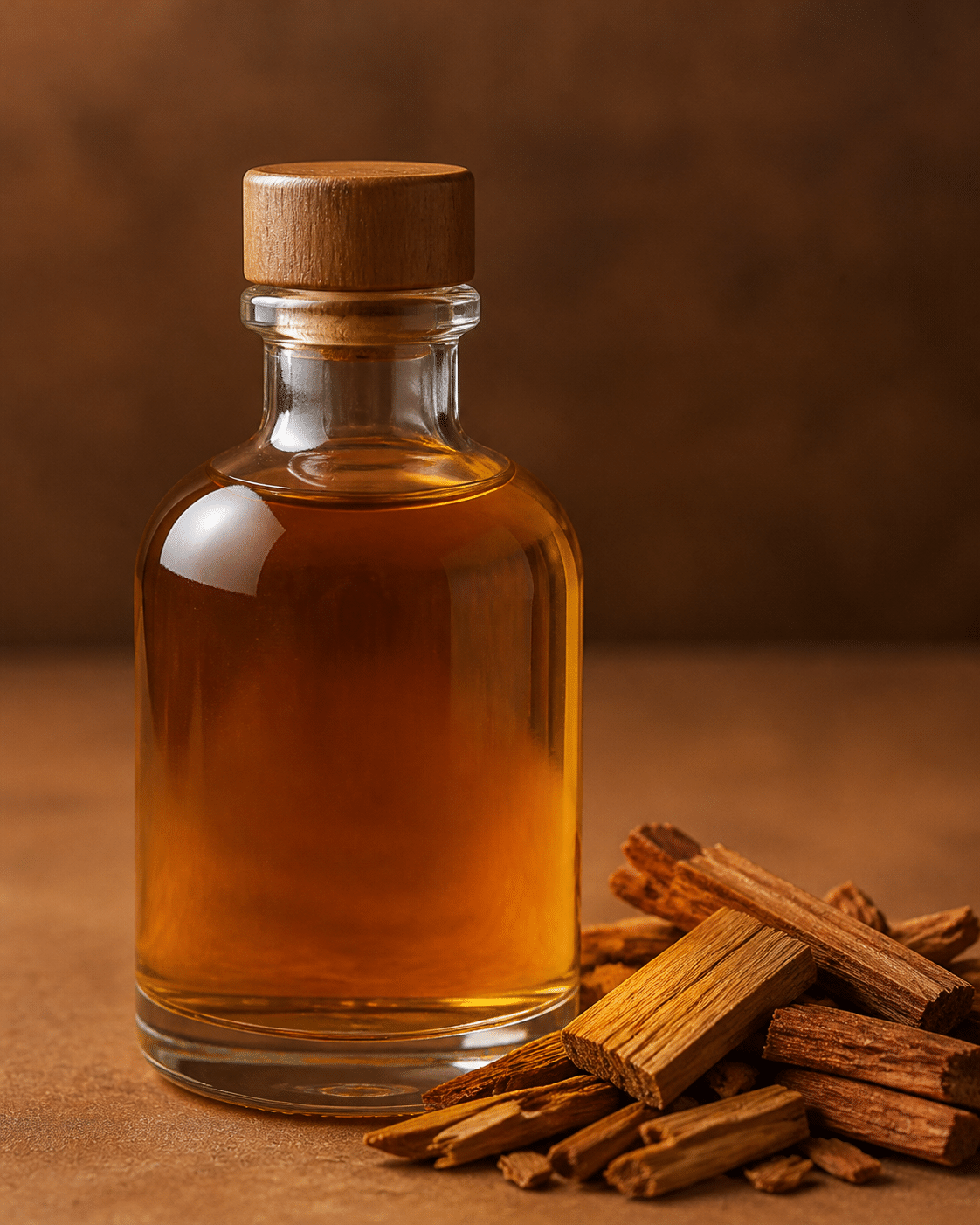
Beyond Essential Oils: Why Sandalwood Water is the Ingredient Your Brand Needs in 2026
Picture a product developer at her desk last Tuesday, staring at a shelf of samples. Rose water, check. Lavender oil, check. Another tea tree toner. Everything looks the same, and she knows her customers are noticing.
That’s the problem a lot of brands face right now. Shoppers want more than the basics. They want plant-based, traceable and multi-purpose products that do real work. Straits Research puts the global natural cosmetics market at $24.68 billion in 2026, and ties its growth to clean-label positioning, ethical sourcing and multifunctional skincare.
Meet sandalwood water
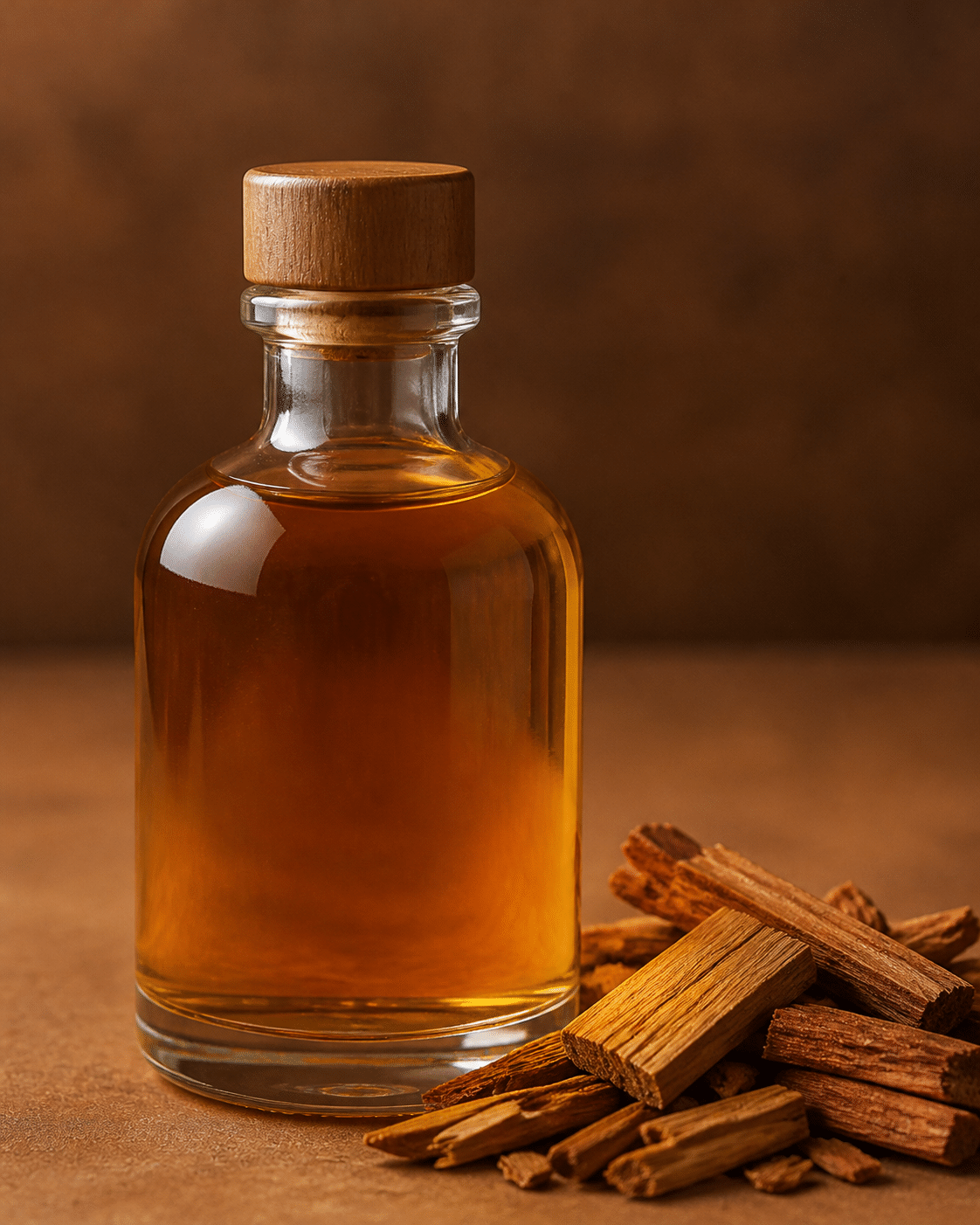
Sandalwood water is the aromatic water left behind after steam distilling sandalwood. Some call it sandalwood hydrosol. It smells soft, woody and calm, and it’s much gentler than the oil. So it fits places where neat essential oil simply can’t go, like facial mists, toners, lotions and room sprays.
Think of it as a quieter cousin of sandalwood oil. Less punch. More versatility.
And here’s an honest note: it won’t replace the oil, and nobody has proven big clinical claims for the water itself. What it does offer is a distinctive, water-based botanical for aromatherapy, wellness and cosmetic lines.
The real challenge is sourcing
If you’re a procurement or product development manager, you already know the catch. Finding a sandalwood water that’s authentic, pure and reliably available is hard. Some products are just water with a splash of oil and a solubilizer. Others have shaky microbial results or vague species labels.
So the question isn’t whether your customers will like it. It’s whether you can trust what lands in your warehouse. Aroma Monk sees this worry from buyers all the time, and that’s why we’ll keep the rest of this guide practical, starting with what sandalwood water actually is.
What Exactly is Sandalwood Water? A Deep Dive into Production and Purity
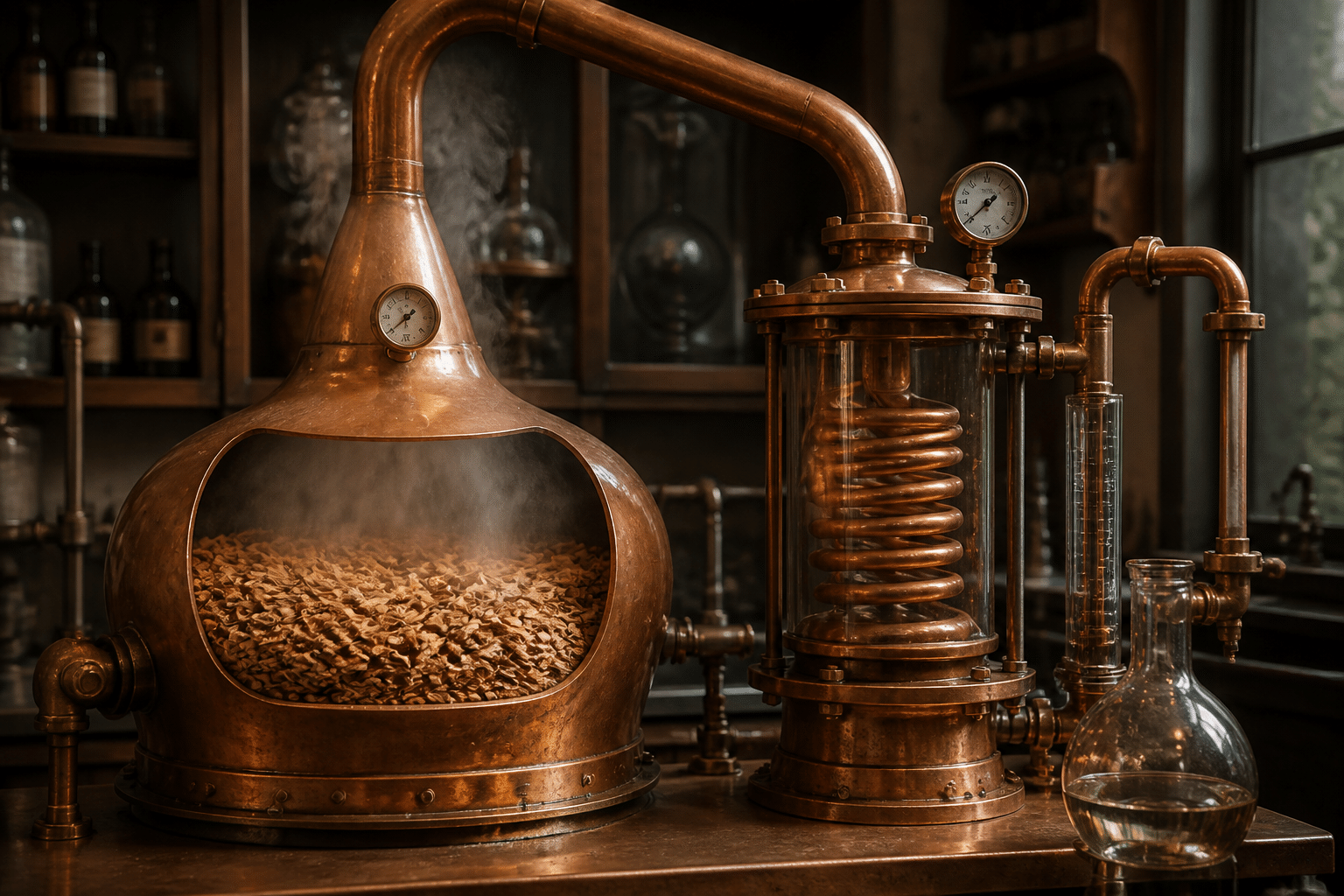
Let’s start in the still room, because that’s where you can tell a real product from an imitation.
How True Sandalwood Hydrosol Gets Made
The process is simpler than you’d think. Steam passes through chipped Santalum album heartwood, and it picks up the wood’s volatile aroma compounds on the way. That hot vapor then moves into a condenser and turns back into liquid. The liquid separates into two parts: the essential oil and the water. The water is your sandalwood hydrosol. It carries a small, water-soluble share of the wood’s aroma.
| Step | What happens | What comes out |
|---|---|---|
| 1. Raw material | Authenticated Santalum album wood is chipped or ground | Wood ready for the still |
| 2. Steam distillation | Steam moves through the wood and carries aroma compounds | Hot vapor |
| 3. Condensation | The vapor cools in a condenser | Liquid distillate |
| 4. Separation | Oil and water are split apart | Essential oil and hydrosol |
Here’s something I won’t gloss over. There’s no universal temperature or pressure spec for premium sandalwood water. Still design, steam flow and distillation time all change the result. So ask the supplier for batch records instead of trusting a number in a brochure. And ask where the wood came from, since sandalwood is tightly controlled.
What It Is Not
This is where buyers get burned. Sandalwood water is not:
- Diluted essential oil. Some makers stir a little oil into water with a solubilizer. It smells strong, but it isn’t a true distillate.
- Synthetic sandalwood fragrance. Lab-made odorants copy the scent, not the natural profile.
- Another wood in disguise. Sandalwood oil has been cut or rebuilt with amyris, cedarwood, benzyl benzoate and similar materials, and the same tricks can show up in fragranced waters.
Species matter too. A Hawaiian product listed as Santalum paniculatum water is a different thing from Indian Santalum album. Both can be perfectly good. They just aren’t interchangeable, and the label should say which one you’re getting.
What Pure Sandalwood Water Looks and Smells Like
Expect a soft, woody-sweet scent. Quiet, not perfumey. If it smells like a candle shop, be suspicious.
It should look clear. A milky or cloudy liquid with no mention of a solubilizer is a warning sign, though looks alone can’t prove anything. One supplier specification lists more than 99.85% water and only about 0.03 to 0.07% total santalol. That’s why the aroma is gentle.
What about pH? I couldn’t find a universal range, so treat any “typical” figure with caution. Ask for the pH on each batch’s certificate instead. Also ask whether it’s preserved, because pure doesn’t mean shelf-stable.
Once you know what the real thing looks like, the next question is why formulators want it in the first place.
The Therapeutic & Aromatic Profile: Why Formulators Choose Sandalwood Hydrosol

Sandalwood has a calm reputation. Think quiet temples, slow breathing, a lit stick of incense. But a reputation isn’t proof, so let’s look at what the science actually says, and where it stops.
A Soft Scent for Calm and Wellness Products
Here’s the honest part first. Most calming research looks at sandalwood oil or its main compound, alpha-santalol. Not the water. A clinical summary on sandalwood oil reports that topical oil lowered body arousal in one study, and a massage study saw less anxiety, though that result wasn’t statistically significant. So the evidence is small and mixed.
So why do wellness brands still love the water? Because of how it feels. The scent is soft and woody, and it won’t overwhelm a room or a face. It works well in:
- Meditation and yoga mists
- Pillow and linen sprays
- Calming facial mists for evening routines
- Spa and bath products
I’d position it as a gentle, grounding ritual ingredient. Not as a stress cure. Your customers will notice the difference, and so will regulators.
What We Know About Skin Benefits
Now for skin. You’ll see sandalwood benefits for skin listed everywhere: soothing, toning, hydrating. Some of that has backing. A 2025 review table on essential oils and itchy skin lists santalol as the key sandalwood compound, with proposed soothing and anti-inflammatory effects. But it labels the evidence as preclinical. A dermatology ingredient review calls the research “promising” while noting that trials are small.
And the water itself? I couldn’t find a study that tests sandalwood hydrosol for hydrosation or inflammation directly. (Yes, I looked.) Mild toning is a common description from makers, but it’s not proven either.
So what can you say? Words like “soothing,” “comforting” and “refreshing” are safer. Skip “clinically proven.” It fits toners, facial mists and sensitive-skin formulas, mainly because it’s water-based and gentle.
Sandalwood Oil vs. Sandalwood Water
A hydrosol holds far less of the volatile aroma compounds than the oil. That’s the whole trade. Less punch, more freedom.
| Feature | Sandalwood essential oil | Sandalwood water (hydrosol) |
|---|---|---|
| Aroma strength | Rich, deep, long-lasting | Soft, light, quickly fades |
| Main uses | Perfumes, attars, massage blends, candles | Facial mists, toners, room sprays, lotions |
| Water-based formulas | Needs a solubilizer to mix | Blends in as part of the water phase |
| Best for | Bold, lasting scent | Subtle, sophisticated scent |
| Research base | Some human studies (small) | Almost none on the water itself |
| Handling | Needs proper dilution | Needs preservation and microbial testing |
So if you want a whisper instead of a shout, the water wins. Many brands even use both: water for the base, a touch of oil for depth. Once you’ve picked your lane, the next job is finding a supplier you can trust.
A Buyer’s Guide to Quality Assurance: Vetting Your Bulk Sandalwood Water Supplier
Here’s a hard truth. A nice sample doesn’t tell you much. Anyone can send a lovely 100 ml bottle, and the 200 liters that show up later can be a different story. So let’s talk about how to vet a bulk sandalwood water supplier before money changes hands.
Paperwork First: What a Real Supplier Hands Over
A serious supplier shares documents without a fight. Ask for these on every batch, not just once:
- Certificate of Analysis (CoA): botanical name (Santalum album), plant part, batch number, production date, pH, appearance, odor and preservative declaration.
- GC/MS report: the chromatogram, peak table and test method. Look for alpha-santalol and beta-santalol, plus a believable mix of related compounds.
- Microbial results: tied to the exact batch, with the lab named.
- Sourcing proof: records showing the wood came from a legal, traceable source.
One catch with GC/MS. Hydrosol is mostly water, so santalol levels can be tiny. Oil specs often show roughly 41 to 55% alpha-santalol, but that number belongs to the oil, not the water. If a supplier pastes oil figures onto a hydrosol report, that’s a flag. And if santalols are barely there, ask them to explain it. Low isn’t automatically fake, but silence is a problem.
CITES is messier. I found sources that disagree on whether Santalum album needs CITES permits, and one says Indian law controls it instead. I’m not a lawyer, so check the current CITES Species+ database and ask India’s Management Authority directly. An export guide for Indian essential oils is a handy starting point for the usual shipping paperwork. Also get a written customs ruling for your exact product, since water, oil and wood can be classified differently.
Questions to Ask Before You Order
Print this table and take it to your next supplier call.
| Topic | Ask this | A good answer sounds like |
|---|---|---|
| Origin | Which species and region is the wood from? | Named species, region and legal sourcing records |
| Production | Is it a true steam distillate? Can I see batch records? | Yes, with distillation date, method and duration |
| Consistency | How do you keep batches alike? | Retained samples, set specs, batch-to-batch comparisons |
| Additives | Any solubilizer, fragrance or essential oil added? | Full disclosure, or a clear “none” |
| Microbial | What are your limits and test methods? | Accredited lab, clear numbers, pathogen results |
| Shelf life | Preserved or not? What’s the expiry and storage? | A dated retest or expiry, backed by stability data |
On microbial limits, the common benchmark is ISO 17516. According to the BAV Institut, general cosmetics should stay at or below 1,000 CFU per gram or ml, with a tighter 100 for eye-area and baby products. Pathogens like E. coli and Staph aureus should be absent. If a supplier quotes “yeast and mold absent,” that’s their own stricter standard, not the ISO rule. Fine, just know the difference.
Also, “natural” and “preservative-free” don’t mean safe. Aroma-Zone notes that aromatic waters are very prone to contamination, so check each batch.
Red Flags That Should Stop the Deal
Some warning signs show up fast:
- A loud, perfumey scent. Real sandalwood water is soft. If it smells like a candle shop, think added oil or fragrance.
- Milky or cloudy liquid with no mention of a solubilizer. Looks alone prove nothing, but it’s a reason to ask questions.
- No documents, or recycled ones. The same CoA for every lot? Walk away.
- A price that’s way too low. Real distillation from controlled wood costs money. A bargain bulk price usually means dilution or substitution.
- Vague labels like “sandalwood” with no species named.
At Aroma Monk, buyers often ask for lab reports and traceability up front, and honestly, that’s the right instinct. Any supplier worth your time should welcome it. Once you’ve found one, the fun part begins: putting that water to work in your formulas.
Get a quote from Aroma Monk.
Essential Oil Supplier – Bulk pricing • Samples • Fast response
Formulation Showcase: Integrating Sandalwood Water into Your Product Line
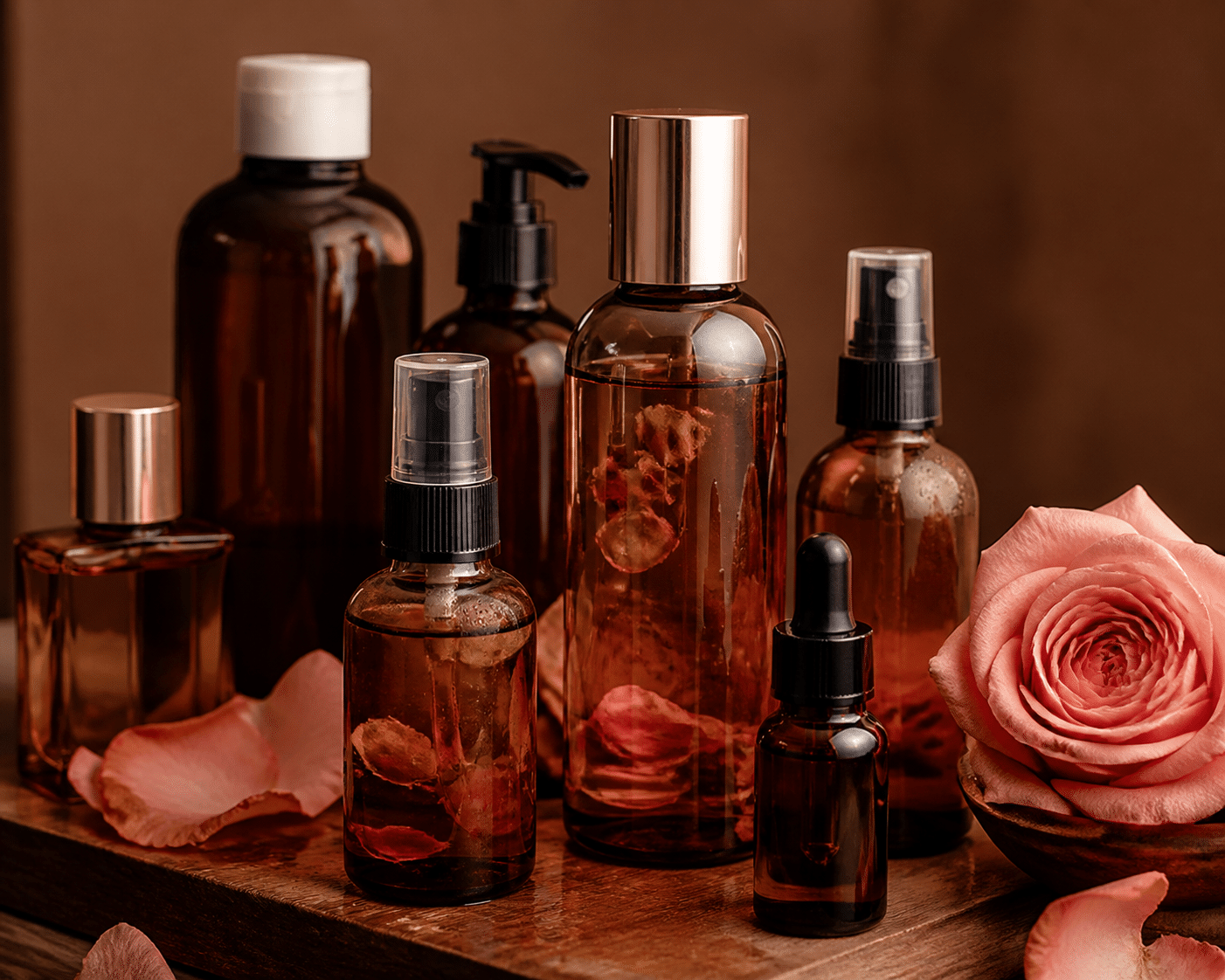
You’ve vetted the supplier and the paperwork looks clean. Now what do you actually make with it?
Here are three starter concepts. Treat the numbers as bench-trial starting points, not validated limits. Your own stability and safety testing has the final word.
Three Recipe Cards to Test on the Bench
Concept 1: The “Mindful Moment” Facial Mist
This one’s a quiet evening ritual in a bottle. Soft scent, nothing loud, easy to explain on a label.
| Ingredient | Starting range | Job in the formula |
|---|---|---|
| Sandalwood water | 55 to 65% | Soft woody base |
| Lavender hydrosol | 20 to 25% | Calming, familiar scent |
| Frankincense hydrosol | 5 to 10% | Resinous, grounding depth |
| Glycerin | 1 to 2% | Light skin feel |
| Preservative | Supplier’s rate | Keeps the water phase safe |
Concept 2: “Sandalwood & Rose” Toner for Mature Skin
Mature-skin shoppers often want gentle and comfortable, not tingly. Rose water (a staple of Aroma Monk’s range) and sandalwood water make a sweet-woody pair.
| Ingredient | Starting range | Job in the formula |
|---|---|---|
| Sandalwood water | 40 to 50% | Woody, soothing-feeling base |
| Rose water | 40 to 50% | Floral softness |
| Glycerin | 2 to 3% | Humectant for a plumper feel |
| Preservative | Supplier’s rate | Broad-spectrum protection |
Concept 3: Soothing After-Sun or After-Shave Spray
Keep claims modest here. “Comforting” and “refreshing” work. “Treats sunburn” doesn’t.
| Ingredient | Starting range | Job in the formula |
|---|---|---|
| Sandalwood water | 45 to 50% | Cooling-feeling, gentle base |
| Chamomile hydrosol | 35 to 40% | Soft, herbal comfort |
| Aloe juice | 5 to 10% | Light, watery slip |
| Preservative | Supplier’s rate | Essential for aloe plus hydrosols |
Blending Partners That Play Well
Sandalwood water is quiet, so it pairs best with other quiet things.
- Rose water: adds floral sweetness and rounds off the woody edge.
- Lavender: brings the calm, sleepy feel customers already expect.
- Frankincense: gives a resinous, meditative depth (great for yoga and spa lines).
- Chamomile: softens the blend and suits sensitive-skin positioning.
One tip. Add the stronger scent last, a little at a time. Sandalwood water can disappear fast if lavender gets bossy.
Usage Levels and Preservation
There’s no single industry rule for how much sandalwood water to use. Formulators commonly start around 10 to 30% in light lotions and 5 to 20% in richer creams, and mist or toner bases can go much higher, even to 100% of the water phase. A supplier guide says it can replace ordinary water in lotions, creams, toners and sprays. Higher levels mean more testing, though: pH, viscosity, odor drift, freeze-thaw and accelerated stability.
Then there’s preservation. Don’t skip it. Anything with water, hydrosols, aloe or botanical extracts needs a broad-spectrum preservative, and refrigeration or essential oils alone won’t cut it. Formula Botanica covers natural-origin systems for water-containing products. Check the pH range your preservative needs, and run challenge testing on the finished formula. A COSMOS-approved ingredient doesn’t make the whole product COSMOS-approved.
Once a formula holds up, the next question is what it does for your margins.
The Business Case: Supply Chain & ROI of Premium Sandalwood Water
Your formula works. The samples smell great. Now someone from finance wants to know if it pays off. Fair question.
Shelf Life, Storage and Batch Consistency
Hydrosol is mostly water, so it’s a bit fussy. Supplier claims jump around a lot. Organic Creations suggests using its preserved sandalwood hydrosol within one year, and its unpreserved version within 3 months in the fridge. But Down Under Enterprises reports more than 18 months for an unpreserved Australian sandalwood hydrosol.
So is 12 to 24 months realistic? Sometimes. Only if there’s stability data behind it. Until you see that, plan on the shorter end.
Storage is simple. Keep it cool, dark and tightly sealed, and don’t let drums sit in a hot warehouse. Ask every supplier for the manufacture date, a retest or expiry date and the storage conditions on each lot.
Then there’s consistency. If batch one is soft and woody and batch four is loud or flat, your customers will notice before you do. Ask how a supplier keeps lots alike (retained samples and set specs are a good sign).
What the Premium Pays Back
Here’s my honest caveat. I couldn’t find a case study that measures the ROI of sandalwood water by itself. What we do have are directional numbers for traceable natural ingredients.
A luxury skincare market report estimates shoppers pay 15 to 25% more for ethically sourced natural formulas when brands document origin and harvesting. Another eco-beauty analysis says these products often retail 20 to 40% above conventional ones, and that 71% of global beauty shoppers would pay more for eco-certified items. Treat those as benchmarks, not promises.
| What you spend on | What you may get back |
|---|---|
| Pure, batch-tested sandalwood water | Claims you can back up, fewer rejected lots |
| Traceable species and sourcing records | A real story behind a higher shelf price |
| Stability and challenge testing | Fewer surprises after launch |
| One steady supplier | On-time launches and repeat orders |
Loyalty is the quieter payoff. A 2026 industry report citing NSF research says 74% of Americans see natural ingredients as important in personal care, and links verified sourcing to trust and sales. Trust brings people back.
Why a Vertically Integrated Supplier Cuts Risk
Every handoff in a supply chain is a place for things to go wrong. Wood gets swapped, a broker adds a margin, a lab report gets recycled.
A vertically integrated supplier like Aroma Monk shortens that chain. It manages sourcing, distillation and quality testing in one system, all the way to final delivery. That means one team answers for the wood, the batch records and the lab results. When a lot runs late or a number looks odd, you call one number.
It also helps with bulk orders. Direct relationships make it easier to set specs, plan volumes and ask for custom packaging. And for supply chain managers, that steady flow of raw material matters more than a few cents saved per liter.
So the numbers can work. The next question is how you tell that story to customers.
Elevate Your Brand with the Authenticity of Pure Sandalwood Water
Remember that product developer staring at a shelf of look-alike samples? Here’s how her story ends. She picks the ingredient that gives her something real to say.
That’s the whole case for sandalwood water. It’s soft, woody and calm, and it fits mists, toners, lotions and room sprays where the oil can’t go. It helps your line stand out. It gives your brand a story about species, origin and slow distillation. And if you keep your claims modest (soothing, comforting, refreshing), it gives you something you can stand behind.
But the ingredient is only as good as the supplier. Pure sandalwood hydrosol, batch records, a real CoA, microbial results and clear sourcing papers are what separate a premium product from a risky one. Ask for them every time. A good partner won’t flinch.
At Aroma Monk, we manage the chain from sourcing to final delivery, so one team answers for what lands in your warehouse. Buyers get lab-tested quality, traceability and room for custom packaging on bulk orders.
Ready to test it in your own formulas? Partner with a leader in pure botanical extracts. Contact Aroma Monk today to request a sample, CoA and bulk pricing for our authentic Sandalwood Water.
Request Your Sample & Spec Sheet
Get a quote from Aroma Monk.
Essential Oil Supplier – Bulk pricing • Samples • Fast response
Get a quote from Aroma Monk.
Essential Oil Supplier – Bulk pricing • Samples • Fast response