
Unlock Natural Hair Health: The Surprising Power of Beeswax
Ever stared at a hair gel shelf and thought, “Why does this smell like a science lab?” Yeah, same.
A lot of people are getting tired of hair products with long ingredient lists and hard-to-pronounce stuff. That shift is real. In a 2025 NSF survey, 74% of consumers said organic ingredients matter in personal care, and 65% want a clear ingredient list so they can spot ingredients they don’t trust NSF survey on clean personal care ingredient preferences. Plus, clean beauty sales keep growing because people want simpler products.
That’s where beeswax for hair comes in. Beeswax, also called cera alba for hair care, can help with natural hair styling, frizz control, and soft hold. It’s not just for candles. It can work in a beeswax hair pomade, a homemade hair wax, or even a beeswax leave-in conditioner when it’s mixed the right way.
In this guide, we’ll look at the benefits of beeswax for hair, how to use beeswax for hair without making it greasy, how to choose the right kind, and a few easy DIY beeswax hair recipes. We’ll also talk about how to get beeswax out of hair if you use too much. Because yes, that can happen. To all of us.
The Science of Shine: Why Beeswax is a Game-Changer for Hair
Ever rubbed a little product between your fingers and thought, “Oh, this actually feels different”? That’s the beeswax magic. Not flashy. Just solid.
Beeswax for hair works in a few neat ways at once. First, it acts like a natural humectant, so it helps pull in moisture and keep hair from feeling dry and straw-like. That matters a lot if your hair gets frizzy the second the air changes. Plus, beeswax forms a light shield on the hair shaft. That shield can help seal split ends, smooth the cuticle, and block some day-to-day stuff like heat, wind, and pollution.
Research on cera alba for hair care backs this up too. A 2023 review found beeswax acts as an occlusive, humectant, and emollient all at once, which is a fancy way of saying it helps hold moisture while still feeling more breathable than a stiff gel beeswax review in the Journal of Cosmetic Dermatology. It also contains beta-carotene, which supports cell repair and hair health. Nice bonus.
And here’s what a lot of people like most: the hold feels flexible. Not crunchy. Not helmet-like. So if you want natural hair styling without that hard, glued-down look, beeswax hair pomade or homemade hair wax can be a sweet spot. Actually, wait, there’s a better way to say it. It gives control without the stiff drama.
That’s a big reason people keep reaching for beeswax leave-in conditioner blends and DIY beeswax hair recipes. Cleaner labels. Softer feel. Less fuss. And for brands like Aroma Monk, it pairs well with pure essential oils, rose water, and carrier oils for products that feel simple, honest, and easy to trust.
A Buyer’s Guide: Choosing the Perfect Beeswax for Your DIY Recipes
You know what gets messy fast? Buying wax in a hurry and then realizing it smells weird, looks off, or melts like a dream but behaves like a sticky brick. Been there. Not fun.
If you’re making beeswax for hair products at home, the type you pick really matters. Yellow beeswax is unrefined, so it keeps more of its natural scent and golden color. That makes it a nice fit for a beeswax hair pomade or homemade hair wax when you want a warm, natural feel. White beeswax is filtered more, so it looks cleaner and has less smell. I’d go with white beeswax when you want color purity, like in a beeswax leave-in conditioner or a light balm where you don’t want the wax tint showing up.
Also, think about form. Beeswax pellets or pastilles are just easier. They measure fast and melt faster too. Solid blocks usually cost less, but you’ll need to grate them first. More work. Less convenience. That’s the trade-off.
| Beeswax Type | Best For | Pros | Watch Out For |
|---|---|---|---|
| Yellow beeswax | Hair pomade, DIY hair wax | Natural scent, richer color | Can tint pale formulas |
| White beeswax | Light creams, color-safe blends | Clean look, mild smell | Usually more processed |
| Pellets or pastilles | Quick DIY batches | Easy to weigh, fast melting | Can cost a bit more |
| Solid blocks | Bulk mixing | Budget-friendly | Needs grating |
One more thing. Always buy 100% pure, cosmetic-grade beeswax. That helps you avoid fillers like paraffin, which you really don’t want near your scalp. If you’re sourcing ingredients for a brand, Aroma Monk’s lab-tested oils and natural raw materials can pair nicely with clean DIY formulas, especially if you’re building a simple, trustworthy product line.
And yes, the clean beauty push is still going strong. A 2025 NSF survey found 74% of consumers care about organic ingredients in personal care, and 65% want a clear ingredient list so they can spot stuff they don’t trust NSF consumer survey on clean personal care ingredients. So picking the right beeswax isn’t just a small detail. It’s part of the whole story.
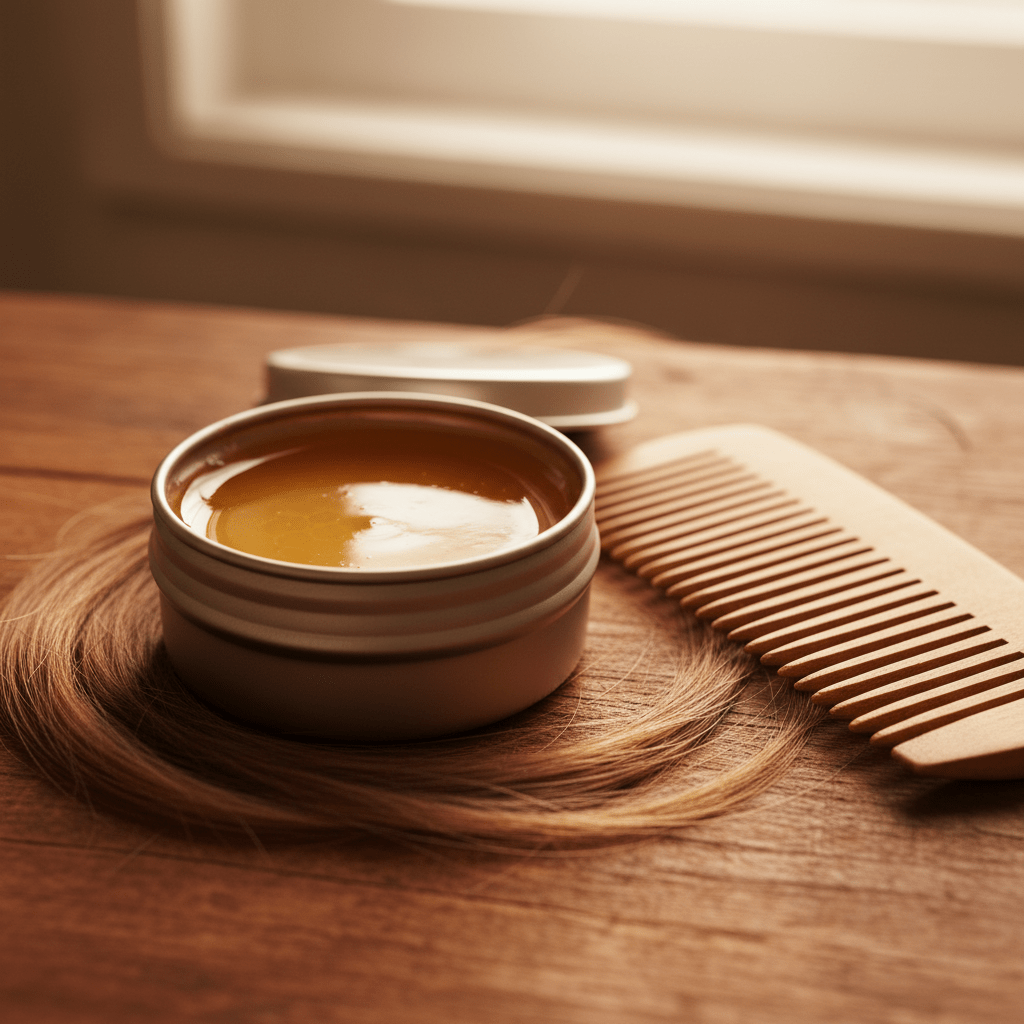
Your DIY Station: Essential Tools and Safety Precautions
Before you melt a single speck of beeswax, set up your space first. Trust me, it saves a lot of sticky regret.
Here’s the simple gear list for DIY beeswax hair recipes:
- Double boiler or a pot with a heat-safe bowl on top
- Digital kitchen scale for exact measuring
- Silicone spatula for stirring and scraping
- Storage tins or glass jars with tight lids
- Paper towels for quick cleanup
And yes, the scale matters. Beeswax for hair works best when you measure by weight, not by guesswork. A tiny change can turn a soft homemade hair wax into a brick that won’t spread right.
| Tool | Why you want it |
|---|---|
| Double boiler | Keeps wax from scorching |
| Digital scale | Helps with exact ratios |
| Silicone spatula | Makes cleanup easier |
| Tins or jars | Stores balm safely |
Safety comes next. Use low heat only. Beeswax melts around 62 to 65°C, so you really don’t need a roaring flame. Never leave it alone while it’s melting. Not for a minute. And always do a patch test before trying a new beeswax leave-in conditioner or beeswax hair pomade on your scalp or skin.
Cleanup is pretty easy if you move fast. Wipe tools with paper towels while they’re still warm, then wash with hot soapy water. If wax hardens on a spoon or counter, rub a little oil on it first. Coconut oil or olive oil usually helps lift it off. A little patience. That’s the trick.
If you’re making larger batches for a brand or bulk line, Aroma Monk’s lab-tested essential oils, rose water, and carrier oils can fit nicely into clean, simple formulas too.
Recipe 1: The Foundational Beeswax Hair & Scalp Balm
You know that moment when your hair just needs a little peace? Not a full-on gel helmet. Just a soft hold, a bit of shine, and less frizz fighting back at you before breakfast. This balm is my go-to for that.
And it’s simple. Three main parts. Beeswax for hair gives the hold and helps seal in moisture. A carrier oil brings slip and softness. Then you can add a few drops of essential oil if you want a nice scent or a little scalp support.
What you need
| Ingredient | Amount | What it does |
|---|---|---|
| Beeswax pellets | 1 tablespoon | Gives hold and seals the hair |
| Coconut oil or jojoba oil | 3 tablespoons | Adds moisture and makes it spreadable |
| Rosemary or lavender essential oil | 5 to 8 drops | Optional scent and scalp support |
If your hair is fine, jojoba or grapeseed oil usually feels lighter. For coarse or dry hair, avocado oil or argan oil can feel richer. That tiny switch can make a big difference. Seriously.
How to make it
- Set up a double boiler.
- Add the beeswax and oil.
- Warm it on low heat until the wax melts.
- Stir well with a silicone spatula.
- Take it off the heat.
- Add the essential oil, if using.
- Pour the mix into a clean tin or glass jar.
- Let it cool fully before closing the lid.
That’s it. No drama. No weird lab smell.
How to use it
Rub a pea-sized amount between your palms first. Wait a second until it softens. Then smooth it over dry or slightly damp hair, mostly on the ends and mid-lengths. For natural hair styling, start small. You can always add more. But taking it out is a whole other story.
This balm works well as a simple beeswax hair pomade or homemade hair wax for flyaways, twist-outs, and edges. If you want a firmer hold, use a little more beeswax. If you want a softer feel, add more oil.
A good starting mix is 1 part beeswax to 3 parts oil. For a softer balm, go closer to 1 to 4. For a firmer one, try 1 to 2. A lot of DIY beeswax hair recipes stop right there, and honestly, that’s usually enough.
If you like mixing skincare-style ingredients into hair care, this also pairs well with other clean formulas like rose water and pure essential oils from Aroma Monk. That kind of ingredient set keeps things simple, which people seem to want more and more these days clean personal care ingredient survey from NSF.
And if you ever use too much? Don’t panic. We’ll talk about how to get beeswax out of hair later, step by step.
Get a quote from Aroma Monk.
Essential Oil Supplier – Bulk pricing • Samples • Fast response
Recipe 2: Ultra-Moisturizing Beeswax & Shea Butter Leave-In Conditioner
You know that dry, frizzy hair moment? The one where your curls look thirsty before lunch? Yeah. This recipe is for that.
This beeswax leave-in conditioner is richer than the first balm, so it works best for dry, curly, thick, or heat-stressed hair. And the mix makes sense. Beeswax for hair helps seal in moisture. Shea butter brings deep softness. Argan oil adds shine without that greasy, heavy feel. Aloe vera gives a little water-based hydration, which is nice… but tricky too.
That trick part matters. Beeswax alone doesn’t truly blend water and oil into one stable cream. For a smooth leave-in, you need to whisk the aloe in slowly and use a real emulsifier if you want it to stay together long term. If you skip that step, the mix can split. Fast. So think of this more like a creamy DIY hair treat than a forever-stable lotion.
What you need
| Ingredient | Amount | What it does |
|---|---|---|
| Beeswax pellets | 2 teaspoons | Seals in moisture and adds soft hold |
| Shea butter | 2 tablespoons | Deeply moisturizes dry strands |
| Argan oil | 1 tablespoon | Adds shine and softness |
| Aloe vera gel | 1 tablespoon | Gives light hydration |
| Emulsifying wax | 1 teaspoon | Helps the water and oils mix |
| Preservative, optional but smart | Per label directions | Helps water-based formulas last longer |
How to make it
- Set up a double boiler.
- Melt the beeswax, shea butter, and argan oil together on low heat.
- In a small cup, warm the aloe vera gel a little so it’s not cold.
- Slowly whisk the aloe into the melted oil mix.
- If you’re using an emulsifier, blend it in well until the texture looks creamy.
- Remove from heat and keep stirring as it cools.
- Add a preservative if your formula includes water-based aloe and you plan to store it.
- Spoon into a clean jar once it starts to thicken.
How to use it
Use a small amount on damp hair. Start with the ends, then work up toward the middle. A little goes a long way here. Really. Too much can make hair feel heavy, especially near the roots.
This works well as a beeswax leave-in conditioner for twist-outs, braid-outs, and rough winter days when your hair just needs extra care. It also fits right into DIY beeswax hair recipes if you want a richer, creamier product than a basic pomade.
And if you’re trying to build clean hair products for a brand, this kind of formula pairs nicely with pure essential oils, rose water, and other natural raw materials from Aroma Monk. Their lab-tested oils can help keep your ingredient list simple, which is what a lot of shoppers want right now. A 2025 NSF survey found 74% of consumers care about organic ingredients in personal care, and 65% want a clear ingredient list so they can spot ingredients they don’t trust NSF survey on clean personal care ingredient preferences.
Plus, beeswax for hair keeps showing up in clean beauty because it gives a softer, more flexible hold than rigid styling polymers. Not crunchy. Not stiff. Just enough control to make hair behave.
And if you ever make it too rich? That’s fixable too. Later on, we’ll get into how to get beeswax out of hair without a panic wash day.
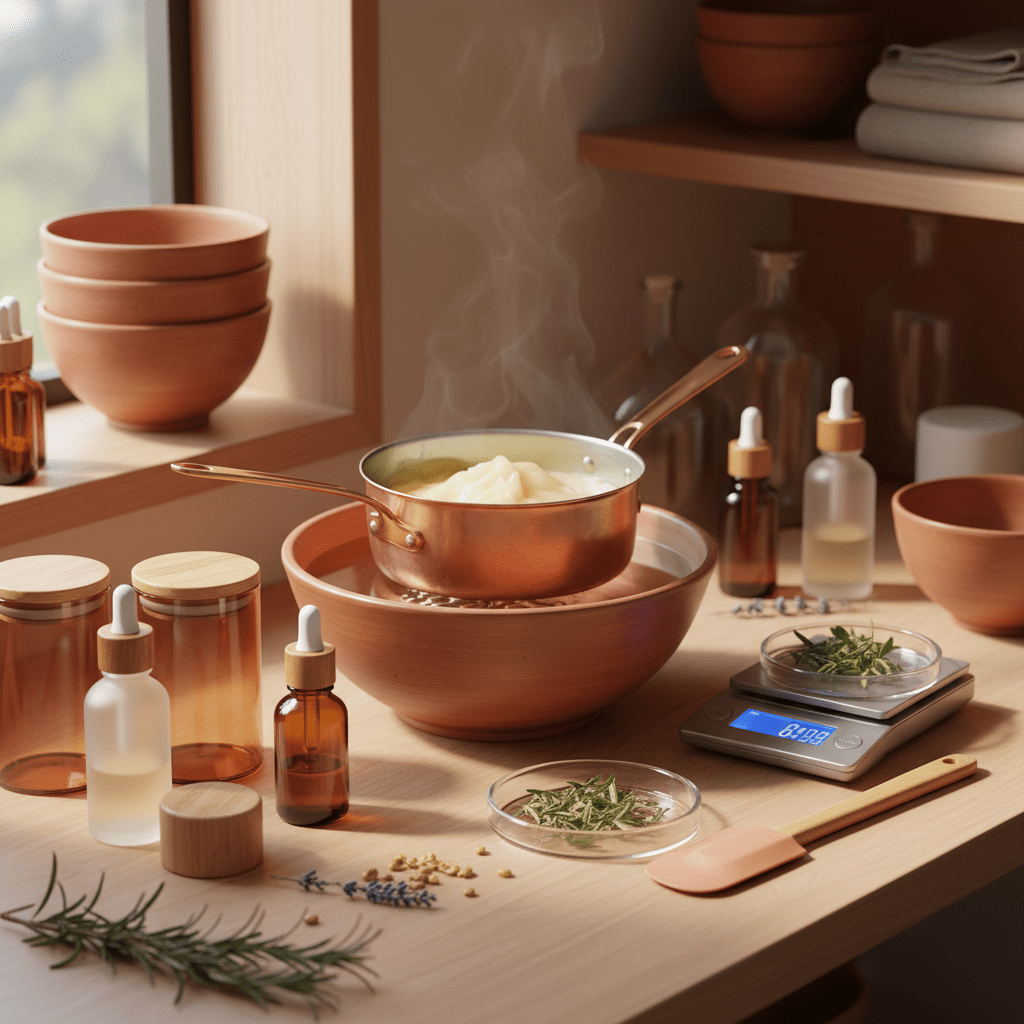
Recipe 3: All-Natural Styling Pomade for Texture and Hold
Ever want that piecey, lived-in look without the greasy shine? Same. This one is for short cuts, defined curls, and those little flyaways that pop up right after you leave the house.
This pomade leans firmer than the first two recipes. So if you want beeswax for hair that gives real shape, this is the one to try. It uses more beeswax, plus bentonite clay for a matte finish and a clean, fuller look. Bentonite clay helps soak up extra oil, adds body, and cuts down that waxy, slick feel that can make some pomades look heavy.
What you need
| Ingredient | Amount | What it does |
|---|---|---|
| Beeswax pellets | 2 tablespoons | Gives strong hold and structure |
| Shea butter or cocoa butter | 1 tablespoon | Softens the mix a bit |
| Jojoba oil or grapeseed oil | 1 tablespoon | Adds slip without much grease |
| Bentonite clay | 1 teaspoon | Absorbs oil and gives a matte finish |
| Rosemary or lavender essential oil | 4 to 6 drops | Optional scent |
If your hair is fine, use a little less beeswax. If it’s thick, curly, or coarse, this ratio usually works better. And if you’ve been asking how to use beeswax for hair without it feeling slick, the answer is pretty simple: start tiny.
How to make it
- Set up a double boiler.
- Melt the beeswax, butter, and oil on low heat.
- Stir in the bentonite clay slowly.
- Mix until the clay is smooth and there are no lumps.
- Take it off the heat.
- Add the essential oil, if using.
- Spoon into a clean tin.
- Let it cool all the way before sealing.
How to use it
Warm a pea-sized amount between your fingers first. Then use your fingertips to define the ends, twist small sections, or shape short hair into a piecey style. For the hairline, rub a tiny bit between your palms and smooth it down lightly. Not a lot. Just enough.
That matte finish is the nice surprise here. Wax-only pomades can feel heavy fast, but bentonite clay changes the feel a lot. It gives a more modern look. Less shine. More lift.
This is also a good fit for natural hair styling if you want control without that stiff, helmet vibe. And if you like working with clean ingredients for a brand, Aroma Monk’s lab-tested essential oils, rose water, and carrier oils can pair well with DIY beeswax hair recipes like this one. Plus, shoppers are still asking for simpler labels. A 2025 NSF survey found 74% of consumers care about organic ingredients in personal care, and 65% want a clear ingredient list so they can spot ingredients they don’t trust NSF survey on clean personal care ingredient preferences.
Beeswax for hair can also help you build styles that last through a normal day, not just the first 10 minutes. Pretty handy.
Application & Removal: The Do’s and Don’ts of Using Beeswax for Hair
Ever put too much product in your hair and thought, “Well… that was a bad idea”? Yeah. Beeswax can do that if you get heavy-handed.
The sweet spot is simple. Start with a pea-sized amount. Warm it between your palms until it turns into a clear, soft oil. Then smooth it onto the mid-lengths and ends first. That’s where beeswax for hair usually works best. It helps with natural hair styling, adds soft hold, and keeps flyaways in check without coating your roots in a sticky mess.
But here’s the big don’t: don’t rub cold, hard wax straight onto dry hair. It just sits there. And don’t pile it on, especially if your hair is fine or low-porosity. That’s how you get buildup fast.
| Do | Don’t |
|---|---|
| Use a pea-sized amount | Use a big blob right away |
| Warm it in your hands | Apply cold wax directly |
| Start on mid-lengths and ends | Smear it all over the scalp |
| Build slowly | Fix it with more and more product |
If you need to remove beeswax from hair, go gentle first. A pre-shampoo oil treatment with coconut oil or olive oil helps loosen the wax. Leave it on for 10 to 15 minutes, then wash with a clarifying shampoo. That combo usually works better than scrubbing harder (which just makes things grumpier).
And if there’s still residue? A second wash or a light apple cider vinegar rinse can help lift what’s left. That’s the real answer to how to get beeswax out of hair without a full meltdown.
For best results, use beeswax hair pomade and homemade hair wax like tools, not blankets. A little goes a long way. And if you’re building clean products, Aroma Monk’s lab-tested essential oils, rose water, and carrier oils fit nicely into simple DIY beeswax hair recipes and beeswax leave-in conditioner blends.
Frequently Asked Questions About Beeswax Hair Products
Got a few “wait, but what about…?” questions? Good. That’s usually where the real answers live.
Will beeswax clog my scalp pores or cause acne?
Usually, no. Beeswax has a low comedogenic rating, so it’s not a big pore-clogger for most people. But keep it on the hair strands, not slathered right onto the scalp. That’s the trick. If you want to be extra safe, use non-comedogenic oils like jojoba or grapeseed in your DIY beeswax hair recipes. Simple. Less drama.
Is beeswax good for fine or thin hair?
Yes, but only in tiny amounts. Fine hair can get weighed down fast, so use beeswax for hair more like an end-sealer than an all-over product. A pea-sized bit is often enough. And if you want more texture without the greasy feel, the pomade with bentonite clay is probably your best bet. It gives a matte finish and a little more lift.
How often can I use beeswax hair products?
Styling products can be used daily if you really need them, but wash your hair well every 2 to 3 days so buildup doesn’t hang around. Moisturizing balms can be used as needed on dry ends. That’s where beeswax leave-in conditioner blends and homemade hair wax can shine without taking over your whole routine.
And honestly, that’s why so many people keep looking for cleaner options. A 2025 NSF survey found 74% of consumers care about organic ingredients in personal care, and 65% want a clear ingredient list so they can spot stuff they don’t trust NSF consumer survey on clean personal care ingredients. So if you’re reaching for beeswax for hair, you’re not alone. You’re just picking a simpler path.
Want to try it for yourself? Start with a small DIY batch, test it on dry ends, and see how your hair responds. Small move. Big clue.
Embrace Your Inner Alchemist: Start Your Natural Hair Journey
So here we are. Beeswax for hair can give you moisture, a little shield from dry air, and natural hair styling with soft hold that won’t feel hard and crunchy. That’s the real charm. It works with your hair, not against it.
And honestly, that’s what a lot of people want now. A 2025 NSF survey found 74% of consumers care about organic ingredients in personal care, and 65% want clear ingredient lists so they can spot stuff they don’t trust NSF survey on clean personal care ingredients. Makes sense, right?
The good part is this: with quality ingredients and a few simple steps, DIY beeswax hair recipes are totally doable at home. You can start small with a beeswax hair pomade, try a beeswax leave-in conditioner, or make homemade hair wax for flyaways and ends. Pick one recipe this weekend. Try it. Then come back and tell us how it went, or drop your questions in the comments. We’d love to hear what your hair liked best.
Get a quote from Aroma Monk.
Essential Oil Supplier – Bulk pricing • Samples • Fast response