
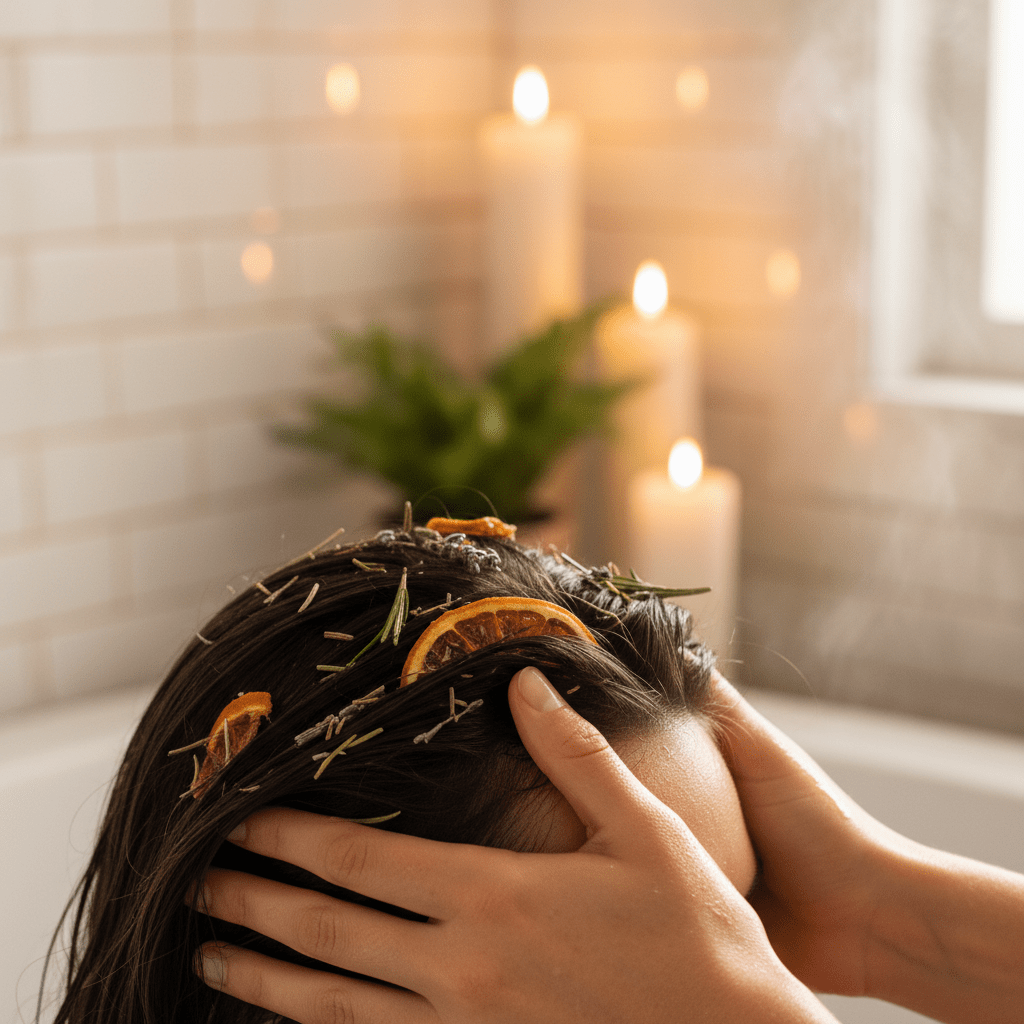
Tired of an Itchy, Unhealthy Scalp? The Ancient Solution You’re Missing
You know that annoying scalp feeling? The flakes on your shirt. The itch that shows up at the worst time. The dryness that makes your head feel tight, then somehow oily again by lunch. Yeah, that one.
A lot of people try shampoo after shampoo and still don’t get relief. That lines up with what we see all the time: dandruff, dry scalp, sensitive scalp, and even contact reactions from hair products are common complaints, and dandruff affects about half of adults worldwide common scalp complaints and dandruff rates.
But here’s the good part. Shikakai oil has been used for ages in Ayurveda as a gentle way to clean and care for the scalp. It’s made from Acacia concinna, a plant known for its natural cleansing power and mild feel. People often use it as a natural scalp cleanser, and many also look to it for shikakai oil for dandruff, dryness, and everyday scalp comfort.
In this article, we’ll keep it simple. You’ll learn what shikakai is, the benefits of shikakai oil, how it may support shikakai for hair growth, how to use shikakai oil the right way, and how to choose or make your own DIY shikakai oil. Plus, we’ll look at a few easy ways to pick a product that fits your scalp type.

What Exactly is Shikakai? Unpacking the ‘Fruit for Hair’
Ever heard a plant called the “fruit for hair”? Sounds like something your grandma would trust before a beauty brand ever got hold of it. But that’s pretty much where shikakai comes from.
Shikakai is the pod, leaf, and bark of Acacia concinna, a climbing shrub that grows in India and other warm parts of Asia. The name itself is often explained as “fruit for hair” or “fruit for the head,” which tells you a lot about how people have used it for ages. In Ayurveda, it’s been a go-to for scalp cleansing and hair care for centuries, and some records link its use back nearly 5,000 years.
Here’s the thing: shikakai can show up in a few different forms, and they don’t all work the same way.
| Form | What it is | How people usually use it |
|---|---|---|
| Raw pods | Dried whole pods from the plant | Soaked, boiled, or ground into a rinse |
| Shikakai powder | Finely ground pods, sometimes with leaves or bark | Mixed with water or herbs as a wash |
| Shikakai oil | Shikakai infused into a carrier oil like coconut or sesame | Massaged into the scalp for oiling and scalp comfort |
Raw pods and powder are the classic Ayurvedic scalp treatment. They make a gentle lather because of natural saponins, so they act like a natural scalp cleanser. Shikakai oil is a little different. It doesn’t wash hair the same way. Instead, it’s used more like a scalp massage oil, which can feel better for dry, tight, or flaky skin.
And if you’re a brand or maker looking for natural ingredients, this is where shikakai fits right in with oils, attars, and other plant-based blends. A clean carrier oil matters a lot here. That’s where a trusted supplier like Aroma Monk can help with pure carrier oils for DIY shikakai oil or larger product lines.
So yes, shikakai is old-school. But it still makes sense today.
The Science of a Healthy Scalp: How Shikakai Oil Works
Ever notice how your scalp can feel clean, then tight, then greasy again by lunch? Ugh. That back-and-forth usually means your scalp barrier is out of whack, and your hair routine might be doing too much.
Shikakai oil works a little differently from harsh shampoos. Shikakai pods and bark from Acacia concinna contain natural saponins, which act like gentle cleaners. They lift away dirt and extra oil without scraping off all the good sebum your scalp needs. So your head gets a fresh feel, but not that squeaky, stripped feeling that can make things worse.
And that matters. Dandruff affects about half of adults worldwide, and dry, itchy scalps are super common too common scalp complaints and dandruff rates. A calmer scalp often starts with a cleaner, softer wash routine.
Here’s the part people skip: shikakai isn’t just about cleansing. It also brings plant compounds that may help the scalp stay healthier over time. Research on Acacia concinna has found saponins, flavonoids, tannins, phenols, and vitamin C, plus antimicrobial and antifungal activity in lab studies research on Acacia concinna plant compounds. That mix may help with scalp comfort, shine, and that less-flaky look people want from an Ayurvedic scalp treatment.

Why the pH matters
Your scalp likes balance. Not drama.
Shikakai is naturally low in pH, so it can help keep the scalp’s acid mantle in a better place. That matters because the acid mantle helps protect skin from unwanted microbial growth and irritation. When that balance gets thrown off, flakes and itchiness can show up fast. Weird, right? Something so small can make such a big mess.
You’ll also hear people talk about the vitamins in shikakai. The plant contains vitamins A, C, D, E, and K, plus antioxidants that help protect skin cells from stress. Vitamin C is especially interesting because it helps with collagen support, and collagen plays a role in keeping the skin around follicles strong. Vitamin E also helps fight oxidative stress, which is one reason many people look at shikakai for hair growth support.
Think of it like this:
| Shikakai part | What it may do |
|---|---|
| Saponins | Gently cleans the scalp |
| Antioxidants | Help protect scalp skin from stress |
| Vitamins A, C, D, E, K | Support scalp and follicle health |
| Low pH | Helps keep the scalp’s acid mantle steady |
So if you’re looking at the benefits of shikakai oil, this is the big idea. It doesn’t blast the scalp clean. It works more like a soft reset.
That’s also why people compare it with other natural scalp cleanser options, and why some brands mix it into DIY shikakai oil blends with coconut, sesame, or jojoba oil. If your scalp gets dry fast, a gentler oiling step may feel better than a harsh wash cycle. If you want a clean base for a formula or bulk ingredient supply, Aroma Monk’s pure carrier oils can be a smart starting point for product makers and B2B buyers.
What this means for real scalp care
If your scalp is itchy, flaky, or just plain tired, shikakai oil may help support a calmer routine. It’s not magic. But it is a plant-based option with a long track record, and that counts for a lot.
Use it as part of a simple hair care plan. Keep the formula light if your scalp gets oily. Go richer if your skin runs dry. And if you’re building a product line, this is where shikakai, amla, and reetha often get paired together for a more complete Ayurvedic blend.
Simple idea. Better scalp habits. Less guessing.
Get a quote from Aroma Monk.
Essential Oil Supplier – Bulk pricing • Samples • Fast response
Targeted Solutions: Using Shikakai Oil for Common Scalp Ailments
Got flakes on your shoulders again? Yeah, nobody loves that moment. And if your scalp feels itchy, sore, or just plain annoyed, shikakai oil may be a gentle place to start.
Let’s keep this real. Shikakai oil isn’t a cure-all, but it can fit nicely into a calmer hair care routine, especially if your scalp gets upset by strong shampoos or heavy styling products. Since dandruff is one of the most common scalp complaints, along with dry scalp, oily scalp, sensitive skin, and contact reactions, it makes sense that more people are reaching for plant-based options scalp complaint trends and dandruff rates.
1) For dandruff and fungal trouble
Shikakai for dandruff gets talked about a lot for a reason. The pods from Acacia concinna contain natural plant compounds with antifungal and antimicrobial activity in lab studies, which may help calm the yeast and microbes that can make flakes worse research on Acacia concinna plant compounds.
Now, that doesn’t mean it acts like medicine from a pharmacy shelf. But as part of an Ayurvedic scalp treatment, it can help you keep the scalp cleaner without that harsh, stripped feeling. And that matters, because when the scalp gets too dry or irritated, dandruff often seems to get louder. Weird how that works.
Think of it like this:
| Scalp issue | How shikakai oil may help |
|---|---|
| Flaking | Helps loosen buildup and calm the scalp |
| Itchiness | May soothe irritation with a gentler oiling step |
| Fungal feel | Plant compounds may help slow unwanted growth |
2) For dryness and itchiness
Dry, tight scalps are the worst. One day it feels like your head needs lotion. The next day it looks shiny by lunch. Classic scalp mood swings.
Shikakai oil works well here because it usually cleanses in a softer way than many regular shampoos. So instead of scraping away every bit of natural oil, it tends to leave more of your scalp’s moisture in place. That can help the skin feel less tight and less angry after washing. And if you make your own DIY shikakai oil, you can pair it with a carrier oil that fits your scalp type. Coconut oil or almond oil may suit drier skin, while jojoba oil usually feels lighter on oilier scalps.
A little trick: use less than you think you need. Really. A small amount massaged into the scalp for 5 to 10 minutes is usually enough for most people. Then wash it out if your hair tends to get greasy fast.
3) For clogged follicles and buildup
This part is boring on paper, but it helps a lot in real life. Hair products can stack up. So can hard water minerals, extra sebum, and all that dry shampoo we pretend to use “just once”.
Shikakai oil can support a cleaner scalp environment by helping break up residue and soften buildup before washing. When the scalp feels clearer, hair often feels lighter too. That can matter if you’re trying to support shikakai for hair growth, since a less clogged scalp gives follicles more breathing room. Not magic. Just basic scalp housekeeping.
If you’re making a blend, this is where the classic shikakai, amla, and reetha trio comes in. Shikakai cleans, reetha helps lift oil, and amla adds a nourishing touch. A lot of Ayurvedic blends use all three because they each do a slightly different job, which is kind of the point.
A few quick tips before you try it
- Patch test first, especially if your scalp is sensitive.
- Use a lighter oil base if your scalp gets oily fast.
- Keep the formula simple. Too many ingredients can backfire.
- Don’t leave heavy oil on for days. Your pores won’t thank you.
If you’re shopping for a ready-made product or sourcing ingredients for your own line, look for pure carrier oils and clear labels. That’s where a supplier like Aroma Monk can be helpful for brands that want clean, traceable ingredients for DIY shikakai oil, scalp oils, and other natural personal care products.
Simple routine. Less guessing. And hopefully a scalp that stops acting up for once.
How to Use Shikakai Oil: A Practical Guide for Your Hair Care Routine
You know that moment when you buy a new hair oil and then just… stare at it? Same. A little bottle can feel weirdly mysterious. But shikakai oil is pretty simple once you know what to do with it.
Here’s the easiest way to try it as a pre-shampoo treatment:
- Warm a small amount first. Put a few teaspoons in a bowl and warm it gently in your hands or in a warm-water bath. Don’t microwave it. Too hot is a bad idea.
- Part your hair and apply it to the scalp. Use your fingertips or a dropper and get the oil right onto your roots and flaky spots.
- Massage for 5 to 10 minutes. Slow circles work best. No need to scrub like you’re cleaning a pan.
- Let it sit. Wait 20 to 30 minutes before washing, or leave it on a bit longer if your scalp feels very dry.
- Shampoo as usual. Use a mild wash so you don’t undo the whole point.
And yes, you should patch test first. Always. Put a tiny bit behind your ear or on your inner arm and wait 24 hours. If it turns red, stings, or gets itchy, skip it.
Shikakai oil for dandruff or dryness usually works best 1 to 2 times a week. If your scalp is oily, once a week may be enough. If it’s dry or tight, two light uses can feel better. More is not always better. Your scalp probably doesn’t need a spa marathon.
Easy ways to use it differently
- Add 2 to 3 drops to your regular conditioner for a softer feel.
- Mix a little into yogurt for a quick hair mask.
- Stir it into aloe vera gel if your scalp gets hot or irritated.
That’s where DIY shikakai oil can get fun. A lighter carrier oil works well for oily scalps, while richer oils may suit dry hair better. If you’re making products at home or sourcing bulk oils for a brand, a clean base matters a lot. Aroma Monk’s pure carrier oils can be a handy choice for DIY blends, salon products, or private-label scalp care lines.
Simple rule. Start small, test first, and watch how your scalp reacts. Then adjust from there.
DIY vs. Store-Bought Shikakai Oil: Which Is Right for You?
You know that moment when you want something natural, but you also don’t want to spend your whole Sunday in the kitchen? Yep. That’s where this choice gets real.
If you like making things yourself, DIY shikakai oil can feel pretty satisfying. You get to pick the carrier oil, control the strength, and skip the extra stuff. But store-bought shikakai oil is easier, faster, and way less messy. Both can fit into a simple Ayurvedic scalp treatment. It just depends on your time, your scalp, and how picky you want to be about the ingredients.
A simple DIY shikakai oil recipe
Here’s a basic version you can make at home:
You’ll need:
- 2 tablespoons dried shikakai pods or shikakai powder
- 1/2 cup carrier oil like coconut, sesame, jojoba, or almond oil
- A clean glass jar
- A small pan or a sunny windowsill
- A strainer or cheesecloth
Gentle heat method:
- Put the shikakai and oil in a glass jar or small pan.
- Warm it on very low heat for 1 to 2 hours. Keep it cozy, not hot.
- Stir now and then.
- Let it cool, then strain it well.
- Store it in a clean bottle.
Solar infusion method:
- Mix the shikakai and oil in a glass jar.
- Seal it and place it in a sunny spot for 1 to 2 weeks.
- Shake it once a day.
- Strain and bottle it when the oil looks rich and smells earthy.
The solar method is slower, but it feels more old-school. The low-heat method is faster, which is handy when you’re not trying to wait half a month for a hair oil.
How to pick a good store-bought shikakai oil
If you’d rather buy it, check the label closely. A good one should have:
- A cold-pressed carrier oil base
- No mineral oil
- No silicones
- No fake fragrance
- A brand that shares its sourcing and ingredient list clearly
That matters because not every bottle that says “natural” really is. Some products are mostly filler with a tiny bit of herb dust thrown in for good luck. Not ideal.
And since scalp complaints like dandruff, dry scalp, and sensitivity are so common, lots of people now want cleaner hair care options that feel gentler on the skin common scalp complaint trends and dandruff rates.
DIY vs. store-bought: quick comparison
| Factor | DIY Shikakai Oil | Store-Bought Shikakai Oil |
|---|---|---|
| Cost | Usually cheaper if you already have oil and tools | Usually costs more per bottle |
| Convenience | Takes time and straining | Ready to use right away |
| Potency | You control the strength | Depends on the brand and formula |
| Purity control | High, if you make it carefully | Depends on label honesty and brand trust |
| Best for | People who like custom blends | People who want a simple grab-and-go option |
A quick note for brands and makers
If you’re making products for customers, the base oil matters just as much as the herb. That’s where a supplier like Aroma Monk can be handy, since their pure carrier oils, essential oils, and other natural ingredients work well for bulk blends, private-label scalp oils, and cosmetic formulas.
So, what’s the better pick? DIY gives you control. Store-bought gives you ease. And honestly, both can work well if the ingredients are clean and your scalp likes the formula. Simple as that.
The Ayurvedic Power Trio: Combining Shikakai with Amla and Reetha
Ever notice how some hair routines sound fancy, but they still don’t do much? This one’s different. The old Ayurvedic mix of shikakai, amla, and reetha has stayed popular for a reason. It’s simple, plant-based, and it covers more than one scalp problem at a time.
Amla, or Indian gooseberry, is the smooth one in the group. It’s rich in vitamin C and antioxidants, so it’s often used to help support stronger hair from the root and add shine. People also like it for dry-looking hair that feels flat and tired. And honestly, that little extra gloss can make a big difference on a rough hair day.
Reetha, also called soapnut, is the stronger cleanser. It has lots of natural saponins, so it helps lift away oil, dirt, and heavy buildup. If your scalp gets greasy fast, reetha can help the blend work a bit harder without turning the wash into a harsh scrub. That’s the sweet spot.
Then shikakai comes in as the balancer. It’s gentle, low-pH, and used as a natural scalp cleanser in Ayurveda. So when you mix the three, you get a more complete hair care blend:
| Herb | Main job | Why people like it |
|---|---|---|
| Amla | Conditions and nourishes | Helps hair feel softer and shinier |
| Reetha | Cleans more deeply | Good for oil and buildup |
| Shikakai | Cleans gently and supports the scalp | Helps keep the wash from feeling too stripping |
Together, they make a classic Ayurvedic scalp treatment that many people still use in powders, rinses, and DIY shikakai oil blends. Some folks boil equal parts of all three in water and use the strained liquid like a natural shampoo. Others infuse shikakai with a carrier oil and keep amla and reetha in powder form for a layered routine. Both can work, depending on your hair type.
If you’re buying ingredients for home use or for a product line, look for clean, traceable oils and raw materials. A supplier like Aroma Monk can be a helpful fit for brands that want pure carrier oils and natural ingredients for DIY shikakai oil and other hair blends.
Simple mix. Big history. Still doing the job.

Embrace Natural Scalp Wellness with the Power of Shikakai Oil
If your scalp has been acting up, you’re not alone. Flakes, itch, dryness, and that weird oily-by-noon feeling show up for a lot of people. Shikakai oil offers a gentler path. It works as a natural scalp cleanser, may help calm dandruff, and can make your scalp feel more settled after washing. That softer feel matters more than people think.
It’s not a magic fix. But it does give your scalp a break from harsh routines, which is often where the real change starts. Shikakai, from Acacia concinna, has been used in Ayurveda for a very long time, and people still reach for it because it’s simple and plant-based. Simple can be good. Actually, simple is usually better.
If you want one easy starting point, try a shikakai oil scalp treatment once a week. Keep it light, watch how your skin reacts, and adjust from there. That one small habit can make your scalp feel more comfortable and your hair look a little happier too. And if you’re building a natural hair care routine or product line, this old remedy still has plenty of room in modern care.
More people are looking for this kind of switch. Natural hair care keeps growing because folks want cleaner options that feel kinder on the scalp, not just another bottle with a loud promise. That’s the nice part here: rediscovering time-tested remedies can give us a calmer, more sustainable way to care for our hair without all the noise.
Get a quote from Aroma Monk.
Essential Oil Supplier – Bulk pricing • Samples • Fast response