
Rediscover Lustrous Hair: Why Ancient Wisdom Holds the Key
Ever look at your brush and think, “Wait… where did all this hair come from?”
You’re not alone. A lot of people are fed up with dry ends, extra shedding, itchy scalps, and products that smell nice but leave hair feeling weirdly stripped. Plus, with so many people worrying about harsh ingredients in hair dyes and other beauty items, it makes sense that folks are looking back at plant-based care. One report from Consumer Reports on toxic chemicals in hair products found troubling chemicals in every hair dye it tested, which is a pretty big wake-up call.
That’s part of why shikakai oil is getting fresh attention. Shikakai, often called the “fruit for hair,” has been used for ages in Indian and Ayurvedic hair care. People have used it as a natural hair cleanser and as part of an Ayurvedic hair care oil routine for a long time. Not trendy. Just old wisdom that still makes sense.
Actually, wait, there’s a better way to say it: this isn’t about chasing a beauty fad. It’s about using a simple plant that people have trusted for generations.
In this article, we’ll look at where shikakai comes from, shikakai oil benefits, what science says about it, how to make shikakai oil at home, and how to use it in real life. We’ll also compare shikakai vs shampoo, talk about shikakai for hair growth, and share a few easy tips for dandruff-prone scalps. If you’ve been searching for a herbal hair oil for dandruff that feels gentle, this one’s worth a look.
And yes, we’ll keep it simple.

What is Shikakai? The ‘Fruit for Hair’ Explained
Ever heard of a plant that people have used for hair care for thousands of years, and then thought, “Why did we stop doing that?”
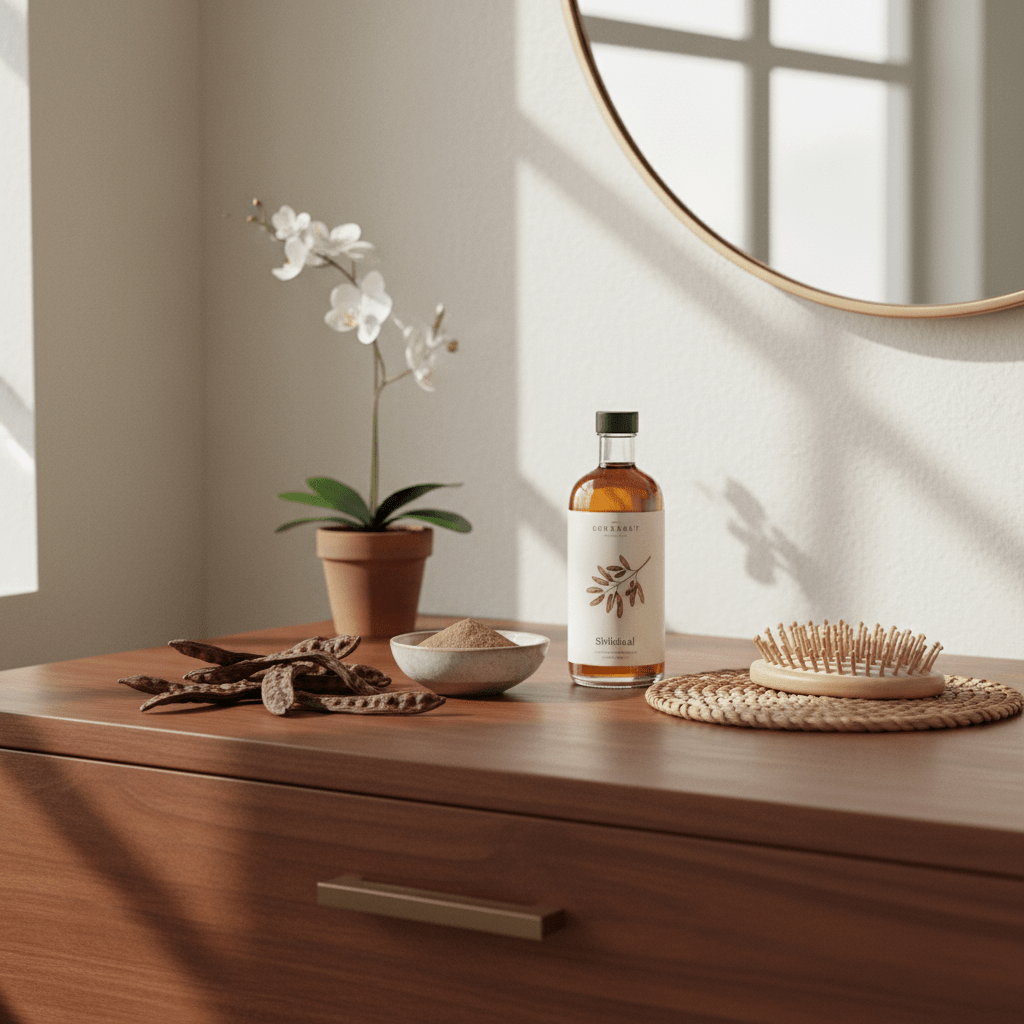
That’s shikakai. Its botanical name is Acacia concinna and it’s often called the “fruit for hair” because the pods are packed with natural cleansing compounds. It grows as a thorny climbing shrub in parts of India and tropical Asia, and people have used it in Indian hair care rituals for ages. Some old traces even show it being used with soap nut and amla for hair cleaning way back in ancient times. Wild, right?
Shikakai usually comes in a few forms:
| Form | What it looks like | How people use it |
|---|---|---|
| Whole dried pods | Brown, wrinkled pods | Boiled or soaked for hair rinse |
| Fine powder | Soft brown powder | Mixed into pastes, masks, or oil blends |
| Infused oil | Oil steeped with shikakai | Used as a scalp massage oil or pre-wash treatment |
So yes, shikakai oil is just one way people use the plant. The powder and pods are often used as a natural hair cleanser too, while the oil works more like a nourishing prep step before washing.
In Ayurveda, shikakai is known as a kaphahara herb. That just means it’s believed to help calm excess kapha, which many people connect with oily, heavy, or itchy scalp buildup. And that lines up with why so many folks still reach for it today. It cleans without that super squeaky, stripped feeling you get from some shampoos. You know the one. Hair feels clean, but also kind of cranky.
The thing is, shikakai fits into the bigger Ayurvedic hair care oil routine pretty naturally. It’s often used for scalp comfort, gentle cleansing, and helping hair feel soft after wash day. Not magic. Just a plant that does its job well.
And if you’ve been comparing shikakai vs shampoo, this is where it gets interesting. Shampoo usually cleans fast, but shikakai tends to be gentler and more scalp-friendly for people who want a softer wash. For that reason, many people use it as part of a DIY shikakai oil recipe or mix it into herbal blends with amla, reetha, or fenugreek.
If your scalp gets picky, shikakai might be worth a try. Simple. Old-school. Still useful.
The Science Behind Shikakai Oil: A Nutrient-Rich Elixir
You know that feeling when your scalp is clean, but your hair still feels mad about it?
That’s where shikakai oil starts to make a lot of sense. The magic isn’t really magic at all. It’s plant chemistry doing its thing. Shikakai pods are rich in saponins, which are natural cleansing compounds that make a soft foam and help lift oil and dirt without that harsh, stripped feeling you can get from some shampoos. That’s one reason people keep comparing shikakai vs shampoo in the first place.
And the plant brings more than just cleanse power. Shikakai also contains plant compounds like antioxidants, flavonoids, tannins, and vitamin C, plus other nutrients often talked about in Ayurveda, like vitamins A, D, E, and K. Not every vitamin claim has strong lab proof, so I’d keep that part honest. But the bigger idea still holds: these plant parts may help support a calmer scalp and hair that feels less dry after washing.
Here’s a simple look at what’s inside:
| Compound | What it may do |
|---|---|
| Saponins | Gentle cleansing and light foam |
| Vitamin C | Helps fight oxidative stress |
| Antioxidants | May help protect scalp and hair from damage |
| Tannins and flavonoids | Support scalp comfort and balance |
| Plant acids and oils | Help with softness and manageability |
OK, so why do people care so much about this now? A lot of folks are getting picky about what goes on their heads. Consumer Reports found toxic chemicals in every hair dye it tested, which probably explains why more buyers are moving toward cleaner options. At the same time, market reports show more people are reaching for chemical-free and Ayurvedic beauty products, which is a pretty clear signal that old-school plant care is having a real comeback .
But the best part? Shikakai oil doesn’t just clean. It may also help create a scalp-friendly space where dandruff and itchiness don’t get to run the show. Some studies point to anti-fungal and anti-bacterial activity, which makes sense for people using shikakai for dandruff-prone scalps or looking for a herbal hair oil for dandruff. Plus, its gentle cleansing feel means it can work well in an Ayurvedic hair care oil routine, especially if your scalp hates strong soap-y stuff.
Actually, wait. The real win is balance. Clean scalp. Softer hair. Less drama.
And if you’re making products, that balance matters too. For brands that need natural ingredients for hair oils, shikakai fits neatly beside rose water, carrier oils, and essential oils in clean beauty formulas. It’s the kind of ingredient that helps a product feel both traditional and current.
So yes, shikakai oil benefits go beyond hair wash day. It’s a simple plant-based option with cleansing compounds, helpful antioxidants, and a long history of use. Not flashy. Just steady. And that’s kind of the point.

7 Proven Benefits of Using Shikakai Oil for Hair and Scalp
Ever had one of those wash days where your hair looks clean, but feels like straw? Yeah. That’s usually the moment people start looking for something softer.
Shikakai oil has been around for ages, but it’s getting fresh love now because a lot of folks want plant-based care that doesn’t leave their scalp angry. And honestly, I get it. With Consumer Reports finding toxic chemicals in every hair dye it tested, people are asking smarter questions about what they put on their heads.
So what can shikakai oil do? Quite a bit. Let’s keep it plain and real.
1. Gentle cleansing without that stripped feeling
Shikakai is a natural hair cleanser. Its saponins help lift dirt and oil, but they don’t usually leave hair feeling squeaky, dry, or weirdly tight. That’s one reason people compare shikakai vs shampoo and still come back to the old-school stuff.
For oily scalps, that softer wash can feel like a relief. For dry hair, it can be even better.
2. May help support hair growth
People often search for shikakai for hair growth, and there’s a reason. Shikakai oil is used in Ayurvedic hair care oil routines to keep the scalp comfy and feed the roots during massage. A calm scalp can be a better place for hair to grow.
It’s not some overnight miracle. But regular use in a DIY shikakai oil recipe may help reduce the stuff that gets in the way, like buildup and dryness.
3. Helps with dandruff and itch
If you’re dealing with flakes, you know the frustration. The little shoulder snowstorm. Not cute.
Shikakai has been linked to anti-fungal and anti-microbial activity, which is why people use it as a herbal hair oil for dandruff. It may help make the scalp feel less itchy and less irritated, especially when used with a gentle head massage.
4. Adds shine and softness
This one’s easy to notice fast. Hair that’s been coated in heavy product can start to feel dull. Shikakai oil helps with slip, so hair can feel smoother and easier to comb.
That softer feel also means fewer tangles. And fewer tangles usually means less breakage. Nice little bonus.
5. May help slow premature graying
Now, let’s be careful here. Shikakai won’t turn gray hair back to black. But its antioxidants may help fight oxidative stress, and that matters because stress on the scalp and hair can play a role in early graying.
So while this isn’t a fix-all, it fits well in a gentle hair care routine for people who want to support their hair long term.
6. Soothes an angry scalp
You know that burning or hot feeling some products leave behind? No thanks.
As part of an Ayurvedic hair care oil routine, shikakai oil is often used with warm sesame or coconut oil during shiro abhyanga, the traditional head massage. The massage itself may help relax the scalp, and the herb blend can feel cooling and calming.
A small ritual, maybe. But a nice one.
7. Strengthens hair from the roots
This is where shikakai really earns its keep. When the scalp gets less dry and the strands feel softer, hair is often less likely to snap while brushing or washing. That means less breakage and fewer split ends.
Here’s a quick view:
| Benefit | What it may do |
|---|---|
| Gentle cleansing | Removes buildup without harsh stripping |
| Hair growth support | Helps keep scalp healthy for roots |
| Dandruff control | May calm itch and flakes |
| Shine and softness | Leaves hair smoother and easier to manage |
| Anti-graying support | Antioxidants may help with oxidative stress |
| Scalp soothing | Can feel cooling and calming |
| Root strength | May reduce breakage and split ends |
If you want the best results, pair shikakai oil with a simple scalp massage 2 to 3 times a week. Also, if you’re making your own blend, a slow, low-heat infusion is the way to go. That’s the heart of how to make shikakai oil at home without burning the good stuff.
And for brands or makers, this is where plant oils can shine. Aroma Monk’s pure essential oils, carrier oils, rose water, and natural attars fit right into clean hair blends, especially if you’re building a product line around gentle, natural care. If your customers want simple ingredients with a story, shikakai belongs in the conversation.
Get a quote from Aroma Monk.
Essential Oil Supplier – Bulk pricing • Samples • Fast response
How to Make Authentic Shikakai Oil at Home (DIY Infusion Recipe)
You know that moment when you open a bottle and think, “OK… this smells like real care”? That’s the vibe we’re going for here.
Making shikakai oil at home is pretty simple. No fancy gear. No weird lab stuff. Just a slow, warm infusion that pulls the good bits from shikakai powder or pods and folds them into coconut or sesame oil. And yes, it really can feel like an old family trick, because it kind of is.
What you’ll need
| Ingredient or tool | Amount | Why it helps |
|---|---|---|
| Shikakai powder or crushed pods | 2 tbsp | The star ingredient |
| Coconut oil or sesame oil | 100 ml | The base oil |
| Small pan | 1 | For gentle heating |
| Spoon | 1 | For stirring |
| Muslin cloth or fine strainer | 1 | For filtering |
| Clean glass bottle | 1 | For storage |
If you’re buying shikakai powder, look for a pure one with no added perfume, dye, or fillers. A good powder should look brown, smell earthy, and feel fine but not chalky. If the label has a huge list of extras, I’d skip it.
Step-by-step DIY shikakai oil recipe
Step 1: Warm the oil.
Pour 100 ml of coconut oil or sesame oil into a small pan. Keep the flame low. You want it warm, not hot. Around 40 to 60°C is the sweet spot. If it starts smoking, the heat is too high. Simple rule.
Step 2: Add the shikakai.
Stir in 2 tablespoons of shikakai powder. If you’re using pods, crush them first so the oil can soak up more of the plant goodness. Mix gently.
Step 3: Let it infuse.
Keep the heat low for 10 to 15 minutes. The herbs should look crisp and dry, not burnt. Stir now and then so nothing sticks. This is the part where patience wins.
Step 4: Cool it down.
Take the pan off the stove and let the oil cool fully. Don’t rush this part. Hot oil and cloth filters do not get along.
Step 5: Strain and store.
Pour the oil through a muslin cloth or fine strainer into a clean glass bottle. Seal it tight. Store it in a cool, dark spot for about 1 to 2 months.
Easy herb swaps and add-ins
Want to make it a fuller herbal hair oil? You can.
- Shikakai + amla: Add 1 tbsp amla powder for a more traditional Ayurvedic hair care oil feel.
- Shikakai + reetha: Add 1 to 2 tbsp reetha powder if you want a stronger natural hair cleanser.
- Shikakai + fenugreek: Add 1 tsp fenugreek seeds for a richer scalp massage oil.
- Shikakai + amla + reetha + fenugreek: A classic DIY shikakai oil recipe for people who like the full herb mix.
You can also toss in a few curry leaves or neem leaves if that fits your routine. Just keep the amounts small at first. More is not always better. Trust me.
A few quick tips
- Use a heavy-bottom pan so the oil heats evenly.
- Don’t crank the flame. Low and slow works best.
- Make a small batch first so you can test the feel on your scalp.
- If your scalp is very sensitive, patch test before full use.
This is one of those old methods that still makes sense in 2026. It’s budget-friendly, easy to tweak, and fits right into a simple herbal hair oil routine. Plus, if your hair has been acting fussy, a little warm oil massage can feel weirdly soothing.
And if you’re a brand owner or product maker, this kind of base blend pairs well with pure carrier oils, rose water, and essential oils from Aroma Monk for clean beauty lines. That’s especially handy if you’re building a scalp oil, pre-wash treatment, or ayurvedic-inspired hair product that needs simple, honest ingredients.

Your Guide to Using Shikakai Oil for Maximum Results
You know that moment when your hair feels clean, but your scalp feels mad about it? Yeah, that’s usually the point where shikakai oil starts looking pretty smart.
The best way to use it is simple. Before wash day, warm a little shikakai oil in your hands and rub it into your scalp for 5 to 15 minutes. Use small circles with your fingertips, not your nails. That gentle massage can help get the oil moving and may help the scalp soak up the good stuff better. If you like a deeper treatment, leave it on for 30 to 60 minutes before shampooing. For dry or frizzy hair, you can even leave it on overnight as a pre-shampoo mask. Just put a towel on your pillow unless you enjoy surprise laundry.
How to massage it right
Start at the temples. Then move to the crown and back of the head. Slow circles work best. You don’t need to press hard. Think “calm scalp,” not “deep tissue spa panic.” A 5-minute massage is fine for busy days, but 10 minutes usually feels even better. And if you’re using an Ayurvedic hair care oil blend with sesame or coconut oil, the warmth can feel extra soothing.
Here’s a quick cheat sheet:
| Hair type | How often to use shikakai oil | Best use style |
|---|---|---|
| Oily hair | 1 to 2 times a week | Pre-shampoo treatment |
| Normal hair | 2 times a week | Scalp massage or 1-hour mask |
| Dry hair | 2 to 3 times a week | Overnight mask or long pre-wash treatment |
Common mistakes to skip
Don’t drown your hair in oil. More is not better. A few teaspoons usually do the job unless your hair is very thick or very long. Also, make sure you wash it out well. If you don’t, your hair can end up heavy, sticky, and oddly flat. Been there. Not fun.
Another thing? Don’t use hot water right after oiling. Lukewarm water works better. And if your scalp gets flaky, itchy, or angry after use, stop and patch test next time. Even a natural hair cleanser can be a little much for some people.
A lot of people are switching to plant-based care for a reason. Consumer Reports found toxic chemicals in every hair dye it tested, and market reports also show more shoppers choosing chemical-free beauty products because they want safer options. So if you’re trying shikakai for hair growth, dandruff help, or just softer strands, you’re not alone.
And for brands, this is where simple blends can shine. If you’re building a scalp oil or pre-wash product, Aroma Monk’s pure essential oils, carrier oils, rose water, and natural attars can fit right into clean hair care formulas. Honest ingredients. Clean feel. That’s the sweet spot.
Shikakai Oil vs. Commercial Shampoo: A Comparative Table
You know that little tug-of-war in the shower? One bottle says fast and easy. The other says gentle and plant-based. And your scalp is just standing there like, “Can I get a vote?”
That’s basically the shikakai vs shampoo question. Commercial shampoo usually wins on speed and convenience. Shikakai oil and shikakai-based cleansers win on natural purity and a softer feel. So it’s not always about which one is “better.” It’s about what your hair actually likes.
Here’s a simple side-by-side look:
| Factor | Shikakai oil and shikakai cleansers | Commercial shampoo |
|---|---|---|
| Cleansing agent | Plant saponins from Acacia concinna | Often sulfates like SLS or SLES |
| pH level | Usually near neutral to mildly acidic, around 5 to 6 | Can vary a lot, and some formulas are more alkaline |
| Ingredient purity | Usually simple and plant-based | Often has fragrance, preservatives, silicones, and extra additives |
| Cost-effectiveness | Cheap if you make it at home, but takes time | Easy to buy and ready to use right away |
| Environmental impact | Biodegradable and low waste | Petrochemical-based surfactants can be harder on waterways |
The big plus with shikakai is how clean it feels in the ingredient list. If you’re making an Ayurvedic hair care oil routine at home, that can matter a lot. You’re working with a natural hair cleanser that’s been used for ages, not a long list of mystery extras.
But commercial shampoo does have a place. It’s quick. It’s everywhere. And if you’ve got a busy morning, that matters. No shame there. Really.
Where shikakai shines is for people who want a calmer scalp, a softer wash, or a herbal hair oil for dandruff that feels less harsh. It also fits nicely for brands that want cleaner formulas. For example, if you’re building a product line, Aroma Monk’s pure carrier oils, essential oils, rose water, and natural attars can pair well with shikakai for natural blends that feel honest and simple.
And here’s the bigger picture. More people are moving toward chemical-free beauty. Consumer Reports found toxic chemicals in every hair dye it tested, including a probable human carcinogen, and market reports show growing demand for Ayurvedic and herbal beauty products. That shift is one reason shikakai oil benefits are getting fresh attention again.
So what should you pick?
- Choose shikakai oil if you want a gentler, plant-first routine.
- Choose commercial shampoo if you want speed and convenience.
- Use both if that works for your hair. Yep, that’s allowed.
If you want the old-school feel without giving up modern ease, shikakai can be a nice middle ground. And if you’re a brand owner, this is a good time to test natural ingredients in your next formula. Hair care shoppers are paying attention.

Embrace the Tradition: Your Journey to Healthier Hair Starts Now
So here’s the simple truth: if your scalp has been tired of harsh washes, flaky moments, and one more bottle that promises a lot, shikakai oil gives you a calmer path.
It works as a natural hair cleanser, a soothing scalp oil, and a gentle helper for shine, softness, and maybe even shikakai for hair growth support over time. And because shikakai comes from Acacia concinna, it has real roots in Indian hair care, not just a pretty label. People are also paying closer attention to what goes into beauty products. Consumer Reports found toxic chemicals in every hair dye it tested, which helps explain why more folks are reaching for plant-based care.
If you want to start small, try the DIY shikakai oil recipe from this guide. If you’d rather skip the stove, pick a high-quality pre-made shikakai oil with clean ingredients. Either way, you’re choosing a gentler Ayurvedic hair care oil that fits real life.
And that’s the nice part. Old wisdom still works. Quietly, steadily, and without all the drama.
For anyone building hair care products, Aroma Monk’s pure essential oils, natural attars, rose water, and carrier oils can pair well with herbal blends like shikakai. It’s a simple way to keep formulas clean and honest.
Try the plant-first route. Your hair may thank you for it.
Get a quote from Aroma Monk.
Essential Oil Supplier – Bulk pricing • Samples • Fast response