
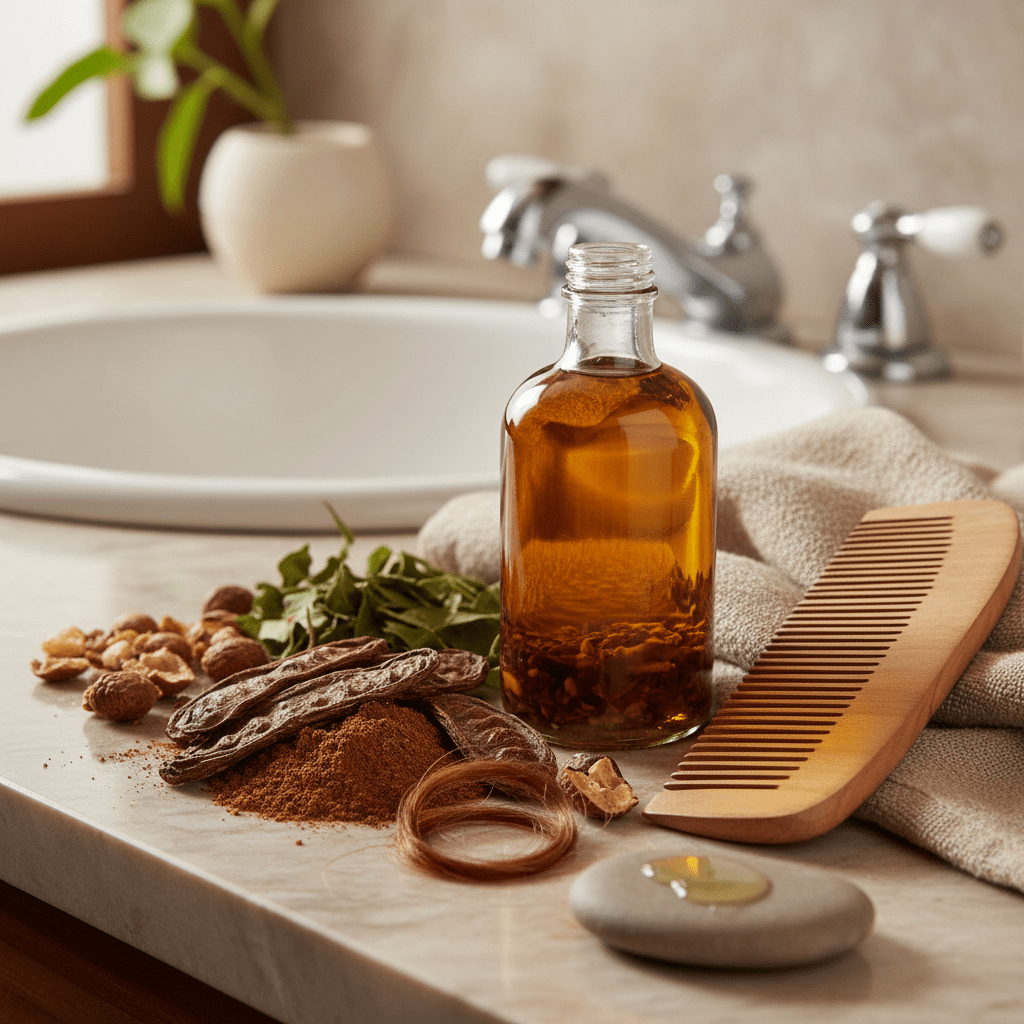
Tired of Dandruff? This Ancient Hair Secret Could Be Your Answer
Ever scratch your scalp and see little white flakes on your shirt again? Annoying. It can feel like you just washed your hair, and still, there it is. And if you’ve tried harsh shampoos that leave your scalp tight, dry, or extra itchy, you’re not alone.
Dandruff is super common. A global review says about half of adults deal with it, and the dandruff care market is growing fast as more people look for plant-based options like natural ingredients in hair care. That’s where shikakai hair oil comes in.
Shikakai is called the “fruit for hair” in Ayurveda. Fancy name, simple idea. It’s a gentle, traditional herb that people have used for scalp care for generations. Many people now use shikakai for dandruff, itchy scalp, and dry flakes because it cleans without being too rough.
In this guide, we’ll look at what shikakai is, why shikakai hair oil may help with flakes, how to use shikakai oil, what to check before buying, and how to make a DIY shikakai oil at home. Plus, we’ll keep it simple. No fluff. Just the stuff you can actually use.
And if you work with natural beauty products, this is the kind of ingredient that fits right into clean, scalp-friendly formulas.

What Exactly is Shikakai? Unpacking the ‘Fruit for Hair’
You know that moment when a simple herb turns out to have a pretty wild backstory? Shikakai is like that. It comes from Acacia concinna, a spiny climbing shrub that grows in parts of India, tropical Asia, and China. People have called it the “fruit for hair” for ages, and honestly, the name makes sense.
In Ayurveda, shikakai has long been used for scalp care and hair washing. It’s been part of traditional routines for a very long time, especially for dandruff, itchy scalp, and excess oil. Old-school? Yes. But also still useful.
The big reason shikakai hair oil gets attention is what’s inside it. Shikakai pods contain saponins, which are natural cleansers that can help lift dirt and oil without the harsh feel of strong detergents. It also has vitamins like A, C, D, E, and K, plus antioxidants. Those little extras may help calm the scalp and support a healthier feel.
And here’s the part people mix up all the time. Shikakai powder and shikakai oil are not the same thing. Powder is the traditional route. You mix it, wash with it, and rinse it out. Shikakai hair oil is the easier option for busy routines, since it’s already infused and ready to massage into the scalp. For many people, that makes how to use shikakai oil a lot simpler than making a wash from scratch.
| Form | What it does | Best for |
|---|---|---|
| Shikakai powder | Cleanses like a herbal wash | People who want a classic Ayurvedic hair cleanse |
| Shikakai hair oil | Feeds the scalp with a lighter, easier routine | People who want a simple shikakai oil for itchy scalp or flakes |
If you’re building products, this herb also fits well in natural dandruff treatment lines and ayurvedic hair oil for dandruff blends. And if you’re sourcing scalp-friendly oils for your brand, a pure carrier oil base matters a lot. That’s where suppliers like Aroma Monk can help with clean, lab-tested oils and custom blends for hair care formulas.
The Science: How Shikakai Fights Dandruff at its Source
Here’s the thing. Dandruff usually isn’t just “dry skin.” A tiny yeast called Malassezia globosa often plays a big part, and that’s why flakes keep coming back even after a good wash. Shikakai hair oil may help because it works on a few fronts at once.
First, shikakai has natural antifungal and antimicrobial power. That means it can help slow down the stuff that feeds dandruff and makes the scalp angry. Some lab work has found Acacia concinna pod extracts can act against Malassezia species, including the one tied most closely to flakes study on antifungal activity against Malassezia. Pretty handy for a plant that sounds so old-school, right?
But wait, there’s more. A healthy scalp sits on the slightly acidic side, around pH 4.5 to 5.5. Shikakai helps keep things in that zone, which makes it harder for fungus to run wild. When the scalp gets thrown off by harsh cleansers, the skin barrier can feel off-balance and extra itchy. Then the cycle starts: dry scalp, more oil, more flakes. Fun. Not really.
That’s where the gentle cleanse matters. Shikakai’s natural saponins clean without stripping away all your sebum. And sebum is not the enemy. You need some of it to keep the scalp from feeling tight and cranky. If you’ve ever used a super-strong shampoo and felt like your scalp was squeaky clean in a bad way, you know what I mean.
So the benefits of shikakai for scalp care are pretty clear:
- Helps fight the fungus tied to dandruff
- Supports a scalp pH that feels balanced
- Cleans softly, so the scalp does not get stripped
- May calm itch and dryness over time
This is also why shikakai for dandruff works best as part of a calm routine, not a harsh one. Think of it as a gentle reset. And if you’re building a natural dandruff treatment line or an ayurvedic hair oil for dandruff, shikakai fits nicely with other scalp-friendly ingredients like carrier oils, rose water, or essential oils from suppliers such as Aroma Monk. Clean inputs matter. A lot.
If you want the next step, keep reading for how to use shikakai oil the right way, so you get the scalp care without the mess.

Beyond Flakes: Overall Benefits of Shikakai Oil for Your Scalp
You know that annoying itch that shows up at the worst time? Like right before a meeting, or while you’re trying to act normal in a coffee shop. Yeah, that one. Shikakai hair oil can help with more than flakes. It may also calm the scalp, add moisture, and make the whole wash day feel a lot less rough.
First, let’s talk about itch. Shikakai oil for itchy scalp is often used because shikakai has soothing plant compounds, plus a cooling feel in Ayurveda. That matters when your scalp is red, tight, or just plain cranky. And since dandruff is super common, affecting about half of adults worldwide, it makes sense that more people are looking for a natural dandruff treatment that feels gentler on the skin global dandruff and treatment market trends.
Then there’s moisture. Dry scalp can look like dandruff, and sometimes it’s part of the same mess. Shikakai hair oil may help soften that cycle by supporting the scalp’s natural oils instead of stripping them away. The vitamins and plant compounds in acacia concinna for hair, like vitamin C and antioxidants, can help the scalp feel less parched and the hair roots feel a bit more cared for. Not magic. Just kinder care.
And yes, it can help lift flakes too. A gentle scalp massage with shikakai oil softens dry bits so they come off more easily when you wash your hair. That means less scratching, less irritation, and less “why is my shirt doing this to me?” energy. Pretty nice.
Here’s a quick look:
| Benefit | What it can do |
|---|---|
| Soothes itch | May calm irritation and scalp discomfort |
| Adds moisture | Helps support a less dry, tight scalp |
| Gentle exfoliation | Softens flakes so they wash away more easily |
| Scalp comfort | Makes regular hair care feel less harsh |
If you want the best results, use shikakai for dandruff as part of a steady routine. A light massage, a short wait, then a gentle wash. Simple. And if you’re building a natural hair care line, this is also where a clean ayurvedic hair oil for dandruff blend can stand out. Aroma Monk’s lab-tested essential oils, rose water, and carrier oils can fit nicely into that kind of scalp-friendly product work.
A Buyer’s Guide: How to Choose an Effective Shikakai Hair Oil
You know that weird feeling when you buy a hair oil that sounds amazing, then you open it and it smells like a perfume counter in 2008? Yeah. Not ideal. If you want shikakai hair oil that actually helps with flakes, you have to read the label with a little care.
First, check the ingredient list. Look for Acacia concinna near the top, since that’s the plant name for shikakai. If it’s buried way down after a long list of fillers, you’re probably not getting much of the good stuff. Also check the carrier oil. Coconut, sesame, and almond are common bases, and each one brings a different feel. Coconut is heavier, sesame feels warming, and almond is a bit lighter. Pick what fits your scalp, not what sounds fancy.
But wait, there’s more. A lot of good ayurvedic hair oil for dandruff blends include other herbs too. These can work well together:
| Herb | Why it’s added |
|---|---|
| Amla | Helps support stronger-looking hair |
| Reetha | Gives extra cleansing power |
| Brahmi | May help soothe the scalp |
That mix can be handy if you want a natural dandruff treatment that does more than just coat the hair. And if you’re trying to compare bottles, this part matters a lot more than the front label art. Pretty bottle. Weak formula. We’ve all been there.
Now for the red flags. Avoid products loaded with mineral oil, parabens, silicones, and fake fragrance. Mineral oil can sit on the scalp and clog things up. Silicones can make hair feel slippery without really helping it. And artificial fragrance? That’s often where itchy scalp trouble starts for sensitive folks.
A few quick buying tips:
- Choose a product that lists shikakai for dandruff clearly
- Check for a full ingredient list, not vague wording
- Pick lab-tested oils when you can
- If you have a sensitive scalp, patch test first
And if you make products for a brand, this is where clean sourcing matters. A pure carrier oil base and well-tested botanical inputs can make a big difference in your final formula. That’s also why many B2B brands look for trusted suppliers like Aroma Monk for carrier oils, rose water, and lab-tested natural ingredients they can build on.
One more thing. If your scalp is really flaky, don’t pile on heavy oil every day. A light scalp massage once or twice a week is usually enough for most people, and it gives you time to see how your skin reacts.
Simple. Smart. Less mess.
Get a quote from Aroma Monk.
Essential Oil Supplier – Bulk pricing • Samples • Fast response
Your Weekly Ritual: Using Shikakai Hair Oil for Maximum Results (Step-by-Step)
You know that moment when your scalp feels fine… then by afternoon, the flakes are back again? So frustrating. The good news is that shikakai hair oil works best when you use it the same way each week, not just once in a panic before a big event.
Step 1: Warm it up a little
Pour a small amount into your palm, then warm it between your hands or place the bottle in warm water for a few minutes. Just warm, not hot. That helps the oil spread better and feel softer on the scalp.
Next, part your hair into a few sections. Four sections is usually enough for most people. If your hair is thick, make more parts. That way, the oil reaches your scalp instead of sitting on top like a sad little layer.
Step 2: Massage gently
Use your fingertips, not your nails. Nails can scratch and make dandruff feel worse. Put the oil on your scalp and massage in small circles for 5 to 10 minutes. Start near the front, move to the crown, then around the sides and back.
And yes, take your time. A short massage helps the oil settle in and can also feel pretty relaxing. Almost like a tiny reset after a long day.
Step 3: Let it sit, then wash it out
For most scalps, leave the oil on for 1 to 2 hours. If your scalp feels dry or extra flaky, you can leave it on overnight with a scalp cap. But if your scalp gets oily fast, shorter is usually better.
Wash with a mild, sulfate-free shampoo. If you like herbal care, a gentle powder cleanser can also work. Rinse well so no residue stays behind.
Here’s a simple weekly plan:
| Hair need | How often | How long to leave it on |
|---|---|---|
| Mild flakes | Every 1 to 2 weeks | 1 to 2 hours |
| Oily scalp | Every 10 to 14 days | 30 to 60 minutes |
| Dry, itchy scalp | Once a week | Overnight or 2 hours |
As of 2024, dandruff affects about half of adults worldwide, and the hair care market keeps leaning toward plant-based options like natural ingredients in hair care. So if you’re building a routine, keep it steady. Small steps. Weekly rhythm. That’s where shikakai for dandruff tends to shine.
And if you’re making your own blend, this is where a clean base matters too. Aroma Monk’s pure carrier oils, rose water, and lab-tested essential oils can fit well in a DIY shikakai oil or a gentle ayurvedic hair oil for dandruff formula.

DIY Shikakai Hair Oil: A Simple Recipe for Home Infusion
Want to make your own shikakai hair oil at home? Good. You do not need a fancy lab setup. Just a clean jar, a little patience, and a gentle touch.
What you’ll need
- 1 tablespoon shikakai powder, or 2 to 3 broken shikakai pods
- 1 cup organic coconut oil or sesame oil
- A clean, dry glass jar
- A fine strainer or cheesecloth
- A dark glass bottle for storage
If you want a stronger DIY shikakai oil, use a little less oil. If you want a lighter one, use a bit more. Simple.
Easy infusion method
Option 1: Double-boiler method
- Put the shikakai and oil in a heat-safe bowl or jar.
- Set it over a pot of warm water.
- Keep the heat low for 1 to 2 hours.
- Stir now and then.
- Do not let it boil. That can cook the oil too hard and ruin the good parts.
Option 2: Solar infusion
- Mix the shikakai and oil in a dry glass jar.
- Close it well.
- Put it in a sunny window or warm spot for 5 to 7 days.
- Shake it once a day.
Solar infusion takes longer, but it feels a bit old-school in the best way. And if you like slow, low-effort projects, this one’s pretty nice.
Strain and store it right
When the oil looks infused, strain out every bit of plant material. Really. Tiny bits left behind can make the oil go bad faster. Press the herbs gently, but don’t force sludge through the cloth.
Pour the finished oil into a dark glass bottle. Keep it in a cool, dry place away from sunlight. Homemade herbal oil usually stays good for 6 to 12 months if stored well. If it starts smelling sour, cheesy, or odd, toss it.
A fresh batch of shikakai for dandruff can be a nice part of your weekly scalp care. Use it once or twice a week, then wash with a gentle shampoo. That’s usually enough for most people.
And if you make hair care products for a brand, this kind of DIY shikakai oil is a good place to test formulas before scaling. Clean oils, clean bottles, and solid raw materials matter. Brands like Aroma Monk can help with lab-tested carrier oils, rose water, and natural ingredients for bigger batches too.

Important Precautions and Potential Side Effects
Your scalp might love shikakai hair oil. But not every head does. Weird, right? A natural ingredient can still cause trouble if you use it the wrong way, or if your skin just doesn’t like it.
First, do a patch test. Always. Put a tiny bit of the oil behind your ear or on the inner elbow and wait 24 hours. If you see redness, itching, or a rash, skip it. That small step can save you a lot of scratching later.
Also, shikakai is a cleanser. That’s the part people miss. If you use too much, or use it without a good carrier oil, it can feel drying on some hair types. Dry ends can get extra cranky. So if you’re using a DIY shikakai oil or a stronger ayurvedic hair oil for dandruff blend, follow with conditioner on the hair lengths, not the scalp.
And if your flakes are painful, thick, yellow, or keep coming back no matter what you try, it may be more than common dandruff. Seborrheic dermatitis and psoriasis can look similar at first, but they usually need a doctor’s eye. A dermatologist can tell you what’s going on and give the right treatment. That’s the smarter move.
Quick check list:
| What to watch for | What to do |
|---|---|
| Redness or itching after use | Stop and patch test a different product |
| Dry, rough hair ends | Use less oil and add conditioner |
| Painful or stubborn flakes | See a dermatologist |
| Rash near the eyes | Rinse well and stop use right away |
Shikakai for dandruff can be a gentle natural dandruff treatment, but gentle doesn’t mean one-size-fits-all. Listen to your scalp. It usually tells you pretty fast.
Embrace Natural Clarity for Your Scalp
So here’s the big picture. Shikakai hair oil is not just a pretty old-school remedy. It’s a gentle, plant-based way to help with flakes, itch, and scalp buildup without beating your skin up in the process.
It can help from a few angles at once. It has cleansing saponins, calming plant compounds, and a pH that sits close to a healthy scalp’s sweet spot. Plus, its antifungal and anti-inflammatory support may help with the root causes of dandruff instead of only hiding the flakes for a day. That’s why shikakai for dandruff keeps showing up in both home care and ayurvedic hair oil for dandruff blends.
If your scalp feels dry, itchy, or just fed up with harsh shampoos, this might be a kinder swap. Try it once a week. Keep it simple. See how your scalp responds.
And if you’re building a natural hair care routine, or even a product line, shikakai oil for itchy scalp fits nicely with clean ingredients like carrier oils and rose water from trusted suppliers such as Aroma Monk. Small steps. Better scalp days. That’s the goal.
Get a quote from Aroma Monk.
Essential Oil Supplier – Bulk pricing • Samples • Fast response