
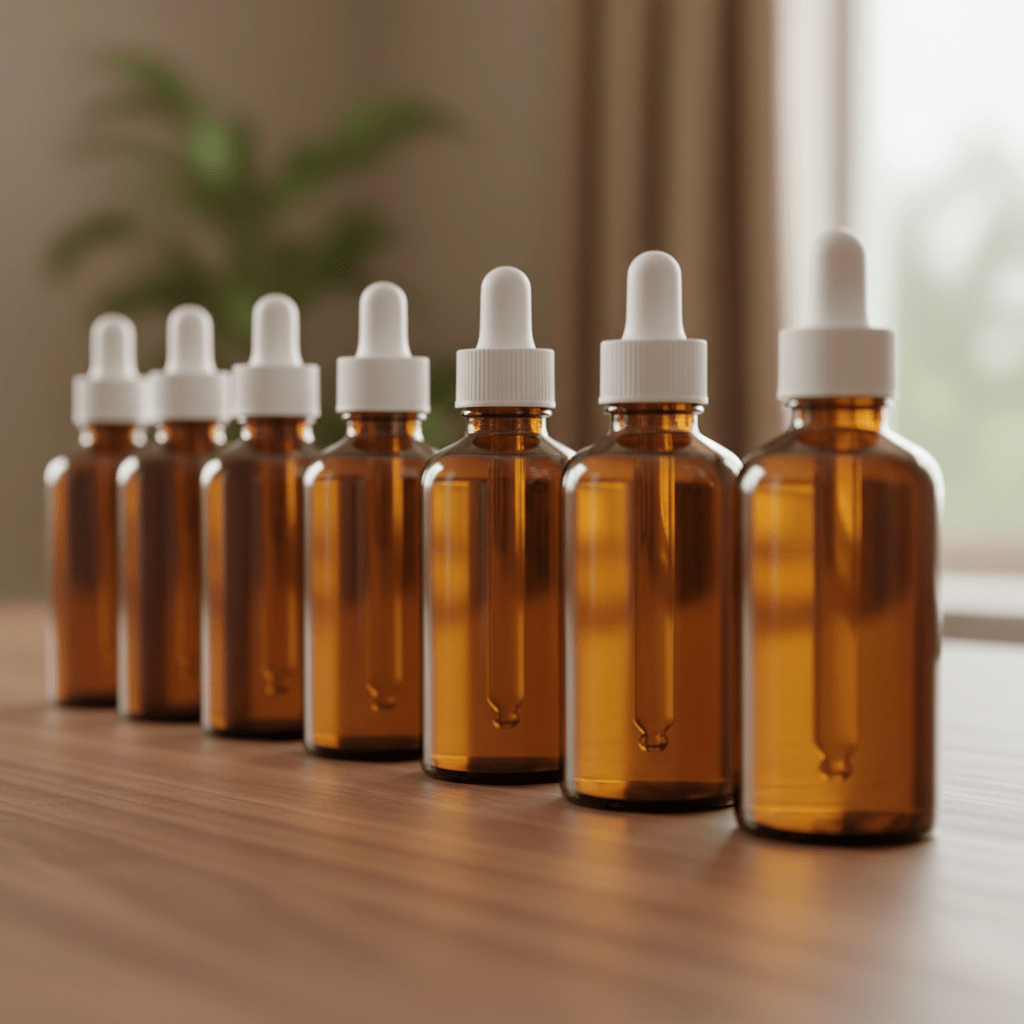
The Booming Wellness Market: Your Opportunity in White Label Organic Essential Oils
The wellness industry isn’t just growing. It’s exploding.
As of 2024, the global wellness economy hit a record $6.8 trillion. That is double what it was just over a decade ago Global Wellness Institute.
And within that massive number? Organic essential oils are the star players. They are actually growing at over 13% every single year, which is much faster than non-organic oils.
Basically, people want natural products. They want to feel good. And they are ready to pay for quality.
But here’s the hard part.
If you try to do this the old-fashioned way, you’re looking at a mountain of work. You have to find reliable farmers who aren’t faking their organic status.
You need expensive equipment to extract the oils. Plus, you need a lab to test purity because customers are smart—they know when something smells synthetic or “off.”
It costs a fortune. It takes months (or years) to set up.
Honestly, most new brands can’t survive that initial cost.
That is where white label organic essential oils come in. Think of it as your strategic shortcut.
Instead of building a factory, you partner with a manufacturer who already does the hard work. You get certified, lab-tested oils—like the pure ones we handle at Aroma Monk—and you put your own brand on the bottle.
It cuts your costs way down. You can launch in weeks, not years. And you get to focus on marketing and selling, which is where the real money is made.
Ready to grab your slice of this $6.8 trillion pie? Let’s break down how to do it right.
Understanding the Foundations: Why ‘Organic’ and ‘White Label’ are a Perfect Match
Let’s keep this simple.
White label organic essential oils are ready-made oils from a manufacturer that you sell under your own brand name. The formula is already made. The testing is already done. You mainly choose your label, bottle details, and packaging.
Private label is a little different. You still work with a manufacturer, but you usually get more room to tweak the product. That might mean custom essential oil blends, special bottle sizes, or a scent profile made just for your brand. So if you want speed, white label usually wins. If you want something more unique later, a private label essential oil manufacturer can help you grow into that.
Here’s a quick look:
| Model | Best for | Speed | Customization | Cost |
|---|---|---|---|---|
| White label | Fast launches | Fastest | Low | Lowest |
| Private label | Brand differentiation | Medium | Higher | Medium |
| In-house | Full control | Slowest | Highest | Highest |

That speed matters. A lot. In the essential oils market, brands often choose white label because it has the lowest barrier to entry, the fastest path to launch, and lets them spend more time on sales instead of factory problems, according to market comparison data on white label vs private label vs in-house manufacturing.
Now let’s talk about the word people care about most: organic.
Plenty of brands say “natural.” But “natural” can mean almost anything. USDA Certified Organic means something real. For a product to carry that seal, it must contain at least 95% certified organic ingredients, and it has to meet strict rules for sourcing, handling, and yearly certification checks. That kind of proof builds trust fast. And trust is a big deal when you are launching an essential oil brand.
You may also see names like ECOCERT, Fair Trade, or cruelty-free marks. These can help too, especially with buyers who care about sustainability in beauty and clean sourcing. But USDA organic still tends to be the label people trust most.
And this is why organic essential oil sourcing and white label work so well together.
You get the trust of certified organic essential oil suppliers without having to build the whole system yourself. No chasing farms. No buying distillation gear. No trying to manage testing, packing, and export paperwork at the same time. That risk stays much lower.
Instead, you focus on what new brands usually need most:
- building your brand story
- talking to customers
- testing offers and price points
- growing into custom essential oil blends later
That’s the sweet spot.
For many brands, a partner like Aroma Monk makes this easier by handling lab-tested quality, traceability, and supply support while you focus on customer relationships and launch plans. And honestly, that’s where most small brands should spend their energy first.
Market Trend #1: Radical Transparency and Sustainable Sourcing
Have you ever picked up a bottle of essential oil, turned it over to read the label, and still felt like you had no idea what was actually inside?
You aren’t alone.
Shoppers today are smart. They don’t just want a nice smell. They want to know the story behind the bottle. They want to know where the plants grew. They want to know how the oil was made. And they definitely want to know if it’s safe.
This is what people in the industry call a “seed-to-seal” story.
Consumers are digging deep. In fact, 79% of U.S. households buy organic products multiple times a year, mostly because they want that safety and trust, according to data.
If your brand can’t tell them where your oil comes from, they will probably go to a competitor who can.
The Attack on Plastic
It isn’t just about the oil, though. It’s about what holds the oil.
For a long time, plastic was king. It was cheap, light, and easy. But those days are fading fast.
Now, sustainability in beauty is a massive deal. Buyers are actively avoiding plastic. Research shows that 38% of consumers actively avoid PET packaging when they shop.
Instead, they want glass. Specifically, dark glass like amber or violet.

Why? Two big reasons:
- It looks premium. Heavy glass feels expensive and protects the product.
- It works better. Dark glass blocks harmful light. Actually, over 75% of personal care brands now prefer containers that block UV light because it keeps the product fresh longer.
So, when you are looking into white label organic essential oils, you need to check the packaging options. Does the manufacturer offer glass? It’s a small detail, but it screams “quality” to your customer before they even open the bottle.
Why Your Supplier Is Your Secret Weapon
Here is the thing about white labeling. You aren’t the one on the farm.
So, how do you promise your customers that your stuff is pure?
You have to partner with a private label essential oil manufacturer who is obsessed with the details. This is where organic essential oil sourcing gets tricky. You need a partner who provides proof, not just promises.
This usually comes in the form of something called a GC/MS report.
I know, that sounds super technical. But it’s just a lab test that gives you a “fingerprint” of the oil. It proves the oil is 100% pure and hasn’t been watered down with cheap fillers.
When we supply raw materials at Aroma Monk, we provide that traceability. It lets you tell your customers, “Yes, this is real lavender from a real farm, and here is the proof.”
Turning Transparency into Marketing
Think about it. If you are launching an essential oil brand, you are competing with big names.
But being small and transparent is actually your superpower. You can show the lab results on your product page. You can talk about the sustainable glass bottles in your social media posts. Big companies are often too slow or secretive to do this well.
When you work with a transparent supplier, their “hard work” becomes your “marketing gold.”
If you can combine transparent sourcing with eco-friendly packaging, you aren’t just selling a product. You’re selling peace of mind. And that is exactly what the modern buyer is willing to pay extra for.
Market Trend #2: Beyond Lavender and Peppermint – The Rise of Niche & Exotic Oils
Let’s be real for a second.
Lavender and Peppermint are the bread and butter of the industry. You probably need them in your catalog. But if you try to build a whole brand around just these basics, you are going to run into a problem.
Everybody sells them.
The grocery store sells them. The gas station sells them. Even huge big-box stores sell them for five bucks.
If you are launching an essential oil brand, you do not want to compete on price with a giant corporation. You will lose.
So, how do you win? You go where the giants can’t (or won’t) go. You target the niche.
Shoppers today are educated. They aren’t just looking for something that “smells nice.” They are looking for specific, functional tools to fix a problem. They want better skin, sharper focus, or deeper sleep. And they are looking for exotic ingredients that feel special.
The “Hero” Oils Taking Over
Right now, a few specific oils are having a major moment. These usually cost more, but customers are happy to pay for them because they see real results.
Blue Tansy is a perfect example.
Have you seen those bright blue face oils all over Instagram? That is Blue Tansy. It gets its color from chamazulene, a compound that is amazing for soothing angry, red skin. It is difficult to farm and tricky to unearth, which makes it expensive. But that rarity also makes it a premium product that customers rave about, according to skincare trend analysis.

Then there is Helichrysum.
People call this the “Immortal Flower.” It is famous for skin renewal and anti-aging. While basic Lavender soothes a bug bite, Helichrysum is what people reach for when they want to diminish the look of a scar or a wrinkle.
By offering these high-value oils, you instantly position your brand as a serious player in the wellness space. You aren’t just a commodity; you are a specialist.
Functional Wellness: Oils as Tools
Another huge shift is the move toward functionality.
Consumers are using aromatherapy as a life hack. They want to change how they feel, right now. This is where custom essential oil blends become your best friend.
Instead of just selling “Rosemary Oil,” successful brands are selling “Focus Blends.”
Here is a quick cheat sheet on what is trending in functional wellness:
- For the “Brain Fog” Crowd: Rosemary. It is seeing a huge surge in popularity because people use it for memory and concentration. It’s becoming the natural alternative to a third cup of coffee.
- For the “Can’t turn my brain off” Crowd: Vetiver. Lavender is for relaxation, but Vetiver is for grounding. It is heavy, earthy, and very popular for deep sleep support.
- For the “Afternoon Slump” Crowd: Cardamom or Yuzu. These are bright and spicy. They wake you up without the jitters.
Why Generics Can’t Compete Here
This is where working with a specialized private label essential oil manufacturer like Aroma Monk matters.
Sourcing generic Lavender is easy. Sourcing pure, organic Blue Tansy or authentic Japanese Yuzu? That is hard.
Niche oils are often faked. If you buy a cheap version, it won’t work, and it might even smell like chemicals. You need organic essential oil sourcing that provides those GC/MS reports we talked about earlier.
When you have the real stuff, you have a story to tell.
You can tell your customers, “This isn’t just oil. This is a tool for your anxiety/skin/focus.” That is a value proposition that a five-dollar bottle at the supermarket just can’t match.
Get a quote from Aroma Monk.
Essential Oil Supplier – Bulk pricing • Samples • Fast response
Market Trend #3: Hyper-Personalization with Custom Essential Oil Blends
Remember when you could just put a bottle of “Lavender” on a shelf and it would sell?
Yeah, those days are pretty much gone.
The market is getting crowded. Really crowded. And the one-size-fits-all approach just doesn’t work like it used to.
Shoppers today don’t want generic stuff. They want products that feel like they were made just for them. They want solutions to their specific, messy, real-life problems.
They aren’t looking for “Peppermint Oil.” They are looking for a “3 PM Wake-Up Call.”
They aren’t looking for “Chamomile.” They are looking for “Toddler Tantrum Tamer.”
This shift is huge using custom essential oil blends.
Instead of selling single ingredients, the smartest brands are selling outcomes. And this is where you can win big.
Why Blends Build Better Brands
Here is the secret nobody tells you about launching an essential oil brand: reliable blends create loyal customers way faster than single oils.
Why?
Because anyone can sell Lemon oil. But only you can sell your secret “Sunshine in a Bottle” blend.
When a customer falls in love with your specific recipe, they can’t just go to Amazon and buy a cheap knock-off. They have to come back to you.
We see this with success stories like Thulisa Naturals. They didn’t just sell generic oils; they built a brand around aromatherapy experiences (like shower steamers) and grew from a tiny $5,000 budget to over $348,000 in annual revenue by focusing on specific customer needs.
You Don’t Need to Be a Chemist
Now, you might be thinking, “But I don’t know how to formulate a complex blend!”
Good news. You don’t have to.
This is the best part about working with a private label essential oil manufacturer.
Most good suppliers (like us at Aroma Monk) already have master formulators. We know which oils play nice together. We know that Lavender and Chamomile are great for sleep, but if you add a tiny bit of Vetiver, it becomes a powerhouse.
You can leverage that expertise.
You can ask for a “Focus Blend” or a “Post-Workout Muscle Blend.” Your supplier handles the science. You handle the naming and the marketing.
The “Quiz” Strategy
Want to know a really effective way to sell these blends?
Use a quiz.
Brands like JennScents have done this brilliantly by using questionnaires to find out exactly what a customer needs.
You can do a simple version of this. Put a quiz on your website asking things like:
- “How do you feel when you wake up?”
- “What is your biggest stress trigger?”
- “Do you prefer floral or earthy smells?”
Then, recommend one of your custom essential oil blends based on their answers.
It makes the shopper feel heard. It makes the product feel personal.
Also, consider that ~50% of Millennials and Gen Z are willing to pay more for products that align with their organic and sustainable values.
So, if you can offer them a Certified Organic custom blend that fits their exact mood? You aren’t just selling oil anymore. You are solving a problem.
And that is how you turn a one-time buyer into a customer for life.
Market Trend #4: Integrating Essential Oils into Broader Product Ecosystems
So, you sold a customer a bottle of Lavender oil.
That’s great. But now what?
A 10ml bottle lasts a long time. If you wait for them to run out before they buy again, you might be waiting months.
This is why the smartest brands aren’t just selling oils for diffusers anymore. They are building entire natural wellness product ecosystems.
Basically, they are taking those same high-quality oils and putting them into everything else the customer uses daily.
From “Smelling Good” to “Looking Good”
The jump from aromatherapy to skincare is shorter than you think.
If a customer trusts your organic Lavender to help them sleep, they will probably trust your Lavender-infused face serum to calm their skin. It is the same core ingredient, just a different format.
And the demand is definitely there. With the global wellness economy hitting a massive $6.8 trillion recently, people are scrutinizing every label in their bathroom Global Wellness Institute. They want the chemical stuff out.
Here is where you can expand:
- Face Serums: Oils like Frankincense are legendary for anti-aging. Tea Tree is the go-to for battling breakouts in natural skincare routines.
- Body Care: Think body oils, lotions, or even simple shower steamers.
- Home Cleaning: This is huge right now. People are terrified of harsh bleach and ammonia. A “Lemon and Eucalyptus” counter spray feels safer and smells way better.
The “Sticky” Brand Effect
Here is the business logic behind this.
When you offer more than just tiny bottles of oil, you increase what business people call “Customer Lifetime Value” (LTV).
Instead of a customer spending $20 once every three months, they might buy a $20 oil, a $30 face serum, and a $15 room spray all at once.
Also, it makes your brand “sticky.”
If you invade their laundry room, their bathroom cabinet, and their nightstand, you aren’t just a product choice anymore. You are a lifestyle.
How Your Supplier Helps You Scale
This might sound like a lot of work.
“I can’t manufacture lotion in my kitchen!”
You don’t have to. This is where a versatile private label essential oil manufacturer becomes your best asset.
When you work with a partner like Aroma Monk, you have access to the raw materials in bulk. You can start simple. Maybe you launch with five core oils. Then, six months later, you use those same organic oils to create a line of roll-on perfumes or room sprays.
You leverage the same supply chain. You keep the same quality standards. But you triple your product catalog.
It’s about working smarter, not harder.
How to Choose the Right White Label Organic Essential Oil Partner
Okay, real talk.
Finding a supplier is the scariest part of this whole process.
It feels a bit like dating. You want someone reliable, honest, and in it for the long haul. But the internet is full of companies promising the world and delivering… well, junk.
If you pick the wrong private label essential oil manufacturer, you could end up with bottles that leak, oil that smells like chemicals, or a shipment that arrives three months late.
I’ve seen it happen. It’s a nightmare.
But when you find the right one? It’s smooth sailing.
Here is exactly what you need to look for so you don’t get burned.
The “Non-Negotiables” Checklist
Before you even look at the price tag, you need to check these three boxes. If a supplier can’t give you these, close the tab and move on.
1. The “Truth Detector” (GC/MS Reports)
This is the big one.
A GC/MS report is basically a fingerprint of the oil. It tells you exactly what chemical compounds are inside. It proves the oil is pure and hasn’t been cut with cheap vegetable oil or synthetic fragrances.
It is the gold standard for quality. Without it, you are just guessing.

Actually, a reputable supplier should be happy to show you these. At Aroma Monk, we view this as basic proof of work. If a supplier hides their testing or says “trust us, it’s pure,” that is a massive red flag, according to safety experts at the Tisserand Institute.
2. Real Certifications
You are selling a health product. People are putting this on their skin and breathing it in.
Look for certified organic essential oil suppliers who carry the USDA Organic seal. As we talked about earlier, that seal is the number one thing customers trust.
Also, check for GMP (Good Manufacturing Practice) compliance. This just means they follow strict cleanliness and safety rules when bottling your product. You don’t want your oil bottled in a dirty garage.
3. Low Minimum Order Quantities (MOQs)
Here represents a trap new brands fall into.
You find a manufacturer with great prices, but there’s a catch: you have to buy 5,000 bottles at once.
Don’t do it.
When you are just starting, cash flow is everything. You want a partner who lets you start small. Look for suppliers who allow starting orders around 12 to 100 units per product. This lowers your risk and lets you test what sells before you go all in.
Red Flags: When to Run Away
I made a quick list of warning signs. If you see these, run.
- The Price is Too Good: If their Rose oil costs $50 a liter when everyone else charges $1,500, it’s fake. Real organic essential oil sourcing costs money because farming is hard work.
- Vague Origins: If they can’t tell you which country the Lavender came from, they don’t know what they are selling.
- No Phone Number: If you can’t get a human on the phone before you buy, good luck getting them on the phone when your order goes missing.
The “Partnership” Test
You don’t just want a vending machine. You want a partner.
The best suppliers act like an extension of your team. They should help you spot trends. They should know that Blue Tansy is hot right now. They should be able to help you craft custom essential oil blends that set you apart.
If they just send you a price list and stop talking, they aren’t going to help you grow.
5 Questions to Ask Before You Sign
Copy and paste these into your first email to a new supplier. Their answers will tell you everything you need to know.
- “Can you provide batch-specific GC/MS reports for these oils?”
- “What is your lead time for a re-order?” (You need to know how fast they can ship when you sell out).
- “Do you offer support for custom formulation if I want to create a signature blend later?”
- “Where exactly is this oil farmed and distilled?”
- “What are your MOQs for white label vs. private label?”
Getting these answers upfront saves you so much headache later. It ensures you are building your brand on a foundation of quality, not just cheap filler.
Summary: Riding the Wellness Wave to Build Your Essential Oil Brand
Let’s zoom out for a second.
We aren’t just talking about selling nice-smelling bottles. We are seeing a massive shift where the natural products industry has actually tripled in size since 2007.
The opportunity is right in front of you. But the old way of doing business—hiding ingredients and using cheap fillers—is dead.
To really win today, you need to ride the four trends we covered:
- Radical Transparency: Show the proof and the farms.
- Niche Ingredients: Go beyond basic Lavender and try exotic things like Yuzu.
- Personalization: Solve specific problems with custom essential oil blends.
- Ecosystems: Expand from oils to home and body care.
It sounds like a lot, right?
But here is the good news. You don’t have to do the farming. You don’t have to build a lab.
That is why the white label model works.
When you partner with a manufacturer who handles the difficult organic essential oil sourcing—like the team here at Aroma Monk—you get to skip the headaches. We handle the GC/MS testing. We handle the sustainability in beauty standards combined with reliable supply chains. You just handle the vision.
So, don’t let the fear of starting stop you.
The market is hungry for authentic, clean brands. The tools are ready. Now it is your turn to build something amazing.
Get a quote from Aroma Monk.
Essential Oil Supplier – Bulk pricing • Samples • Fast response